Joachim Ringelnatz, Michael Roes, John Birmingham, Vladimir Sorokin, Cees Budding’, Garrison Keillor, Heinz Rudolf Unger, Dieter Schlesak, Joseph Rodman Drake, Johan Carl Christian Brosbøll

De Duitse dichter, schrijver, cabaretier en schilder Joachim Ringelnatz (eig. Hans Bötticher) werd geboren op 7 augustus 1883 Wurzen bij Leipzig. Zie ook alle tags voor Joachim Ringelnatz op dit blog.


Ein Taschenkrebs und ein Känguruh

Ein Taschenkrebs und ein Känguruh,
Die wollten sich ehelichen.
Das Standesamt gab es nicht zu,
Weil beide einander nicht glichen.

Da riefen sie zornig: “Verflucht und verdammt
Sei dieser Bürokratismus!”
Und hingen sich auf vor dem Standesamt
An einem Türmechanismus  


Heimatlose

Ich bin fast
Gestorben vor Schreck:
In dem Haus, wo ich zu Gast
War, im Versteck,
Bewegte sich,
Regte sich
Plötzlich hinter einem Brett
In einem Kasten neben dem Klosett,
Ohne Beinchen,
Stumm, fremd und nett
Ein Meerschweinchen.
Sah mich bange an,
Sah mich lange an,
Sann wohl hin und sann her,
Wagte sich
Dann heran
Und fragte mich:
“Wo ist das Meer?” 


Wie mag er aussehen?

Wer hat zum Steuerbogenformular
den Text erfunden?
Ob der in jenen Stunden,
da er dies Wunderwirr gebar,
wohl ganz — oder total — war?

Du liest den Text. Du sinnst. Du spinnst.
Du grinst – “Welch Rinds” – Und du beginnst
wieder und wieder. Eisigkalt
kommt die Vision dir “Heilanstalt”.

Für ihn? Für dich? – Dein Witz erblaßt.
Der Mann, der jenen Text verfaßt,
was mag er dünkeln oder wähnen?
Ahnt er denn nichts von Zeitverlust und Tränen?

Wir kommen nicht auf seine Spur.
Und er muß wohl so sein und bleiben.
Auf seinen Grabstein sollte man nur
den Text vom Steuerbogen schreiben.  


ringelnatz

Joachim Ringelnatz (7 augustus 1883 – 17 november 1934)


De Duitse dichter, schrijver en filmmaker Michael Roes werd geboren op 7 augustus 1960 in Rhede. Zie ook alle tags voor Michael Roes op dit blog.


AL-KUDS


Die Wunde, die nicht blutet, tötet

            und das Wort, das nicht fällt, erstickt


Der Gestellte verweigert die Ausweisung

            die geschulterte Last Herkunft und Ziel


Gäbe der Pflichtbewußte mit Gott sich zufrieden

            doch verehrt die Ikone mit Stiefeln


Saurer Wein hätte gewarnt, die grundlosen

            Freudentriller, die brennenden Reifen


In der Ferne der heilige Berg, rauchend

            Halde aus Seife und Fischmehl


TEIRESIAS


Frauen sind keine blutenden Vögel

und schlüge eine von ihnen

uns eine Wunde, es träte

nur Wasser heraus


Nie haben sie mir Treue geschworen

noch tat ich ihnen diesen Schwur

Wir haben einander nichts vorzuwerfen


Wäre ich Frau, wäre ich

Nymphe. Auch die Gewalt liebte ich

die schweigsame, wegwerfende Geste des

Mannes, den gewaltsam geöffneten Mund


Doch einmal werden wir Männer

Frau sein, bluten vor Scham, vor

Schande, jemandes Schatten


roes

Michael Roes (Rhede, 7 augustus 1960)


De Australische schrijver John Birmingham werd geboren op 7 augustus 1964 in Liverpool, Engeland. In 1970 emigreerden zijn ouders naar Australië. Hij begon al met publiceren op de University of Queensland. Zijn bekendste werk is He Died With A Felafel In His Hand uit 1994. Van dit boek werd een toneelstuk gemaakt, een film en ook een stripboek. In 1997 verscheen The Tasmanian Babes Fiasco. Andere werken van hem zijn The Search for Savage Henry, How To Be A Man en Off One’s Tits. Voor Leviathan: the unauthorised biography of Sydney ontving hij in 2002 de National Prize For Non-Fiction.


Uit: Without Warning


„Pitié-Salpêtrière Hospital, Paris

The killer awoke, surrounded by strangers. An IV line dripped clear fluid through a long, thick needle punched into the back of her right hand. Surgical tape held the silver spike in place and tugged at the fine blond hairs growing there. The strangers—all women—leaned in, their faces knotted with anxiety, apparently for her. But she stared instead at her hands, which lay in her lap on a thin brown blanket. They looked strong, even masculine. She turned them over, examining them. The nails were cut short. Calluses disfigured her knuckles, the heels of both palms, and the sides of her hands, from the base of both little fingers down to her wrists. The more she stared, the more unsettled she became. Like the women gathered around her bed, those hands were completely alien to her. She had no idea who she was.

“Cathy? Are you all right?”

“Nurse!” somebody called out.

The strangers, three of them, seemed to launch themselves at her bed, and she felt herself tense up, but they simply wanted to comfort her.

“Doctor. She’s awake,” one of them said in French.

She felt soft hands patting her down, stroking her the way you might comfort a child who’s suffered a bad fright. Cathy—that wasn’t her name, was it?—Cathy tried not to panic or to show how much she didn’t want any of these women touching her. They looked like freaks, not the sort of people she’d want as friends. And then she remembered. They weren’t her friends.“


John_Birmingham

John Birmingham (Liverpool, 7 augustus 1964)


De Russische schrijver Vladimir Sorokin werd geboren op 7 augustus 1955 in Bykovo bij Moskou. Zie ook alle tags voor Vladimir Sorokin op dit blog.


Uit: The Queue (Vertaald door Sally Laird)


“—He’s just got back from America.

—And how was it?

—Depends… There’s an awful lot of crime. You can’t really go out after eight in the evening… There’s loads of stuff around to buy, but you have to work like a horse.

—Of course. Can’t get anything for nothing.

—Here at least you can walk round the streets at night.

—I wouldn’t speak too soon. Just in the last two years we’ve had two murders round our house. And robbery.

—Just coincidence.

—Oh yeah, you reckon!

—The point is Americans are always scared about something—frightened they’ll be kicked out of their job or their wife’s going to get raped or their car stolen…they’re scared stiff the whole time…

—Still, they don’t have these queues.

—No, they don’t have the queues, that’s true.”


sorokin

Vladimir Sorokin (Bykovo, 7 augustus 1955)


De Nederlandse dichter en prozaïst Cees Buddingh’ werd op 7 augustus 1918 geboren in Dordrecht. Zie ook alle tags voor Cees Budding’ op dit blog.


De bozbezbozzel


De bozbezbozzel lijkt wat op
Een jenk, maar heeft een klein’re kop.

Zijn poten staan steeds twee aan twee
Als eenmaal bij het stekelree.

Hij hinnikt als een maliepaard,
En als het sneeuwt heeft hij een staart.

Wanneer die staart zijn kop zou zijn,
Was hij precies een spieringzwijn.

En als hij zeven staarten had,
Een kossosale kolbakrat.

Nu lijkt hij nog het meeste op
Een jenk, maar met een klein’re kop.


Eight days a week


als mijn vrouw met de bus naar de stad gaat
hoop ik altijd dat ze halte ziekenhuisplein instapt:
dan kan ik haar net zolang nakijken
als wanneer ze halte vogelplein neemt
en zie ik haar bovendien nog een keer
voorbijkomen in de bus


Buddingh'

Cees Budding’ (7 augustus 1918- 24 november 1985)


De Amerikaanse schrijver en radiomaker Garrison Keillor werd geboren op 7 augustus 1942 in Anoka, Minnesota. Zie ook alle tags voor Garrison Keillor op dit blog.


Uit: A Lutheran’s Guide to the Orchestra


Nobody goes into choir music for the wrong reasons.  But orchestra… do you know what you’re getting into?  You’re getting into oper
a for one thing.  Don Juan and Mephistopheles, pagan goddesses screeching and being strangled and thrown off balconies.  And even if you stick

to concert music, where are the Christian composers?  Modern ones are existentialists, the romantics were secular humanists, the 18th century was all rationalists, and the 17th were Italian except for Bach.  And you can’t make a living playing Bach.  In the Bible, we read about people singing and playing musical instruments, including the harp, the last trump, the cymbal, the psaltery.  But in the Bible, music was in praise of the Lord, not for amusement.  We don’t read that our Lord Himself ever played an instrument or enjoyed hearing other people play theirs.  The apostles did not attend concerts.  They weren’t in the arts – maybe there’s a reason for that.  You play in an orchestra, you’re going to be devoting your life to music that sort of swirls around in spiritual mystery.  Searching for answers that people could find in the Epistle to the Romans if somebody just showed them

where it is.“


garrison-keillor

Garrison Keillor (Anoka, 7 augustus 1942)


De Oostenrijkse schrijver en dichter Heinz Rudolf Unger werd geboren op 7 augustus 1938 in Wenen. Zie ook alle tags voor Heinz Rudolf Unger op dit blog.


 Uit:  Zwölfeläuten


„Von der Bergseite her stapft der Förster heran, ein einsamer Jäger in weißer Wildnis. Sein deutscher Wolfshund hat die Tollwut gekriegt, von den Füchsen, diesem Gesindel. Und es gibt keine rassereinen Jagdhunde mehr in der Gegend, nur noch irgendwelche Rattler, Mischlinge ersten und zweiten Grades. Er biegt um die Kirchhofmauer und hält das Jagdgewehr schußbereit in der Hand, den Jägerblick, scharf wie ein Jagdhund, auf die Schrittspuren gerichtet. Grad waren sie noch deutlich, aber an der Mauer verlieren sie sich, alles zerstampft. „Viel zu viel Füß“, flucht er.
Der Pfarrer Glashüttner fährt herum: „Fichtelhuber! Bist nicht beim Begräbnis?“
„Mein Beileid“, sagt der Förster kalt. „Das da ist wichtiger!“
Der Pfarrer folgt seinem Blick, sucht im Matsch, was da wichtiger sein könnte, findet nichts.
„Das da“, sagt der Förster, „ist viel wichtiger, das ist kriegswichtig, Pfarrer!“
Der Pfarrer versteht nichts. „Was denn, um Himmelswillen?“
Der Förster deutet mit dem Gewehrlauf in den Schnee: „Partisanen! Und die Spuren führen bis ins Dorf!“
Mit einer gewissen Genugtuung sieht er den Pfarrer Glashüttner erbleichen. Der bringt kein Wort heraus, sieht aus, als suche er nach einem passenden Bibeltext. „Ich muß jetzt zum Begräbnis“, sagt er schließlich und will davon.
„Der Ortsvorsteher muß her“, fordert der Förster. „Sagen Sie ihm, etwas enorm Wichtiges wär passiert, und daß er sofort kommen soll!“
Der Pfarrer bockt: „Das geht nicht, er ist ja beim Begräbnis!“
„Er soll sich wegschleichen!“
Jetzt wird es dem Glashüttner zuviel, jetzt wird er widerständig. „Ein Förster kann schleichen“, ätzt er, „aber ein Orstvorsteher kann sich nicht einfach schleichen!“
Der Fichtelhuber hebt seine Stimme wie ein Fahne – da er der Fichtelhuber ist, wie eine Hakenkreuzfahne: „Kruzitürken, Pfarrer! Partisanen!“
Der Pfarrer neigt den Kopf, verschränkt die Arme und wird zynisch: „Na und? Es ist ja Krieg! Was erwartest du dir denn vom Krieg? Touristen?“


Unger

Heinz Rudolf Unger (Wenen, 7 augustus 1932)


De Duitse dichter, schrijver, essayist en vertaler Dieter Schlesak werd geboren in Sighişoara, Roemenië, op 7 augustus 1934. Zie ook alle tags voor Dieter Schlesak op dit blog.


Uit: Vlad. Die Draculakorrektur


Der Gestank hatte sich etwas verzogen, der zweite Teil, der gemütliche, mit Likören, Dulceata tödlich süßem Gebäck aus Rusciuc und Tarigrad, Halva, Serbet Kaffee, Vutca wieder, Wasserpfeifen wurden gereicht- und hereinkamen noch Clowns gesprungen und Schauspieler, die Lautari, die Zigeunerkapelle, war ja sowieso die ganze Zeit laut dabei gewesen; drei Stunden saufen und Toasts ausbringen, war nun angezeigt. Erstaunlich, dass nicht alle bei den letzten Toasts völlig besoffen unter den Tisch fielen. Man trank aus Pokalen von einer Oca (1,2 l) Größe. Außer dem Metropoliten mussten alle stehen. Dieser brachte als erstes einen Toast auf die Gesundheit des Fürsten aus. Der zweite galt dem “Kaiser” (Sultan oder wer, der Kaiser von Wien?). Dann trank der Woiwode auf die Gesundheit jedes einzelnen der versammelten Großbojaren, das ging so drei Stunden lang. Und niemand durfte den Toasttrunk verweigern, mancher ließ den Wein einfach am Mund herunter rinnen, tat als trinke er, und war schließlich völlig durchnässt, als wäre er inkontinent, Geübte ließen es ins Essen rinnen, manche hatten Schwämme am Körper angebracht. Als letztes, es war meist schon Abend, brachte der Fürst einen Toast auf Gott den Herrn aus.“


Dieter_Schlesak

Dieter Schlesak (Sighişoara, 7 augustus 1934)


De Amerikaanse dichter Joseph Rodman Drake werd geboren op 7 augustus 1795 in New York. Nog tientallen jaren na zijn dood werden zijn gedichten opnieuw uitgegeven en in bloemlezingen opgenomen. Hij was in de canon van de Amerikaanse literatuurgeschiedenis opgenomen, zoals bijvoorbeeld in een werk als Rufus Wilmot Griswolds The Poets and Poetry of America (1856). Hij werd de Amerikaanse Keats genoemd, mede door de overeenkomsten in hun biografie: in 1795 geboren, studie medicijnen, dichter geworden, jong gestorven aan tbc. Edgar Allen Poe was minder over hem te spreken en latere critici hebben zich bij diens negatieve oorde
el aangesloten, waardoor zijn werk op een paar gedichten na is vergeten.


The American Flag


I


WHEN Freedom, from her mountain height,

Unfurled her standard to the air,

She tore the azure robe of night,

And set the stars of glory there;

She mingled with its gorgeous dyes

The milky baldric of the skies,

And striped its pure, celestial white

With streakings of the morning light;

Then, from his mansion in the sun,

She called her eagle bearer down,

And gave into his mighty hand,

The symbol of her chosen land.


II


Majestic monarch of the cloud!

Who rear’st aloft thy regal form,

To hear the tempest-trumpings loud,

And see the lightning-lances driven

When strive the warriors of the storm,

And rolls the thunder-drum of heaven–

Child of the sun! to thee ’t is given

To guard the banner of the free,

To hover in the sulphur smoke,

To ward away the battle-stroke,

And bid its blendings shine afar,

Like rainbows on the cloud of war,

The harbingers of victory!


drake

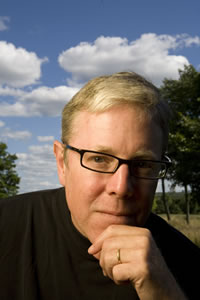
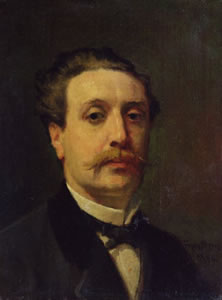
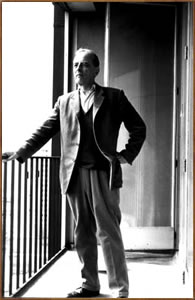
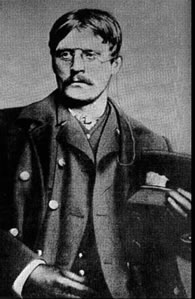
Joseph Rodman Drake (7 augustus 1795 – 21 september 1820)


Zie voor onderstaande schrijver ook mijn blog van 7 augustus 2007.

De Deense schrijver Johan Carl Christian Brosbøll werd geboren op 7 augustus 1816 in Fredericia.


Kjell Westö, Christoph Simon, Conor McPherson, Diane DiPrima, Jean Carrière, Alfred Lord Tennyson, Paul Claudel, John Middleton Murry, János Rózsás, Christa Reinig, Yacine Kateb, Isabel Bolton, Rolf Boldrewood, Jiří Weil

De Finse schrijver Kjell Westö werd geboren op 6 augustus 1961 in Helsinki. Zie ook alle tags voor Kjell Westö op dit blog.

 Uit: Wo wir einst gingen  (Vertaald door Paul Berf)


Der Zufall wollte es, dass der erste Tag von Vivan Fallenius als Hausmädchen bei den Herrschaften Gylfe in der Achtzimmerwohnung an der Boulevardsgatan auf den ersten Jahrestag der Ermordung des russischen Generalgouverneurs Bobrikoff durch den einsamen und halbtauben Beamten Eugen

Schauman fiel. Der stellvertretende Amtsrichter und seine Frau, die Schauman flüchtig gekannt hatten, feierten dies mit einem stummen Champagnertoast zur Consommé. Vivan stand an der Tür zum Flur, mit Rüschen in den Haaren, sie trug einen schwarzen Rock und eine schwarze Bluse

mit weißem Spitzenkragen und hatte sich darüber hinaus eine weiße Schürze umgebunden, sie wartete auf die nächste Anweisung und versuchte sich möglichst unsichtbar zu machen.

Das mit Schauman und Bobrikoff interessierte sie nicht weiter, stattdessen dachte sie an den Familienbaum daheim in Degerby, an ihre Hofbirke, die während eines überraschenden Maisturms vor gut einem Monat in der Mitte umgeknickt war, und daran, wie seltsam es doch war, dass sie bereits im Januar geträumt hatte, der Baum werde sterben. Träume dieser Art hatte sie in regelmäßigen Abständen, und sie machten ihr Angst, aber inzwischen war schon zartgrün gefärbter Sommer, und sie fragte sich, warum Frau Beata Gylfe nicht die schweren Samtvorhänge aufziehen ließ. Vivan hatte es am Vormittag eigenmächtig getan; wenn die Vorhänge fort waren, sah man, wie schön das Licht auf die Boulevardsgatan fiel, und man konnte sich hinauslehnen und die jungen Linden anschauen

und dem Klackern von Pferdehufen und Klappern von Wagen und Karren auf dem Kopfsteinpflaster lauschen. Vivan fand, dass die Gylfeschen Paradezimmer düster und brütend wurden, sobald die Vorhänge zugezogen waren. Sie wusste nicht, dass es dem Wunsch der reichen Stadtbewohner entsprach, wenn ihre Wohnungen so aussahen – dunkel getäfelte Möbel, Ebenholz und Mahagoni, schwarze, dekorativ bemalte Urnen und gipsweiße, auf kleinen Ziertischen ausgestellte Statuetten,

üppige Topfpalmen in den Ecken, Seegemälde und glupschäugige Verwandte an den Wänden und dann die Stühle, diese quälende Vielzahl von Zierstühlen und Sesseln, die allerorten herumstanden und zur Folge hatten, dass man sich die Beine blau und wund schlug, wenn man zwischen den Möbelstücken kreuzte, um zu servieren oder abzudecken oder eine soeben abgegebene Visitenkarte zu überreichen oder was einem sonst gerade aufgetragen worden war.“


westo

Kjell Westö (Helsinki, 6 augustus 1961)


De Zwitserse schrijver Christoph Simon werd geboren op 6 augustus 1972 in Langnau im Emmental. Zie ook alle tags voor Christoph Simon op dit blog.


Uit: Luna Llena


«Sieben mal vier Meter Parkett. Luna Llena, die Gelateria im Breitenrain, vollgestellt mit Holztischen, Stühlen und einem abgewetzten Sofa. Eine ägyptische Palme beim Eingang und ein mexikanischer Kaktus beim Ausgang verbreiteten Stimmung. Das Prunkstück, der türkisfarbene Eiskasten, und daneben die Bar, Stütze für Gewohnheitstrinker, die halbleere Biergläser von der einen in die andere Hand schoben und ein Gesprach mit Rahel König suchten, wers schafft, zehn Franken. Das Luna Llena im Breitenrain war Bühne und Abstellkammer für allerlei Strandgut der geist- und weniger geistreichen Art: Stempelbrüder, Provinzintellektuelle, Hafturlauber, Erziehungsbedürftige, lettische Aupair-Mädchen … Sie strömten herein, sassen an kleinen Tischen, Platz für vier Personen, zu acht, zu neunt, je später der Abend. Sie löffelten Eis, assen Focaccias, schlürften Kaffee und überboten sich im Versuch, Neuigkeiten und Insiderwissen auszutauschen (Schwarzarbeit, Aktienkurse, Gletscherschmelze). Einige hörten mit (Ukrainer mit Touristenvisum, Kiffer im freien Fall, Jugendliche mit Return-to-sender-Bewerbungen in der Tasche), schnappten auf und verdrückten sich zu den regional einschlägigen Arbeitsbörsen: Flohmärkte, eigenwillige Strassenecken, General-Guisan-Platz. Alles hatte seine Ordnung bis zu jenem Tag, als Alexandra Jenk bei ihrem Freund, dem Bodybuilder Jost Matter ein- und – mit ausgekugeltem Arm – gleich wieder auszog. Das Luna Llena begann zu kochen.»



simon

Christoph Simon (Langnau im Emmental, 6 augustus 1972)


De Ierse (toneel)schrijver Conor McPherson werd geboren op 6 augustus 1971 in Dublin. Daar heeft hij ook filosofie gestudeerd. In 1992 bracht hij aan de universiteit zijn eerste stuk op de planken Rum & Vodka. In 1996 nam het Londense Bush Theatre zijn stuk The Lime Tree Bower op het repertoir en nam de schrijver zelf in dienst als “writer in residence“. Met The Weir kwam in 1997 in het Royal Court Theatre in London de grote doorbraak. The Lime Tree Bower werd inmiddels door McPherson zelf verfilmd. In 2006 werd hij genomineerd voor een Tony Award voor Shining City.


Uit: The Weir


“I just kept walking. There was a light rain. I just kept walking. And then I was in town… And I ducked into a pub. Little dark place. Just one or two others there. A businesslike barman… And I put a pint or two away. And a small one or two. And I sat there, just looking down at the dirty wooden bar. And the barman asked me if I was alright? Simple little question. And I said I was. And he said he’d make me a sandwich. And I said okay. And I nearly started crying – because, you know, here was someone just… and I watched him.
He took two big slices off a fresh loaf and buttered them carefully, spreading it all around. I’ll never forget it. And then he sliced some cheese and cooked ham and an onion out of a jar, and put it all on a plate and sliced it down the middle. And, just someone doing this for me. And putting it down in front of me. ‘Get that down you now,’ he said. And then he folded up his newspaper and put on his jacket and went off on his break. And there was another barman then.
And I took this sandwich up and I could hardly swallow it, because of the lump in my throat. But I ate it all down because someone I didn’t know had done this for me. Such a small thing. But a huge thing in my condition. It fortified me, like no meal I ever had in my life.”


McPherson

Conor McPherson (Dublin, 6 augustus 1971)


 De Amerikaanse dichteres en schrijfster Diane DiPrima werd geboren op 6 augustus 1934 in New York. In 1957 leerde zij Allen Ginsberg, Jack Kerouac en andere schrijvers van de Beat Generation kennen. In 1958 verscheen haar eerste bundel This Kind of Bird Flies Backward. In 1961 verscheen een prozaboek Dinners and Nightmares. Eind jaren zestig drong Maurice Girodias van de Olympia Press er bij haar op aan om haar memoires te schrijven. Elk hoofdstuk dat zij naar hem opstuurde retourneerde hij met de opdracht: “meer sex”. Hoewel zij het boek schreef vanwege het geld werd Memoirs of a Beatnik haar meest gelezen werk.


Rant, From A Cool Place


                                                       “I see no end of it, but the turning

                                                        upside down of the entire world”

                                                                                               Erasmus 


We are in the middle of a bloody, heartrending revolution

Called America, called the Protestant reformation, called Western man,

Called individual consciousness, meaning I need a refrigerator and a car

And milk and meat for the kids so, I can discover that I don’t need a car

Or a refrigerator, or meat, or even milk, just rice and a place with

              no wind to sleep next to someone

Two someones keeping warm in the winter learning to weave

To pot and to putter, learning to steal honey from bees,

               wearing the bedclothes by day, sleeping under

(or in) them at night; hording bits of glass, colored stones, and

               stringing beads

How long before we come to that blessed definable state

Known as buddhahood, primitive man, people in a landscape

together like trees, the second childhood of man 


I don’t know if I will make it somehow nearer by saying all this

out loud, for christs sake, that Stevenson was killed, that Shastri

              was killed

both having dined with Marietta Tree

the wife of a higher-up in the CIA

both out of their own countries mysteriously dead, as how many others

as Marilyn Monroe, wept over in so many tabloids

done in for sleeping with Jack Kennedy – this isn’t a poem – full of

              cold prosaic fact

thirteen done in the Oswald plot: Jack Ruby’s cancer that disappeared

              in autopsy

the last of a long line – and they’re waiting to get Tim Leary

Bob Dylan

Allen Ginsberg

LeRoi Jones – as, who killed Malcolm X? They give themselves away

with TV programs on the Third Reich, and I wonder if I’ll live to sit in

             Peking or Hanoi

see TV programs on LBJ’s Reich: our great SS analysed, our money exposed,

              the plot to keep Africa

genocide in Southeast Asia now in progress Laos Vietnam Thailand Cambodia

             O soft-spoken Sukamo

O great stone Buddhas with sad negroid lips torn down by us by the red

              guard all one force

one leveling mad mechanism, grinding it down to earth and swamp to sea

              to powder 


till Mozart is something a few men can whistle

or play on a homemade flute and we bow to each other

telling old tales half remembered gathering shells

learning again “all beings are from the very beginning Buddhas”

or glowing and dying radiation and plague we come to that final great

             love illumination

“FROM THE VERY FIRST NOTHING IS.”


DiPrima

Diane DiPrima (New York, 6 augustus 1934)


De Franse schrijver en essayist Jean Carrière werd geboren op 6 augustus 1928 in Nîmes. Hij debuteerde in 1957 met de roman Retour à Uzès, waarvoor hij meteen de prijs van de Académie française ontving. Van tijd tot tijd werkte hij ook als muziek- en literatuurcriticus. In 1972 ontving hij voor L’épervier de Maheux de Prix Goncourt. Het boek werd een enorm succes ( 2 miljoen verkochte exemplaren, vertalingen in 14 talen). Maar de dood van zijn vader bij een verkeersongeluk en een scheiding stortten de schrijver in een diepe depressie. Deze verwerkt hij vijftien jaar later in Le prix d’un Goncourt. In dit boek beschrijft hij de vernietigende werking die de toekenning van een prijs op een schrijver kan hebben.


Uit: Passions futiles


« Nous avons réalisé que nous étions passés à travers deux guerres mondiales mais qu’elles ne nous avaient pas affectés. Quand nous avons vu dans les journaux locaux les photographies des abominations commises dans les camps de la mort, nous n’avons pas été tellement bouleversés. Ces horreurs restaient hors de portée de notre compréhension, et notre indignation demeurait abstraite.

(…)


Les mois, les semaines, les jours qui passaient, et jusqu’à la moindre minute, se ressemblaient tellement que nous avions le sentiment de vivre dans la prison d’un éternel présent où mêmes les amabilités du climat n’avaient que peu de prise sur notre état d’esprit. Tout était immobile, figé, comme un suspens du mouvement des planètes, du soleil, de la lune, et notre principale activité mentale se réduisait à lutter contre la peur d’une nouvelle catastrophe. »


Carriere

Jean Carrière (6 augustus 1928 – 7 mei 2005)


De Engelse dichter Alfred, Lord Tennyson werd geboren op 6 augustus 1809 in Somersby, Lincolnshire, England. Zie ook alle tags voor Alfred Tennyson op dit blog.


Tears, Idle Tears


‘Tears, idle tears, I know not what they mean,

Tears from the depth of some divine despair

Rise in the heart, and gather to the eyes,

In looking on the happy autumn-fields,

And thinking of the days that are no more.


‘Fresh as the first beam glittering on the sail,

That brings our friends up from the underworld,

Sad as the last which reddens over one

That sinks with all we love below the verge;

So sad, so fresh, the days that are no more.


‘Ah, sad and strange as in dark summer dawns

The earliest pipe of half-awaken’d birds

To dying ears, when unto dying eyes

The casement slowly grows a glimmering square;

So sad, so strange, the days that are no more.


‘Dear as remember’d kisses after death,

And sweet as those by hopeless fancy feign’d

On lips that are for others; deep as love,

Deep as first love, and wild with all regret;

O Death in Life, the days that are no more.’


The Miller’s Daughter


IT is the miller’s daughter,

And she is grown so dear, so dear,

That I would be the jewel

That trembles in her ear:

For hid in ringlets day and night,

I’d touch her neck so warm and white.


And I would be the girdle

About her dainty dainty waist,

And her heart would beat against me,

In sorrow and in rest:

And I should know if it beat right,

I’d clasp it round so close and tight.


And I would be the necklace,

And all day long to fall and rise

Upon her balmy bosom,

With her laughter or her sighs:

And I would lie so light, so light,

I scarce should be unclasp’d at night.


Tennyson

Alfred Tennyson (6 augustus 1809 – 6 oktober 1892)
Portret door Samuel Laurence


De Franse dichter, schrijver en diplomaat Paul Claudel werd geboren op 6 augustus 1868 in Villeneuve-sur-Fère. Zie ook alle tags voor Paul Claudel op dit blog.


Le delphinium

Toute pure comme le ciel,
Brûlante comme le feu,
Aérienne et réelle,
Quel nom te donner pour modèle,
Énorme torche bleue?

La grande fleur bleue dit: N’ai-je
Pas réussi à sortir
Du fond du plus noir saphir
Ce feu plus pur que la neige?
Dans le clair matin du Dieu
La grande fleur a frissonné
De la gloire d’être née,
Du triomphe d’être bleue!
Si jamais Dieu s’ennuyait,
Qu’il te regarde, créature
Aussi fraîche que le lait,
Énorme épi de millet,
Colonie de clair juillet.
Madrépore de l’azur!


Claudel

Paul Claudel (6 augustus 1868 – 23 februari 1955)


De Engelse schrijver, criticus, vertaler en dichter John Middleton Murry werd geboren op 6 augustus 1889 in Londen. Hij was een uiterst vruchtbaar schrijver die tijdens zijn leven meer dan 60 boeken schreef en duizenden essays, artikelen en kritieken over literatuur, sociale kwesties, politiek en religie. Hij was getrouwd met de schrijfster Katherine Mansfield en verzorgde na haar dood de uitgave van haar werk. Ook werkte hij nauw samen met de schrijver D.H. Lawrence. Gedurende WO I waren de Murrys en de Lawrences buren in Cornwall, en iets van de relatie tussen de twee echtparen is terug te vinden Lawrence’s Women in Love.


Uit: The Bet (Tsjechov, vertaald door John Middleton Murry)


„IT was a dark autumn night. The old banker was pacing from corner to corner of his study, recalling to his mind the party he gave in the autumn fifteen years ago. There were many clever people at the party and much interesting conversation. They talked among other things of capital punishment. The guests, among them not a few scholars and journalists, for the most part disapproved of capital punishment. They found it obsolete as a means of punishment, unfitted to a Christian State and immoral. Some of them thought that capital punishment should be replaced universally by life-imprisonment.

“I don’t agree with you,” said the host. ” I myself have experienced neither capital punishment nor life-imprisonment, but if one may
judge a priori, then in my opinion capital punishment is more moral and more humane than imprisonment. Execution kills instantly, life-imprisonment kills by degrees. Who is the more humane executioner, one who kills you in a few seconds or one who draws the life out of you incessantly, for years ? “

“They’re both equally immoral,” remarked one of the guests, ” because their purpose is the same, to take away life. The State is not God. It has no right to take away that which it cannot give back, if it should so desire.”

Among the company was a lawyer, a young man of about twenty-five. On being asked his opinion, he said :

“Capital punishment and life-imprisonment are equally immoral ; but if I were offered the choice between them, I would certainly choose the second. It’s better to live somehow than not to live at all.”

There ensued a lively discussion. The banker who was then younger and more nervous suddenly lost his temper, banged his fist on the table, and turning to the young lawyer, cried out :

“It’s a lie. I bet you two millions you wouldn’t stick in a cell even for five years.”

“If that’s serious,” replied the lawyer, ” then I bet I’ll stay not five but fifteen.”

“Fifteen! Done!” cried the banker. “Gentlemen, I stake two millions.”

“Agreed. You stake two millions, I my freedom,” said the lawyer.“


johnmurry

John Middleton Murry (6 augustus 1889 – 12 maart 1957)


De Hongaarse schrijver János Rózsás werd geboren in Boedapest op 6 augustus 1926. Zie ook alle tags voor János Rózsás op dit blog.


Uit: In der sonnigen Ukraine


„Am Ufer des breit und würdevoll dahinströmenden, blauen Dnjepr liegt eine der schönsten Städte der Ukraine: Cherson.

Im Sommer 1946 waren in der ganzen Stadt die entsetzlichen Spuren des unlängst beendeten, verheerenden Krieges noch immer sichtbar. Die brandgeschwärzt aufragenden Mauerreste der durch Bombardements, Beschuss und Straßenkämpfe ausgebrannten Häuser säumten die breiten Straßen. An anderen Stellen erinnerten Eisenbeton-Trümmerhaufen, grasbewachsene und rostige Industriegeleise, dass dort, irgendwann vor gar nicht langer Zeit, eine Fabrik gewesen sein mochte. Eine von Arbeit, von menschlichen Stimmen widerhallende Industrieanlage.

Die am Leben gebliebenen Mitglieder der im ungeheuerlichen Sturm des Krieges gelichteten, zerstreuten Familien sickerten nach und nach von Osten und von Westen zurück, um in ihrem sturmzerwühlten Heim das erloschene Feuer des häuslichen Herdes wieder anzufachen, das Leben auf den Trümmern neu zu beginnen.

Die von den verschiedenen Fronten heimkehrenden Soldaten nahmen ihre Auszeichnungen und Achselklappen von ihrem Uniformrock ab. In ihren von Rangabzeichen, Orden befreiten Soldatenkleidern stellten sie sich vor die Hochöfen, an die Maschinen und Werkbänke.

In ausgeblichener Soldatenhose und zerfledderter Wattejacke gingen Groß und Klein. Die Bekleidung der Frauen war ähnlich armselig und zusammengewürfelt. Die verblichene, verbrauchte Uniform und die an den Arbeitsplätzen ausgeteilten abgetragenen Wattesachen waren allgemein die einzige Bekleidung, gleichermaßen für Werktage und Feiertage, für die meisten sogar ihr Bettzeug nach dem in ermüdender Arbeit verbrachten Tag.“


Rozsas

János Rózsás (Boedapest, 6 augustus 1926)


De Duitse dichteres en schrijfster Christa Reinig werd geboren op 6 augustus 1926 in Berlijn. Zie ook alle tags voor Christa Reinig op dit blog.


Das Jahr 1945

(gesehen im Jahre 1945)


Wir sind dabei, den Leibgurt zu zerkauen,

und keiner mehr, der noch Vergangenes schmähte,

die Freiheit ist ein Trug, den wir durchschauen,

nichts als der Knechtschaft aufgeplatzte Nähte


und alle, die der Hunger niedermähte,

die wollten Knechte sein und gut verdauen,

und manche schlüpfen durch die Stacheldrähte

und dürfen draußen neue Waffen bauen


da hört man Räuber aus der Bibel lesen

und Mörder über Menschenrechte schreien

und Vollgefressene sind höhre Wesen-


das können wir der Freiheit nicht verzeihen,

für uns bleibt alles, wie es stets gewesen,

und wieder wird uns wer erneut befreien.


REINIGChrista

Christa Reinig (6 augustus 1926 – 30 september 2008)


De Algerijnse dichter en schrijver Kateb Yacine werd geboren op 6 augustus 1929 in Zighout-Youcef. Zie ook alle tags voor Kateb Yacine op dit blog.


Bonjour


Bonjour ma vie
Et vous mes désespoirs.
Me revoici aux fossés
Où naquit ma misère !
Toi mon vieux guignon,
Je te rapporte un peu de cœur

Bonjour, bonjour à tous
Bonjour mes vieux copains ;
Je vous reviens avec ma gueule
De paladin solitaire,
Et je sais que ce soir
Monteront des chants infernaux…
Voici le coin de boue
Où dormait mon front fier,
Aux hurlements des vents,
Par les cris de Décembre ;
Voici ma vie à moi,
Rassemblée en poussière…

Bonjour, toutes mes choses,
J’ai suivi l’oiseau des tropiques
Aux randonnées sublimes
Et me voici sanglant
Avec des meurtrissures
Dans mon cœur en rictus !…

Bonjour mes horizons lourds,
Mes vieilles vaches de chimères :
Ainsi fleurit l’espoir
Et mon jardin pourri !
– Ridicule tortue,
J’ai ouvert le bec
Pour tomber sur des ronces

Bonjour mes poèmes sans raison…


kateb_yacine

Yacine Kateb (6 augustus 1929 – 28 oktober 1989)


De Amerikaanse schrijfster Isabel Bolton (eig. Mary Britton Miller) werd geboren op 6 augustus 1883 in New London, Connecticut. Toen zij vier jaar was stierven haar veide ouders aan een longontsteking. Haar tweelingzus Grace verdronk toen zij veertien jaar was. Zij werd door haar grootmoeder opgevoed, maar werd na een reis naar Italië, waarvan zij volgens familieleden met een buitenechtelijk kind terugkeerde, het zwarte schaap van de familie. Zij begon te schrijven, zowel voor kinderen als voor volwassenen. Haar pseudoniem koos zij toen zij al 62 was en de New York Mosaik Trilogie (Do I Wake or Sleep, The Christmas Tree, Many Mansions) die zij onder dit pseudoniem publiceerde werden een groot succes. Na haar dood in 1975 raakte zij wat in de vergetelhied, maar in 1997 werd zij opnieuw ontdekt en tegenwoordig behoort zij tot de klassieken.


Uit: Der Weihnachtsbaum (Vertaald door Hannah Harders)


„Die Weihnachtszeit, dachte Mrs. Danforth, während sie in ihrem Wohnzimmer auf und ab ging, stellte komische Sachen mit einem an, baute die gesammelten Erinnerungen vor einem auf – und man erinnerte sich an frühere Weihnachten, ja, man könnte sagen, an frühere Leben; denn sie war eine Frau, die die eigene Sterblichkeit nicht aus den Augen verlor, und die Summe all ihrer Erfahrungen gab ihr recht häufig das merkwürdige Gefühl, als habe sie viele verschiedene Leben gelebt und viele Zeitalter durchlaufen. Nicht nur hatte sie gesehen, wie sich in der äußeren, der materiellen Welt erstaunliche Dinge zugetragen hatten, sondern auch welch bestürzende Revolutionen sich in den Seelen der Menschen ereignet zu haben schienen – die Gesten und Gebärden des Geistes, die Moralvorstellungen und Umgangsformen von heute! Gott, wenn man sich von diesen angesammelten Erinnerungen und Eindrücken hinreißen ließ – wenn man in Gedanken zur eigenen Jugend zurückkehrte.
Man wartete, erinnerte sie sich, und ihre Gedanken an frühere Weihnachten verschwommen zu einer sehr fernen Vergangenheit, während sie sah, wie die zarten kleinen Schneeflocken um die Ecke ihrer hohen Balkone und ihrer Terrassen von einem Dezember zum nächsten wirbelten und alle Tage dazwischen mit einem Hauch Weihnachtserwartung verzauberten. Da hatte es diese märchenhaften, ja legendären New Yorker Winter gegeben, auf der Avenue wurden Wagen und Busse von Pferden gezogen und im Park glitten die Schlitten in hellem Schneegestöber unter Glockengeläut dahin – und der knackende Klang der Wagenräde
r und Kutschenräder in der Kälte, das Plonk-Plonk der Pferdehufe – alle Straßen so ganz ordentlich und, um diese abgenutzte Wendung zu gebrauchen, »Menschen der eigenen Klasse« überlassen, der Schnee so rein, zu beiden Seiten der Gehwege akkurat aufgeschichtet, er lag auf Gittern und Geländern und Balustraden, und auf der Avenue überragten nur wenige Gebäude die vertrauten Kirchtürme, bis man schließlich an das Reservoir an der zweiundvierzigsten Straße kam, umgeben von der hohen Steinmauer, die so spärlich mit Efeu bewachsen war, in der die vielen Spatzen zwitscherten.“


bolten

Isabel Bolton (6 augustus 1883 – 5 april 1975)


De Australische schrijver Rolf Boldrewood (eig. Thomas Alexander Browne) werd geboren op 6 augustus 1826 in Londen. Zijn bekendste roman is Robbery Under Arms. Aan het begin van de roman wacht de verteller Dick Marsden op zijn terechtstelling wegens misdrijven die hij als ranger in de Australische bush gepleegd heeft. Hij vertelt de geschiedenis van zijn leven. Sommige verhalen berusten op werkelijke gebeurtenissen waarbij bestaande personen als Daniel Morgan, Ben Hall, Frank Gardiner en John Gilbert betrokken waren. Deze zogenaamde „ripping yarn“ is sinds de eerste publicatie in boekvorm in 1888 in Australië populair gebleven en werd drie keer verfilmd.


Uit: Robbery Under Arms


My name’s Dick Marston, Sydney-side native.  I’m twenty-nine years old, six feet in my stocking soles, and thirteen stone weight.

Pretty strong and active with it, so they say.  I don’t want to blow — not here, any road — but it takes a good man to put me on my back, or stand up to me with the gloves, or the naked mauleys. I can ride anything — anything that ever was lapped in horsehide — swim like a musk-duck, and track like a Myall blackfellow.

Most things that a man can do I’m up to, and that’s all about it. As I lift myself now I can feel the muscle swell on my arm like a cricket ball, in spite of the — well, in spite of everything.

The morning sun comes shining through the window bars; and ever since he was up have I been cursing the daylight, cursing myself, and them that brought me into the world.  Did I curse mother,

and the hour I was born into this miserable life?

Why should I curse the day?  Why do I lie here, groaning; yes, crying like a child, and beating my head against the stone floor?

I am not mad, though I am shut up in a cell.  No.  Better for me if I was.

But it’s all up now; there’s no get away this time; and I, Dick Marston, as strong as a bullock, as active as a rock-wallaby, chock-full of life and spirits and health, have been tried for bush-ranging — robbery under arms they call it — and though the blood runs through my veins like the water in the mountain creeks, and every bit of bone and sinew is as sound as the day I was born, I must die on the gallows this day month.“


boldrewood

Rolf Boldrewood (6 augustus 1826 – 11 maart 1915)


Zie voor onderstaande schrijvers ook mijn blog van 6 augustus 2007.

De Tsjechische schrijver, criticus en vertaler Jiří Weil werd op 6 augustus 1900 in Praskolesy.


Richard Preston, Sergio Ramírez, Conrad Aiken, Wendell Berry, Guy de Maupassant, Ron Silliman, Christian Wagner

De Amerikaanse schrijver Richard Preston werd geboren op 5 augustus 1954 in Cambridge, Massachusetts. Zie ook alle tags voor Richard Preston op dit blog.

Uit: The Demon In The Freezer


In the early nineteen seventies, a British photo retoucher named Robert Stevens arrived in south Florida to take a job at the National Enquirer, which is published in Palm Beach County. At the time, photo retouchers for supermarket tabloids used an airbrush (nowadays they use computers) to clarify news photographs of world leaders shaking hands with aliens or to give more punch to pictures of six-month-old babies who weigh three hundred pounds. Stevens was reputed to be one of the best photo retouchers in the business. The Enquirer was moving away from stories like “I Ate My Mother-in-Law’s Head,” and the editors recruited him to bring some class to the paper. They offered him much more than he made working for tabloids in Britain.
Stevens was in his early thirties when he moved to Florida. He bought a red Chevy pickup truck, and he put a CB radio in it and pasted an American-flag decal in the back window and installed a gun rack next to the flag. He didn’t own a gun: the gun rack was for his fishing rods. Stevens spent a lot of time at lakes and canals around south Florida, where he would spin-cast for bass and panfish. He often stopped to drop a line in the water on his way to and from work. He became an American citizen. He would drink a Guinness or two in bars with his friends and explain the Constitution to them. “Bobby was the only English redneck I ever knew,” Tom Wilbur, one of his best friends, said to me.
Stevens’s best work tended to get the Enquirer sued. When the TV star Freddie Prinze shot himself to death, Stevens joined two photographs into a seamless image of Prinze and Raquel Welch at a party together. The implication was that they had been lovers, and this sparked a lawsuit. He enhanced a photograph of a woman with a long neck: “Giraffe Woman.” Giraffe Woman sued.”


Preston

Richard Preston (Cambridge, 5 augustus 1954)


De Nicaraguaanse schrijver en politicus Sergio Ramírez Mercado werd geboren in Masatepe op 5 augustus 1942. Zie ook mijn blog van 5 augustus 2010 en eveneens alle tags voor Sergio Ramirez op dit blog.


Uit: A Thousand Deaths Plus One (Vertaald door Leland H. Chambers)


“Darkness had now fallen and I was obliged to move closer to the fluorescent tube installed under the bookstall’s eaves, when I discovered a snapshot of a nude which was not feminine in the least, and which was the Before to the Afterward of the cover photograph that showed Turgenev’s body on his bed at Les Frênes. One explained the other, and their relevance was mutual. At the foot of this other one was this description: The Russian writer Ivan Turgenev after being embalmed (flexible negative treated with gelatin).

The body rests on what looks like a joiner’s work bench, enveloped in a troubled light that comes from a clerestory window above. This doesn’t look like the dissection room of a hospital but rather one of the shed-like service buildings at Les Frênes, a stable perhaps, or an equipment room, with stucco walls blackened by candle smoke. There is a pail at the foot of the bench that might be used for milking, or might be there to receive the viscera from the cadaver. But that isn’t all. At one side, barely offering her profile to the camera, Pauline García-Viardot is staring at the body with religious fervor, her shoulders thrown forward—don’t forget that Ernesta Grisi found consolation in calling her “the hunchback”—and dressed severely in mourning, with a veil thrown over her face.

This is a furtive visit by Pauline to that shed after the embalmer has finished his work, as furtive as the presence of the photographer, who took the snapshot from outside, through the window. He would have been carrying his brass suitcases full of equipment along the path among the ash trees and had sat down on one of them to rest near the shed when his attention was caught by the banging of the shutters loose in the wind, and he looked in. There was Turgenev, naked on the workbench, and Pauline in her pose of motionless contemplation. He hastened to get his portable camera out of its bag, took the picture while scarcely poking his head in, and disappeared immediately from the window frame, fearful of having been betrayed by the sound of the camera’s shutter. Then he went on his way carrying his equipment cases toward the dacha to wait there for the body, now dressed, to be moved to the bed, and to go ahead with fulfilling the assignment from the Revue des Deux Mondes that had brought him to Les Frênes.”


sergio-ramirez

Sergio Ramírez (Masatepe, 5 augustus 1942)


De Amerikaanse schrijver en dichter Conrad Potter Aiken werd geboren in Savannah, Georgia op 5 augustus 1889. Zie ook mijn blog van 5 augustus 2010 en eveneens alle tags voor Conrad Aitken op dit blog.


Red is the color of blood


Red is the color of blood, and I will seek it:

I have sought it in the grass.

It is the color of steep sun seen through eyelids.


It is hidden under the suave flesh of women–

Flows there, quietly flows.

It mounts from the heart to the temples, the singing mouth–

As cold sap climbs to the rose.

I am confused in webs and knots of scarlet

Spun from the darkness;

Or shuttled from the mouths of thirsty spiders.

&nbsp
;

Madness for red! I devour the leaves of autumn.

I tire of the green of the world.

I am myself a mouth for blood …


Here, in the golden haze of the late slant sun,

Let us walk, with the light in our eyes,

To a single bench from the outset predetermined.

Look: there are seagulls in these city skies,

Kindled against the blue.

But I do not think of the seagulls, I think of you.


Your eyes, with the late sun in them,

Are like blue pools dazzled with yellow petals.

This pale green suits them well.


Here is your finger, with an emerald on it:

The one I gave you. I say these things politely–

But what I think beneath them, who can tell?


For I think of you, crumpled against a whiteness;

Flayed and torn, with a dulled face.

I think of you, writing, a thing of scarlet,

And myself, rising red from that embrace.


November sun is sunlight poured through honey:

Old things, in such a light, grow subtle and fine.

Bare oaks are like still fire.

Talk to me: now we drink the evening’s wine.

Look, how our shadows creep along the grave!–

And this way, how the gravel begins to shine!


This is the time of day for recollections,

For sentimental regrets, oblique allusions,

Rose-leaves, shrivelled in a musty jar.

Scatter them to the wind! There are tempests coming.

It is dark, with a windy star.


If human mouths were really roses, my dear,–

(Why must we link things so?–)

I would tear yours petal by petal with slow murder.

I would pluck the stamens, the pistils,

The gold and the green,–

Spreading the subtle sweetness that was your breath

On a cold wave of death….


Now let us walk back, slowly, as we came.

We will light the room with candles; they may shine

Like rows of yellow eyes.

Your hair is like spun fire, by candle-flame.

You smile at me–say nothing. You are wise.


For I think of you, flung down brutal darkness;

Crushed and red, with pale face.

I think of you, with your hair disordered and dripping.

And myself, rising red from that embrace.


Aiken

Conrad Aiken (5 augustus 1889 – 17 augustus 1973)


De Amerikaanse dichter, schrijver, essayist en criticus Wendell Berry werd geboren op 5 augustus 1934 in Henry County, Kentucky. Zie ook mijn blog van 5 augustus 2010 en eveneens alle tags voor Wendell Berry op dit blog.


The peace of wild things

 When despair grows in me
and I wake in the middle of
the night at the least sound
in fear of what my life and my children’s lives may be,
I go and lie down where the wood drake
rests in his beauty on the water, and the great heron feeds.
I come into the peace of wild things
who do not tax their lives with forethought
of grief. I come into the presence of still water.
And I feel above me the day-blind stars
waiting for their light. For a time
I rest in the grace of the world, and am free.


A Meeting


In a dream I meet

my dead friend. He has,

I know, gone long and far,

and yet he is the same

for the dead are changeless.

They grow no older.

It is I who have changed,

grown strange to what I was.

Yet I, the changed one,

ask: “How you been?”

He grins and looks at me.

“I been eating peaches

off some mighty fine trees.”


berry

Wendell Berry (Henry County, 5 augustus 1934)


De Franse schrijver Guy de Maupassant werd geboren op 5 augustus 1850 in kasteel Miromesnil bij Dieppe. Zie ook mijn blog van 5 augustus 2010 en eveneens alle tags voor Guy de Maupassant op dit blog.


Uit: Le Horla


“12 mai. – J’ai un peu de fièvre depuis quelques jours ; je me sens souffrant, ou plutôt je me sens triste.
D’où viennent ces influences mystérieuses qui changent en découragement notre bonheur et notre confiance en détresse ? On dirait que l’air, l’air invisible est plein d’inconnaissables Puissances, dont nous subissons les voisinages mystérieux. Je m’éveille plein de gaieté, avec des envies de chanter dans la gorge. – Pourquoi ? – Je descends le long de l’eau ; et soudain, après une courte promenade, je rentre désolé, comme si quelque malheur m’attendait chez moi. – Pourquoi ? – Est-ce un frisson de froid qui, frôlant ma peau, a ébranlé mes nerfs et assombri mon âme ? Est-ce la forme des nuages, ou la couleur du jour, la couleur des choses, si variable, qui, passant par mes yeux, a troublé ma pensée ? Sait-on ? Tout ce qui nous entoure, tout ce que nous voyons sans le regarder, tout ce que nous frôlons sans le connaître, tout ce que nous touchons sans le palper, tout ce que nous rencontrons sans le distinguer, a sur nous, sur nos organes et, par eux, sur nos idées, sur notre cœur lui-même, des effets rapides, surprenants et inexplicables.
Comme il est profond, ce mystère de l’Invisible ! Nous ne le pouvons sonder avec nos sens misérables, avec nos yeux qui ne savent apercevoir ni le trop petit, ni le trop grand, ni le trop près, ni le trop loin, ni les habitants d’une étoile, ni les habitants d’une goutte d’eau… avec nos oreilles qui nous trompent, car elles nous transmettent les vibrations de l’air en notes sonores. Elles sont des fées qui font ce miracle de changer en bruit ce mouvement et par cette métamorphose donnent naissance à la musique, qui rend chantante l’agitation muette de la nature… avec notre odorat, plus faible que celui du chien… avec notre goût, qui peut à peine discerner l’âge d’un vin ! »


Guy-De-Maupassant-1850

Guy de Maupassant (5 augustus 1850 – 6 juli 1893)
Portret door François Nicolas Augustin


De Amerikaanse dichter Ron Silliman werd geboren op 5 augustus 1946 in Pasco, Washington. Zie ook alle tags voor Ron Silliman op dit blog.


the nose of kim darby’s double (Fragment)


Canyons, paths
dug thru the snow
Tunnels
the walls as high as
shoulders
The weight of it
heavier
when it begins to melt
& then, at sunset
still midafternoon
the temperature drops
wind over the ridge
so that by dawn
each surface
hardens into ice

Dams clog the drains
to turn the window
facing north
into a waterfall . . .

Driving north
past the mall turn, King
of Prussia, past Bridgeport
and the narrow brick streets of Norr’stown
the road eases up, what
was once country
into a more purely rural
suburbiana (golf course
blanketed in white

A gas station that has not yet
turned into a minmart

Swath cut
by the powerlines
right thru the old quarry, the pit
filled with water
is called a lake, each
new townhouse with its private dock
tho if you look upstairs
you will discover the doors to the closets
all made of vinyl

Someone in another room is singing the alphabet

Barely visible in the high slush
fog mixed with rain
a woman waits for her bus


Silliman

Ron Silliman (Pasco, 5 augustus 1946)


Zie voor onderstaande schrijver ook mijn blog van 5 augustus 2007.

De Duitse dichter en schrijver Christian Wagner werd geboren op 5 augustus 1835 in Warmbronn.

Rutger Kopland, Witold Gombrowicz, Tim Winton, Jáchym Topol, Allison Hedge Coke, Erich Weinert, Knut Hamsun, Percy Bysshe Shelley, Michaël Slory, Otto Steiger, René Schickele, Munkepunke, Maurice de Guérin

De Nederlandse dichter en schrijver Rutger Kopland (eig. Rutger Hendrik van den Hoofdakker) werd geboren in Goor op 4 augustus 1934. Zie ook alle tags voor Rutger Kopland op dit blog.


De God in mijn hersenen

Toen ik al bijna ontwaakt was herinnerde ik mij
dat ik die nacht in het verleden had geleefd
en zonder de geringste verbazing weer
geloofd had dat God bestond

ik wilde hem eindelijk wel eens spreken
het is een bijzonder aardige man zei iemand
je kunt hem gerust eens bellen

ik belde en er klonk een stem, een heel lieve stem
zodat ik mij een lieve gevleugelde vrouw voorstelde
zoals je wel ziet op felicitatiekaarten

wilt u god, werd er gezegd, toets dan één
wilt u god niet, toets dan niet
ik toetste één

en dezelfde gevleugelde vrouw zei: er is nog
één wachtende voor u en die ene bent u

ik herinnerde mij dat ik hier eindeloos over
moest nadenken tot ik ontwaakte en God weer
was verdwenen, ergens in mijn hersenen


Toen de nacht

toen het licht van de nacht
duisternis was

het licht van de nacht
ons onzichtbaar maakte
en wij alleen nog stemmen waren
op een bank in de tuin

toen de nacht ons omgaf
en meenam in de duistere vragen
wanneer en waar en wie

toen de nacht een geheim was
dat met de nacht verdween


Plaatsen, passages


Ga nu maar liggen liefste in de tuin,
de lege plekken in het hoge gras, ik heb
altijd gewild dat ik dat was, een lege
plek voor iemand, om te blijven.

Zomer, nu alles in me terugkeert
zie ik het paard weer, liggend
met gestrekte benen, als was zij
dood, met wieltjes, en de grijze, veel
te dikke buik, waaruit een kraai pikt,
dons en haren voor haar nest.


Rutger_Kopland

Rutger Kopland (Goor, 4 augustus 1934)


De Poolse schrijver Witold Gombrowicz werd geboren in Małoszyce op 4 augustus 1904. Zie ook alle tags voor Witold Gombrowicz op dit blog.


Uit: A Guide to Philosophy in Six Hours and Fifteen Minutes (Vertaald door Benjamin Ivry)


„Kant 1724-1804

Beginning of modern thought.

One could also say that this is Descartes (beginning of the 17th century).

Descartes: a single important idea: absolute doubt.

Here rationalism begins: subject everything to absolute doubt, until the moment when reason forces us to accept an idea.

(Basis for the phenomenology of Husserl) -subject: thinking self -object: opera glasses-table -the idea of an object which forms in my consciousness.

Descartes reduces these three aspects of knowledge.

I am certain that this is in my consciousness but does not correspond to reality. For example, the centaur.

Systematic doubt. Puts the world in doubt, in parentheses:

1. the object.

2. everything involving the object.

The only certainty is that they exist in my consciousness.

In parentheses:

the idea of God; the sciences which relate toreality (supposedly objective): sociology, psychology, except for the abstract sciences; mathematics and logic, because they do not concern the outside world, but are laws for my own consciousness.

What is Descartes’ great error, “deviation” (to use Husserl’s term)? Descartes feared the terrifying consequences of his ideas. He tries to show the objective reality of God-and therefore of the world (as God’s creation).

Descartes’ fear is similar to that of Sartre. Because of it, all his later philosophy was distorted. For Descartes, the important thing is Discourse on the Method. TO ELIMINATE THE OBJECT: Descartes’ great idea.

Philosophy begins to deal with consciousness as something fundamental. Imagine an absolute night, with a single object. If this object does not encounter a consciousness capable of sensing its existence, then it does not exist.“


Gombrowicz2

Witold Gombrowicz (4 augustus 1904 – 24 juli 1969)


De Australische schrijver Timothy John Winton werd geboren op 4 augustus 1960 in Perth. Hij volgde een cursus creatief schrijven aan de Curtin University. Toen hij 21 jaar was won hij zijn eerste literaire prijs en werkte hij vanaf dat moment als zelfstandig schrijver. Hij schreef al talrijke romans, jeugdboeken en nonfictie-boeken. Hij won driemaal de Miles Franklin Award, als ook de Commonwealth Writers Prize. Bovendien stond hij tweemaal op de shortlist van de Booker Prize.

Uit: Dirt Music


„One night in November, another that had somehow become morning while she sat there, Georgie Jutland looked up to see her pale and furious face reflected in the window. Only a moment before she’d been perusing the blueprints for a thirty-two-foot Pain Clark from 1913 which a sailing enthusiast from Manila had posted on his website, but she was bumped by the server and was overtaken by such a silly rush of anger that she had to wonder what was happening to her. Neither the boat nor the bloke in Manila meant a damn thing to her; they were of as little consequence as every other site she’d visited in the last six hours. In fact, she had to struggle to remember how she’d spent the time. She had traipsed through the Uffizi without any more attention than a footsore tourist. She’d stared at a live camera image of a mall in the city of Perth, been to the Frank Zappa fan club of Brazil, seen Francis Drake’s chamberpot in the Tower of London and stumbled upon a chat group for world citizens who yearned to be amputees.

Logging on — what a laugh. They should have called it stepping off. When Georgie sat down before the terminal she was gone in her seat, like a pensioner at the pokies, gone for all money. Into that welter of useless information night after night to confront people and notions she could do without. She didn’t know why she bothered except that it ate time. Still, you had to admit that it was nice to be without a body for a while; there was an addictive thrill in being of no age, no gender, with no past. It was an infinite sequence of opening portals, of menus and corridors that let you into brief, painless encounters, where what passed for life was a listless kind of browsing. World without consequence, amen. And in it she felt light as an angel. Besides, it kept her off the sauce.

She swivelled in her seat, snatched up the mug and recoiled as her lips met the cold sarcoma that had formed on the coffee’s surface. Beyond her reflection in the window the moony sea seemed to shiver.“


Tim-Winton

Tim Winton (Perth, 4 augustus 1960)


De Tsjechische schrijver Jáchym Topol werd geboren op 4 augustus 1962 in Praag. Topol was in de late jaren zeventig en in de jaren tachtig lid van de literaire en muzikale Unterground-beweging. Hij schreef teksten voor de rockband Psí vojáci en het Underground-Magazin Revolver Revue op. In 1988 verscheen zijn eerste dichtbundel. Na nog meer dichtbundels verscheen in 1994 de roman Sestra (De zuster). Er volgden o.a. in 1995 Anděl (Engel), in 2001 Noční práce (Nachtwerk) en in 2005 Kloktat dehet. (Spoelen met teerzeep)

Uit: City Sister Silver (Vertaald door Alex Zucker)

“We were the People of the Secret. And we were waiting. Then David lost his mind. Maybe the reason his head cracked was because it was the best, sending out the signals that propelled the whole crew, the whole community, forward. That’s what we told ourselves, that we were going forward, getting somewhere, but we soon lost all concept which way we were headed.

Some of us might have noticed we had stopped going in a straight line and were turning in a circle. It also struck me several times that time was fading in the pale light, turning more translucent, losing its color and taste again, and I was horrified by that. Probably Sharky was the only one who had a tangible goal: to rid himself of the box and its phantoms. Me, I went like a bear on a treadmill, the whole thing was scary, but it was fun and charged me up. Micka couldn’t afford to stop glowing, and he never glowed more than when the metal flowed.

The thing with David happened after the Ministry cleaned out our well. Not only did he constantly sniff at his thumbs. But I also noticed a change in his face, his eyes starting to bulge while his chin seemed to be caving in. His lips hung open loosely, you look like a gourd, I kidded, he didn’t respond.

I found him down in the storeroom, sitting under the fabrics like he was in some Bedouin tent, one hand in brocade, it all feels the same, he said, it’s exactly the same, it’s all the same to me.

What’re you talkin about, I asked.

There’s no difference. It’s all the same. You did the cars, right?

Yeah.

See, he said, you or Novák. You’re both the same to me. That’s the way it feels to me, physically an mentally. An that’s all I’m gonna say.

I gave up and went back upstairs where we sat around and talked the way we always did after work.

So how did it all begin? If I’m going to retrace my footsteps back then in the Stone Age I have to talk about the time me and Bára walked through the square full of Germans, and I will, because that was the place where I began to feel the motion, where time took on taste and color, where the carnival started for me.”

jachym-topol

Jáchym Topol (Praag, 4 augustus 1962)


De Amerikaans-Canadese dichteres Allison Hedge Coke werd geboren op 4 augustus 1958 in Texas. Zij heeft een mix van indiaans bloed in zich, maar haar voorouders kwamen verder ook zowat uit alle windstreken. Zij groeide op in North Carolina, in Canada en op de Great Plaines. Zij doceert poëzie en creatief schrijven aan de University of Nebraska in Kearney.


Baggage

For Pumpkin


We watched grocery rows

through an iron grate,

Strangers’ hatted heads

below our feet and floor.


In the small-town apartment

straddling the general store

we spent days and nights

pretending to be spies.


My sister and I

still young enough

to carry.


We were

carried in with

a banded wheat-colored suitcase,

its sides blackened

from radiator burns,


Our crumpled cotton shifts

And wax crayons

Tucked inside.


Attached to the handles were

fluttering tags,

the names

of those who dropped

us here

and left.


Each time the customers

strode aisles below

they might have been walking

softly lit halls between

psychiatrists and guards-my


daddy visitor, mama patient,

In Dix Asylum.


HedgeCoke

Allison Hedge Coke (Texas, 4 augustus 1958)


De (Oost)Duitse dichter en schrijver Erich Weinert werd geboren in Magdeburg op 4 augustus 1890. Zie ook mijn blog van 4 augustus 2007 en ook mijn blog van 4 augustus 2008


Bei Dichters


Neulich war ich bei Dichters eingeladen.

Da roch es nach Lorbeern und Gesprächen mit Gott.

Es gab lyrische Hammelkarbonaden

Und hinterher Aphorismenkompott.


Herr Dichter sprach über die letzte Schaffensepoche

Und kaute gedankenvoll Petersilie.

Es kam mir vor wie ein Bild aus der „Woche“:

Der Dichter im Kreise seiner Familie.


Frau Dichter machte in Seelenergüssen

Und sprach, als Herr Dichter mal austreten ging,

Von der Tragik derer, die dichten müssen.

Wobei sie noch mal mit Kompott anfing.


Nach Tisch kamen noch zwei weitere Genies,

Beide mit katafalkischen Mienen,

An denen sich unschwer erkennen ließ:

Es lebte die gleiche Tragik in ihnen.


Herr Dichter schob uns in seine Zelle;

Da war er eben von einem Drama genesen.

Wir lagerten uns pittoresk an der Quelle.

Herrn Dichter drang es, was vorzulesen.


Und er las, bis s
eine Bronchien pfiffen,

Die lautesten Stellen aus jedem Akt.

Wir saßen finster und angegriffen,

Von seiner starken Dynamik zerhackt.


Dann klappte er zu, mit verhängten Pupillen.

Frau Dichter schmolz über seine Knie.

Im Dunkeln funkelten hörnerne Brillen,

Die räusperten was von Kosmosophie.


Hierauf traten die andern Herrn aus dem Schatten.

Manuskripte wurden heftig gezückt,

Die sie alle zufällig bei sich hatten;

Und jeder las nun den eignen Konflikt.


Herr Dichter sah ganz von oben runter,

Das geschlossene Auge nach innen getunkt.

Doch die andern wurden gewaltig munter

Und deklamierten geballt, ohne Reim und Punkt.


Das eine Genie kriegte tragische Inspiration,

Die eine Hand im Klavier, die andre am Schlipse,

Und melodramte lyrisch kakophon.

Es war eine schauerliche Apokalypse.


Dann redeten sie mit verstauchten Manschetten:

Sie wären innerlich völlig Kristall,

Und wie sie mit Gott zu ringen hätten

Und glühend dahinzuschweifen durchs All. –


Ich bin leise weinend davongelaufen,

Mir hing schon die ganze Seele raus.

Denn so viel Tragik auf einen Haufen,

Das hält die beste Gesundheit nicht aus.


Weinert

Erich Weinert (4 augustus 1890 – 20 april 1953)


De Noorse schrijver Knut Hamsun (eig. Knut Pedersen) werd geboren inLom, Fylke Oppland op 4 augustus 1859. Zie ook mijn blog van 4 augustus 2007  en ook mijn blog van 4 augustus 2008.


Uit: Pan (Vertaald door Ingeborg en Aldo Keel)


„ In den letzten Tagen dachte und dachte ich an des Nordlandsommers ewigen Tag. Ich sitze hier und denke daran und an eine Hütte, in der ich wohnte, und an den Wald hinter der Hütte, und ich beginne, einiges niederzuschreiben, um mir die Zeit zu vertreiben, zu meinem Vergnügen.

Die Zeit zieht sich hin, sie will mir nicht so schnell vergehen, wie ich möchte, obwohl ich keinen Kummer habe, und obwohl ich das fröhlichste Leben führe. Eigentlich bin ich mit allem zufrieden, und meine dreißig Jahre sind kein Alter. Vor einigen Tagen erhielt ich von weit her ein Paar Vogelfedern zugeschickt, von einem Menschen, der sie mir nicht schuldete,aber es waren zwei grüne Federn in einem gekrönten Briefbogen, der mit einer Oblate versiegelt war. Es amüsierte mich nicht wenig, die

beiden teuflisch grünen Vogelfedern zu betrachten.

Und sonst plagt mich nichts als hin und wieder etwas Gicht in meinem linken Fuß nach einer alten Schusswunde, die seit langem verheilt ist.

Ich erinnere mich, dass die Zeit vor zwei Jahren sehr schnell verging, ohne Frage viel schneller als jetzt, ein Sommer war vorbei, ehe ich mich’s versah. Es war vor zwei Jahren, 1855, ich will davon schreiben, zu meinem Vergnügen, mir widerfuhr etwas, oder ich träumte es.

Jetzt habe ich vieles von dem vergessen, was damals geschah, denn seither habe ich fast nie mehr daran gedacht; aber ich erinnere mich, dass die Nächte sehr hell waren. Vieles kam mir auch so unwirklich vor, das Jahr hatte zwölf Monate, doch die Nacht wurde zum Tag, und nie war am Himmel ein Stern zu sehen. Und die Menschen, denen ich begegnete, waren besonders und von anderer Natur als die Leute, die ich von früher kannte; manchmal genügte eine Nacht, damit sie in ihrer ganzen Herrlichkeit aufblühten, vom Kindhaften zur vollen Reife. Darin lag keine Zauberei, aber ich hatte das nie zuvor erlebt. O nein.

In einem großen weißgestrichenen Haus unten am Meer traf ich einen Menschen, der für kurze Zeit meine Gedanken fesselte.“


knut_hamsun

Knut Hamsun (4 augustus 1859 – 19 februari 1952)


De Engelse dichter Percy Bysshe Shelley werd op 4 augustus 1792 geboren in Field Place, Sussex. Zie ook alle tags voor Percy Bysshe Shelley op dit blog.


Remorse


Away! the moor is dark beneath the moon,

Rapid clouds have drunk the last pale beam of even:

Away! the gathering winds will call the darkness soon,

And profoundest midnight shroud the serene lights of heaven.

Pause not! the time is past! Every voice cries ‘Away!’

Tempt not with one last tear thy friend’s ungentle mood:

Thy lover’s eye, so glazed and cold, dares not entreat thy stay:

Duty and dereliction guide thee back to solitude.


Away, away! to thy sad and silent home;

Pour bitter tears on its desolated hearth;

Watch the dim shades as like ghosts they go and come,

And complicate strange webs of melancholy mirth.

The leaves of wasted autumn woods shall float around thine head,

The blooms of dewy Spring shall gleam beneath thy feet:

But thy soul or this world must fade in the frost that binds the dead,

Ere midnight’s frown and morning’s smile, ere thou and peace, may meet.


The cloud shadows of midnight possess their own repose,

For the weary winds are silent, or the moon is in the deep;

Some respite to its turbulence unresting ocean knows;

Whatever moves or toils or grieves hath its appointed sleep.

Thou in the grave shall rest:–yet, till the phantoms flee,

Which that house and heath and garden made dear to thee erewhile,

Thy remembrance and repentance and deep musings are not free

From the music of two voices, and the light of one sweet smile.


Shelley_Writing_Prometheus_Unbound_1845

Percy Bysshe Shelley (4 augustus 1792 – 8 juli 1822)
Portret door Joseph Severn


De Surinaamse dichter Michaël Arnoldus Slory werd geboren in Totness, district Coronie in Suriname, op 4 augustus 1935. Zie ook mijn blog van 4 augustus 2007.


Morgenwagen

(Li Tsi-Tsjeng)


Mijn hart

gaat nu opnieuw beginnen.

Het vliegtuig,

die ijzeren korjaal van mijn boodschap

wordt rood:

een morgenwagen

vol bamboestengels op mijn drempel…


Orfeu negro


Ik zal zingen

om de zon

te laten opkomen,

wanneer de sterren weggewassen zijn

uit de lucht.

Ik zal zingen

in wolken van oranje,

bespikkelde lendendoeken van roodblauw,

zwart, dat zich niet langer kan staande houden

wanneer mijn zon aankomt;

een gele boodschap

voor allen die nog in hun kampen liggen,

voor allen die blind zijn van slaap…

Ik zal zingen

om de zon

te laten opkomen,

vanuit het water

dat zo eindeloos breed is,

totdat jullie naar buiten komen

om te luisteren

naar het bericht dat vanuit mijn hart

naar buiten breekt:

enkele druppels van morgenzon.


Slory

Michaël Slory (Totness, 4 augustus 1935)


De Zwitserse schrijver Otto Steiger werd geboren op 4 augustus 1909 in Uetendorf bij Thun. Hij groeide op in Bern en studeerde in Parijs romanistiek. In 1936 werd hij redacteur en nieuwslezer bij de Zwitserse radio. Na WO II opende hij een eigen handelsschool die hij in 1954 verkocht. Hij debuteerde als schrijver in 1942 met Sie tun als ob sie lebten. Zijn derde roman Porträt eines angesehenen Mannes uit 1952 werd zonder toestemming in het Russisch vertaald en 300.000 keer verkocht. Steiger kreeg de kritiek te verduren dat hij propaganda maakte voor het communisme. Steiger richtte zich mede als gevolg daarvan op het schrijven van toneel en van jeugdboeken. Daarmee kreeg hij weer succes bij een groter publiek. Boeken als Spurlos vorhanden (1980), Die Unreifeprüfung (1984), Der Doppelgänger (1985), Schott (1992), Schachmatt (1996) en Das Wunder von Schondorf (2001) worden nog steeds uitgegeven.


Uit: Die Tote im Wasser


“Borel war schlecht gelaunt, sogar niedergeschlagen; er hatteFarner weggeschickt, weil er allein sein wollte, und vor allem, weil er jetzt Ratschläge, Mutmassungen und die Dienstfertigkeit seines Untergebenen
nicht ertrug. Es regnete immer noch, weniger stark zwar, aber beharrlich, und der Himmel sah aus, als würde es bis ans Ende der Tage nicht aufhören. Das war es nicht, was ihn verdross. Nicht einmal die brutale Niedertracht des Verbrechens, das aufzuklären seine Pflicht war, sondern eine Mutlosigkeit, für die er keinen Grund wusste, die er nicht mehr loswurde, seit er den ersten flüchtigen Blick auf die Leiche geworfen hatte. Als sei der Fall zu schwer für ihn, als reichten seine Fähigkeiten nicht aus, ihn aufzuklären. Er war es sonst gewohnt, dass zu Beginn eines Falles das Gehirn fast ohne seinen Willen zu kombinieren begann, Lösungen ausheckte, Schuldige erfand. Von all dem spürte er diesmal nichts, und während er im Regen bergauf ging, wiederholte er in Gedanken stur den einen Satz: Stöckelschuhe und die Geldtasche, wie reimt sich das zusammen?”


steiger

Otto Steiger (4 augustus 1909 – 10 mei 2005)


De Duits-Fanse dichter, schrijver, essayist en vertaler René Schickele werd geboren op 4 augustus 1883 in Oberehnheim in de Elzas. Na zijn studie literatuurgeschiedenis, natuurkunde en filosofie in Straatsburg, München, Parijs en Berlijn publiceerde hij samen met zijn vrienden Otto Flake en Ernst  Stadler verschillende tijdschriften en gaf hij enkele dichtbundels uit. Zijn tijdschrift Die weißen Blätter was belangrijk voor het expressionisme. Al in 1932 vreesde hij de machtsovername door de nazi’s en week hij uit naar Sanary-sur-Mer in Frankrijk, waar o.a. ook Heinrich en Thomas Mann, Arnold Zweig, Franz Werfel, Lion Feuchtwanger, Ernst Toller en Bert Brecht neergestreken waren. Zijn bekendste werk is de romantrilogie Das Erbe am Rhein (1925-31): Maria Capponi (1925), Blick auf die Vogesen (1927), Der Wolf in der Hürde (1931).


Der Potsdamer Platz


Ich geh’ eine ganz vergoldete Straße entlang,

Der Himmel zerfließt im Sonnenuntergang.

Da kommen Frauen, märchenschön,

und bleiben vor glitzernden Läden stehn.

In Blüten schwimmt der Potsdamer Platz,

er träumt vom Mond, dem Götterschatz.


Der Knabe im Garten


Ich will meine bloßen Hände aneinander legen
und sie schwer versinken lassen,
da es Abend wird, als wären sie Geliebte.
Maiglocken läuten in der Dämmerung,
und weiße Düfteschleier senken sich auf uns,
die wir eng beieinander unsern Blumen lauschen.
Durch den letzten Glanz des Tages leuchten Tulpen.
die Syringen quellen aus den Büschen,
eine helle Rose schmilzt am Boden…
Wir alle sind einander gut.
Draußen durch die blaue Nacht
hören wir gedämpft die Stunde schlagen.


Rene_Schickele

René Schickele (4 augustus 1883 – 31 januari 1940)


De Duitse dichter, schrijver, vertaler en uitgever Munkepunke (pseudoniem voor Alfred Richard Meyer) werd geboren op 4 augustus 1882 in Schwerin. Hij trad naar voren als een vroege ontdekker en uitgever van vroegexpressionistische dichters als Heinrich Lautensack (Gesammelte Gedichte/1910), Paul Zech (Waldpastelle/1910), Gottfried Benn (Morgue und andere Gedichte/1912), Rudolf Leonhard (Angelische Strophen/1913), Else Lasker-Schüler (Hebräische Balladen/1913), Alfred Lichtenstein (Die Dämmerung/1913) of Iwan Goll (Der Panama-Kanal/1914). Al in 1912 vertaalde hij F.-T. Marinetti en in 1913 Apollinaire in het Duits. Het bleven de enige Duitse vertalingen van hun werk.. In 1933 hoorde Meyer wel bij de 88 schrijvers die een gelofte van trouw aan Hitler ondertekenden. In 1937 werd hij lid van de NSDAP. Tijdens de laatste dagen van de oorlog werd zijn huis, compleet met bibliotheek, geheel verwoest. Meyer trok naar Lübeck, maar had na de oorlog met zijn werk geen succes meer.


Geleit

Immer Kalte Ente! Ewig Pfirsich-Bowle!
Andres sinnt sich Munkepunke seinem Wohle.
Weil er aber keineswegs ein Egoist,
lässt er dieses Flugblatt flattern, dass Ihr wisst,
wie die furchtbar leeren Stunden sind zu füllen,
wenn Ihr misogyn und masochistisch brüllen
müsst. Dann mischt mit Andacht Munkepunkes Strophen,
flüstern Skal und ein Fiduzit dem Apostel,
sei’s in Rafz, Filehne, Felka, Fallingbostel,
Ebermannstadt, Schebitz, Pinne, Possenhofen.


munkepunke
Munkepunke ( 4 augustus 1882 – 9 januari 1956)
Portret door Curt Stoermer


De Franse dichter en schrijver Georges Maurice de Guérin du Cayla werd geboren op 4 augustus 1810 in het familiekasteel Le Cayla nabij Andillac in de Languedoc. Zie ook mijn blog van 4 augustus 2007.


Glaucus (Fragment)


Non, ce n’est plus assez de la roche lointaine
Où mes jours, consumés à contempler les mers,
Ont nourri dans mon sein un amour qui m’entraîne
À suivre aveuglément l’attrait des flots amers.
Il me faut sur le bord une grotte profonde,
Que l’orage remplit d’écume et de clameurs,
Où, quand le dieu du jour se lève sur le monde,
L’oeil règne et se contente au vaste sein de l’onde,
Ou suit à l’horizon la fuite des rameurs.
J’aime Téthys : ses bords ont des sables humides ;
La pente qui m’attire y conduit mes pieds nus ;
Son haleine a gonflé mes songes trop timides,
Et je vogue en dormant à des points inconnus.
L’amour qui, dans le sein des roches les plus dures,
Tire de son sommeil la source des ruisseaux,
Du désir de la mer émeut ses faibles eaux,
La conduit vers le jour par des veines obscures,
Et qui, précipitant sa pente et ses murmures,
Dans l’abîme cherché termine ses travaux :
C’est le mien. Mon destin s’incline vers la plage.
Le secret de mon mal est au sein de Téthys,
J’irai, je goûterai les plantes du rivage,
Et peut-être en mon sein tombera le breuvage
Qui change en dieux des mers les mortels engloutis.


Guerin

Maurice de Guérin (4 augustus 1810 – 19 juli 1839)
Medallion op het graf van Eugénie de Guérin en haar broer Maurice de Guérin

Rupert Brooke, Leon Uris, Marica Bodrozic, Radek Knapp, Christoph Geiser, Steven Millhauser, Leonhard Huizinga

De Britse dichter Rupert Brooke werd geboren in Rugby, Engeland, op 3 augustus 1887. Zie ook mijn blog van 3 augustus 2010 en eveneens alle tags voor Rupert Brooke op dit blog.


Clouds


DOWN the blue night the unending columns press

In noiseless tumult, break and wave and flow,

Now tread the far South, or lift rounds of snow

Up to the white moon’s hidden loveliness.


Some pause in their grave wandering comradeless,

And turn with profound gesture vague and slow,

As who would pray good for the world, but know

Their benediction empty as they bless.


They say that the Dead die not, but remain

Near to the rich heirs of their grief and mirth.

I think they ride the calm mid-heaven, as these,

In wise majestic melancholy train,

And watch the moon, and the still-raging seas,

And men, coming and going on the earth.


Heaven


FISH (fly-replete, in depth of June,

Dawdling away their wat’ry noon)

Ponder deep wisdom, dark or clear,

Each secret fishy hope or fear.

Fish
say, they have their Stream and Pond;

But is there anything Beyond?

This life cannot be All, they swear,

For how unpleasant, if it were!

One may not doubt that, somehow, Good

Shall come of Water and of Mud;

And, sure, the reverent eye must see

A Purpose in Liquidity.

We darkly know, by Faith we cry,

The future is not Wholly Dry.

Mud unto mud! — Death eddies near —

Not here the appointed End, not here!

But somewhere, beyond Space and Time.

Is wetter water, slimier slime!

And there (they trust) there swimmeth One

Who swam ere rivers were begun,

Immense, of fishy form and mind,

Squamous, omnipotent, and kind;

And under that Almighty Fin,

The littlest fish may enter in.

Oh! never fly conceals a hook,

Fish say, in the Eternal Brook,

But more than mundane weeds are there,

And mud, celestially fair;

Fat caterpillars drift around,

And Paradisal grubs are found;

Unfading moths, immortal flies,

And the worm that never dies.

And in that Heaven of all their wish,

There shall be no more land, say fish.


Rupert_Brooke_statue

Rupert Brooke (3 augustus 1887 – 23 april 1915)
Standbeeld in Rugby


De Amerikaanse schrijver Leon Uris werd geboren in Baltimore op 3 augustus 1924. Zie ook mijn blog van 3 augustus 2010 en eveneens alle tags voor Leon Uris op dit blog.


Uit: O’Hara’s Choice

The Royal Society of Paddy O’Hara’s Wart-Hogs were the ugliest and most vile men to ever wear the uniform of United States Marines. They were molded out of old, stiff, cracked leather.

The Wart-Hogs were an exclusive brotherhood with no pro-vision at inception for perpetuation. There were about eighteen charter members, no one knew the exact number, all men whose lives had been saved in battle through the gallantry of Paddy O’Hara in three, maybe four, separate Civil War actions.

For many years after the War, all who could gathered for an annual donnybrook. As time moved on, many of the reunions took place at graveside and the society grew more exclusive. But no Wart-Hog ever died in the poorhouse. They were bound by the most powerful of all ties, that of men and their comrades in a war.

The Wart-Hog doors were always open to other Wart-Hogs, but they were scattered and burdened with family life and other traumas, so that meetings became occasional and by chance. Only three remained in the Corps. However, it appeared that the rendezvous at Prichard’s was by design. Prichard’s Inn & Tavern stood on the Post Road in Virginia, across the Potomac from Washington, a most convenient watering hole.

Master Gunnery Sergeant Wally Kunkle was first to arrive by horseback from Quantico down the pike. The Corps had a piece of land there and had established a small, convenient station near the Capitol, where they formed up new units, or housed an overflow from Washington. Quantico had become a nice rest spot and transit center.

Master Gunnery Sergeant Kunkle had been on sea duty and a member of the contingent that ran the Germans out of Samoa. Kunkle had not been home in three years. Well, he actually didn’t have a home.

The Gunny wore his forty-odd years well and he cut quite the figure as he rode up to the inn at Prichard’s. When the stable boy had seen to the horse’s comfort, he came to the Gunny’s room and poured buckets of hot water over him in a big galvanized tub to wash away the road dust. Kunkle then repaired to the common room with the large fireplace in the pub and allowed himself to be overtaken by nostalgia.“


uris

Leon Uris (3 augustus 1924 – 21 juni 2003)


De Duitse dichteres en schrijfster Marica Bodrozić werd geboren op 3 augustus 1973 in Zadvarje in het toenmalige Joegoslavië, tegenwoordig in Kroatië. Toen haar tiende werd zij door haar grootvader opgevoed. Pas in 1983 trok zij naar haar ouders die al in Duitsland werkten als gastarbeiders. Toen pas leerde zij de Duitse taal. Zij studeerde in Frankfurt am Main culturele antropologie, psychoanalyse en slavistiek. In 2002 ontving zij voor haar literaire debuut, de roman Tito ist tot de Heimito-von-Doderer-Preis. In 2007 verscheen het autobiografische boek Sterne erben, Sterne färben. Marica Bodrožić werkt ook als vertaalster. Tegenwoordig woont zij als zelfstandig schrijfster in Berlijn.


Uit: Ein Kolibri kam unverwandelt


„Es gibt ein gutes Zauberbuch, das hat keine Regeln, es wundert sich, es macht, was es machen will, und ist immer im Werden. Es hat keine Gesetze in sich, jede Seite ist eine Zahl, niemand kann es wenden, es ist ein Mittagsmahl. An ihm sich satt zu essen, das ist eine gute Tat. Niemand kann es missen, niemand, der Augen hat. In den weiten Fluren, den Beständen des Morgentaus, ruht ein Wipfel Traum und ruht sich blindlings aus. Einer kommt vorbei, wie auf einer Wanderung, pflückt sich einen Blumenstrauß aus unbewiesener Erinnerung. Da sagt ein Wächter immergrün, es werde richtig Tag.

Im Gelände der Dämmerung, nimmt mich eine große Helle an die schöne Hand. Die Seiten des Buches wenden sich, von allein von still von stumm, das Wundern nimmt sich aus, ein Däumling drumherum. Da wohnt er still und leise, sagt kein Wort von sich, ihn weich umarmend bemerke ich den Vater, wie er, sitzend unterm Maulbeerbaum, seine Augen bricht. Die Sonne weist ihn ein in die Vorhöfe seiner Bilder und mir scheint, ihn dort wissend, er zähle seine Kinder. An den Fingern sieht er menschengleich hinunter; er sieht die Raupen über ihm und ich eile herbei. Ich sage, Vater bleib, das Buch ist für uns zwei.“


bodrosic

Marica Bodrožić (Zadvarje, 3 augustus 1973)


De Pools-Oostenrijkse schrijver Radek Knapp werd geboren op 3 augustus 1964 in Warschau. Zie ook alle tags voor Radek Knapp op dit blog.


Uit: Herrn Kukas Empfehlungen


„Auch wenn seine Eltern nicht damit einverstanden sind – Waldemar ist fest entschlossen, über den Sommer in den Westen zu gehen. Warschau kann doch nicht alles gewesen sein! Außerdem kann ihm doch nichts passieren – hat er sich doch von Herrn Kuka gegen eine Flasche Wodka ganz
entscheidende Tipps geholt.
So ausgerüstet, kann ihm nichts mehr passieren. Eigentlich wollte er zwar nach Deutschland, doch in Deutschland, so hatte Herr Kuka ihm erklärt, wären die Polen nicht gerne gesehen. Österreich, Wien – das wäre der rechte Platz für ihn.
Der Bus, mit dem Waldemar auf Anraten Herrn Kukas reist, entpuppt sich als umgedrehter Kühlschrank; alle anderen Fahrgäste, merkt er, schmuggeln wie wild. Nur er nicht. Trotzdem geht es an der Grenze beinahe schief, weil der Zöllner ihm nicht glauben will, dass er nicht als Tourist einreisen will.
Doch in Wien angelangt, merkt er schnell: Herrn Kukas Empfehlungen sind höchst zweifelhaft. Der Tipp mit dem billigen Hotelzimmer im Hotel Vier Jahreszeiten entpuppt sich als Parkbank im Belvedere; und dass ein Lippizaner keine Süßspeise ist, muss er auch erst lernen.
Nach einer Woche als
Tourist fängt er an, sich Arbeit zu suchen; und merkt bald, dass seine Bemühungen häufig an einem abschließenden Blick auf seine Füße scheitern. Als ob seine Schuhe wirklich soo schlimm wären!“


Knapp

Radek Knapp (Warschau, 3 augustus 1964)


De Zwitserse schrijver Christoph Geiser werd geboren op 3 augustus 1949 in Basel. Zie ook alle tags voor Christoph Geiser op dit blog.


Uit: Der Passagier


Nein – ich erblickte die Statue der Freiheitsgöttin nicht wie in einem plötzlich stärker gewordenen Sonnenlicht, und um ihre Gestalt wehten nicht die freien Lüfte: sondern schmierige, bräunliche Nebel, und die wehten nicht; schwebten nicht einmal; hingen bestenfalls und verschleierten die Gestalt, und nichts ragte empor und schon gar nicht wie neuerdings. Eine verwahrloste Person in einem schäbigen Mantel; ein Gespenst im dreckigen Dunst, bodenlos, dessen Umrisse sich im Fernglas erst allmählich abzeichneten, ein Schemen – ein Un-Kenntliches: kennte man’s nicht – und dahinter: finstere Klötze, klobige Schatten, in luftigem Schmutz. Wie auf einer alten, ja uralten, schier gänzlich verblichenen Daguerreotypie, oder wie von Anselm Kiefer.
Ohne Fernglas nur Smog, von Regenschlieren verschmiert.
Um sechs Uhr früh hatte mich der Kapitän übers Bordtelephon auf die Brücke gerufen: Haben Sie nicht verschlafen? Es gibt frischen Kaffee.
Seit fünf war ich auf den Beinen. Die Lichter hatten mich geweckt, plötzlich Lichter am Himmel, weiße und rote, und eins nach dem andern, die Lichter landender Flugzeuge: als wollten die alle, alle Flugzeuge der Welt, und schon in aller Frühe, hier landen. Ja, wo denn? Wo kommen die her, so urplötzlich? Warum landen … ausgerechnet … hier?! Lichter einer Landzunge im Bullauge, steuerbord. Ein Schiff! beleuchtet wie ’n schwimmender Christbaum … ist ja typisch! It’s the law, mutmaßlich … und noch eins. So ist es wohl Zeit. Höchste Zeit, an Deck zu gehen – denn ein Bullauge bietet der Natur gemäß nur beschränkt Ausblick.
Achtern die Lichter der Lotsen-Station – dafür brauchen die hier ein schwimmendes Haus?! – und ein kleines Schnellboot, das eilig zu der schier wohnlich leuchtenden pilot station zurückfuhr. Der Lotse also schon an Bord. Und – es regnete! und in Strömen.”


geiser

Christoph Geiser (Basel, 3 augustus 1949)


De Amerikaanse schrijver Steven Millhauser werd geboren op 3 augustus 1943 in New York. Zie ook alle tags voor Steven Millhauser op dit blog.


Uit: Restless


“A hot summer night in southern Connecticut, tide going out and the moon still rising. Laura Engstrom, fourteen years old, sits up in bed and throws the covers off. Her forehead is damp, her hair feels wet. Through the screens of the two half-open windows she can hear a rasp of crickets and a dim rush of traffic on the distant thruway. Five past twelve. Do you know where your children are? The room is so hot that the heat is a hand gripping her throat. Got to move, got to do something. Moonlight is streaming in past the edges of the closed and slightly raised venetian blinds. She can’t breathe in this room, in this house. Oh man, do something. Do it. The crickets are growing louder. A smell of cut grass mixes with a salt tang of low tide from the beach four blocks away. She imagines herself out there, on the night beach, low waves breaking, crunch of sand, the lifeguard chairs tall and white and clean under the moon, but the thought disturbs her–she feels exposed, a girl in moonlight, out in the open, spied on. She doesn’t want anyone to look at her. No one is allowed to think about her body. But she can’t stay in her room, oh no. If she doesn’t do something right away, this second, she’ll scream. The inside of her skin itches. Her bones itch. So how do you scratch your bones? Laura steps onto the braided throw rug beside her bed and pulls on her jeans. They are so tight that she has to suck in her flat stomach to get the hole over the copper button. She pulls off her nightgown and puts on a white T-shirt–no bra–and a denim jacket with a lump in one pocket: half a roll of Life Savers. She has to get out of there, she has to breathe. If you don’t breathe, you’re dead. The room is killing her. She won’t go far.”


millhauser_steven_new2_1

Steven Millhauser (New York, 3 augustus 1943)


Zie voor onderstaande schrijver ook mijn blog van 3 augustus 2007

De Nederlandse schrijver Leonhard Huizinga werd geboren op 3 augustus 1906 in Groningen.

Isabel Allende, James Baldwin, Zoltán Egressy, Caleb Carr, Philippe Soupault, Félix Leclerc, Arnold Kübler, Adolf Friedrich von Schack

De Chileense schrijfster Isabel Allende werd geboren in Lima op 2 augustus 1942. Zie ook alle tags voor Isabel Allende op dit blog.

Uit: Daughter of Fortune (Vertaald door Margaret Savers Peden)


Everyone is born with some special talent, and Eliza Sommers discovered early on that she had two: a good sense of smell and a good memory. She used the first to earn a living and the second to recall her life-if not in precise detail, at least with an astrologer’s poetic vagueness. The things we forget may as well never have happened, but she had many memories, both real and illusory, and that was like living twice. She used to tell her faithful friend, the sage Tao Chi’en, that her memory was like the hold of the ship where they had come to know one another: vast and somber, bursting with boxes, barrels, and sacks in which all the events of her life were jammed. Awake it was difficult to find anything in that chaotic clutter, but asleep she could, just as Mama Fresia had taught her in the gentle nights of her childhood, when the contours of reality were as faint as a tracery of pale ink. She entered the place of her dreams along a much traveled path and returned treading very carefully in order not to shatter the tenuous visions against the harsh light of consciousness. She put as much store in that process as others put in numbers, and she so refined the art of remembering that she could see Miss Rose bent over the crate of Marseilles soap that was her first cradle.
“You cannot possibly remember that, Eliza. Newborns are like cats, they have no emotions and no memory,” Miss Rose insisted the few times the subject arose.
Possible or not, that woman peering down at her, her topaz-colored dress, the loose strands from her bun stirring in the breeze were engraved in Eliza’s mind, and she could never accept the other explanation of her origins.
“You have English blood, like us,” Miss Rose assured Eliza when she was old enough to understand. “Only someone from the British colony would have thought to leave you in a basket on the doorstep of the British Import and Export Company, Limited. I am sure they knew how good-hearted my brother Jeremy is, and felt sure he would take you in. In those days I was longing to have a child, and you fell into my arms, sent by God to be brought up in the solid principles of the Protestant faith and the English language.”


isabel-allende

Isabel Allende (Lima, 2 augustus 1942)


De Amerikaanse schrijver James Baldwin werd op 2 augustus 1924 in Harlem, New York, geboren. Zie ook alle tags voor James Baldwin op dit blog.


Uit: Another Country


HE WAS FACING Seventh Avenue, at Times Square. It was past midnight and he had been sitting in the movies, in the top row of the balcony, since two o’clock in the afternoon. Twice he had been awakened by the violent accents of the Italian film, once the usher had awakened him, and twice he had been awakened by caterpillar fingers between his thighs. He was so tired, he had fallen so low, that he scarcely had the energy to be angry; nothing of his belonged to him anymore—you took the best, so why not take the rest?—but he had growled in his sleep and bared the white teeth in his dark face and crossed his legs. Then the balcony was nearly empty, the Italian film was approaching a climax; he stumbled down the endless stairs into the street. He was hungry, his mouth felt filthy. He realized too late, as he passed through the doors, that he wanted to urinate. And he was broke. And he had nowhere to go.

The policeman passed him, giving him a look. Rufus turned, pulling up the collar of his leather jacket while the wind nibbled delightedly at him through his summer slacks, and started north on Seventh Avenue. He had been thinking of going downtown and waking up Vivaldo—the only friend he had left in the city, or maybe in the world—but now he decided to walk up as far as a certain jazz bar and night club and look in. Maybe somebody would see him and recognize him, maybe one of the guys would lay enough bread on him for a meal or at least subway fare. At the same time, he hoped that he would not be recognized.

The Avenue was quiet, too, most of its bright lights out. Here and there a woman passed, here and there a man; rarely, a couple. At corners, under the lights, near drugstores, small knots of white, bright, chattering people showed teeth to each other, pawed each other, whistled for taxis, were whirled away in them, vanished through the doors of drugstores or into the blackness of side streets. Newsstands, like small black blocks on a board, held down corners of the pavements and policemen and taxi drivers and others, harder to place, stomped their feet before them and exchanged such words as they both knew with the muffled vendor within.”


Baldwin

James Baldwin (2 augustus 1924 – 1 december 1987)


De Hongaarse dichter en schrijver Zoltán Egressy werd geboren in Boedapest op 2 augustus 1967. Zie ook alle tags voor Zoltán Egressy op dit blog.


Uit: DREI SÄRGE (Vertaald door Wilhelm Droste)


(Im Zimmer sieht man außer dem Bett – mit Emmi und Viktor – noch einen großen Tisch und zwei Stühle. Ein dritter Stuhl ist eng unter den Tisch geschoben. An der Wand hängen drei Bilder, auf dem einen ist ein betagter Mann, das andere zeigt ein Ehepaar mittleren Alters. Auf dem dritten ist Emmi als Kind mit ihrem Vater, dem männlichen Part des Ehepaares in mittleren Jahren. In der Ecke steht ein Klavier. Auf dem Tisch ist eine Tischdecke, darauf zwei Teller und zwei Gläser. Das Essen ist offensichtlich beendet. In der Mitte des Tisches steht eine Vase, darin vertrocknete Feldblumen. Emmi und Viktor nach dem Liebesakt. Sie liegen auf dem Rücken. Emmi ist schlecht gelaunt.)
VIKTOR: Das war gut.
EMMI: Dann ist ja gut.
VIKTOR: Du bist geschickt.
Es war gut.
EMMI: Dann ist ja gut.
VIKTOR: Für dich?
EMMI: Das ist das wichtigste.
(Sie zieht sich einen Bademantel an, steht auf, nimmt den trockenen Strauß aus der Vase.)
VIKTOR: Auch das Essen war gut.
EMMI: Das freut mich.
(Sie steht da mit den vertrockneten Blumen, dann geht sie hinaus. Viktor liegt befriedigt da.. Emmi kommt zurück.)
VIKTOR: So ist es doch besser. Wenn deine Mama da ist und die Veronka, dann achte ich immer darauf, ob sie vielleicht reinkommen.
EMMI: Die kommen nicht rein.
VIKTOR: Nein.
EMMI: Wenn sie wüßten…
VIKTOR: Würden sie dann reinkommen.
EMMI: So ist es besser.
VIKTOR: Besser. Wie lange noch?
EMMI: Drei Wochen.
(Stille)
VIKTOR: Gib mir noch was von dem Pflaumenschnaps.
EMMI: Bis wann kannst du bleiben?
VIKTOR: Ich mach mich auf, gib mir nur noch ein bißchen Schnaps.
EMMI: Früher bist du länger geblieben.
(Stille)
VIKTOR: In den nächsten Tagen kommt eine Division. Man sagt, in der Stadt würden dann Offiziere stationiert. Sie werden hier in die Häuser einziehen.”


egressy

Zoltán Egressy (Boedapest, 2 augustus 1967)


De Amerikaanse schrijver en historicus Caleb Carr werd geboren op 2 augustus 1955 in New York. Zie ook alle tags voor Caleb Carr op dit blog.

Uit: Killing Time

“Somewhere in the Mitumba Mountain Range of Central Africa, September 2024

We leave at daylight, so I must write quickly. All reports indicate that my pursuers are now very close: the same scouts who for the last two days have reported seeing a phantom airship moving steadily down from the northeast, setting fire to the earth as it goes, now say that they have spotted the vessel near Lake Albert. My host, Chief Dugumbe, has at last given up his insistence that I allow his warriors to help me stand and fight, and instead offers an escort of fifty men to cover my escape. Although I’m grateful, I’ve told him that so large a group would be too conspicuous. I’ll take only my good friend Mutesa, the man who first dragged my exhausted body out of this high jungle, along with two or three others armed with some of the better French and American automatic weapons. We’ll make straight for the coast, where I hope to find passage to a place even more remote than these mountains.

It seems years since fate cast me among Dugumbe’s tribe, though in reality it’s been only nine months; but then reality has ceased to have much meaning for me. It was a desire to get that meaning back that originally made me choose this place to hide, this remote, beautiful corner of Africa that has been forever plagued by tribal wars. At the time the brutality of such conflicts seemed to me secondary to the fact that the ancient grievances fueling them had been handed down from generation to generation by word of mouth alone; I thought this a place where I might be at least marginally sure that the human behavior around me was not being manipulated by the unseen hands of those who, through mastery of the wondrous yet sinister technologies of our “information age,” have
obliterated the line between truth and fiction, between reality and a terrifying world in which one’s eyes, ears, and heart can no longer be trusted.”


carrcaleb

Caleb Carr (New York, 2 augustus 1955)


De Franse dichter en schrijver Philippe Soupault werd geboren op 2 augustus 1897 in Chaville bij Parijs. Zie ook alle tags voor Philippe Soupault op dit blog.


C’est demain dimanche


Il faut apprendre à sourire

même quand le temps est gris

Pourquoi pleurer aujourd’hui

Quand le soleil brille

C’est demain la fête des amis

Des grenouilles et des oiseaux

des champignons des escargots

n’oublions pas les insectes

Les mouches et les coccinelles

Et surtout à l’heure à midi

j’attendrai l’arc-en-ciel

violet indigo bleu vert

jaune orange et rouge

et nous jouerons à la marelle


Le pirate


Et lui dort-il sous les voiles

il écoute le vent son complice

il regarde la terre ferme son ennemie sans envie

et la boussole est près de son cœur immobile

Il court sur les mers

à la recherche de l’axe invisible du monde

Il n’y a pas de cris

pas de bruit

des chiffres s’envolent

et la nuit les efface

Ce sont les étoiles sur l’ardoise du ciel

Elles surveillent les rivières qui coulent dans l’ombre

et les amis du silence les poissons

mais ses yeux fixent une autre étoile

perdue dans la foule

tandis que les nuages passent

doucement plus fort que lui

lui

lui


Soupault

Philippe Soupault (2 augustus 1897 – 12 maart 1990)


Zie voor onderstaande schrijvers ook mijn blog van 2 augustus 2007.

De Frans-Canadese dichter, schrijver, acteur, zanger en politiek activist Félix Leclerc werd geboren op 2 augustus 1914 in La Tuque, Quebec, Canada.

De Zwitserse schrijver Arnold Kübler werd geboren op 2 augustus 1890 in Wiesendrangen.

 De Duitse dichter, schrijver, kunst- en literatuurcriticus Adolf Friedrich von Schack werd geboren op 2 augustus 1815 in Brüsewitz bij Schwerin. Zie ook mijn blog van 2 augustus 2008.

Gerrit Krol, Edward van de Vendel, Frans Pointl, Jim Carroll, Ko Un, Anne Hébert, Herman Melville, Frederick Busch, Ernst Jandl

De Nederlandse dichter en schrijver Gerrit Krol werd geboren op 1 augustus 1943 in Groningen. Zie ook mijn blog van 1 augustus 2006 en ook mijn blog van 1 augustus 2007 en ook mijn blog van 1 augustus 2008.


De deur

Ik loop door de lange gang
op zoek naar de deur met mijn naam
tot ik er ben;
ik open hem en trap
hem aan de binnenkant weer toe.

O, de vreugde een deur te hebben
met Krol erop,
de vreugde dat mijn bestaan
wat dit betreft volledig klopt.


Klassefoto


Gedrieën in een bank gedreven,
ondoorgrondelijk ogenblik
van stilte … de blonde Goudriaan vooraan,
de schele Kast, die jongen van Peen
ruggelings tegen het Periodiek Systeem,
de mooie zware Wieke van der Linden
naast de leraar die zij beminde,
de kleine Vink, de dorre Krol,
magere Kossen, Kooiman de hater,
Spoelstra de schaker, Johnnie de meid,
Rie die zo lachen kon, edoch later
nog zoveel heeft geschreid —
wij waren, voor we heengingen
over de aarde, een tel bijeen.


Over de ijdelheid


Wie met een revolver schiet
wordt soms afgebeeld:
een beetje door de knieen zakkend, pang.
op een kleurplaat in te sturen.

Maar ga intussen jezelf maar na,
bekijk jezelf in een winkelruit –
als je ervoor staat, kun je ook
je duimen achter de broekriem steken
en achterover staan,
vooral als de ruit een beetje wiebelt door de wind.


Krol

Gerrit Krol (Groningen, 1 augustus 1934)


De Nederlandse dichter en schrijver Edward van de Vendel werd geboren in Leerdam op 1 augustus 1964. Als jongen droomde hij ervan profvoetballer te worden of een beroemde zanger. Maar in plaats daarvan werd hij leraar op een basisschool. En omdat hij erg veel hield van zijn werk richtte hij samen met andere collega’s een school op, waarvan hij enkele jaren het hoofd was. Maar langzaam werd een andere liefde sterker: de liefde voor de taal. Hij begon gedichten te schrijven en in 1996 werden zijn eerste gedichten gepubliceerd bij Querido. Sindsdien zijn vele andere boeken van hem verschenen. Ondertussen werkt van de Vendel fulltime als schrijver en woont hij in Rotterdam. Hij schrijft zowel jeugdromans en boeken voor beginnende lezers, teksten voor prentenboeken, gedichten voor alle leeftijd groepen en zelfs non-fictie. Hij schrijft ook voor diverse artiesten songteksten.


Oude handen


Als ik oud ben wil ik oude handen

die, als op de reliëfkaart

van een basisschool

hun gebergte, hun rivieren

durven tonen. — Verre landen

waar ik in kan wonen.

Ervaren aderen,

vingers met verhalen.

Handen

die ergens waren;

Op schouders, om een hart,

in andere handen.

Aan relings, zwaaiend,

aaiend langs de wanden

van een huis ver van hun huis.

Handen wil ik

vol geschiedenis

en aardrijkskunde:

Reizigers, na vele avonturen

veilig thuis.


VendelEdwardvandenw

Edward van de Vendel (Leerdam, 1 augustus 1964)


De Nederlandse dichter en schrijver Frans Pointl werd geboren in Amsterdam op 1 augustus 1933. Zie ook mijn blog van 5 mei 2006 en ook mijn blog van 1 augustus 2007  en ook mijn blog van 1 augustus 2008.


Je drie namen


vannacht droomde ik
je rug
het bewegen
van je armen
voor de Steinbach

je drie namen
moeder, mevrouw, Rebecca
riep ik
waarom niet eenmaal
je omgedraaid


Bij een oude foto


dertig was ik
(in 1963 was ik niet lelijk)
de vrouw die me fotografeerde zei:
nu moet je aan mij denken
ontspan je lippen

een gescheiden vrouw
met vier aardige katten
maar even dominerend
als mijn Duitse hospita
dus hield ik flink afstand

ze had een donkere kamer
waarin ze mij heeft ontwikkeld
zelfs uitvergroot
(later ingelijst
hoelang heb ik op haar buffet
gestaan?
wat heeft ze ernaar starende
gedaan?)

onlangs toonde ik iemand
die foto
hij vroeg:
is dat je zoon?


Pointl

Frans Pointl (Amsterdam,  1 augustus 1933)


De Amerikaanse dichter, schrijver en musicus Jim Carroll werd geboren op 1 augustus 1950 in New York. Zie ook mijn blog van 1 augustus 2007 en ook mijn blog van 1 augustus 2008.


8 Fragments For Kurt Cobain


4/

Here’s synchronicity for you:


Your music’s tape was inside my walkman

When my best friend from summer camp

Called with the news about you


I listened them…

It was all there!

Your music kept cutting deeper and deeper valleys of sound

Less and less light

Until you hit solid rock


The drill bit broke

and the valley became

A thin crevice, impassible in time,

As time itself stopped.


And the walls became cages of brilliant notes

Pressing in…

Pressure

That’s how diamonds are made

And that’s WHERE it sometimes all collapses

Down in on you


5/

Then I translated your muttered lyrics

And the phrases were curious:

Like “incognito libido”

And “Chalk Skin Bending”


The words kept getting smaller and smaller

Until

Separated from their music

Each letter spilled out into a cartridge

Which fit only in the barrel of a gun


6/

And you shoved the barrel in as far as possible

Because that’s where the pain came from

That’s where the demons were digging


The world outside was blank

Its every cause was just a continuation

Of another unsolved effect


Carroll

Jim Carroll (New York, 1 augustus 1950)


De Koreaanse dichter Ko Un werd geboren op 1 augustus 1933 in Gunsan. Zie ook mijn blog van 1 augustus 2007 en ook mijn blog van 1 augustus 2008.


Laute des Nachtregens


Es regnet.

Tropfen für Tropfen spalten die Bahnen des Regens

tausend- und zehntausendfach den schwarzen Lack der Nacht.

Für gewöhnlich in solchen Nächten

sind Vögel wie Vieh beunruhigt

und wachen offenen Augs.

Auch Strandvögel und Schnepfen

verbringen diese Nacht geradeso wie das Meer

weit aufgerissenen Augs.

Der Schauer hört auf.

Noch ist des Menschen Gehör vom Getrippel des Regens ertaubt.

Vögel und Vieh schlummern ein.

Auch die von ihnen beherrschte Nacht entschwindet.

Draußen im Garten ist schließlich auch auf den Blättern der Morgenlilie

das Tröpfeln ganz verstummt.

Von einem höheren Standpunkt aus:

Die sogenannte Arbeit der Natur ist Tatenlosigkeit.


Herbstbrief


Im Herbst werd’ ich einen Brief schreiben.

Wer du auch sein magst, bitte empfange ihn.

Schon häuft sich’s Laub überall.

Einsame Frau, du bist schön.


Im Herbst werd’ ich einen Brief schreiben.

Wer du auch sein magst, bitte empfange ihn.

Schon wirbelt’s Laub umher überall.

Umherschlendernde Frau, du bist schön.


Im Herbst werd’ ich einen Brief schreiben.

Mein ganzes grübelndes Herz send’ ich dir.

Schon verweht’s Laub überall.

Fremde Frau, du bist schön.


Vertaald door Frank Hoffmann


Ko_Un

Ko Un (Gunsan, 1 augustus 1933)


De Canadese schrijfster Anne Hébert werd geboren op 1 augustus 1916 in Sainte-Catherine-de-Fossambault, Quebec. Zie ook mijn blog van 1 augustus 2007 en ook mijn blog van 1 augustus 2008.


La nuit

La nuit
Le silence de la nuit
M’entoure
Comme de grands courants sous-marins.

Je repose au fond de l’eau muette et glauque.
J’entends mon coeur
Qui s’illumine et s’éteint
Comme un phare.

Rythme sourd
Code secret
Je ne déchiffre aucun mystère.

À chaque éclat de lumière
Je ferme les yeux
Pour la continuité de la nuit
La perpétuité du silence
Où je sombre.


Terrain vague

Les enfants hâves et mal peignés
Qu’on a relégués Hors de la planète
Au delà des nuages gris
Plus loin que les astres et les anges
Baignent dans les halos de lune morte
Blême mémoire et lieu d’origine
Terrain vague bosselé d’ordures.


Hebert

Anne Hébert (1 augustus 1916 – 22 februari 2000)


De Amerikaanse dichter en schrijver Herman Melville werd geboren in New York op 1 augustus 1819. Zie ook mijn blog van 1 augustus 2007  en ook mijn blog van 1 augustus 2008.


THE MALDIVE SHARK


ABOUT the Shark, phlegmatical one,
Pale sot of the Maldive sea,
The sleek little pilot-fish, azure and slim,
How alert in attendance be.
From his saw-pit of mouth, from his charnel of maw,
They have nothing of harm to dread,
But liquidly glide on his ghastly flank
Or before his Gorgonian head;
Or lurk in the port of serrated teeth
In white triple tiers of glittering gates,
And there find a haven when peril’s abroad,
An asylum in jaws of the Fates!
They are friends; and friendly they guide him to prey,
Yet never partake of the treat–
Eyes and brains to the dotard lethargic and dull,
Pale ravener of horrible meat.


melville

Herman Melville (1 augustus 1819 – 28 september 1891)


Zie voor onderstaande schrijvers ook mijn blog van 1 augustus 2008.


De Amerikaanse schrijver Frederick Busch werd geboren in New York.  Zie ook mijn blog van 1 augustus 2007.


De Oostenrijkse dichter en schrijver

Ernst Jandl werd geboren in Wenen op 1 augustus 1925. Zie ook mijn blog van 1 augustus 2007.

Cees Nooteboom, Joanne Rowling, Primo Levi, Alain Nadaud, Triztán Vindtorn, Ahmed Zitouni, Peter Rosegger

De Nederlandse dichter en schrijver Cees Nooteboom werd geboren in Den Haag op 31 juli 1933. Zie ook alle tags voor Cees Nooteboom op dit blog.


Trinidad

Dit ben ik vaak geweest:
een man op een landweg,
een man in een vliegtuig,
een man met een vrouw.

En dit ben ik vaak geweest:
een man die zich onder een steen
wou verbergen
om geen licht meer te zien.

Deze twee mannen,
ze dragen mijn koffers,
ze lezen mijn kranten,
ze verdienen mijn brood.

Samen trekken we
door het geluid en de lucht van de wereld
op zoek naar het onzichtbare standbeeld
waar ze alle drie opstaan
in de gedaante van één.


Duizend nachten en dagen

Als een koning op een nors eiland
gaat de wind heen en weer door de avond.
Ik jaag op mijn onzichtbare leven.
De vleugels van mijn ogen branden.

Zwarter worden de vogels.
Een koperen avond schalt in de bergen.
Onder de houten bomen graast de rust,
maar niemand gelooft het.

Alle struiken verbergen soldaten.
Het gruis van de regen likt aan het water.
Het koper verschaalt en gaat onder.
Alleen ik vlieg nog rond met mijn vernederde onrust.

Nooit zal ik een keer mijn lichaam ontmoeten.
Een schuldig gordijn houdt me voor eeuwig van me gescheiden.


Black dog

Ik die geen leerlingen heb
en geen bediendes,
ik die mijn kaas alleen eet
en de verkeerde mensen
in de verkeerde steden zie
ik ruik bloemen op het ijs,
en zie de dood op een schommel.

Ik die ook wel weet
dat een woord maar een vertaling is,
een armzalige code
van iemand voor niemand,
ik die zelf woorden
gekocht en geerfd heb
uit het groot bordeel
waar de wereld op uitmondt.

Ik die geleerd heb
dat de toekomst een motor is
die nog nooit heeft gelopen
dat alle talen hetzelfde
verzwijgen
en dat veel unieke dromen
op film te zien zijn.

Ik

en ook dat niet lang meer.


Cees Nooteboom (Den Haag, 31 juli 1933)


De Britse schrijfster Joanne Rowling werd geboren in Chipping Sodbury bij Bristol op 31 juli 1965. Zie ook alle tags voor Joanne Rowling op dit blog.

Uit: Harry Potter And The Chamber Of Secrets

“October arrived, spreading a damp chill over the grounds and into the castle. Madam Pomfrey, the nurse, was kept busy by a sudden spate of colds among the staff and students. Her Pepperup potion worked instantly, though it left the drinker smoking at the ears for several hours afterward. Ginny Weasley, who had been looking pale, was bullied into taking some by Percy. The steam pouring from under her vivid hair gave the impression that her whole head was on fire.
Raindrops the size of bullets thundered on the castle windows for days on end; the lake rose, the flower beds turned into muddy streams, and Hagrid’s pumpkins swelled to the size of garden sheds. Oliver Wood’s enthusiasm for regular training sessions, however, was not dampened, which was why Harry was to be found, late one stormy Saturday afternoon a few days before Halloween, returning to Gryffindor Tower, drenched to the skin and splattered with mud.
Even aside from the rain and wind it hadn’t been a happy practice session. Fred and George, who had been spying on the Slytherin team, had seen for themselves the speed of those new Nimbus Two Thousand and Ones. They reported that the Slytherin team was no more than seven greenish blurs, shooting through the air like missiles.”


Joanne Rowling (Chipping Sodbury, 31 juli 1965)


De Italiaanse schrijver Primo Levi werd geboren op 31 juli 1919 in Turijn. Zie ook alle tags voor Primo Levi op dit blog.

Uit: Survival In Auschwitz (Vertaald door Stuart Woolf)

“I was captured by the Fascist Militia on 13 December 1943. I was twenty-four, with little wisdom, no experience and a decided tendency — encouraged by the life of segregation forced on me for the previous four years by the racial laws — to live in an unrealistic world of my own, a world inhabited by civilized Cartesian phantoms, by sincere male and bloodless female friendships. I cultivated a moderate and abstract sense of rebellion.

It had been by no means easy to flee into the mountains and to help set up what, both in my opinion and in that of friends little more experienced than myself, should have become a partisan band affiliated with the Resistance movement Justice and Liberty. Contacts, arms, money and the experience needed to acquire them were all missing. We lacked capable men, and instead we were swamped by a deluge of outcasts, in good or bad faith, who came from the plain in search of a non-existent military or political organization, of arms, or merely of protection, a hiding place, a fire, a pair of shoes.

At that time I had not yet been taught the doctrine I was later to learn so hurriedly in the Lager: that man is bound to pursue his own ends by all possible means, while he who errs but once pays dearly. So that I can only consider the following sequence of events justified. Three Fascist Militia companies, which had set out in the night to surprise a much more powerful and dangerous band than ours, broke into our refuge one spectral snowy dawn and took me down to the valley as a suspect person.”


Primo Levi (31 juli 1919 – 11 april 1987)


De Franse schrijver Alain Nadaud werd geboren op 31 juli 1948 in Parijs. Zie ook alle tags voor Alain Nadaud op dit blog.

Uit: Le Passage du col

“Un matin, il y eut une alerte qui mit le monastère en émoi. Une délégation d’officiels chinois venait d’emprunter la piste à l’entrée de la vallée. Entourée de volutes de poussière, elle arrivait dans plusieurs grosses land cruisers blanches, escortées à l’avant et à l’arrière par deux voitures de police. Le khempo Lobsang en avait été averti par des émissaires à cheval qui, en empruntant les raccourcis, les avaient précédées. Et aussi, par le changement de la couleur de certaines bannières, visibles de loin, qui flottaient au sommet des collines et servaient de système de signalisation. Avant que, sous la conduite du dobdob Athar, je ne m’esquive par une porte dérobée,j’eus le temps de les apercevoir, qui descendaient de voiture. Cette visite faisait suite à un déjeuner qui avait eu lieu dans la vallée et avait dû être bien arrosé. En costume cravate, mais à présent un rien débraillés, les bureaucrates venus de Lhassa ou de Pékin tinrent à se faire photographier devant la porte du monastère, entourés de militaires, au garde-à-vous dans leur uniforme impeccable et sans pli. Il y avait même une ou deux femmes parmi eux. Ils avaient l’air à la fois brutaux, lisses, impénétrables, sans scrupules ni états d’âme. Ils parlaient fort et s’esclaffèrent devant les fresques de l’entrée, pour un détail, peut-être salace, que je ne compris pas.”


nadaudl

Alain Nadaud (Parijs, 31 juli 1948)


De Noorse dichter Triztán Vindtorn werd geboren als Kjell Erik Vindtorn in Drammen op 31 juli 1942. Hij gold als de enige belangrijke surrealistische dichter van zijn land. Zijn eerste werk was de dichtbundel Sentrifuge (‘Centrifuge’) uit 1970. In 2008 kwam zijn laatste bundel uit onder de titel Sirkus for usynlige elefanter (‘Circus voor onzichtbare olifanten’). De fantasierijke en avant-gardistische Vindtorn genoot ook bekendheid in het buitenland. Hij heeft lange tijd buiten Noorwegen gewoond, onder meer in Portugal, Spanje (onder andere op Ibiza en Majorca) en Griekenland. Verder woonde hij zes jaar in de Deense hoofdstad Kopenhagen. Een aanzienlijk deel van zijn werk is in (literaire) tijdschriften, kranten en als bloemlezingen, in negentien talen verschenen. Voorts gaf hij nog een tweetal dichtcollages en een aantal kalligrafieën uit alsook diverse vertalingen van Chinese gedichten. Triztán Vindtorn overleed plotseling op 4 maart van dit jaar 66-jarige leeftijd


Linguistic Search Party

death is without logic and only a circle
placed outside another to fix the limit
of the glowing mass of our volcanic lives ..

every thought has its own egg as a hiding place
for shooting stars and breakneck exercises
the core of our pointless leaps into survival ..

the dark cathedral may easily be transformed into amniotic fluid
set free by the moon’s quivering fingertips
like flotsam towards all our chained enigmas ..

in the linguistic search for new paintings
the goal is what can save us from point zero
while the trough between the waves drowns out all our cries ..

life’s energy discharge and the planet’s rotation
are not only remedies against sleep
but against the sound of glass ringing in our throat ..

in order to have the rainbow drip from our armpits
and green sprouts grow out of the lovers’ eyes
this brief story is lifted onto a broader plane?

see the human being drag a wing across the earthen floor
and the army of black shoes which hone the corner of the world
back on the wet asphalt lies only a run-over moon


Triztán Vindtorn (31 juli 1942 – 4 maart 2009)


Zie voor onderstaande schrijver ook mijn blog van 31 juli 2008.

Volgens de Franse Wikipedia is de Algerijnse, Franstalige schrijver Ahmed Zitouni geboren op 31 juli 1949 in Saïda, Algerije. Zie ook mijn blog van 31 juli 2007.

De Oostenrijkse schrijver Peter Rosegger werd geboren op 31 juli 1843 in Alpl, Steiermark. Zie ook mijn blog van 31 juli 2007.

Patrick Modiano, Cherie Priest, Christopher Nolan, Salvador Novo, Emily Brontë, Alexander Trocchi, Pauline van der Lans, Jacques de Kadt

De Franse schrijver Patrick Modiano werd geboren in Boulogne-Billancourt op 30 juli 1945. Zie ook alle tags voor Patrick Mondiano op dit blog.

Uit: Unfall in der Nacht (Vertaald door Elisabeth Edl)  


“Spät in der Nacht, vor sehr langer Zeit, kurz bevor ich volljährig wurde, da überquerte ich die Place des Pyramides in Richtung Concorde, als ein Wagen aus der Dunkelheit auftauchte. Zunächst glaubte ich, er habe mich gestreift, dann spürte ich einen stechenden Schmerz vom Knöchel bis hinauf ins Knie. Ich war auf das Trottoir gestürzt. Doch ich schaffte es, wieder aufzustehen. Der Wagen hatte plötzlich einen Schlenker gemacht und war mit dem Geklirr zerbrechenden Glases gegen einen der Arkadenpfeiler auf dem Platz geprallt. Die Tür ging auf, und eine Frau stieg schwankend aus. Jemand, der vor dem Hoteleingang unter den Arkaden stand, hat uns ins Foyer geführt. Wir, die Frau und ich, warteten auf einem roten Lederkanapee, während er an der Rezeption telephonierte. Sie hatte sich an der Wange, auf dem Backenknochen und der Stirn verletzt, und sie blutete. Ein brünetter Klotz mit sehr kurzem Haar hat das Foyer betreten und ist auf uns zugekommen.
Draußen umringten sie den Wagen, dessen Türen offenstanden, und einer machte sich Notizen wie für ein Protokoll. Als wir in den Streifenwagen stiegen, merkte ich, daß ich keinen Schuh mehr am linken Fuß hatte. Die Frau und ich saßen nebeneinander auf der Holzbank. Der brünette Klotz hatte sich uns gegenüber auf der anderen Bank niedergelassen. Er rauchte und warf von Zeit zu Zeit einen kalten Blick auf uns. Durch das vergitterte Fenster habe ich gesehen, daß wir den Quai des Tuileries hinunterfuhren. Man hatte mir keine Zeit gelassen, den Schuh zu holen, und ich habe gedacht, daß er nun die ganze Nacht dort auf dem Trottoir liegenbleiben würde. Ich wußte nicht mehr genau, ob es ein Schuh war oder ein Tier, das ich im Stich gelassen hatte, jener Hund aus meiner Kindheit, der von einem Wagen überfahren worden war, als ich in der Nähe von Paris lebte, in einer Rue du Docteur-Kurzenne. Mir war ganz wirr im Kopf.


modiano

Patrick Modiano (Boulogne-Billancourt, 30 juli 1945)


De Amerikaanse schrijfster Cherie Priest werd geboren in Tampa op 30 juli 1975. Zie ook alle tags voor Cherie Priest op dit blog.


Uit: The Immigrant


«”Venez m’aider,” he said.

With a jaw like that, so long and underbitten like a boxer dog, you wouldn’t have thought he could speak at all. His face wasn’t made for talking, but he forced the words out. He said it again, quiet-like.

“Venez m’aider.”

I knew what it meant. I didn’t know ten words of French total, but I knew those last two, pushed together with an apostrophe, if you wrote them out.

He looked like a cross between a lizard and a cat, or he did when he was sitting, anyway. When he stood and unfolded himself, he was the size of a pillow, maybe — but so slender, with bones so thin they must have been fragile. Something about the way he held that one wing back . . . something about his crouch, all submissive — like a dog or a kid afraid of being hit — it made me think he was a brittle little thing.

He had my attention, and he knew it. I don’t know why I thought of him automatically as a he,’ but it must have been that voice. It could’ve been a boy’s voice, if that boy were very tired, and maybe sick.

We stared at each other for a minute.

He looked at me through half-closed eyes, and he probably figured the worst. I was a mess, and I looked mean. It’d been less than a month since Normandy. I’d been lucky enough to make it past the beach, then they sent us down through France, which wasn’t half so bad — once you got past that initial reception. As soon as we got into Paris they sent me and a few others to dislodge the last of the Germans — the ones who hadn’t got the message yet that Paris had been liberated. Most of them had run out ahead of us, but there were a few here and there digging in and holding out.

I thought I’d heard something, you know how it is — down a dark alley, in a beat-up part of the city. Don’t want to look. Don’t want to check. Don’t want to go. Seen enough already.

But orders are orders, so you do it anyhow.

I told myself it was a few stray bricks, falling from an unlucky wall or a shell-battered house. I knew the Krauts hadn’t been too hard on the city, not compared to other places. But there were beat-up spots here and there, and I’d found one. I just hoped the spot was unoccupied. That was the trick.”


CheriePriest

Cherie Priest (Tampa, 30 juli 1975)


De Ierse dichter en schrijver Christopher Nolan werd geboren in Dublin op 30 juli 1965 – Dublin. Nolan was sinds zijn geboorte spastisch verlamd en kon niet spreken. Schrijven kon hij uitsluitend met behulp van een speciale computer. In 1981, toen Nolan 15 jaar was, verraste hij de critici met de gedichtenbundel Dam-Burst of Dreams. Hij werd vergeleken met zijn landgenoten Yeats en James Joyce. Met Under the Eye of the Clock, een autobiografie uit 1987, won hij de Whitbread Award. Torchlight And Lazer Beams was een toneelversie van het werk. De Ierse rockgroep U2 droeg de song Miracle drug, van hun album How to Dismantle an Atomic Bomb, op aan Nolan. De titel The Wrong Child van het album Green van R.E.M. werd door Nolan geïnspireerd. Hij verstikte zich in februari 2009, nadat een stuk voeding in zijn luchtpijp was geraakt.


Uit: The Banyan Tree


“That churn came out once a week, usually on a Friday. Big brown crocks of thickening cream stood there waiting for the fray. A great black kettle watched for its turn as it filibustered on the hot stove in the kitchen, while out in the drab dairy Minnie O’Brien fussed as she made ready to bring about a miracle.
The churn echoed in emptiness when she set it centre stage on the cold cement floor. A round-bellied barrel it was, its staves held together by four iron hoops. Eight days had passed since it was last used; its insides now waited their hot and cold baptism.
When Minnie felt that the churn was scrubbed enough, she set to next to sweeten its porous wood. At hand lay a bunch of freshly plucked hazel leaves, and those she thrust down inside it. Fetching then that big black kettle, she poured its boiling water in on top of the leaves. Scalded so, the leaves released their nutty sweet scent and the hot wood of the churn absorbed it into its druidic, dark drum.
Her hazel wand waved, Minnie disposed of the limp leaves before shocking the churn with, this time, icy cold water from the old spring well. Three white pails full it took to cool down the steaming hot wood, three whole pails full she used to freeze the churn in readiness for its sacramental rotations.”


Nolan

Christopher Nolan (30 juli 1965 – 20 februari 2009)


De Mexicaanse dichter, schrijver, vertaler, televisiepresentator en ondernemer Salvador Novo werd geboren op 30 juli 1904 in Mexico City. Zie ook alle tags voor Salvador Novo op dit blog.


INTERRUPTED POEM

Even now in writing, I’m doing something different.
I told myself: I must write a thoughtful poem
and I should speak within it all my pain
before the evidence of my aging.

I should dampen it in tears
of eyes that see without the hope
that life gives lovely fruits
and that then go to the mirror
to reflect a bogus smile
and a clumsy body without grace.

These eyes that imprison crystals
that tire in the cages
of lines inside books.

This mouth bitter with smoke and lies
that withers on its own from thirst.
These hands that pick up pencils, that reach
for another pair of needy hands,
that knot my tie and secure my confinement.

The cost of youth is a pinch of gold,
tomorrow at the expense of today,
today at the expense of yesterday,
a blessing at the expense of a kiss,
greetings at the expense of bliss.


Vertaald door Rigoberto González


Novo

Salvador Novo (30 juli 1904 – 13 januari 1974)


De Engelse dichteres en schrijfster Emily Brontë werd geboren in Thornton in Yorkshire op 30 juli 1818. Zie ook alle tags voor Emily Brontë op dit blog.


Uit: Wuthering Heights


“When he saw my horse’s breast fairly pushing the barrier, he did put out his hand to unchain it, and then sullenly preceded me up the causeway, calling, as we entered the court–“Joseph, take Mr. Lockwood’s horse; and bring up some wine.”
“Here we have the whole establishment of domestics, I suppose,” was the reflection suggested by this compound order. “No wonder the grass grows up between the flags, and cattle are the only hedge-cutters.”
Joseph was an elderly, nay, an old man: very old, perhaps, though hale and sinewy. “The Lord help us!” he soliloquised in an undertone of peevish displeasure, while relieving me of my horse: looking, meantime, in my face so sourly
that I charitably conjectured he must have need of divine aid to digest his dinner, and his pious ejaculation had no reference to my unexpected advent.
Wuthering Heights is the name of Mr. Heathcliff’s dwelling. “Wuthering” being a significant provincial adjective, descriptive of the atmospheric tumult to which its station is exposed in stormy weather. Pure, bracing ventilation they must have up there at all times, indeed: one may guess the power of the north wind blowing over the edge, by the excessive slant of a few stunted firs at the end of the house; and by a range of gaunt thorns all stretching their limbs one way, as if craving alms of the sun. Happily the architect had foresight to build it strong: the narrow windows are deeply set in the wall, and the corners defended with large jutting stones.
Before passing the threshold, I paused to admire a quantity of grotesque carving lavished over the front, and especially about the principal door; above which, among a wilderness of crumbling griffins and shameless little boys, I detected the date “1500,” and the name “Hareton Earnshaw.” I would have made a few comments, and requested a short history of the place from the surly owner; but his attitude at the door appeared to demand my speedy entrance, or complete departure, and I had no desire to aggravate his impatience previous to inspecting the penetralium.”


Bronte

Emily Brontë (30 juli 1818 – 19 december 1848)


De Schotse schrijver Alexander Trocchi werd geboren op 30 juli 1925 in Glasgow. Zie ook alle tags voor Alexander Trocchi op dit blog.


Uit: Young Adam


“This morning, the first thing after I got out of bed, I looked in the mirror. It is of chromium plated steel and I always carry it with me. My beard had grown during the night and now my checks and my chin were covered with stubble. I must have slept well; my eyes were less bloodshot than they had been during the previous fortnight. I looked at my image for a few moments and I could see nothing strange about it. It was the same nose and the same mouth and the little scar above and thrusting into my left eyebrow was no more obvious than it had been the day before. Nothing seemed out of place. Yet everything was out of place because there existed between the mirror and myself the same distance–the same break in continuity–I have always felt to exist between the acts I committed in the past and my present consciousness of them.

But there is no problem.

I do not ask now whether I am the “I” looking or the image which was seen; whether I am the man who acted or the man who thought about the act. I know now that it is the structure of language itself which lacks continuity. The problem comes into being as soon as I use the word “I.” There is no contradiction in things, only in objects, that is, in the words we invent to refer to things. It is the word “I” which is arbitrary and contains withi
n itself its own inadequacy and its own contradiction.

There is no problem.

I saw that. I turned away from the face in the mirror then. Between then and now I have smoked nine cigarettes.

* * * *

It had come floating downstream, willowy, like a tangle of weeds. She was beautiful in a pale way–not her face, although that was not bad–but the way her body seemed to have given itself to the water. Its whole gesture was abandoned, with the long white legs apart and trailing, sucked downwards slightly at the feet.

As I leaned over the side of the barge with the boat hook, I did not think of her as a dead woman, not even when I looked at her face. She was like some beautiful white water-fungus, a strange shining thing come up from the depths, and her limbs and her flesh had the ripeness and maturity of a large mushroom. But it was the hair more than anything. It stranded “


Trochhi

Alexander Trocchi (30 juli 1925 – 15 april 1984)


De Nederlandse schrijfster Pauline van der Lans werd geboren op 30 juli 1963 in Den Haag. Zie ook alle tags voor Pauline van der Lans op dit blog.


Uit: Mevrouw De Wit


‘Kom maar Kimberley! Doe de bal maar naar de buuf gooien!’

Met een klap sluit Mevrouw De Wit de keukendeur. Die stem van dat mens, niet om aan te horen. Ordinair, schel, doorrookt en Nijmeegs. Ze ratst het overgordijn dicht. Alsof dat helpt. ‘Hohohohoh!’ klinkt het mat. ‘Waar is die bal nou?’

Er zit maar een ding op: ze moet haar flat uit. Maakt niet uit waar naartoe. In de verduisterde keuken haalt ze nog even een doekje over het aanrecht en controleert ze of het gas uit is.

In het bushokje ziet ze zichzelf weerspiegelt in een billboardreclame van ‘War Child’ met daarop een tenger meisje in zwarte kleren dat een snaarinstrument vasthoudt. Op de achtergrond rokende puinhopen. Ze laat het beeld van het meisje los en verplaatst haar blik naar zichzelf, zittend op het metalen bankje. Een mollige ‘buuf’ die nodig naar de kapper moet. Volgens de dienstregeling duurt het nog vijf minuten voordat de bus komt. Vijf minuten om na te denken waarom ze zich zo aan haar buurvrouw ergert. Dolores. Ook dat nog. Het is niet alleen die naam, die stem. ‘Tuurlijk niet. Nee, het is een vrolijk mens, ze rookt als een ketter en zuipt als een tempelier. Niet dat mevrouw De Wit
daar nou behoefte aan heeft, maar ze zou wel eens wat losser willen zijn, iemand met diepgang en met wie je ook kan lachen. Een kruising tussen prinses Irene en Erica Terpstra. De buschauffeur stempelt haar strippenkaart af.” 


VanDerLans

Pauline van der Lans (Den Haag, 30 juli 1963)


Zie voor onderstaande schrijver ook mijn blog van 30 juli 2008.


De Nederlandse publicist, journalist en politicus Jacques de Kadt werd geboren op 30 juli 1897 in Oss. Zie ook mijn blog van 30 juli 2007.

Harry Mulisch, Stanley Kunitz, Chang-Rae Lee, Wolfgang Bittner, Sten Nadolny, Thomas Rosenlöcher, Marja Brouwers, Eyvind Johnson, Michail Zostsjenko, August Stramm

De Nederlandse schrijver Harry Mulisch werd geboren op 29 juli 1927 in Haarlem. Zie ook alle tags voor Harry Mulisch op dit blog.

Uit: Aan de Tiber

“Sjofel gekleed trok de vreemdeling op zijn olifant naar het westen, over de Gagra, en dan naar het noorden; vervolgens aanhoudend westwaarts. Hij floot een lied, want daar was reden toe: alles was in orde. Niemand verdacht hem; het was een meesterstukje geweest. Onbekommerd voor achtervolging kon hij reizen, met de diamant in een zakje op zijn borsthuid. Ook Apavahin werd door niemand verdacht. Hij had een huis met vrouwen gekocht en kon in welstand leven zo lang hij wilde. Alleen: van blijdschap geen sprake. Ook die verstarde en onbruikbare hand, waaruit de steen slechts met moeite bevrijd had kunnen worden, was vreemd en te betreuren. Ongeoorloofd diamanten uit nachtelijke tempels halen is geen grappenmakerij, dat was nu weer eens gebleken. Maar hij had er tenminste veel geld voor gekregen, – aanmerkelijk veel meer echter zou híj, de vreemdeling zelf, van Amemti ontvangen. Dat kwam hem toe. Zonder hem zou Apavahin nooit op het idee en de moed zijn gekomen. Hijzelf was anderzijds weer niets zonder Amemti van Alexandrië, die hem immers de mogelijkheden voor zijn arbeid verschafte.

Weken achtereen reisde hij door Voor-Indië, Perzië en Babylonië. Op een namiddag reed hij door een verlaten woestenij van grauw zand, dorre struiken en stilte; het schemerde al; toen was de wereld plotseling bezaaid met rovers en de lucht volgezet met schreeuwen. Van overal flitsten ze tevoorschijn, achter struiken vandaan en uit de grond, waar ze zich met takken hadden gekamoufleerd. Ze sprongen op de olifant, sleurden hem er vanaf, sloegen in zijn gezicht, doorzochten ruw zijn bagage. Tenslotte rukten ze hem de sjofele kleding van het lijf, maar verstarden toen als gesmolten lood in het water, honderd ogen op zijn borst gericht…

O Siddhartha, – Tathagata, – prins en koning! Welke hymne zingen je kleuren? Een zang van trouw en bestendigheid! Over alle eeuwen gaat je glans! Rovers met baarden, afgeslagen armen en te weinig oren verliezen kracht en woorden bij je aanblik!

Nooit zal van je majestueuze waarheid een grein verloren gaan!

Of… Wat is dat? Ze beginnen weer te bewegen, ze schuifelen heen en weer. Is nu hun ontroering al voorbij? Eén kucht en, ja hij grinnikt; anderen giechelen. Dan buigen ze achterover en voorover en stoten een barbaars lachen tevoorschijn, stompen elkaar in de borst, en vallen bulkend op de grond, met hun beentjes in de lucht spartelend van radeloos plezier.”


mulisch2

Harry Mulisch (Haarlem,  29 juli 1927)


De Amerikaanse dichter en vertaler Stanley Jasspon Kunitz werd geboren in Worcester, Massachusetts, op 29 juli 1905. Zie ook alle tags voor Stanley Kunitz op dit blog.


After The Last Dynasty 


Reading in Li Po

how “the peach blossom follows the water”

I keep thinking of you

because you were so much like

Chairman Mao,

naturally with the sex

transposed

and the figure slighter.

Loving you was a kind

of Chinese guerilla war.

Thanks to your lightfoot genius

no Eighth Route Army

kept its lines more fluid,

traveled with less baggage

so nibbled the advantage.

Even with your small bad heart

you made a dance of departures.

In the cold spring rains

when last you failed me

I had nothing left to spend

but a red crayon language

on the character of the enemy

to break appointments,

to fight us not

with his strength

but with his weakness,

to kill us

not with his health

but with his sickness.

Pet, spitfire, blue-eyed pony,

here is a new note

I want to pin on your door,

though I am ten years late

and you are nowhere:

Tell me,

are you stillmistress of the valley,

what trophies drift downriver,

why did you keep me waiting?


kunitz

Stanley Kunitz (29 juli 1905 – 14 mei 2006)


De Koreaans-Amerikaanse schrijver Chang-Rae Lee werd geboren op 29 juli 1965 in Seoel. Zie ook alle tags voor Chang-Rae Lee op dit blog.


Uit: Native Speaker


“The day my wife left she gave me a list of who I was.

     I didn’t know what she was handing me. She had been compiling it without my knowledge for the last year or so we were together. Eventually I would understand that she didn’t mean the list as exhaustive, something complete, in any way the sum of my character or nature. Lelia was the last person who would attempt anything even vaguely encyclopedic.

     But then maybe she herself didn’t know what she was doing. She was drawing up idioms in the list, visions of me in the whitest raw light, instant snapshots of the difficult truths native to our time together.

     The year before she left she often took trips. Mostly weekends somewhere. I stayed home. I never voiced any displeasure at this. I made sure to know where she was going, who’d likely be there, the particular milieu, whether dancing or sauna might be involved, those kinds of angles. The destinations were harmless, really, like the farming cooperative upstate, where her college roommate made soft cheeses for the city street markets. Or she went to New Hampshire, to see her mother, who’d been more or less depressed and homebound for the last three years. Once or twice she went to Montreal, which worried me a little, because whenever she called to say she was fine I would hear the sound of French in the background, all breezy and gutteral. She would fly westward on longer trips, to El Paso and the like, where we first met ten years ago. Then at last and every day, from our Manhattan apartment, she would take day trips to any part of New York City, which she loved and thought she would never leave.”

Chang-rae-Lee

Chang-Rae Lee (Seoel, 29 juli 1965)


De Duitse dichter en schrijver Wolfgang Bittner werd geboren op 29 juli 1941 in Gleiwitz, Oberschlesien (tegenwoordig Gliwice, Polen). Zie ook alle tags voor Wolfgang Bittner op dit blog.


Uit: Das andere Leben


Das Land lag in der glühenden, lebenspendenden und kraftverzehrenden Sonne, die weder Erklärung noch Rechtfertigung bedurfte. Olivenhaine, unterbrochen von einzelnen himmelwärts strebenden Zypressen, zogen sich die Hänge hinauf, an denen hier und da Terrassen angelegt waren; weiter hinten trockene, felsige Berge. Die Häuser des Dorfes bestanden aus Bruchsteinmauern und lehmfarbenen Ziegeldächern (…)
„Ein hübscher, freundlicher Platz”, sagte die Frau.
„Ja”, erwiderte er, „es tut gut, endlich im Schatten zu sitzen. Mal sehen, welche Gaumenfreuden uns hier erwarten.” Er studierte die Speisekarte.
Offensichtlich waren sie ein Ehepaar, denn sie gingen sehr vertraut miteinander um. Wie Menschen, die sich seit langem kennen und nichts Neues mehr voneinander erwarten, deswegen aber auch nicht unzufrieden sind (…)
Eines dieser schrecklich lauten Motorräder, die von Touristen gemietet werden konnten, bog aus einer Gasse auf den Platz und verstummte erfreulicherweise. Ein noch jüngerer Mann in Bermudashorts mit offenem Hemd, Gesicht, Arme und Beine sonnenverbrannt, kam herangeschlendert …”


Bittner

Wolfgang Bittner (Gliwice, 29 juli 1941)


De Duitse schrijver Sten Nadolny werd geboren op 29 juli 1942 in Zehdenick an der Havel. Zie ook alle tags voor Sten Nadolny op dit blog.


Uit: Er oder Ich


“6. August, früher Nachmittag, auf dem S-Bahnsteig in Halensee. Ein etwas zu langer Blick in meine Augen, zwei junge Leute scheinen mich erkannt zu haben. Ich beachte sie nicht und beginne mit meinen Notizen. (Kein Wort über Wirtschaft und Politik!)Jenseits der Gleise wird in einer Drehtrommel Kies gewaschen. Aus großen Haufen schmutzigen Gerölls wird brauchbarer Schotter, ein verständlicher und produktiver Vorgang, eine Gebetsmühle mit Resultat. Was wäre, wenn dabei Gold anfiele? Lustloses Grübeln über den Goldpreis. Hier mein Filzstift, hier das erste der rasch noch gekauften sechs Schreibhefte, es ist aufgeschlagen und der Länge nach in der Mitte gefalzt, damit es in die Jacken- oder Hemdtasche paßt. Der Filzstift ist ungeeignet. Seine Schrift färbt durch, bei feuchtem Papier sowieso, ich schwitze zu sehr. Ich kann jedes Blatt nur von einer Seite beschriften. Vielleicht sollte ich das Heft ins Außenfach des ‘Pilotenkoffers’ stecken. Ein unpraktisches Ding aus starr em Kunststoff, ich habe es, fürchte ich, seiner Bezeichnung wegen gekauft. Am 6. August 1996 stellte ein großer, schwerer, vor Anstrengung schwitzender Mann im S-Bahnhof Halensee zwei Koffer auf den Bahnsteig. Er legte seine Rechte ins Kreuz, richtete sich ächzend auf, blinzelte in die Nachmittagssonne und ähnelte dabei, das war ihm nur zu klar, dem Bild des durstigen Dicken in einer Reklame für Dosenbier. Als Wartende ihn starr anlächelten, blickte er unwirsch weg. Jenseits der Gleise leierte eine Art Kieswaschmaschine, der Mann starrte hinüber, das Geräusch schien ihn zu beruhigen. Er wischte mit dem Handrücken Schweiß von der Stirn, zog aus der rechten Innentasche seines Jacketts ein längs zusammengefaltetes blaues Schulheft, dann aus einer anderen Tasche einen Filzstift, und wollte etwas aufschreiben. Das Heft war feucht geworden, er fand erst weiter innen ein trockenes Blatt, auf dem sich Notizen machen ließen. Immer wieder blickte er in beide Richtungen, aus denen ein Zug kom men konnte, schien sich also zwischen Süden und Norden noch nicht entschieden zu haben. Dann befiel ihn erneut Unruhe, er beugte sich zu den Koffern, tastete in den Außentaschen des kleineren, öffnete den größeren, ohne diesen aber flachzulegen, wodurch Krawatten, Gürtel und Hemdsärmel herausdrängten.”


Nadolny

Sten Nadolny (Zehdenick an der Havel, 29 juli 1942)


De Duitse dichter en schrijver Thomas Rosenlöcher werd geboren op 29 juli 1947 in Dresden. Zie ook alle tags voor Thomas Rosenlöcher op dit blog.


Uit: Wie ich in Ludwig Richters Brautzug verschwand


“Sandsteindresden

1.
Wer als Dresdner in der Welt etwas werden will, muß rechtzeitig die Stadt verlassen. Allein schon des Sandsteins wegen, der nach den Worten eines, der die Stadt auch verließ, alles weich macht, was hier aufwächst. Und was sich im milden Klima, unterhalb sachter Hügelketten, entlang des auch nicht gerade stürmisch auftretenden Flusses, eines besonders nachgiebigen, sprich: babbschen Idioms bedient, des sogenannten Sandsteinsächsisch, das, kaum im Mund des Sprechers geformt, sich seinerseits den Sprecher formt.

Doch muß einer denn in der Welt etwas werden, wenn Härte die Voraussetzung ist? Bedeutet es nicht ein tieferes Lächeln, als runder Puttenhintern auf der Zwingerbalustrade im Ansturm der Verhältnisse ein wenig Sand rieseln zu lassen? Besser weich in Dresden als in der Welt Granit.


rosenloecher

Thomas Rosenlöcher (Dresden, 29 juli 1947)


De Nederlandse schrijfster Marja Brouwers werd geboren op 29 juli 1948 in Bergen op Zoom. Zie ook alle tags voor Marja Brouwers op dit blog.


Uit: Casino


“Tot de dag waarop hij Philip van Heemskerk ontmoette had zich in het leven van Rink de Vilder nog nooit iets voorgedaan waarbij zijn persoonlijke kwaliteiten ongestraft tot hun recht konden komen.
Een samenvatting van zijn hieraan voorafgaand curriculum vitae kan dan ook niet kort genoeg zijn. Hij werd geboren bij zonsopgang op 17 oktober 1962 in Den Haag, toen daar hoofdzakelijk de enigszins deprimerende saaiheid heerste van een hofstad in verval. Zijn ouders noemden hem Richard, een naam waarvan de twee Germaanse componenten respectievelijk ‘rijk’ en ‘moedig’ betekenen, maar al gauw werd het kortaf ‘Rink’ en dat betekende vrijwel niets meer. Rink liet zich kennen als een beweeglijk jongetje met een aangeboren neiging tot botsen en breken. Voor hij leerde lopen, was hij al driemaal van de aankleedtafel gevallen. Na zijn eerste halfuur in de onvermijdelijke box brak hij twee spijlen en verdween ermee door de openstaande balkondeuren naar de tuin. In de zandbak bij de kleuterschool timmerde hij andere jongetjes met zandschepjes op het hoofd. Hij stapte over op het breken van ruiten, het slopen van fietsen en het mikken van katapultsteentjes op de pantograaf van de tram, tot hij ten slotte in zijn eerste jaar op het Gymnasium Haganum met een vanaf de binnenplaats de hal in geschoten voetbal een apocalyptische hybride van Hercules en Paris feilloos wist te onthoofden. De kop viel in gruzelementen en zijn vader moest een nog raarder, nieuw gezicht voor het beeld betalen.
Hierna hield hij de ruimtelijke ordening van mens en wereld even voor gezien en zette hij zich aan het bijeengaren van een opleiding. Hij deed eindexamen in negen vakken met acht afgeronde zessen en een vijf, werkte een half jaar als koerier voor Europarcels en maakte een reis door Australië tot zijn geld op was. Toen schreef hij zich in voor een studie sociologie aan de Universiteit van Amsterdam.”


casinobrouwers1

Marja Brouwers (Bergen op Zoom, 28 juli 1948)


De Zweedse schrijver Eyvind Olof Verner Johnson werd geboren in Svartbjörsbyn bij Boden op 29 juli 1900.  Eyvind Johnson kreeg de Nobelprijs voor de Literatuur in 1974 samen met Harry Martinson. Hij kreeg de prijs voor zijn boek Romanen om Olof (De Roman over Olof). De roman beschrijft hoe het is om op te groeien als tot een jongeman in Norrland in de jaren 1900. Eyvind zelf groeide op in Björkelund bij Boden in Norrbottens län in Zweden, waar zijn geboortehuis nog staat.


Uit: Träume von Rosen und Feuer (Vertaald door Walter Lindenthal)


„Sie heulten förmlich auf, als ich mich direkt an sie wandte. Ich hatte nicht gewusst, dass die Sprache der Dämonen so grob ist […]
Die Frauen heulten auf mich ein. Sie rissen sich die Hauben ab und entblößten ihr Haar, dies schwarze, graumelierte oder helle, wehende, schweißdurchnässte Frauenhaar. Als ich ihr Haar sah, fühlte ich wieder Verlockung. Sie rissen ihre Kleider entzwei. Wir dachten alle: Das sind die Dämonen, die mit Hilfe der besessenen Hände die Kleider von den Frauenleibern reißen. Sie zerfetzten die Kleider. Die unbedeckten straffen oder schlaffen Frauenbrüste wurden mir zugekehrt, und ich erinnere mich, dass ich dachte: Jetzt sehe ich das wahre Gesicht dieser Frauen. Sie zeigten ihre Beine und Schenkel, sie wanden sich in wunderlichen Stellungen, die von wildem Begehren zeugten, von toller Lust. Sie berührten ihre Brüste und ihren Unterleib, als wollten sie Brüste und Schoß zu mir emporheben. Ich empfand Schreck und Ekel, aber in meinem Schreck und Abscheu lag doch auch eine gewisse Befriedigung: eine Art Lust.
Immer wieder versuchte ich, den Frauen zuzurufen: “Ich bin unschuldig!” Sie hörten mich nicht, und in meinem Herzen und Körper fühlte ich, dass ich nicht unschuldig war.“


Eyvind Johnson

Eyvind Johnson (29 juli 1900 – 25 augustus 1976)


De Russische schrijver Michail Michailovitsj Zostsjenko werd  geboren in Sint-Petersburg op 29 juli 1895. Zosjtsjenko was lid van de in 1921 opgerichte Serapionbroeders, een literaire groep. Zijn in 1943 gedeeltelijk in het tijdschrift Oktjabr verschenen boek Voor zonsondergang leidde ertoe dat hij uit de gratie viel bij de CPSU nadat Andrej Zjdanov het bekritiseerde. Zijn werken mochten niet meer gedrukt worden en vanaf 1946 mocht hij helemaal niet meer publiceren. Pas na de dood van Stalin in 1953 werd hij gerehabiliteerd. Hierdoor kon in 1956, twee jaar voor zijn dood, nog een band met verzameld werk worden uitgegeven.


Uit: Het naamfeest (Vertaald door Kristien Warmenhoven)


“Het is avond. Ik loop naar huis. Ik ben neerslachtig.
„Hé student!” roept iemand.
Het is een vrouw. Ze is zwaar opgemaakt. Ze draagt een hoed met veer, waaronder een alledaags gezicht schuilgaat met uitstekende jukbeenderen en dikke lippen.
Ik kijk haar fronsend aan en wil doorlopen, maar de vrouw zegt met een verlegen glimlach: „Het is vandaag mijn naamdag… Kom je bij me theedrinken?”

Ik antwoord: „Het spijt me, ik heb geen tijd.”
„Ik ga met iedereen mee die me vraagt”, zegt de vrouw, „maar vandaag vier ik mijn naamdag. Ik heb besloten zelf iemand uit te nodigen. Zeg alsjeblieft geen nee.”
We lopen een donkere trap op, vol katten, en komen in een kleine kamer.

Op tafel een samowar, noten, jam en broodjes.
We drinken thee in stilte. Ik weet niets te zeggen. En zij is verlegen met mijn zwijgen.

„Heeft u dan helemaal niemand – geen vrienden of familie?”
„Nee”, zegt ze. „Ik ben hier vreemd, ik kom uit Rostov.”
Als ik mijn thee op heb, trek ik mijn jas aan en wil vertrekken.

„Zie je niks in me?” zegt ze.
Ik ben geamuseerd. Ik vind haar niet onaantrekkelijk. Ik kus haar dikke lippen ten afscheid. En zij vraagt me: „Kom je nog eens terug?”

Ik loop het trapportaal op. Misschien moet ik onthouden waar ze woont. In het donker tel ik hoeveel treden het zijn tot haar deur. Zal ik een lucifer aansteken en kijken wat het huisnummer is? Nee, het is niet de moeite waard. Ik kom hier nooit meer terug.”


Zosjtsjenko

Michail  Zostsjenko (10 augustus 1895 – 22 juli 1958)


De Duitse dichter en toneelschrijver August Stramm werd geboren op 29 juli 1874 in Münster, Westfalen. Zie ook alle tags voor August Stramm op dit blog.


Abend

Zähnen
Plantschet streif das Blut des Himmels
Denken schicksalt
Tode zattern und verklatschen
Sterne dünsten
Scheine schwimmen
Wolken greifen fetz das Haar
Und
Weinen
Mein
Zergehn
Dir
In
den
Schooß


Feuertaufe

Der Körper schrumpft den weiten Rock
Der Kopf verkriecht die Beine
Erschrecken
Würgt die Flinte
Aengste
Knattern
Knattern schrillen
Knattern hieben
Knattern stolpern
Knattern
Uebertaumeln
Gelle
Wut.
Der Blick
Spitzt
Zisch
Die Hände spannen Klaren.
Das Trotzen ladet.
Wollen äugt
Und
Stahler Blick
Schnellt
Streck
Das
Schicksal.


Stramm

August Stramm (29 juli 1874 – 1 september 1915)