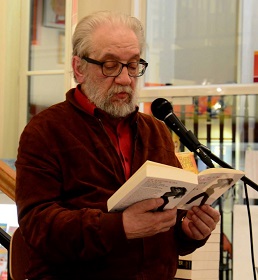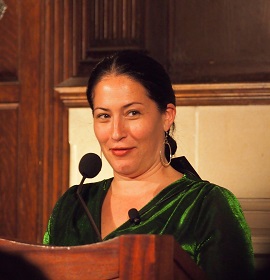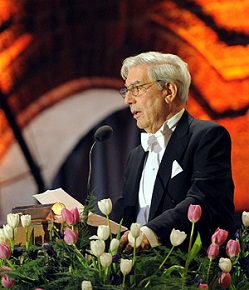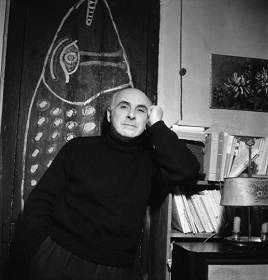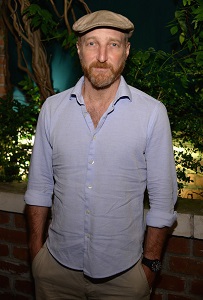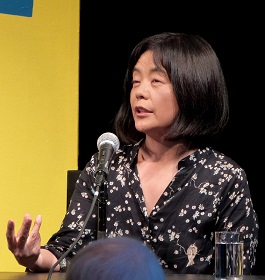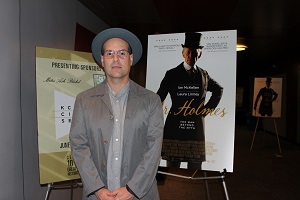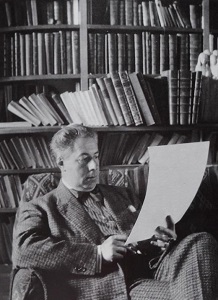
Geert van Istendael, Wim Brands, Eric Walz, Georg Klein, Ernst Jünger, Yvan Goll, R. S. Thomas, Jacques Brault, Denton Welch

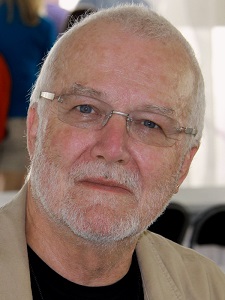
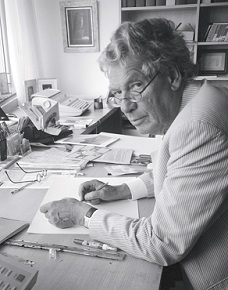
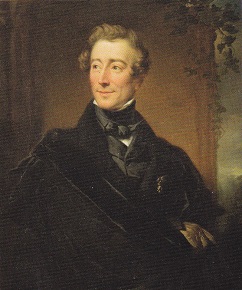
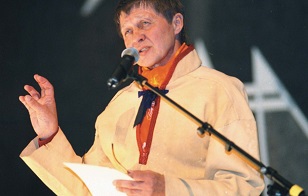
De Vlaamse schrijver, dichter en essayist Geert van Istendael werd geboren in Ukkel op 29 maart 1947. Zie ook alle tags voor Geert van Istendael op dit blog.


Randgebied

Ik slenter door industriële straten.
Gras vult bij wijze van natuur de gaten
in schuttingen. Onder de spoorwegbruggen
verrichten kalk en water drup voor drup
hun pegelvormig werk. Een godverlaten
baggerboot heeft bloempotten van ijzer
en vette grond voor kattestaart en lis.
Aken zijn vastgeroest in doelloos water.
Aan de overkant staat keurig nieuw bedrijf.
Japanse naam, kort gras, het mag niet baten.
De stad is warm, kapot. Gij zult niet haten.


Voor wie na ons komt

We lopen ruggelings de toekomst tegemoet.
Wie stilstaat, sterft. Wie omkijkt, breekt zijn nek. We wijzen
op wolfsklemmen, op slangen. In de paradijzen
die nog vergrendeld zijn voor ons komt alles goed.

We struikelen, we vallen. Knielen. Vatten moed,
we liegen vleugels aan onze hielen. We herrijzen
om zonder gids of licht het duister in te reizen
naar nevel wakend bij een berg van overvloed.

Elk pad is een vertakking van een ouder pad
en ooit loopt iedere vertakking dood.
Het zand is grijs. Kom, treuzel niet. Bekijk de kleuren,

hoor, de vogels. Zij zijn eeuwig. Als moorden,
als woorden. Mooie. Valse. Weiger trots te treuren.
Geniet. Vandaag. De toekomst heeft al vlam gevat.


Veebel

Schor. Aardewerk dat breekt, verbruikt, versleten.
Veel scherven na en door elkaar, een spraak
door vee gestuurd al doende. Stappen, eten.
Heuvel en berg weerkaatsen tegenspraak,
de galm, de tik behoeden voor vergeten.

Geen geit of koebeest mag verloren gaan,
door waterval of boomkruin overstemd.
Kras op het ruisen. Luister. Melk die stremt.
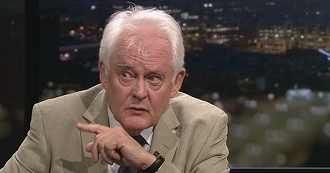


Geert van Istendael (Ukkel, 29 maart 1947)


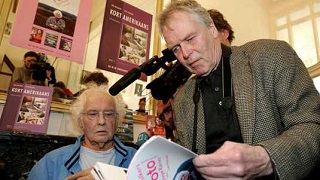
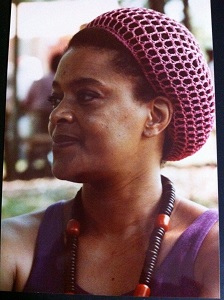
De Nederlandse dichter, journalist en presentator Wim Brands werd geboren in Brummen op 29 maart 1959. Zie ook alle tags voor Wim Brands op dit blog.


Ze hangt als een lege boodschappentas

Ze hangt als een lege boodschappentas
aan mijn arm en ik bedenk me
wat er met haar
uit mijn leven verdwijnt: Buisman,
een stoof, de theemuts.
Niets houdt haar trouwens
nog warm.
Bevelend wijst ze naar de supermarkt
en vraagt me wat ik zie: ik noem
een naam.
Nee idioot, dat is de overkant
en hoe komen wij daar?
Ik wil haar nooit meer ontstemmen,
zeg me hoe.
Maak je maar klaar,
we zullen moeten zwemmen.


Dichterlijke vrijheid

De draaimolen staat stil
in het geelgeworden weiland

vogels en sombere heren van
stand bekijken het voorwerp

met ingehouden woede/

Is dit nu de beloofde
dichterlijke vrijheid?

aarzelend trekken ze hun
messen
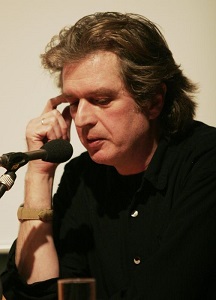


Wim Brands (29 maart 1959 – 4 april 2016)


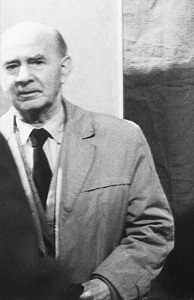
De Duitse schrijver Ernst Jünger werd geboren in Heidelberg op 29 maart 1895. Zie ook alle tags voor Ernst Jünger op dit blog.

Uit: Kriegstagebuch 1914-1918

“27. I. 15.
Heute, an Kaisers Geburtstag waren wir im Graben. Um 12 Uhr wurde geblasen und wir schrieen den Franzosen 3 Hurrahs entgegen. Dann sangen wir die erste Strophe von »Heil Dir im Siegerkranz.«

28. I. 15.
Die beiden Nächte waren sehr klar und kalt. Ich taxiere mindestens auf 5–6 unter Null. Jedenfalls viel besser als Regen. Der Kaffee fror in den Feldpullen und das Essen in den Kochgeschirren. Mein Freund, der Orion leuchtete in wundervoller, regelmäßiger Klarheit. Ein Pullchen mit Rum und eins mit Cognak taten gute Dienste. Wir gossen den Alkohol in Löffel mit feinem Zucker und hatten so einen großen Genuß.

30. I. 15.
Wir hatten heut Stellung ganz am linken Flügel unsrer Gräben. Des Nachts hatten wir Wache neben dem Feldgeschütz und unterhielten uns sehr gut mit den Artilleristen. Ich ging 3 mal zum Wasserholen nach der zerschossenen Mühle im Bachgrunde, ein unheimliches Stimmungsbild à la Böcklin. Vollmond, zerschossenes Gemäuer, ein Gewirr niedergestürzter Erlen, im Wasser ein zerfallender Kahn, das rauschende Wasser, überall tiefe Granatlöcher, ein mitelalterliches Bild der Verwüstung. Am nächsten Morgen kochten wir bei den Artilleristen Kakao, Tee und Krebssuppe.

31. I. 15.
Stellung in Graben 5a ganz vorn. Ich stand ganz allein auf Posten im Schilf und war so müde, daß ich einpennte. Als ich aufwachte (ich hatte im Stehen gedöst) war mein Gewehr weg. Seffers hatte sich ganz leise herangeschlichenund es geklaut. Zur Strafe wurde ich nur mit einem Beile bewaffnet von einem Unteroffizier vor unsre Posten geführt und mußte dort 3 Stunden stehen. Als wir hingingen, bekamen wir 2 Salven. Der Unteroffizier, der nachher den Familienvater markieren wollte, verschwand, als er das Pfeifen hörte, mir schlugen noch einige Kugeln am Kopf vorbei, eine schlug grade über mir einen Zweig von der Weide. Meinetwegen hätten sie mich auch direkt in den franz. Posten setzen können, mich ärgerte nur der gemeine Kerl, der äußerte: Wenn ihm was passiert, ist es ihm recht. Nach 2 Stunden schlichen 3 Kerls karikaturenmäßig nach vorn als Patrouille, darunter Lang und Wiesenburg. Sie gingen am Bach entlang, an einer Zuavenleiche vorbei und verschwanden. Bald darauf knallte es und dann pfiff noch eine Salve in meine Gegend. Die beiden kamen zurück, Lang war geblieben. Vor Angst schissen die beiden Feiglinge, die ihren Kameraden liegen lassen hatten, sich fast die Hose voll: Sie mußten wieder zurück, behaupteten aber, ihn nicht finden zu können, wahrscheinlich sind sie im nächsten Gebüsch liegen geblieben.“
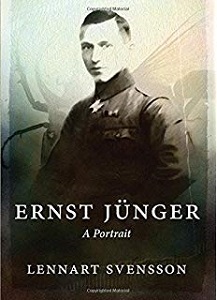


Ernst Jünger (29 maart 1895 – 17 februari 1998)
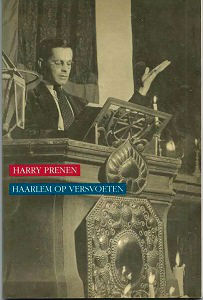
Cover


De Duitse schrijver Eric Walz werd geboren op 29 maart 1966 in Königstein im Taunus. Zie ook alle tags voor Eric Walz op dit blog.

Uit: Schwule Schurken (Alexander der Große, der Besessene)

„Zu jener Zeit zeichnete sich bereits Alexanders künftige, ein wenig widersprüchliche Statur ab: schlank war er, drahtig und standfest, obwohl er den Sport oft vernachlässigte; seine Augen dagegen glänzten melancholisch und blickten gerne in den Himmel, und seine wallenden blonden Haare gaben ihm sogar etwas Androgynes. Hephaistion, der Schöne, hatte einige Züge mit ihm gemeinsam. Ein einziger Blick in seine makellos hellen Gesichtszüge genügte Alexander, um zu erkennen, dass dieser Junge immer loyal zu ihm sein würde, ja, ihn einmal mit aller Kraft lieben würde. Und Alexander wusste, dass er schon deshalb nicht anders konnte als ihn widerzulieben. Kleitos dagegen war robust, schon damals ein Athlet Seine Muskulatur begann sich auszuprägen, und seine tiefliegenden, dunklen Augen leuchteten von innerem Widerstand. Oh, Kleitos mochte Alexander, aber er unterwarf sich nicht gerne, wi-dersprach, korrigierte, und zeigte stets nur das Mindestmaß an Respekt für den Thronfolger und spöttische Verachtung für den fügsamen Hephaistion. Alexander hätte Kleitos fortschicken oder maßregeln lassen können, aber er freute sich darauf, Kleitos eines Tages zu zähmen, ihn zu besiegen und sich von ihm lieben zu lassen, und so nutzten diese beiden die letzten Jahre der Kindheit mit unschuldigem Kräftemessen, hinter dem sich bereits eine schwer kontrollierbare Leidenschaft verbarg. Philipp sah nur, dass sein Sohn sich mit Kleitos im Schwertkampf übte und im Reiten maß, und dass Hephaistion der treueste Vertraute war, den ein künftiger König sich wünschen konnte; daher nickte er diesem in unsichtbarer, verworrener Hassliebe verbundenen Trio arglos und beifällig zu, wann immer er ihm begegnete. Dieser Esel, denkt Alexander und hustet vor Belustigung und Aufregung. Konnte Philipp diese nur schlecht verborgenen Be-ziehungen der heranwachsenden Knaben nicht durchschauen?“



Eric Walz (Königstein im Taunus, 29 maart 1966)
Jared Leto als Hephaistion en Colin Farrell als Alexander in de film “Alexander” uit 2004


De Duitse schrijver Georg Klein werd geboren op 29 maart 1953 in Augsburg. Zie ook alle tags voor Georg Klein op dit blog.

Uit: Miakro

“Es war ein fremder Wind. Die fünfte Nacht in Folge holte ihn dieses Wehen, als strichen ihm kühle Fingerspitzen über Wangen, Stirn und Lider, aus traumlos blindem Schlummer in die Finsternis seiner Koje. Nettler richtete sich auf. Seine Linke stach durch die weichen Stränge seines Schlafnetzes, die Rechte stemmte sich an die hornig festen Deckenrippen. Er fühlte sich mehr als bloß wach. Denn mit einer Gewalt, die ihm jenseits der letzten Nächte unbekannt gewesen war, hatte seine Vorstellung erneut damit begonnen, über Geschautes, über in vielen Jahren Glasarbeit Gesehenes, hinwegzujagen. Alles, was unter seinen Händen, mehr oder minder tief, mehr oder minder günstig übereinandergeschichtet, durch das weiche Glas geglitten war, schien nun in diesem Strom enthalten. Nichts hatte an Glanz, Transparenz oder Schärfe eingebüßt. Aber unabhängig davon, wie prächtig in den zurückliegenden Nächten eine Fülle bekannter Bilder aufgeflammt war, wie leuchtend sich nun erneut Bild über Bild schob, der frische Binnenwind, der Nettler hierbei ins Gesicht blies, duldete kein Verharren, das zur Besinnung eingeladen hätte, sondern nötigte das Auferstandene zur Eile. Und während es gleichmäßig schnell, ohne trödeliges Langsamerwerden, ohne Stocken und ruckartiges Beschleunigen heranrückte, dahinfloss und verschwand, erwarb es sich, befreit von den eigenwüchsigen Widrigkeiten des weichen Glases, eine neue Vertrautheit. Erst derart flugs und stetig geworden, schien Nettler das Erkannte wirklich alt und vollends gewesen. Gleichzeitig spürte er, dass draußen vor seiner Ruhenische, unter der hohen, nächtlich dunklen Kuppel des Mittleren Büros, dessen Leiter er war, Unbekanntes bevorstand. Etwas Ungesehenes wollte Gestalt annehmen. Und die von rechts nach links flottierende Buntheit, der wärmeraubende Luftstrom auf seinem Gesicht und das lauernde Grau des Kommenden schwangen in ihm zu einem unsinnig lustigen Dreiklang zusammen. Als Nettler den Kopf aus seiner Koje in die laue Luft des Büros hinausschob, war dort draußen, in dessen weitem Rund, über den vielen in den allnächtlichen Ruhemodus gefallenen Tischen, nicht die geringste Luftbewegung zu spüren. Auch die Erscheinungen erloschen im Nu, allein seine Anspannung dauerte fort und suchte nach irgendeinem Hinweis. Wie immer gegen Winterende war das Band der Wandbeleuchtung schmal geworden und weit nach unten gesunken. Die magere blaue Linie verlief gerade mal handhoch über dem Boden und verdickte sich nur noch an wenigen Stellen zu pulsierenden, vor- und zurückzuckenden Knoten. Das Licht, das sie abstrahlten, reichte hin, einen bescheidenen Streifen bleiche Wand zu erhellen, war aber nicht mehr stark genug, um eines der Arbeitsrechtecke einen Schatten werfen zu lassen.“



Georg Klein (Augsburg, 29 maart 1953)


De Duits-Franse dichter en schrijver Yvan Goll (eig. Isaac Lang) werd geboren in Saint-Dié-des-Vosges op 29 maart 1891. Zie ook alle tags voor Yvan Goll op dit blog.


Death-chemistry

In the alembic of the dream
You turn yellow red yellow
Fever blossom
And belladonna of anxiety
On the slopes of darkness

Blood’s night-chemistry
Reeling puss-cup
Dewy with tears
That drain her worn-out sleep

Breathe slowly you sick ones
At the wounded wall
Birds from ashes settle themselves on your hands
On your fragile fingers
The last day crumbles

Hours
Stern queens of an afternoon
Anointed with gold
How you laugh at me
Shame me with palms
Your son

What sorrow if I don’t drag you from your wagon
down into my nettles
Your eyes your wheels
Rattle me in dark dust
Hours
Worn-out wanderers near evening


Your body was a tree

Your body was a tree
Giant father earth
Your visage of bearded moss
Father of animals, father of winds
And your eyes with the heraldic power of fruits
That people shake in human autumn

Your grave was built by birds
Giant father of heaven
I made a nest in the ivy stock
A soft nest of field mist and dream grass
Small father of the laughter of larks

From your soul grew
The cradle of a poem


Vertaald door Donald Wellman
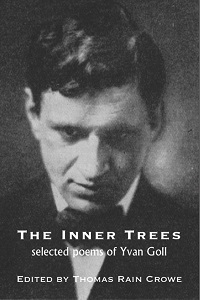


Yvan Goll (29 maart 1891 – 27 februari 1950)
Cover


De Welshe dichter Ronald Stuart Thomas werd geboren op 29 maart 1913 in Cardiff. Zie ook alle tags voor R. S. Thomas op dit blog.


The Absence

It is this great absence
that is like a presence, that compels
me to address it without hope
of a reply. It is a room I enter

from which someone has just
gone, the vestibule for the arrival
of one who has not yet come.
I modernise the anachronism

of my language, but he is no more here
than before. Genes and molecules
have no more power to call
him up than the incense of the Hebrews

at their altars. My equations fail
as my words do. What resources have I
other than the emptiness without him of my whole
being, a vacuum he may not abhor?


A Marriage

We met
under a shower
of bird-notes.
Fifty years passed,
love’s moment
in a world in
servitude to time.
She was young;
I kissed with my eyes
closed and opened
them on her wrinkles.
`Come,’ said death,
choosing her as his
partner for
the last dance, And she,
who in life
had done everything
with a bird’s grace,
opened her bill now
for the shedding
of one sigh no
heavier than a feather.
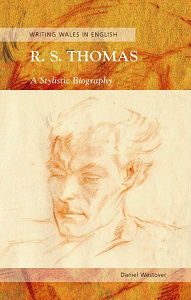


R. S. Thomas (29 maart 1913 – 25 september 2000)
Cover biografie


De Canadese dichter, schrijver en vertaler Jacques Brault werd geboren op 29 maart 1933 in Montreal. Zie ook alle tags voor Jacques Brault op dit blog.


Suite fraternelle (Fragment)

Nous
    les bâtards sans nom
    les déracinés d’aucune terre
    les boutonneux sans âge
    les demi-révoltés confortables
    les clochards nantis
    les tapettes de la grande tuerie
    les entretenus de la Saint-Jean-Baptiste

Gilles mon frère cadet par la mort ô Gilles dont le sang épouse
    la poussière

Suaires et sueurs nous sommes délavés de grésil et de peur
La petitesse nous habille de gourmandises flottantes

Nous
    les croisés criards du Nord
nous qui râlons de fièvre blanche sous la tente de la Transfiguration
nos amours ombreuses ne font jamais que des orphelins
nous sommes dans nos corps comme dans un hôtel
nous murmurons une laurentie pleine de cormorans châtrés
nous léchons les silences d’une papille rêche
et les bottes du remords

Nous
les seuls nègres aux belles certitudes blanches
     ô caravelles et grands appareillages des enfants-messies
nous les sauvages cravatés
nous attendons trois siècles pêle-mêle
                       la revanche de l’histoire
                       la fée de l’occident
                       la fonte des glaciers

Je n’oublie pas Gilles et j’ai encore dans mes mots la cassure
    par où tu coulas un jour de fleurs et de ferraille


Jacques Brault (Montreal, 29 maart 1933)
Cover


De Engelse schrijver en schilder Maurice Denton Welch werd geboren op 29 maart 1915 in Sjanghai. Zie ook alle tags voor Denton Welch op dit blog.

Uit: Good Night, Beloved Comrade: The Letters of Denton Welch to Eric Oliver

“Monday Jan 10th 1944
My dear Eric,
Thank you so much for nice letter. Yes, do come over, either on Sunday 23rd or this coming Sunday, whichever suits you best. I shall so look forward to seeing you. I thought my last letter rather preposterous and almost decided not to send it, then I thought as an antidote to the Christmas one which (although you may not remember) you told me at the time was chilly, indefinite, and altogether vague and unsatisfactory; I don’t seem to be able to strike the happy medium, do I! For heaven’s sake, if you haven’t already torn the last letter up, bring it with you when you come over. I will keep it here, if you want it preserved. I hate to think of your inquisi-tive landlady going thro’ your pockets and cackling at my extravagances! and I won’t have it, so please remember what I say!7 I have been thoroughly enjoying the book you lent me. I read it all in one day or two. Very sound I think, but not much solution offered for general difficult problems. I shall be going up to London soon to see another doctor about myself, but I think that very little can really be done about these high temperature attacks. I must simply lead a very quiet life, then they are less frequent.’ Come to lunch about t o’clock if you can, otherwise I’ll expect you in the early afternoon.
Love D.

Sunday, January t6th, 1944
My dear Eric,
Thank you so much for sending the book, for your letters, and for doing what I asked you so punctually. I will keep them here for you, if you should ever want to lay your hands on them again. I have found an excellent place for them. I wonder if you had a nice time with your mother this weekend; or whether it was hell; or whether it all fell thro’ at the last moment as it did the last time. 9 I have just been here quietly writing a new book.10 Yester-day Rosemary appeared with her mother. She was rather self-conscious and hardly dared mention your name. This amused me. I think she thought I’d be thoroughly annoyed and put out.” Do you still work at Mereworth or have you moved on somewhere else?12 I was over there the other evening. I bicycled, and went and walked about the churchyard in the moonlight. It is lonely there except for all those wretched bombers circling overhead and those peculiar lights which flash from the hillside.13 I have your book here for you when you come over. Come as early as you can won’t you, then there’s no rush. Marvellous about not going into the pub this year! You really seem able to do what you say you’ll do, when you make up your mind. Next Sunday it will be exactly a month since we’ve met, as you ar-ranged! Looking forward to seeing you. To lunch 1 o’clock if you can manage it.
Much love D.”
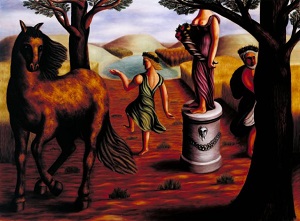


Denton Welch (29 maart 1915 – 30 december 1948)
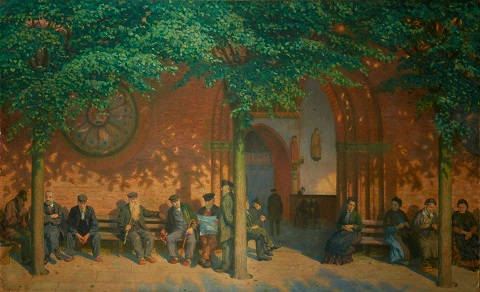
Harvest door Denton Welch, ca. 1940


Zie voor nog meer schrijvers van de 29e maart ook mijn blog van 29 maart 2015 deel 2.
Joost de Vries, Walter van den Broeck, Ada Limón, Mario Vargas Llosa, Chrétien Breukers, Steye Raviez, Nelson Algren, Marianne Frederiksson, Russell Banks

De Nederlandse schrijver Joost de Vries werd geboren op 28 maart 1983 in Alkmaar. Zie ook alle tags voor Joost de Vries op dit blog.

Uit: Oude meesters

‘Sieger, wil je koffie?’ vroeg Mireille Beumer.
‘Nu even niet.’
Mireille Beumer – bijna ontroerde ze hem, hoe ze erbij zat. Bijna. Ingetogen glimlachend, rechte rug, haar handen voor haar buik gevouwen. Overgenomen van een bn’er-blad, momenteel chef Lifestyle maar belast met de taak een nieuw wekelijks katern voor de krant te bedenken. Zo smetteloos als ze eruitzag, zo correct, make-up, haar, outfit. Haar ambitie was zo evident. Iemand die zou proberen de Beste Leerling van de Klas te blijven, hoewel niemand nog cijfers uitdeelde. Ze speelde altijd precies de rol die van haar verwacht werd. ‘Vond je het een mooie dienst?’ zei Mireille. (aimabele gastvrouw.) ‘Alles wat gezegd moest worden werd gezegd.’ ‘Je bedoelt dat het iets voorspelbaars had?’ (serieuze interviewster.) ‘Zijn vrouw zei tegen me dat de uitvaart meer was voor de mensen die hem niet zo goed kenden, dan voor de mensen die hem goed kenden.’ ‘Als wij ons maar herinneren hoe Willem echt was.’ (oprechte rouw.) Hoe was zij echt? Ze schreef geen stuk in de lifestylesectie zonder even in een bijzin te vermelden dat ze een ‘single lady’ was, ze gebruikte termen als ‘nahuwelijk’, en ‘love life’. Sarie had haar een keer ontmoet op een feestje van een glossy waar ze ooit een klusje voor had gedaan. ‘Zij is al heel lang niet aangeraakt,’ was haar enige oordeel. (Sarie kon dat: iets zeggen alsof het de wet was. Ze keek erbij alsof ze vanaf de Tafelberg over de oceaan keek en ze iets leek te zien wat er altijd al was geweest, sinds het begin van de tijd.)
Heerlijk hoe ze het had uitgesproken, kin-duh-run, ze spuwde het uit alsof het de nieuwste in een serie oppervlakkige hypes was. Ergens in haar hart zat een gat zo groot als een babywagen. De eerste keer dat hij haar daarna sprak was ze weer fris en fruitig en deed ze alsof hun gesprek nooit had plaatsgevonden.
Maar liever haar maskerade dan Feiko’s ongemak. Hij zat daar aan die tafel met zijn pens naar voren waardoor je je afvroeg of de overbelaste knoopjes van zijn overhemd niet elk moment de lucht in konden worden gelanceerd.
‘Ik geef deze twee gewoon maar het woord,’ zei Anthony, die niet aan de tafel maar achter zijn bureau iets verderop ging zitten.
De twee keken elkaar even aan, en toen begon de spraakwaterval: We willen je even bijpraten en, als je het goed vindt, even je advies inwinnen, zei Mireille.”


Joost de Vries (Alkmaar, 28 maart 1983)


De Vlaamse roman- en toneelschrijver Walter van den Broeck werd geboren in Olen op 28 maart 1941. Zie ook alle tags voor Walter van den Broeck op dit blog.

Uit:Een lichtgevoelige jongen

“Eerst dacht ik dat ze al wist wat mij was overkomen – moeders weten altijd alles – maar toen zag ik dat zij met haar gedachten helemaal bij vader was die minder jachtig zat te eten dan gewoonlijk. Zijn rechterslaap zag donkerblauw, zijn jukbeen had gebloed en was nu opgezet.
‘Elli, ik rijd straks eens naar Antwerpen’, had hij gisteren bij het middageten aangekondigd.
‘Zie maar dat ge op tijd thuis zijt,’ had moeder geantwoord, ‘ge staat morgen, met de vroege.’
Wanneer was hij thuisgekomen? Voor of na Ward Peeters en Frans Claes, die samen het lied van de kapotte pompbak hadden lopen lallen?
Tastend doopte hij soIdaatjes in een ei. Hij was zo te zien helemaal verdiept in de krant naast zijn bord.
‘Julius en Ethel Rosenberg.’
Die waren nu dood wist ik. Vader zou nu wel tevreden zijn. Dat zou hun leren atoomgeheimen aan de Rus te verkopen. Zo moesten ze allemaal varen, die smerige communisten. Was hij daarom nog altijd thuis? Om de dood van de Rosenbergs te vieren? Ik vond die Rosenbergs ook maar rare lui. Hij met dat brilletje en dat snorretje. En zij met die rare hoed, die hoge wenkbrauwen en dat zuinige mondje. Ze had iets van tante Leen uit Antwerpen. En welke vrouw heette er nu in godsnaam Ethel?
‘Staat hij van twee tot tien?’ vroeg ik. Hij hoorde me toch niet, hij was half doof, en als hij zat te lezen mocht de wereld vergaan.
Mijn zus Elvire schopte me onder tafel en lipte: Onnozelaar!
‘Heeft hij congé?’
‘Hij is vannacht tegen die paal aan de Tweede Halfstraat gelopen’, zei moeder. ‘Onze Staf zal meneer Timmermans bellen.’


Walter van den Broeck (Olen, 28 maart 1941)


De Amerikaanse dichteres Ada Limón werd geboren op 28 maart 1976 in Sonoma, Californië. Zie ook alle tags voor Ada Limón op dit blog.


We Are Surprised

Now, we take the moon
into the middle of our brains
so we look like roadside stray cats
with bright flashlight-white eyes
in our faces, but no real ideas
of when or where to run.
We linger on the field’s green edge
and say, Someday son, none of this
will be yours. Miracles are all around.
We’re not so much homeless
as we are home free, penny-poor,
but plenty lucky for love and leaves
that keep breaking the fall. Here it is:
the new way of living with the world
inside of us so we cannot lose it,
and we cannot be lost. You and me,
are us and them, and it and sky.
It’s hard to believe we didn’t
know that before; it’s hard to believe
we were so hollowed out, so drained,
only so we could shine a little harder
when the light finally came.


Downhearted

Six horses died in a tractor-trailer fire.
There. That’s the hard part. I wanted
to tell you straight away so we could
grieve together. So many sad things,
that’s just one on a long recent list
that loops and elongates in the chest,
in the diaphragm, in the alveoli. What
is it they say, heart-sick or downhearted?
I picture a heart lying down on the floor
of the torso, pulling up the blankets
over its head, thinking this pain will
go on forever (even though it won’t).
The heart is watching Lifetime movies
and wishing, and missing all the good
parts of her that she has forgotten.
The heart is so tired of beating
herself up, she wants to stop it still,
but also she wants the blood to return,
wants to bring in the thrill and wind of the ride,
the fast pull of life driving underneath her.
What the heart wants? The heart wants
her horses back.


Ada Limón (Sonoma, 28 maart 1976)


De Peruviaanse schrijver Mario Vargas Llosa werd geboren op 28 maart 1936 in Arequipa. Zie ook alle tags voor Mario Vargas Llosa op dit blog.

Uit: Voor uw liefde (Vertaald door Arie van der Wal)

“Ze deed haar ogen dicht en luisterde: heel zwak maar regelmatig, zo klonk Chabela’s ademhaling. Ze sliep, droomde misschien, en dus was zij het ongetwijfeld zelf geweest die in haar slaap dichter naar het lichaam van haar vriendin was toe geschoven.
Terwijl ze zich verbaasd en beschaamd opnieuw afvroeg of ze wakker was of droomde, werd Marisa zich eindelijk bewust van wat haar lichaam al wist: ze was opgewonden. Die tere voetzool die haar wreef verwarmde, had haar huid en zinnen in vuur en vlam gezet, en als ze een hand tussen haar benen zou laten glijden, zou ze vast en zeker voelen dat ze nat was. Ben je gek geworden? zei ze bij zichzelf. Opgewonden raken van een vrouw? Sinds wanneer, Marisita? Natuurlijk werd ze in haar eentje ook vaak genoeg opgewonden, en ze had weleens met een kussen tussen haar benen gemasturbeerd, maar daarbij had ze altijd aan een man gedacht.
Voor zover ze zich kon herinneren nooit, maar dan ook nooit, aan een vrouw. En toch deed ze dat nu wél, ze trilde van top tot teen en verlangde er hevig naar dat niet alleen hun voeten elkaar raakten maar ook hun lichamen en dat ze, net als op haar wreef, overal de nabijheid en warmte van haar vriendin zou voelen.
Heel voorzichtig, met bonzend hart, zodanig ademend dat het leek alsof ze sliep, schoof ze een stukje op, totdat ze, ook al raakte ze haar niet aan, merkte dat ze zich nu op hoogstens enkele millimeters van Chabela’s rug, billen en benen bevond. Ze hoorde haar duidelijk ademen en meende een verborgen uitwaseming te bespeuren, die opsteeg uit dat zo nabije lichaam en haar volledig omhulde. Haast werktuiglijk, alsof ze zich niet bewust was van wat ze deed, strekte ze haar rechterhand uit en legde die op de dij van haar vriendin. Leve de avondklok, dacht ze. Ze voelde haar hart sneller kloppen. Chabela zou wakker worden en dan haar hand wegduwen: ‘Wat doe je? Raak me niet aan. Ben je gek geworden? Hoe haal je het in je hoofd.’ Maar Chabela bewoog zich niet en leek nog altijd diep in slaap. Ze hoorde haar in- en uitademen en het was net of die lucht naar haar toe kwam, haar neus en mond binnendrong en haar inwendig verwarmde. Opeens, in al haar opwinding, en dat was echt absurd, moest ze denken aan de avondklok, de stroomstoringen, de ontvoeringen – vooral de ontvoering van Cachito – en de bommen van de terroristen. Wat een land, wat een land!”


Mario Vargas Llosa (Arequipa, 28 maart 1936) 


De Nederlandse dichter en schrijver Chrétien Breukers werd geboren op 28 maart 1965 in het Limburgse Leveroy. Zie ook alle tags voor Chrétien Breukers op dit blog.

Uit: Een zoon van Limburg

“De winst ging naar de Hollanders, althans, zo wordt dat in Limburg gezien. En alle bossen die moesten wijken voor de inmiddels verdwenen welvaart? Die bossen waar een onbegrijpelijk provincie-omspannend snelwegennet voor in de plaats is gekomen? Ze zijn weg en blijven weg, en maken van Limburg een doorgangsweg, een geasfalteerde route richting Duitsland, België en het hart van Europa.
De Limburger vertrouwt het allemaal niet, wat zeg ik? Hij heeft het nooit vertrouwd. De hoge heren zitten met hun handen aan zijn dochter en in zijn portemonnee, de burgemeester maakt vuile zaken met provincie en rijk, de fabrieksdirecteur is alleen maar uit op winst en aanzien. En de kleine man? Die kan zich kapotwerken. Vroeger totdat hij stoflongen had of was bezweken onder het boerenwerk, nu totdat hij met AOW en pensioen wordt afgedankt. De Limburger voelt zich genaaid, door alles en iedereen. Daarin heeft de gemiddelde Limburger wel iets van een Surinamer. Hij komt uit een kleine wereld die voornamelijk is gedefinieerd vanuit negatieve gevoelens over de machthebbers. Dit is natuurlijk niet de hele waarheid. Limburgers voelen zich – bijvoorbeeld in culturele zin – wel degelijk met elkaar verbonden. Uiteraard zetten ze zich daarbij af tegen Holland, dat vreemde gebied ergens in de verte, maar de ligging van de provincie vergemakkelijkt samenwerking met Belgen en Duitsers. Er is nog een ander moment waarop Limburgers zich verbonden voelen met elkaar – als ze in het gezelschap zijn van Hollanders. Want niets schept zo’n band als de omgang met de natuurlijke vijand en bond- annex landgenoot. Limburg en de Limburgers bestaan vooral als ze hun plaats moeten bepalen jegens de dierbare vijand, van wie ze zelf deel uit-maken.
Het schrijven van ‘mijn’ verhaal, mijn verhaal over Limburg, heeft therapeutische bijverschijnselen gehad: ik voel me nu meer een Nederlander en tegelijkertijd meer een Limburger dan ooit. Een effect dat ik vooral de Limburgse lezers van dit boek van harte toewens. Helaas wil dat niet zeggen dat Limburg daardoor ineens bestáát. Zoveel toverkracht is het geschreven woord niet gegeven.”


Chrétien Breukers (Leveroy, 28 maart 1965)
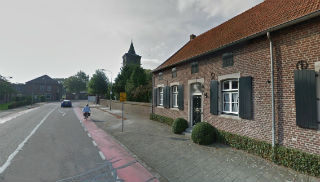
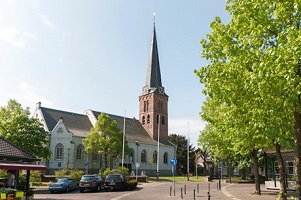
Leveroy, Kerkstraat


De Nederlandse fotograaf en schrijver Steye Raviez werd geboren in Amsterdam op 28 maart 1943. Zie ook alle tags voor Steye Raviez op dit blog.

Uit: Spion

“Pos wilde onder geen beding hele of halve sympathisanten van nazisme of fascisme op het congres een podium bieden. Hij streefde veel meer naar een open discussie tussen communistische en niet-communistische filosofen. Er waren de on-vermijdelijke anekdotes.
Volgens een zekere Stuttenheim, voorzitter van de sectie taalfilosofie, waren lang niet alle filosofen in het gezelschap vakbekwaam.Stuttenheim tegen Pos:‘Ik sta op een morgen een kopje koffie te drinken. Staat er een mannetje naast me. Hij kijkt me aan en zegt:“Einstein heeft het nooit begrepen.”Ik zeg:“Wat heeft hij nooit begrepen?”“Dat van die getallen.”Ik zeg: “Van die getallen?”“Nou,” zegt dat mannetje, “je hebt mannelijke en vrouwe-lijke getallen en dat mannelijke kristalliseert zich in het vrou-welijke en dat vrouwelijke manifesteert zich in dat mannelijke.”Toen heb ik mijn kopje koffie neergezet en ben weggelopen, want ik denk: over twee seconden steekt hij weer van wal. Nou wil ik dat ’s avonds aan Pos vertellen en zeg:“Pos, ik heb vanmorgen een krankzinnige ontmoet.”Kijkt die Pos me moedeloos aan en zegt: “Maar eentje?”’De anekdote sloeg gelukkig niet op mijn vader, maar hij zou wel in krankzinnigheid eindigen: midden jaren vijftig werd hij opgenomen in de psychiatrische afdeling van de Sint-Willi-brordusstichting te Heiloo. In medische rapporten uit die tijd was onder meer opgetekend hoe hij tijdens nachtelijke uren dikwijls amok maakte door spiernaakt en kabaal makend rond te struinen in de slaapzalen. Het was op schrijnende wijze dui-delijk hoe zijn geestelijk verval doorzette. Edouard weet zijn recalcitrante gedrag aan de broeders van het gesticht: zolang er familiebezoek was waren ze poeslief, maar zodra men de hielen had gelicht gedroegen ze zich hardvochtig. Hij zou Sint-Willi-brordus nooit meer verlaten.”


Steye Raviez (28 maart 1943 – 20 februari 2017)
Hier met Jan Wolkers (links)


De Amerikaanse schrijver Nelson Algren werd geboren op 28 maart 1909 in Detroit. Zie ook alle tags voor Nelson Algren op dit blog.

Uit: A Place To Lie Down

“The Negro wriggled his toes, in sleep. Tex’s own feet had gone sockless for months, he too was very tired; but even as he felt himself dozing off he became aware of someone coming toward him. Then a silver badge above small boots, a row of brass buttons and a neck on thighs swung up a winding cindered path twirling a club-on-a-cord like a swagger-stick. Tex saw him coming, shoved Mack, and ran. From behind the picket fence, safe outside, Tex watched. Boots budged Mack until he rolled over, moaning like a sick man. He was sweating in sleep, his mouth drooled saliva, then he woke with a start, his eyes bulging out; there was, for one moment, no flicker of understanding in his eyes.
“White folks’ park, nigger. Git a-goin’ ‘for ah fan yore fanny.”
He twirled his club-on-a-cord significantly, boy-fashion, threatening.
Tex waited on the street. He’d like to josh the nigger a little now. But when the Negro joined him they walked on silently, and Tex said nothing at all.
On a street lined with radios competitively blasting the air into splinters, they sat down on a Keep-Our-City-Clean box. Both were hungry enough to chew their tongues; but they were both too weary to think consistently even about food. Tex rested his feet on the curbstone and watched the gutterflow swirl past.
Much was being borne on that gutter-tide: a frayed cigarbutt came past first; then a red beer-cork; and then, its pages flung wide in a disgraceful death, a copy of Hollywood Gossip came floating by. It lay flat on its back, a whore-like thing. Tex sniped the cigar and the magazine, crushed tobacco onto a dry page, and rolled a rude cigarette. Smoking, he looked at the magazine’s pictures. One page bore a picture of Douglas Fairbanks, Jr., in a stovepipe hat, hugging two girls in onepiece bathing suits. Out of Fairbanks’s ears Tex fashioned four long cigarettes, but the figures of the girls in the bathing suits Tex McKay preserved, studying them as he smoked.
The cigarettes were strong, hence good; he offered Mack one, but the boy shook his head as though he were too tired even to smoke. To make a few more, Tex ripped one of the bathing girls up the middle. He had an odd feeling when he did that, and looked through the book for more bathing girls’ pictures; but there was no other dry page, and he began to feel tired again.”


Nelson Algren (28 maart 1909 – 9 mei 1981)
Cover biografie


De Zweedse schrijfster Marianne Fredriksson werd geboren in Göteborg op 28 maart 1927. Zie ook alle tags voor Marianne Fredriksson op dit blog.

Uit: According to Mary Magdalene (Vertaald door Joan Tate)

“Mary had a great deal to do. Leonidas was to return home that day, thirsty, tired, and hungry. She put the great water pan to the fire and fetched water. As usual at the well, she glanced with gratitude up at the mountains in the south where Daphne’s springs leapt out of the rocks and supplied the town with an abundance of clear fresh water. They were expecting his sister in the afternoon. She was to bring the account book and the two of them were to sit at the big table to enter all the expenses and income from his journey. “Please, God, that trade was good,” said Mary, but her words were largely routine, an unnecessary invocation out into the air. She liked her sister-in-law, but feared those bold eyes that saw straight through you. Mary Magdalene had much to hide. She should have gone to the market the day before. Now she had to hurry down to the marketplace. She was in luck—a large piece of fresh lamb, some smoked fish, and a basket of vegetables and fruit. On her way home she passed the synagogue, and for a moment wished she could go in to Rabbi Amasya and tell him her story, but the thought was only random. She remembered her neighbor had said that Simon Peter and his companions were staying with the rabbi. She pulled down her headcloth and hurried on. She managed to clean the house and fill her jars with flowers from the garden, then finally combed her long hair and fastened it into a long plait round her head. A golden crown; she was proud of her hair. But she was troubled when she looked in the mirror and saw how wide-open her eyes were, dark shadows all around them.
……

When Leonidas arrived, the house smelled of spices, flowers, and roasting lamb. He sniffed at the aroma and laughed aloud with delight. As usual, he took her two hands in his. “Every evening on my journey” he said, “I try to remember how beautiful you are. But I have a poor imagination and you always surpass my images.” “Silly. I’m beginning to grow old.” “You’ll never grow old.” “The eyes of love,” she said, smiling, but then he noticed the dark circles around her eyes. “Mary, something’s happened.”


Marianne Frederiksson (28 maart 1927 – 11 februari 2007)
Göteborg


De Amerikaanse schrijver Russell Banks werd geboren op 28 maart 1940 in Newton, Massachusetts. Zie ook alle tags voor Russell Banks op dit blog.

Uit: The Angel On The Roof

“When I began writing nearly forty years ago, I wanted to be a poet, but had not the gift and fell in love instead with the short story, the form in prose closest to lyric poetry. Unable to court successfully the queen of the arts, I turned my attention to her lady-in-waiting. This is not a rare form of abandonment (as Faulkner famously observed, “All fiction writers are failed poets”), but in any event, it’s clear enough to me why I abandoned poetry early, almost too early to have failed at it, for the short story. Too many of my close friends at college and shortly afterwards obviously had the gifts (of language, wit, personal charm, good looks–whatever it took to woo and win the favors of the queen’s main muse), and by unavoidable comparison to poetry-writing friends like William Matthews, James Tate, and Charles Simic, I was tongue-tied, humorless, bad-mannered, and homely. No wonder I turned to prose fiction.
Before leaving, however, I did publish a fair number of those early poems in obscure–but not obscure enough- literary magazines and journals and published two chapbooks of poetry in small–but not small enough–editions. They show up now and then in the hands of collectors at book-signings, and it’s all I can do to keep from tearing the book from the collector’s hands and starting an auto-da-fe with it right there in the store. I’m not so much ashamed of those poor poems as embarrassed by the vanity of my youthful ambition, by its evident (to me, now) transparency, and am comforted a bit only by calling to mind Nathaniel Howthorne’s first book, an absolutely awful bodice- ripper entitled Fanshawe, self-published in an edition of perhaps 500 copies that he spent his life afterwards quietly seeking out, purchasing, and destroying by fire, in the process (since he got all but a handful of copies) making it one of the rarest, most expensive books in American literature.
Unable to cohabit with lyric poetry, I, like my illustrious ancestor, took up temporary residence instead with her nearest neighbor, the short story, and only later moved across town as he did, to settle more or less permanently, I thought, with the novel.”


Russell Banks (Newton, 28 maart 1940)


Zie voor nog meer schrijvers van de 28e maart ook mijn blog van 28 maart 2017 en ook mijn blog van 28 maart 2016 deel 2 en eveneens deel 3.

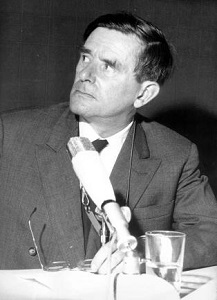
Heinrich Mann, Shusaku Endo, Golo Mann, Carolina Trujillo, Patrick McCabe, Bob den Uyl, Dubravka Ugresić, Francis Ponge, Alfred de Vigny

De Duitse schrijver Heinrich Mann werd geboren op 27 maart 1871 in Lübeck. Zie ook alle tags voor Heinrich Mann op dit blog.

Uit: The Loyal Subject (Der Untertan, vertaald door Ernest Boyd en Daniel Theisen)

“While Diederich maintained a disturbed silence, there was a ring and Herr von Barnim said:
“This is my barber; I must work on him as well.”
He noticed Diederich’s look of disappointment and added: “Of course with such a man I talk differently. But each one of us must do his bit against the Social Democrats, and bring the common people into the camp of our Christian Emperor. You must do yours!”
Thereupon Diederich took his leave. He heard the barber say:
“Another old customer, sir, has gone over to Liebling just because Liebling now has marble fittings.”
When Diederich reported to Wiebel the latter said:
“That is all very well, and I have a particular regard for the idealistic viewpoint of my friend, von Barnim, but in the long run it will not get us anywhere. Stöcker, you know, also made his damned experiments with democracy at the Ice Palace. Whether it was Christian or un-Christian democracy, I don’t know. Things have got too far for that. Today only one course is still open: to hit out hard so long as we have the power.”
Greatly relieved, Diederich agreed with him. To go around converting Christians had at once struck him as a rather embarrassing task.
“‘I will attend to the Social Democrats,’ the Emperor has said.” Wiebel’s eyes gleamed with a catlike ferocity. “Now what more do you want? The soldiers have been given their orders, and it may happen that they will have to fire on their beloved relatives. What do you think of that? I tell you, my dear fellow, we are on the eve of great events.”
Diederich showed signs of excited curiosity.
“My cousin, von Klappke—”
Wiebel paused and Diederich clicked his heels:
“—has told me things which are not yet ripe for publication. Suffice it to say that His Majesty’s statement yesterday, that the grumblers should kindly shake the dust of Germany from the soles of their feet, was a damned serious warning.”
“Is that a fact? Do you really think so?” said Diederich. “Then it is the devil’s own luck that I have to leave His Majesty’s service just at this moment. I would have done my duty against the enemy inside Germany. One thing I do know, the Emperor can rely upon the army.”
During those cold, damp days of February 1892, he went about the streets expecting great events. Along Unter den Linden something was happening, but what it was could not yet be seen. Mounted police stood guard at the ends of the streets and waited. Pedestrians pointed to this display of force. “The unemployed!” People stood still to watch them approaching.”


Heinrich Mann (27 maart 1871 – 12 maart 1950)
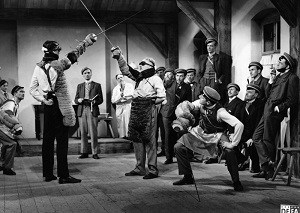
Scene uit de verfilming van “Der Untertan” uit 1951


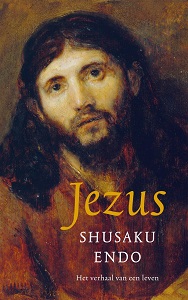
De Japanse schrijver Shusaku Endo werd geboren in Tokio op 27 maart 1923. Zie ook alle tags voor Shusaku Endo op dit blog.

Uit: Jezus. Het verhaal van een leven

“Wij hebben zijn gezicht nooit gezien, zijn stem nooit gehoord.
Wij weten niet hoe hij eruitzag – de man die Jezus heette, van wie ik spreken wil – niet echt. Onze verbeelding heeft talloze voorstellingen van hem opgeleverd, naar de conventie met tot op de schouders vallend haar, een strak in model geschoren baard en een rank gelaat met scherpe jukbeenderen. Eeuw na eeuw hebben kunstenaars deze blauwdruk gevolgd in hun portretten van Jezus, is dit het model geweest op basis waarvan zij zijn trekken verder hebben gemodelleerd naar de standaarden van reinheid en zedigheid van hun tijd.
Maar in de eerste dagen van de geschiedenis van de kerk is de verschijning van Jezus nooit op die manier weergegeven. De eerste christenen waren erg terughoudend in het maken van een voorstelling van heiligen. Het was voor de kunstenaars en ambachtslieden van die tijd dan ook geen doel op zich om een getrouwe weergave van het gezicht van Jezus te maken; als zij ‘de Heer’ wilden afbeelden, bedienden zij zich van symbolen: een vis of een lam, een korenschoof of een druiventros. In de era waarin de christelijke geloofsbeleving zich afspeelde in de catacomben, zien we Jezus afgebeeld als een naar Griekse mode geklede jongeman met het baardloze gezicht van een adolescent; heel anders dan het huidige conventionele beeld. Pas jaren later, aan het begin van de vijfde eeuw, ontstond onder invloed van Byzantijnse kunst het model voor het gezicht van Jezus zoals wij dat kennen. Studie van deze portretten geeft een goede indruk van hoe de mensheid in haar lange spirituele geschiedenis heeft gekeken naar de fysiologie van de heiligste persoon die ooit heeft geleefd en wat in de loop der tijd de ultieme verbeelding van zuiverheid en schoonheid is geweest.”


Shusaku Endo (27 maart 1923 – 29 september 1996)
Cover


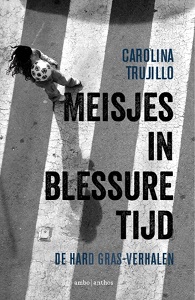
De Uruguayaans-Nederlandse schrijfster Carolina Trujillo werd geboren in Montevideo, Uruguay, op 27 maart 1970. Zie ook alle tags voor Carolina Trujillo op dit blog.

Uit: Meisjes in Blessuretijd

“Met Maracanazo bedoelen wij de grote overwinning die onze jongens daar in 1950 op de Brazilianen behaalden en omdat Uruguay daarna nooit meer een wk won, teren we daar nog steeds op. Het is maar goed dat die 7-1 van Duitsland-Brazilië in een ander stadion was, anders had Die Mannschaft ons met een Maracanazi overtroffen.
Het Maracaná werd speciaal voor het wk 1950 gebouwd en het moest het grootste voetbalstadion worden dat de mensheid tot dan had gekend. Capaciteit 183.000 toeschouwers.
Tegen de tijd dat de spelers werden overgevlogen was men nog niet aan het schilderen van het kale beton toegekomen, daarom werd beloofd dat het stadion na afloop van het wk in de kleur van het winnende elftal zou worden geschilderd, wat aangeeft hoeveel vertrouwen de Brazilianen erin hadden dat ze gingen winnen, en tevens verklaart waarom dat stadion tot 2013 lichtblauw was.
Het wk zat in 1950 zo in elkaar dat de laatste finalepoulewedstrijd ook de finale werd. Brazilië had daarin tegen Uruguay genoeg aan een gelijkspel om wereldkampioen te worden.
Er waren al meer dan 500.000 T-shirts verkocht waar brasil campeâo 1950 op stond. Er waren munten geslagen met de koppen van de Braziliaanse spelers. Er stonden carnavalskarren met het kampioenenthema klaar en er waren overal festiviteiten gepland. Op de grote dag waren er
– met 173.000 betalende toeschouwers, plus duizenden die naar binnen waren geglipt – nog nooit zoveel mensen tegelijk een potje voetbal gaan zien. Verreweg de meesten
waren Brazilianen die erop vertrouwden dat ze die dag wereldkampioen werden, toen Friaça in de 47ste minuut scoorde, wisten ze het zeker. De menigte in het stadion ging los, buiten sloegen de motoren van de carnavalskarren aan, het feest laaide op, en het hele land vierde het: Brasil Campeâo 1950.
Dat de Uruguayaan Schiaffino in de 66ste minuut scoorde was misschien even schrikken, maar met 1-1 won Brazilië nog steeds de wereldtitel, dus bleef het vuur van het feest om zich heen grijpen.
Jules Rimet, de president van de fifa, vertelde later dat hij zich had teruggetrokken in de catacomben om zijn toespraak door te nemen, de enige toespraak die hij op zak had: die waarin hij de Brazilianen in het Portugees feliciteerde.
Er zou een erehaag klaarstaan waarlangs hij naar de Braziliaanse aanvoerder zou lopen terwijl de fanfare het Braziliaanse volkslied zou spelen, maar toen hij terugkeerde uit de kleedkamers merkte hij aan de doodse stilte dat er iets vreselijk was misgegaan.”


Carolina Trujillo (Montevideo, 27 maart 1970)
Cover


De Duitse schrijver en historicus Golo Mann werd geboren in München op 27 maart 1909. Zie ook alle tags voor Golo Mann op dit blog.

Uit: Deutsche Geschichte des 19. und 20. Jahrhunderts

„Ich war jung, als ich meine •Deutsche Geschichte« schrieb, noch nicht einmal fünfzig. Erlebt, mit mehr Leid als Freude, hatte ich deutsche Geschichte, seit ich, sagen wir, vierzehn Jahre alt war, wobei mir als Ziel und Wunsch immer ein echter Friede vorschwebte, und das konnte nur einer zwischen Deutschland und Frankreich sein. Leider hat das sehr lange gebraucht; wenn nicht, was wäre uns alles erspart geblieben! Im sogenannten »Zweiten Weltkrieg wurde ich von der US Arne der American Broadcasting Station in London ausgeliehen. Meine Stellung dort wurde bald eine führende; nicht nur Amerikaner, auch Briten liehen so manches von mir aus. Zum Beispiel, daß die Frauen und Männer des 20. Juli 1944 wahre Patrioten waren, deutsche und europäische, und nicht bloß ihr Leben für den nächsten Krieg aufsparen wollten, wie selbst Churchill meinte: Der war gerne ritterlich und hilfreich, wenn der Krieg aus war, aber ohne Gnade, solange er seine Opfer verlangte. Natürlich war nicht Churchill der britische Historiker, der mich in Harnisch brachte, so sehr, daß ich mich danach sehnte, selber eine deutsche Geschichte zu schreiben; es war ein Brite namens A.J. P. Taylor. Ich will hier kurz seine Ansichten wiedergeben. Der Nationalsozialismus war nach Taylor keine imtionale Episode in der deutschen Geschichte, vielmehr etwas, was sich seit Jahrhunderten vorbereitete und nur um so schlimmer kam, weil es so lange hinausgeschoben war. Hitlers Autorität war die genauest deutsche, die breiteste, historisch berechtigtste seit dem Verfall des mittelalterlichen Kaisertums. Sein Regime war im schlimmsten Sinn des Wortes demokratisch: ungleich demokratischer als Bismarcks Reich oder die Weimarer Republik. Daß es auf Terror beruhte, leugnet Taylor nicht, sieht aber darin keine Widerlegung seiner These. Nicht Hitler, sondern die Opposition war mit sich selbst im Widerspruch. Sie wollte Hitlers Ziele ohne Hitlers Methoden. Aber Hitlers Ziele, Deutschlands Ziele, ließen sich ohne Hitlers Methoden nicht erreichen. Ludendorffs zivilisiertere Methoden hatten dazu ja nicht ausgereicht. Das deutsche Volk mußte sich selber terrorisieren, um seine Herrschaft über Osteuropa aufzurichten. Der Juni 1941 brachte die tiefste, seit hundertjahren angelegte Krise. Daß Deutschland dieser Krise erlag, bedeutet das Ende der modernen deutschen Geschichte. Basta. Von den zahlreichen Beispielen, die Taylor gibt und die meinen Zorn erregten, nur noch ein paar andere, es gäbe viele. Taylor hat nie viel von der österreichischen Republik gehalten, so wie sie 1918 — und wieder 1945 — errichtet wurde. Seine Ablehnung ist konsequent vom Standpunkt des einfachen Logikers der Macht und der Nationalitäten. Deutsch ist deutsch und russisch ist russisch. Aber österreichisch ist nicht österreichisch, sondern entweder deutsch oder tschechisch, ungarisch und so fort. Löste man den österreichischen Nationalstaat auf, so mußten seine deutschsprachigen Untertanen logischerweise zu Deutschland kommen. An der Wiener Republik war nichts logisch, weder der Name, Österreich, auf den sie keinen Anspruch hatte, noch die Sache. Darauf hat Taylor immer wieder verwiesen, in seinen Hauptwerken wie auch in einem »Die österreichische Illusion« betitelten Essay. Mit beißendem Spott macht er sich lustig über den Versuch, mit der Hilfe von Mozarts Opern, Tiroler Kostümen, Skilehrern und vertrottelten Aristokraten eine spezifisch österreichische Kultur zu improvisieren.“


Golo Mann (27 maart 1909 – 7 april 1994)


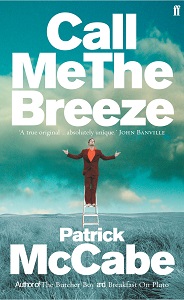
De Ierse schrijver Patrick Joseph McCabe werd geboren op 27 maart 1955 in Clones, Monaghan. Zie ook alle tags voor Patrick Mc Cabe op dit blog.

Uit: Call Me the Breeze

“It was a ruse, to get him on his own. They used to show all these blue movies in a barn way out the country. They had dubbed it ‘The Ritzy’ and for a tenner you could watch the films and drink all you wanted. There was talk of Boyle Henry and the Provos being involved in its operation, but you’d never say that openly. ‘I couldn’t tell you anything about The Ritzy’ was what you said if you were asked. ‘I know nothing at all about any of that’ — that’s what you were expected to say.
And did, if you had any sense.
The ‘blues’, as they called them, were very popular. Bennett had always liked them. ‘The best of crack,’ he used to say. ‘I always make sure to go out every Saturday.’ But not any more.
After the salesman’s funeral, Bennett had driven out to the reservoir and sat there for a couple of hours thinking about it all, and his part in it, I guess. He was discovered there a few hours later, slumped over the dash and poisoned with carbon monoxide.
Whenever I heard things like that back in those days, my reaction would always be the same: finish up my work, head straight home to fall into Mona’s arms.
I used to tell her everything. The only other person I had ever talked to in that kind of way was Eamon Byrne, The Seeker. We had been at school together but he’d gone off to travel the world. I used to love seeing him coming into Austie’s with the big long beard and the hair flying around his shoulders. Especially when you knew the reaction he was going to get. He always wore this hooded brown robe, the djellaba, and knew that it drove them crazy. He’d sit at the bar and roll himself a joint, without, it seemed, a care in the world. Then the two of us would just sit there, rapping for ages, about Dylan and Carlos Castaneda (The Teachings of Don Juan) and Santana, the band. He was a big fan of their album Abraxas and had brought me home a tape of it. I used to put on ‘Oye Como Va’ and ‘Singing Winds/Crying Beasts’ in the pub just to drive Austie wild. ‘Fucking jungle music!’ he called it, flicking his dishcloth and kicking crates.
The Seeker (he took his name from a song by The Who) was living in a squat in Peckham and working on an adventure playground. Just listening to him there, you’d be kind of hypnotized.
‘Did you ever read T. S. Eliot?’ he said to me one day, and I had to admit that I hadn’t. To be perfectly honest, up to that point I hadn’t read much of anything. I’d read sweet fuck all, to tell you the God’s honest truth. Not since Just William, Biggles and shit … “


Patrick McCabe (Clones, 27 maart 1955)
Cover


De Nederlandse schrijver Bob den Uyl werd geboren in Rotterdam op 27 maart 1930. Zie ook alle tags voor Bob den Uyl op dit blog.

Uit: Vogels kijken

“Zo was de situatie toen, jarenlang haastte ik me ’s morgens naar mijn arbeidsterrein en ’s avonds haastte ik me naar huis. En ik zag vogels. Tot ik op een dag beroepshalve met een zeer eigenwijze cliënt had zitten praten. Hij woonde aan een vervallen binnenplaats omsloten door hoge huizen. Ik kwam half misselijk van ergernis en onderdrukte woede naar buiten en daar zag ik, in de vale schemer, een wonderlijk mooie vogel, lichtblauw met oranje kop en staart. Hij vloog in trage spiralen hoger en hoger, stak even opwindend af tegen de betrokken lucht, en verdween over de gore daken. Op dat ogenblik besefte ik voor het eerst het eigenaardige in die eigenschap van mij. Ik dacht er de hele verdere dag ernstig over na en moest wel tot de overtuiging komen dat mijn eigenschap volstrekt ongewoon was, dat ik mij hierin duidelijk onderscheidde van andere mensen.
’s Avonds thuis, ontspannen uitgestrekt op de bank, drong het tot me door dat het zien van vreemde vogels wel eens een middel zou kunnen zijn om uit het slop van de dagelijks weerkerende arbeidsplicht te geraken. Zou ik deze gave niet in geld kunnen omzetten? Dit idee hield me dagenlang bezig, ik sliep er onrustig van. Maar hoe ik de kwestie ook wendde of keerde, ik vond er geen oplossing voor. Ik kon proberen de vogels te vangen om ze op te laten zetten. Maar wat een werk was dat allemaal niet en zou ik er ten slotte een markt voor vinden? Ik zou foto’s kunnen nemen van de vogels, ze geplaatst zien te krijgen in wetenschappelijke bladen. Maar hiermee zou ik alleen maar een mij onverschillig latende bekendheid krijgen in kringen van vogelkenners, en me geen rijkdom verwerven. Ook het idee om tegen betaling excursies te ondernemen met geïnteresseerden verwierp ik als weinig winstgevend. En stelde ik nu zelf maar belang in vogels, dan zou ik hierin een prachtige liefhebberij kunnen vinden. Maar dit was niet het geval. Nee, er scheen geen bestaansmogelijkheid in te schuilen. De oplossing kwam pas toen ik de feiten voor de zoveelste maal in gedachten had opgesomd. Ik zie zeldzame vogels. Ik doe hiervoor geen enkele moeite, ik stel geen belang in vogels en weet er ook niets van af. De door mij waargenomen vogels zijn onbekend en waardevol. Toen ik zover was, kwam het idee in me op waarom dit ook op andere gebieden niet zo zou zijn? Waarom zou ik ook niet de eigenschap hebben om zonder nadenken of inspanning zeldzame en kostbare schilderijen te ontdekken?”


Bob den Uyl (27 maart 1930 – 14 februari 1992)


De Kroatische schrijfster Dubravka Ugrešić werd geboren op 27 maart 1949 in Kutina in Joegoslavië. Zie ook alle tags voor Dubravka Ugrešić op dit blog.

Uit: American Fictionary (Vertaald door Celia Hawkesworth en Ellen Elias-Bursac)

“My mother collects other people’s deaths, rattling them mournfully like coins in a piggy bank.
“Did you know Petrović died?” asks Mother over the phone.
“Really?” I say, although I have no idea who this Petrović is.
“Yes, imagine, a heart attack,” says Mother, stressing the words.
“Oh,” I say.
“Poor man,” sighs Mother, ending her little verbal funeral rite. And she files Petrović away in her mental piggy-bank.
Mother tells me these sorts of things. Talking about them allows her to prolong anonymous Petrović’s life for another moment, light him an invisible candle; by counting out other people’s deaths like pocket change she holds her own fears at bay.
But I’m not interested in deaths. They are so final. I’m interested in disappearances.
One year my Zagreb friend Knaflec disappeared as well. People said he’d gone to America. When I first went to America, someone gave me his phone number. I called the number, somewhere in Texas. He answered, but the person I was speaking to was no longer my friend Knaflec. Now I don’t think of calling him—he too has disappeared.
And then one year there was a journalist who took up my favorite theme of disappearance and wrote an article about it. It turned out that 2,847 people had disappeared in Yugoslavia that year. I even remember the exact figure. That year, 2,847 Yugoslavs could not be found among the living or the dead.
I find New York the most confusing. As I walk through the city’s streets I often think I must be in the middle of a nightmare. I see a man with a plastic bag. There’s a long stick of American celery poking from it. And I can clearly see: he’s my friend Nenad. “Hey, Nenad,” I call. “Hey, what are you doing here?” He looks at me but doesn’t recognize me. Goodness, I whisper, confused. He shrugs his shoulders and walks on with the long stick of celery in his bag.
A taxi passes. In it is my friend Berti. “Hey, Berti!” The taxi stops at a crossing, the light’s red. “Hey, Berti!” Berti looks at me through the window, he smiles but he doesn’t recognize me. What’s this, I think, if he were here, if that were Berti, he’d surely say hello, I think. But I’m not certain.”


Dubravka Ugrešić (Kutina, 27 maart 1949)
Cover


De Franse dichter en schrijver Francis Ponge werd geboren op 27 maart 1899 in Montpellier. Zie ook alle tags voor Francis Ponge op dit blog.

L’orange

Comme dans l’éponge il y a dans l’orange une aspiration à reprendre contenance après avoir subi l’épreuve de l’expression. Mais où l’éponge réussit toujours, l’orange jamais : car ses cellules ont éclaté, ses tissus se sont déchirés. Tandis que l’écorce seule se rétablit mollement dans sa forme grâce à son élasticité, un liquide d’ambre s’est répandu, accompagné de rafraîchissement, de parfum suaves, certes, — mais souvent aussi de la conscience amère d’une expulsion prématurée de pépins.

Faut-il prendre parti entre ces deux manières de mal supporter l’oppression? — L’éponge n’est que muscle et se remplit de vent, d’eau propre ou d’eau sale selon : cette gymnastique est ignoble. L’orange a meilleur goût, mais elle est trop passive, — et ce sacrifice odorant… c’est faire à l’oppresseur trop bon compte vraiment.

Mais ce n’est pas assez avoir dit de l’orange que d’avoir rappelé sa façon particulière de parfumer l’air et de réjouir son bourreau. Il faut mettre l’accent sur la coloration glorieuse du liquide qui en résulte, et qui, mieux que le jus de citron, oblige le larynx à s’ouvrir largement pour la prononciation du mot comme pour l’ingestion du liquide, sans aucune moue appréhensive de l’avant-bouche dont il ne fait pas se hérisser les papilles.

Et l’on demeure au reste sans paroles pour avouer l’admiration que mérite l’enveloppe du tendre, fragile et rose ballon ovale dans cet épais tampon-buvard humide dont l’épidémie extrêmement mince mais très pigmenté, acerbement sapide, est juste assez rugueux pour accrocher dignement la lumière sur la parfaite forme du fruit.

Mais à la fin d’une trop courte étude, menée aussi rondement que possible, — il faut en venir au pépin. Ce grain, de la forme d’un minuscule citron, offre à l’extérieur la couleur du bois blanc de citronnier, à l’intérieur un vert de pois ou de germe tendre. C’est en lui que se retrouvent, après l’explosion sensationnelle de la lanterne vénitienne de saveurs, couleurs et parfums que constitue le ballon fruité lui-même, — la dureté relative et la verdeur (non d’ailleurs entièrement insipide) du bois, de la branche, de la feuille : somme toute petite quoique avec certitude la raison d’être du fruit.


Francis Ponge (27 maart 1899 – 6 augustus 1988)


De Franse dichter en schrijver Alfred de Vigny werd geboren op 27 maart 1797 te Loches (departement Indre-et-Loire). Zie ook alle tags voor Alfred de Vigny op dit blog.


La flûte (Fragment)

III

– ” Non, criai-je en prenant ses deux mains dans les miennes,
Ni dans les grandes lois des croyances anciennes,
Ni dans nos dogmes froids, forgés à l’atelier,
Entre le banc du maître et ceux de l’écolier,
Ces faux Athéniens dépourvus d’Atticisme,
Qui nous soufflent aux yeux des bulles de Sophisme,
N’ont découvert un mot par qui fût condamné
L’homme aveuglé d’esprit plus que l’aveugle-né.

C’est assez de souffrir sans se juger coupable
Pour avoir entrepris et pour être incapable ;
J’aime, autant que le fort, le faible courageux
Qui lance un bras débile en des flots orageux,
De la glace d’un lac plonge dans la fournaise
Et d’un volcan profond va tourmenter la braise.
Ce Sisyphe éternel est beau, seul, tout meurtri,
Brûlé, précipité, sans jeter un seul cri,
Et n’avouant jamais qu’il saigne et qu’il succombe
A toujours ramasser son rocher qui retombe.
Si, plus haut parvenus, de glorieux esprits
Vous dédaignent jamais, méprisez leur mépris ;
Car ce sommet de tout, dominant toute gloire,
Ils n’y sont pas, ainsi que l’oeil pourrait le croire.
On n’est jamais en haut. Les forts, devant leurs pas,
Trouvent un nouveau mont inaperçu d’en bas.
Tel que l’on croit complet et maître en toute chose
Ne dit pas les savoirs qu’à tort on lui suppose,
Et qu’il est tel grand but qu’en vain il entreprit.
– Tout homme a vu le mur qui borne son esprit.


Alfred de Vigny (27 maart 1797 – 17 september 1863)
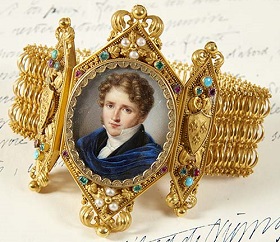
Miniatuurportret op een armband


Zie voor nog meer schrijvers van de 27e maart ook mijn blog van 27 maart 2017 en ook mijn blog van 27 maart 2016 deel 2 en eveneens deel 3.

Tennessee Williams, Martin McDonagh, Gregory Corso, Hwang Sun-won, Robert Frost, Patrick Süskind, A. E. Housman, Bettina Galvagni, Erica Jong

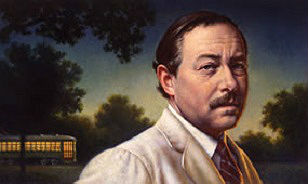
De Amerikaanse dichter en schrijver Tennessee Williams (eigenlijk Thomas Lanier Williams) werd geboren in Columbus, Mississippi, op 26 maart 1911. Zie ook alle tags voor Tennessee Williams op dit blog.


This Hour

At break of dawn the shape of life
Is chiselled with a keener knife,
And angularities emerge
From the illusion of a curve.

This is the hour that imparts
A special nudity to hearts,
When every secret thing is known
Inward to the very bone.

No mist of rain nor veil of snow
Can blur this stark intaglio
Of sculptured hill and hollowed plain,
Poignant as thought, distinct as pain.

This is the keen recurrent edge
Of shuttling time. The frosty hedge,
The arrowed song of birds betray
The sword unsheathed in break of day.

This is the hour when men who dare
Shake lightning from their unbound hair,
And cherish in their last retreat
The will to bear, the strength to meet
Unflinchingly and with iron heart
The steel that smites the breast apart!


My love was light

My love was light the old wives said —
Light was my love and better dead!

My love was of such little worth
Stones were but wasted on her tomb;
She left no kettle by the hearth,
No crying child nor silent loom.

My love drank wine the old wives said
And danced her empty days away;
She baked no bread, she spun no thread,
She shaped no vessels out of clay ….

But how should old wives understand
Eternally my heart must grieve,
The cup remembering in her hand,
The dance her ghostly feet still weave ….

My love was light the old wives said —
Light was my love and better dead!


Tennessee Williams (26 maart 1911 – 25 februari 1983)


De Engels-Ierse schrijver en regisseur Martin McDonagh werd geboren op 26 maart 1970 in Camberwell, Londen. Zie ook alle tags voor Martin McDonagh op dit blog.

Uit: The Cripple of Inishmaan

“Billy I want to, Bobby. See, I never thought at all this day would come when I’d have to explain. I’d hoped I’d disappear forever to America. And I would’ve too, if they’d wanted me there. If they’d wanted me for the filming. But they didn’t want me. A blond lad from Fort Lauderdale they hired instead of me. He wasn’t crippled at all, but the Yank said ‘Ah, better to get a normal fella who can act crippled than a crippled fella who can’t fecking act at all.’ Except he said it ruder. (Pause.) I thought I’d done alright for meself with me acting. Hours I practiced in me hotel there. And all for nothing. (Pause.) I gave it a go anyways. I had to give it a go. I had to get away from this place, Babbybobby, be any means, just like me mammy and daddy had to get away from this place. (Pause.) Going drowning meself I’d often think of when I was here, just to . . . just to end the laughing at me, and the sniping at me, and the life of nothing but shuffling to the doctor’s and shuffling back from the doctor’s and pawing over the same oul books and finding any other way to piss another day away.
Another day of sniggering, or the patting me on the head like a broken-brained gosawer. The village orphan. The village cripple, and nothing more. Well, there are plenty round here just as crippled as me, only it isn’t on the outside it shows. (Pause.) But the thing is, you’re not one of them, Babbybobby, nor never were. You’ve a kind heart on you. I suppose that’s why it was so easy to cod you with the TB letter, but that’s why I was so sorry for codding you at the time and why I’m just as sorry now.
Especially for codding you with the same thing your Mrs passed from. Just I thought that would be more effective. But, in the long run, I thought, or I hoped, that if you had a choice between you being codded a while and me doing away with meself, once your anger had died down anyways, you’d choose you being codded every time. Was I wrong, Babbybobby? Was I?
Bobby slowly walks over to Billy, stops just in front of him, and lets a length of lead piping slide down his sleeve into his hand.
Bobby Aye.
Bobby raises the pipe . . .
Billy No, Bobby, no . . . !
Billy covers up as the pipe scythes down. Blackout, with the sounds of Billy’s pained screams and the pipe scything down again and again.”


Martin McDonagh (Camberwell, 26 maart 1970) 
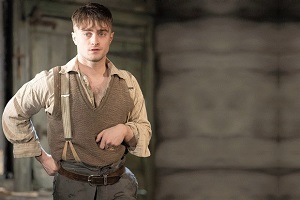
Daniel Radcliffe als Billy in The Cripple of Inishmaan, Londen, 2013


De Amerikaanse dichter Gregory Corso werd geboren in New York op 26 maart 1930. Zie ook alle tags voor Gregory Corso op dit blog.


America Politica Historia, In Spontaneity (Fragment)

He looks and acts like a boyman.
He never looks cruel in uniform.
He is rednecked portly rich and jolly.
White-haired serious Harvard, kind and wry.
A convention man a family man a rotary man & practical joker.
He is moonfaced cunning well-meaning & righteously mean.
He is Madison Avenue, handsome, in-the-know, and superstitious.
He is odd, happy, quicker than light, shameless, and heroic
Great yawn of youth!
The young don’t seem interested in politics anymore.
Politics has lost its romance!
The “bloody kitchen” has drowned!
And all that is left are those granite
façades of Pentagon, Justice, and Department—
Politicians do not know youth!
They depend on the old
and the old depend on them
and lo! this has given youth a chance
to think of heaven in their independence.
No need to give them liberty or freedom
where they’re at—
When Stevenson in 1956 came to San Francisco
he campaigned in what he thought was an Italian section!
He spoke of Italy and Joe DiMaggio and spaghetti,
but all who were there, all for him,
were young beatniks! and when his car drove off
Ginsberg & I ran up to him and yelled:
“When are you going to free the poets from their attics!”
Great yawn of youth!
Mad beautiful oldyoung America has no candidate
the craziest wildest greatest country of them all!
and not one candidate—
Nixon arrives ever so temporal, self-made,
frontways sideways and backways,
could he be America’s against? Detour to vehicle?
Mast to wind? Shore to sea? Death to life?
The last President?


Gregory Corso (26 maart 1930 – 17 januari 2001)
Cover


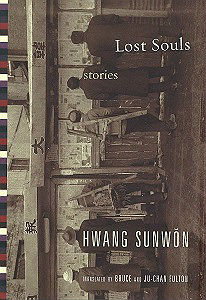
De Zuid-Koreaanse dichter en schrijver Hwang Sun-won werd geboren op 26 maart 1915 in Taedong, Zuid-Pyongan, in het hedendaagse Noord-Korea. Zie ook alle tags voor Hwang Sun-won op dit blog.

Uit: Cranes (Vertaald door David R. McCann)

“Once, when they were young, he had gone with Tŏkchae to swipe chestnuts from the old grandfather with the wen. It had been Sŏngsam’s turn to climb the tree. Next instant, the old grandfather was shouting at them. He slipped and fell out of the tree. The chestnut burs pierced his backside, but they just ran. Only when they had gone far enough so the old grandfather with the wen couldn’t follow, did he turn his backside to Tŏkchae. It hurt like anything, pulling out the chestnut burs. He couldn’t help the tears that trickled down. Tŏkchae suddenly reached out with a fistful of his own chestnuts and stuck them in Sŏngsam’s pocket….Sŏngsam threw away the cigarette he had just lit. He makes up his mind not to light another while escorting this fellow Tŏkchae.They reached the hill road. The hill is where he and Tŏkchae had gone all the time to cut fodder, until two years before Liberation when Sŏngsam moved to a place near Ch’ŏnt’ae, south of the 38th.Sŏngsam, overwhelmed by sudden anger, gave a shout.“You son of a…! How many people have you killed so far?”Only then does Tŏkchae look over, then lower his head again.“Sunnavabitch…! How many people have you killed?”Tŏkchae raises his head and turns his way. He shoots a look at Sŏngsam. His expression turns darker, and the edges of his mouth, surrounded by his dangling beard, quiver and shake.“So, that’s how you killed people?”Sunnavabitch! Somehow Sŏngsam’s heart feels relieved at its core. As if something blocking it has eased and fallen loose. But,“Some guy gets to be vice chairman of the Farmers Collective Committee, why didn’t you run off? Hiding out with some secret mission?”Tŏkchae says nothing.“Go ahead, tell the truth! What sort of mission was it you were hiding out to do?”But Tŏkchae just keeps walking silently along. Clear enough, this one is feeling caught. It’s good to see their faces at a moment like one is feeling caught. It’s good to see their faces at a moment like this, but he keeps his face turned away, and doesn’t look over.
Grasping the pistol that he carried at his waist, Sŏngsam says, “It’s no use trying to defend yourself. You’re going to be shot, no doubt about it. So you might as well tell the truth right here and now.”Without turning his head, Tŏkchae replies,“There’s nothing to defend myself about. I’m just the son of a dirt-poor farmer. I’m known as a guy who can handle the hard work, and that’s why I was made vice chairman of the Farmers Cooperative Committee. If that’s a crime to get killed for, there’s nothing to be done about it. All I’m good at, all I ever was good at to stay alive, is digging in the dirt.”He pauses for a moment.“My father is laid up now. It’s half a year already.”Tŏkchae’s father was a widower, a poor farmer getting old, caring just for his son Tŏkchae. Seven years ago his back had already given out and his face was covered with age spots.“You married?”A moment, and“Yeah, married.”“Who with?”“Short Stuff.”No. Short Stuff? This is great. Short Stuff. Kind of fat, and too short to know the skies were high, just how wide the earth is. Sort of a loner. They hadn’t liked that, so he and Tŏkchae, together they used to tease her all the time and make her cry. And now Tŏkchae had gone and married Short Stuff.”


Hwang Sun-won (26 maart 1915-14 september 2000)
Cover


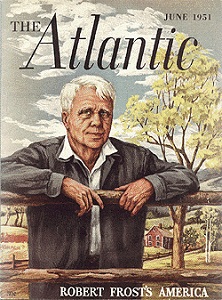
De Amerikaanse dichter Robert Lee Frost werd geboren op 26 maart 1874 in San Francisco. Zie ook alle tags voor Robert Frost op dit blog.


Brown’s Descent (Fragment)

He reeled, he lurched, he bobbed, he checked;
He fell and made the lantern rattle
(But saved the light from going out.)
So half-way down he fought the battle

Incredulous of his own bad luck.
And then becoming reconciled
To everything, he gave it up
And came down like a coasting child.

Well—I—be—” that was all he said,
As standing in the river road,
He looked back up the slippery slope
(Two miles it was) to his abode.

Sometimes as an authority
On motor-cars, I’m asked if I
Should say our stock was petered out,
And this is my sincere reply:

Yankees are what they always were.
Don’t think Brown ever gave up hope
Of getting home again because
He couldn’t climb that slippery slope;

Or even thought of standing there
Until the January thaw
Should take the polish off the crust.
He bowed with grace to natural law,

And then went round it on his feet,
After the manner of our stock;
Not much concerned for those to whom,
At that particular time o’clock,

It must have looked as if the course
He steered was really straight away
From that which he was headed for—
Not much concerned for them, I say:

No more so than became a man—
And politician at odd seasons.
I’ve kept Brown standing in the cold
While I invested him with reasons;

But now he snapped his eyes three times;
Then shook his lantern, saying, “Ile’s
‘Bout out!” and took the long way home
By road, a matter of several miles.


Robert Frost (26 maart 1874 – 29 januari 1963) 
Cover


De Duitse schrijver Patrick Süskind werd geboren in Ambach op 26 maart 1949. Zie ook alle tags voor Patrick Süskind op dit blog.

Uit: Die Taube

„Anfang der fünfziger Jahre – Jonathan begann, an der Existenz eines Landarbeiters Gefallen zu finden – verlangte der Onkel, er solle sich zum Militärdienst melden, und Jonathan verpflichtete sich gehorsam für drei Jahre. Im ersten Jahr war er einzig damit beschäftigt, sich an die Widerwärtigkeiten des Horden- und Kasernenlebens zu gewöhnen. Im zweiten Jahr wurde er nach Indochina verschifft. Den größten Teil des dritten Jahres verbrachte er mit einem Fußschuß und einem Beinschuß und der Amöbenruhr im Lazarett. Als er im Frühjahr 1954 nach Puget zurückkehrte, war seine Schwester verschwunden, ausgewandert nach Kanada, hieß es. Der Onkel verlangte nun, daß sich Jonathan unverzüglich vereheliche, und zwar mit einem Mädchen namens Marie Baccouche aus dem Nachbarort Lauris, und Jonathan, der das Mädchen noch nie gesehen hatte, tat brav wie ihm geheißen, ja tat es sogar gerne, denn wenngleich er nur eine ungenaue Vorstellung von der Ehe besaß, so hoffte er doch, in ihr endlich jenen Zustand von monotoner Ruhe und Ereignislosigkeit zu finden, der das einzige war, wonach er sich sehnte. Aber bereits vier Monate später gebar Marie einen Knaben, und noch im selben Herbst brannte sie durch mit einem tunesischen Obsthändler aus Marseille. –
Aus all diesen Vorkommnissen zog Jonathan Noel den Schluß, daß auf die Menschen kein Verlaß sei und daß man nur in Frieden leben könne, wenn man sie sich vom Leibe hielt. Und weil er nun auch noch zum Gespött des Dorfes geworden war, was ihn nicht wegen des Gespötts an sich störte, sondern wegen der öffentlichen Aufmerksamkeit, die er dadurch erregte, traf er zum ersten Mal in seinem Leben selbst eine Entscheidung: Er ging zum Crédit Agricole, hob seine Ersparnisse ab, packte den Koffer und fuhr nach Paris.“


Patrick Süskind (Ambach, 26 maart 1949)


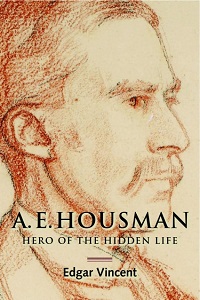
De Engelse dichter Alfred Edward Housman werd geboren op 26 maart 1859 in Fockbury, Worcestershire. Zie ook alle tags voor A. E. Housman op dit blog.


‘Tis five years since, `An end,’ said I

‘Tis five years since, `An end,’ said I;
`I’ll march no further, time to die.
All’s lost; no worse has heaven to give.’
Worse has it given, and yet I live.

I shall not die to-day, no fear:
I shall live yet for many a year,
And see worse ills and worse again,
And die of age and not of pain.

When God would rear from earth aloof
The blue height of the hollow roof,
He sought him pillars sure and strong,
And ere he found them sought them long.

The stark steel splintered from the thrust,
The basalt mountain sprang to dust,
The blazing pier of diamond flawed
In shards of rainbow all abroad.

What found he, that the heavens stand fast?
What pillar proven firm at last
Bears up so light that world-seen span?
The heart of man, the heart of man.


Good creatures, do you love your lives

Good creatures, do you love your lives
And have you ears for sense?
Here is a knife like other knives,
That cost me eighteen pence.

I need but stick it in my heart
And down will come the sky,
And earth’s foundations will depart
And all you folk will die.


A. E. Housman (26 maart 1859 – 30 april 1936)
Cover


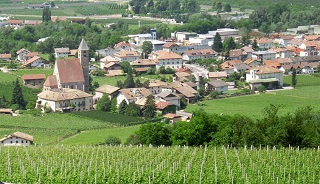
De Italiaanse, Duitstalige, dichteres en schrijfster Bettina Galvagni werd geboren op 26 maart 1976 in Neumarkt, Zuid-Tirol. Zie ook alle tags voor Bettina Galvagni op dit blog.

Uit: Guinevere in Zürich

„Und im Winter eben, da spielt Paris Venedig. Alle die Vögel des Zürichbergs, die Eichhörnchen auf der großen Buche vor dem Haus, und die vielen gefräßigen aristokratischen Katzen, sie alle erinnerten mich nur an meine sanfte, zärtliche moumoutte in Paris. Am Samstag begleitete ich meine Tante immer zum Einkaufen. Mit ihrem großen roten Auto fuhren wir von einem Supermarkt zum nächsten. Nie vorher hatte ich jemanden gesehen, der so aufmerksam durch einen Supermarkt ging wie meine Tante. Ich fing an, mich für bestimmte Artikel zu begeistern, am meisten liebte ich die verschiedenen Reisezahnbürsten und die dazugehörigen bunten Zahnpasten. Diese kleinen subtilen Gegenstände ließen sofort Koffer und Flughäfen vor meinen Augen entstehen. Ich wußte noch nicht, daß Rachel Zilberstein nach Israel gegangen war, ich wußte nicht, daß sie in der Zeit nahezu alle zwei Wochen von Paris nach Tel Aviv und zurück flog, daß sie alle zwei Wochen auf dem Charles-de-Gaulle-Flughafen und in Ashdod war, in einem Kostüm aus einem modernen Stoff, der nicht knittert, mit einer großen Schauspielerinnen-Sonnenbrille, zweifarbigen Chanel-Schuhen und so viel rotem Lippenstift, als ob sie gleich auf die Bühne gerufen würde, um eine exaltierte Judith zu spielen. Meine Tante pflegte für die ganze Woche einzukaufen, vor allem große Mengen an Gemüse. Ihre Leidenschaft war Mangold. Sie konnte ihn in jeder Variante zubereiten, und da ich ihn ebenfalls liebte, aß ich oft tagelang Mangoldreis,
Mangoldsuppe und Mangoldgemüse. Ich aß so viel davon, daß mir einmal, an einem Abend, so schlecht davon wurde, daß ich den Mangold verfluchte und später wieder um Verzeihung bat. Bei unseren langen Aufenthalten in den Supermärkten war die Tante sehr nett. Sie fragte mich jedesmal, ob ich eine besondere Schokolade, eine neue Frucht oder sonst etwas haben möchte. Und meistens fing sie mit jemandem zu reden an, oft geriet sie mit einer der Angestellten in einen Streit, und manchmal ließ sie ihre Brieftasche liegen (mein Onkel hatte sie ihr geschenkt, sie besaß ein Schachbrettmuster, genauso wie ihre Tasche; nachdem sie sie etwa zehnmal verloren und wiederbekommen und unzählige Ausflüge zu Fundbüros, Polizei und ähnlichem hinter sich hatte – ich begleitete sie natürlich immer -, hatte sie sie endgültig verloren), manchmal verlor sie ihren Ring, weil er sich am Morgen durch die Seife oder später durch das Abspülmittel leicht gelöst hatte undsoweiter. Manchmal wurde ihr auch schwindelig, und sie setzte sich hin und ich holte für sie Wasser aus einem Plastikbehälter. Dann fuhren wir mit dem großen roten Auto zurück. Sie fragte mich nach Paris, ob ich es vermißte, und dann begann sie meine Haarlocken auseinanderzuzupfen.“


Bettina Galvagni (Neumarkt, 26 maart 1976)
Neumarkt in Zuid-Tirol


De Amerikaanse dichteres en schrijfster Erica Jong werd geboren in New York op 26 maart 1942. Zie ook alle tags voor Erica Jong op dit blog.

Uit: Fear of Dying

“A time of new beginnings (Yom Kippur), starting over (Rosh Hashanah), and laying in acorns against a barren winter (Succoth). When I placed the ad, I had thought of myself as a sophisticate coolly interviewing lovers. But now I was suddenly overcome with panic. I began fantasizing about what sort of creeps, losers, retreads, extortionists, and homicidal maniacs such an ad would attract — and then I got so busy with calls from my ailing parents and pregnant daughter that I forgot all about it.
A few minutes went by. Then suddenly the responses poured out of the Internet like coins out of a slot machine. I was almost afraid to look. After a couple of beats, I couldn’t resist. It was like hoping I had won the lottery. The first response showed a scanned Polaroid of an erect penis — a tawny uncircumcised specimen with a drop of dew winking at the tip. Under the photo, on the white border, was scrawled: “Without Viagra.” The accompanying e- mail was concise:
I like your style. Have always risen for assertive women. Send nude shot and measurements.
The next one began like this:
Dear Seeker,
Sometimes we think it’s carnality we want when actually we long for Jesus. We discover that if we open our hearts and let Him in, all sorts of satisfaction undreamt of can be ours. Perhaps you think you are seeking Eros, but Thanatos is what you really seek. In Jesus, there is eternal life.
He is the lover who never disappoints, the friend who is loyal forever. It would be an honor to meet and counsel you …
A telephone number was proffered: 1-800- JESUS-4U. “


Erica Jong (New York, 26 maart 1942)


Zie voor nog meer schrijvers van de 26e maart ook mijn blog van 26 maart 2017 deel 2.
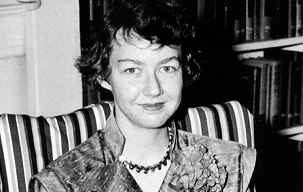
Pol Hoste, Menno Van der Beek, Jung Chang, Paul Meeuws, Flannery O’Connor, Jaime Sabines, Peter Van Straaten, Toni Cade Bambara

De Vlaamse schrijver Pol Hoste werd geboren in Lokeren op 25 maart 1947. Zie ook alle tags voor Pol Hoste op dit blog.

Uit: Het landschap bloedt en de dieren

“Het landschap bloedt en de dieren. De sluizen roesten. Onderwerp, werkwoord, gezegde zoals in (zingt:) ‘op enen boom een koehoekoek’. Tien keer uw taal voor straf. Jaap, Tijs, Blok. Wij konden ons kiezen: appelsienen, negers en met Nieuwjaar een baard van de koning. Geen hemel na de boonranken. Vuurkruisers, Noord-Nederlandse calvinisten, onze helden, watergeuzen. Wisten wij veel wat Portugese Joden zijn. Sefarden? Bojaren? Pruisen, Poolse vorsten, piano’s Maene. Begrijpt de gewone man de gewone man, of alleen het volstrekt onbegrijpelijke? Alleen het volstrekt onbegrijpelijke.
Als een aprilvis glijdt de maansikkel over de Leie richting Schloss Anvers, een Spaans kasteel dat zijn formulieren op onze Letteren gericht houdt. Een vrijplaats, de lyriek? Boekhouding, ja! Controle, onderwerping, domesticering van de creativiteit.
– Formez vos bataillons!
Si ghinck al voor haeren vader staan. He pretended to be Peter Stuyvesant. Opmerkelijk is de strakke beheersching der stof en haar stileering. Kennen.
Begeven wij ons thans van Baarchoem naar Giesbaren, lezer. Wat vindt ge van volgend tafereel? Verwijder, treffend, geen mening. Een op de vijf maal bezocht.
Kurieuzeneuze schrijft niet. Onze rosten. Hij zit in zijn kot. Je, men, je, men, die ‘men’ altoos, dat jouwen. Die letterlijke gender correctness! Ge zijt in de fleur van uw leven en uw ma schrijft gedichten. Komt dat tegen. Ge woont met haar in één van de huizekens langs de Dender waar het stinkt naar armoe, Amylum, mout en vette kolen. Komt dat tegen. Maar wel wreed schone schoenwinkels met Ambiorixen. En bakkers, hete mokkels, smeltende ijzerdraad, pinnekens kussen can’t geen quaet! O la la!
Excuseer, dat ik u onderbreek, ik denk aan iets. Hij denkt aan iets. Ik zat eens met ons Geertrui in Aalst.
– ’t Is nie waar!
– Batoet, batoet!
Lap, ons Geertrui toch wel naar Lokeren, zekers. Ui! Ui! Zo dus, ge kunt peinzen. (Contra-alt:) ‘Wat heb ik u misdreven? Ja ‘daan?’
‘Joyce is geen slechte schrijver, maar Dublin is er te veel aan.’
– Oesje!
‘Take the money and run’, Trui said.”


Pol Hoste (Lokeren, 25 maart 1947)
Affiche voor de uitreiking van de  Louis Paul Boonprijs aan Pol Hoste in 2013


De Nederlandse dichter en vertaler Menno van der Beek werd geboren op 25 maart 1967 in Rotterdam. Zie ook alle tags voor Menno van der Beek op dit blog.


Tors

Wij hebben afgesproken op het strand
voor het decor van water en van wind.
Want hij wil weten wat ik hier van vind:
hij heeft de dingen niet meer in de hand.

Hij veegt zichzelf een nieuwe vrouw van zand
waarmee hij weer van voorafaan begint
maar zonder dat hij een gezicht verzint;
hij vlijt zijn handen om haar bovenkant

en laat haar borsten los. Nu is ze klaar.
Het lijkt alsof ze hierop had gewacht,
alleen maar hoefde worden blootgelegd.

We zitten even zwijgend bij elkaar
totdat hij zegt: ‘Ik wil weer van haar af’;
dan loopt hij zonder om te kijken bij haar weg.


Hartenvrouw

Hier in de stad zijn mensen opgeborgen
in gasbeton in ramen en in hout.
De straat is in het donker niet vertrouwd
maar wij zijn thuis. Zo zal ik voor je zorgen.

Geen kant meer op tot in de vroege morgen:
gelukkig is dit huis voor ons gebouwd;
zolang het gaat, zolang de grendel houdt
blijft alles wat nog goed is diep verborgen.

Hier slaapt een kind. Hier ligt een vraag van God
gelukkigen genadeloos te zijn,
onaangeraakt door de vermoeide stad.

Straks gaat ze weg, zo gauw ze wakker wordt.
De lege straten en het grote plein
vertellen welke droom ze heeft gehad.


Menno Van der Beek (Rotterdam, 25 maart 1967)
Cover


De Chinese schrijfster Jung Chang werd geboren in Yibin, Sichuan op 25 maart 1952. Zie ook alle tags voor Jung Chang op dit blog.

Uit: Mao. The Unknown Story

“Mao tse-tung, who for decades held absolute power over the lives of one-quarter of the world’s population, was responsible for well over 70 million deaths in peacetime, more than any other twentieth-century leader. He was born into a peasant family in a valley called Shaoshan, in the province of Hunan, in the heartland of China. The date was 26 December 1893. His ancestors had lived in the valley for five hundred years.
This was a world of ancient beauty, a temperate, humid region whose misty, undulating hills had been populated ever since the Neolithic age. Buddhist temples dating from the Tang dynasty (ad 618–906), when Buddhism first came here, were still in use. Forests where nearly 300 species of trees grew, including maples, camphor, metasequoia and the rare ginkgo, covered the area and sheltered the tigers, leopards and boar that still roamed the hills. (The last tiger was killed in 1957.) These hills, with neither roads nor navigable rivers, detached the village from the world at large. Even as late as the early twentieth century an event as momentous as the death of the emperor in 1908 did not percolate this far, and Mao found out only two years afterwards when he left Shaoshan.
The valley of Shaoshan measures about 5 by 3.5 km. The 600-odd families who lived there grew rice, tea and bamboo, harnessing buffalo to plough the rice paddies. Daily life revolved round these age-old activities. Mao’s father, Yi-chang, was born in 1870. At the age of ten he was engaged to a girl of thirteen from a village about 10 kilometres away, beyond a pass called Tiger Resting Pass, where tigers used to sun themselves. This short distance was long enough in those years for the two villages to speak dialects that were almost mutually unintelligible. Being merely a girl, Mao’s mother did not receive a name; as the seventh girl born in the Wen clan, she was just Seventh Sister Wen. In accordance with centuries of custom, her feet had been crushed and bound to produce the so-called three-inch golden lilies that epitomised beauty at the time.”


Jung Chang (Yibin, 25 maart 1952)


De Nederlandse dichter en schrijver Paul Meeuws werd geboren op 25 maart 1947 in Roermond. Zie ook alle tags voor Paul Meeuws op dit blog.

Uit: De martelaren

“Toen iemand, niemand wist wie, de bal met een trefzeker schot over de hoge kloostermuur schopte, volgde er niets, zelfs geen ver verwijderd plofje. Het was alsof de bal almaar bleef voortsuizen in een onpeilbare diepte. Een gelukzalig moment lang leek het leven voor Nelson niet meer te kloppen, stond alles, zonder enig verband, geheel op zichzelf.
Het spel liep juist in een broeierige verwarring ten einde. De jongens zwermden doelloos om elkaar heen en ontweken vakkundig elkaars onbeduidende, maar niet al te grappig bedoelde pootjes en heimelijke duwtjes. De meisjes vormden een rijtje op de stoeprand en zinspeelden giechelend op de intredende schemering. Niemand lette op Nelson, die nogal klein was voor zijn twaalf jaar en nauwlettend toekeek hoe de avond langs de huizen omhoog kroop, tot aan het raam van zijn kamertje, tot aan het moment dat de zon achter de kloostermuur was verdwenen en hij naar binnen moest.
Niemand sprak meer over de bal. Het klooster, waarvan de oude wallen zich over de volle lengte van de straat uitstrekten, had zijn bekoorlijke dreiging verloren. Hoe lang was het al geleden dat een jongen zich over de muur gewaagd had en met het gruwelijke verhaal terugkwam dat de monniken zichzelf daar geselden? Vlak daarna had iemand ’s nachts het hondse kermen gehoord. (Hoe dan, wou Nelson weten, en hoelang dan en hoeveel stemmen waren het? Honderd? Een paar? Een paar was erger, geloofwaardiger.) Ouderen haalden daar hun schouders over op en zeiden dat die monniken niet wisten wat er in de wereld te koop was en uit pure onnozelheid hun dagen biddend sleten. De zweep verdreef tenminste voor enkele ogenblikken de kou uit hun stramme lijven.
Je groeit met het ergste op, daaraan kon Nelson maar niet wennen. Sinds dat geselverhaal verdeelde hij de mensheid in een groep, die zoiets, meteen of na een tijdje, normaal vond, en in mensen zoals hij, bij wie gewelddadigheid een blijvende ontreddering teweegbracht. Zijn vriendjes behoorden zonder uitzondering tot de eerste categorie. Hun meerderheid was overweldigend, ofschoon het zonderlinge fenomeen van een bal die niet ophoudt met vallen, ze toch aan het twijfelen had moeten brengen. Ik heb gelijk, besloot hij en de enige manier om dat te bewijzen was door middel van de moeilijke klimpartij over de muur.”


Paul Meeuws (Roermond, 25 maart 1947) 


De Amerikaanse schrijfster Flannery O’Connor werd geboren op 25 maart 1925 in Savannah, Georgia. Zie ook alle tags voor Flannery O’Connor op dit blog.

Uit: A Prayer Journal

“Dear God, I cannot love Thee the way I want to. You are the slim crescent of a moon that I see and my self is the earth’s shadow that keeps me from seeing all the moon. The crescent is very beautiful and perhaps that is all one like I am should or could see; but what I am afraid of, dear God, is that my self shadow will grow so large that it blocks the whole moon, and that I will judge myself by the shadow that is nothing.
I do not know you God because I am in the way. Please help me to push myself aside.
I want very much to succeed in the world with what I want to do. I have prayed to You about this with my mind and my nerves on it and strung my nerves into a tension over it and said, “oh God, please,” and “I must,” and “please, please.” I have not asked You, I feel, in the right way. Let me henceforth ask You with resignation—that not being or meant to be a slacking up in prayer but a less frenzied kind, realizing that the frenzy is caused by an eagerness for what I want and not a a spiritual trust. I do not wish to presume. I want to love.
Oh God please make my mind clear.
Please make it clean.
I ask You for a greater love for my holy Mother and I ask her for a greater love for You.
Please help me to get down under things and find where You are.
I do not mean to deny the traditional prayers I have said all my life; but I have been saying them and not feeling them. My attention is always very fugitive. This way I have it every instant. I can feel a warmth of love heating me when I think & write this to You. Please do not let the explanations of the psychologists about this make it turn suddenly cold. My intellect is so limited, Lord, that I can only trust in You to preserve me as I should be.

*

Please let Christian principles permeate my writing and please let there be enough of my writing (published) for Christian principles to permeate. I dread, oh Lord, losing my faith. My mind is not strong. It is a prey to all sorts of intellectual quackery. I do not want it to be fear which keeps me in the Church. I don’t want to be a coward, staying with You because I fear hell. I should reason that if I fear hell, I can be assured of the author of it.”


Flannery O’Connor (25 maart 1925 – 3 augustus 1964)


De Mexicaanse dichter en schrijver Jaime Sabines Gutiérrez werd geboren op 25 maart 1926 in Tuxtla Gutiérrez, Chiapas. Zie ook alle tags voor Jaime Sabines op dit blog.


On Hope

Occupy yourselves here with hope.
The joy of the day that’s coming
buds in your eyes like a new light.
But that day that’s coming isn’t going to come: this is it.


On Death

Bury it.
There are many silent men under the earth
who will take care of it.
Don’t leave it here.
Bury it.


On Myth

My mother told me that I cried in her womb.
They said to her: he’ll be lucky.
.
Someone spoke to me all the days of my life
into my ear, slowly, taking their time.
Said to me: live, live, live!
It was Death.


Vertaald door W.S. Merwin


Jaime Sabines (25 maart 1926 – 19 maart 1999)


De Nederlandse cartoonist en striptekenaar Peter van Straaten werd geboren in Arnhem op 25 maart 1935. Zie ook alle tags voor Peter van Straaten op dit blog.


“Je gaat steeds minder wijverig schrijven, weet je dat?.”


Peter Van Straaten (25 maart 1935 – 8 december 2016)


De Amerikaanse schrijfster en sociale activiste Toni Cade Bambara werd als Miltona Mirkin Cade geboren op 25 maart 1939 in New York. Zie ook alle tags voor Toni Cade Bambara op dit blog.

Uit: This Bridge Called My Back

“I am ready to go home now. I am ready. Very tired. Couldn’t sleep all night. Missing home. There is a deep fatigue in my body this morning.
I feel used up. Adrienne asks me if I can write of what has happened with me while here in Boston. She asks me if I can, not would. I say, yes, I think so. And now I doubt it. The pain of racism, classism. Such overused and trivialized words. The pain of it all. I do not feel people of color are the only ones hurt by racism.
Another meeting. Again walking into a room filled with white women, a splattering of women of color around the room. The issue on the table, Racism. The dread and terror in the room lay like a thick immovable paste above all our shoulders, white and colored, alike.
We, Third World women in the room, thinking back to square one, again.
How can we — this time — not use our bodies to be thrown over a river of tormented history to bridge the gap? Barbara says last night: “A bridge gets walked over.” Yes, over and over and over again.
I watch the white women shrink before my eyes, losing their fluidity of argument, of confidence, pause awkwardly at the word, “race”, the word, “color.” The pauses keeping the voices breathless, the bodies taut, erect – unable to breathe deeply, to laugh, to moan in despair, to cry in regret. I cannot continue to use my body to be walked over to make a connection. Feeling every joint in my body tense this morning, used.”


Toni Cade Bambara (25 maart 1939 – 9 december 1995)
Cover


Zie voor nog meer schrijvers van de 25e maart ook mijn blog van 25 maart 2018 deel 3.

Hans Hagen, Lawrence Ferlinghetti, Peter Bichsel, Joy Ladin, Jacob van Lennep, Jeroen Mettes, Harry Prenen


Dolce far niente


Lebensabend door Ernst Eitner, 1906


Mis mij

nu
zoveel jaren later
is er steeds meer
wat jij niet weet van mij
steeds meer wat ik vergeet
van toen wij samen
gingen kwamen

je stem trilt haast
niet meer in mij
je gezicht wordt zacht en vader
je glimlach wint het
van de ruzies die we deelden
overschaduwt het venijn
van toen we samen speelden

wat ik je vertellen moet
wordt groter
langzaam mis je meer van mij
ik loop jou jaren in
kom met gemak langszij
ouder ben ik straks
drijf ik je stilletjes voorbij.


Hans Hagen (‘s-Graveland, 10 september 1955)
Huis de Trompenburgh in ‘s-Graveland


De Amerikaanse dichter en schrijver Lawrence Ferlinghetti werd geboren op 24 maart 1919 in Yonkers, New York. Zie ook alle tags voor Lawrence Ferlinghetti op dit blog. Lawrence Ferlinghetti viert vandaag zijn 100e verjaardag.

Uit: Little Boy, A Novel

“Little Boy was quite lost. He had no idea who he was or where he had come from. He was with Aunt Emilie whom he loved very much. She had taken him in swaddling clothes from his mother who already had four sons and could not handle a fifth born a few months after his father died of a heart attack. His brother Harry aged twelve found their father dead on the back cellar steps of their little house just north of Van Cortland Park, Manhattan.  “Poor Mom, no money, Pop dead,” wrote Harry years later. His mother, Clemence Albertine Mendes-Monsanto, was born in Providence, Rhode Island, to Sephardic parents who had immigrated from Saint Thomas, Virgin Islands, where the family had been established for a very long time as wealthy planters until a collapse of the sugar market in the late 1890s impoverished them. The family had originally fled the Inquisition in Spain and Portugal but didn’t arrive in the New World in steerage with nothing but their clothes. They arrived with all their possessions in steamer trunks, including candelabras, gold and jewels, and thus were able to set up as merchants and planters in St. Thomas where they soon had a great house on a hill with wide verandas looking down on the center of the town, and a family album showed them in broad-brimmed hats and black string ties. Saint Thomas was a Danish crown colony until America snatched it early in the 20th century, and the Monsantos had intermarried with the Danes as well as with French settlers, and there were many French relatives who visited and were visited in France. Clemence Albertine had a French mother of vague aristocratic origins, and she still spoke French. So it went that Clemence Albertine’s uncle married Emilie from northern France, and thus it was that Emilie who had always wanted a child came and took the newborn Laurent from his distraught mother and bore him off to France by herself. Little Boy surmised many years later that her husband, Ludwig Monsanto, a professor of languages, and quite a bit older than Emilie, did not at his advanced age want to adopt a son, and thus left Emilie with little Laurent.”


Lawrence Ferlinghetti (Yonkers, 24 maart 1919)


De Zwitserse schrijver Peter Bichsel werd geboren op 24 maart 1935 in Luzern. Zie ook alle tags voor Peter Bichsel op dit blog.

Uit: Über Gott und die Welt

»Der Herr ist mein Trotzdem!« Und wenn einer kommt, der schlüssig und endgültig beweist, daß es ihn nicht gibt – ich brauche ihn trotzdem.
Ich brauche ihn nicht, um zu überleben. Ich brauche ihn nur, um leben zu können. Damit das, was hier ist, nicht alles ist. Damit Lernen nicht alles ist und Arbeiten nicht alles ist, damit Karriere und Landesverteidigung und Zivilschutz und Atomkraft und Krieg und Aufrüstung, schweizerische Aufrüstung, nicht alles ist. Damit Reichtum und Villa und Jacht und Freundin zum Vorzeigen und Auto zum Vorzeigen nicht erstrebenswert sind. Ich brauche ihn, damit ich mir vorstellen kann, daß sich jemand freut über mein Nein, daß sich jemand darüber freut, wenn ich versuche, ein anderer zu sein – versuche, trotzig auf den Boden zu stampfen, wenn mir der gute Onkel übers Haar fahrt. Ich brauche ihn, damit es sinnvoll ist, daß diese Welt mich überlebt. Und sie wird uns nur überleben, wenn uns der Trotz gelingt, wenn uns der Widerstand gelingt. Wir Menschen haben diese Welt endgültig in unsere Hände genommen – wir haben den Weltuntergang endgültig in unseren Händen. Und wir wissen endgültig alle, daß wir ihn schaffen können. Und wir wissen alle nicht, ob wir ihn werden verhindern können. . .
•Um deswillen ergreifet den Harnisch Gottes, auf daß ihr an dem bösen Tage Widerstand tun und alles wohl ausrichten und das Feld behalten möget«, schreibt Paulus an die Eplieser.2 Das hat Paulus nicht umweltschützerisch gemeint, aber inzwischen muß ich es so verstehen: Wenn wir das Feld behalten wollen, dann haben wir Widerstand zu leisten — dann hätten wir Widerstand zu leisten, hätten wir endlich Widerstand zu leisten. Ich weiß, wovon spreche, weil ich von mir selbst weiß, daß ich es nicht kann. Ich habe zu oft in meinem Leben nicht Nein gesagt.“


Peter Bichsel (Luzern, 24 maart 1935)
Cover


De Amerikaanse dichteres, schrijfster en hoogleraar transgender-wetenschappen Joy Ladin werd geboren in Rochester, New York, op 24 maart 1961. Zie ook alle tags voor Joy Ladin op dit blog.


The Poem and Me

The poem walks from me toward meaning
that may or may not be there

By the time it returns
I am someone else

though to the poem
which walks at relativistic speeds

no time at all has passed
That’s why the poem looks so puzzled

when it finds I’ve forgotten
how we are related

The poem and I disappoint one another
Rather than mother and child body and soul

we turned out to be one-night stands
The earth moved my head throbbed

but when the poem returns many years later
it seems like nothing happened

I remember now how the poem began
I was looking out the window

It was winter or summer there was a bird
or a memory of a bird

a screech I suddenly heard as song
a pain that felt like explanation

I lay on the floor of the world
pieces of a toy

the poem began to play with


Psalm I:12

This morning we’re quiet,
Sad maybe but quiet, weaned
From the dramatic breast of torment

That kept us tossing
Toward and away from each other all night,
Exposing our nakedness

As the covers we fought over in our sleep
Became smaller and smaller,
And maybe you hurt me badly, maybe you said

And failed to say
Words I can never forgive, maybe you left
Bruises on my breasts,

And maybe my love for you
Became a kind of hatred, my clinging
Narcissism, maybe I was sick

Of you and maybe you
Were responsible for my sickness
And maybe my sickness

Was a form of love
You had no choice but reject
For both our sakes, for the sake of what’s left,

Lying quietly this morning, bruised and stripped,
Nursed
By the milk of aftermath, the sad but nourishing quiet

That flows from the breasts
Of longing and disappointment,
Your disappointment that my longing for you

Couldn’t lead me to accept
The body you bestowed upon me like a kiss,
A hard kiss, a kiss with teeth and invading tongue

But a kiss nonetheless,
And my longing to disappoint
The presumption you call love

No matter what you do to me,
No matter what I’ve said,
We lie here in the quiet, soul to soul,

One an exploding universe,
One a sliver of glass,
Clinging to each other

In the physical silence
Of this narrow bed.


Joy Ladin (Rochester, 24 maart 1961)


De Nederlandse schrijver Jacob van Lennep werd geboren te Amsterdam op 24 maart 1802. Zie ook alle tags voor Jacob van Lennep op dit blog.

Uit: Dagboek van mijne reis (1823)

“Dingsdag 3 Juny.
Te 6 ure opgestaan zijnde, schreven wij zooveel wij konden tot 11 ure toe, terwijl de tegenwind en het regenachtig weder ons vreezen deed dat wij den volgenden dag niet zouden kunnen vertrekken naar Friesland. – Te 11 ure bij den heer DUYVENSZ gekomen zijnde, werden wij door hem naar het armenwerkhuis* gebracht, waar de Burgemeester SLIJPER, die, schoon er in den raad over de audientie van 4 Juny gebesogneerd moest worden, verkozen had ons in persoon hetzelve te doen zien, ons afwachtte. Hij is een tachtigjarige grijzaart en altijd in ’t bestuur van dit werkhuis geweest. Zijn zoon verzelde hem. –
Alle fatsoenlijke ingezetenen van Enkhuizen brengen het hunne toe om aan arme lieden in dit gebouw werk te kunnen verschaffen. Het oude werkhuis brandde dezen winter af, hetgeen wegens de menigte der netten aldaar bewaard een vreeslijk vuur maakte; echter verloor de stad weinig, wegens de hooge assurantie, een oud gasthuis, door een inwooner voorheen gesticht, doch thands ongebruikt, verving het. Honderd vijftig mannen vonden wij aan ’t werk, allen bezig om touw te maken, kleine jongens draaiden de wielen, terwijl de vrouwen kaarden. Ook stuurt men aan sommige vrouwen het werk te huis. In eene bovenzaal vonden wij dertig a veertig kinderen, met het breiden van netten bezig, dat zeer vlug ging. Voor die menschen welke zich het ieverigst in het jaar getoond hebben, worden bij het einde afzonderlijke prijzen weggelegd; een net van zes treden lang en vier breed wordt met 28 st betaald en er zijn vrouwen die een zoodanig net in twee dagen ja in minder tijd vervaardigen: vier zulke netten maken aaneengehecht een wand uit, en elke haringbuis heeft ten minsten 40 wanden aan boord, welke zij bijna alle tegelijk in zee werpt. – Na het werkgesticht gezien te hebben, bracht ons de jonge SLIJPER in het taanhuis (voorheen een groot gebouw, thands gedeeltelijk afgebroken) waarvan hij opziener is. Hier zagen wij de netten in twee gemetselde ketels van wel dertig voet hoogte en nog grooter omtrek, tanen, ’t welk eene bruissching en rook gaf die het gebouw vervulde.
Na bij den Heer en Mev. HUNNINK koffi gedronken te hebben, aten wij te twee ure bij den Heer DUYVENSZ, wiens conversaties met zijne stomme vrouw wij bewonderden. Daar de heer ABEGG ons den dag te voren bezocht had, gingen wij met onzen gastheer thee bij hem drinken: hij ontving ons zeer vriendelijk, begeleidde ons bij ’t heengaan met duizend zegewenschen en verzocht aan mijn vader, schoon onbekend zijn groet, alleen uit genegenheid te mijnaart.”


Jacob van Lennep (24 maart 1802 – 25 augustus 1868)
Portret door Jan Adam Kruseman, 1838


De Nederlandse dichter, essayist en blogger Jeroen Mettes werd geboren in Valkenswaard op 24 maart 1978. Zie ook alle tags voor Jeroen Mettes op dit blog.

Uit: N30

“Schrijf je nog?
Fuck off, ik vond het lief en schattig. Zal ik hem bellen? Er was aan alles gedacht, maar niet dat hij hier zou zitten – dat hadden zijn lichaam en deze tuin uit zichzelf besloten. Ik bedoel niet het woord of de betekenis van het woord, maar… Het voelt niet aan als een gewone crème. Je moet natuurlijk ook je geld verdienen, maar… Ik heb ze knuppels zien gebruiken. Hij trok mijn masker af en duwde het, bespoten met pepperspray, terug in mijn gezicht. De ware protagonist is macht. We zijn wat we wel en niet van ons laten maken. Het zal nog jaren duren, maar… De bladeren vielen op het water, tussen de slaperige eenden, die er niets van merkten. De wereld ging ten. Liefdesgedicht. Surf naar. Haar huid het. STOP. Droompartner gezocht. Dead or alive. Ik zie er tegen op. Ik wil met mijn romans een beetje glans terugbrengen in de wereld.
…zodat twee tegenover elkaar gezeten personen, niet langer gescheiden maar ook op generlei wijze meer verbonden door iets tastbaars, elkaar nog slechts wezenloos aanstaren. ‘Help, help, ik verdrink!’ Da’s bullshit, en dat weet je best. Gooi je hoofd niet zo in je nek. (…) We kijken naar elkaar in haar spiegel.
Staan we nog aan de juiste kant?
IK WIL DE DISCUSSIE NIET AANGAAN. Ik word wakker in New York, in een onwijs mooi penthouse, boven op een heel hoog flatgebouw of zo. Ik ben een vrouw en ik ben verliefd. Ik ben aan het praten. Ik wil je graag even uitleggen wat landelijke dekking betekent. Voor sommige Afrikanen is dat een feest. Ik ben geloof ik wat te snel geweest met het deleten van je memo. Als hij de lucht in kijkt, ziet hij de onderkant van ’n ekster. Bloesemeilandjes op het water. Snackbar. Napoli. Pizza. I love. Ze lachte toen ik haar vertelde wat ik studeerde (‘geschiedenis’ (een leugen)), de hoer (nee, ze was echt een hoer (voor een tijdje (om haar hypotheek te kunnen afbetalen))). ’n Man draagt ’n monitor de trap op. Sindsdien steekt ze vrijwel al haar energie in het verzorgen van de tuin: 99% van haar libidinale, emotionele en intellectuele reserves vloeit via de gieter, de schaar en de grasmaaier terug de natuur in, en op haar pijn en frustratie groeien narcissen en viooltjes. Maar het gaat ook steeds. Leiden. DE GELDKRAAN MOET OPEN. Het is de marktwaarde van de schrijver die is gestegen. Deze zin heb ik geschreven in juni, de omringende in april (september) 2000 (november 2002). Station Leiden.”


Jeroen Mettes (24 maart 1978 – 21 september 2006)
Naambordje in Valkenswaard


De Nederlandse (gelegenheids)dichter, historicus, geschiedenisleraar, illustrator en journalist Harry Prenen werd geboren in Schoten op 24 maart 1915. Zie ook alle tags voor Harry Prenen op dit blog.


De eenzaat
naar Wilhelm Busch

Wie eenzaam blijft die heeft het goed;
geen mens is er die hem wat doet.
Verborgen in zijn lustpriëel
koos hij sinds lang het beste deel
waar niemand hem met wijze lessen
tot nut van ’t algemeen kan pressen.
Terzij der wereld gaat hij stil
op zijn pantoffels waar hij wil,
ja zelfs kan hij met welbehagen
de ganse dag zijn slaapmuts dragen,
en als een schoorsteen mag hij roken
en in zijn keuken overkoken
en onbeperkt de vaten breken,
want niemand staat met boetepreken
gereed de sporen van zijn feilen
weer grondig van de vloer te dweilen.
Hem stoort geen vrouw of huisgenoot,
en komt hij goed en wel op stoot
dan mag hij luid en krachtig niezen
of toeteren, al naar verkiezen.
Ook kan hij bij het middagmalen
zichzelf op allerlei onthalen
en ver van onbescheiden blikken
tenslotte nog de pan uitlikken.
Geen mens hoeft iets van hem te weten,
zo raakt hij zoetjesaan vergeten
als eremiet en buitenbeentje,
want hoogstens vraagt er wel eens eentje:
‘Wat, lééft-ie nog? Wel sakkerloot!
Ik dacht: die was al jaren dood.’
Kortom – bedienend op uw wenken,
wat kunt gij schoner lot bedenken!
Waaruit met recht dus volgen moet:
wie eenzaat blijft, die heeft het goed.


Harry Prenen (24 maart 1915 – 20 oktober 1992)
Cover


Zie voor nog meer schrijvers van de 24e maart ook mijn blog van 24 maart 2018 deel 1 en eveneens deel 2.

Eerst de vruchten dan de bladeren (Thomas Möhlmann)


Bij de 11e zondag door het jaar


The Barren Fig Tree door N.C. Wyeth, 1923


Eerst de vruchten dan de bladeren

De wolfskinderen dronken hier
de dromen van hun stad al in

in deze dunne stammen schuilden
een moeder en haar vluchteling

onder deze takken brak een man niet
onder verleiding en bedreiging

met deze bladeren bedekten reeds
je voorgangers hun vernedering

je hoeft alleen maar te geloven
dat je al kreeg waar je om vraagt

omring de vijgenboom met zorg
en neem de vruchten die ze draagt.


Thomas Möhlmann (Baarn, 18 november 1975)
De Pauluskerk in Baarn


Zie voor de schrijvers van de 24e maart ook mijn volgende blog van vandaag.

Cri Stellweg, Jonathan Ames, Yōko Tawada, Gary Whitehead, Mitch Cullin, Roger Martin du Gard, Madison Cawein

De Nederlandse schrijfster en columniste Margaretha Hendrika (Cri) Stellweg (alias Saartje Burgerhart) werd geboren in Nijmegen op 23 maart 1922. Zie ook alle tags voor Cri Stellweg op dit blog en ook mijn blog van 27 november 2006.
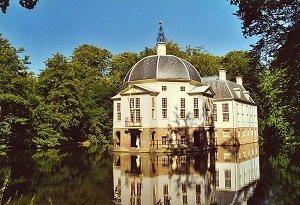
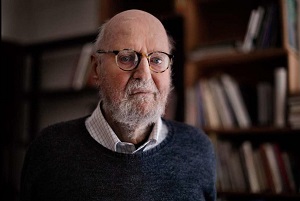
Uit: Ik maak je een graf van letters

“En ik: ‘Ik denk eraan hoe vaak ik je in de weer heb gezien met die voeten van je.’
De onderhoudswerkzaamheden. Hij trok dan het been op tot de kuit te rusten kwam tegen de binnenkant van de dij en met zijn hoofd ter hoogte van de knie werd er geknipt en gevijld, met een klein tangetje werden losse velletjes weggetrokken, de nagelriemen teruggeduwd, met de vingertoppen de bal van de voet, de zool, tenen en wreef afgetast op onregelmatigheden of oneffenheden. Mooie voeten en terdege onderhouden voeten. In badkamer of slaapkamer kwam het niet zelden voor dat wanneer ik tijdens een of andere bezigheid wat voorover leunde, ik die voet in mijn bilspleet voelde, althans van die voet de grote teen. Hetgeen nogal eens uitliep op voortgezet lichamelijk contact.
Ik heb daaraan denkend misschien wel geglimlacht, zittend aan het voeteneind van zijn bed, maar omdat hij daarop niet reageerde en zijn stem – ‘Wat is er te giechelen?’ – me niet daarop opmerkzaam maakte, weet ik zelf niet eens of ik glimlachte bij die gedachtenspinsels van me. De communicatie tussen ons was na al die jaren verbroken. Ik keek op van zijn voeten, om te zuchten of zoiets, toch in verwarring gebracht door die tot nu toe gezamenlijk gedeelde herinneringen die nu misschien weldra alleen de mijne zouden zijn.
Mijn herinneringen ja, die heel eigen herinneringen van mij aan zijn voeten.
We waren onderweg naar een kampeerterrein aan de Dordogne. De kinderen waren klein. We waren te laat van huis vertrokken. De schemer overviel ons min of meer, Noord-Frankrijk was nog maar net bereikt. Hij besloot dat we maar een stop moesten maken voor de nacht, zomaar terzijde van de weg die loopt van Etain naar Verdun. De kleine groene legertent werd opgezet, vierpersoons maar met een beetje duwen en goeie wil pasten we er met ons vijven wel in. Maar de auto, ojee, de auto met alles eraan en erin voor drie weken kamperen, die moest daar in de berm blijven staan.”


Cri Stellweg (23 maart 1922 – 26 november 2006)
Cover


De Amerikaanse schrijver en acteur Jonathan Ames werd geboren op 23 maart 1964 in New York. Zie ook alle tags voor Jonathan Ames op dit blog.

Uit: You Were Never Really Here

“Joe felt something behind him. It was the presence of life and the coming of violence, and that anticipation, that sensitivity, enabled him to turn in time and catch the blackjack on his shoulder, which was better than taking it on the back of his head. Also, it was his left shoulder and Joe was right-handed, and, turning around completely, he was able to grab the man’s wrist before the blackjack came down again, and they were face to face, the same height, and Joe immediately drove his forehead, like a brick, into the bridge of the man’s nose, shattering the bone, and the man, his eyes blinded by red pain, began to fall, and Joe brought up his knee, brought it up hard, without mercy, into the man’s jaw, breaking it. The man went down completely, strings cut, lifeless but breathing. Joe quickly swung his head to the left and the right. He was in an alley wide enough for a car. He’d come out of his flop hotel’s service entrance in the middle of the passageway, and no one was walking by or had stopped at either end. No one had seen. There was street light coming from the avenue, but the alley was mostly in shadow. Joe wiggled his left arm, trying to get life into it, the blackjack had numbed the whole limb, and he dragged the body behind a dumpster and quickly went through the pockets of the light coat, a blue windbreaker. The fallen was a pro. No wallet. No ID. Just keys and a money clip with about two hundred dollars. But there was a cell phone. So he wasn’t a total professional. He didn’t anticipate losing, and he didn’t anticipate being hunted, like Joe did. Joe never carried a cell phone. Joe looked at the blackjack. Police issue. Probably a bent cop from the Cincinnati suburbs doing a little moonlighting in the big town, where his face wasn’t known. Whoever had sent him didn’t want Joe dead. Not yet, anyway. They wanted to bring him in, talk to him. There was probably a partner waiting in a car, waiting for a call. Joe would have been spooked by a car in the alley, so this one had hidden in a cove of a doorway. He’d sap Joe and call his partner. They’d throw his body in the car and bring him to the boss. “


Jonathan Ames (New York, 23 maart 1964)


De Japanse dichteres en schrijfster Yōko Tawada werd geboren op 23 maart 1960 in Tokyo. Zie alle tags voor Yōko Tawada op dit blog.


Westerland or The Waste Land

Humane hormones
a pedestrian zone flowing
between bonehouses
Fish patties
Herring on a bun
Beach reads featuring perspiring bosoms
Ultraviolet the universal eye color
Your ebb and flow
synchronized with foam economics
A breeze shakes salt
in your face
Did you see
The cook is dead
lying beside his three arms
chopped off and thrown on the ground
an apron, wrinkly
as the North Sea, which he
dished up daily
a nourishing medley
The napkins are stained with rosehips and sky
A poorly-defined national flag
Not even the bedsheets with their dreamstains
can be washed clean amid these
faded scraps of order an expansion
or industrial milk teeth: pillars
without a roof


Aries

He said I was an animal with horns
dwelling eternally in the first seven years
of life. If I leave them,
I’ll perish. If I remain, I’ll never have
sex. My attempt to find a habitable age.
You have already found it.
An open landscape of hills, shut up
within the body of the camera.
There is no haiku about the interior
in which no seasons exist.


Vertaald door Susan Bernofsky


Yōko Tawada (Tokyo, 23 maart 1960)


De Amerikaanse dichter Gary Joseph Whitehead werd geboren op 23 maart 1965 in Pawtucket, Rhode Island. Zie alle tags voor Gary Whitehead op dit blog.


Plums

I like to slice them along the seam,
blade balanced on the fulcrum of pit
—that density, like bone, inside the flesh—
and roll until it’s cut clean through.
Then the twist as if uncapping a jar,

and I’m holding hemispheres:
the center of one an oval cup, the other
an egg I pluck from its sweet nest.
But always before I eat each smooth half
comes the urge to put it all back together.


Mouse In The House

For two nights now it’s wakened me from dreams
with a sound like paper being torn, reams

of it, a scratching that’s gone on for hours.
Blind in the dark, I think of my father’s

letters, the ones composed but never sent.
They were addressed to his sister, my aunt,

a woman I never met but whose voice,
slurry and calling from some noisy place,

introduced itself one New Year’s eve, late,
before my mother came and silenced it

with a click. She was one of many things
we never spoke of. But when the phone rang

at odd hours, I’d wonder if it was her.
That voice had resurrected the picture

in the silver frame, my parents’ wedding
day: on the church steps the woman throwing

rice, blond and beautiful, showing no trace
at all of malice in her youthful face.

Now the awful sound, waking me again
like a secret, calls to mind the poison

I left out, and my mother on their bed
tearing a box of letters into shreds.


Gary Whitehead (Pawtucket, 23 maart 1965)


De Amerikaanse schrijver Mitch Cullin werd geboren op 23 maart 1968 in Santa Fe, New Mexico. Zie alle tags voor Mitch Cullin op dit blog.

Uit: Mr Holmes

“Upon arriving from his travels abroad, he entered his stone-built farmhouse on a summer’s afternoon, leaving the luggage by the front door for his housekeeper to manage. lie then re-treated into the library, where he sat quietly, glad to be surrounded by his books and the familiarity of home. For almost two months, he had been away, traveling by military train across India, by Royal Navy ship to Australia, and then finally setting foot on the occupied shores of postwar Japan. Going and returning, the same interminable routes had been taken—usually in the company of rowdy enlisted men, few of whom acknowledged the elderly gentleman dining or sitting beside them (that slow-walking geriatric, searching his pock-ets for a match he’d never find, chewing relentlessly on an unlit Ja-maican cigar). Only on the rare occasions when an informed officer might announce his identity would the ruddy faces gaze with amaze-ment, assessing him in that moment: For while he used two canes, his body remained unbowed, and the passing of years hadn’t dimmed his keen gray eyes; his snow-white hair, thick and long, like his beard, was combed straight back in the English fashion. “Is that true? Are you really him?” “I am afraid I still hold that distinction.”
“You are Sherlock Holmes? No, I don’t believe it.” That is quite all right. I scarcely believe it myself.” But at last the journey was completed, though he found it diffi-cult to summon the specifics of his days abroad. Instead, the whole vacation—while filling him like a satisfying meal—felt unfath-omable in hindsight, punctuated here and there by brief remem-brances that soon became vague impressions and were invariably forgotten again. Even so, he had the immutable rooms of his farm-house, the rituals of his orderly country life, the reliability of his apiary—these things required no vast, let alone meager, amount of recall; they had simply become ingrained during his decades of iso-lation. Then there were the bees he tended: The world continued to change, as did he, but they persisted nonetheless. And after his eyes closed and his breaths resonated, it would be a bee that welcomed him home—a worker manifesting in his thoughts, finding him else-where, settling on his throat and stinging him. Of course, when stung by a bee on the throat, he knew it was best to drink salt and water to prevent serious consequences. Naturally, the stinger should be pulled from the skin beforehand, preferably seconds after the poison’s instantaneous release. In his forty-four years of beekeeping on the southern slope of the Sussex Downs—liv-ing between Seaford and Eastbourne, the closest village being the tiny Cuckmere Haven—he had received exactly 7,816 stings from worker bees (almost always on the hands or face, occasionally on the earlobes or the neck or the throat: the cause and subsequent effects of every single prick dutifully contemplated, and later recorded into one of the many notebook journals he kept in his attic study).”


Mitch Cullin (Santa Fe, 23 maart 1968)
Cover


De Franse schrijver Roger Martin du Gard werd geboren op 23 maart 1881 in Neuilly. Zie alle tags voor Roger Martin du Gard op dit blog. 

Uit: Les Thibault, I, Le pénitencier

— « Père, ce que j’ai vu là-bas… »
— « Assez là-dessus. Ton frère a pu te débiter tous les mensonges qu’il a voulus ; avec toi, il avait beau jeu ! Mais avec moi, ce sera une autre affaire. »
— « Jacques ne s’est plaint de rien. »
M. Thibault parut interloqué.
— « Eh bien, alors ? » lança-t-il.
— « Au contraire, et c’est le plus grave : il dit qu’il est tranquille, il dit même qu’il est heureux, qu’il se plaît là-bas ! » Et comme M. Thibault faisait entendre un petit rire satisfait, Antoine lâcha sur un ton blessant : « Le pauvre gosse a de tels souvenirs de la vie de famille, qu’il préfère encore sa prison ! »
L’offense manqua son but :
— « Eh bien, c’est parfait, nous sommes donc tous d’accord. Que veux-tu d’autre ? »
Antoine n’était plus assez certain d’obtenir la liberté de Jacques pour dévoiler à M. Thibault tout ce que les aveux de l’enfant lui avaient appris ; il résolut de s’en tenir à des griefs généraux et de dissimuler le reste.
— « Je vais te dire la vérité, père », commença-t-il, en fixant sur M. Thibault un regard attentif. « J’avais soupçonné des privations, des mauvais traitements, des cachots. Oui, je sais. Rien de tout cela n’est fondé, heureusement. Mais j’ai constaté dans l’existence de Jacques une misère morale cent fois pire. On te trompe quand on te dit que l’isolement lui fait du bien. Le remède est bien plus dangereux que le mal. Ses journées se passent dans une oisiveté pernicieuse. Son professeur, n’en parlons pas : la vérité est que Jacques ne fait rien, et il est visible que déjà son intelligence devient incapable du moindre effort. Prolonger l’épreuve, crois-moi, c’est compromettre à jamais l’avenir. Il est tombé dans un tel état d’indifférence, et sa faiblesse est telle, que s’il restait quelques mois encore dans cette torpeur, il serait trop tard pour lui rendre jamais la santé. »
Antoine ne quittait pas son père de l’œil ; il semblait peser de tout son regard sur cette face inerte pour en faire jaillir une lueur d’acquiescement. M. Thibault, ramassé sur lui-même, gardait une immobilité massive ; il faisait songer à ces pachydermes dont la puissance reste cachée tant qu’ils sont au repos ; de l’éléphant d’ailleurs, il avait les larges oreilles plates, et aussi, par éclairs, l’œil rusé. Le plaidoyer d’Antoine le rassurait. Il y avait eu déjà quelques embryons de scandales à la Fondation, quelques surveillants qu’il avait fallu congédier, sans ébruiter les [ I-208 ] motifs de leur renvoi, et M. Thibault avait craint un moment que les révélations d’Antoine fussent de cette nature : il respirait.”


Roger Martin du Gard (23 maart 1881 – 22 augustus 1958)


De Amerikaanse dichter Madison Julius Cawein werd geboren in Louisville, Kentucky, op 23 maart 1865. Zie ook alle tags voor Madison Cawein op dit blog.


A Broken Rainbow On The Skies Of May

A Broken rainbow on the skies of May,
Touching the dripping roses and low clouds,
And in wet clouds its scattered glories lost:
So in the sorrow of her soul the ghost
Of one great love, of iridescent ray,
Spanning the roses dim of memory,
Against the tumult of life’s rushing crowds
A broken rainbow on the skies of May.
A flashing humming-bird among the flowers,
Deep-coloured blooms; its slender tongue and bill
Sucking the syrups and the calyxed myrrhs,
Till, being full of sweets, away it whirrs:
Such was his love that won her heart’s rich bowers
To give to him their all, their honied showers,
The bloom from which he drank his body’s fill
A flashing humming-bird among the flowers.
A moon, moth-white, that through long mists of fleece
Moves amber-girt into a bulk of black,
And, lost to vision, rims the black with froth:
A love that swept its moon, like some great moth,
Across the heaven of her soul’s young peace;
And, smoothly passing, in the clouds did cease
Of time, through which its burning light comes back
A moon, moth-white, that moves through mists of fleece.
A bolt of living thunder downward hurled,
Momental blazing from the piled-up storm,
That instants out the mountains and the ocean,
The towering crag, then blots the sight’s commotion:
Love, love that swiftly coming bared the world,
The deeps of life, ‘round which fate’s clouds are curled,
And, ceasing, left all night and black alarm
A bolt of living thunder downward hurled.


Madison Cawein (23 maart 1865 – 8 december 1914)
Cover


Zie voor nog meer schrijvers van de 23e maart ook mijn vorige blog van vandaag.

Federica de Cesco, Nils-Aslak Valkeapää, Steven Saylor, Hamvas Béla, Daniel Biga, Ceija Stojka

De Zwitserse schrijfster Federica de Cesco werd geboren op 23 maart 1938 in Pordenone, Zie alle tags voor Federica de Cesco op dit blog.

Uit: Die Traumjägerin

„Ich habe Pandora getötet«, hatte Night gesagt. Danach: ein langes Schweigen. Die Worte rührten Tumult in mir auf, stießen hart an mein Herz, so dass es in entgeistertem Unverständnis pochte. Das Schweigen hing zwischen uns, zitterte wie eine Kompassnadel, bis ich sagte: »Also, ich kann dir nicht mehr folgen.« Er antwortete nicht; und als das Schweigen andauerte, ging mir allmählich das Unvermeidliche auf. Ich wandte sogar das Gesicht von ihm ab, denn seine Aufrichtigkeit sprang in die Augen. Still wartete er, bis mein Blick zu ihm zurückkehrte. »Erzähl mir, warum.« Er schien weit fort in einem Traum, aus dem heraus er abwesend antwortete. »Sie hat mich darum gebeten.« »Was ist das für eine Geschichte?« Ich fuhr mir mit der Hand über die Stirn. Sein Gesicht war dem offenen Fenster zugewandt, der Straße, tief unten, mit dem brausenden Verkehr. Langsam schüttelte er den Kopf. »Ich lüge nicht.« Eine ruhige Geste bestätigte die Worte. »Es wäre nicht sehr indianisch zu lügen.« Ich lächelte, aber nur halbherzig. Es gab Meerestiefen in jedem Herz, und Strömungen und dunkle Inseln. Ich sagte: »Vielleicht … wenn ich es für möglich halte … dann nur aus Verzweiflung?«
»Wie du sagst: aus Verzweiflung.« Er stand plötzlich auf, nahm die Tassen, goss frischen Kaffee ein, alles ganz ruhig, bevor er sich wieder mir gegenübersetzte. »Weiter«, sagte ich. Er antwortete nachdenklich. Mir fiel plötzlich auf, wie empfindsam sein Gesicht eigentlich war. »Verzweiflung kannst du nicht erklären. Sie kommt über dich, sie erfüllt dich ganz. Dann erst verstehst du sie.« Ich nickte stumm. Er atmete mit einem kleinen Stoß aus. Er hatte immer noch diesen Blick, von aller Welt entrückt. »Ich werde es nie vergessen. Und möchte es nicht noch einmal erleben. Auch nicht im Traum. Ich muss mich da zusammenreißen.« Verstecktes, nicht offen angesprochenes Leid hatte mich schon immer zornig werden lassen. Ich musste plötzlich an Elinor denken und sagte es ihm. »Es ist traurig, aber Träume bringen es am Ende noch fertig, uns verrückt zu machen.« »Elinor«, murmelte er. »Ach ja …« Er trank einen Schluck und begann mit unerwartet ruhiger Stimme zu erzählen. »Also, es war in Seattle, als ich zum ersten Mal von ihr hörte. Elinor spielte eine große Rolle in Pandoras Leben. Sie sprach auch noch von ihr, als wir nach dem Essen eine Bar aufsuchten.”


Federica de Cesco (Pordenone, 23 maart 1938)
Cover


De Samische dichter, schilder, musicus en fotograaf Nils-Aslak Valkeapää werd geboren op 23 maart 1943 in Palonjoensuu nabij Enontekiö. Zie alle tags voor Nils-Aslak Valkeapää op dit blog.


The sun’s progress (Fragment)

the wind
blew the clouds to travel
across heaven
the fire to speak

our gods
together with us
the same joy
dreamed dreams
the sun’s progress
along the highways
the moon in the vent-hole
aurora borealis
heaven’s stars

they were the ones who themselves
knew everything
had everything
considered they stood above life itself

our grandmothers
followed time’s signs
taught us
how many months to a year

the guests had one month less
they do not speak nature’s language

birds, birds
we were
twittering of the bird
under blue high heaven

and the wind,
the wind carried along with it
the wind carried away


Nils-Aslak Valkeapää (23 maart 1943 – 26 november 2001)


De Amerikaanse schrijver Steven Saylor werd geboren op 23 maart 1956 in Port Lavaca Texas. Zie alle tags voor Steven Saylor op dit blog.

Uit: Roma

“She traveled back and forth, up and down the river path. No single place was home. She liked the seaside, where there was always fish to eat, and the gentle lapping of the waves lulled her to sleep at night. She was less fond of the foothills, where the path grew steep, the nights could be cold, and views of great distances made her dizzy. She felt uneasy in the villages, and was often shy around strangers. The path itself was where she felt most at home. She loved the smell of the river on a hot day, and the croaking of frogs at night. Vines grew amid the lush foliage along the river, with berries that were good to eat. Even on the hottest day, sundown brought a cool breeze off the water, which sighed and sang amid the reeds and tall grasses.
Of all the places along the path, the area they were approaching, with the island in the river, was Lara’s favorite. The terrain along this stretch of the river was mostly flat, but in the immediate vicinity of the island, the land on the sunrise side was like a rumpled cloth, with hills and ridges and valleys. Among Lara’s people, there was a wooden baby’s crib, suitable for strapping to a cart, that had been passed down for generations. The island was shaped like that crib, longer than it was wide and pointed at the upriver end, where the flow had eroded both banks. The island was like a crib, and the group of hills on the sunrise side of the river were like old women mantled in heavy cloaks gathered to have a look at the baby in the crib — that was how Lara’s father had once described the lay of the land. Larth spoke like that all the time, conjuring images of giants and monsters in the landscape. He could perceive the spirits, called numina, that dwelled in rocks and trees. Sometimes he could speak to them and hear what they had to say. The river was his oldest friend and told him where the fishing would be best. From whispers in the wind he could foretell the next day’s weather. Because of such skills, Larth was the leader of the group. “We’re close to the island, aren’t we, Papa?” said Lara. “How did you know?” “The hills. First we start to see the hills, off to the right. The hills grow bigger. And just before we come to the island, we can see the silhouette of that fig tree up there, along the crest of that hill.” “Good girl!” said Larth, proud of his daughter’s memory and powers of observation. He was a strong, handsome man with flecks of gray in his black beard. His wife had borne several children, but all had died very young except Lara, the last, whom his wife had died bearing. Lara was very precious to him. Like her mother, she had golden hair. Now that she had reached the age of childbearing, Lara was beginning to display the fullness of a woman’s hips and breasts.”


Steven Saylor (Port Lavaca, 23 maart 1956)
Cover audioboek


De Hongaarse schrijver Hamvas Béla werd geboren op 23 maart 1897 in Eperjes (tegenwoordig Prešov). Zie alle tags voor Hamvas Béla op dit blog.

Uit: On Friendship (Vertaald door Zsolt Suto)

“However, Aristotle probably is wrong when he says that the possibility of community is created by Philia. The community is not more and is not less. The community is something different. It is an wholly and perfectly and basically different life; an existence, possibility, reality, magic and mysterium. They have found an expression for these days: they say it is the relationship of Me and You. There must be at least three people for a community. But when there are three Philia takes off. The Me and the You makes two, always and only two. More with one than when one is alone and less with one than when one is part of a community. The relationship of Me and You is a circle of existence apart: a specific circle between the individual and the collective. Between loneliness and community. Between aloneness and crowd. Between the One and the Three. This two is the world where Philia thrives.

*

Astrology divides the space of human fate into twelve parts, or in its vocabulary, it divides the stages of human fate into twelve houses. Such houses are personality, wealth, education, home, marriage, etc. and astrology assigns a house apart for friendship, too. In the huge literature of modern psychology one may find not a word on friendship – based on this single fact it seems obvious that astrology has much more refinement to the whole of human existence. Astrology also seems to know that friendship doesn’t have anything to do with the Me nor with love. It designates a house apart for Philia and values its weight and importance the way it values vocation or death. Friendship is not a simple association, just the same way that a friend is not a mere companion. Not a comrade, not a colleague, not a partner. What one experiences in the house of friendship cannot be substituted by any other kind of relationship. A friend cannot be replaced by anything else. There are people incapable of friendship; there are people who are unfit for friendship; there are people who have many other people around them; and there are some, whose life passes in a constant hunger for a friend, without ever finding one.”


Hamvas Béla (23 maart 1897 – 7 november 1968)


De Franse dichter en schrijver Daniel Biga werd geboren op 23 maart 1940 in Nice. Zie alle tags voor Daniel Biga op dit blog.


CAPITAINE DES MYRTILLES 
(disait Emerson de Thoreau)

et moi aussi
j’ai été huissier des chants
appariteur des couleurs
berger d’enfants
et instituteur des caprins et ovins
j’ai été ingénieur des bétons et bitumes
manœuvre des dossiers et paperasses
j’ai eu une chaire associée de gynécologue du cœur
et de pharmacien des âmes
mais c’est toujours jardinier de fourmis et scarabées
brocanteur des mûres et chanterelles
troisième classe des eaux et forêts
que j’ai été parfaitement à l’aise
comme le gardon dans son élément
car il n’y a pas un paysage pas une vie végétale
pas une plante au monde
dont je ne me sois jamais senti l’étranger

mais que dirai-je de l’homme ?


LES RÊVES SE RACONTENT ÀL’OREILLE

miel de père lait de mère œuf du poème
(belle rencontre de miel avec  l’ours d’or au festival de Berlin)
l’enfant qui n’aime plus guerre le lait
l’adolescent qui le vend
le poète de quarante ans son œuf de poévie :

dans les rayons le miel se goutte avec le doigt
dans les rayons d’abeilles de propolis de cire les rêves
les rêves se racontent à l’oreille

dans la trilogie de Yussu les films de Semih Kaplanogu
miel –lait-œuf honney-milk-egg hourra ! le réalisme spirituel
hourra ! l’enfant se voit de l’autre côté du miroir
de l’autre bord du torrent il de voit lent faon :

« je bois la lune je bois l’eau de la lune pleine
j’avale la pleine lune tombée dans le seau
je plonge la tête dans l’eau du seau et
j’avale le reflet d’un reflet tombé… »
 les rêves se murmurent à l’oreille


Daniel Biga (Nice, 23 maart 1940)


De Oostenrijkse schrijfster Ceija Stojka werd op 23 maart 1933 geboren in Kraubarth. Zie alle tags voor Ceija Stojka op dit blog.

Uit: Wir leben im Verborgenen

„1939 fuhren wir Rom noch mit Wagen und Pferden frei in Österreich herum. Meine Mutter war damals zweiunddreißig Jahre alt, mein Vater ebenfalls. Wir waren sechs Kinder, die älteste Schwester, Mitzi, war gerade vierzehn, dann kamen meine Schwester Kathi mit zwölf Jahren, meine beiden Brüder Hansi mit elf und Karli mit acht, unser Nesthäkchen Ossi mit sieben und ich selbst, Ceija, mit sechs Jahren. Wir liebten unsere Eltern, und unter uns Geschwistern war das ebenfalls so. Natürlich mussten wir auch, wo immer wir waren, die Schule besuchen. Ich erinnere mich noch an meinen ersten Schultag, mein Vater Wackar brachte mich dahin. Ich war mächtig stolz.
Wir waren damals, 1939, irgendwo in der Steiermark, als meine Leute erfuhren, dass wir nicht mehr umherreisen dürften. Es wurde immer schlimmer für uns, bis mein Vater den Entschluss fasste, nach Wien zu gehen. Er sagte, dass er in Wien einen guten Bekannten habe, einen Fuhrwerksunternehmer, mit einem großen Platz. Vielleicht könnten wir unsere Wohnwagen bei ihm einstellen und dort eine Zeit lang leben. Und so ging es nach Wien, in den sechzehnten Bezirk, in die Paletzgasse zu Herrn Sprach. Dieser Mann nahm uns herzlich auf, doch er sagte zu meinem Vater: »Karl, der Wohnwagen ist zu auffällig, du musst ihn in ein kleines Holzhaus umbauen.« So geschah es dann auch. Wir Kinder kamen wieder in die Schule, meine älteste Schwester Mitzi in eine Papierfabrik. Ossi, der Kleinste, blieb noch bei meiner Mutter Sidi. In diesem großen Hof lebte noch das Ehepaar Brösel in einem kleinen Haus. Sie hatten keine Kinder, aber sie hatten uns sehr lieb. Sie züchteten Hasen, und oft durften Ossi und ich mit Frau Brösel zum Hanselteich, um Gras für die Hasen zu rupfen. Nach der Arbeit gab es dann immer eine gute Jause.
Gleich neben unserem Hof war das schöne Kongressbad, wo wir Kinder uns sehr viel aufhielten, und in der Paletzgasse gab es einen neuen Gemeindebau, der wegen seiner roten Farbe von den Bewohnern Paprikakistl genannt wurde. In diesem Neubau wohnte die Patin meiner Schwester Kathi. Wir nannten sie Gusti-Godl. Sie war einfach ein Sonnenschein. Sie versteckte uns vor den Nazis, wann immer sie die Möglichkeit dazu hatte.“


Ceija Stojka (Steiermark, 23 maart 1933)
Cover

Billy Collins, Theo Kars, Eveline Hasler, Érik Orsenna, Arnold Sauwen, Wolfgang Bächler, Ilse Kleberger, Léon Deubel, Karel Poláček

De Amerikaanse dichter en schrijver Billy Collins werd geboren in New York op 22 maart 1941. Zie ook alle tags voor Billy Collins op dit blog.


Morning

Why do we bother with the rest of the day,
the swale of the afternoon,
the sudden dip into evening,

then night with his notorious perfumes,
his many-pointed stars?

This is the best—
throwing off the light covers,
feet on the cold floor,
and buzzing around the house on espresso—

maybe a splash of water on the face,
a palmful of vitamins—
but mostly buzzing around the house on espresso,

dictionary and atlas open on the rug,
the typewriter waiting for the key of the head,
a cello on the radio,

and, if necessary, the windows—
trees fifty, a hundred years old
out there,
heavy clouds on the way
and the lawn steaming like a horse
in the early morning.


Silence

There is the sudden silence of the crowd
above a player not moving on the field,
and the silence of the orchid.

The silence of the falling vase
before it strikes the floor,
the silence of the belt when it is not striking the child.

The stillness of the cup and the water in it,
the silence of the moon
and the quiet of the day far from the roar of the sun.

The silence when I hold you to my chest,
the silence of the window above us,
and the silence when you rise and turn away.

And there is the silence of this morning
which I have broken with my pen,
a silence that had piled up all night

like snow falling in the darkness of the house—
the silence before I wrote a word
and the poorer silence now.


Billy Collins (New York, 22 maart 1941)


De Nederlandse schrijver en vertaler Theo Kars werd geboren in Rotterdam op 22 maart 1940. Zie ook alle tags voor Theo Kars op dit blog.

Uit: Memoires van een slecht mens

“Het eerste voorval dat ik mij uit mijn prille kindertijd herinner, staat onwaarschijnlijk scherp in mijn geheugen gegrift. Ik moet toen niet veel ouder dan drie jaar zijn geweest, want mijn grootvader hield mij op zijn arm. Wij stonden in de deuropening van de bijkeuken van het huis van mijn ouders. Mijn grootvader had een grijze gleufhoed op. Opeens, in een opwelling van baldadigheid, sloeg ik de hoed van zijn hoofd. Ik deed dit niet om hem te plagen, maar uitsluitend voor mijn eigen vermaak, en schaterde het uit toen de hoed door de lucht vloog en een paar meter verder op de betonnen vloer belandde. Ik was verrast door de geërgerde reactie van mijn hevig geschrokken grootvader, wiens keurige, door een middenscheiding in twee symmetrische helften verdeelde dunne, grijze haardos opeens tot enkele slordige slierten was herleid. Hij zette mij op de grond en sprak mij daarna op boze toon toe, daarin bijgevallen door mijn moeder, die was toegesneld. Ik weet niet meer wat zij zeiden, maar nog wel dat ik begreep dat ik onnadenkend had gehandeld en onbedoeld iemand op wie ik dol was een onaangename sensatie had bezorgd. Dit voorval is mij vermoedelijk zo duidelijk bijgebleven omdat ik mij toen voor het eerst bewust werd van mijn verantwoordelijkheid voor mijn doen en laten.
Mijn ouders, die beiden uit Rotterdam afkomstig waren, woonden in Bergschenhoek op Bergweg nr. 1, het eerste huis na de stadsgrens bij Hillegersberg. Deze grens liep enkele honderden meters midden over de Bergweg, waardoor de huizen aan de ene zijde van de weg nog tot de gemeente Rotterdam behoorden en die aan de overzijde deel uitmaakten van Bergschenhoek. Deze topografische eigenaardigheid zou niet vermeldenswaard zijn als zij aan het eind van de oorlog niet tot een wrange situatie had geleid die grote verontwaardiging teweegbracht in mijn ouderlijk huis. Toen de geallieerden in het voorjaar van 1945 voedsel dropten voor de hongerige bevolking van Rotterdam, werd dit uitsluitend onder de hongerige burgers van deze stad verspreid. Als gevolg daarvan kregen de bewoners van de huizen aan de Rotterdamse zijde van de Bergweg extra voedsel, maar werd aan de niet minder hongerige bewoners aan de overzijde niets uitgereikt. Iedereen in mijn omgeving was erg verontwaardigd hierover, vooral mijn grootvader, die in die tijd met zijn vrouw bij mijn ouders woonde, en verzot was op eten. Mijn vader placht minachtend over hem te zeggen dat hij ‘van zijn buik zijn God maakte’. Ik herinner mij dat ik mij verbaasde over de algemene verontwaardiging, en dacht: het is vervelend dat Rotterdam net bij ons huis ophoudt, maar dat is niemands schuld. Op wie is iedereen nu zo kwaad?”


Theo Kars (22 maart 1940 – 10 november 2015)
Cover


De Zwitserse schrijfster Eveline Hasler werd geboren in Glarus op 22 maart 1933. Zie ook alle tags voor Eveline Hasler op dit blog.

Uit: Die Wachsflügelfrau

„Da steht schon wieder eine der Wärterinnen hinter ihr. Die Hügin hat eine Art, geräuschlos in Stoffschuhen sich hin-terrücks zu nähern. Neugierig ist die, wittert mit der flei-schigen Nase, beschnuppert die Dinge, läßt unter der falti-gen Oberlippe die Zähne sehen. Nein. Nicht lesen. Emily zieht die Schulter hoch wie ein Schulkind, das sich gegen Abschreiben schützt. Die Hügin kann unter dem abgewinkelten Arm Emilys Namenszug sehen: Dr. Emily Kempin. Schwungvoll, diese Unterschrift! lacht die Hügin. -Doktor. — klingt gut, was! Die Schneidezähne sind immer noch zu sehen, obwohl die Hügin aufgehört hat zu lachen. Emily richtet sich auf, dreht abrupt den Kopf: Ich habe den Doktortitel verdient. Kein Doktor Marriage. Schon gut, Frau Kempin. Frau Doktor Kempin. Nicht einmal die Rosa Clarissa, die ihr von den Wärte-rinnen noch die liebste ist, wird den Brief zu sehen be-kommen. Nur Dr. Wolff. Direktor Mille wird ihn natür-lich lesen, er, der alles, was hier geschieht, überblickt. Fast alles. Bevor sie zum Pavillon zurück muß, händigt ihr die Hü-gin die zerlesenen Zeitungen aus. Auch die Schere wieder? Ja, die Schere. Dr. Wolff hat Emily eine der sonst streng gehüteten Scheren zugestanden, zweimal die Woche von drei bis fünf, speziell für ihre •Weltordnungen•. Um fünf sind alle geliehenen Gegenstände abzuliefern, das ist Vor-schrift. Aufrecht im Bett sitzend, schneidet sie ins Zeitungspa-pier. Die Spitze der Schere fährt Figuren aus dem Reklameteil entlang: Umrisse einer Frau im Pelzmantel, die Pelzmütze wie ein Schiff auf den Locken. Die Schere frißt sich weiter. Ein Mann mit Zylinder, der ausgestreckte linke Arm mit dem weißen Handschuh zeigt auf einen patentierten eins a Aktenkoffer. Behutsam, nur behutsam, damit das zerknitterte Papier nicht reißt. Um deutlich zu sehen, muß sieden Kopf weit hinunterbeugen, längst bräuchte sie eine Lesebrille, es wird das erste sein, was sie sich nach der Entlassung vom Lohn des Pfarrers leistet. Nun kommt das Zerschneiden der Figuren: säuberlich den Kopf mit dem lächelnden Mund abtrennen, den linken Arm mit dem Pelzmuff. Schweißtropfen sammeln sich über ihrcn Brauen. Ein Männerbein in gestreifter Hose, eine Damennase, ein Männerfuß im Lackschuh liegen auf ihrer Bettdecke. Nun alles in die Schachteln geordnet: in eine Frauen-schachtel, in eine Männerschachtel.“


Eveline Hasler (Glarus, 22 maart 1933)
Cover


De Franse schrijver Érik Orsenna werd geboren in Parijs op 22 maart 1947 als Érik Arnoult. Zie ook alle tags voor Erik Orsenna op dit blog.

Uit: La Fontaine

« Le père, qu’en ce jour il faut présumer heureux, se nomme Charles de La Fontaine. Le petit Jean est son premier enfant. Il est baptisé en l’église Saint-Crespin, lequel est patron des savetiers. Chez les La Fontaine, on est de bourgeoisie récente, à peine quatre générations, enrichies dans le commerce et notamment celui du drap. Ce début de fortune a permis au grand-père d’acquérir une charge, celle de « maître des Eaux et Forêts ». À ce titre, il surveille et contrôle un territoire à lui confié par le seigneur du lieu. Au fil du temps, les La Fontaine ont acheté des terres. Ils tirent de leurs fermes l’essentiel de leurs revenus. Une charge et des fermes : on n’est pas encore tout à fait noble, mais on s’en rapproche. Encore un effort, La Fontaine !
La mère, prénommée Françoise, mais d’abord née Pidoux, éveille plus notre intérêt. Dès le XIIIe siècle, sa famille n’a cessé d’occuper les plus hautes fonctions : banquiers de princes, évêques, prévôts des marchands… Un Pidoux fut seigneur de Chaillot, un autre liquidateur des biens des Templiers. Habitant Paris, mais chassés par la guerre de Cent Ans, ils s’enfuient vers Poitiers où ils s’installent. Et, de mariage en mariage, ils continuent de tisser des liens utiles. On trouve des Pidoux partout : l’un est beau-frère du cardinal de Richelieu ; un autre, parent de Bossuet ; une autre encore, cousine de Racine… N’oublions pas un Pidoux médecin du roi Henri III.
Les Pidoux ne sont pas que sérieux. La passion peut parfois les conduire à toutes les audaces et tous les sacrifices. Le jeune Loys, un des frères de Françoise, donc l’oncle direct de notre poète, achève ses études de médecine. Il a vingt-cinq ans. Un beau jour, il rencontre une quasi vieille (trente ans), mais encore fille, Isabelle de Richelieu. Coup de foudre. Les familles s’oppo­sant au mariage, Loys enlève Isabelle. Ils vivront à Dole, capitale d’une Franche-Comté pas encore française. Toujours fous d’amour, mais désargentés : la parentèle a profité de leur fuite pour faire main basse sur leurs biens.
Un autre Pidoux a connu la gloire pour une raison qui tient à l’hydrologie en même temps qu’à l’hygiène. Il se passionne pour les eaux thermales, comparant sans fin les vertus d’une cure à Pougues, à Spa et à Bourbon-l’Archambault.”


Érik Orsenna (Parijs, 22 maart 1947)


De Vlaamse dichter en schrijver Arnold Sauwen werd geboren te Stokkem op 22 maart 1857. Zie ook alle tags voor Arnold Sauwen op dit blog.


Landschap

Op Lanklaars hoogsten heuvel blijf ik staan,
en laat mijn blikken in het ronde weiden.
Een reuzenslange schijnt de zandge baan,
die kronkelt door de stille, bruine heide.

Het verre West, in bloedig rood gehuld,
Zie ik door ’t kaalgeschudde boschje blinken;
de laatste glans der najaarszon verguldt
de kruin der boomen, in het nederzinken.

Een schaarsche vogelzang breekt soms de stilt;
De krekel sjirpt, in ’t heidekruid verloren;
Somwijlen klinkt een schot, dat ’t bosch doortrilt,
en ’t schallend toeten van een jagershoren.

Ginds, achter eik en kalen beukentop,
waardoor de koele najaarswinden suizen,
heft Stockheims kerk haar spitsen toren op,
hoog boven markt en blanke visschershuizen.

Stil wenkt mij, in het diepe Mazedal
het dorp, getuige mijner kinderjaren;
en de oude linde, naast den breeden wal,
lacht als een droom, sinds lang reeds heengevaren.

En blijde groet ik ’t dak van meengen vrind,
het torenhaantje, dat in ’t zonlicht fonkelt,
en Limburgs stroom, die, als een zilvren lint,
langs akkerland en vruchtbre weiden kronkelt.


Arnold Sauwen (22 maart 1857 – 11 mei 1938)
Gedenkplaat


De Duitse dichter Wolfgang Bächler (een pseudoniem van Wolfgang Born) werd geboren op 22 maart 1925 in Augsburg. Zie ook alle tags voor Wolfgang Bächler op dit blog.


Stadtbesetzung

Schwarze Wälder belagern die Stadt, haben sie lautlos umzingelt. Längst haben sie Vorposten an die Einfallstraßen gestellt, Spähtrupps, Vorhuten, Fünfte Kolonnen bis in den Stadtkern geschickt. Jetzt drin­gen sie nachts in die Vororte ein, schlagen sie Breschen in Villenviertel, stoßen an die Ufer des Flusses, die Böschungen der Kanäle vor und säu­men alle Gewässer ein.
Pappelkolonnen sperren die Straßen ab, gliedern die Alleebäume ein, schließen zu dichteren Reihen auf, marschieren im Gleichschritt weiter. Tannen und Eschen befreien Gefangene in den Gärten und Parks, Friedhöfen und Hinterhöfen. Eichen und Buchen besetzen die Kreu­zungen, Knotenpunkte, die großen Plätze, verbrüdern, verschwistern sich mit den Ulmen, Linden, Kastanienbäumen, sprengen die Ketten parkender Autos, drängen die Baumaschinen, Bauzäune, Grundmau­ern, Gerüste, Geländer zurück, schlagen Wurzeln in Gruben und Grä­ben.
Fichten umstellen die Amtsgebäude, das Rathaus, den Rundfunk, den Bahnhof, die Polizeiinspektionen, Gerichte, Gefängnis, das Arbeits­und das Finanzamt. Die Pappelfront hat die Kasernen erreicht, verteilt sich um die Gebäude. Ahornbäume füllen die Lücken, schreiten durchs Tor in den Hof. Machtlos klettern die Wachen mit ihren Gewehren die Äste hinauf in die Kronen, sehen vor lauter Bäumen die Stadt nicht mehr.
Geräuschlos, kampflos, ohne Verluste haben die Wälder die Stadt besetzt, erobern sie Heimatboden zurück, besiegen sie Steine, Stahl und Beton, verdrängen Verdrängte ihre Verdränger.


Wolfgang Bächler (22 maart 1925 – 24 mei 2007)
Cover


De Duitse dichteres en schrijfster Ilse Kleberger werd als Ilse Krahn geboren op 22 maart 1921 in Potsdam. Zie ook alle tags voor Ilse Kleberger op dit blog.


Frühling

Die Amsel singt
und dein Gummiball springt.
Die Sonne flirrt
und dein Springseil schwirrt.
Der Apfelbaum blüht
und dein Rollschuh zieht
eine schnurgerade Bahn.


Sommer

Weißt du, wie der Sommer riecht?
Nach Birnen und nach Nelken,
nach Äpfeln und Vergißmeinnicht,
die in der Sonne welken,
nach heißem Sand und kühler See
und nassen Badehosen,
nach Wasserball und Sonnenkrem,
nach Straßenstaub und Rosen.
Weißt du, wie der Sommer schmeckt?
Nach gelben Aprikosen
und Walderdbeeren, halb versteckt
zwischen Gras und Moosen,
nach Himbeereis, Vanilleeis
und Eis aus Schokolade,
nach Sauerklee vom Wiesenrand
und Brauselimonade.
Weißt du, wie der Sommer klingt?
Nach einer Flötenweise,
die durch die Mittagsstille dringt:
Ein Vogel zwitschert leise,
dumpf fällt ein Apfel in das Gras,
der Wind rauscht in den Bäumen.
Ein Kind lacht hell, dann schweigt es schnell
und möchte lieber träumen.


Ilse Kleberger (22 maart 1921 – 2 januari 2012)
Potsdam, Holländisches Viertel


De Franse dichter Léon Deubel werd geboren op 22 maart 1879 in Belfort. Zie ook alle tags voor Léon Deubel op dit blog.


INSTANTS DE FÊTE

Comme un enfant craintif j’erre à travers les rues.
L’ombre, ainsi qu’un automne, a flétri les visages,
Et des paupières d’or d’un azur sans nuages
Filtre le long regard des choses disparues.

En vain, je fuis la joie énervante qui rôde
Et propage en la nuit sa grossière hystérie.
C’est féte. La douleur des cuivres psalmodie…
Et l’Ivresse, en haillons, prophétique, clabaude.

Sur la place, où dormaient des silences de lune,
La crécelle d’un orgue a repris, une à une,
Les valses à la mode en robes de paillons.

Un clown, sur des tréteaux, parodie son martyre,
Et la foule, aux éclats de voix de l’histrion,
Acclame par instants la souffrance de rire.


NOTATIONS

Au travers de ton songe, entends sur cette rive
Les printemps persifleurs susciter les dryades
Et les sous-bois changeants, aidés des oréades,
Filer à leurs rouets l’argent des sources vives.

Par delà l’infini moutonnement des bois,
Entends, comme un rayon descendu d’une étoile,
Cette voix qui ondule au coeur de l’autrefois
Selon l’inflexion des collines natales.

C’est l’éveil frémissant d’un calme souvenir.
La courbe du passé fléchit vers l’avenir
Ainsi qu’un arc-en•ciel s’abaisse à l’horizon.

L’âme s’exalte au chant pastoral des villages
Et, simplement élit, pour sa fidèle image,
La sereine fumée au toit d’une maison.


Léon Deubel (22 maart 1879 – 4 juni 1913)
Belfort


De Tsjechische schrijver Karel Poláček werd geboren op 22 maart 1892 in Rychnov nad Kně¸nou (Reichenau an der Knieschna). Zie ook alle tags voor Karel Poláček op dit blog.

Uit: We Were a Handful (Vertaald door Mark Corner)

“Joey Zilvar was there among them and I would have liked to ask him whether he’d really got married or what he was up to, but he kept mum, I expect because he didn’t want to say anything in front of the others. And the lads told me what was going on that was new. They said we had a new teacher who’s still hardly out of shorts and so they call him an ansillyary teacher, but on the other hand he knows how to run really fast and plays on the left wing for a sports club called Ctibor. Apparently in the last championship match he broke free and scored three goals, and one of them was taken on the volley. And they went on to say that when I was taken ill the entire place had to be whitewashed and there was no school for three days and so the whole affair had put a spring in the step of the pupils and they were really happy about it. I said to them: “I wonder if you’re properly grateful to me for all this.” They replied that everyone had said good things about me and called me a crackerjack because I’d been down with scarlet fever which was really something and I was ever so proud when I heard this. But the question of what happened to India kept preying on my mind and I just couldn’t get it out of my head. So I made up my mind to find out what I could from the lads. If they spilled the beans about it, all to the good, and if they didn’t say anything, so what. And so when they came to see me again, all of a sudden I blurted out in a loud voice: “India?” and then kept a crafty eye on them to see what would happen next. Speaking all at once the boys came back at me in another loud voice saying: “India!” Once again I fixed them with a cunning look and said in an even stronger voice: “Calcutta?” And back came the chorus in a strong voice of its own: “Calcutta!”


Karel Poláček (22 maart 1892 – 19 oktober 1944)
Gedenkplaat in Rychnov nad Kně, tegenwoordig Reichenau an der Knieschna


Zie voor nog meer schrijvers van de 22e maart ook mijn blog van 22 maart 2017 en ook mijn blog van 22 maart 2016 en mijn twee blogs van 22 maart 2014.