Umberto Eco, Joris van Casteren, Paul Ingendaay, Ngũgĩ wa Thiong’o, Xu Xiake, Luisa Futoransky, Friedrich Dürrenmatt, Forough Farokhzad, László Krasznahorkai

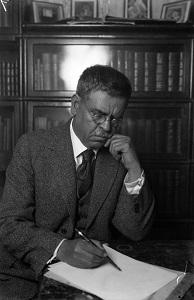
De Italiaanse schrijver Umberto Eco werd geboren op 5 januari 1932 in Allasandria. Zie ook alle tags voor Umberto Eco op dit blog.

Uit: Chronicles of a Liquid Society (Vertaald door Richard Dixon)

“The idea of “liquid” modernity or society comes from Zygmunt Bauman. Those who want to understand the various implications of this concept may find it helpful to read State of Crisis, where Bauman and Carlo Bordoni discuss this and other topics.
The liquid society begins to take shape with the movement known as postmodernism, an umbrella term that brings together a great variety of phenomena, from architecture to philosophy to literature, not always in a coherent fashion. Postmodernism signaled the crisis of “grand narratives,” each of which had claimed that one model of order could be superimposed on the world; it devoted itself to a playful or ironic reconsideration of the past, and was woven in various ways with nihilistic tendencies. But postmodernism, according to Bordoni, is also on the way out. It was temporary in character, we have passed through it without noticing, and it will be studied one day like pre-Romanticism. It served to point out an event that was happening and represented a sort of ferry from modernity to a present that still has no name.
Among the characteristics of this nascent present Bauman includes the crisis facing the state: what freedom do nation-states retain when faced with the power of supranational entities? We are witnessing the disappearance of something that used to ensure that individuals could resolve the various problems of our time in a homogeneous fashion. This crisis has led to a collapse of ideologies, and therefore of political parties, and to a general call for a sharing of values that allowed individuals to feel part of something that understood their needs.
The crisis in the concept of community gives rise to unbridled individualism: people are no longer fellow citizens, but rivals to beware of. This “subjectivism” has threatened the foundations of modernity, has made it fragile, producing a situation with no points of reference, where everything dissolves into a sort of liquidity. The certainty of the law is lost, the judiciary is regarded as an enemy, and the only solutions for individuals who have no points of reference are to make themselves conspicuous at all costs, to treat conspicuousness as a value, and to follow consumerism. Yet this is not a consumerism aimed at the possession of desirable objects that produce satisfaction, but one that immediately makes such objects obsolete. People move from one act of consumption to another in a sort of purposeless bulimia: the new cell phone is no better than the old one, but the old one has to be discarded in order to indulge in this orgy of desire.
The collapse of ideologies and political parties: it has been suggested that political parties have become like taxis taken by vote-controlling mob leaders or Mafia bosses, who choose them casually, according to what is on offer ​— ​politicians can change party allegiance without creating any scandal. It’s not just people: society itself is living in an increasingly precarious condition.”
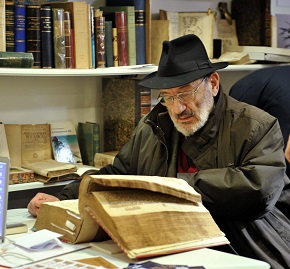


Umberto Eco (5 januari 1932 – 19 februari 2016)


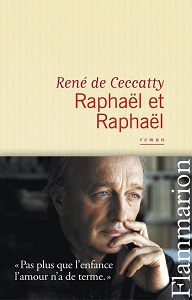
De Nederlandse schrijver, dichter en journalist Joris van Casteren werd geboren in Rotterdam op 5 januari 1976. Zie ook alle tags voor Joris van Casteren op dit blog.

Uit: Het glas van Casanova

“Op een dinsdag in april rijd ik met de auto naar Hoek van Holland. Naast me zit mijn dochter, die anderhalve week later – het is 2008 – vier zal worden. Achterin liggen mijn gedemonteerde fiets, een fietskar, een sporttas met kleding, slaapzakken en een tentje.
Ik tank bij een benzinepomp langs de a4 en koop een blikje cola. In de auto schud ik het, om een of andere reden, waardoor de cola, bij het openen van het blikje, door de auto spuit. ‘Je moet ook niet schudden met cola,’ zegt mijn dochter, gierend van het lachen. ‘Ik heb geen idee waarom ik dat deed,’ zeg ik.
In Hoek van Holland zet ik met plakkerige handen mijn fiets in elkaar. Met mijn dochter in het zitje en onze bagage, de slaapzakken en het tentje in de kar, fiets ik tussen auto’s, bussen en vrachtwagens de veerboot op.
We eten mosselen, garnalen en zalm in het restaurant als de boot begint te varen. Naast ons dineren twee Britten. ‘I admire your courage,’ zegt een van hen als ik vertel wat het doel van mijn onderneming is.
W.G. Sebald maakte in augustus 1992 een wandeling langs de kust van het graafschap Suffolk. Hij passeerde vergeten badplaatsen waar depressieve mensen in krottige huisjes woonden. De wandeling zou centraal komen te staan in
De ringen van Saturnus (1995), een mengvorm van autobiografie, reportage en geschiedschrijving, dat op mij – ook vanwege de curieuze, mijmerende manier van schrijven, waarbij volstrekt op zichzelf staande verhaallijnen harmonieus vervlochten raken – een verpletterende indruk maakte.
In het eerste deel van De ringen van Saturnus schrijft Sebald over de door hem bewonderde zeventiende-eeuwse Britse arts en schrijver Thomas Browne. Diens werk typeert hij als volgt: ‘Het is alsof je tegelijk door een omgekeerde verrekijker en door een microscoop kijkt.’ Daarmee levert Sebald tevens een volmaakte omschrijving van zijn eigen werk.”
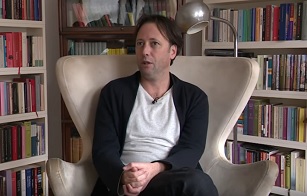


Joris van Casteren (Rotterdam, 5 januari 1976)


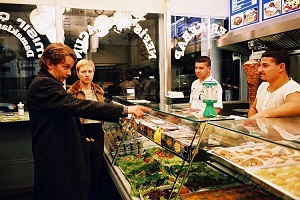
De Duitser schrijver, criticus en literatuurwetenschapper Paul Ingendaay werd geboren op 5 januari 1961 in Keulen. Zie ook alle tags voor Paul Ingendaay op dit blog.

Uit: Gebrauchsanweisung für Andalusien

“Lange Zeit war Spanien in der Vorstellung seiner Besucher gleichbedeutend mit Andalusien – und Andalusien mit Spanien. Klischee oder Wahrheit, dort wurden ziemlich starke Bilder heraufbeschworen : von Stierkampf, Zigeunern und Flamencofolklore. Von Abenteurern, dunklen Augen und wildem Temperament. Das Stereotyp des Andalusiers ( und der Andalusierin ! ) hat so viele Jahrhunderte hindurch die Phantasien der übrigen Welt beherrscht, dass der moderne spanische Autonomienstaat, von dem Andalusien nur eine von siebzehn Regionen – und nicht einmal die größte – bildet, kaum dagegen ankommt.
Kleine Kostprobe gefällig ? Die jungen andalusischen Frauen, lese ich in einem hundert Jahre alten deutschen Buch, sind » durchweg anmutige Gestalten mit großen, feurigen, von langen, gebogenen Wimpern beschatteten Augen, üppigem schwarzen Haar, zierlichen Händen und Füßen, reizend in ihrer Art, sich zu kleiden und mit Blumen zu schmücken «.
Verzeihen Sie, dass ich mit den Frauen anfange. Vielleicht hätten erst die Gitarrenspieler oder die Messerstecher kommen sollen. Aber es liegt am Thema. Es geht noch weiter. » Wer Gelegenheit hatte, eine spanische Tertulia zu besuchen «, schreibt derselbe Mann, Francisco Fronner, in seinem Buch Land und Leute in Spanien ( 1912 ), » wird von der unnachahmlichen Grazie, dem zwanglosen Benehmen und der ungekünstelten Koketterie der Andalusierinnen entzückt sein. « Vermutlich war der Verfasser Junggeselle und hatte leicht reden. Wir sollten ihn nicht wörtlich nehmen. Doch der Kern stimmt noch heute.
Das sind Äußerlichkeiten, werden Sie einwenden. Das dachte ich zuerst auch. Aber dann las ich mit wachsender Faszination weiter und erfuhr in diesem Buch, aus welchen Elementen sich nach Meinung von Francisco Fronner – nennen wir ihn Don Francisco, wenn wir es ehrerbietig meinen, oder Paco, wenn wir ihn zu unseren Freunden rechnen – der andalusische Charakter zusammensetzt. Und ich bewunderte Don Franciscos heute eher selten anzutreffenden Mut zur Verallgemeinerung.
Denn die hervorstechenden Eigenschaften des andalusischen Charakters, schreibt er, seien folgende : » Sorgloser Leichtsinn, übermütige Fröhlichkeit, Eitelkeit, Putzsucht ( gemeint ist die weibliche Neigung zu aufregenden Kleidern, nicht zum geschrubbten Küchenboden ), Redseligkeit, Prahlsucht, Dünkel, Spottsucht, Neugierde und Leichtgläubigkeit. « Und jetzt kommt’s : » Zu diesen teilweise nicht sehr empfehlenswerten Eigenschaften gesellt sich jedoch ein gutmütiges, leicht versöhnliches Wesen, höfliche Zuvorkommenheit und Dienstfertigkeit gegen Fremde ( Don Francisco spricht hier mit dem Selbstbewusstsein des wohlhabenden deutschen Touristen ), wohl auch uneigennützige Gastfreiheit, ungewöhnliche Liebenswürdigkeit im Umgange, scharfer Verstand, gepaart mit rascher Auffassung, und eine überschwängliche orientalische Phantasie. ”



Paul Ingendaay (Keulen, 5 januari 1961)
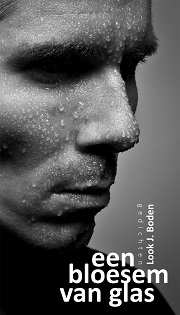
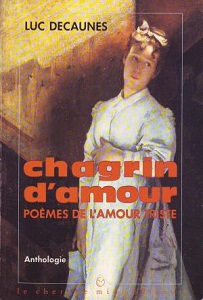
Cover


De Keniase schrijver Ngũgĩ wa Thiong’o werd geboren op 5 januari 1938 in Kamiriithu, Limuru, Kenia. Zie ook alle tags voor Ngũgĩ wa Thiong’o op dit blog.

Uit: Petals of Blood

“It did not matter that for him, all these years, he had acquired very little. Still he felt a lordly proprietorial air to the structure: was the police not the force that guaranteed that stability which alone made possible the unhindered accumulation of wealth? Everybody, even those millionaires that had ganged together under Kamwene Cultural Organization, really owed their position to the force. The police force was truly the maker of modern Kenya, he had always felt. The Karegas and their like should really be deported to Tanzania and China! But it was people like Munira who really disturbed him. How could Munira have repudiated his father’s immense property? Could property, wealth, status, religion, plus education not hold a family together? What else could a man want? Inspector Godfrey decided that it was religious fanaticism! Yet from his own experience in the police force, such fanaticism was normally found among the poor. Human beings: they could never be satisfied! And yet there was a way in which Munira was right. This system of capitalism and capitalistic democracy needed moral purity if it was going to survive. The skeletons that he himself had come across in the New Ilmorog could not very well come under the label of moral purity. Of course he had seen similar or near similar things in Nairobi, Mombasa, Malindi, Watamu and other places but he had never before given it much thought because, at least so he supposed now, he had never before come across a Munira who was prepared to murder in the name of moral purity. And it was not Wanja’s Sunshine Lodge that Inspector Godfrey was thinking about. It was, for instance, the Utamaduni Cultural Tourist Centre at Ilmorog. Ostensibly it was there to entertain watalii from USA, Japan, West Germany, and other parts of Western Europe. But this only camouflaged other more sinister activities: smuggling of gemstones and ivory plus animal and even human skins. It was a centre for the plunder of the country’s natural and human assets. Women, young girls, were being recruited to satisfy any watalii’s physical whims. The more promising ones, those who seemed to acquire an air of sophistication with a smattering of English and German were lured to Europe as slave whores from Africa! Inspector Godfrey was in no doubt that this lucrative trade in Black Ivory was done with the knowledge of Nderi wa Riera, the MP for the area, for did he not own the centre? He was in partnership with the proprietor, the man from West Germany. Black Ivory for Export: First-rate Foreign Exchange Earner: but couldn’t we do without it, Inspector Godfrey thought, recalling the storm that had burst out when years before a similar trafficking in young flesh had been discovered at Watamu Bay? Maybe he would talk to his superiors about this: maybe he would give them the separate report that he had made.”
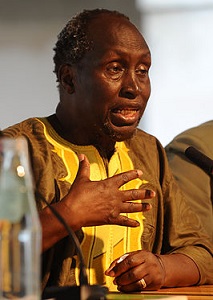


Ngũgĩ wa Thiong’o (Kamiriithu, 5 januari 1938)


De Chinese schrijver Xu Xiake werd geboren op 5 januari 1587 in Jiangyin (provincie Jiangsu). Zie ook alle tags voor Xu Xiake op dit blog.

Uit: Randonnées aux sites sublimes (Vertaald door Jacques Dars)

« A ce moment-là, un épais brouillard tour à tour tombe puis se dissipe, nous rendant, à chacun de ses assauts, invisibles l’un à l’autre ! Tous les sommets du mont en Fleur de Lotus, nous les apercevons, pris pour la plupart dans la brume ; pourtant, chose curieuse, durant l’ascension de la Métropole Céleste, lorsque j’avançais, le brouillard était sur mes talons, et lorsque je le franchissais à droite, il surgissait à gauche. Ici, les pins, droits ou torves, parviennent encore à pousser en désordre, mais les cyprès, eussent-ils des branches de la taille d’un bras, sont sans exception aplatis et collés comme des mousses sur les rochers. A cette altitude, les vents sont d’une rare violence, et les brumes et vapeurs vont et viennent sans se fixer ; quand on baisse les yeux vers tous les sommets, on les voit tantôt surgir en crêtes aiguës aux tons d’émeraude, tantôt sombrer dans un océan argenté ; si l’on porte le regard vers la base des monts, on la trouve, elle, baignée de soleil, nimbée d’une lumière cristalline : un autre monde ! Mais le crépuscule approche ; aussi, pieds en avant, mains vers l’arrière et agrippées au sol, nous laissons-nous, assis, glisser vers le bas ; aux endroits les plus dangereux,  Source Pure me reçoit des mains et des épaules. Les périls franchis, nous descendons jusqu’à une plate-forme montagneuse, alors que la nuit tombe. De là, nous remontons la gorge par des passerelles de bois, et faisons halte au monastère de Manjusri. »



Xu Xiake (5 januari 1587 – 8 maart 1641)


De Argentijnse dichteres en schrijfster Luisa Futoransky werd geboren op 5 januari 1939 in Buenos Aires. Zie ook alle tags voor Luisa Futoransky op dit blog.


Vitraux of Exile

All the efficacy of the names
which the imagery laboriously built up to fascinate you
falls silent:
a rich cemetery of ashes
that, now, is your geography.

You learned at the cost of your youth
and most of your innocence
that to be alone in a forsaken suburb of the pampas
or in splendid Samarkand
holds the same dimension of oblivion or tragedy;
that the wind never took pity scattering
stones and the dead, that only the doomed tourists
take each other’s photos showing off their glass beads

because to say country is to whisper barely seven letters
and through them the density of secret combinations
gravestones of strangers bearing our name
and pale photos that preserve the echo of your passage
toward love or despair.
It’s also the memory of tiring labors
or maybe some old tune
that retains the first risks of your youth.

A country is your name
and the acid violence with which a word comes
to your defenseless traveler’s mouth.
It’s a map with a river whose source and outlet
curiously unite at the exact spot on earth
that your bones wish to fertilize.

It’s daybreaks, insomnias, salutations, anger,
an arm, a shoulder, diminutives, insults,
farewells, gardens, meetings, tremors,
promises, autumns, rails, challenges,
absolute nouns that allow
no other explanation for its weight in ghosts:
these and not others.


Vertaald door Jason Weiss
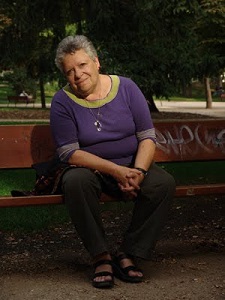


Luisa Futoransky (Buenos Aires, 5 januari 1939)


De Zwitserse schrijver Friedrich Dürrenmatt werd geboren op 5 januari 1921 in Konolfingen. Zie ook alle tags voor Friedrich Dürrenmatt op dit blog.

Uit: Das Versprechen

»Der Hausierer hatte auf einem Bürosessel ohne Lehne Platz genommen, Treuler seinen Stuhl an Matthäis alten Schreibtisch gerückt, der ihm als Stütze für seinen linken Arm diente, dazu die Beine übereinandergeschlagen und den Kopf in die linke Hand gelegt. Er rauchte eine Zigarette. Feiler nahm das Protokoll auf. Henzi und ich blieben in der Türe stehen und wurden von dem Hausierer nicht bemerkt, da er uns den Rücken zukehrte.
›Ich habe es nicht getan, Herr Polizeiwachtmeister‹, murmelte der Hausierer.
›Das habe ich auch nicht behauptet. Ich sagte nur, du könntest es getan haben‹, erwiderte Treuler. ›Ob ich recht habe oder nicht, wird sich ja dann feststellen lassen. Beginnen wir von vorn. Du hattest dich also am Waldrande bequem hingelagert?‹
›Jawohl, Herr Polizeiwachtmeister.‹
›Und geschlafen?‹
›Richtig, Herr Polizeiwachtmeister.‹
›Warum? Du wolltest doch nach Mägendorf.‹
›Ich war müde, Herr Polizeiwachtmeister.‹
›Weshalb hast du denn den Briefträger nach dem Polizisten in Mägendorf ausgefragt?‹
›Um mich zu erkundigen, Herr Polizeiwachtmeister.‹
›Was wolltest du wissen?‹
›Mein Patent war nicht erneuert. Da wollte ich wissen, wie es um die polizeilichen Verhältnisse in Mägendorf stünde.‹
›Und wie stand es um die polizeilichen Verhältnisse?‹
›Ich erfuhr, in Mägendorf sei ein Stellvertreter. Da fürchtete ich mich, Herr Polizeiwachtmeister.‹
›Ich bin auch ein Stellvertreter‹, erklärte der Polizist trocken. ›Vor mir fürchtest du dich auch?‹
›Jawohl, Herr Polizeiwachtmeister.‹
›Aus diesem Grunde wolltest du auch nicht mehr ins Dorf?‹
›Jawohl, Herr Polizeiwachtmeister.‹
›Das ist gar keine so üble Version der Geschichte‹, sagte Treuler anerkennend, ›aber vielleicht gibt es noch eine andere Version, die nur den Vorzug hätte, wahr zu sein.‹
›Ich habe die Wahrheit gesagt, Herr Polizeiwachtmeister.‹
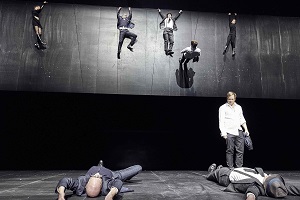


Friedrich Dürrenmatt (5 januari 1921 – 14 december 1990)
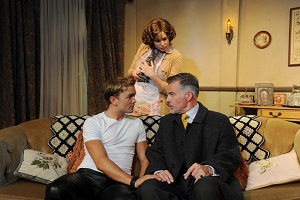
Scene uit een toneelbewerking, Düsseldorf, 2017


De Iraanse dichteres Forough Farokhzad werd geboren op 5 januari 1935 in Teheran. Zie ook alle tags voor Forough Farokhzad op dit blog.


Rode wijn danste in de beker

Rode wijn danste in de beker
In zijn blik schittterde de dorst
Mijn lichaam trilde in verrukking
Op het zachte bed van zijn naakte borst

Ik heb gezondigd, een zonde vol genot
Naast een lichaam, bevend zonder woord
O God, ik weet niet wat ik deed
In dit donkere, afgelegen oord.


Vertaald door Nafiss Nia en Ronald Bos


Gezel

De nacht komt
En dan de duisternis
En na de duisternis
Ogen
Handen
En zuchten en zuchten en zuchten…
En het geluid van het water
Dat druppel voor druppel uit de kraan stroomt;
Dan twee rode punten
Van twee aangestoken sigaretten;
Tik tak van de klok
En twee harten
En twee eenzaamheden


Vertaald doorAsghar Seyed-Gohrab
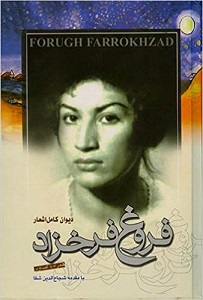


Forough Farokhzad (5 januari 1935 – 13 februari 1967)
Cover


De Hongaarse schrijver László Krasznahorkai werd geboren op 5 januari 1954 in Gyula. Zie ook alle tags voor László Krasznahorkai op dit blog.

Uit: Seiobo There Below (Vertaald door Ottilie Mulzet)

“Everything around it moves, as if just this one time and one time only, as if the message of Heraclitus has arrived here through some deep current, from the distance of an entire universe, in spite of all the senseless obstacles, because the water moves, it flows, it arrives, and cascades; now and then the silken breeze sways, the mountains quiver in the scourging heat, but this heat itself also moves, trembles, and vibrates in the land, as do the tall scattered grass-islands—the grass, blade by blade in the riverbed; each individual shallow wave, as it falls, tumbles over the low weirs, and then, every inconceivable fleeting element of this subsiding wave, and all the individual glitterings of light flashing on the surface of this fleeting element, this surface suddenly emerging and just as quickly collapsing, with its drops of light dying down, scintillating, and then reeling in all directions, inexpressible in words; clouds are gathering; the restless jarring blue sky high above; the sun is concentrated with horrific strength, yet still indescribable, extending onto the entire momentary creation, maddeningly brilliant, blindingly radiant; the fish and the frogs and the beetles and the tiny reptiles are in the river; the cars and the buses, from the northbound number 3 to the number 32 up to the number 38, inexorably creep along on the steaming asphalt built parallel on both embankments, then the rapidly propelled bicycles below the breakwaters, the men and women strolling next to the river along paths that were built or inscribed, into the dust, and the blocking stones, too, set down artificially and asymmetrically underneath the mass of gliding water: everything is at play or alive, so that things happen, move on, dash along, proceed forward, sink down, rise up, disappear, emerge again, run and flow and rush somewhere, only it, the Ooshirosagi, does not move at all, this enormous snow-white bird, open to attack by all, not concealing its defenselessness; this hunter, it leans forward, its neck folded in an S-form, and it now extends its head and long hard beak out from this S-form, and strains the whole, but at the same time it is strained downwards, its wings pressed tightly against its body, its thin legs searching for a firm point beneath the water’s surface, it fixes its gaze on the flowing surface of the water, the surface, yes, while it sees, crystal-clear, what lies beneath this surface, down below in the refractions of light, however rapidly it may arrive, if it does arrive, if it ends up there…”
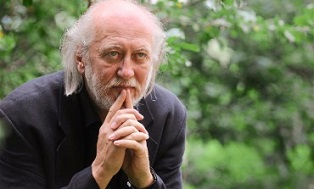


László Krasznahorkai (Gyula, 5 januari 1954)


Zie voor nog meer schrijvers van de 5e januari ook mijn vorige blog van vandaag.
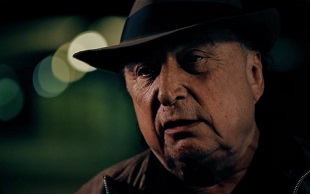
Peter Zingler, Yevgeni Popov, William Snodgrass, Pierre Seghers, Fred Wander, Humbert Wolfe, Stella Gibbons, Terenci Moix

De Duitse schrijver en scenarist Peter Zingler werd geboren op 5 januari 1944 in Chemnitz. Zie ook alle tags voor Peter Zingler op dit blog.

Uit: Vom Tunnel zur Himmelsleiter

„Der Typ, der vor dem Düsseldorfer Flughafen aus dem Taxi stieg, sah nicht aus wie ein Erste Klasse Passagier. Peter Zingler trug Jeans, Sweatshirt, eine kurze schwarze Lederjacke und auf dem Kopf die Batschkapp, unter der seine langen Haare hervorstrubbelten. Auch einen Vollbart hatte der Kerl, der sich nun vorsichtig sichernd umschaute, als fürchte er Ungemach. Für den kalten Januartag war er viel zu dünn angezogen und in seiner kleinen Leinentasche war sicher kein Platz für dicke Wintermäntel. Er betrat das Flughafengebäude, orientierte sich, passierte den Sicherheitscheck und stand dann vor der Passkontrolle. Wer ihn kannte, bemerkte die leichte Nervosität, das Schaben des rechten Fußes, dann die Gewichtsverlagerung auf den linken Fuß, bis der Grenzschutzbeamte den Pass zurückgab. Zingler bedankte sich, ging schnell einige Meter weiter außer Sichtweite, blieb stehen und atmete tief durch! Jetzt schlenderte er gemächlich zu einem Gate, auf dessen Anzeigetafel das Flugziel MONTEGO BAY zu lesen war.
Die erste Hürde hatte Peter Zingler geschafft.
Nun saß er in der Maschine, einer Lockheed TriStar der LTU, die langsam Fahrt aufnahm, so stark beschleunigte, dass der Rumpf zitterte und dann endlich abhob. Peter schaute aus dem Fenster auf Düsseldorf hinunter und lehnte sich entspannt zurück. Erst mal entkommen. Er sah sich in der Maschine um. Zwar war ihm schon am Gate aufgefallen, wie viele alleinreisende Frauen auf den Abflug nach Jamaika warteten, hübsche junge Frauen, alle im besten Studentenalter.“


Peter Zingler (Chemnitz, 5 januari 1944)


De Russische schrijver Yevgeni Anatoljewitsj Popov werd geboren op 5 januari 1946 in Krasnojarsk, Sibirië. Zie ook alle tags voor Yevgeni Popov op dit blog.

Uit: De sigaar (Vertaald door Karel van het Reve)

“Er was eens een braaf meisje dat bij het station Oejar aan de Oostsiberische spoorweg woonde. Haar pa bleek een behoorlijke schoft en verdween op een keer met onbekende bestemming, en ma was altijd ziek. Ze had zelfs een keer naar het sanatorium ‘Het Sjira-meer’ gemogen. Ze was altijd maar ziek en ging dood, stil en onopgemerkt, bescheiden en pijnloos.
Het meisje begroef haar moeder en zette een kruis met foto op haar graf. Ma keek op de foto of ze leefde. Het meisje treurde een tijdje, nam afscheid van haar in leven gebleven oudtante en ging naar de stad.
En daar loopt ze op straat en opeens ziet ze op een paal geplakt een scheef papiertje:
‘Kamer voor meisje aleen. Op de Prokrovka.’
Ze ging naar het opgegeven adres dat van een gewiekste oude vrouw bleek te zijn van een bochelige constructie. Het mens vroeg drie maanden huur vooruit, en verbood alle bezoek want ze ‘wilde van haar huis geen bordeel maken’. Zelf bedronk de oude zich de eerste avond aan ‘Zonnegave’, liep de moestuin in en begon ruzie te maken met de buurvrouw. Die gooide haar met zonnebloemkoppen. De oude begon te gillen, keerde zich om en deed haar rok omhoog. Een onduldbare belediging, en de buurvrouw wierp zich dan ook in het gevecht, er kwam een politieman proces-verbaal maken.
Het meisje wilde eerst op de financiële crediet-academie, maar het bleek dat er dat jaar geen leerlingen werden aangenomen. Toen kreeg ze een betrekking bij de post, brieven, kranten en postwissels rondbrengen.
Vriendinnen had ze niet. Ze ging een keer dansen in het Polytechnisch Instituut, en daar werd ze gevraagd door een lange, harige. Leek enigszins op zo’n ‘zanger’ die zoet en luid zingt bij electrische instrumenten op een grammofoonplaat van dat merk. Hij heette Vovik. Hij bracht haar thuis, stond en rookte en probeerde onder haar kleren te komen en werd teruggewezen, en de volgende dag kwam hij weer, en de oude vrouw zei:
Je moet die bok niet aanhalen. Ik zie aan zijn smoel dat je met hem de sigaar bent.
Daar denk ik helemaal niet aan, zei het meisje.
Je kunt denken wat je wilt, maar als je hem aanhaalt ben je de sigaar, hield de oude vol.
Maar het meisje geloofde haar niet. Ze gingen dansen, naar de bioscoop, twee keer nam hij haar mee naar huis, waar hij sterk aandrong. Maar de eerste keer werden ze door zijn vader gestoord. Hij rammelde met het deurslot en riep opgewekt de reusachtige woning in:
Vollek! De kostwinner is terug van zijn vergadering en heeft een honger als een paard!”


Yevgeni Popov (Krasnojarsk, 5 januari 1946)


De Amerikaanse dichter William De Witt Snodgrass werd geboren op 5 januari 1926 in Wilkinsburg, Pennsylvania. Zie ook alle tags voor William Snodgrass op dit blog.


Nightwatchman’s Song
After Heinrich I. F. Biber

I
What’s unseen may not exist—
Or so those secret powers insist
That prowl past nightfall,
Enabled by the brain’s blacklist
To fester out of sight,

So we streak from bad to worse,
Through an expanding universe
And see no evil.
On my rounds like a night nurse
Or sentry on qui vive,

I make, through murkier hours, my way
Where the sun patrolled all day
Toward stone-blind midnight
To poke this flickering flashlamp’s ray
At what’s hushed up and hidden.

Lacking all leave or protocol,
Things, one by one, hear my footfall,
Blank out their faces,
Dodge between trees, find cracks in walls
Or lock down offices.

Still, though scuttling forces flee
Just as far stars recede from me
To outmost boundaries,
I stalk through ruins and debris,
Graveyard and underground.

Led by their helmetlantern’s light
Miners inch through anthracite;
I’m the unblinking mole
That sniffs out what gets lost or might
Slip down the world’s black hole.


William Snodgrass (5 januari 1926 – 13 januari 2009)


De Franse dichter en uitgever Pierre Seghers werd geboren op 5 januari 1906 in Parijs. Zie ook alle tags voor Pierre Seghers op dit blog.


Le nègre Bungalow

Le nègre Bungalow dans son île flottante
A quatre boules bleues, quatre boules de mer
Quatre étoiles d’or pur et quatre bulles d’air
Un chandelier d’argent dont les chandelles chantent.

Une harpe qu’Eole a touchée. Ses cheveux
Le nègre Bungalow les tisse sur les planches
Sa barque est enchantée sous sa peinture blanche
Il jongle, il joue, les jours qu’il pêche sont des jeux.

Il a deux cocotiers qui donnent des amandes
Un fusil de cristal, une bague de feu
Un grand voile de ciel qu’ il décloue quand il veut
draper d’azur et d’eau ses filles de lavande.

Il tangue sur son île où le voient les poissons,
Il passe, il rit, et les étoiles le préfèrent
Les sept mages postés aux bouches de la mer
L’annoncent : Il viendra… Les constellations

retroussent dans le ciel leurs cheveux de nuages
Andromède et Vénus l’attendent. Le chanteur
va venir, et les galaxies pressent leur coeur
C’est le fait de leur nuit qu’il boit à son passage.

Il s’en vient, il s’en va de L’Arctique au Pégal,
Il souffle le bonheur dans de grandes coquilles
Des sorciers bottés se rongent sous la quille
Et son cheval marin se fait un vrai cheval
.

Pégase, Bungalow, Icare, Poésie…


Pierre Seghers (5 januari 1906 – 4 november 1987)
Hier in 1942, rechts op de foto, met collegaschrijvers Louis Aragon and Elsa Triolet


De Oostenrijkse schrijver Fred Wander werd geboren op 5 januari 1917 in Wenen als Fritz Rosenblatt. Zie ook alle tags voor Fred Wander op dit blog.

Uit: Worüber ich schreibe

„Wenn ich sage, mein Thema ist das Überleben – wie überlebt der Mensch in der Katastrophe, dann meine ich das nicht nur physisch, und nicht Menschen in der Gruppe, sondern Einzelgänger meine ich, den nomadischen Typ, den Flüchtling, den Andersartigen und Außenseiter, den Mißachteten und Gehaßten. Denn der Mensch findet sich selbst besser im Unbekannten, als in der Geborgenheit seines Stammes. Und er ist dann besser geeignet, in sich die Menschheit als Ganzes zu erleben. Auch das ist das zentrale Thema: Die Selbstfindung in der Fremde und Anonymität. Und ich habe mein Leben lang nach exemplarischen Beispielen Ausschau gehalten, von Leuten, die fast nichts besitzen, kaum Bedürfnisse haben und doch Freude am Dasein finden. Ich meine nicht Heilige, sondern ganz einfache und manchmal sogar ungeschickte Menschen, die wenig brauchen, um viel zu erleben. Die oft geradezu ekstatisch zu leben verstehen, in einer Freiheit, die nur sie kennen. Deren Lebenskunst in der Mischung der Gegensätze liegt, in der Spannung der Kontraste zwischen äußerster Trauer und dann wieder Lebensfreude, manchmal in überschäumender, wilder Energie – und manchmal in marmorner Ruhe, wenn der Boden wankt. Einige von diesen Leuten habe ich in meinen Erzählungen zu zeichnen versucht.“


Fred Wander (5 januari 1917 – 10 juli 2006)
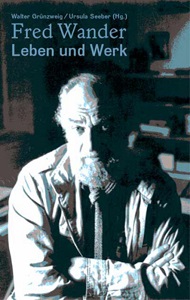
Cover biografie


De Engelse dichter Humbert Wolfe werd geboren op 5 januari 1885 in Milaan. Zie ook alle tags voor Humbert Wolfe op dit blog.


Give me the wings

Give me the wings, magician! So their tune
Mix with the silver trumpets of the Moon,
And, beyond music mounting, clean outrun
The golden diapason of the sun.
There is a secret that the birds are learning
Where the long lanes in heaven have a turning
And no man yet has followed: therefore these
Laugh hauntingly across our usual seas.
I’ll not be mocked by curlews in the sky;
Give me the wings, magician, or I die.


On Betelgeuse

On Betelgeuse
the gold leaves hang in golden aisles
for twice a hundred million miles,
and twice a hundred million years
they golden hang and nothing stirs,
on Betelgeuse.

Space is a wind that does
not blow on Betelgeuse,
and time – oh time – is a bird,
whose wings have never stirred
the golden avenues of leaves
on Betelgeuse.

On Betelgeuse
there is nothing that joys or grieves
the unstirred multitude of leaves,
nor ghost of evil or good haunts
the gold multitude
on Betelgeuse.

And birth they do not use
nor death on Betelgeuse,
and the God, of whom we are
infinite dust, is there
a single leaf of those
gold leaves on Betelgeuse.


Humbert Wolfe (5 januari 1885 – 5 januari 1940)
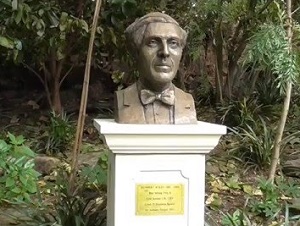
Borstbeeld in Londen


De Engelse schrijfster Stella Gibbons werd geboren op 5 januari 1902 in Londen. Zie ook alle tags voor Stella Gibbons op dit blog.

Uit:Cold Comfort Farm

“Mrs Smiling’s character was firm and her tastes civilized. Her method of dealing with wayward human nature when it insisted on obtruding its grossness upon her scheme of life was short and effective; she pretended things were not so: and usually, after a time, they were not. Christian Science is perhaps a larger organization, but seldom so successful. ‘Of course, if you encourage people to think they’re messy, they will be messy,’ was one of Mrs Smiling’s favourite maxims. Another was, ‘Nonsense, Flora. You imagine things.’ Yet Mrs Smiling herself was not without the softer graces of imagination. `Well, darling,’ said Mrs Smiling – and Flora, who was tall, bent and kissed her cheek – ‘will you have tea, or a cocktail?’ Flora said that she would have tea. She folded her gloves and put her coat over the back of a chair, and took the tea and a cinnamon wafer. ‘Was the funeral awful?’ enquired Mrs Smiling. She knew that Mr Poste, that large man who had been serious about games and contemptuous of the arts, was not regretted by his child. Nor was Mrs Poste, who had wished people to live beautiful lives and yet be ladies and gentlemen. Flora replied that it had been horrid. She added that she was bound to say all the older relatives seemed to have enjoyed it no end.
`Did any of them ask you to go and live with them? I meant to warn you about that. Relatives are always wanting you to go and live with them,’ said Mrs Smiling. `No. Remember, Mary, I have only a hundred pounds a year now; and I cannot play Bridge.’ `Bridge? What is that?’ enquired Mrs Smiling, glancing vaguely out of the window at the river. ‘What curious ways people have of passing their time, to be sure. I think you are very fortunate, darling, to have got through all those dreadful years at school and college, where you had to play all those games, without getting to like them yourself. How did you manage it?’ Flora considered. `Well – first of all, I used to stand quite still and stare at the trees and not think about anything. There were usually some trees about, for most games, you know, are played at in the open air, and even in the winter the trees are still there. But I found that people would bump into me, so I had to give up standing still, and run, like the others. I always ran after the ball because, after all, Mary, the ball is important in a game, isn’t it? until I found they didn’t like me doing that, because I never got near it or hit it or did whatever you are supposed to do to it.”


Stella Gibbons (5 januari 1902 – 19 december 1989)
Cover


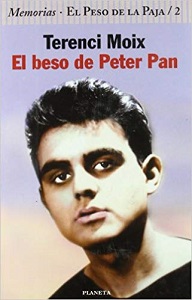
De Spaanse (Catalaanse) schrijver Terenci Moix werd geboren op 5 januari 1942 in Barcelona. Zie ook alle tags voor Terenci Moix op dit blog.

Uit: Looking Queer – Terenci Moix

(In: The Hispanic Homograph: Gay Self-representation in Contemporary Spanish Autobiography door Robert Richmond Ellis)

“When Terenci Moix was fourteen years old, he first witnessed an act of civil disobedience. As he was about to purchase a copy of La Van-guardia from a kiosk on the Paralelo of Barcelona, a throng of Catalan dissi-dents suddenly burst down the street, shouting and seizing newspapers. At the time, he was completely unaware of the historical significance of the in-cident, and as the police began to club and arrest the protesters, he felt a pro-found sense of relief. And with good reason too. After all, poor Norma Shearer had been led off to the guillotine by a similar sort of mob in the film Marie Antoinette. According to his autobiographical volumes, El cine de los stibados [The Saturday matinee] and El beso de Peter Pan (The kiss of Peter Pan), Hollywood cinema (and to a lesser degree radio, comics, and film in general) determined his childhood vision of the world and himself and con-stituted him as “la perfecta imagen del jovencito colonizado” (199) [the per-fect image of the colonized little lad]! This cinematic colonization preceded his birth (his mother supposedly went into labor during a screening of Gas-light), fixing the parameters of his alienation as a gay youth while simulta-neously establishing the context for his eventual act of defiance as an openly gay writer and autobiographer. For the young Moix, however, cinema was.”

Uit: The Kiss of Peter Pan

“When Peter Pan kissed me in a pergola of the gardens of Never Land, I was afraid that his love might be a one-day flower, and I decided to seize his dagger in order to force him to return to me in moments of danger. But the hero assured me that such a precaution was unnecessary because we would never be parted. By way of confirmation we made cuts in our wrists and mixed our blood and therefore I know that through my veins flows the star dust that only eternal children have.”


Terenci Moix (5 januari 1942 – 2 april 2003)
Cover

Gao Xingjian, Hellmuth Karasek, Emil Zopfi, David Berman, Markus Seidel, Andreas Altmann, Doris Kearns Goodwin, Jacob Grimm, Svend Fleuron

De Chinese schrijver Gao Xingjian werd geboren op 4 januari 1940 in Ganzhou, in de provincie Jiangxi. Zie ook alle tags voor Gao Xingjian op dit blog.

Uit: One Man’s Bible (Vertaald door Mabel Lee)

“While still in China, he had revisited the old city, looking for the old courtyard compound at the back of the bank where his father had once worked. He found only a few cheaply built cement residential buildings that would have been constructed a good number of years earlier. He asked people coming in and out if such a courtyard used to be there, but no one could say for sure. He remembered that at the rear gate of the courtyard, below the stone steps, there was a lake. At Duanwu Festival, his father and his bank colleagues would crowd on the stone steps to watch the dragon-boat race. There was the pounding of big gongs and drums, as dragon boats decorated with colorful streamers came to snatch the red packets hanging from bamboo poles put out the houses around the lake. The red packets, of course, contained money. His third uncle, youngest uncle, and youngest aunt, once took him out on a boat to fish for the two-horned water chestnuts that grew in the lake. He had never been to the opposite side of the lake, but even if he went there and looked back, from that short distance, he would not have recognized this dreamlike memory.
This family had been decimated; it was too gentle and fragile for the times. It was destined to have no progeny. After his grandfather died, his father lost his job as bank manager and the family fell into rapid decline. His second uncle, who was keen on singing Peking Opera, was the only one to work with the new government authorities, and this was on account of his Democratic Personage title. Nevertheless, seven or eight years later he was labeled a rightist. Afterward, he grew sullen, barely spoke, and would doze off as soon as he sat down. Transformed into a listless, wizened old man, he held on for a few years, then quietly died. The members of this big family died of illness, drowned, committed suicide, went insane, or followed their husbands to prison farms and simply passed away, so that the only person left was a bastard like him. There was also his eldest aunt whose black shadow had once engulfed the whole family. She was said to have been alive and well a few years ago, but he had not seen her since that photo was taken. The husband of this aunt was a member of the Nationalist airforce. As ground personnel, he never dropped a bomb but he fled to Taiwan, where he died of some illness a few years later. He did not know how this aunt had managed to get to America, and had not bothered to find out.”


Gao Xingjian (Ganzhou, 4 januari 1940)


De Duitse journalist, schrijver, film- en literair criticus en hoogleraar theaterwetenschap Hellmuth Karasek werd geboren op 4 januari 1934 in Brno, Moravië, Tsjechoslowakije. Zie ook alle tags voor Hellmuth Karasek op dit blog.

Uit: Süßer Vogel Jugend oder Der Abend wirft lange Schatten

„Wer Grillen jagt, 
wird Grillen fangen.
Deutsches Sprichwort
Früher hieß es von den Alten, dass sie »Grillen« haben, »Grillen fangen«, was so viel bedeuten sollte wie Marotten haben, wunderlich werden und versponnen, zu fixen Ideen neigen. Ich bin den Grillen bei einer gründlichen Untersuchung, einem sogenannten »Check-up«, begegnet, bei dem sich Apparate über uns hermachen, die immer genauer, immer bunter, mit immer phantasiereicheren Bildern und Symbolen unser Innerstes nach außen bringen, in teils naturgetreuen, sozusagen in der Körperlandschaft abfotografierten Bildern, teils in Bildern, übersetzt aus Daten vom pulsierenden Pumpen in der Aorta, von der Ausdehnung der Leber, der Füllung der Blase. Ultraschall heißt das. Und die Bilder, die produziert werden, haben die gleiche Entwicklung durchlaufen wie der Film und das Fernsehen: Sie werden immer bunter, können Töne absondern und werden von Computern gesteuert. So habe ich meine Kinder bereits im Mutterleib sehen können, damals noch als primitive schwarz-weiß schraffierte Strichzeichnung, wenn auch bewegt. Und der Arzt fragte: »Wollen Sie wissen, was es wird?« Und wir, die künftige Mutter und ich, haben »Nein« gesagt. Und er hat zu seinem Glück gesagt, er wisse es auch nicht. Zu seinem Glück! Denn wenn er etwas gesehen hätte, hätte er bloß etwas sehen können, was nur ein Junge hat. Logisch! Der Mehrwert! Das Plus! Selbst Tomographen sind Chauvis! Es wurde ein Mädchen. Inzwischen zeichnen die Geräte die Babys in Utero als hinreißende Technicolor-Bilder auf. Der Fortschritt lässt sich auch hier nicht aufhalten. Und das Alter bleibt auch hier hoffnungslos zurück. Eines Tages werde ich traurig sagen: »Ich gehöre noch zu der Generation, die ihre Babys nur unscharf schwarz-weiß im Bauch der Mutter gesehen haben!« Und meine Tochter wird sagen: »Ich habe mein Baby farbig gesehen. Farbig, scharf gestochen. Wie im richtigen Leben!« Alles ist viel genauer. Und so hat die Assistentin mir alles auf dem Bildschirm des Ultraschallgeräts gezeigt, wirklich alles, nachdem sie lange gebraucht hatte, das neue Gerät zu verstehen. Sie musste erst mit ihrer Kollegin telefonieren. Und hat dann immer »Aha« gesagt. »Aha!« und eine Taste bedient. »Aha! Ja so!« – »Ich muss mich entschuldigen«, sagte sie zu mir, »ich war länger im Urlaub, und in der Zeit haben wir einen neuen Sonographen bekommen. Elektronisch!« – Ich sah also blaue und rote Blutströme ums Herz und aus dem Herzen pulsieren, manchmal schaltete die Assistentin auf Momentaufnahme, und das Bild blieb stehen, und mir stockte der Atem unwillkürlich, als wäre mein Herz über den Stillstand so erschrocken, dass es stillestehen wollte. Doch dann, Gott sei Dank, setzte sie das Herz wieder in Gang, ich atmete durch. Sie konnte es auch klopfen lassen. Und dann schlug es laut, regelmäßig, aber schleppend, fast ein wenig schmatzend. Und ich war meinem eigenen Herzen noch nie so fremd gewesen – außer bei einer Gemeinheit, wo ich es auch laut schlagen hörte, wenn auch nicht so laut.“


Hellmuth Karasek (4 januari 1934 – 29 september 2015)


De Zwitserse schrijver Emil Zopfi werd geboren op 4 januari 1943 in Wald. Zie ook alle tags voor Emil Zopfi op dit blog.

Uit: Mettmen gibts noch

“Vor Jahren kletterte ich in London im Westway Sports Centre an Betonklötzen mit Kunstgriffen, die im Freien unter einem Autobahnkreisel stehen. Dabei wünschte ich mir sehnlichst, ich wäre in Mettmen, im Klettergarten mit den Felsklötzen aus griffigem, festem Quarzporphyr im Widerstein oberhalb der Mettmenalp. Das erste Mal kam ich mit meinen Eltern nach Mettmen wegen der Heidelbeeren. Es war kurz nach dem Zweiten Weltkrieg, und wir füllten grosse Kessel mit Beeren für Konfitüre. In der Nacht schliefen wir unter kratzenden Wolldecken im Berghaus. Mit unseren eigenen Kindern kamen wir nach Mettmen für die ersten Kletterübungen, und seit Jahren kommen wir immer wieder in den Klettergarten, kaum ist der Schnee weg – und im Herbst, solange die Sonne noch über den Grat scheint. Die Routen kennen wir auswendig, «Nur Fliegen ist schöner», «Chiron», «Zaubertrank» und so weiter.
Heute ist ein wolkenloser Tag, und, oh Wunder, wir sind allein. Suchen den Schatten, denn Schatten gibt es immer irgendwo rund um die 18 haushohen Felsblöcke. Nicht hoch ist das, kann aber auch mal schön steil sein. Der Kletterführer GLclimbs von Ruedi Jenny und Felix Ortlieb verzeichnet über hundert Routen in den Graden 2 bis 8a – viel Schönes im Bereich 5c bis 6c. An Wochenenden im Frühling und Herbst sind die Felsen oft umlagert von Familien mit Oma, Opa, Eltern und Kindern, und alle klettern oder hüten zwischendurch das Baby oder den Hund.
Die Routen hat in jahrelanger harter Arbeit vor allem der Glarner Kletterer und Künstler Felix Ortlieb mit seiner Frau und Freunden perfekt eingerichtet. Alte Rosthaken wurden durch solides Material ersetzt, neue Linien erschlossen. Legendär sind seine von Hand gezeichneten und liebevoll gestalteten Routenbüchlein, die heute Liebhaberobjekte sind. Auch die Topografien in seinem Glarner Kletterführer GLclimbs sind von bestechender Klarheit, für Mettmen genügen Fotos mit farbigen Linien. Ein Foto zeigt den Autor im tiefsten Winter splitternackt an einer mit Eiszapfen gespickten Wand hängen – die Felsen von Mettmen, so vermittelt das Bild, sind eine Welt mit eigenen Gesetzen. Landschaftlich und atmosphärisch ist Mettmen sicher einer der schönsten Klettergärten der Ostschweiz.“


Emil Zopfi (Wald, 4 januari 1943)


De Amerikaanse dichter, songwriter en frontman van Silver Jews David Berman werd geboren op 4 januari 1967 in Williamsburg, Virginia. Zie ook alle tags voor David Berman op dit blog.


Self-Portrait At 28 (Fragment)

My childhood hasn’t made good material either
mostly being a mulch of white minutes
with a few stand out moments,
popping tar bubbles on the driveway in the summer
a certain amount of pride at school
everytime they called it “our sun”
and playing football when the only play
was “go out long” are what stand out now.

If squeezed for more information
I can remember old clock radios
with flipping metal numbers
and an entree called Surf and Turf.

As a way of getting in touch with my origins
every night I set the alarm clock
for the time I was born so that waking up
becomes a historical reenactment and the first thing I do
is take a reading of the day and try to flow with it like
when you’re riding a mechanical bull and you strain to learn
the pattern quickly so you don’t inadverantly resist it.

II two

I can’t remember being born
and no one else can remember it either
even the doctor who I met years later
at a cocktail party.
It’s one of the little disappointments
that makes you think about getting away
going to Holly Springs or Coral Gables
and taking a room on the square
with a landlady whose hands are scored
by disinfectant, telling the people you meet
that you are from Alaska, and listen
to what they have to say about Alaska
until you have learned much more about Alaska
than you ever will about Holly Springs or Coral Gables.


David Berman (Williamsburg, 4 januari 1967)


De Duitse schrijver Markus Seidel werd geboren op 4 januari 1969 in Wilhelmshaven. Zie ook alle tags voor Markus Seidel op dit blog.

Uit: Das verschwundene Dorf

„Es war ein schöner Tag, ein Samstag, die Sonne schien und es war ziemlich heiß. Wir hatten bald große Ferien, Sommerferien; Marie und Maya, meine Geschwister, und ich freuten uns schon darauf, denn wir wollten in Frankreich an der Atlantikküste mit unseren Eltern zelten. Maya geht noch in den Kindergarten, Marie in die sechste und ich in die fünfte Klasse. Ich hatte vor Kurzem meinen elften Geburtstag gefeiert, auf der Terrasse hing noch immer das bunte Happy-Birthday-Spruchband von der Party.
Mama schickte uns nach draußen. Papa saß an dem Tag, an dem ich plötzlich verschwand, oben an seinem Schreibtisch und schrieb an seinem Buch. Seit ein paar Wochen schrieb er daran, er ist nämlich Schriftsteller. Nebenher arbeitet er für eine Zeitung und schreibt Artikel. Worüber, weiß ich nicht so genau, aber hin und wieder liest er mir etwas vor. Ich mag es, wie er schreibt. Einmal habe ich ihn auch gefragt, ob er mir nicht etwas aus seinem Buch, an dem er gerade tippt, vorlesen möchte, aber er meinte, das sei nichts für mich, dafür sei ich noch zu klein, aber später, wenn ich älter sei, würde er es mir zum Lesen geben. Das hat er mir jedenfalls versprochen.
Meine Mama ist bei einer Versicherung; was sie da genau macht, weiß ich auch nicht, aber sie hat ziemlich viel zu tun.
Es war also ein Samstag, Mama hatte frei und Papa tippte, wie gesagt, oben an seinem Buch. Wir baten ihn wieder einmal, uns etwas vorzulesen, aber er schüttelte nur den Kopf und erzählte uns eine Geschichte, die er sich in diesem Moment ausdachte. Marie fand die Geschichte langweilig (mir gefiel sie), sie sagte es ihm auch ganz direkt, aber Papa nahm es ihr nicht übel und meinte, dass er sich ganz bestimmt irgendwann auch eine Geschichte ausdenken würde, die ihr gefiele. Dann nahm er sie in den Arm und wirbelte sie durch die Luft, bis Mama lachend meinte, sie würden beide noch einen Drehwurm kriegen, wenn er so weitermacht. Dann wollte auch Maya von ihm herumgewirbelt werden, schließlich auch ich, und am Ende sollte uns natürlich auch Mama durch die Luft drehen.
An dem besagten Tag hatte Mama uns nach draußen geschickt, weil so schönes Wetter war und sie das Mittagessen vorbereiten wollte. Wir malten zuerst ein bisschen mit Kreide auf dem Gehweg, Marie hatte aber bald keine Lust mehr, und schlug dann vor, Verstecken zu spielen. Obwohl sie schon zwölf ist, spielt sie immer noch für ihr Leben gern Verstecken. Ich sollte sie und Maya suchen, Maya war mit ihren vier Jahren noch zu klein, um sich alleine zu verstecken, das hatte uns auch Mama immer wieder gesagt: Einer muss immer bei Maya bleiben.“


Markus Seidel (Wilhelmshaven, 4 januari 1969)
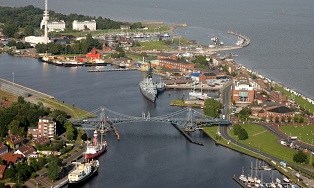
Wilhelmshaven


De Duitse dichter en schrijver Andreas Altmann werd geboren in Hainichen (Sachsen) op 4 januari 1963. Zie ook alle tags voor Andreas Altmann op dit blog. Zie ook mijn blog van 8 juni 2009 


insel kopf

vergitterte bunkerwände liegen am kopf
der insel gestoßen das meer plätschert dahin
vergangene hände haben einzelne federn
an finger starke drähte gebunden im stein

nach dem sommer werden sie fliegen
hier sieht man teile der wurzeln von unten
ohne zu sterben steil blättert die küste
aus dem sand zeigt eine rostige uhr

sie ist naß ihr vergeht diese zeit später
hab ich den schwan für die federn gefunden
ihm fehlte der kopf nur am körper
war das bild seines schattens zu ändern.


rauschen

nachtfrost hatte die gegend gelöscht,
farben brachen ineinander. du hast mir
geschrieben, wechsle dich aus und den namen
an eine andere tür gesprochen. das holz war hart
für deine weichen lippen. das rauschen
nach dem brand der bäume war noch warm.
du hast mein haar aus deinem mund gerochen.
der kopf war nackt und flüssig deckte sich
die hand im wasser auf und das gesicht
schwamm in den blick zurück. ich schrieb dir
ohne nur ein wort die alten stellen aus.
es war kein brief. es war mein leben.


Andreas Altmann (Hainichen, 4 januari 1963)


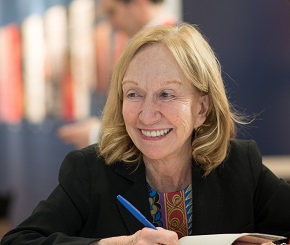
De Amerikaanse schrijfster en biografe Doris Kearns Goodwin werd geboren op 4 januari 1943 in New York. Zie ook alle tags voor Doris Kearns Goodwin op dit blog.

Uit: The Bully Pulpit

“Perhaps most surprising to me in my own process of research was the discovery that Roosevelt’s chosen successor in the White House, William Howard Taft, was a far more sympathetic, if flawed, figure than I had realized. Scholarship has long focused on the rift in the relations between the two men during the bitter 1912 election fight, ignoring their career-long, mutually beneficial friendship. Throughout the Roosevelt administration, Taft functioned, in Roosevelt’s own estimation, as the central figure in his cabinet. Because it was seen as undignified for a sitting president to campaign on his own behalf, Taft served as the chief surrogate during Roosevelt’s 1904 presidential race, the most demanded speaker on the circuit to explain and justify the president’s positions. In an era when presidents routinely spent long periods away from Washington, crisscrossing the country on whistle-stop tours or simply vacationing, it was Taft, the secretary of war—not the secretary of state or the vice president—who was considered the “acting President.” Asked how things would be managed in his absence, Roosevelt blithely replied: “Oh, things will be all right, I have left Taft sitting on the lid.” Long before Taft’s 1908 election, Roosevelt had disclosed his passionate wish that Taft be his successor. There was no man in the country, he believed, better suited to be president, no man he trusted more to carry out his legacy of active moral leadership and progressive reform. Yet, left alone at the helm when Roosevelt embarked on a yearlong African expedition, Taft questioned whether he was suited for the office. For all of Taft’s admirable qualities and intentions to codify and expand upon Roosevelt’s progressive legacy, he ultimately failed as a public leader, a failure that underscores the pivotal importance of the bully pulpit in presidential leadership. From the start of his administration, Taft’s relationship with journalists was uneasy. He was never able to seek the counsel they offered or harness the press corps to broadcast a coherent narrative concerning his legislative goals. As a former judge, he assumed that his decisions would speak for themselves. Eventually, he recognized the handicap of his inability to engage the press as his predecessor had done, conceding after he left office that he had been “derelict” in his use of the bully pulpit.”


Doris Kearns Goodwin (New York, 4 januari 1943)


De Duitse jurist, taal- en letterkundige Jacob Ludwig Karl Grimm werd geboren in Hanau op 4 januari 1785. Zie ook alle tags voor Jacob Grimm op dit blog.

Uit: Kinder- und Hausmärchen (Der gute Handel)

„Ein Bauer, der hatte seine Kuh auf den Markt getrieben und für sieben Taler verkauft. Auf dem Heimweg mußte er an einem Teich vorbei, und da hörte er schon von weitem, wie die Frösche riefen “ak, ak, ak, ak.” – “Ja,” sprach er für sich, “die schreien auch ins Haberfeld hinein: sieben sind’s, die ich gelöst habe, keine acht.” Als er zu dem Wasser herankam, rief er ihnen zu: “Dummes Vieh, das ihr seid! Wißt ihr’s nicht besser? Sieben Taler sind’s und keine acht.” Die Frösche blieben aber bei ihrem “ak, ak, ak, ak.” – “Nun, wenn ihr’s nicht glauben wollt, ich kann’s euch vorzählen,” holte das Geld aus der Tasche und zählte die sieben Taler ab, immer vierundzwanzig Groschen auf einen. Die Frösche aber kehrten sich nicht an seine Rechnung, und riefen abermals: “Ak, ak, ak, ak.” – “Ei,” rief der Bauer ganz bös, “wollt ihr’s besser wissen als ich, so zählt selber,” und warf ihnen das Geld miteinander ins Wasser hinein. Er blieb stehen und wollte warten, bis sie fertig wären und ihm das Seinige wiederbrächten, aber die Frösche beharrten auf ihrem Sinn, schrieen immerfort “ak, ak, ak, ak” und warfen auch das Geld nicht wieder heraus. Er wartete noch eine gute Weile, bis der Abend anbrach und er nach Haus mußte. Da schimpfte er die Frösche aus und rief: “Ihr Wasserpatscher, ihr Dickköpfe, ihr Glotzaugen, ein groß Maul habt ihr und könnt schreien, daß einem die Ohren weh tun, aber sieben Taler könnt ihr nicht zählen. Meint ihr, ich wollte dastehen bis ihr fertig wärt?” Damit ging er fort, aber die Frösche riefen noch “ak, ak, ak, ak” hinter ihm her, daß er ganz verdrießlich heimkam.
Über eine Zeit erhandelte er sich wieder eine Kuh, die schlachtete er und machte die Rechnung, wenn er das Fleisch gut verkaufte, könnte er so viel lösen, als die beiden Kühe wert wären, und das Fell hätte er obendrein. Als er nun mit dem Fleisch zu der Stadt kam, war vor dem Tore ein ganzes Rudel Hunde zusammengelaufen, voran ein großer Windhund. Der sprang um das Fleisch, schnupperte und bellte: “Was, was, was, was.” Als er gar nicht aufhören wollte, sprach der Bauer zu ihm: “Ja, ich merke wohl, du sagst ›was, was‹, weil du etwas von dem Fleische verlangst, da sollt ich aber schön ankommen, wenn ich dir’s geben wollte.” Der Hund antwortete nichts als “was, was.” – “Willst du’s auch nicht wegfressen und für deine Kameraden da gutstehen?” – “Was, was,” sprach der Hund. “Nun, wenn du dabei beharrst, so will ich dir’s lassen, ich kenne dich wohl und weiß, bei wem du dienst. Aber das sage ich dir, in drei Tagen muß ich mein Geld haben, sonst geht dir’s schlimm. Du kannst mir’s nur hinausbringen.” Darauf lud er das Fleisch ab und kehrte wieder um. Die Hunde machten sich darüber her und bellten laut, “was, was.” Der Bauer, der es von weitem hörte, sprach zu sich: “Horch, jetzt verlangen sie alle was, aber der große muß mir einstehen.”


Jacob Grimm (4 januari 1785 – 20 september 1863)
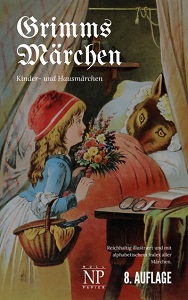
Cover


De Deense schrijver Svend Fleuron werd geboren op 4 januari 1874 op het landgoed Katrinedal bij Keldby. Zie ook alle tags voor Svend Fleuron op dit blog.

Uit: Strix, Die Geschichte eines Uhus (Vertaald door Mathilde Mann)

„Der Schneesturm stiefelt über Wald und Heide, über Wiese und Moor hin, verkittet und löscht aus — nur die rinnenden Gewässer liegen wie vorher da, grauschwarz und offen. Über die blanken Eisgürtel auf den stillen Mooren, die sich wie ein Keil in den Wald hineintreiben, gleitet das Gestöber in breiter Schlachtordnung dahin, bis es plötzlich aufgewirbelt und in eine Schneeschlange verwandelt wird, die auf dem Schwanz steht. Es dunkelt in der Baumtiefe um Strix herum. Ihre lichtstarken Augen können das Spinnengewebe nicht mehr sehen, das von dem Schlackerwetter fortwährend auf und nieder geschaukelt wird. Immer weniger scharf hebt sich der Eingang da oben zu ihrem Hause ab … die Nacht, die sie so sehr liebt, naht. Besonnen erklimmt sie die Treppe und sitzt in der Tür und heult: die Erde hat ja die Farbe gewechselt, wie die Bäume die Rinde, die Natur ist verwandelt, ihr alter Bekannter aus dem Wunderland gen Norden, der Winter — das Weißwetter — ist gekommen! Mit einem Satz fliegt sie hinaus und hinab in den Schnee, sie badet sich darin, sie tummelt sich darin wie eine Ente im Wasser! — — — Der Schneesturm aber nimmt zu. Sprung auf Sprung wirft sich das Gestöber gegen den Wald. Es wirbelt vom Waldessaum her, es stiebt aus den Wipfeln herab, es ist, als falle der Himmel in weißen kleinen Stückchen nieder, ununterbrochen … ein Wolfswetter, das drei Tage und drei Nächte anhält! In einem solchen Wetter werden alle Raubtiere reizbar; es wird ihnen schwer, Beute zu finden, und sie haben kein Glück beim Fang. Alle Grasfresser suchen ihr Versteck auf; die zanksüchtigen unter ihnen werden friedlich und die streitbaren fügsam, sie erkennen ihre gemeinsame Ohnmacht und halten sich notgedrungen in Ruhe. Den Raubtieren ergeht es umgekehrt. Das Wetter peitscht sie auf, sie empfinden den Hunger doppelt, die Mordlust wird angespornt, und sie spüren einen eigenartig brennenden Durst nach Blut.
Es ist mitten in der Nacht nach dem dritten Tage. Der Schneesturm hat sich gelegt, und der Wald liegt reifüberpudert und mit großen Schneeklecksen da. Abenteuerlich sieht er aus — großartig phantastisch erscheint er in der Dunkelheit. Alle Blattknospen in den Windeln, alle Anemonen in der schwarzen Fruchterde, die Puppen, die zu Schmetterlingen werden, die Larven, aus denen sich einstmals beschwingte Insekten entwickeln sollen, sehen ihn — ohne ihn zu sehen — im Traume! Ja, es ist, als wenn die Erde, auf der der Wald steht, selbst träumt — und der Wald in seinem phantastisch weißen Wetterkleide ist der wundervolle Mitwintertraum der Erde!“

 
Svend Fleuron (4 januari 1874 – 5 april 1966)


Zie voor nog meer schrijvers van de 4e januari ook mijn blog van 4 januari 2018 en ook mijn blog van 4 januari 2017 en mijn drie blogs van 4 januari 2015 deel 1.

Peter Ghyssaert, Henk van der Waal, Dirk Ayelt Kooiman, J.R.R. Tolkien, Smith Henderson, Marie Darrieussecq, Alex Wheatle, Cicero, Jean Muno

De Vlaamse dichter Peter Ghyssaert werd geboren op 3 januari 1966 te Wilrijk. Zie ook alle tags voor Peter Ghyssaert op dit blog.


Hobo

Te mager zijn zij toch gesteeld
want de ronding der violen blijft
ook achterwege in hun klank.

Nergens heeft de wind dunnere flanken
nergens ook wordt hij daar
rot geknepen dat het godgeklaagd is.

(Zo droog en droevig
als de hobo klinkt, men denkt
aan de ascese van versleten mannen.)


De ziekenhuispatiënt

Na de ramp groeiden de baardstoppels
de andere kant op, dus de keel binnen.
Zijn huig zat in de modder vast
als een waardeloos plastic, en verder
was het hele hoofd niet meer in orde.

Of je ook mocht trainen in het ziekenhuis?
vroeg hij de zuster. Ja, het mocht.
Met zwaar vernikkeld bed en al de gangen
op en af, en op en af. Men vond
hem moed hebben voor zo een zwaar geval.

Maar na een week of twee ging het al trager.
En nog drie dagen daarna stopte hij knarsend
voor het rode licht van zuster Beatrijs.
Op zijn lichaam stelde men een derde oog
vast, donker als Malaga-wijn. Het knapte,

Gaf wat ingewandsvlees prijs, en toen
verdween de heldere weg, vanuit de plasma-
zak in ’t langzaam zwartgeworden lijf
gebaand, geheel onder een struikgewas
van zachtwuivende aderen en zenuwen.


Moeder

Moeder, ingekuild tussen de meubels
en het porselein, komt nog maar moeizaam
boven hout, mummelt sterfberichten
van vriendinnen.

Boekdelen van pluis schikt ze de kast in
en ze hoest het laatste restje warmte
uit haar schrale rinkelende borst;
schouderbladen van verdriet geblakerd
breken uit de rug te voorschijn.

Langzaam groeien kinderen weg
van haar schoot waarin onvruchtbaarheid
werd afgeworpen.

Dor is moeder; oud machien.
Herinnering hangt als een teder lint
van ingebruikname dwars door haar heen, maar
niemand krijgt haar nog in gang of weet
waartoe ze dient.


Peter Ghyssaert (Wilrijk, 3 januari 1966)
In 1998


De Nederlandse dichter en filosoof Henk van der Waal werd op 3 januari 1960 geboren in Hilversum. Zie ook alle tags voor Henk van der Waal op dit blog.


de vierde persoon enkelvoud

waarom zouden die niet bij je zijn, die paar woorden van een toevalling die
de mond brak maken: in plaats van je stilletjes te verkneukelen over de
dood van god en te roepen: zie mij eens, hoe vrij ik ben en opstandig,
vermag je misschien ontvangst te sonderen omtrent hoe de
ontwrichtster de ouwel van de toekomst verkruimelt
op de tong van de tot zich beperkten

die vervanging zoekers in lust en ontwijkers van

de vierde persoon enkelvoud

die halsbreekster en bandeloze jaknikster

die het uiterste geeft en ten
behoeve van de terugdeinzers
voor de dood met fluwelen hand
dominosteentjes uit de rij tegen elkaar
tikkende seconden tilt tot niets meer voort valt en de
tijdgevoeligen gehouden zijn in het nooit van wat wordt: puur hoop


Of zoals

Of zoals
wanneer het buiten
regent en je je uitstrekt en
lang maakt en langzaam doortastbaar
laat zodat het water ook van binnen kan
gaan stromen als voorproefje van al het
oeverloze dat komen gaat

simpelweg omdat de stilte,
waar het gonzen van de dingen uit is weggelekt, nu
al aanspraak op je maakt en een vermoeden in je wakker
roept van hoe het zijn zal als je buiten adem over de rand
van de toekomst gekropen bent om je in de gedaante der
mensen aan het menselijke te onttrekken en te wachten
op de streling van de hand die alles weet.


Henk van der Waal (Hilversum, 3 januari 1960)


De Nederlandse schrijver en essayist Dirk Ayelt Kooiman werd geboren in Amsterdam op 3 januari 1946. Zie ook alle tags voor Dirk Ayelt Kooiman op dit blog.

Uit: De grote stilte

“Wat hij zich tenslotte nog had kunnen verwijten was hoogstens dat hij de landstaal niet beheerste. In dat geval had hij de mogelijkheid gehad de chauffeur opdracht te geven om toch maar liever door te rijden. Nu zat hij verdoofd – maar dat kon ook door de hitte komen – weggezakt op de achterbank van de taxi, en tastte werktuiglijk met zijn linkerhand in zijn binnenzak naar de envelop bankpapier die gedurende de hele rit in opgerolde vorm in zijn rechterhand gekleefd had.
Had hij zich, twintig jaar na dato, nog een voorstelling kunnen maken van dit hotel, waarvan hij gedachteloos de naam aan de chauffeur had opgegeven – zonder eigenlijk te weten dat hij die nog kende of zelfs ooit gekend had? Amper. Toch had hij de gevel met één oogopslag herkend. Niets was eraan veranderd, al verkeerde het gebouw in een verdere staat van verval dan toen. En hij zou er zich misschien over kunnen verbazen dat het zoveel kleiner bleek te zijn dan in zijn herinnering, maar daarbij was het toch in de eerste plaats de verbazing zélf die zijn verwondering moest wekken, want het verschijnsel was hem beslist niet onbekend. De tijd had niet stilgestaan, voor het gebouw noch voor hemzelf. Hij nam zijn koffers over van de chauffeur en liep de stoep op. Met zijn schouder duwde hij de deur open, waarvan een van de geslepen ruitjes door een stuk triplex was vervangen.
In de hal was het koel. Een lange, kaalhoofdige man stond gebogen over de portiersbalie ingespannen een krant te lezen, waarbij hij met iedere hand een poot van zijn bril tussen duim en wijsvinger hield, zodat deze ter hoogte van het puntje van zijn neus zweefde. Hij keek op en staarde kippig door de lenzen van de bril die hij nog steeds op leesafstand van zijn ogen hield. De fout bemerkend glimlachte hij – alsof hij te kennen wilde geven dat hij het die vage schim wel vergaf verder van hem verwijderd te zijn dan de krant – en drukte de bril op zijn neus. Na hem van top tot teen te hebben opgenomen schudde hij het hoofd en zei:
‘Sju’.
Johan deed een stap naar voren. ‘Do you speak English? Sprechen Sie Deutsch?’ Maar de ander volhardde erin het hoofd te schudden:
‘Sju! Sju!’ En hij vulde die uitroep aan met een gebaar dat ‘stop’ en ook wel ‘vol’ uitdrukt. Toch keek hij niet onvriendelijk, als betrof het een spelletje en was hij nu benieuwd naar de tegenaktie van de ander. Het viel ook moeilijk voor te stellen dat het hotel vol was; het wekte een uitgestorven indruk. Misschien is het hier helemaal geen hotel meer, bedacht hij, maar half teleurgesteld. Wanneer het in de hal niet zo heerlijk koel geweest was, en buiten niet zo warm, zou hij waarschijnlijk zijn koffer weer opgepakt hebben – het hotel het hotel latend, en het verleden het verleden. Nu diepte hij met een zucht het wisselgeld op dat hij van de taxichauffeur gekregen had, en legde een roze bankbiljetje waarvan hij aannam dat het een hogere waarde vertegenwoordigde dan de lichtmetalen muntstukken, op de balie.”


Dirk Ayelt Kooiman (3 januari 1946 – 2 oktober 2018)
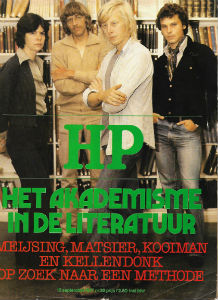
V.l.n.r. Doeschka Meijsing, Nicolaas Matsier, Dirk Ayelt Kooiman en Frans Kellendonk op de cover van de Haagse Post, september 1977


De Engelse schrijver J.R.R. Tolkien werd geboren op 3 januari 1892 in Bloemfontein, Zuid-Afrika. Zie ook alle tags voor J.R.R. Tolkien op dit blog.

Uit: The Lord of the Rings (The Hobbit)

“Lots!” Bilbo found himself answering, to his own surprise; and he found himself scuttling off, too, to the cellar to fill a pint beer-mug, and to the pantry to fetch two beautiful round seed-cakes which he had baked that afternoon for his after-supper morsel.
When he got back Balin and Dwalin were talking at the table like old friends (as a matter of fact they were brothers). Bilbo plumped down the beer and the cake in front of them, when loud came a ring at the bell again, and then another ring.
“Gandalf for certain this time,” he thought as he puffed along the passage. But it was not. It was two more dwarves, both with blue hoods, silver belts, and yellow beards; and each of them carried a bag of tools and a spade. In they hopped, as soon as the door began to open-Bilbo was hardly surprised at all.
“What can I do for you, my dwarves?” he said. “Kili at your service!” said the one. “And Fili!” added the other; and they both swept off their blue hoods and bowed.
“At yours and your family’s!” replied Bilbo, remembering his manners this time.
“Dwalin and Balin here already, I see,” said Kili. “Let us join the throng!”
“Throng!” thought Mr. Baggins. “I don’t like the sound of that. I really must sit down for a minute and collect my wits, and have a drink.” He had only just had a sip-in the corner, while the four dwarves sat around the table, and talked about mines and gold and troubles with the goblins, and the depredations of dragons, and lots of other things which he did not understand, and did not want to, for they sounded much too adventurous-when, ding-dong-a-ling-‘ dang, his bell rang again, as if some naughty little hobbit-boy was trying to pull the handle off. “Someone at the door!” he said, blinking. “Some four, I should say by the sound,” said Fili. “Be-sides, we saw them coming along behind us in the distance.”
The poor little hobbit sat down in the hall and put his head in his hands, and wondered what had happened, and what was going to happen, and whether they would all stay to supper. Then the bell rang again louder than ever, and he had to run to the door. It was not four after all, it was FIVE. Another dwarf had come along while he was wondering in the hall. He had hardly turned the knob, be-x)re they were all inside, bowing and saying “at your service” one after another.”


J.R.R. Tolkien (3 januari 1892 – 2 september 1973)


De Amerikaanse schrijver Smith Henderson werd geboren op 3 januari 1954 in Montana. Zie ook alle tags voor Smith Henderson op dit blog.

Uit: Fourth of July Creek

“Pete nodded and wrote some more.
“So then what?”
“So he says ‘fuckit’ and calls it in.”
“And the situation when you got here?”
The situation was a perfect fucking mess. The situation was the kid climbing up onto the slanted, dented aluminum carport and stomping on the rusted thing like an ape. Just making the whole unsound shelter boom and groan under his weight. The mother saying so help her if that thing falls on her Charger she’ll gut him, and the kid just swagging the carport back and forth so that it was popping and starting to bow under his weight. Now the cop was about ready to shoot the ornery shit off the goddamn thing.
Then the situation got interesting.
“The mother has the air rifle and—”
“No way,” Pete said.
“Yeah, fuckin way,” the cop said.
“She shoot him?”
“Before I get to her, yeah, she shoots. You can see the big old welt on his forearm.”
Pete started to write.
“And then what?”
Then the kid leaps off the carport just as the cop has taken the air rifle and ordered the woman inside, but the kid and his mother are already tearing at each other like two wet cats in a sack. Right in front of a goddamn cop, mind you. Like he ain’t even there. All the neighbors are out on their nice, normal lawns in their bathrobes clutched closed at the neck watching the cop trying to disentangle the two of them, taking it in like the fucking rodeo. And the bitch—“pardon my French” the cop at last says about all his cussing—won’t desist, and the kid won’t desist, so the cop wrangles the first one he can get a hand on—the woman it turns out—and wrestles her onto her belly and into the cuffs, but not before the kid makes a run to kick her in the face, which the cop just barely stops with his own body. And realizing he’s just kicked one seriously pissed-off police officer in the chest, the dumbshit turns tail and flees.”


Smith Henderson (Montana, 3 januari 1954)


De Franse schrijfster Marie Darrieussecq werd geboren in Bayonne, Pyrénées-Atlantiques, op 3 januari 1969. Zie ook alle tags voor Marie Darrieussecq op dit blog.

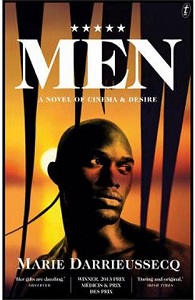
Uit: Men

“He talked to her about the Congo. Not any old Congo, not the little Brazzaville Congo, no, the big Kinshasa one, where very quickly the road runs out and there are just the long arms of the river, which she had looked at on Google Earth three hours earlier. The coincidence was disturbing. She was going to chat about the islands—but he had drawn breath to introduce a new topic of conversation, and was now talking about Heart of Darkness. He told her about Conrad’s novel. The story of a man who is looking for a man. Marlow looking for Kurtz, a retired officer from a colonial regiment, a ‘devil of a rapacious and pitiless folly’. Conrad’s Congo is ‘something great and invincible, like evil or truth’. And Europe—white-faced Europe, the premonition of genocides. He cited the African woman in the novel ‘with a slight jingle and flash of barbarous ornaments’, ‘brass leggings to the knees’ (she pictured the sorceress in Kirikou). He cited the ‘Intended’, ‘this pale visage’, blonde and diaphanous (she pictured herself). Was it a racist novel? No. But it was time for an African to seize power in Hollywood. It was time to take back from America the history of indigenous people.
She was overwhelmed with tiredness. Couldn’t they just have a normal conversation? But he kept talking: he wanted to make a film adaptation of Heart of Darkness, something different from Coppola’s Apocalypse Now and, in any case, on location—a crazy project, he was aware of that, his first film as a director and with equatorial ambitions to transport a crew into the heart of the forest and, once there, attempt to mount that masterpiece of a novel. Coppola went to the Philippines in order to film Vietnam; he would go to the Congo to film the Congo.
She interrupted him. She hadn’t read the novel, but wasn’t it a bit of a cliché: Heart of Darkness? A bit too run-of-the-mill for Africa? He protested. What he was interested in was precisely the stereotype, the ultimate cliché, what white people saw when they thought about Africa: darkness and elephants.”


Marie Darrieussecq (Bayonne, 3 januari 1969)
Cover


De Britse schrijver Alex Wheatle werd geboren op 3 januari 1963 in Londen. Zie ook alle tags voor Alex Wheatle op dit blog.

Uit: Crongton Knights

‘Don’t answer the door!’ barked Dad from the kitchen, the washing-up suds popping on his grimy white vest.
‘Mr Tambo!’ a voice boomed from outside. It was deep. I imagined the owner of that tone strutting in the park with a rhino on a leash. ‘We know you’re in there! Let’s be adult about this, Mr Tambo. Let us in so we can sit down and talk about your repayments. This is notgoing to go away.’
I breathed in a dose of pure fear. Why are we in so much deep debt? Dad’s working.Why won’t he give me the full score on what’s going on?Dad dried his hands on the dishclothand then draped it over his shoulder. He looked at my olderbrother, Nesta, who was standing in the hallway only a couple of metres from our drawbridge. Dad beckoned him to retreat. Nesta shook his head. I put my fork down on my plate.
Suddenly, I didn’t love my pasta and mince even though I had grated some cheese on top to nice it up. The letter box crashed again. My heart rumbled. ‘Mr Tambo!’
Dad walked out of the kitchen and switched off the light in the front room. He gestured to Nesta again but Nesta took a step towards the door. I closed my eyes and willed for the men outside to go missing. I also prayed that Nesta wouldn’t let loose his temper.
‘Why are you scared of them pussies?’ spat Nesta, glaring at Dad like he wanted to go head-to-head with the debt brothers outside. Dad raised his palms, trying to calm Nesta down. I could hardly bear to watch.
I strained my ears and could just about make out muffled conversations. Nesta took another stride forward. We all looked at each other. I sank half of my blackcurrant. When I placed the glass down I nearly knocked it over cos my hands were shaking. Kiss my knights! Will evenings like this ever stop?
‘They’re moving on,’ said Nesta. ‘Yeah, I can hear them bouncing down the stairs.’
My heart put its brakes on. Dad closed his eyes and let out a mighty sigh.
‘Why do you let them chat to you like you’re a pussy?’ charged Nesta. He rolled towards Dad, taking his hands out of his pockets. I stood up from my chair and stepped between them. I didn’t want them to be warring again.
‘Stand up to them!’ raged Nesta. ‘Or go outside our gates and tell them to remove their grimy, money-sucking asses from our slab!’
‘Nesta,’ I called. ‘They’re gone now. Calm down, bro.’


Alex Wheatle (Londen, 3 januari 1963)


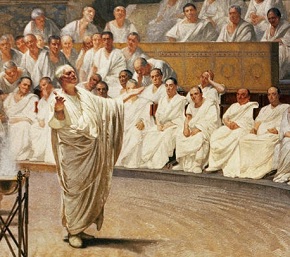
De Romeinse schrijver, redenaar, politicus, advocaat en filosoof Marcus Tullius Cicero werd geboren in Arpinum op 3 januari 106 v. Chr. Zie ook alle tags voor Cicero op dit blog.

Uit: De Goden (De Natura Deorum, vertaald door Vincent Hunink)

“Toen zei Cotta: ‘Als het waar is wat mijn leermees ter Antiochus zegt in het boek dat hij onlangs aan Balbus heeft opgedragen, dan hoef jij je vriend Piso hier niet te missen. Want volgens Antiochus zitten Stoïci en Peripatetici inhoudelijk op één lijn, maar verschillen ze in hun terminologie. Wat vind je eigenlijk van dat boek, Balbus?’
‘Ik?’, zei hij. ‘Ik sta verbaasd dat zo’n uitzonderlijk scherpzinnig man als Antiochus niet heeft gezien dat er een zeer groot verschil is tussen de Stoïci en de Peripatetici. Bij de eerste school is het onderscheid tussen goed en aangenaam niet nominaal maar reëel, terwijl bij de andere aangenaam en goed zo vermengd zijn dat ze alleen relatief en als het ware gradueel van elkaar verschillen en niet absoluut. Dat is namelijk geen kleine terminologische onenigheid maar een zeer grote inhoudelijke. Maar daarover wellicht een andere keer meer. Laten we nu doorgaan met ons eigenlijke onderwerp, als jullie het goed vinden.’
‘Ik vind het goed’, zei Cotta ‘maar degene die er nu bij gekomen is’ (hierbij keek hij mij aan) ‘moet wel weten waarover het gaat. We hadden het over het wezen der Goden. Ikzelf vond dit probleem, zoals gebruikelijk, geheel ondoorgrondelijk, en daarom vroeg ik Velleius naar de opvatting van Epicurus. Welnu, Velleius, als je het niet erg vindt, begin dan even van voren af aan.’
‘Dat zal ik doen, hoewel niet ik, maar jij nu een medestander krijgt. Want jullie allebei,’ zei hij met een glimlach, ‘hebben van Philo geleerd om “niets te weten.”‘
Toen zei ik: ‘Wat wij geleerd hebben, dat laat ik graag aan Cotta over. Wat jou betreft, geloof me, ik ben hier niet gekomen als medestander van hem, maar als toeschouwer, en wel een onpartijdige en onbevooroordeelde: ik voel me geenszins verplicht om één bepaalde opvatting eventueel tegen heug en meug te verdedigen.’

 
Cicero (3 januari 106 v. Chr. – 7 december 43 v. Chr.)
“Cicero veroordeelt Catilina”. Fresco door Cesare Maccari, 1888 (detail)


De Belgische schrijver Jean Muno (pseudoniem van Robert Burniaux) werd geboren in Molenbeek op 3 januari 1924. Zie ook alle tags voor Jean Muno op dit blog.

Uit: Histoire exécrable d’un héros brabançon

« C’est alors queje me suis vu. Dans mon assiette, oui, dans l’épaisseur de mon ris que j’incisais d’une lame circonspecte et vaguement écoeurée. Il y avait là quelque chose d’anormal, d’étranger à la texture conventionnelle de l’organe. Je me suis penché. Etalé de tout mon long, cuit dans le mou, j’étais là, Papin, sous les espèces d’un cloporte. Les antennes coquines, les papattes frisées comme des crosses de fougères, bien peinard, sage pour l’éternité, c’était moi sans aucun doute, cuit et recuit dans le thymus du biengrandir.
(…)

Dans ces lieux, je me sentais vraiment chez moi. Je m’installais bien commodément, comme s’il se fût agi chaque fois d’une occasion majeure, et je poussais un peu, pas trop, afin de ne point gaspiller les matières. Elles venaient doucettement, ce n’était pas désagréable. Autant que possible, je retardais le floc terminal, souvent ténu. Hé oui, nous avions le sens de l’épargne à cette époque-là, la guerre et l’Occupation ne nous surprendraient pas autre mesure.
Entretemps, je continuais même de m’instruire, de mériter en somme mon modique salaire. On mettait à ma disposition des pages du Soir coupées en huit et retenus par une ficelle, elle-même de remploi. A chacune de mes retraites, chose faisant, j’avais l’occasion de parcourir quelques feuilles, recto verso. L’actualité politique, intellectuelle et sportive, les faits divers, les beaux crimes et les scandales financiers, les petites annonces aussi, fidèles reflets de la vie quotidienne…”


Jean Muno (3 januari 1924 – 6 april 1988)
Cover


Zie voor nog meer schrijvers van de 3e januari ook mijn blog van 3 januari 2018 en ook mijn blog van 3 januari 2017 en eveneens mijn 3 blogs van 3 januari 2016.

Nyk de Vries, André Aciman, Jimmy Santiago Baca, David Shapiro, Look J. Boden, Anton van Duinkerken, Hans Herbjørnsrud, Jean-Bernard Pouy, Luc Decaunes

De Nederlandse dichter Nyk de Vries werd geboren in Noordbergum op 2 januari 1971. Zie ook alle tags voor Nyk de Vries op dit blog.

Uit: Renger

“Nadat we een dagje eropuit waren geweest, stond er opeens een schutting op twee meter afstand van onze schuur, vlak voor de gebogen gietijzeren ramen. Die namiddag barstte in ons huis de bom. Mijn vader was in alle staten. Hij kon niet stoppen met vloeken, ook de volgende dag niet, maar kraniger dan anders weigerde mijn moeder om zijn doemscenario’s te onderschrijven. ‘Ik heb van mijn vader geleerd,’ zei ze, ‘om kwaadwillende mensen niet te veel aandacht te schenken. Elk mens heeft zijn eigen motieven.’
Met betraande ogen verschool ik me in de grote stoel. Er kwam geen eind aan de opzwepende discussies. Nog nooit had ik mijn vader zo kwaad gezien. Mijn moeder huilde net als ik. Ze pleitte voor haar standpunt, maar er was geen beginnen aan. Mijn vader bleef maar schreeuwen en zwaaien met zijn vinger. Vanuit het niks stond hij op en ineens vreesde ik dat de situatie uit de hand zou lopen. Mijn moeder vluchtte naar de keuken en in een flits was ze terug met de oranje hapjespan die ze dreigend omhoog hield.
Mijn vader verdween naar de schuur. Even later kwam hij terug om te vragen of ik hem wilde helpen. Met gebogen hoofd volgde ik hem en lange tijd stond ik met betraand gezicht het nieuwe keukenraamkozijn te schuren. Terug in huis besprak ik met mijn moeder de noodsituatie, als twee volwassenen. ‘Volgens mij,’ zei ik ernstig, ‘zijn we op een beslissend punt aanbeland.’
Het leek me een uitgemaakte zaak dat mijn ouders uit elkaar zouden gaan, maar mijn moeder keek me verbaasd aan. ‘Wat moet ik dan?’ vroeg ze. ‘Moet ik in de nieuwbouw gaan wonen?’
Ze kende mijn vader beter dan ik. In de namiddag liep hij langs het raam. Toen hij terugkwam met de krant, schudde ze haar hoofd.
‘Kijk eens,’ verzuchtte ze, ‘nu loopt hij alweer te fluiten.’
Sinds die zomerdag probeer ik afstand van hem te nemen. Zijn onberekenbaarheid maakt me gek. Soms komt hij met ijsjes de tuin in. De volgende ochtend kan het opnieuw duiveldag zijn. Dan fantaseer ik over zijn verdwijning, maar ik zou niet weten hoe ik dat voor elkaar moet krijgen. Daarom verdwijn ik soms zelf maar.
Ik leg het boek van Orwell opzij en loop naar de schuur waar ik mijn fiets te voorschijn trek. Aan de overkant van de Rijksstraatweg rijd ik het bos in, zoals ik veel vaker doe om aan de drukkende sfeer te ontsnappen.”


Nyk de Vries (Noordbergum, 2 januari 1971)


De Amerikaanse schrijver, essayist en literatuurwetenschapper André Aciman werd geboren op 2 januari 1951 in Alexandrië in Egypte. Zie ook alle tags voor André Aciman op dit blog.

Uit: Alibis. Essays on Elsewhere

“Life begins somewhere with the scent of lavender. My father is standing in front of a mirror. He has just showered and shaved and is about to put on a suit. I watch him tighten the knot of his necktie, flip down his shirt collar, and button it up. Suddenly, there it is, as always: lavender.
I know where it comes from. An elaborately shaped bottle sits on the dresser. One day, when I’m having a very bad migraine and am lying on the living room sofa, my mother, scrambling for something to take my mind off the pain, picks up the bottle, unscrews the cap, and dabs some of its contents onto a handkerchief, which she then brings to my nose. Instantly, I feel better. She lets me keep the handkerchief. I like to hold it in my fist, with my head tilted slightly back, as if I’d been punched in a fistfight and were still bleeding—or the way I’d seen others do when they were feeling sick or crushed and walked about the house taking occasional sniffs through crumpled handkerchiefs in what looked like last-ditch efforts to avoid a fainting spell. I liked the handkerchief, liked the secret scent emanating from within its folds, liked smuggling it to school and taking furtive whiffs in class, because the scent brought me back to my parents, to their living room, and into a world that was so serene that just inhaling its scent cast a protective cloud around me. Smell lavender and I was sheltered, happy, beloved. Smell lavender and in came good thoughts—about life, about those I loved, about me. Smell lavender and, no matter how far from one another, we were all gathered in one warm, snug room stuffed with pillows, close to a crackling fire, with the patter of rain outside to remind us our lives were secure. Smell lavender and you couldn’t pull us apart.”


André Aciman (Alexandrië, 2 januari 1951)


De Amerikaanse dichter en schrijver Jimmy Santiago Baca werd geboren in Santa Fe, New Mexico, op 2 januari 1952. Zie ook alle tags voor Jimmy Santiago Baca op dit blog.


There Are Black

There are black guards slamming cell gates
on black men,
And brown guards saying hello to brown men
with numbers on their backs,
And white guards laughing with white cons,
and red guards, few, say nothing
to red inmates as they walk by to chow and cells.

There you have it, the little antpile . . .
convicts marching in straight lines, guards flying
on badged wings, permits to sting, to glut themselves
at the cost of secluding themselves from their people . .
Turning off their minds like watertaps
wrapped in gunnysacks that insulate the pipes
carrying the pale weak water to their hearts.

It gets bad when you see these same guards
carrying buckets of blood out of cells,
see them puking at the smell, the people,
their own people slashing their wrists,
hanging themselves with belts from light outlets;
it gets bad to see them clean up the mess,
carry the blue cold body out under sheets,
and then retake their places in guard cages,
watching their people maul and mangle themselves,

And over this blood-rutted land,
the sun shines, the guards talk of horses and guns,
go to the store and buy new boots,
and the longer they work here the more powerful they become,
taking on the presence of some ancient mummy,
down in the dungeons of prison, a mummy
that will not listen, but has a strange power
in this dark world, to be so utterly disgusting in ignorance,
and yet so proudly command so many men. . . .

And the convicts themselves, at the mummy’s
feet, blood-splattered leather, at this one’s feet,
they become cobras sucking life out of their brothers,
they fight for rings and money and drugs,
in this pit of pain their teeth bare fangs,
to fight for what morsels they can. . . .

And the other convicts, guilty
of nothing but their born color, guilty of being innocent,
they slowly turn to dust in the nightly winds here,
flying in the wind back to their farms and cities.
From the gash in their hearts, sand flies up spraying
over houses and through trees,

look at the sand blow over this deserted place,
you are looking at them.


Jimmy Santiago Baca (Santa Fe, 2 januari 1952)


De Amerikaanse dichter, criticus en historicus David Shapiro werd geboren op 2 januari 1947 in Newark, New Jersey. Zie ook alle tags voor David Shapiro op dit blog.


The Devil’s Trill Sonata (Fragment)

Dear cloud, free from moral guilt,
I see you dragged like a heap of small sacrificial cakes or
swerve
Streets tarry in one place, and satirical teeth bite and corrode
Stinging clouds are worse

Oh clouds I fall fighting against the whole Persian army
A pond’s another place where streetlights delight to roll
in gewgaws and larvae
Andromeda, make steady my steps
You who had but lately begun to exist, who existed
formerly

The sun is hot and scalds the little day.
The plane sails up, stalls slightly, drops its nose in a dive
Into a barrel of dimes.
What tree always has a partner?

What flower do most people go far to avoid?
You are beginning to find a bed very boring
Yet you are not allowed to sit up more than an hour at a
time.
Mother stands straight up at Green’s Five and Ten Cent
store.

A supply of white floating soap, and you are all ready
to carve up
This tray holds all I need;
It’s a nice clean occupation.
But I am not sure what these incalculable beasts may do.

You need a ticket of admission to my rooms.
Naomi and I make up contrite items and float them down
the stairs.
You are lying on your back in the honeysuckles—
choking.
My entire life was being decided by five nincompoops.


David Shapiro (Newark, 2 januari 1947)


De Nederlandse dichter, tekstschrijver en uitgever Look J. Boden werd geboren in Vlaardingen op 2 januari 1974. Zie ook alle tags voor Look J. Boden op dit blog.


Er was een keer iets raars gebeurd

Er was een keer iets raars gebeurd,
ik was in alle staten!
Het hele huis begon zowaar
te zingen en te praten.

De wasmachine zong heel schoon,
maar maakte het soms bont.
De oven had een warm verhaal
en sprak met volle mond.

De keukenla, die ratelde
-aan één stuk -stevig door.
De kastdeur wilde dichten
en het bankstel zong in koor.

De lamp begon met lichte stem
de muren aan te spreken.
Het vloerkleed gaf de grondtoon
met een kort maar helder teken.

Ik probeerde het geluid
met beide handen te bedwingen.
Zelfs toen ik wilde slapen
ging mijn bed nog wat bezingen.

De dag daarna was alles stil,
ik wist niet wat ik hoorde.
Ik dacht nog: ben ik gek of zo?
Dit is te gek voor woorden!

Maar toen kwam er een stemmetje
vanachter het behang:
Zeg, hoor jij váker stemmetjes?
En hoor je ze allang?

Toen moest ik stiekem lachen,
die stem, die was van mij.
Ik was er, in mijn eigen spel,
ontzettend gloeiend bij.

Ja, humor is echt overal
daarvoor geldt geen bepaling.
Maar wil je echt hard lachen?
Neem dan jezelf maar in de maling.


Look J. Boden (Vlaardingen, 2 januari 1974)
Cover


De Nederlandse dichter, essayist, redenaar en literair-historicus Anton van Duinkerken werd op 2 januari 1903 geboren in Bergen op Zoom. Zie ook alle tags voor Anton van Duinkerken op dit blog.


Mijn dochtertje zei: dood

Het woord, dat ik het zwaarst van al verdraag,
Dubbel onwelkom uit een kindermond,
Schrijnt mijn geheugen als een open wond,
Bloot voor de wind, naakt in een regenvlaag.

Hoe leert de kleuter, daar zij nooit iets derft,
Dit allerbitterste begrip verstaan?
Je vader weet wel, dat hij dood zal gaan,
En moeder weet het van zichzelf: zij sterft.

Grootmoeder sterft, je zusje sterft en zij,
Die aan het venster tikken of je komt,
Staan in hetzelfde doodsboek opgesomd,
Want niet één naam is voor doods fluistring vrij.

Namen van ouden noemt hij in de wind,
Als ’t regent en het eerste blad verdort,
Doch nu de lente bloeit, nu ’t zomer wordt,
Leert hij zijn eigen naam aan ’t staamlend kind.

Ik was het niet, noch ook mijn vrouw, die sprak
De donkre klank. Zij heeft hem nooit gehoord
Van anderen, zij vormde zelf dit woord
En trok het kinderlijke voorhoofd strak.

Zij zag mij aan. Haar ogen werden groot
Van een ontzetting, die zij ergens las.
En ik, die stil met haar aan ’t spelen was,
Weet nu voorgoed: mijn eigen kind gaat dood.


Anton van Duinkerken (2 januari 1903 – 27 juli 1968)
Standbeeld in Bergen op Zoom


De Noorse schrijver Hans Herbjørnsrud werd geboren op 2 januari 1938 in Heddal, Telemark. Zie ook alle tags voor Hans Herbjørnsrud op dit blog.

Uit: Kai Sandemo /Kai Sandmoser (Vertaald door Michael Baumgartner)

„Dann führe ich seine Beine Schritt für Schritt zum Fluß hinunter, der sachte dahingleitet, Heiligenscheine über tauchenden Enten entstehen läßt und kleine mahlende Vertiefungen bildet, die man hier in der Gegend Grübchen des Flusses nennt. Ich lasse diesen glücklichen Mann, der so frei von Sorgen, Melancholie und Schuld ist, mit seinem Glas und seiner Zigarre am Ufer des Flusses stehen, lange, sehr lange, während er auf das Rauschen des Windes im Schilf hört, das mich an ein erntereifes Haferfeld erinnert.
Uli Huber war leer und verlassen. Jetzt fülle ich ihn mit meinem Fleisch und Blut vollkommen aus. Ich bin seine Eingeweide. Er ist prall ausgestopft wie eine Wurst, nur mit mir. In seiner ausgefüllten Schale schwappen meine vier Körpersäfte. Meine Gedärme und mein Blinddarm sind seine Gedärme und sein Blinddarm. Die Eisenstange vom Scheitel bis zum Schritt, die seinen Oberkörper aufrechthält, ist mein Pfahl im Fleisch. Da mein Herz für ihn schlägt, ist er nicht herzlos.
Dieser Uli Huber ist von mir allein geschaffen und nicht von einer Frau geboren, daher hat er keinen Nabel. Dieser Mangel ist sein einziger Makel. Doch er gleicht ihn mit einem hübschen Tuschenabel aus, den er jedes Mal auf seinen blanken Bauch zeichnet, nachdem er im Bad gewesen ist. Selbst diese kleine charmante Eitelkeit habe ich ihm geschenkt. Ich gönne ihm das Beste. Da ich in ihm leben muß, liegt es in meinem Interesse, für ihn zu leben. Obschon er erschaffen wurde, ist er ebenso ein legitimes Kind der Evolution wie ich.
Uli Huber ist nur eine Schale. Da er meine Schale ist, bin ich seine inneren Organe. Er verzehrt mich, wie ich mich verzehre. Auch die Evolution frißt ihre Kinder. Ich bin gleichzeitig sein inneres Leben und seine wahre Natur. Er selbst nennt mich seine ewige Seele. Uli Huber möchte seelenvoll sein und mit flackernder Seele leben. Ich habe keine. Eine Seele braucht keine Seele.
Wenn Uli Huber sich selbst kennen würde, hieße er mich seinen Gott und fiele auf seine knarzenden Knie und betete zu seinen Eingeweiden. Aber er weiß nicht, daß er mein Reich in sich trägt.
Nun kennst du mein Geschöpf Uli Huber. Er hat nur einen Namen und ist eine vollständige Persönlichkeit. Gäbe es seine Seele nicht, könnte man sagen, er sei eine einfache Seele.
Vermutlich weißt du immer noch nicht, wer ich bin. Obwohl der Absender Deutscher ist und Uli heißt, kann der Schreiber dieses Briefes durchaus Schweizer sein und Kai heißen.
Wie du bald verstehen wirst – nimm dir nur die Zeit, die du brauchst – ist es Kai, ja, eben der Kai Sandmoser, dein alter Stallbruder und Knappe vom Nachbarhof, der sich nun in postulierter Vertrautheit an dich wendet.
Meinen Vornamen Kai trage ich für alle Zeiten wie ein Kainsmal auf der Stirn.“


Hans Herbjørnsrud (Heddal, 2 januari 1938)


De Franse schrijver Jean-Bernard Pouy werd geboren op 2 januari 1946 in Parijs. Zie ook alle tags voor Jean-Bernard Pouy op dit blog.

Uit: Tout doit disparaître

« La Place des Invalides s’aplatissait dans le rose du soir. La circula-tion avait lentement dépéri, et les habitants de ce quartier anesthésié par le bon goût et l’ennui avaient soit déserté le lieu de travail minis-tériel, soit réintégré les appartements luxueux où le Journal Télévisé de 20 heures accaparait leurs regards désespérément inquiets. Seules, quelques limousines officielles glissaient sans bruit et stoppaient devant le Centre Culturel Canadien illuminé, flanqué de deux portiers en tenue rouge et blanc, sur leur sexe, peut-être, y a-t-il une feuille d’érable ?, et de plusieurs gardes du corps, éternelles gueules cassées voulant bien casser celles des autres. Ce soir, raout huppé et diplomatique, ouverture et inauguration du Festival Culturel Québécois, films, expositions, théâtre et tout le tremblement propre à agiter la gélatine intellectuelle des esquimos de Paris. De nombreux ambassadeurs sont là, avec leurs épouses enrubannées et parfois leurs familles empotichées, celui de Londres, Lord Bonington, Le Grand Chapeau Melon, régnant sur cette irréa-lité mondaine, journalistes et chroniqueurs, attachés et secrétaires d’Ambassade et de Consulat, le Ministre de la Culture et ainsi de suite jusqu’au vomissement de l’âme.
Les voitures s’arrêtent, en sortent des smokings déambulants, d’où surgissent des cartons d’invitation immaculés. Les casquettes por-tières se soulèvent et des bras à gants blancs poussent des barres de cuivre entraînant des portes vitrées d’une imparable luminescence. Un léger brouhaha et un vague fond sonore de verre teinté accueillent alors l’arrivant.”


Jean-Bernard Pouy (Parijs 2 januari 1946)


De Franse dichter en schrijver Luc Decaunes werd geboren op 2 januari 1913 in Marseille. Zie ook alle tags voor Luc Decaunes op dit blog.


Clair de lune

Lune qui joues avec le vent mouillé,
Avec les fleurs de la rivière;

Lune qui fais brûler le doigt des pierres
Dans la campagne hallucinée;
O somnambule solitaire
Par les landes et les marais,

Lune hagarde,
Confidente de la fontaine, amie des larmes,
Complice des arbres peureux,

Lune, lune, qui viens très tard
Ouvrir des veines de lumière

A la gorge des chemins creux;
Lune,
Fais chanter ma guitare !


Luc Decaunes (2 januari 1913 – 13 maart 2001)
Cover


Zie voor nog meer schrijvers van de 2e januari ook mijn blog van 2 januari 2017 en ook mijn blog van 2 januari 2016 deel 1 en ook deel 2 en eveneens deel 3.

Old And New Year Ditties (Christina Rossetti)


Alle bezoekers en mede-bloggers een gelukkig Nieuwjaar!


Winter in Amsterdam door David Schulman (1881-1966)


Old And New Year Ditties

New Year met me somewhat sad:
Old Year leaves me tired,
Stripped of favourite things I had
Baulked of much desired:
Yet farther on my road to-day
God willing, farther on my way.

New Year coming on apace
What have you to give me?
Bring you scathe, or bring you grace,
Face me with an honest face;
You shall not deceive me:
Be it good or ill, be it what you will,
It needs shall help me on my road,
My rugged way to heaven, please God.

Watch with me, men, women, and children dear,
You whom I love, for whom I hope and fear,
Watch with me this last vigil of the year.
Some hug their business, some their pleasure-scheme;
Some seize the vacant hour to sleep or dream;
Heart locked in heart some kneel and watch apart.

Watch with me blessed spirits, who delight
All through the holy night to walk in white,
Or take your ease after the long-drawn fight.
I know not if they watch with me: I know
They count this eve of resurrection slow,
And cry, ‘How long?’ with urgent utterance strong.

Watch with me Jesus, in my loneliness:
Though others say me nay, yet say Thou yes;
Though others pass me by, stop Thou to bless.
Yea, Thou dost stop with me this vigil night;
To-night of pain, to-morrow of delight:
I, Love, am Thine; Thou, Lord my God, art mine.

Passing away, saith the World, passing away:
Chances, beauty and youth sapped day by day:
Thy life never continueth in one stay.
Is the eye waxen dim, is the dark hair changing to grey
That hath won neither laurel nor bay?
I shall clothe myself in Spring and bud in May:
Thou, root-stricken, shalt not rebuild thy decay
On my bosom for aye.
Then I answered: Yea.

Passing away, saith my Soul, passing away:
With its burden of fear and hope, of labour and play;
Hearken what the past doth witness and say:
Rust in thy gold, a moth is in thine array,
A canker is in thy bud, thy leaf must decay.
At midnight, at cockcrow, at morning, one certain day
Lo, the Bridegroom shall come and shall not delay:
Watch thou and pray.
Then I answered: Yea.

Passing away, saith my God, passing away:
Winter passeth after the long delay:
New grapes on the vine, new figs on the tender spray,
Turtle calleth turtle in Heaven’s May.
Though I tarry wait for Me, trust Me, watch and pray:
Arise, come away, night is past and lo it is day,
My love, My sister, My spouse, thou shalt hear Me say.
Then I answered: Yea.


Christina Rossetti (5 december 1830 – 27 december 1894)
Londen, de geboorteplaats van Christina Rossetti bij de jaarwisseling


Zie voor de schrijvers van de 1e januari ook mijn vorige vier blogs van vandaag.

Ernest van der Kwast, Rawi Hage, Adonis, Jonas T. Bengtsson, Chantal van Gastel, Inge Schilperoord

De Nederlandse schrijver Ernest van der Kwast werd geboren in Bombay, India, op 1 januari 1981. Zie ook alle tags voor Ernest van der Kwast op dit blog.

Uit: Het wonder dat niet omvalt

‘Step, step, los!’ De vrouwen beginnen met kikkersprongen. De billen op het zadel, de voeten op de grond. Tatjana Wechgelaar kijkt hen na. Ze is coördinator Fietsles voor Stichting Wilskracht Werkt. Na drie lessen mogen de vrouwen een voet op het linker- of rechterpedaal plaatsen, maar ook dan moet er worden gestept. ‘De balans is het belangrijkst,’ zegt de platinablonde Tatjana. ‘Trappen kan iedere idioot.’
De cursisten van Fietsles zijn vrijwel allemaal van allochtone afkomst. Vrouwen die nooit op een fiets hebben gezeten, die weinig buiten komen en ‘die de hele dag thuis baklava zitten te eten,’ zegt Tatjana. Ze leert hen allen fietsen. Door middel van kikkersprongen, theorielessen en speciale manoeuvres. Sommige vrouwen doen er twee maanden over, andere zijn een jaar bezig.
De cursus wordt twee keer per week gegeven, op Zuid en in Noord. Een les duurt twee uur en gaat altijd door, ook als het regent of vriest. Maar de weersomstandigheden zijn niet de grootste hindernis. ‘Dat is het zadel,’ zegt Tatjana. ‘Bijna alle cursisten hebben pijn aan hun billen, en natuurlijk aan de edele delen,’ fluistert ze. Dat komt deels door gebrek aan ervaring, maar ook door het overgewicht van sommige cursisten. Een met gel gevulde zadelhoes van de Action biedt uitkomst. Vrijwel alle vrouwen hebben er een.
Eén mevrouw heeft er zelfs drie, die ze over elkaar om haar zadel doet. ‘Maar ze heeft nog steeds pijn,’ zegt Tatjana, die haar cursisten ‘kuikentjes’ noemt – ook als ze honderdvijftig kilo wegen.
Drie jaar geleden is ze begonnen bij Wilskracht Werkt, nadat ze door haar vorige werkgever boventallig was verklaard. Er was al een fietsproject, maar dat liep niet zo lekker. ‘Daar ga ik mijn tanden in zetten, dacht ik,’ vertelt Tatjana. En dat heeft ze gedaan.
Vorig jaar leerde ze maar liefst honderd vrouwen fietsen door de straten van de stad. Daarnaast heeft ze de sociale dienst als klant binnengehaald.”


Ernest van der Kwast (Bombay, 1 januari 1981)


De Libanees-Canadese schrijver en fotograaf Rawi Hage werd geboren op 1 januari 1964 in Beiroet. Zie ook alle tags voor Rawi Hage op dit blog.

Uit: Cockroach

“I am in love with Shohreh. But I don’t trust my emotions anymore. I’ve neither lived with a woman nor properly courted one. And I’ve often wondered about my need to seduce and possess every female of the species that comes my way. When I see a woman, I feel my teeth getting thinner, longer, pointed. My back hunches and my forehead sprouts two antennae that sway in the air, flagging a need for attention. I want to crawl under the feet of the women I meet and admire from below their upright posture, their delicate ankles. I also feel repulsed — not embarrassed, but repulsed — by slimy feelings of cunning and need. It is a bizarre mix of emotions and instinct that comes over me, compelling me to approach these women like a hunchback in the presence of schoolgirls. Perhaps it’s time to see my therapist again, because lately this feeling has been weighing on me. Although that same urge has started to act upon me in the shrink’s presence. Recently, when I saw her laughing with one of her co-workers, I realized that she is also a woman, and when she asked me to re-enact my urges, I put my hand on her knee while she was sitting across from me. She changed the subject and, calmly, with a compassionate face, brushed my hand away, pushed her seat back, and said: Okay, let’s talk about your suicide. Last week I confessed to her that I used to be more courageous, more carefree, and even, one might add, more violent. But here in this northern land no one gives you an excuse to hit, rob, or shoot, or even to shout from across the balcony, to curse your neighbours’ mothers and threaten their kids. When I said that to the therapist, she told me that I have a lot of hidden anger. So when she left the room for a moment, I opened her purse and stole her lipstick, and when she returned I continued my tale of growing up somewhere else. She would interrupt me with questions such as: And how do you feel about that? Tell me more. She mostly listened and took notes, and it wasn’t in a fancy room with a massive cherrywood and leather couch either (or with a globe of an ancient admiral’s map, for that matter). No, we sat across from each other in a small office, in a public health clinic, only a tiny round table between us. I am not sure why I told her all about my relations with women. I had tried many times to tell her that my suicide attempt was only my way of trying to escape the permanence of the sun. With frankness, and using my limited psychological knowledge and powers of articulation, I tried to explain to her that I had attempted suicide out of a kind of curiosity, or maybe as a challenge to nature, to the cosmos itself, to the recurring light. I felt oppressed by it all.”


Rawi Hage (Beiroet, 1 januari 1964)


De Syrische schrijver Adonis (pseudoniem van Ali Ahmad Sa’id) werd geboren op 1 januari 1930 in Qassabin in het noorden van Syrië. Zie ook alle tags voor Adonis op dit blog.


Desert (Fragment)

Tower Square—(an engraving whispers its secrets
                                                       to bombed-out bridges . . . )
Tower Square—(a memory seeks its shape
                                                       among dust and fire . . . )
Tower Square—(an open desert
                                                       chosen by winds and vomited . . . by them . . . )
Tower Square—(It’s magical
to see corpses move/their limbs
in one alleyway, and their ghosts
in another/and to hear their sighs . . . )
Tower Square—(West and East
                            and gallows are set up—
                            martyrs, commands . . . )
Tower Square—(a throng
            of caravans: myrrh
                           and gum Arabica and musk
                                         and spices that launch the festival . . . )
Tower Square—(let go of time . . .
                                          in the name of place)

—Corpses or destruction,
                is this the face of Beirut?
—and this
             a bell, or a scream?
—A friend?
—You? Welcome.
            Did you travel? Have you returned? What’s new with you?
—A neighbor got killed . . . /

. . . . . . . . . . . . . . . . . . . . . . . . . . . . . . . . . . . . . . . . . . . . . . . . . . . . . . . . . . . . . . .

A game /
—Your dice are on a streak.
—Oh, just a coincidence /

. . . . . . . . . . . . . . . . . . . . . . . . . . . . . . . . . . . . . . . . . . . . .

                                Layers of darkness
                                and talk dragging more talk.


Adonis (Qassabin, 1 januari 1930)


De Deense schrijver Jonas T. Bengtsson werd geboren op 1 januari 1976 in Kopenhagen. Zie ook alle tags voor Jonas T. Bengtsson op dit blog.

Uit: Wie keiner sonst (Vertaald door Frank Zuber)

„Auf den grauen Platten des Bürgersteigs sind dunkle Flecken, wie Farbe. Die Kamera bewegt sich dichter heran. Blut, sagt mein Vater, ohne den Blick abzuwenden.
Wieder gehen wir die Straße entlang. Schnell, als müssten wir vor den Bildern im Fernsehen davonrennen. Ich glaube, wir sind auf dem Heimweg, aber bei der geschlossenen Metzgerei geht mein Vater nach rechts. Hinunter zum Hafen, durch die schmale, gepflasterte Gasse. Mein Vater setzt sich auf eine Eisenschwelle, ich setze mich so dicht wie möglich neben ihn. Das Wasser vor uns ist schwarz. Ein paar Kutter fahren ein, weiter rechts steht ein großer Kran, sein Haken hängt direkt über dem Wasser. Der Himmel ist grau. Mein Vater verbirgt das Gesicht im Mantelärmel, laute Schluchzer dringen durch den dicken Stoff. Er hält meine Hand so fest, dass es wehtut. »Jetzt haben sie ihn«, sagt er. »Verdammt, jetzt haben sie ihn.« Es ist das erste Mal, dass ich meinen Vater weinen sehe. Ich frage, ob er Palme kannte, aber er antwortet nicht. Er drückt mich fest an sich. Ich habe eiskalte Füße. »Jetzt haben sie ihn«, sagt er. Der Wind schäumt die Wellen auf. »Ich glaube, wir müssen bald umziehen«, sagt er.“


Jonas T. Bengtsson (Kopenhagen, 1 januari 1976)


De Nederlandse schrijfster Chantal van Gastel werd geboren op 1 januari 1980 in Breda. Zie ook alle tags voor Chantal van Gastel op dit blog.

Uit: Zwaar verguld!

“Floor komt het wc-hokje uit. ‘Alsof er een paar kilo bakstenen in mijn buik zit.’ Ze wast haar handen en kijkt naar mij. ‘Het geeft een drukkend gevoel naar beneden toe, is dat normaal?’ `Ik denk dat deze dag iets te veel van je gevergd heeft,’ zeg ik glimlachend omdat mijn vriendinnen mijn baan als dierenarts zo serieus nemen dat ze ook met hun eigen medische klachten naar me toe komen. Ze leunt met haar handen op de wastafel en zucht. ‘En mijn rug…’ `Je bent ook al de hele dag op de been,’ zeg ik, terwijl ik mijn handen op haar onderrug leg en haar spieren voorzichtig losmaak. ‘Misschien is het tijd om even een stapje terug te doen.’ `Ga zo meteen even lekker zitten…’ stelt Daphne voor. `Zitten?’ Floor lacht en veert meteen op. ‘Ik heb amper de kans gehad om met mijn knappe man te dansen. Dat ga ik eerst doen!’ `Ze voelt zich meteen beter,’ grap ik. `Het gaat alweer,’ antwoordt ze. ‘Het komt en gaat een beetje.’ Daphne steekt haar wijsvinger op. ‘Luister naar je lichaam, Floor.’ `Mijn lichaam wil dansen op mijn bruiloft.’ Ze slaat haar armen om ons heen. ‘En om goed te maken dat ik je zojuist tijdens het plassen bestormde, gun ik jou een plaatsje op de eerste rij tijdens mijn bevalling, Daph. Dan staan we weer quitte.’ Lachend verlaten we de wc. Dat aanbod sla ik liever af,’ antwoordt Daphne, maar ze is nauwelijks verstaanbaar door de harde muziek. Het feest is in volle gang. `Ik ga Mas zoeken,’ zegt Floor en ondertussen speur ik de ruimte af naar de man van mijn leven. Ik ontdek hem aan de andere kant van de volle zaal, aan een statafel. Hij staat te praten met zijn broer Robin, zijn beste vriend Kai — de eigenaar van deze club — én met mijn zusje Tamara. Ruben heeft zijn jasje en stropdas uitgetrokken en de boord van zijn overhemd is los. Het gesprek is geanimeerd. Tamara gooit haar hoofd schaterlachend achterover om iets wat hij zegt. Ik kan mijn ogen niet van hem afhouden. Kai neemt het woord en de aandacht van Ruben lijkt te verslappen. Hij kijkt over hem heen naar de dansende mensen in het midden van de zaal. Dan ziet hij mij. We kijken elkaar aan, hij lacht naar me en dat is alles wat ik nog zie. Hij zet zijn biertje op tafel en langzaam komt hij naar me toe. Als hij voor me staat, pakt hij mijn hand vast. Er gaan wat lichten uit en de eerste tonen van een John Mayernummer spelen. ‘Mag ik met mijn verloofde dansen?’ vraagt hij. Ruben en ik… Ik zal eerlijk zijn, een paar maanden geleden had ik niet meer durven hopen dat we ooit weer zo hecht zouden zijn. Ik zal niet beweren dat alles tussen ons plotseling opgelost is, maar ik heb me werkelijk nooit eerder zo met iemand verbonden gevoeld dan met hem sinds de dag dat ik me — op nogal beschamende wijze — volledig aan hem blootgegeven heb.“


Chantal van Gastel (Breda, 1 januari 1980)


De Nederlandse schrijfster Inge Schilperoord werd geboren op 1 januari 1973. Zie ook alle tags voor Inge Schilperoord op dit blog.

Uit: Muidhond

“Alles was zo ondraaglijk. Vooral de nabijheid van al die mannen. De misselijkmakende etensgeuren.
Maar dat was nu voorbij, even plotseling als het was begonnen. Ondanks alles had het toch plotseling geleken. Vorige week was de zoveelste rechtszitting; de hele dag in het beklaagdenbankje, de woorden van zijn advocaat, die zoals altijd langs hem heen gleden.
En gistermiddag dan de officiële brief van het gerechtshof. Hij was in hoger beroep vrijgesproken. Toch nog. Tegen alle vrees in. Daarmee kwam alles te vervallen: de eerder opgelegde gevangenisstraf, de tbs-behandeling. Er was onvoldoende bewijs. Het shirt waar, zoals de officier van justitie het noemde, volgens de verklaringen van het slachtoffer belastende sporen op zouden zitten, was niet teruggevonden. ‘Het Openbaar Ministerie kan nu nog een keer in beroep gaan,’ legde zijn advocaat hem op de gang uit, ‘maar dat verwacht ik niet.’ Alleen als er meer bewijs gevonden zou worden, kon de zaak worden heropend. Maar wie kon zeggen of dat zou gebeuren? Voor nu was hij vrij.
Hij slikte moeizaam. Alsof er iets hards en puntigs, een graat, vastzat in zijn keelgat. Hij schraapte zijn keel, zuchtte, sloot zijn ogen en sperde zijn neusgaten open. Hij richtte zich op zijn ademhaling, voordat de spanning zich zou vastzetten in zijn schouders. Dat had hij zo geleerd tijdens de pre-therapie, zoals dat werd genoemd. Of ook wel: individuele dadertherapie, therapie die in de gevangenis een aanvang nam en hem zou voorbereiden op de behandeling in de kliniek. Een paar weken geleden was die opgestart met de gevangenispsycholoog. De eerste fase.
‘Nu rustig ademhalen,’ fluisterde hij tegen zichzelf en hij keek naar het vage silhouet van zijn gezicht in de ruit, de uitstekende kin en scherpe jukbeenderen, zijn voorhoofd. ‘In door je neus.’ Hij sloot zijn ogen even kort en opende ze weer, ‘vasthouden, en dan langzaam, langzaam uit door je mond.’ Tien keer herhaalde hij dit, altijd tien keer. ‘Zo brengen we het middenrif tot rust en laten we alle stress van ons afglijden. Voeten op de aarde.’ Hij bleef fluisteren, ook al was hij de enige passagier in de bus. Hij voelde hoe zijn middenrif tot rust kwam, zijn adem kalmeerde, en ondertussen masseerde hij met zijn knokkels de harde pijnlijke spieren van zijn nek.”


Inge Schilperoord (Den Haag(?), 1 januari 1973)


Zie voor nog meer schrijvers van de 1e januari ook mijn vorige drie blogs van vandaag.

Rhidian Brook, J.D. Salinger, E. M. Forster, Juan Gabriel Vásquez, Douglas Kennedy, Rascha Peper

De Britse schrijver Rhidian Brook werd geboren op 1 januari 1964 in Tenby. Zie ook alle tags voor Rhidian Brook op dit blog. Zie ook alle tags voor Rhidian Brook op dit blog.

Uit: Niemandsland (Vertaald door Maria Andreas)

“Die kleinen Wilden folgten ihrem Anführer über die Schutt-halde, die Augen angstvoll aufgerissen, das Weiß darin in den schmutzigen Gesichtern noch weißer. Sie schlichen durch Morä-nen aus Ziegelgestein, bis sie zu einer Lichtung kamen, auf der in voller Länge eine Kirchturmspitze lag. Osi stoppte die ande-ren mit einem Handzeichen und griff im Morgenmantel nach seiner Luger. Er witterte. »Da drinnen ist er. Ich kann ihn riechen. Riecht ihr ihn auch?. Die Wilden schnüffelten wie nervöse Kaninchen. Osi presste sich gegen die gefällte Turmspitze und schob sich Stück für Stück an das offene Ende heran, die Pistole wie eine Wünschel-rute vorgestreckt. Er blieb stehen und klopfte damit gegen den Stein, als wollte er sagen, da drinnen steck es, das Biest. Und dann ein schwarzer Blitz — etwas schoss ins Freie. Die Wilden duckten sich, doch Osi machte einen Ausfallschritt, stellte sich breit in Positur, kniff ein Auge zu, zielte und feuerte. »Stirb, Bestie! « Die drückende, feuchte Luft dämpfte den Schuss, und das metallische Zing eines Querschlägers meldete: Ziel verfehlt. »Hast du ihn getroffen?« Osi ließ die Pistole sinken und stieß sie in den Gürtel. »Wir kriegen ihn ein anderes Mal«, sagte er. »Suchen wir uns was zu essen.
»Wir haben ein Haus für Sie gefunden, Sir.« Captain Wilkins drückte seine Zigarette aus und legte den nikotingelben Zeigefinger auf den Hamburgplan, der hinter sei-nein Schreibtisch an der Wand hing. Er fuhr von dem Steckna-delkopf, der ihr provisorisches Hauptquartier markierte, nach Westen, weg von den ausgebombten Stadtteilen Hammcrbrook und St. Georg, über St. Pauli und Altona bis zu dem einstigen Fischerdorf Blankenese, wo die Elbe einen Bogen macht und in Richtung Nordsee fließt. Der aus einem deutschen Vorkriegs-reiseführer herausgerissene Stadtplan zeigte allerdings nicht, dass diese Ballungsgebiete nur noch eine Phantomstadt aus Schutt und Asche waren. »Ein Prachtpalast direkt am Fluss. Hier.« Wilkins umkreiste mit dem Finger die Biegung am Ende der Elbchaussee, die pa-rallel zum Elbstrom verlief. »Ich glaube, der wird nach Ihrem Geschmack sein, Sir.« Geschmack? Das Wort gehörte einer anderen Welt an, ei-ner Welt des Überflusses, ausgestattet mit allen zivilisatori-schen Annehmlichkeiten. Woran Lewis Geschmack fand, war in den letzten Monaten auf eine kurze Liste unmittelba-rer Grundbedürfnisse zusammengeschrumpft: 2500 Kalorien täglich, Tabak, Wärme. Ein »Prachtpalast am Fluss« kam ihm plötzlich vor wie die frivole Forderung eines ausschweifenden Königs. »Sir?« Lewis war wieder einmal »abwesend«, weggedriftet zu dem vielstimmigen Parlament in seinem Kopf, in dem er sich immer öfter in heiße Debatten mit Kollegen verstrickt sah. »Wohnt da nicht schon jemand?”


Rhidian Brook (Tenby, 1 januari 1964)


De Amerikaanse schrijver Jerome David Salinger werd in New York geboren op 1 januari 1919. Zie ook alle tags voor J. D. Salinger op dit blog.

Uit: The Catcher in the Rye

“Then the crook that had stolen them probably would’ve said, his voice very innocent and all, “What gloves?” Then what I probably would’ve done, I’d have gone in his closet and found the gloves somewhere. Hidden in his goddam galoshes or something, for instance. I’d have taken them out and showed them to the guy and said, “I suppose these are your goddam gloves?” Then the crook probably would’ve given me this very phony, innocent look, and said, “I never saw those gloves before in my life. If they’re yours, take ‘em. I don’t want the goddam things.” Then I probably would’ve just stood there for about five minutes. I’d have the damn gloves right in my hand and all, but I’d feel I ought to sock the guy in the jaw or something–break his goddam jaw. Only, I wouldn’t have the guts to do it. I’d just stand there, trying to look tough. What I might do, I might say something very cutting and snotty, to rile him up–instead of socking him in the jaw. Anyway if I did say something very cutting and snotty, he’d probably get up and come over to me and say, “Listen, Caulfield. Are you calling me a crook?” Then, instead of saying, “You’re goddam right I am, you dirty crooked bastard!” all I probably would’ve said would be, “All I know is my goddam gloves were in your goddam galoshes.” Right away then, the guy would know for sure that I wasn’t going to take a sock at him, and he probably would’ve said, “Listen. Let’s get this straight. Are you calling me a thief?” Then I probably would’ve said, “Nobody’s calling anybody a thief. All I know is my gloves were in your goddam galoshes.” It could go on like that for hours. Finally, though, I’d leave his room without even taking a sock at him. I’d probably go down to the can and sneak a cigarette and watch myself getting tough in the mirror. Anyway, that’s what I thought about the whole way back to the hotel. It’s no fun to he yellow. Maybe I’m not all yellow. I don’t know. I think maybe I’m just partly yellow and partly the type that doesn’t give much of a damn if they lose their gloves. One of my troubles is, I never care too much when I lose something–it used to drive my mother crazy when I was a kid. Some guys spend days looking for something they lost. I never seem to have anything that if I lost it I’d care too much. Maybe that’s why I’m partly yellow. It’s no excuse, though. It really isn’t. What you should be is not yellow at all. If you’re supposed to sock somebody in the jaw, and you sort of feel like doing it, you should do it. I’m just no good at it, though. I’d rather push a guy out the window or chop his head off with an ax than sock him in the jaw. I hate fist fights. I don’t mind getting hit so much–although I’m not crazy about it, naturally–but what scares me most in a fist fight is the guy’s face. I can’t stand looking at the other guy’s face, is my trouble. It wouldn’t be so bad if you could both be blindfolded or something.”


J.D. Salinger (1 januari 1919 – 27 januari 2010)


De Engelse romanschrijver en essayist Edward Morgan Forster werd geboren op 1 januari 1879 in Londen. Zie ook alle tags voor Edward Morgan Forster op dit blog.

Uit: A Passage to India

“Bribes?”
“Did you not know that when they were lent to Central India over a Canal Scheme, some
Rajah or other gave her a sewing machine in solid gold so that the water should run through his state?”
“And does it?
“No, that is where Mrs. Turton is so skilful. When we poor blacks take bribes, we perform what we are bribed to perform, and the law discovers us in consequence. The English take and do nothing. I admire them.”
“We all admire them. Aziz, please pass me the hookah.”
“Oh, not yet— hookah is so jolly now.”
“You are a very selfish boy.” He raised his voice suddenly, and shouted for dinner. Servants shouted back that it was ready. They meant that they wished it was ready, and were so understood, for nobody moved. Then Hamidullah continued, but with changed manner and evident emotion.
“But take my case—the case of young Hugh Bannister. Here is the son of my dear, my dead friends, the Reverend and Mrs. Bannister, whose goodness to me in England I shall never forget or describe. They were father and mother to me, I talked to them as I do now. In the vacations their Rectory became my home. They entrusted all their children to me— I often carried little Hugh about— I took him up to the Funeral of Queen Victoria, and held him in my arms above the crowd.”
“Queen Victoria was different,” murmured Mahmoud Ali.
“I learn now that this boy is in business as a leather merchant at Cawnpore. Imagine how I long to see him and to pay his fare that this house may be his home. But it is useless. The other Anglo-Indians will have got hold of him long ago. He will probably think that I want something, and I cannot face that from the son of my old friends. Oh, what in this country has gone wrong with everything, Vakil Sahib? I ask you.”
Aziz joined in. “Why talk about the English? Brrrr . . . ! Why be either friends with the fellows or not friends? Let us shut them out and be jolly. Queen Victoria and Mrs. Bannister were the only exceptions, and they’re dead.”
“No, no, I do not admit that, I have met others.”
“So have I,” said Mahmoud Ali, unexpectedly veering. “All ladies are far from alike.” Their mood was changed, and they recalled little kindnesses and courtesies. “She said ‘Thank you so much’ in the most natural way.” “She offered me a lozenge when the dust irritated my throat.”


Edward Morgan Forster (1 januari 1879 – 7 juni 1970)
DVD-cover voor de gelijknamige film uit 1984


De Colombiaanse schrijver Juan Gabriel Vásquez werd geboren in Bogotá op 1 januari 1973. Zie ook alle tags voor Juan Gabriel Vásquez op dit blog.

Uit: The Sound of Things Falling (Vertaald door Anne McLean)

“Nobody asked why he’d been killed, or who by, because such questions no longer had any meaning in my city, or they were asked in a mechanical fashion, as the only way to react to the latest shock. I didn’t think so at the time, but those crimes (magnicides, they called them in the press: I learned the meaning of that little word very early) had provided the backbone of my life or punctu-ated it like the unexpected visits of a distant relative. I was fourteen years old that afternoon in 1984 when Pablo Escobar killed or ordered the killing of his most illustri-ous pursuer, the Minister ofJustice Rodrigo Lara Bonilla (two hit men on a motorcycle, a curve on 127th Street). I was sixteen when Escobar killed or ordered the killing of Guillermo Cano, publisher of El Espectador (a few steps away from the newspaper’s offices, the assassin put eight bullets in his chest). I was nineteen and already an adult, although I hadn’t voted yet, on the day of the death of Luis Carlos Galan, a presidential candidate, whose assas-sination was different or is different in our imaginations because it was seen on TV: the crowd cheering Galan, then the machine-gunfire, then the body collapsing on the wooden platform, falling soundlessly or its sound hidden by the uproar or by the first screams. And shortly afterwards there was the Avianca plane, a Boeing 727-21 that Escobar had blown up in mid-air — somewhere in the air between Bogota and Cali — to kill a politician who wasn’t even on board. So all the billiard players lamented the crime with a resignation that was by then a sort of national idiosyn-crasy, the legacy of our times, and then we went back to our respective games. All, I mean, except for one whose attention remained riveted to the screen, where the images had moved on to the next news item and were now showing a scene of neglect: a bullring full of weeds as high as the flagpoles (or as high as the place where flags once flew), a roof over several vintage cars that were rusting away, a gigantic tyrannosaurus whose body was falling apart revealing a complicated metal structure, sad and naked like an old mannequin. It was the Hacienda Napoles, Pablo Escobar’s mythical territory, which had once been the headquarters of his empire, now left to its fate since the capo’s death in 1993.”


Juan Gabriel Vásquez (Bogotá, 1 januari 1973)


De Amerikaanse schrijver Douglas Kennedy werd geboren op 1 januari 1955 in New York. Zie ook alle tags voor Douglas Kennedy op dit blog.

Uit: The Pursuit of Happiness

“My seven-year-old son, Ethan, was tugging at my coat. His voice cut across that of the Episcopalian minister, who was standing at the back of the coffin, solemnly intoning a passage from Revelations:
God shall wipe away all tears from their eyes; And there shall be no more death, neither sorrow Nor flying, neither shall there be any more pain; For the former things are passed away.
I swallowed hard. No sorrow. No crying. No pain. That was not the story of my mother’s life. “Mommy, Mommy …”
Ethan was still tugging on my sleeve, demanding attention. I put a finger to my lips and simultaneously stroked his mop of dirty blond hair. “Not now, darling,” I whispered. “I need to wee.” I fought a smile. “Daddy will take you,” I said, looking up and catching the eye of my ex-husband, Matt. He was standing on the opposite side of the coffin, keeping to the back of the small crowd. I had been just a tad surprised when he showed up at the funeral chapel this morning. Since he left Ethan and me five years ago, our dealings with each other had been, at best, businesslike—whatever words spoken between us having been limited to our son, and the usual dreary financial matters that force even acrimoniously divorced couples to answer each other’s phone calls. Even when he’s attempted to be conciliatory, I’ve cut him off at the pass. For some strange reason, I’ve never really forgiven him for walking right out of our front door and into the arms of Her—Ms. Talking Head News-Channel-4-New-York media babe. And Ethan was just twenty-five months old at the time. Still, one must take these little setbacks on the chin, right? Especially as Matt so conformed to male cliche. But there is one thing I can say in my ex-husband’s favor: he has turned out to be an attentive, loving father. And Ethan adores him—something that everyone at the graveside noticed, as he dashed in front of his grandmother’s coffin and straight into his father’s arms. Matt lifted him off the ground and I saw Ethan whisper his urination request. With a quick nod to me, Matt carried him off, draped across one shoulder, in search of the nearest toilet. The minister now switched to that old funeral favorite, the 23rd Psalm.”


Douglas Kennedy (New York, 1 januari 1955)


De Nederlandse schrijfster Rascha Peper (pseudoniem van Jenneke Strijland) werd geboren op 1 januari 1949 in Driebergen. Zie ook alle tags voor Rascha Peper op dit blog.

Uit: Zwartwaterkoorts

‘Met Gorredijk hier. Komt het gelegen dat ik u even over iets informeer?’ Zijn hart begon onaangenaam tegen zijn ribben te slaan,maar hij dwong zichzelf rustig te overleggenwat hij zou zeggen.
‘Het frappeert me dat u daarvoor de telefoon kiest,meneer Gorredijk, en niet het daarvoor geëigende middel, zoals we hadden afgesproken.’ Aan de andere kant werd gelachen.
‘Een brief bedoelt u?’
‘Precies.’
‘O, ik zal u heus wel een brief sturen, hoor.Maar een emailadres heeft u ook niet en ik wilde u snel iets laten weten, dus ik denk: ik pak maar even de telefoon.’
Stutijn zweeg. Hij staarde naar de schildpad, die net zijn waterbak verlaten had om een eindje over de kranten te kuieren, terwijl Scheffer, die ook de kamer binnengekomen was, op zijn schild sprong voor een ritje. De kraai was gek met de schildpad. Hij scherpte zijn snavel langs de randen van het schild en greep bij wijze van grap weleens een poot beet. De schildpad tolereerde hem.
‘Omdat ik u een aantrekkelijk voorstel wil doen,’ ging Gorredijk verder.
Juist vanwege de aantrekkelijke voorstellen had hij een half jaar geleden per aangetekende brief laten weten Gorredijk niet meer persoonlijk te woord te willen staan. Zolang hij op tijd de huur betaalde, kon niemand hem verplichten zich in levenden lijve of telefonisch aan contact te onderwerpen. Over de klachten van de buurt en de verbouwing van de zolderverdieping was hij sindsdien schriftelijk geïnformeerd. Hij las de brieven, maar reageerde er nooit op. Tot nu toe was die tactiek afdoende gebleken.
‘Daar ben ik niet in geïnteresseerd.’
‘Dat moet u niet meteen zeggen. Het kon wel eens in uw belang zijn.’
Hij keek toe hoe de kraai zich liet vervoeren, totdat de schildpad onder de laag afhangende citroengeraniums verdween en hij eraf geveegd werd. Hij had niet moeten zeggen dat hij niet geïnteresseerd was, maar gewoon: ik zie uw brief wel tegemoet.”


Rascha Peper (1 januari 1949- 16 maart 2013)
Driebergen, Sint Petrus’ Bandenkerk


Zie voor nog meer schrijvers van de 1e januari ook mijn vorige twee blogs van vandaag.

Carry van Bruggen, Paul Hamilton Hayne, Rüdiger Safranski, Joe Orton, Mariano Azuela, René de Ceccatty

De Nederlandse schrijfster Carry van Bruggen (eig. Caroline Lea de Haan) werd geboren in Smilde op 1 januari 1881. Zie ook alle tags voor Carry van Bruggen op dit blog.

Uit: De vier jaargetijden

“Nu hoort ze die niet meer, hier in de achterkamer, maar ze weet en voelt hun naderen, en juist terwijl ze denkt: nu moeten ze vlak bij zijn, nu moeten ze er zijn, juist op datzelfde oogenblik slaat Vader zijn hand aan den knop en nu komen ze in de gang -, Vader, de jongens en de Vreemde, dien ze meebrengen uit Sjoel.
‘Hoort u nu wel, Moeder?’
Zeker, duidelijk! Maar Moeder heeft er toch ook niet aan getwijfeld. Om dezen tijd moest het immers zijn. Reeds weken geleden verschenen in het Joodsche Familieblad de eerste berichten en al gauw werd er toen ook door de gewone kranten melding van gemaakt -, en naderhand hoorde je op de Sabbath-visites na de middagsjoel over niet anders meer praten … En ’s avonds in bed, dan zag je het allemaal voor je gesloten oogen, die nat en koud van afgekoelde tranen waren -, je zag ze loopen, de weggejaagden, de beroofden, de verstootenen -, in die wereld, die je maakt van wat je hoort en leest en die zich opent als je oogen dichtgaan, zag je ze als kleine, donkere, kromgebogen poppetjes. Je zag de donkere wegen als vegen, de wilde bosschen als klompen, de groote verlaten meren als glimpen … en het leek altijd op dingen die je bij dag had gezien, maar somberder, grooter en vermeerderd met alles wat Vader voorlas uit de krant.
‘Wouden en moerassen’ … en stoppelvelden, waar eenmaal koren stond. En uit alle woorden, die hetzelfde zeggen van dwalen en zwerven, van eenzaam en dakloos zijn, koos je altijd het woord ‘dolen’, omdat malle Sientje Prijs altijd spreekt van de ‘dole hoeken’ waarmee ze het verste deel van den dijk om de Oosterpias bedoelt, waar het zoo somber en verlaten is.”


Carry van Bruggen (1 januari 1881 – 16 november 1932)
Cover


De Amerikaanse dichter Paul Hamilton Hayne werd geboren in Charleston, South Carolina, op 1 januari 1830. Zie ook alle tags voor Paul Hamilton Hayne op dit blog.


Baby’s First Word

We watched our baby day by day,
With earnest expectation,
To hear his infant lips unclose
In vague articulation.

But weeks, nay weary months, passed on;
His last wee tooth had broken
From rosy gums, yet not a word,
Not one had baby spoken.

‘O Rol!’ I cried, ‘it cannot be
A child so quick and clever,
Who hears (’tis plain he hears our talk),
Should thus stay dumb forever!’

Rol answered sharply, vexed and red,
‘What wretched nonsense, Jenny!
I never could have dreamed, my dear,
You’ll prate like such a ninny!’

(Yes, that’s the term, I must confess,
By which, with judgment narrow,
He dared for once, just once, you know,
To call his ‘winsome marrow.’)

But what cared I? since as I live,
True as my name is Jenny,
From out the cradle clear and loud,
Came back the bad word ‘Ninny!’

Thence uprose baby all aglee,
His peaceful slumbers routed,
And thrice that naughty, naughty word
He spoke, nay, almost shouted!

Rol, glancing at my startled eyes,
His mirth could scarcely smother.
But oh! to think the rogue’s first word
Should thus abuse his mother!


Paul Hamilton Hayne (1 januari 1830 – 6 juli 1886)
Hayne’s geboortehuis in Charleston, South Carolina


De Duitse schrijver en filosoof Rüdiger Safranski werd geboren op 1 januari 1945 in Rottweil. Zie ook alle tags voor Rüdiger Safranski op dit blog.

Uit: Goethe – Kunstwerk des Lebens

„Wann genau Goethe das Reiseziel Italien ins Auge gefaßt hatte, ist ungewiß. Am 12. Juli 1786, als er an Jacobi nach England schrieb, scheint er aber schon entschlossen gewesen zu sein: wenn du wiederkommst werde ich nach einer andern Weltseite geruckt sein. Heimlich trifft er seine Vorbereitungen, nur sein Sekretär und Vertrauter Philipp Seidel ist eingeweiht, nur er kennt den Namen, unter dem Goethe zu reisen beabsichtigt: Johann Philipp Möller. Unter diesem Namen wird er auch die Geldsendungen, die er sich nachschicken läßt, in Empfang nehmen. Warum die Geheimhaltung zuvor, warum das Inkognito? Es war riskant, abzufahren ohne vom Herzog einen längeren Urlaub erbeten zu haben, denn mit einer Abwesenheit von einigen Monaten rechnete er, ohne zu ahnen, daß sogar fast zwei Jahre daraus würden. Er wollte den Herzog nicht zuvor um Urlaub bitten, denn dann hätte er die Reise zur Disposition stellen und seine Entscheidung von der des Herzogs abhängig machen müssen. Das aber wollte er nicht. Er wollte alleine und für sich entscheiden. Es sollten Tatsachen geschaffen werden. Das Risiko, daß der Herzog mit Unwillen reagieren und ihn vielleicht sogar zurückrufen könnte, mußte er eingehen. Indem er in den Briefen von unterwegs keine Ortsangaben machte, sollte vermieden werden, daß ihn ein solcher Rückruf überhaupt erreichen konnte, ehe er in Rom war. Dort erst fühlte er sich in Sicherheit, denn er wäre dann weit genug weg. So dachte er, so plante er und so führte er es aus. Das Risiko war aber nicht nur der Rückruf. Der Herzog hätte ihm auch sein Vertrauen aufkündigen und ihn entlassen können. Es gibt in den Briefen an Freunde und Bekannte, auch aus späterer Zeit, keinen Anhaltspunkt dafür, daß Goethe diese Möglichkeit mit ihren katastrophalen, vor allem finanziellen Folgen ernsthaft ins Auge gefaßt hatte. Nur einmal wird sie dem Herzog gegenüber als mög liche Unmöglichkeit angedeutet: Versagen Sie mir ein Zeugnis Ihres Andenkens und Ihrer Liebe nicht. Einsam in die Welt hinausgestoßen wäre ich schlimmer dran als ein Anfänger, schrieb er ein Vierteljahr nach seiner Abreise, beunruhigt über das Schweigen des Herzogs. Sonst aber scheint Goethe sich bei ihm der Gefühle von Zutrauen, Wertschätzung und Anhänglichkeit ziemlich sicher gewesen zu sein. Doch eben nicht sicher genug, um auf den fast unterwürfigen Ton in den ersten Briefen aus Italien verzichten zu können. Man spürt den Wunsch, eine Unbotmäßigkeit vergessen zu machen.
Goethes Geheimhaltung seiner Reisepläne hatte also eine präzise Funktion.“


Rüdiger Safranski (Rottweil, 1 januari 1945)
Goethe in de Campagna door Johann Heinrich Wilhelm Tischbein, 1787


De Britse schrijver Joe Kingsley Orton werd geboren in Leicester op 1 januari 1933. Zie ook alle tags voor Joe Orten op dit blog.

Uit: Entertaining Mr Sloane

“SLOANE. I hit him several times.
KATH. You’re exaggerating. You’re not that type of young man. (Pause.) But don’t do it again Mamma wouldn’t like it. (ED enters.) Is he all right?
ED. Yes.
RATH. I’ll go up to him.
ED. He’s asleep.
KATH. Sleeping off the excitement, is he? (Exit.)
ED (taking SLOANE aside). How hard did you hit him?
SLOANE. Not hard.
ED. You don’t know your own strength, boy. Using him like a punchbag.
SLOANE. I’ve told you —
ED. He’s dead.
SLOANE. Dead? His heart.
ED. Whatever it was it’s murder, boy. You’ll have some explaining to do. (Lights a cigarette. KATH enters with a carpet sweeper, begins to sweep.)
KATH. I’d take up a toffee, but he only gets them stuck round his teeth.
ED. You’re not usually at a loss, surely? You can conjure up an idea or two.
KATH. Let Mr Sloane regain his composure, Ed. Let him collect his thoughts. Forget the incident. (She goes upstage, begins to hum ‘The Indian Love Call’.)
SLOANE looks at ED. ED smiles, shakes his head.
ED. That isn’t possible, I’m afraid.
KATH. He meant no harm.
ED. What are you doing?
KATH. My housework. I mustn’t neglect my chores.
ED. Can’t you find a better time than this?
KATH. It’s my usual time. Guess what’s for dinner, Mr Sloane.
SLOANE. I’m not hungry. ED. He doesn’t want any.”


Joe Orton (1 januari 1933 – 9 augustus 1967)
Scene uit een opvoering in West Hollywood, 2011


De Mexicaanse schrijver en medicus Mariano Azuela González werd geboren in Lagos de Moreno op 1 januari 1873. Zie ook alle tags voor Mariano Azuela op dit blog.

Uit: The Underdogs (Vertaald door E. Munguia jr.)

“The ragged crew jumped to their feet, uttering shrill cries of joy; then their jubilation turned sinister and they gave vent to threats, oaths and imprecations.
“Of course, we can’t tell how strong they are,” said Demetrio as his glance traveled over their faces in scrutiny.
“Do you remember Medina? Out there at Hostotipaquillo, he only had a half a dozen men with knives that they sharpened on a grindstone. Well, he held back the soldiers and the police, didn’t he? And he beat them, too.”
“We’re every bit as good as Medina’s crowd!” said a tall, broad-shouldered man with a black beard and bushy eyebrows.
“By God, if I don’t own a Mauser and a lot of cartridges, if I can’t get a pair of trousers and shoes, then my name’s not Anastasio Montanez! Look here, Quail, you don’t believe it, do you? You ask my partner Demetrio if I haven’t half a dozen bullets in me already. Christ! Bullets are marbles to me! And I dare you to contradict me!”
“Viva Anastasio Montanez,” shouted Manteca.
“All right, all right!” said Montanez. “Viva Demetrio Macias, our chief, and long life to God in His heaven and to the Virgin Mary.”
“Viva Demetrio Macias,” they all shouted.
They gathered dry brush and wood, built a fire and placed chunks of fresh meat upon the burning coals. As the blaze rose, they collected about the fire, sat down Indian-fashion and inhaled the odor of the meat as it twisted on the crackling fire. The rays of the sun, falling about them, cast a golden radiance over the bloody hide of a calf, lying on the ground nearby. The meat dangled from a rope fastened to a huizache tree, to dry in the sun and wind.
“Well, men,” Demetrio said, “you know we’ve only twenty rifles, besides my thirty-thirty. If there are just a few of them, we’ll shoot until there’s not a live man left. If there’s a lot of ‘em, we can give ‘em a good scare, anyhow.”


Mariano Azuela (1 januari 1873 – 1 maart 1952)


De Franse schrijver, essayist en vertaler René de Ceccatty werd geboren op 1 januari 1952 in Tunis. Zie ook alle tags voor René de Ceccatty op dit blog.

Uit: Raphaël et Raphaël

« Il me semblait impossible de passer pour le promeneur que j’étais, angoissé par la décision que j’avais prise de revoir le lieu où s’était produit, une cinquantaine d’années plus tôt, un événement qui pouvait encore déterminer mes rêves, mon corps, mes humeurs, ma pensée, ma vie. Et incertain sur l’issue de cette démarche. « Démarche » est en effet le terme administratif qui convient à mes raisonnements très volontaristes. Je faisais une « démarche » en marchant dans cette lumière orageuse. Parfois un flot de chansons orientales était vomi par une fenêtre où se balançait le tulle rose et doré d’un rideau, et un cri d’enfant en troublait la placide mélopée. Parfois un rire sec et grave d’homme rustre en soulignait le rythme soudain accéléré. Je croisai deux filles aux seins lourds et aux paupières luisantes : elles paraissaient, juchées sur leurs cothurnes à lanières d’argent et à hauts et larges talons de liège, devoir, à chaque pas, projeter leur corps tout entier d’un bord à l’autre du trottoir, ne cessant de perdre et de retrouver l’équilibre, par un jeu presque involontaire, soumis à leur poids, mais aussi à l’agitation de leurs mains, cliquetantes de bracelets et de bagues, et aux éclats de rire qui, dans leur souci exagéré d’expressivité, comme si elles avaient craint de ne pas être comprises l’une par l’autre, et comme si elles avaient convoqué un public imaginaire auquel j’étais le seul, en cet instant, à pouvoir donner une réalité, leur faisaient ouvrir démesurément la bouche, en lançant de courts rires stridents, suivis de raclements gutturaux de glaires et de petites toux théâtrales dans lesquelles elles cherchaient une ornementation raffinée. Que commentaient-elles ensemble qui leur faisait, à chaque pas, risquer la chute, mais, en l’évitant, leur donnait précisément le panache auquel cette mise en scène finalement savante aspirait ? Je laissai filer derrière moi ces deux caravelles qui abandonnaient au passage un parfum de menthe et de rose entêtante. Et, après leur éloignement, j’avais encore, imprimée sur ma rétine, telle une persistante fleur du vide, leurs visages jumeaux dont le front était barré d’une mèche noire plaquée, oblique et scintillante, comme si le gel dont elles l’avaient enduite était parsemé de strass. »


René de Ceccatty (Tunis, 1 januari 1952)
Cover


Zie voor nog meer schrijvers van de 1e januari ook mijn vorige blog van vandaag.
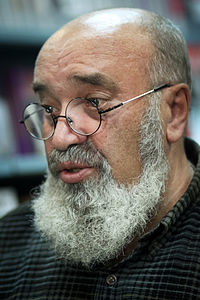
Sven Regener, Ashfaq Hussain, Kristijonas Donelaitis, Johannes Kinker, Sándor Petőfi, Anne Duden

De Duitse schrijver en musicus Sven Regener werd geboren op 1 januari 1961 in Bremen. Zie ook alle tags voor Sven Regener op dit blog.
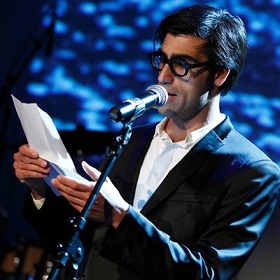
Uit: Herr Lehmann

„Wer weiß, was das für einer ist, dachte er, vielleicht ist der auf irgendwas abgerichtet, ein Killerhund, ein Hodenbeißer, einer, dachte er, der die Schlagader im Arm trifft, und dann verblutet man hier mitten auf dem Lausitzer Platz, es ist ja niemand da, der Platz ist menschenleer, dachte er, wer soll sich so früh am Sonntagmorgen schon hier herumtreiben, die Kneipen sind ja alle schon geschlossen, es ist ja immer das Einfall, das am allerspätesten zumacht, vom Abfall einmal abgesehen, aber das zählt nicht, dachte er, um diese Zeit treiben sich ja bloß noch Verrückte herum, geisteskranke Berliner mit abgerichteten Killerhunden, Perverse, die sich im Gebüsch einen runterholen, während sie sich ansehen, dachte Herr Lehmann, wie ihre beißwütigen Hunde ihr tödliches Spiel mit mir treiben. »Wem gehört dieser Hund hier?«, rief er über den leeren Platz, »WEM GEHÖRT DIESER VERDAMMTE SCHEISSHUND?«, aber niemand meldete sich. Nur der Hund knurrte noch lauter und verdrehte seinen Kopf so, dass die Augen rot glühend schimmerten. Es ist bloß die Netzhaut, beruhigte sich Herr Lehmann, es ist bloß die blöde Netzhaut, er hat den Kopf verdreht, und jetzt fällt das Licht so in seine Augen, dass es von der Netzhaut in meine Richtung reflektiert wird, dachte er, es ist die Netzhaut, die ist rot, Karotin, Vitamin A und so Zeug, das ist ja bekannt, dass das gut für die Augen ist, dachte er, er hatte daran eine dunkle Erinnerung aus seiner Schulzeit, er war immer gut in Biologie gewesen, aber das war nun auch schon lange her, Biologie, dachte Herr Lehmann, Biologie hilft jetzt auch nicht mehr weiter, ich muss hier weg, und es erfüllte ihn ein nie zuvor gekanntes Verlangen nach seinem Zuhause, einer Eineinhalbzimmerwohnung in der Eisenbahnstraße, wo seine Bücher und sein leeres Bett auf ihn warteten, keine hundert Meter entfernt von der Stelle, an der jetzt ein völlig fremder Hund sein Leben bedrohte. Wenn er mich nicht vorbeilässt, dachte Herr Lehmann, den sie früher alle ganz normal Frank genannt hatten, bis eben dieser kindische Witz, ihn mit Herr Lehmann anzureden, um sich gegriffen hatte, dann muss ich eben zurückgehen. Und er sah im Geiste schon die Stationen des Umwegs, den er nehmen musste, um die tollwütige Bestie des Lausitzer Platzes weiträumig zu umgehen, Waldemarstraße, Pücklerstraße, Wrangelstraße und dann von der anderen Seite kommend in die Eisenbahnstraße hinein, das ist ein Kinderspiel, dachte er, manchmal ist ein Rückzug besser als ein Angriff, dachte Herr Lehmann, ein taktisch kluger Rückzug kann strategisch zum Sieg führen.“


Sven Regener (Bremen, 1 januari 1961)
Scene uit de gelijknamige film uit 2003


De Canadess-Pakistaanse (Urdu) Ashfaq Hussain werd geboren op 1 januari 1951 in Karachi, Pakistan. Zie ook alle tags voor Ashfaq Hussain op dit blog.


Muhabbat Aur Zaroorat

From the core of my heart
From its very depths
I concede
‘I love you’
But what I’m saying
It’s quite possible
Carries the truth which mightn’t have undergone
The real test of fire
The word love that my lips utter
It’s quite possible
Was born out of necessity


Ashfaq Hussain (Karachi, 1 januari 1951)


De Pruisische-Litouwse dichter Kristijonas Donelaitis werd geboren op 1 januari 1714 in Lasdinehlen bij Gumbinnen in het oostelijk deel van Oost-Pruisen. Zie ook alle tags voor Kristijonas Donelaitis op dit blog.


Winter Cares (Fragment)

As I mused all alone, a pack of wolves drew near;
Their howls broke savagely into the midnight’s hush.
Fie ye, rapacious beasts, do you miss your fresh meat?
Doubtless your empty bellies ache and growl at you.
Come, come ye lusty winds and lash out at these beasts!
Strike them with your sharp darts that paralyze and slay!
It is an awful thing how these bloodthirsty brutes,
Like gory butchers, kill scores of our sheep and kine.
When they attack a herd at a green forest’s edge,
They care not if a sow is corpulent or lean;
They never hesitate to take a young pig’s life,
And have no fear to tear a husky shoat apart.
Those slaughterers, e’en when filled up with luscious pork,
Are not content, but crave savory veal and beef;
They slay the bearing cows as well as barren ones.
And still they seek for more. With bloody fangs agape,
They kill a gallant bull and a tenacious ox.
In fact they slay a horde of oxen ev’ry year.
They slaughter oxen white, they slaughter oxen black,
They slaughter oxen red, and of every hue;
Fearless, unhesitant, they leap upon a herd,
And slaughter cows and calves to suit their appetites.
They even have no fear of herdsmen and their crews,
Who come at them with shouts and cries. These deadly beasts
Snatch ewes at the wood’s edge and there they lie and eat.
O mighty winter, pray, come forth and punish them!
Else all our kine and sheep and swine will be no more.
Then these rapacious beasts will maim and kill us, too,
And slaughter our sweet wives and our beloved babes.


Kristijonas Donelaitis (1 januari 1714 – 18 februari 1780)
Portret door Petras Stauskas, 1960


De Nederlandse dichter, filosoof en advocaat Johannes Kinker werd geboren in Nieuwer-Amstel op 1 januari 1764. Zie ook alle tags voor Johannes Kinker op dit blog.


De Toekomst (Fragment)

Intusschen spoedt het naast-aanstaande op aadlaars vlerken;
’t Spoedt aan gelijk een straal van ’t flikkrend zonnehof.
Poogt wat den tijdsgeest durft braveren te versterken!
Vergeefs! – zijn algeweld werpt uw gevaarte in ’t stof!

Tergt door uw kreestengang zijn’ invloed, dan niet langer,
Baant u geen voetpad op een’ ondergraven weg!
Uw kunstnarij, uw web, uw listig overleg,
Gaat van een misgeboorte, een’ klomp, ontijdig zwanger.
’t Zinkt alles in het graf, dat reeds zijn kaken spart. –
Ziet opwaards! – Maar gij kunt dien vuurgloed niet verdragen.
Welaan, gluurt dan op de asch van uw verstorven magen,
Zingt hun een’ lijkzang, ter verligting van uw hart!
Maar gij, die in den nacht der eeuwen, lang verloopen,

Naar Plato’s zoekt, in ’t licht, helaas, te schaars verspreid.
Gij die dien straal herkent door ’t duister uitgebreid,
Der wijzen grafzerk eert, door tijd noch kracht te sloopen –
Gij die dien lichtstraal in de toekomst voorwaards rukt,
Zijn’ invloed, die verdubblend aanspoedt, kunt berekenen,
U voegt het, stout en trots, dit landschap af te teekenen;
Gij blikt omhoog, ook als heel ’t menschdom nederbukt. –
Dit land der toekomst daagt, schoon flaauw omwolkt, gedragen
Op ’t donker zwerk des tijds, waarop het sluimrend vaart –
Dat hare komst voorspelt, met doffe donderslagen,
En bliksems schiet in ’t oog, dat op haar grootheid staart.


Johannes Kinker (1 januari 1764 – 16 september 1845)
Portret door J.C. van Rossum, 1845


De Hongaarse dichter Sándor Petőfi werd geboren in Kiskőrös op 1 januari 1823. Zie ook alle tags voor Sándor Petőfi op dit blog.


Through the village

Through the village, all the way,
A gipsy band for me doth play,
A flask of wine I wave in glee,
I dance in maddest revelry.

O gipsy, play thy saddest airs,
That I may weep away my cares;
But when yon window we do reach,
Play joyous tunes I thee beseech.

The maid who lives there is my star,
The star, that shot from me afar;
She left me, strives from me to hide,
And blooms at other lovers’ side.

This is her window. Gipsy, play
A tune which is beyond all gay!
Let not the false maid even see,
That I can feel her falsity.


Drunk For The Country’s Sake

God bless you boys! come take a drink,
Let us the merry glass fill high!
Pray let me not my country see
Forsaken and in misery;
Far rather drunk in dreams I’d lie.

When drunk, I dream that once again
At home the voice of cheer I hear.
It seems to me, that, with each round
Of joyous drink, I heal a wound
Thou sufferest from, my country dear.

If it could be while I lie drunk
My country truly happy were –
You never should, good friends, I say,
Even if I should live for aye,
Behold me sober more, I swear!


Sándor Petőfi (1 januari 1823 – 31 juli 1849)
Portret door Ágost Egerváry Potemkin, z.j.


De Duitse dichteres en schrijfster Anne Duden werd geboren op 1 januari 1942 in Oldenburg. Zie ook alle tags voor Anne Duden op dit blog.


Van Gogh geht zur Arbeit

Van Gogh geht zur Arbeit
auf steiler abschüssiger Bahn.
Der Boden brennt ihm unter den Füßen
in kühler Dunkelheit.
Eine immer schneller sich bewegende Lavamasse
sein Wohnort.
Feuerball, flüssige Sonne.
Nicht anhalten, weiter.
Von einem Fuß auf den andern.
Nicht stehen- sitzen- liegenbleiben.
Alles versengt.
Ein Skifahrer bei der Abfahrt auf rotglühender Piste.
Zur Arbeit.
Und immer entlang dieser schwarzen Luft
in die er eingehen wird – als Rauch –
nach getaner Arbeit. Oder eher.
Weiter. Zur Arbeit.
Nichts anderes geht mehr.
Schon das leichteste Feldbett
würde in der kreisenden Hitze versinken
und sich spurlos verflüssigen.
Wirklich. Seine Glieder dürfen nie wieder weich
werden.
Nie mehr darf er sich hinlegen.
Nie eine einzige Ruhe finden.
Es ist kein Licht.
Neben dem Glutstrom nichts als uferlose Kaltluft.
Wer wirft denn den verkrüppelten Schatten
hinter und unter ihn.
Oder kommt er schon ins Rutschen.
Ist dies schon die Sengspur des sich ankündenden Sturzes.
Geh schneller, van Gogh, zur Arbeit.
Lauf. Es ist vielleicht gerade noch Zeit
zwischen Vereisen und Verglühen.
Kein Zweifel, er wird sich ums Leben laufen
bei diesen Arbeitsbedingungen.
Noch ein paar Bilder
kopfüber mit dem Flammenwerfer gemalt
immer noch einmal gegen die letzte Mauer,
die Leinwand.
Sein Gepäck will nicht leichter werden.
Er müßte sich selber durchbrennen
wie ein Blutvergießer sich hinfeuern mit Haut und
Haar.
Dann – es ist schon passiert –
geht ein dunkles, in alle Richtungen sich
dehnendes Blau
das sommerliche Bewölkung nur teilweise abdeckt
mit gelbgrünen Feldern und Wiesen
ihm auf bis zum Horizont.
Aus diesem Bild kommt keiner mehr lebend heraus.
Bis in die Mitte muß er gehen
sich einwühlen, an der Faltachse aufschlagen
oder sich zerquetschen in der plötzlichen Enge.
Die Erde reicht zu hoch, der Himmel zu tief.
Er sieht die Wolkenschweife noch hektisch das
Bild fliehen
das stärkste Blau immer hohler werden.
Er müßte hindurch.
Ganz vorn noch und winzig schon im Rücken
die Ansammlung roter Blumenköpfe.
Wie ein Fangeisen schlägt es über ihm zusammen.
Er ist zu weit gegangen.
Van Gogh ist tot.
Bei der Arbeit gestorben.
Sein Rauch steigt auf in die Kaltluft.
Sein Krüppelschatten kreist weiter auf unendlicher
Umlaufbahn.


Anne Duden (Oldenburg, 1 januari 1942)