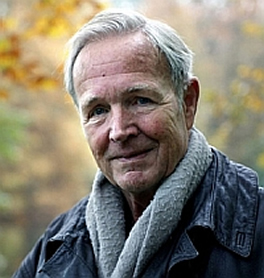
Rebecca Walker, Joost van den Vondel, Auberon Waugh, Christopher Paolini, Dahlia Ravikovitch, Max Barthel, Pierre Véry

De Amerikaanse schrijfster, uitgeefster en politiek activiste Rebecca Walker werd geboren op 17 november 1969 in Jackson, Mississippi. Zie ook alle tags voor Rebecca Walker op dit blog.

Uit: Baby Love

“And then I had what could only be the first twinges of the maternal instinct. Healthy and robust? A huge smile spread across my face. That’s my baby! And then it was as if the synapses in my brain sending exploratory signals to my uterus finally made contact. Aye, mate, is it a go down there? Yes, yes, Captain, we’re full steam ahead!
I was convinced that getting off the phone would exponentially increase my chances of reverting to not-pregnant, but I released Becky anyway and stumbled over to the bathroom, where Glen, my life partner and father of our soon-to-be-born baby, was shaving. I looked into his eyes and tried to keep myself from screaming and jumping up and down. We did it, I said. He grinned. Well, I guess that puts the whole motility question to rest. And I said, I guess it does. Then I wrapped my arms around him and buried my face in his chest, and he wrapped his arms around me and rested his chin on the top of my head.
I was in ecstatic bliss for about ninety seconds, and then it hit me: an avalanche of dread that took my breath away. Pregnant? A baby? What have I done? I looked at Glen. He was going through his own reality check, which brought me even closer to the brink of total hysteria. But then, before I could burst into tears and run screaming out of the room, he pulled me into his arms. You are going to be a fantastic mother, he said to me, to my fear. His love overwhelmed me, and I started to cry big, wet tears onto his favorite black shirt.
We’re going to have a baby.


Rebecca Walker (Jackson, 17 november 1969)
Lees verder “Rebecca Walker, Joost van den Vondel, Auberon Waugh, Christopher Paolini, Dahlia Ravikovitch, Max Barthel, Pierre Véry”

José Saramago, Craig Arnold, Anton Koolhaas, Renate Rubinstein, Danny Wallace

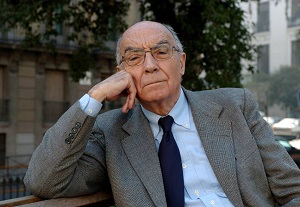
De Portugese schrijver José Saramago werd geboren op 16 november 1922 in het dorpje Azinhaga in de provincie Ribatejo. Zie ook alle tags voor José Saramago op dit blog.

Uit: Baltasar and Blimunda (Vertaald door Giovanni Pontiero)

“They were not afraid, they were simply astounded at their own daring. The priest laughed and shouted. He had already abandoned the safety of the handrail and was running back and forth across the deck of the machine in order to catch a glimpse of the land below, north, south, east, and west, the earth looked so vast, now that they were so far away from it, Baltasar and Blimunda finally scrambled to their feet, nervously holding on to the cords, then to the handrail, dazed by the light and the wind, suddenly no longer frightened, Ah, and Baltasar shouted, We’ve done it, he embraced Blimunda and burst into tears, he was like a lost child, this soldier who had been to war, who had killed a man in Pegões with his spike, and was now weeping for joy as he clung to Blimunda, who kissed his dirty face. The priest came up to them and joined in their embrace, suddenly perturbed by the analogy the Italian had drawn when he had suggested that the priest himself was God, Baltasar his son, and Blimunda the holy ghost, and now all three of them were up there in the skies together, There is only one God, he shouted, but the wind snatched the words from his mouth. Then Blimunda said, Unless we open the sail, we shall go on climbing, and we might even collide with the sun.”
We never ask ourselves whether there might not be some wisdom in madness, even while recognising that we are all a little mad. These are ways of keeping firmly on this side of madness, and just imagine, what would happen if madmen demanded to be treated as if they were equals with the sane, who are only a little mad, on the pretext that they themselves still possess a little wisdom, so as to safeguard, for example, their own existence like Padre Bartolomeu Lourenço, If we were to open the sail abruptly, we should fall to the ground like a stone, and it is he who is manoeuvring the rope and adjusting the slack so that the sail opens gradually, casting its shadow on the balls of amber and causing the machine to slow down, who would ever have thought that it would be so easy to fly, now we can go in search of new Indies.


José Saramago (16 november 1922 – 18 juni 2010)

Lees verder “José Saramago, Craig Arnold, Anton Koolhaas, Renate Rubinstein, Danny Wallace”

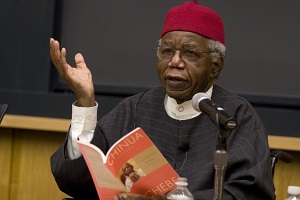
Chinua Achebe, Hugo Dittberner, Andrea Barrett, Henri Charrière, Jónas Hallgrímsson, Max Zimmering, Birgitta Arens

De Nigeriaanse dichter en schrijver Chinua Achebe werd geboren op 16 november 1930 in Ogidi. Zie ook alle tags voor Chinua Achebe op dit blog.


1966

absentminded
our thoughtless days
sat at dire controls
and played indolently
slowly downward in remote
subterranean shaft
a diamond-tipped
drill point crept closer
to residual chaos to
rare artesian hatred
that once squirted warm
blood in God’s face
confirming His first
disappointment in Eden


The First Shot

That lone rifle-shot anonymous
in the dark striding chest-high
through a nervous suburb at the break
of our season of thunders will yet
steep its flight and lodge
more firmly than the greater noises
ahead in the forehead of memory.


Vertaald door Ifeanyi Menkiti


Chinua Achebe (Ogidi, 16 november 1930)

Lees verder “Chinua Achebe, Hugo Dittberner, Andrea Barrett, Henri Charrière, Jónas Hallgrímsson, Max Zimmering, Birgitta Arens”

Jan Telouw, Wolf Biermann, J. G. Ballard, Gerhart Hauptmann, Lucien Rebatet

De Nederlandse schrijver, fysicus en voormalig politicus voor Democraten 66 Jan Terlouw werd geboren in Kamperveen op 15 november 1931. Zie ook alle tags voor Jan Terlouw op dit blog.


Uit: De koning van Katoren

‘Eindelijk, na weken, als blijkt dat ze het toch niet eens worden, besluiten ze te loten. Ze bellen om Gervaas. ‘Breng een dobbelsteen,’beveelt minister de Seer. Gervaas, die voelt dat het om Stach gaat, brengt bezorgd een dobbelsteen in een leren beker. ‘Een een of een twee is zijn hoofd er af,’zegt de Seer. ‘Drie of vier is verbanning. Vijf of zes is opdrachten. Gervaas, werp de dobbelsteen!’ Bevend schudt de oude man de steen in het bekertje. Dan zet hij de beker omgekeerd op tafel. Het ontbreekt hem aan moed hem op te lichten. Het duurt minister Pardoes allemaal veel te lang. Driftig licht hij de beker op. ‘Een zes,’zegt hij. ‘Dat betekent dat de jongen zijn zeven opdrachten krijgt.’

(…)


“Daar zit hij. De stenen zijn hard en koud, maar wie zou daar op letten? Even nog blijft het doodstil, alsof de mensen niet kunnen geloven dat hij rustig in leven blijft. Dan maakt hij een lange neus tegen de ministers en een oorverdovend gejuich breekt los. Vijfhonderd maal zwaaien de mensen hun armen omhoog en roepen hoera, nadat de burgemeester van Decibel heeft geschreeuwd: ‘’LEVE DE KONING VAN KATOREN!” Bij de tweehonderdste maal beginnen de lippen van minister Broeder zachtjes mee te trillen. Bij de tweehonderdvijftigste maal gaat een arm van minister Pardoes voorzichtig meedoen. Bij de driehonderdste maal staat geen van de ministers meer helemaal stil en klinkt er een soort ondergronds gebrom uit hun gelederen. Bij de driehondervijftigste maal komen hun handen al ter hoogte van hun oren en de laatste honderd maal hoerahen ze mee, net als gewonen Katorenen.”


Jan Terlouw (Kamperveen, 15 november 1931)


Lees verder “Jan Telouw, Wolf Biermann, J. G. Ballard, Gerhart Hauptmann, Lucien Rebatet”

Clemens J. Setz

De Oostenrijkse schrijver en vertaler Clemens J. Setz werd geboren op 15 november 1982 in Graz, waar hij nog steeds woont . In 2001 begon hij met een opleiding voor docent wiskunde en Duits aan de Karl-Franzens Universiteit in Graz. Naast de studie werkte hij als vertaler en publiceerde hij gedichten en korte verhalen in tijdschriften en bloemlezingen. Zijn debuutroman “Söhne und Planeten”, gepubliceerd in 2007 haalde de shortlist van de aspekte-literatuurprijs. In 2008 werd hij uitgenodigd voor de Ingeborg Bachmann-prijs, en won hij de Ernst-Willner-Prijs met de novelle “Die Waage” . In 2009 werd zijn tweede roman “Die Frequenzen” voor de Deutsche Buchpreis genomineerd (Short List) . Voor zijn verhalenbundel “Die Liebe zur Zeit des Mahlstädter Kindes” ontving hij in 2011 de Prijs van de Leipziger Buchmesse voor fictie. Vanaf 2011 schreef hij voor het literaire tijdschrift Volltext de serie “Nicht mehr lieferbar” overniet meer leverbare werken van grote schrijvers. Zijn in 2012 gepubliceerde roman “Indigo” kwam op de shortlist voor de Deutsche Buchpreis.

Uit: Indigo

„Es klang, als artikulierten sie durch ein Megaphon, das einen etwas zu langen Nachhall erzeugte. (Wenig später sah ich im Speisesaal des Instituts einen Schüler, der tatsächlich ein kleines hellblaues Megaphon an einem schwarzen Lederband um den Hals trug.)
Nachdem der Junge weitergegangen war, klingelte es erneut, und ein weiteres Kind tauchte auf.
Die kommen nacheinander heraus?
Es gibt eine Reihenfolge, sagte Dr.Rudolph. Eine Reihenfolge…Er schien nicht ganz bei der Sache.
Robert hat komisch ausgesehen, sagte er. Haben Sie sein Auge bemerkt?
Ja, sagte er nachdenklich. Blöde Geschichte, wenn das wieder…
Wissen Sie was, ich werde kurz… nur einen Augenblick, ja?
Er holte sein Handy aus der Tasche und rief jemanden an. Da er sich einige Schritte von mir entfernte, konnte ich nicht verstehen, was er sagte. Ich stand allein auf meinem Flecken Erde und rührte mich nicht. Wie eine Schachfigur, die darauf wartet, weitergeschoben zu werden. Von allein käme sie nie auf die Idee, ihr Feld zu verlassen.
Der Speisesaal war ein auffallend niedriger, aber großer Raum.
In ihm standen lange Tischreihen, die alle paar Meter von einem Stuhl ergänzt wurden. Man konnte die Stühle wie Lautstärkeregler an den Tischen entlangschieben.
Als der Direktor und ich eintraten, drehten sich einige Köpfe nach uns um. Dr. Rudolph ging zu einem an die Wand gerückten Pult und betätigte den Schalter an einer Gegensprechanlage.
Mahlzeit, meine Herrschaften!, kam es aus den Lautsprechern, die in jeder Ecke des Raumes hingen.”

 
Clemens J. Setz (Graz, 15 november 1982)

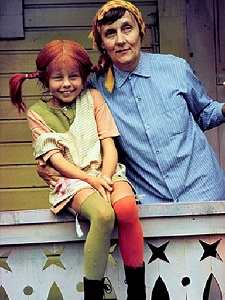
Astrid Lindgren, Jonathan van het Reve, Norbert Krapf, René de Clercq, Chloe Aridjis

De Zweedse schrijfster Astrid Lindgren werd als Astrid Ericsson geboren op 14 november 1907 en groeide op op de boerderij Näs in Vimmerby in Småland. Zie ook alle tags voor Astrid Lindgren op dit blog.


Uit: Pippi Langstrumpf (Vertaald door Cäcilie Heinig)


“Meine Mama ist ein Engel, und mein Papa ist ein Südseekönig. Es gibt wahrhaftig nicht viele Kinder, die so feine Eltern haben!”, pflegte Pippi sehr stolz zu sagen. “Und wenn mein Papa sich nur ein Schiff bauen kann, dann kommt er und holt mich, und dann werde ich eine Südseeprinzessin. Hei hopp, was wird das für ein Leben!” Ihr Papa hatte dieses alte Haus, das in dem Garten stand, vor vielen Jahren gekauft. Er hatte gedacht, dass er dort mit Pippi wohnen würde, wenn er alt war und nicht mehr über die Meere segeln konnte.

Aber dann passierte ja das Schreckliche, dass er ins Meer geweht wurde, und während Pippi darauf wartete, dass er zurückkam, begab sie sich geradewegs nach Hause in die Villa Kunterbunt. So hieß dieses Haus. Es stand möbliert und fertig da und wartete auf sie. An einem schönen Sommerabend hatte sie allen Matrosen auf dem Schiff ihres Papas Lebewohl gesagt. Sie hatten Pippi sehr gern und Pippi hatte sie auch gern.

“Lebt wohl, Jungs”, sagte Pippi und gab allen der Reihe nach einen Kuss auf die Stirn. “Habt keine Angst um mich. Ich komm immer zurecht.”

Zwei Dinge nahm sie vom Schiff mit. Einen kleinen Affen, der Herr Nilsson hieß, und einen großen Handkoffer, voll mit Goldstücken, den hatte sie von ihrem Papa bekommen. Die Matrosen standen an der Reling und schauten Pippi nach, solange sie sie sehen konnten. Sie ging mit festen Schritten davon, ohne sich umzudrehen, mit Herrn Nilsson auf der Schulter und dem Koffer in der Hand.
“Ein merkwürdiges Kind”, sagte einer der Matrosen und wischte sich eine Träne aus dem Auge, als Pippi in der Ferne verschwunden war.“


Astrid Lindgren (14 november 1907 – 28 januari 2002)

Hier met Inger Nilsson als Pippi Langkous

Lees verder “Astrid Lindgren, Jonathan van het Reve, Norbert Krapf, René de Clercq, Chloe Aridjis”

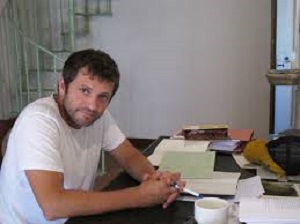
Peter Orner

Onafhankelijk van geboortedata:

De Amerikaanse schrijver Peter Orner werd in 1968 in Chicago geboren. Hij studeerde af aan de Universiteit van Michigan in 1990 en verwierf later een graad in de rechten van de Northeastern University en een MFA van de Iowa Writer’s Workshop..Zijn oudere broer is Eric Orner, de maker van de strip The Mostly Unfabulous Social Life of Ethan Green. Orner heeft lange tijd gewerkt in Kamp Nebagamon, een overnachtingskamp in het noorden van Wisconsin , waar hij o.a. adviseur en reisleider was. Hij heeft ook gewerkt als waarnemer mensenrechten in Chiapas, Mexico, als taxichauffeur in Iowa. Orners verhalen en essays zijn verschenen in de Atlantic Monthly, The New York Times, The San Francisco Chronicle, The Paris Review en elders. Hij won twee keer won de Pushcart Prize. Orner kreeg een Guggenheim Fellowship (2006), evenals het 2 jaar durende Lannan Foundation Literary Fellowship (2007-2008). Een van Orner ’s verhalen, “The Raft” werd verfilmd. In 2001 verscheen de bundel “Esther Stories”, waarvoor hij o.a. de Prize from the American Academy of Arts and Letters ontving. In 2006 publiceerde hij zijn roman “The Second Coming of Mavala Shikongo”, een roman die speelt in Namibië, waar Orner in de jaren negentig werkte. In 2011 volgde “Love and Shame and Love”, winnaar van de California Book Award. In 2013 verscheen een nieuwe bundel verhalen “Last Car Over the Sagamore Bridge”. Orner is professor Creative Writing aan de San Francisco State University en heeft gedoceerd aan de Writers ‘ Workshop van de Universiteit van Iowa, The Warren Wilson MFA Program van de University of Montana, Washington University, de Universiteit van Miami, Bard College en de Karelsuniversiteit in Praag.

Uit: The Second Coming of Mavala Shikongo

“The Volunteer

A brother from the diocese drove me out there from Windhoek. His name was Brother Hermanahildis. He was a silent man with a bald, sunburned head. The single thing he said to me in four hours was “I am not a Boer, I am pure Dutch. I was born in The Hague.” He drove like a lunatic. I watched the veld wing by, and the towns that were so far between. Brakwater, Okahandja, Wilhelmstal. Brother Hermanahildis seemed to be suffering from an excruciating toothache. At times he took both hands off the wheel and pulled on his face. I was relieved when we reached Karibib and he turned onto a gravel road heading south. Eventually, he let me off at a wind-battered tin sign—farm goas—and told me to follow the road, that the mission was just beyond the second ridge. When you get there, Brother Hermanahildis said, go and see the Father directly.
Ta-ta. With a suitcase in each hand, one backpack on my back, another on my stomach, I followed the road, a rock-strewn double-track across the veld. There were a number of ridges. I looked for one that might be considered a second one. The short rocky hills made it impossible to see what was ahead on the road, although in the distance I could see a cluster of smallish mountains rising. A few crooked, bony trees here and there. Strawlike grass grew like stubble up out of the gravel. Somehow I thought a purer desert might have been more comforting. Where were the perfect rippled dunes? Where was the startling arid beauty? These plants looked like they’d rather be dead. I listened to the crunch of my own feet as I shuffled up and over ridges. There was no second ridge. There would never be a second ridge.
An hour or so later, sweat-soaked, miserable, I stood, weighted and wobbly, and looked down on a place where the land swooped into a kind of valley, a flat stretch of sand and gravel. There was a group of low-slung buildings painted a loud, happy yellow.
There was a hill with a tall white cross on top. Hallelujah! As best I could I bumbled down the road until I reached a cattle gate made from bedsprings lashed to a post. The gate was latched closed by a complicated twist of wire. As I struggled with the wire, a rotund man in a khaki suit moved slowly but inevitably down the road toward me, as if being towed by his own stomach. When he reached the other side of the gate he stopped. He faced me for a moment before he spoke much louder than he needed to. “Howdy.”

 
Peter Orner (Chicago, 1968)

José Carlos Somoza, Inez van Dullemen, Timo Berger, Hadjar Benmiloud, Nico Scheepmaker, Robert Louis Stevenson

De Spaanse schrijver José Carlos Somoza werd geboren in Havana, Cuba op 13 november 1959. Zie ook alle tags voor José Carlos Somoza op dit blog.


Uit: Zig Zag (Vertaald door Lisa Dillman)


„And that was what was so strange.

People thought she was too perfect. Too intelligent and too worthy to be working in a mediocre physics department at a business-oriented university like Alighieri, where no one truly cared about physics. Her colleagues were sure that she could have had her pick of careers: a post at the Spanish National Research Council, a tenured professorship at a public university, or some important role at a prestigious center abroad. Elisa was wasted at Alighieri. Then, too, no theory (and physicists love theories) adequately explained why, at thirty-two, almost thirty-three (her birthday was in April, just a month away), Elisa was unattached, had no close friends, and yet seemed perfectly happy. She appeared to have all she wanted in life. No one knew of any boyfriends (or girlfriends), and her friendships were limited to colleagues with whom she rarely if ever spent free time. She wasn’t conceited or even arrogant despite her obvious good looks. And although she accentuated her attractiveness by wearing a whole range of perfectly tailored designer clothes that often made her look downright provocative, she never seemed to be trying to hard to attract the attention of men (who often turned to gawk when she passed) with the clothes she wore. Elisa spoke only about her profession, was courteous, and always smiled. The Elisa Mystery was unfathomable.

Occasionally, she seemed unsettled. It was nothing concrete: maybe a look, or a momentary dullness in her brown eyes, or just a feeling she gave people after a quick conversation. As though she was hiding something. Those who thought they knew her-Noriega, the department chair, among others-thought it was probably best that she never reveal her secret. For whatever reason, some people, regardless of how insignificant their role in others’ lives, or how few close moments they’ve shared, are unforgettable. Elisa Robledo was one of them, and people wanted it to stay that way.”


José Carlos Somoza (Havana, 13 november 1959)

Lees verder “José Carlos Somoza, Inez van Dullemen, Timo Berger, Hadjar Benmiloud, Nico Scheepmaker, Robert Louis Stevenson”

Daniël Dee, Johnny van Doorn, Cristina Peri Rossi, Naomi Wolf, Juana Inés de la Cruz

De Nederlandse dichter Daniël Dee werd geboren op 12 november 1975 in Empangeni, Zuid-Afrika. Zie ook mijn blog van 12 november 2010 en eveneens alle tags voor Daniël Dee op dit blog.


A day in the life


pas op dat je niet zonder komt te zitten

ooit daar aan gedacht

straks gaan de dagen weder lengen

de lente komt van ver op blote voetjes

om hier uiteindelijk te heersen

in al haar heerlijkheid elke dag

en elke dag wordt tot op de minuut

voor onze burgemeester

gedicteerd door de agenda

het heilige boek van de 21ste eeuw

het heilige moeten is ingekapseld

in een lappendeken van regelingen

de ambtsketen verleent hem

zijn krachten of is het juist andersom

sommige mechaniek blijft vertrouwelijk

gevraagd aan de burgemeester

waar hij een tientje aan zou uitgeven

antwoordt hij zonder nadenken

één euro is voor het onderwijs

twee voor het onderwijs

drie voor het onderwijs

en daarna zien we pas verder

het rode lichtje van de microfoon brandt

het aantal minuten spreektijd wordt in het groen

op een beeldscherm weergegeven

politici komen en gaan

als pop-ups op je pc hun retoriek

hol als een chocoladen paashaas

de burgemeester blijft en pareert

in de raadszaal de kritiek

met feiten die achter hem staan

tot zover het verbale geweld

hard als inktpotten

want nu is het genoeg

inktpotten werpt men slechts

in de raadszaal


Daniël Dee (Empangeni, 12 november 1975)

Lees verder “Daniël Dee, Johnny van Doorn, Cristina Peri Rossi, Naomi Wolf, Juana Inés de la Cruz”

Bij Sint Maarten, Hans Magnus Enzensberger, Mircea Dinescu, Carlos Fuentes

Bij Sint Maarten


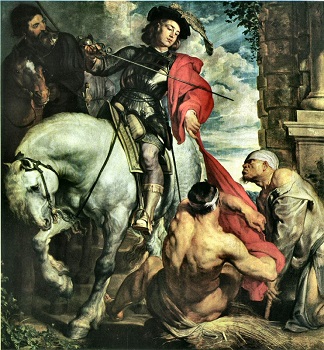
Sint Maarten verdeelt de mantel door Anthony van Dyck, rond 1618


St. Martin’s Day

In damp dark, we parents and children
line up in groups behind teachers
in the Pausenhof of the Grundschule

to walk in procession to the park
behind the baroque palace. As we
move forward in unison, we sing songs

to celebrate the legend of a knight on horseback
who cut his cloak in half with his sword
to comfort a beggar on foot. The children

carry tiny flames through the dark
in lanterns they have made in school
and hooked to the end of sticks.

“Laterne, Laterne, Sonne, Mond und Sterne,”
they sing. In Elizabeth’s blue box burns
a candle illuminating a paper angel, an apple,

a moon, and a star cut out in construction
paper she glued together. Before the arched
Orangerie in the park, the children stand

in semicircles to sing. Some play recorders,
some play violins, some tap rhythm
on tambourines. Behind them, facing

us parents, is a big illuminated sheet,
before which silhouetted children
actors mime the action of Martin

and his beggar as classmates narrate their
lines. At the end, all sing the round
“Hebet die Laterne / Lift the lanterns,”

repeat the refrain “Licht zu bringen
in dieser Welt / To bring light into this
world,” and follow a rider on horseback

into the dark. As they wind along geometric
walkways in the Schlosspark, stringing
beads of light through the dark with their

handmade lanterns, I remember the first question
Elizabeth asked after we arrived in Erlangen:
“Daddy, do they celebrate Chanukah here?”

Fifty years after the Kristallnacht, I see
burning beads of light along looping walkways
merge into the menorah held in uplifted hands.


Norbert Krapf (Jasper, 14 november 1943)

Lees verder “Bij Sint Maarten, Hans Magnus Enzensberger, Mircea Dinescu, Carlos Fuentes”