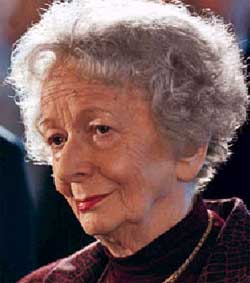
Gunnar Ekelöf, Agatha Christie, Jim Curtiss, Ina Seidel

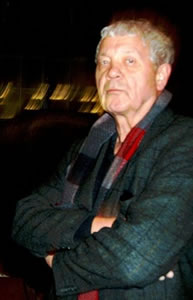
De Zweedse dichter en schrijver Bengt Gunnar Ekelöf werd geboren op 15 september 1907 in Stockholm. Zie ook mijn blog van 15 september 2007 en ook mijn blog van 16 september 2008 en ook mijn blog van 15 september 2009 en ook mijn blog van 15 september 2010


De bloemen

de bloemen slapen voor het raam en de lamp staart licht

en het raam staart gedachteloos in het donker daarbuiten

de schilderÿen tonen onntzield de hun toevertrouwde oinhoud

en de vliegen staan stil op de muur en denken

de bloemen leunen tegen de nacht en de lamp spint licht

in de hoek spint de kat wollen draden om mee te slapen

op het fornuis snurkt de koffieketel af en toe met welbehagen

en de kinderen spelen stil met woorden op de vloer

de wit gedekte tafel wacht op iemand

wiens stappen nooit de trap opkomen

een trein die in de verte de stilte doorboort

ontsluiert het geheim der dingen niet

maar het lot telt de slagen van de klok in decimalen.


Ik geloof in de eenzame mens

Ik geloof in de eenzame mens,

in hem die eenzaam dwaalt,

die niet als een hond zijn reuk achterna rent,

die niet als een wolf de reuk van mensen mijdt:

mens en anti-mens tegelijk.

Hoe gemeenschap te vinden?

Mijd de hoge buitenweg:

wat vee is in anderen is ook vee in jou.

Neem de lage binnenweg:

wat bodem is in jou is ook bodem in anderen.

Moeilijk om aan jezelf te wennen.

Moeilijk jezelf te ontwennen.

Wie het doet wordt toch nooit alleen gelaten.

Wie het doet blijft toch altijd soldair.

Het onpraktische is het enig praktische

op den duur.

Vertaald door H.C. ten Berge en Marguérite Törnqvist
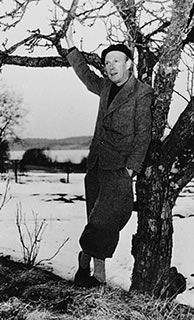
 

Gunnar Ekelöf (15 september 1907 – 16 maart 1968)

Lees verder “Gunnar Ekelöf, Agatha Christie, Jim Curtiss, Ina Seidel”
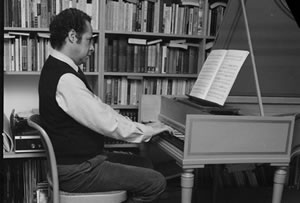
Hans Faverey, Theodor Storm, Leo Ferrier, Bernard MacLaverty, Martyn Burke, Ivan Klima

De Nederlandse dichter Hans Faverey werd op 14 september 1933 geboren in Paramaribo. Zie ook mijn blog van 14 september 2010 en eveneens alle tags voor Hans Faverey op dit blog.


Rozenmond ligt languit in haar bad

en wil er niet uit. Zij rekt zich uit
en maakt met haar handen van die
schokkende bewegingkjes boven haar hoofd.

De wind is intussen gaan liggen.
Het riet beweegt niet meer en op
de plavuizen vloer is ook
mijn schaduw vervluchtigd.

Rozenmond in haar denken is leeg.
Gedachtenloos strijkt zij de kleine
luchtbelletjes uit haar schaamhaar,
van haar dijen. Rozenmond ligt

in bad, wil niet uit bad, komt ook
niet uit bad. Zij draait de mengkranen
open, duwt het hefboompje omhoog
en laat het nog uren en uren
regenen op haar schouders,
op haar zo mooie hoofd.


Zodat ik uitzie

Zodat ik uitzie
door het oog
van mijn naald

en sneeuwblind herken
de zwerfsteen,
sterfsteen onder

mijn tong: splinter
voor spinter

slaagt hij erin
niets te wegen,
niets voor te stellen.


Hans Faverey (14 september 1933 – 8 juli 1990)

Lees verder “Hans Faverey, Theodor Storm, Leo Ferrier, Bernard MacLaverty, Martyn Burke, Ivan Klima”

Eckhard Henscheid, Corly Verlooghen, Eric van der Steen, Mario Benedetti, Uli Becker

De Duitse schrijver Eckhard Henscheid werd geboren op 14 september 1941 in Amberg. Zie ook mijn blog van 14 september 2010.


Uit: Dummdeutsch

»Dummdeutsch«: ein ebenso rasch einleuchtender, ein kaum je ganz (…) mißverstandener und praktikabler wie selbstverständlich proto- und parawissenschaftlicher Begriff. Welcher, sehr straff zusammengefaßt, an-sich »Dummes«, strukturell »dummes« Wortmaterial ebenso umgreift wie solches, das erst per fortgesetzte Inflation, gedankenlose Entleerung oder auch bloße Verwendung durch die garantiert falschen Menschen es – von Fall zu Fall anders – geworden ist.“
(…)


»Dummdeutsch«: der fraglos wissenschaftlich, historisch, linguistisch nicht allzu ausgewiesene noch abgegrenzte Begriff tut sogar gut daran, im leicht zwielichtig Unausgewiesenen zu verbleiben; wie gleichsam die Sache, die er bezeichnet, selber: Diese genetisch manchmal kaum sortierbare und sehr gallertartige Aufschüttung aus Neo- und Zeitlosquatsch, aus verbalem Imponiergewurstel bei gleichzeitiger Verschleierungs- und Verhöhnungsabsicht oder auch umgekehrt Angst; aus modisch progressistischem Gehabe wie gleichzeitig stur autoritärer Gesinnung mal bürokratieseligem Geschwafel – dieses Dummdeutsche bekommt am Ende etwas über die läßliche Verfehlung weit hinaus konstitutionell Hirnzerbröselndes noch jenseits der ja eher biologisch konditionierten Mentalschwächen von Sprachalterung etwa nach Maßgabe der Lord Chandosschen Befunde. Geister- und schauderhaft meint es die Signatur der Epoche, aber auch die der Sprache und Sprachgeschichte selber, die sozusagen ontische Torheit des Worts, des in und an sich selbst Verwesenden von Wort und Wortbildung, fast eine Ästhetik also auch des Scheußlichen, des Ruinösen und des Desaströsen alles Phonetische – aber lassen wir das.“


.

Eckhard Henscheid (Amberg, 14 september 1941)

Lees verder “Eckhard Henscheid, Corly Verlooghen, Eric van der Steen, Mario Benedetti, Uli Becker”

Tõnu Õnnepalu, Janusz Glowacki, Julian Tuwim, Eginald Schlattner, Warren Murphy, Johannes Poethen

De Estische dichter, schrijver en vertaler Tõnu Õnnepalu werd geboren op 13 september 1962 in Tallin. Zie ook mijn blog van 13 september 2008 en ook mijn blog van 13 september 2009 en ook mijn blog van 13 september 2010.


Flesh has become word

Flesh has become word, word has not become flesh.
Who lives, can become word,
this is my little human hope
and today it is visible, today, today!

Today awakens the flesh in my flesh and the earth in my bones
and the sap of trees, the earth water, rises upwards,
earth’s cold blind water, lifeless water, ice water,
presses up throught the veins,
through the bitter flesh of pines,
the sweet flesh of maples,
up, out, into steam, as spirit,
in vain, water presses, sap presses, blood presses, yes,
not listening, in vain!

The hum of ducks is the Victory Song today,
the Nameless’ immense fleshly voice in the tranquil mist of the sea,
under the bright morning covers, in the warm, wordless light,
yes, in wordlessness, in not becoming word, in not being held by the word.

And I remain outside of it, outside of this great day,
because inside me there are words,
seeing and hearing I think words,
I do not hum like ducks, I do not flap wings,
the words in my head are mute motionless song,
needless sounds that nobody hears,
blind light that nobody sees,
an unmade move, caress and pain that nobody feels.

But there is something else in me, there happens to be everything
that touches everything else today and flies away.

And the word is smaller than this,
for really there is very little in word.
Perhaps this or that, perhaps a lot,
perhaps almost everything remains outside the word.

The word is ill of it, always in pain for what it is not.
In pain of this morning,
in pain of the flesh and blood,
in pain of water and light,
in pain for being closed in the head.

It may be that this is my work, that this is
the pressing voice of the Nameless speaking in me:
to let the word free, let it out of the head,
let it die, sow it into the vast earth of the unword,
into the darkness of myself and un-self,
outside the gates into the great light where Today is waiting,
where the wordless, shapeless, ever changing All is waiting.

And I myself should wait, not knowing for what,
cry and mourn for the word, weep for my self
that has no more name,
lie down on bare ground before the Gates
as beggars lie down to sleep in the open
and wait to be let in,
wait to get out,
wait for the Hour of Change, for the Unknown.

Tõnu Õnnepalu (Tallin, 13 september 1962)

Lees verder “Tõnu Õnnepalu, Janusz Glowacki, Julian Tuwim, Eginald Schlattner, Warren Murphy, Johannes Poethen”

Nicolaas Beets, Francis Yard, Roald Dahl, Anton Constandse, J. B. Priestley, James Shirley

De Nederlandse dichter, predikant en hoogleraarr Nicolaas Beets werd geboren op 13 september 1814 in Haarlem. Zie ook mijn blog van 13 september 2010 en eveneens alle tags voor Nicolaas Beets op dit blog.


Langs moeders graf

’t Was de eerste thuiskomst na haar sterven;
Wij haalden hem van boord.
Hij pakte en kuste ons honderd werven,
Maar sprak geen enkel woord.
Een tijdlang stond hij in gedachten,
En zag ons zwijgend aan;
Op eenmaal kreeg hij moed en krachten,
En zeide “ Laat ons gaan ! “

Het kleine Stijntje werd gedragen,
Ik bij de hand gevat;
Opeens de Kerkstraat ingeslagen,
In plaats van ’t achterpad.
Verwondring heb ik niet doen blijken;
Benepen zweeg ik stil,
En had het hart niet op te kijken,
Al had ik ook de wil.

Maar toen wij langs het kerkhof togen,
Zijn hand de mijne neep,
Zag ik hem aan met vochtige ogen,
Ten blijk dat ik ’t begreep,
‘ Had ik die blik maar niet geslagen ! ‘
Herhaal ik duizend keer:
’t Gelaat dat toen mijn ogen zagen,
Vergeet ik nimmermeer.


Niet klagen

Niet klagen
Maar dragen
En vragen
Om kracht.
Niet zorgen
Voor morgen
Bij vallende nacht.
Niet beven
Voor ‘t leven
Gegeven
Van God
Maar ‘t heden
Besteden
Naar plicht en gebod.
Niet dringen
In dingen
Door niemand bevroed.
Tevreden
Te treden
Bij ‘t licht op het pad
En de lamp voor de voet.


Nicolaas Beets (13 september 1814 – 13 maart 1903)

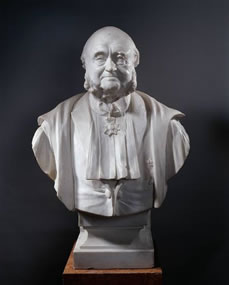
Buste door Cornelis Beets, 1894

Lees verder “Nicolaas Beets, Francis Yard, Roald Dahl, Anton Constandse, J. B. Priestley, James Shirley”

Michael Ondaatje, Werner Dürrson, James Frey, Louis MacNeice, Eduard Elias

De Canadese dichter en schrijver Philip Michael Ondaatje werd op 12 september 1943 geboren in Colombo, Ceylon (nu Sri Lanka). Zie ook mijn blog van 12 september 2009 en ook mijn blog van 12 september 2010


(Inner Tube)

On the warm July river
head back

upside down river
for a roof

slowly paddling
towards an estuary between trees

there’s a dog
learning to swim near me
friends on shore

my head
dips
back to the eyebrow
I’m the prow
on an ancient vessel,
this afternoon
I’m going down to Peru
soul between my teeth

a blue heron
with its awkward
broken backed flap
upside down

one of us is wrong

he
his blue grey thud
thinking he knows
the blue way
out of here

or me


The Time Around Scars

A girl whom I’ve not spoken to
or shared coffee with for several years
writes of an old scar.
On her wrist it sleeps, smooth and white,
the size of a leech.
I gave it to her
brandishing a new Italian penknife.
Look, I said turning,
and blood spat onto her shirt.

My wife has scars like spread raindrops
on knees and ankles,
she talks of broken greenhouse panes
and yet, apart from imagining red feet,
(a nymph out of Chagall)
I bring little to that scene.
We remember the time around scars,
they freeze irrelevant emotions
and divide us from present friends.
I remember this girl’s face,
the widening rise of surprise.

And would she
moving with lover or husband
conceal or flaunt it,
or keep it at her wrist
a mysterious watch.
And this scar I then remember
is a medallion of no emotion.

I would meet you now
and I would wish this scar
to have been given with
all the love
that never occurred between us.

Michael Ondaatje (Colombo, 12 september 1943)

Lees verder “Michael Ondaatje, Werner Dürrson, James Frey, Louis MacNeice, Eduard Elias”

Hannes Meinkema, Gust Van Brussel, Stanislaw Lem, Marya Zaturenska, Elsa Triolet

De Nederlandse dichteres en schrijfster Hannes Meinkema werd op 12 september 1943 geboren in Tiel. Zie ook mijn blog van 12 september 2010 en eveneens alle tags voor Hannes Meinkemaop dit blog.


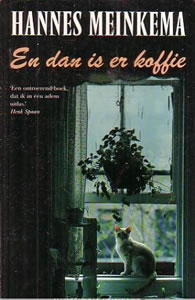
Uit: En dan is er koffie

„Ze steekt haar hand uit, ze is niet nerveus, ze drukt op de bel.
‘Dag’, zegt ze als juffrouw Bussemaker opendoet. ‘Ik moest maar eens langskomen, en hier ben ik. Kom ik gelegen?’
Juffrouw Bussemaker heeft een spijkerbroek aan, met een blauwgeruite blouse erop en een leren riem om haar taille. Ze ziet er jong uit.
‘Natuurlijk kom je gelegen. Kom binnen, Arja,’ zegt ze vriendelijk. Het staat haar goed, een spijkerbroek. Ze heeft mooie benen, ziet Arja als ze achter haar aan naar de kamer loopt.
‘Wat een mooie kamer.’
Juffrouw Bussemaker kijkt haar even aan.
‘Je mag wel je zeggen. Ik heet Marion.’
Een golf van blijdschap gaat door Arja heen. Dat had ze al gehoopt, dat Marion dat zou aanbieden.“


Hannes Meinkema (Tiel, 12 september 1943)

Cover

Lees verder “Hannes Meinkema, Gust Van Brussel, Stanislaw Lem, Marya Zaturenska, Elsa Triolet”

D.H. Lawrence, Murat Isik, Eddy van Vliet, David van Reybrouck, Barbara Bongartz, Tomas Venclova

De Engelse dichter en schrijver D.H. Lawrence werd geboren op 11 september 1885 in Eastwood (Nottinghamshire). Zie ook alle tags voor D. H. Lawrence op dit blog.


Glory

Glory is the sun, too, and the sun of suns,

and down the shafts of his splendid pinions

run tiny rivers of peace.

Most of his time, the tiger pads and slouches in a burning

peace.

And the small hawk high up turns round on the slow pivot of

peace

Peace comes from behind the sun, with the peregrine falcon,

and the owl.

Yet all of these drink blood.


What would you fight for?

I am not sure I would always fight for my life.

Life might not be worth fighting for.

I am not sure I would always fight for my wife.

A wife isn’t always worth fighting for.

Nor my children, nor my country, nor my fellow-men.

It all deprnds whether I found them worth fighting for.

The only thing men invariably fight for

Is their money.But I doubt if I’d fight for mine, anyhow

not to shed a lot of blood over it.

Yet one thing I do fight for, tooth and nail, all the time.

And that is my bit of inward peace, where I am at one

with myself.

And I must say, I am often worsted.


Self Pity

I never saw a wild thing

sorry for itself.

A small bird will drop frozen dead from a bough

without ever having felt sorry for itself.


D.H. Lawrence (11 september 1885 – 2 maart 1930)

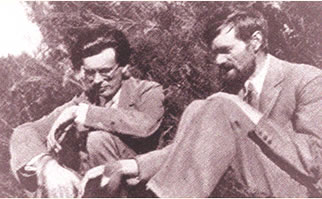
Hier met Alldous Huxley (links) in Taos, 1929

Lees verder “D.H. Lawrence, Murat Isik, Eddy van Vliet, David van Reybrouck, Barbara Bongartz, Tomas Venclova”

O. Henry, Joachim Fernau, Peter Hille, Adam Asnyk, James Thomson, Thomas Parnell, Fitz Hugh Ludlow, Johann Jakob Engel

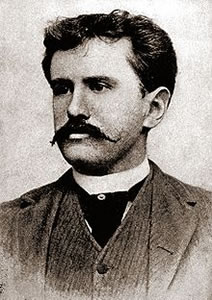
De Amerikaanse schrijver O.Henry, pseudoniem van William Sydney Porter , werd geboren in Greensboro (North Carolina) op 11 september 1862. Zie ook alle tags voor O. Henry op dit blog.

Uit: The Gift of the Magi

“There was a pier-glass between the windows of the room. Perhaps you have seen a pier-glass in an $8 flat. A very thin and very agile person may, by observing his reflection in a rapid sequence of longitudinal strips, obtain a fairly accurate conception of his looks. Della, being slender, had mastered the art.
Suddenly she whirled from the window and stood before the glass. Her eyes were shining brilliantly, but her face had lost its color within twenty seconds. Rapidly she pulled down her hair and let it fall to its full length.
Now, there were two possessions of the James Dillingham Youngs in which they both took a mighty pride. One was Jim’s gold watch that had been his father’s and his grandfather’s. The other was Delia’s hair. Had the Queen of Sheba lived in the flat across the airshaft, Delia would have let her hair hang out the window some day to dry just to depreciate Her Majesty’s jewels and gifts. Had King Solomon been the janitor, with all his treasures piled up in the basement, Jim would have pulled out his watch every time he passed just to see him pluck at his beard from envy.
So now Della’s beautiful hair fell about her rippling and shining like a cascade of brown waters. It reached below her knee and made itself almost a garment for her. And then she did it up again nervously and quickly. Once she faltered for a minute and stood still while a tear or two splashed on the worn red carpet.
On went her old brown jacket; on went her old brown hat. With a whirl of skirts and with the brilliant sparkle still in her eyes, she fluttered out the door and down the stairs to the street.
Where she stopped and sign read: “Mme. Sofronie. Hair Goods of All Kinds.” One flight up Della ran, and collected herself, panting. Madame, large, too white, chilly, hardly looked the “Sofronie.”.
“Will you buy my hair?” asked Della.
“I buy hair,” said Madame. “Take yer hat off and let’s have a sight at the looks of it.”
Down rippled the brown cascade.
“Twenty dollars,” said Madame, lifting the mass with a practised hand.
“Give it to me quick,” said Della.
Oh, and the next two hours tripped by on rosy wings. Forget the hashed metaphor. She was ransacking the stores for Jim’s present.
She found it at last. It surely had been made for Jim and no one else. There was no other like it in any of the stores, and she had turned all of them inside out. It was a platinum fob chain simple and chaste in design, properly proclaiming its value by substance alone and not by meretricious ornamentation—as all good things should do. It was even worthy of The Watch. As soon as she saw it she knew that it must be Jim’s. It was like him. Quietness and value—the description applied to both.”


O. Henry (11 september 1862 – 5 juni 1910)

Lees verder “O. Henry, Joachim Fernau, Peter Hille, Adam Asnyk, James Thomson, Thomas Parnell, Fitz Hugh Ludlow, Johann Jakob Engel”

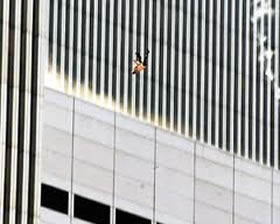
Photograph from September 11


Photograph from September 11


They jumped from the burning floors-
one, two, a few more,
higher, lower.

The photograph halted them in life,
and now keeps them
above the earth toward the earth.

Each is still complete,
with a particular face
and blood well hidden.

There’s enough time
for hair to come loose,
for keys and coins
to fall from pockets.

They’re still within the air’s reach,
within the compass of places
that have just now opened.

I can do only two things for them-
describe this flight
and not add a last line.

They jumped from the burning floors-
one, two, a few more,
higher, lower.


The photograph halted them in life,
and now keeps them
above the earth toward the earth.

Each is still complete,
with a particular face
and blood well hidden.

There’s enough time
for hair to come loose,
for keys and coins
to fall from pockets.

They’re still within the air’s reach,
within the compass of places
that have just now opened.

I can do only two things for them-
describe this flight
and not add a last line.


Wislawa Szymborska (Bnin, 2 juli 1923
)


Zie ook alle tags voor Wislawa Szymborska op dit blog