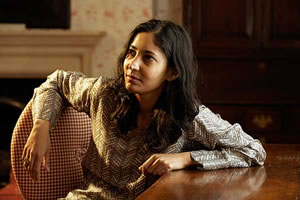
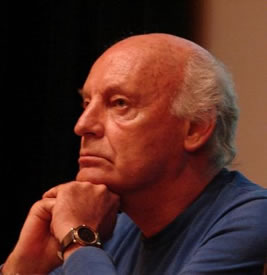
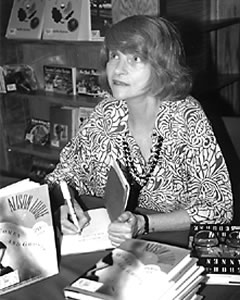
Kiran Desai, Eduardo Galeano, Alison Lurie, Sergej Dovlatov, Lino Wirag

De Indische schrijfster Kiran Desai werd geboren op 3 september 1971 in New Dehli. Zie ook mijn blog van 3 september 2008.en ook mijn blog van 3 september 2009.

 Uit: The Inheritance of Loss

All day, the colors had been those of dusk, mist moving like a water creature across the great flanks of mountains possessed of ocean shadows and depths. Briefly visible above the vapor, Kanchenjunga was a far peak whittled out of ice, gathering the last of the light, a plume of snow blown high by the storms at its summit.
Sai, sitting on the veranda, was reading an article about giant squid in an old National Geographic. Every now and then she looked up at Kanchenjunga, observed its wizard phosphorescence with a shiver. The judge sat at the far corner with his chessboard, playing against himself. Stuffed under his chair where she felt safe was Mutt the dog, snoring gently in her sleep. A single bald lightbulb dangled on a wire above. It was cold, but inside the house, it was still colder, the dark, the freeze, contained by stone walls several feet deep.
Here, at the back, inside the cavernous kitchen, was the cook, trying to light the damp wood. He fingered the kindling gingerly for fear of the community of scorpions living, loving, reproducing in the pile. Once he’d found a mother, plump with poison, fourteen babies on her back.
Eventually the fire caught and he placed his kettle on top, as battered, as encrusted as something dug up by an archeological team, and waited for it to boil. The walls were singed and sodden, garlic hung by muddy stems from the charred beams, thickets of soot clumped batlike upon the ceiling. The flame cast a mosaic of shiny orange across the cook’s face, and his top half grew hot, but a mean gust tortured his arthritic knees.
Up through the chimney and out, the smoke mingled with the mist that was gathering speed, sweeping in thicker and thicker, obscuring things in parts—half a hill, then the other half. The trees turned into silhouettes, loomed forth, were submerged again. Gradually the vapor replaced everything with itself, solid objects with shadow, and nothing remained that did not seem molded from or inspired by it. Sai’s breath flew from her nostrils in drifts, and the diagram of a giant squid constructed from scraps of information, scientists’ dreams, sank entirely into the murk.”

desai 
 Kiran Desai (New Dehli, 3 september 1971)


De Uruguayaanse schrijver, essayist en journalist Eduardo Hughes Galeano werd geboren op 3 september 1940 in Montevideo. Zie ook mijn blog van 3 september 2008. en ook mijn blog van 3 september 2009.

Uit: Memory of Fire

„For a long time Alvarado contemplated his beaten enemy, his body slashed open, the quetzal feathers sprouting from his arms & legs, the wings broken, the triple crown of pearls, diamonds & emeralds…

The children seated in a circle around the poet will ask: “& all this you saw? You heard?”

“Yes.”

“You were here?” the children will ask.

“No. None of our people who were here survived.”

The poet will point to the moving clouds & the sway of the treetops.

“See the lances?” he will ask. “See the horses’ hooves? The rain of arrows? The smoke? Listen,” he will say, & put his ear against the ground, filled with explosions.

& he will teach them to smell history in the wind, to touch it in stones polished by the river, & to recognize its taste by chewing certain herbs, without hurry, as one chews on sadness“.

 galeano
 Eduardo Galeano (Montevideo, 3 september 1940)


De Amerikaanse schrijfster en literatuurwetenschapster Alison Lurie werd geboren op 3 september 1926 in Chicago, Illinois. Zie ook mijn blog van 3 september 2007 en ook mijn blog van 3 september 2008 en ookmijn blog van 3 september 2009.

Uit: Foreign Affairs

„Though patience is held to be a virtue most appropriate to women, especially aging women, Vinnie has always particularly disliked waiting for anything, and never does so if it can be avoided. Now, for instance, she elbows her way deftly past less experienced passengers who are searching for their seat numbers or are encumbered with excess luggage or with children, excusing herself in a thin pleasant voice. By crossing through the galley to the far aisle and back again between two rows of seats, she outflanks a massed confusion of obvious rubes with carry-on bags labeled sun tours. In less time than it takes to read this paragraph she has made her way to a window seat near an exit in the nonsmoking section, pausing only to extract the London Times and British Vogue from a magazine rack. (Once the plane is airborne, the stewardess will distribute periodicals to all the passengers, but those Vinnie prefers may vanish before they reach her.)
Following her usual procedure, Vinnie slides into her place and unzips her boots. In stocking feet she climbs onto the seat and opens the overhead locker; since she is barely over five feet tall, this is the only way she can reach it. She removes two pillows and a loose-woven blue blanket, which she drops onto the center seat beside her handbag and her British periodicals, thus tacitly claiming this space if—as is likely in midweek and mid-February—it hasn’t been assigned to anyone. Then she arranges her worn wool-lined raincoat, her floppy beige felt hat, and her amber-and-beige Liberty-print wool shawl in the locker, in such a way that only the rudest of fellow passengers will attempt to encroach upon them. She slams the locker shut with some difficulty, and sits down. She stows her boots under her own seat along with a carton of duty-free Bristol Cream sherry, and puts on a pair of folding slippers. She arranges one pillow beside her head and wedges the other between her hip and the arm of the chair. Finally she smooths her crisply cut graying hair, leans back, and with a sigh fastens the seatbelt across her tan wool sweater and skirt.“

lurie
Alison Lurie (Chigaco, 3 september 1926)


De Russische schrijver Sergej Dovlatov werd geboren op 3 september 1941 in Ufa, in het zuiden van Rusland. Zie ook mijn blog van 3 september 2007 en ook mijn blog van 3 september 2008 en ook mijn blog van 3 september 2009.

Uit: Kurz ist das Leben (Vertaald door Eric Boemer)

„In ihrem Handtäschchen lag etwas, dass vom Umfang her nur etwas größer als der Miniaturbrowning für Frauen »Elita-16« war.

Regina Gasparjan stammte aus einer edlen russifizierten Familie. Ihr Vater war ein ziemlich bekannter Dozent des Stieglitz-Institutes. Als kommender Armenier beschäftigte er sich mit Kosmopolitismus. In den fünfziger Jahren schlug ihm der Forscher Čuev ein Album mit Reproduktionen von Degas in die Physiognomie.

Ihre Mutter war eine qualifizierte Übersetzerin. Kannte Kaškin. Traf sich mit Rita Kovalëva. Einen Monat lang begleitete sie Caldwell bei seiner Tournee durch den Kaukasus. Sie wurde wegen ihres komplizierten Charakters und als exotische östliche Schönheit gerühmt.

In ihrer Jugend war Regina eine typische sowjetische Schülerin. Nahm an Aufführungen teil. Spielte die Soja Kosmodejanskaja. Der Vater, unter Chruščëv rehabilitiert, nannte sie im Scherz »Sojka Komsomodejanskaja«.

Das Tauwetter brach heran. Im Haus des bekannten Künstlers Gasparjan versammelten sich junge Leute. Meistens Dichter. Hier fütterte man sie, und in der Hauptsache – man hörte sie geduldig bis zu Ende an. Unter ihnen befanden sich auch Lipskij und Brejn.

Alle waren ein bisschen hinter der schönen, belesenen und gut gebauten Regina her. Man widmete ihr Verse. Meist lustige, humoristische. Brejn schrieb ihr zu Beginn der Damanischen Krise aus Soči:

Wart’ auf mich, ich kehr’ zurück, wartest du nur sehr,
Warte, bis die Schwermut bringt gelbe Führer her …

Es begannen die siebziger Jahre. Das Tauwetter, wie sich die Journalisten der Emigration gerne ausdrücken, wurde vom Raureif abgelöst. Die besten Freunde gingen in den Westen.“

dovlatov
Sergej Dovlatov (3 september 1941 – 24 augustus 1990)


Onafhankelijk van geboortedata:

De Duitse dichter, schrijver en striptekenaar Lino Wirag werd geboren in 1983 in Pforzheim. Zie ook mijn blog van 3 september 2009.

Anti-Licht-Gedicht

Nächtig-dämmrig dichtes Nicht-Licht,
Das ein Schwarzloch in die Sicht sticht,
Dunkel-düstre Schummerstunde,
Tintenschwarze Schemenrunde.

Dreilicht, Zwielicht, Einslicht, Keinslicht,
Schwärze ist eine Gesteinsschicht,
Kohlpechzappenrabendunkel,
Koptisch finstres Mankelmunkel.

Mitternächtens, lichtlos-lauernd,
Schattenschläger, formlos-kauernd,
Friedhofsgänger, haltlos-schauernd,
Rottenregen, endlos-dauernd.

Gräber, Grüfte, Leichensteine,
Mausoleen, Steingebeine,
Urnen, Kreuze, Totenmale,
Ehrenstätten, Funerale,

Ziehen schwer durch mein Gemüt,
Wenn mein Aug’ die Dinge sieht,
Die mein Ofenrohr verschmutzen:

Ich sollte doch mal wieder putzen.

wirag
Lino Wirag (Pforzheim, 1983)

Kiran Desai, Eduardo Galeano, Alison Lurie, Sergej Dovlatov, Lino Wirag

De Indische schrijfster Kiran Desai werd geboren op 3 september 1971 in New Dehli. Zie ook mijn blog van 3 september 2008 en ook mijn blog van 3 september 2009.

Uit: The Inheritance of Loss

„All day, the colors had been those of dusk, mist moving like a water creature across the great flanks of mountains possessed of ocean shadows and depths. Briefly visible above the vapor, Kanchenjunga was a far peak whittled out of ice, gathering the last of the light, a plume of snow blown high by the storms at its summit.
Sai, sitting on the veranda, was reading an article about giant squid in an old National Geographic. Every now and then she looked up at Kanchenjunga, observed its wizard phosphorescence with a shiver. The judge sat at the far corner with his chessboard, playing against himself. Stuffed under his chair where she felt safe was Mutt the dog, snoring gently in her sleep. A single bald lightbulb dangled on a wire above. It was cold, but inside the house, it was still colder, the dark, the freeze, contained by stone walls several feet deep.
Here, at the back, inside the cavernous kitchen, was the cook, trying to light the damp wood. He fingered the kindling gingerly for fear of the community of scorpions living, loving, reproducing in the pile. Once he’d found a mother, plump with poison, fourteen babies on her back.
Eventually the fire caught and he placed his kettle on top, as battered, as encrusted as something dug up by an archeological team, and waited for it to boil. The walls were singed and sodden, garlic hung by muddy stems from the charred beams, thickets of soot clumped batlike upon the ceiling. The flame cast a mosaic of shiny orange across the cook’s face, and his top half grew hot, but a mean gust tortured his arthritic knees.
Up through the chimney and out, the smoke mingled with the mist that was gathering speed, sweeping in thicker and thicker, obscuring things in parts—half a hill, then the other half. The trees turned into silhouettes, loomed forth, were submerged again. Gradually the vapor replaced everything with itself, solid objects with shadow, and nothing remained that did not seem molded from or inspired by it. Sai’s breath flew from her nostrils in drifts, and the diagram of a giant squid constructed from scraps of information, scientists’ dreams, sank entirely into the murk.”


Kiran Desai (New Dehli, 3 september 1971)


De Uruguayaanse schrijver, essayist en  journalist Eduardo Hughes Galeano werd geboren op 3 september 1940 in Montevideo. Zie ook mijn blog van 3 september 2008 en ook mijn blog van 3 september 2009.

Uit: Memory of Fire

„For a long time Alvarado contemplated his beaten enemy, his body slashed open, the quetzal feathers sprouting from his arms & legs, the wings broken, the triple crown of pearls, diamonds & emeralds…

The children seated in a circle around the poet will ask: “& all this you saw? You heard?”

“Yes.”

“You were here?” the children will ask.

“No. None of our people who were here survived.”

The poet will point to the moving clouds & the sway of the treetops.

“See the lances?” he will ask. “See the horses’ hooves? The rain of arrows? The smoke? Listen,” he will say, & put his ear against the ground, filled with explosions.

& he will teach them to smell history in the wind, to touch it in stones polished by the river, & to recognize its taste by chewing certain herbs, without hurry, as one chews on sadness“.


Eduardo Galeano (Montevideo, 3 september 1940)


De Amerikaanse schrijfster en literatuurwetenschapster Alison Lurie werd geboren op 3 september 1926 in Chicago, Illinois. Zie ook mijn blog van 3 september 2007 en ook mijn blog van 3 september 2008 en ook mijn blog van 3 september 2009.

Uit: Foreign Affairs

„Though patience is held to be a virtue most appropriate to women, especially aging women, Vinnie has always particularly disliked waiting for anything, and never does so if it can be avoided. Now, for instance, she elbows her way deftly past less experienced passengers who are searching for their seat numbers or are encumbered with excess luggage or with children, excusing herself in a thin pleasant voice. By crossing through the galley to the far aisle and back again between two rows of seats, she outflanks a massed confusion of obvious rubes with carry-on bags labeled sun tours. In less time than it takes to read this paragraph she has made her way to a window seat near an exit in the nonsmoking section, pausing only to extract the London Times and British Vogue from a magazine rack. (Once the plane is airborne, the stewardess will distribute periodicals to all the passengers, but those Vinnie prefers may vanish before they reach her.)
Following her usual procedure, Vinnie slides into her place and unzips her boots. In stocking feet she climbs onto the seat and opens the overhead locker; since she is barely over five feet tall, this is the only way she can reach it. She removes two pillows and a loose-woven blue blanket, which she drops onto the center seat beside her handbag and her British periodicals, thus tacitly claiming this space if—as is likely in midweek and mid-February—it hasn’t been assigned to anyone. Then she arranges her worn wool-lined raincoat, her floppy beige felt hat, and her amber-and-beige Liberty-print wool shawl in the locker, in such a way that only the rudest of fellow passengers will attempt to encroach upon them. She slams the locker shut with some difficulty, and sits down. She stows her boots under her own seat along with a carton of duty-free Bristol Cream sherry, and puts on a pair of folding slippers. She arranges one pillow beside her head and wedges the other between her hip and the arm of the chair. Finally she smooths her crisply cut graying hair, leans back, and with a sigh fastens the seatbelt across her tan wool sweater and skirt.“


Alison Lurie (Chigaco, 3 september 1926)


De Russische schrijver Sergej Dovlatov werd geboren op 3 september 1941 in Ufa, in het zuiden van Rusland. Zie ook alle tags voor Sergej Dovlatov op dit blog.

Uit: Kurz ist das Leben (Vertaald door Eric Boemer)

„In ihrem Handtäschchen lag etwas, dass vom Umfang her nur etwas größer als der Miniaturbrowning für Frauen »Elita-16« war.

Regina Gasparjan stammte aus einer edlen russifizierten Familie. Ihr Vater war ein ziemlich bekannter Dozent des Stieglitz-Institutes. Als kommender Armenier beschäftigte er sich mit Kosmopolitismus. In den fünfziger Jahren schlug ihm der Forscher Čuev ein Album mit Reproduktionen von Degas in die Physiognomie.

Ihre Mutter war eine qualifizierte Übersetzerin. Kannte Kaškin. Traf sich mit Rita Kovalëva. Einen Monat lang begleitete sie Caldwell bei seiner Tournee durch den Kaukasus. Sie wurde wegen ihres komplizierten Charakters und als exotische östliche Schönheit gerühmt.

In ihrer Jugend war Regina eine typische sowjetische Schülerin. Nahm an Aufführungen teil. Spielte die Soja Kosmodejanskaja. Der Vater, unter Chruščëv rehabilitiert, nannte sie im Scherz »Sojka Komsomodejanskaja«.

Das Tauwetter brach heran. Im Haus des bekannten Künstlers Gasparjan versammelten sich junge Leute. Meistens Dichter. Hier fütterte man sie, und in der Hauptsache – man hörte sie geduldig bis zu Ende an. Unter ihnen befanden sich auch Lipskij und Brejn.

Alle waren ein bisschen hinter der schönen, belesenen und gut gebauten Regina her. Man widmete ihr Verse. Meist lustige, humoristische. Brejn schrieb ihr zu Beginn der Damanischen Krise aus Soči:

Wart’ auf mich, ich kehr’ zurück, wartest du nur sehr,
Warte, bis die Schwermut bringt gelbe Führer her …

Es begannen die siebziger Jahre. Das Tauwetter, wie sich die Journalisten der Emigration gerne ausdrücken, wurde vom Raureif abgelöst. Die besten Freunde gingen in den Westen.“


Sergej Dovlatov (3 september 1941 – 24 augustus 1990)


Onafhankelijk van geboortedata:

De Duitse dichter, schrijver en striptekenaar Lino Wirag werd geboren in 1983 in Pforzheim. Zie ook mijn blog van 3 september 2009.


Anti-Licht-Gedicht

Nächtig-dämmrig dichtes Nicht-Licht,
Das ein Schwarzloch in die Sicht sticht,
Dunkel-düstre Schummerstunde,
Tintenschwarze Schemenrunde.

Dreilicht, Zwielicht, Einslicht, Keinslicht,
Schwärze ist eine Gesteinsschicht,
Kohlpechzappenrabendunkel,
Koptisch finstres Mankelmunkel.

Mitternächtens, lichtlos-lauernd,
Schattenschläger, formlos-kauernd,
Friedhofsgänger, haltlos-schauernd,
Rottenregen, endlos-dauernd.

Gräber, Grüfte, Leichensteine,
Mausoleen, Steingebeine,
Urnen, Kreuze, Totenmale,
Ehrenstätten, Funerale,

Ziehen schwer durch mein Gemüt,
Wenn mein Aug’ die Dinge sieht,
Die mein Ofenrohr verschmutzen:

Ich sollte doch mal wieder putzen.


Lino Wirag (Pforzheim, 1983)

Willem de Mérode, Chris Kuzneski, Johann Georg Jacobi, Manfred Böckl, Johan Daisne, Joseph Roth, Paul Bourget, Pierre Huyskens, Paul Déroulède, Giovanni Verga, Richard Voß

De Nederlandse dichter en schrijver Willem de Mérode (pseudoniem van Willem Eduard Keuning) werd op 2 september 1887 geboren in Spijk. Zie ook mijn blog van 2 september 2010 en eveneens alle tags voor Willem de Mérode op dit blog.


GANYMEDES (fragment)

Zijn schoonheid had haar rijkste bloei bereikt,
Nog éne dag, de schuchterheid der jeugd
Zou groeien tot de donkre durf des mans,
En hunkrend gloeien door zijn straffer lêen.
Maar nog niet : bevende was daar een glans,
Nu zilvren en dan even goudgetint,
Dan klaar en blank, dan diep- en purperrood,
Al naar hij wendde en ging, of danste of lag,
Al naar het siddrend rhythme van zijn aêm
Verdeinde rustig, of gejaagd en kort
En hijgend ging, wanneer begeerte heet
Met pijnigende slag zijn bevend hart
Deed bonzen hoorbaar, en het ziedend bloed
De polsen zwol ter suizelende slaap.
En al de heerlijkheid ontwaakter jeugd
Die schoon en veeg is als de morgendauw
Als haar de zon verheerlijkend verderft,
Straalde verblindend in Zeus’ felle licht.
De goden minnen zeer het schoon geslacht
Der sterfelijke knapen, en hun glans
Huwt gaarne zich aan blode donkerheid.
Zo Zeus. – Hij zag de zoete heimlijkhêen
Waarmee zich Ganymedes iedre dag
Naar ziel en lijf, één enig offer, bood,
Als hij der haren donkre overvloed
Streek van het klare voorhoofd; als hij ’t oog
Verdroomd liet dwalen langs het helle blauw
Des hemels, of, (de dauwen avondlucht
Was zijner lichte leden wazen kleed)
Ging, vleesgeworden smachten, gans alleen,
De weedom door van ’t scheemrig geurend veld


 dijkstra

Houtsnede door Johan Dijkstra in de bundel Ganymedes


Zeus zag, en peinsde aan de aanminnigheid
Der ogen en de zoete prille mond,
Wiens kuise lieflijkheid was onberoerd,
En aan de schelpen zijner oren, waar
Het fluisteren der goddelijke stem
Zou wonen als ’t geruis der eeuwige zee;
En aan de bleke blauw doorâerde hals,
Even gebogen, vloeiend wederzijds
Uit in de breekbre pracht der schouderen :
En peinsde aan zijn handen, smal en rap,
Die prijkten aan der armen kostlijkheid;
En aan de matte glans der nagelen,
Die droegen op hun flauw gebogen vlak
De bleke sikkel van Selenes beeld
Boven der vingren zongebronsde huid;
En peinsde aan zijn jonge ranke lijf,
En aan de huiverende zuiverheid
Der dijen en der knieën blank gewricht;
En peinsde aan de lichte statigheid
Der benen en d’aanbiddelijke dans
Der voeten, als zij gingen over de aard.
En heel dit broze en sterfelijke schoon
Beminde hij, wanneer het gouden licht
Van Helios de knaap deed glanze’ als god,
En als Selenes zilveren gewaad
Hem kleedde boven gods onwelkbre pracht.
En Zeus beminde hem dees laatste dag
Van zijne jeugd …

demerode

Willem de Mérode (2 september 1887 – 22 mei 1939)
Portret door oor Alfred Löb, 1936


De Amerikaanse schrijver Chris Kuzneski werd geboren op 2 september 1969 in Indiana, Pennsylvania. Zie ook mijn blog van 2 september 2009.

Uit: The Secret Crown

“For years he had been paid to protect the king. Now he had orders to kill him.

And it needed to be done today.

Without witnesses. Without wounds. Before he could slip away.

Tracking his target from the nearby trees, he watched Ludwig as he left the castle grounds and strolled along the shoreline. The king wore an overcoat and carried an umbrella, protection from the threatening skies that had blanketed the region for much of the day. Normally the sun wouldn’t set until quarter past nine, but the approaching storm made dusk come early.

A storm that would wash away any signs of foul play.

The assassin checked his watch and noted the time. Ten minutes to seven. Dinner would be served at eight and not a moment before. If his target was late, an alarm would be sounded and a search party would be formed. That much was certain. This was a turbulent time in Bavaria, and Ludwig was the central figure in all the drama, somehow loved and hated at the exact same time.

Some viewed him as a hero, a brilliant visionary who could do no wrong. Others saw him as a madman, a paranoid schizophrenic who had bankrupted the royal family with his flights of fancy. The assassin realized the truth was probably somewhere in between, though he couldn’t care less about politics. He was there to do a job, and he would do it without mercy.”


kuzneski

Chris Kuzneski (Indiana, 2 september 1969)


De Duitse dichter en schrijver Johann Georg Jacobi werd geboren op 2 september 1740 op Gut Pempelfort bij Düsseldorf. Zie ook mijn blog van 2 september 2009.

An Chloen

Bey der Liebe reinsten Flammen,
Glänzt das arme Hütten-Dach:
Liebchen! ewig nun beysammen!
Liebchen! schlafend oder wach!

Süßes, zärtliches Umfangen,
Wenn der Tag am Himmel graut:
Heimlich klopfendes Verlangen,
Wenn der Abend niederthaut!

Wonne dort auf allen Hügeln,
Wenn’ im Thal, und Jubel hier!
Volle Freyheit, zu verriegeln
Unsre kleine Hütten-Thür!

Lobgesang in Finsternissen,
Wo kein Neider sich versteckt;
Wo nicht mehr, indem wir küssen,
Jedes Lüftchen uns erschreckt!

Und wir theilen alle Freuden,
Sonn’ und Mond und Sternen-Glanz;
Allen Segen, alles Leiden,
Arbeit und Gebeth und Tanz.

So, bey reiner Liebe Flammen,
Endet sich der schöne Lauf;
Ruhig schweben wir zusammen,
Liebchen! Liebchen! Himmel auf.


 jacobi

 Johann Georg Jacobi (2 september 1740- 4 januari 1814)


De Duitse schrijver Manfred Böckl werd geboren op 2 september 1948 in Landau an der Isar. Zie ook mijn blog van 2 september 2009.

Uit : Šumava – Die Saga des Böhmerwaldes

“Schwarzkoppe nannte ich diesen Berg, als ich ihn zum erstenmal sah”, sagte Birg leise.
“Čerchov”, murmelte Boleslav. “Gut hast du den Namen gewählt. Schon von weitem erinnerte sein Vrchol, sein Gipfel, an einen gewaltigen Kohlenmeiler, der osamělý, einsam, in der Wildnis glost. Jedenfalls pak, dann, wenn Wolkenschatten ihn überstrichen.”
Der Helläugige nickte, dann deutete er nach Nordosten. “Der Aufstieg auf den Čerchov, wie du ihn nennst, hat uns vom geraden Weg abgebracht”, erklärte er. “Doch von hier aus kannst du bereits das Tal erkennen, zu dem ich dich führen wollte. Dort drüben, wo die Nord- und Südhänge sich sanft gegeneinander neigen, schlängelt sich ein Flüßchen durch den Wald, welches nach meiner Schätzung später in die Radbuza mündet -so wie du mir ihren Lauf neulich beschrieben hast. Ich entdeckte das Gewässer im vorigen Jahr, als ich dieser Gegend pirschte. Der Boden dort ist gut, reichlich steht das Wild in den Wäldern. Und am Sonnenhang des einen Hügels sah ich Wildemmer wachsen, so daß dort sicher auch Korn geerntet werden kann.”
Der Sorbe schenkte seinem Freund einen dankbaren Blick: Dann schätzte er die Wegstrecke ab, die sie noch von ihrem Ziel trennte. “Vor Sonnenuntergang werden wir es bohužel, leider, nicht mehr bis dorthin schaffen”, sagte er zuletzt mit bedauerndem Unterton in der Stimme.
Birg stimmte ihm zu: “Die Zeit reicht gerade noch für den Abstieg und den Bau einer Unterkunft aus. Doch morgen wird der Tag noch nicht alt sein, bis wir dort angekommen sind, wo du mit deinen Leuten siedeln wirst – vorausgesetzt, der Platz sagt dir wirklich zu.” “Ich habe das Pocit, das Gefühl, er wird es tun”, erwiderte Boleslav. “Und ich werde dann immer den Čerchov vor Augen haben, von dem aus ich dohromady, zusammen, mit dir die neue Heimat zum erstenmal sah.”


boeckl

Manfred Böckl (Landau an der Isar, 2 september 1948)


De Belgische dichter en schrijver Johan Daisne werd op 2 september 1912 in Gent geboren als Hermanus Thiery. Zie ook alle tags voor Johan Daisne op dit blog.


Ik ook, heer

Het jaar waait met verwoede rukken.
De zondag zieltoogt achter ’t raam .
Ik zie de bomen wijslijk bukken,
ontbladerd en beroofd van naam.

Ik zou hun armen willen drukken’,
Ik die hier loom van warmte zit
maar met mijn hart en hoofd aan stukken:
een droom van donker en sneeuwwit!

Waarom zou het ook mij niet mogen lukken,
daar morgen weerom schoon te staan?
Straks komen feesten die verrukken
en steeds toch gaat de zon weer aan.

Blijf bloesems van uw bomen plukken –
ik ook, Heer, ben Uw onderdaan!


Met zeven aan tafel

Met zeven aan tafel, zo zitten
de oude vrienden nog een keer.
Gele bladen werden weer witte.
Die mocht leven, zegent de Heer.

Al doet het allemaal weer zeer,
de dingen die van daden droomden,
die waarheid waren, roos en speer,
en al wat mettertijd verloomde.

Maar hier, hier zitten we dan weer,
met koffie of een whisky-soda,
terwijl ik van de oude ode

een woord, een komma corrigeer.
En we vertellen van het leven,
dat altijd werd en wordt geschreven,

mijn God, tot Uw meerdere eer!


 daisne

 Johan Daisne (2 september 1912 – 9 augustus 1978)


De Oostenrijks – Hongaarse schrijver en journalist Joseph Roth werd geboren op 2 september 1894 in Brody in Galicië. Zie ook alle tags voor Joseph Roth op dit blog.

Uit: Hiob

„Vor vielen Jahren lebte in Zuchnow ein Mann namens Mendel Singer. Er war fromm, gottesfürchtig und gewöhnlich, ein ganz alltäglicher Jude. Er übte den schlichten Beruf eines Lehrers aus. In seinem Haus, das nur aus einer geräumigen Küche bestand, vermittelte er Kindern die Kenntnis der Bibel. Er lehrte mit ehrlichem Eifer und ohne aufsehenerregenden Erfolg. Hunderttausende vor ihm hatten wie er gelebt und unterrichtet.

Unbedeutend wie sein Wesen war sein blasses Gesicht. Ein Vollbart von einem gewöhnlichen Schwarz umrahmte es ganz. Den Mund verdeckte der Bart. Die Augen waren groß, schwarz, träge und halbverhüllt von schweren Lidern. Auf dem Kopf saß eine Mütze aus schwarzem Seidenrips, einem Stoff, aus dem manchmal unmoderne und billige Krawatten gemacht werden. Der Körper steckte im halblangen landesüblichen jüdischen Kaftan, dessen Schöße flatterten, wenn Mendel Singer durch die Gasse eilte, und die mit hartem regelmäßigen Flügelschlag an die Schäfte der hohen Lederstiefel pochten.

Singer schien wenig Zeit zu haben und lauter dringende Ziele. Gewiß war sein Leben ständig schwer und zuweilen sogar eine Plage. Eine Frau und drei Kinder mußte er kleiden und nähren. (Mit einem vierten ging sie schwanger.) Gott hatte seinen Lenden Fruchtbarkeit verliehen, seinem Herzen Gleichmut und seinen Händen Armut. Sie hatten kein Gold zu wägen und keine Banknoten zu zählen. Dennoch rann sein Leben stetig dahin, wie ein kleiner armer Bach zwischen kärglichen Ufern. Jeden Morgen dankte Mendel Gott für den Schlaf, für das Erwachen und den anbrechenden Tag.

Wenn die Sonne unterging, betete er noch einmal. Wenn die ersten Sterne aufsprühten, betete er zum dritten Mal.“


roth

Joseph Roth (2 september 1894 – 27 mei 1939)


De Franse dichter en schrijver Paul Charles Joseph Bourget werd geboren op 2 september 1852 in Amiens. Zie ook alle tags voor Paul Bourget op dit blog.


Remords dans l’avenir (Fragment)

Tu ne m’aimeras pas, bien que la destinée
Ait ému nos deux cœurs en un seul battement,
Que tu saches ma vie aux deuils abandonnée,
Et que je t’ai un jour chérie uniquement.

Je n’aurai pas la gloire, et mon adolescence
S’était épanouie en beaux et chastes vers.
Nul n’adora peut-être avec plus d’espérance
L’âme de notre obscur et mystique univers.

Je ne vivrais pas pur et je hais la matière,
Etant de toute chair aussitôt dégoûté,
Réjoui seulement par la pure lumière
De l’éternel amour, vierge et sans volupté.
….

Mais les grands cœurs humains, plus troublés que les ondes,
Ces cœurs aujourd’hui froids et jadis embrasés,
Qui pourra compter sous leurs douleurs profondes
Tous les amours éteints et les espoirs brisés ?
….

Qui se souvient, devant l’horizon blanc de voiles,
Que le ciel et la mer sont deux vastes tombeaux ?
On aime une jeune fille de quinze ans,
Oh! reste ainsi toujours sans comprendre les âmes,
Les yeux ouverts sans pleurs sur l’immense horizon ;
Que les astres divins éclairent de leur flammes,
Sans les brûler jamais, ton cœur et ta raison !

Prends en pitié le mal qu’on apaise ou qu’on aide,
Les pauvres corps qu’on touche et qu’on peu secourir,
Et ne connais jamais la peine sans remède
Du cœur humain blessé qui ne veut pas guérir.

Car l’amour même malheureux est toujours bon …


bourget

Paul Bourget (2 september 1852 – 25 december 1935)

Portret door Paul Chabas


De Nederlandse journalist en schrijver Pierre Huyskens werd geboren op 2 september 1931 in Wessem. Zie ook alle tags voor Pierre Huyskens op dit blog.


Ballade van de kroonduif

Bekijkt u nu dit monument
U ziet de tropenzon erin verbeeld,
die met haar zwoele warmte
het rijk van Insulinde
zo genereus bedeelt.

U ziet de koppen van karbouwen
en u herkent de kracht, waarmee
zij hielpen ’t land verbouwen –
de sawah’s, hier in steen geïmiteerd.
Maar hier wordt niet alleen
die éne parel
aan de Gordel van Smaragd.
Het eiland Java met zijn vruchtbaarheid
in beeld gebracht.

O, nee, u ziet de Kroonduif toch,
symbool destijds van Neerlands
Nieuw-Guinea; het mooiste sluitstuk
van die Gordel van Smaragd,
dat Nederland zich hoe dan ook,
in lengte van jaren had toebedacht.

Helaas- dat droombeeld ging niet op.
U hebt in trouwe dienstplicht,
maar vergeefs dat mooie land
met Kroonduif en met Vogelkop
beschermd als laatste krijgsmacht,
in de oost.
Als laatste sluitstuk van het overzees bewind.
Een schrale troost.

U wist het zelf ook, al gauw;
het was de wereldpolitiek
die het ‘Den Haag’ voorschreef
dat Nieuw-Guinea als Irian Jaja
met Papoea-volk en al
voor Nederland niet behouden bleef.

Het doet niets af
aan wat u daar met inzet
en met vlagge-trouw
met hoog moreel en zware offers
hebt volbracht.

En wat u overbleef was rouw
om al die kameraden, die nog
te land, ter zee en in de lucht
het hoogste offer hebben gebracht,
in het zo late eind
van een vergeefse strijd
om dat laatste juweel
van die Gordel van Smaragd.

Neem nu, ondanks uw eigen pijn
in ziel of lichaam
een ogenblik hun naam
in uw gedachten,
opdat zij in de stilte van dit park
en bij de erewacht van deze oude bomen
in het haast tropisch licht van deze zon
en door de Kroonduif zelf gedragen
weer even levend bij ons komen.

huyskens

Pierre Huyskens (2 september 1931 – 19 november 2008)


De Franse dichter, schrijver en politicus Paul Déroulède werd op 2 september 1846 geboren in Parijs. Zie en ook mijn blog van 2 september 2009.


LE CLAIRON (Fragment)

L’air est pur, la route est large
Le clairon sonne la charge
Les zouaves vont en chantant
Et la haut sur la colline,
Dans la forêt qui domine,
Le Prussien les attend.

Le clairon est un vieux brave
Et lorsque la lutte est grave,
C’est un rude compagnon;
Il a vu mainte bataille
Et porte plus d’une entaille,
Depuis les pieds jusqu’au front

C’est lui qui guide la fête,
Jamais sa fière trompette
N’eut un accent plus vainqueur,
Et de son souffle de flamme,
L’espérance vient à l’âme,
Le courage monte au coeur.

On grimpe, on court, on arrive,
Et la fusillade est vive
Et les Prussiens sont adroits;
Quand enfin le cri se jette:
“En marche! A la baïonette!”
Et l’on entre sous le bois.

A la première décharge,
Le clairon sonnant la charge
Tombe frappé sans recours;
Mais, dans un effort suprême,
Menant le combat quand même,
Le clairon sonne toujours.

Déroulède

Paul Déroulède (2 september 1846 – 30 januari 1914)
Portret door Jean-François Portaels, 1877


De Italiaanse schrijver Giovanni Verga werd op 2 september 1840 geboren als oudste zoon in een welgestelde liberale Siciliaanse familie in Catania op Sicilië. Zie ook mijn blog van 2 september 2009.

Uit: Cavalleria Rusticana and Other Stories (Vertaald door G. H. McWilliam)

The She-Wolf

She was dark-haired, tall and lean, with firm, well-rounded breasts, though she was no longer young, and she had a pale complexion, like someone forever in the grip of malaria. The pallor was relieved by a pair of huge eyes and fresh red lips that looked as though they would eat you.

In the village they called her the She-Wolf because, no matter what she had, she was never satisfied. The woman crossed themselves whenever they saw her coming, lone as a stray bitch, with the restless and wary appearance of a starving wolf. She would gobble up their sons and their husbands in the twinkling of an eye with those red lips of hers, and draw them to the tail of her skirt and transfix them with those devilish eyes, as though they were standing before the altar at St Agrippina’s. Luckily the She-Wolf herself never set foot inside the church, either at Easter or at Christmas or to hear Mass or to go to confession. Father Angiolino of St Mary of Jesus, a true servant of God, had lost his soul on her account. Maricchia, poor girl, a good and worthy soul, shed tears in secret because she was the She-Wolf’s daughter and nobody would ever want to marry her, even though she too had a fine trousseau tucked away in a chest and a patch of decent land in the sun, like any other girl in the village.

Then it happened that the She-Wolf fell in love with a handsome young fellow back from the army, when the two of them were hay-making on the notary’s farm. She’d fallen for him lock, stock and barrel, her flesh burning beneath her thick cotton bodice, and, staring into his eyes, she was overcome with the kind of thirst you would experience down in the valley on a hot midsummer day. But he just kept scything calmly away, head down over the hay, saying “What’s the matter, Pina?”.

verga.jpg

Giovanni Verga (2 september 1840 – 27 januari 1922)


De Duitse schrijver Richard Voß werd geboren op 2 september 1851 op Gut Neugrape in Pommern. Zie ook mijn blog van 2 september 2009.

Uit: Ein Münchner Regentag

 Das Wetter war schauderhaft! Schnee und Regen durcheinander. Dabei scharfer Nordwind, und auf Straßen und Plätzen ein Schmutz, daß der kühne Fußwanderer Pfützen durchwaten und wahre Moräste durchschreiten mußte inmitten der lieben Hauptstadt des schönen Bayerlandes. Und zwar geschah solches nicht etwa im grauen, barbarischen Mittelalter, sondern in der aufgeklärten Zeit einer universellen Skepsis und des Glühlichts.

München bei Novemberregen!

In der fashionabeln Briennerstraße einige tiefgesenkte, hin und her schwankende Schirme; auf dem friedlichen Odeonsplatz kein einziger Fiaker; die ganze lange, klassische Ludwigsstraße bis hinauf zum feierlichen Siegestor kaum eine lebendige Seele.

Der Regen rauschte und rauschte, der Tag wurde trüber und trüber; aus dem durchweichten Boden, aus sämtlichen kleinen und großen Wasserlachen stiegen Dünste auf; vom Himmel sanken dichter und dichter die Nebel herab, die der Wind wie Rauchwolken vor sich her trieb.

Die winzigen, blauweiß angestrichenen Wagen der hauptstädtischen Pferdebahn, mit dem einen einzigen, lebensmüden Rößlein davor, glitten wie Nürnberger Riesenspielzeug durch den Dunst hin und her. Bei dem stattlichen Eckhaus, in dessen Erdgeschoß Thierry und Breuil die neuesten, allerliebsten Quincailleriekapricen Altenglands feilhält und die alte, biedere Brienner Bäckerei ihre Gäste mit gut bürgerlichem Kaffee und massiven Backwaren erquickt – an dieser bedeutsamen Stelle des großstädtischen Verkehrs ertönte von Zeit zu Zeit, das Rauschen des Regens und das Brausen des Windes durchgehend, der schrille Pfiff des bedauernswerten Rosselenkers. Er und der Kondukteur hatten ihr leuchtendes Himmelblau unter dunkeln Hüllen verborgen, als müßten sie mithelfen, das Bild eines echten deutschen Regentages grau in grau zu malen.

voss

Richard Voß (2 september 1851 – 10 juni 1918)
 

W. F. Hermans, Hubert Lampo, Blaise Cendrars, Peter Adolphsen, Sabine Scho, Lenrie Peters, J. J. Cremer, Edgar Rice Burroughs

De Nederlandse schrijver Willem Frederik Hermans werd geboren op 1 september 1921 in Amsterdam. Zie ook mijn blog van 1 september 2006. Zie ook mijn blog van 1 september 2007 en ook mijn blog van 1 september 2008 en ook mijn blog van 1 september 2009.

Uit: Herinneringen van een engelbewaarder

“Het is, edelachtbare heren, een groot voorrecht in een vrij en democratisch land te leven als het onze. Niet minder groot is het voorrecht dagbladschrijver te zijn in zulk een land, waar persvrijheid bestaat. Waar vrijheid van gedachten, vrijheid van geest al eeuwen dierbare goederen zijn, door het voorgeslacht met opoffering van goed en bloed verworven, door het nageslacht behoed als het kostbaarste kleinood dat het verleden ons nagelaten heeft.”

De stem van zijn engel onderscheidde hij niet van de stem van zijn gedachten. Wat er op papier stond waren zijn gedachten op dat ogenblik niet en daardoor ging er dan ook van Alberegt’s voordracht niet de geringste bezieling uit. Want mijn stem kon hij niet tot zwijgen brengen en ik kon dat evenmin, omdat het denken van een engel altijd spreken is en zijn spreken denken.

“Juist daarom, meneer de president, mogen wij niet nalaten dit goed, tot hoge prijs gewonnen, ook tot elke prijs te verdedigen. Juist omdat wij deze onmetelijke vrijheid van gedachten bezitten, juist daarom moeten wij zelf bepalen hoever wij in het uiten van die gedachten kunnen gaan. Het is dan ook toe te juichen dat de wetgever enige jaren geleden besloten heeft het in woord en geschrift beledigen van bevriende staatshoofden strafbaar te stellen.

Juist omdat de vrijheid ons hoogste goed is, dienen wij ons beperkingen op te leggen. Het zou niet aangaan dat ons land, door de onberaden uitlatingen van sommige pennevoerders, in den vreemde de reputatie zou krijgen dat hier de persoon van bevriende staatshoofden niet de bescherming zou genieten, die ook de gewone burger geniet.

Men kan over het regime dat door Adolf Hitler in Duitsland gevoerd wordt, zo zijn gedachten hebben. Uitdrukkelijk wil ik echter vaststellen dat het de zaak van de Duitsers is, niet de onze, te beslissen hoe en door wie zij wensen te worden geregeerd, Voorts in aanmerking genomen dat Nederland aan Duitsland grenst; dat Nederland klein is en Duitsland groot; dat allerwegen een vernietigende oorlog woedt; dat ons land tot dusverre voor de verschrikkingen van deze oorlog gespaard gebleven is. Daarbij ons afvragende wat de kleine pen van een kleine pennevoerder in een klein neutraal land zou vermogen te bewerkstelligen tegen vermeend groot onrecht in een grote en machtige buurstaat, komen wij tot de conclusie dat verdachte niet de zorgvuldigheid in acht genomen heeft die elke burger in een vrij land siert, toen hij het geïncrimineerde artikel over het Duitse staatshoofd aan het papier toevertrouwde.”

hermans

W. F. Hermans (1 september 1921 – 27 april 1995)


De Belgische schrijver Hubert Lampo werd op 1 september 1920 geboren in Het Kiel, Antwerpen. Zie ook mijn blog van 1 september 2006. Zie ook mijn blog van 1 september 2007 en ook mijn blog van 1 september 2008 en ook mijn blog van 1 september 2009.

Uit: Terugkeer naar Atlantis

„De Nederzetting
Op een vochtige avond als deze drijft de organische reuk van de kleine kaarsenfabriek laag en haast tastbaar over de nederzetting. Ons, de inboorlingen, schijnt die reuk niet te hinderen. Ook hij heeft er iets mee te maken: weer voel ik mij in het uitsterven van de nazomer een jaar ouder geworden. Nog steeds staan de gaslantarens nutteloos te branden in het landschap van mijn jeugd. Mijn laatste bezoekers voor vandaag waren een vrouw met een kind, dat aan heupgewrichtsontsteking lijdt: armoedzaaiers, zoals de anderen. Morgenvroeg zal ik het stedelijk hospitaal opbellen en horen, wat ze voor me doen kunnen. Het regende geruisloos toen ik hen uitliet. Bedachtzaam heb ik mijn pijp gestopt. Als beschutting tegen de tocht, hield ik de handen bol om de opvlammende lucifer heen. Het deed mij denken aan de vreemde lantarens, die wij als kind omstreeks deze tijd in de vorm van een doodshoofd uit geroofde bieten sneden en waarvoor wij zélf huiverden, als we er een kaars in opstaken. Ik rookte langzaam en aandachtig een goedkope, doch met overleg gekozen zware tabak, gemengd met eigen kweeksel. Daarna heb ik de luiken gesloten. Het geknars der scharnieren en het bonzen van het hout schonken mij één ogenblik die kleine rilling van destijds weder, wanneer moeder mij naar bed had gebracht.“

lampo

Hubert Lampo (1 september 1920 – 12 juli 2006)


De Franstalige, Zwitserse dichter en schrijver Blaise Cendrars werd geboren op 1 september 1887 in La Chaux-de-Fonds. Zie ook mijn blog van 1 september 2007 en ook mijn blog van 1 september 2008 en ook mijn blog van 1 september 2009.

Trans-Siberian Prose and Little Jeanne from France (Fragment)

I was in my adolescence at the time
Scarcely sixteen and already I no longer remembered my childhood

I was 16,000 leagues from my birthplace
I was in Moscow, in the city of a thousand and three belfries and seven railroad stations
And they weren’t enough for me, the seven railroad stations and the thousand and three towers
For my adolescence was so blazing and so mad
That my heart burned in turns as the temple of Epheseus, or as Red Square in Moscow
When the sun sinks.
And my eyes shone upon the ancient routes
And I was already such a bad poet
That I didn’t know how to go all the way to the end.

The Kremlin was like an immense Tatar cake
Crusted with gold,
With great almonds of cathedrals all done in white
And the honeyed gold of the bells…

An old monk was reading to me the legend of Novgorod
I was thirsty
And I was deciphering cuneiform characters
Then, suddenly, the pigeons of the Holy Spirit soared above the square
And my hands also flew up, with the rustling of the albatross
And these, these were the last recollections of the last day
Of the entire last voyage
And of the sea.

But I was a very bad poet.
I didn’t know how to go to all the way to the end.
I was hungry
And all the days and all the women in the cafés and all the glasses
I would have liked to drink and to break them
And all the shop windows and all the streets
And all the homes and all the lives
And all the wheels of the hackney cabs turning in a whirlwind on the bad cobblestones
I would have wanted to thrust them into a furnace of swords
And I would have wanted to crush all the bones
And to tear out all the tongues
And to liquefy all the big bodies strange and naked under the clothing that drives me to madness…
I sensed the coming of the great red Christ of the Russian revolution…
And the sun was a bad wound
That split open like a burnt up inferno


Vertaald door Ekaterina Likhtik

 cendrars

 Blaise Cendrars (1 september 1887 – 21 januari 1961)


De Deense schrijver Peter Adolphsen werd geboren op 1 september 1972 in Århus. Zie ook mijn blog van 1 september 2007 en ook mijn blog van 1 september 2008 en ook mijn blog van 1 september 2009.

Uit: Kleine Geschichten (Vertaald door Uwe Englert)

 „Vor dem Beginn aller Zeiten öffnete GOtt das Buch der Schöpfung und riss eine Seite heraus, denn hätte ER dies nicht getan, wäre das Buch vollkommen und somit die Existenz GOttes unmöglich, da es eines von GOttes Attributen ist, das einzige Vollkommene zu sein. Danach begann ER zu lesen, und allmählich entstand das Universum, indem dessen Geschichte unter Seinen Augen vorüberglitt, doch als ER an die fehlende Seite gelangte und einfach weiterlas, gab es notwendigerweise etwas, das ER nicht wusste, womit Seine Existenz ebenfalls unmöglich war, denn ein weiteres Seiner Attribute ist Seine Allwissenheit. Da ER aber allwissend ist, wusste er von Beginn an, dass ER sich – unabhängig davon, ob er die Seite herausreißen würde oder nicht -, gezwungen sähe, Seine Existenz zu beenden; ergo haben weder GOtt, das Buch, noch beide zusammen jemals existieren können, was in jedem Fall bedeutet, dass auch diese Geschichte unmöglich ist. Es sei denn, ER ist noch nicht an die fehlende Seite gelangt.“

adolphsen

Peter Adolphsen (Århus, 1 september 1972)


De Duitse dichteres en schrijfster Sabine Scho werd geboren op 1 september 1970 in Ochtrup. Zie ook mijn blog van 1 september 2009.

chartreuse

glaub das doch bitte nicht
was man sagt, was man sieht
die abgewedelten deprivationen
der aufgehellte fleck, und frag
nicht nach fahnen, am malen
ist doch was dran, man kann
auch taschenschirme klonen
und behaupten, sie seien geklaut
bis davon was sichtbar wird
bleibt regen regen, »es läuft
es rollt die leere fassade«
hat es je jemanden interessiert
was man dahinter wie destilliert?


glacier

hartschaum, zerkaute
icegumfelder, bricolage
in curaçao, der umgekippte
saft, das wilde
gefrieren passiert problemlos
die blut-hirnschranke,
eros und
schmelze, squeeze
serotonin, klebt wie
hulle, i mean, warum
ziehst du nicht einfach
leine, empty a bottle
and feel a bit freeze
gefäßverengender
wird es nicht mehr

scho.jpg

Sabine Scho (Ochtrup, 1 september 1970)


De Gambiaanse schrijver en chirurg Lenrie Leopold Wilfred Peters werd geboren in Bathurst op 1 september 1932. Zie ook mijn blog van 1 september 2009.
We Have Come Home

We have come home
From the bloodless wars
With sunken hearts
Our booths full of pride-
From the true massacre of the soul
When we have asked
‘What does it cost
To be loved and left alone’

We have come home
Bringing the pledge
Which is written in rainbow colours
Across the sky-for burial
But is not the time
To lay wreaths
For yesterday’s crimes,
Night threatens
Time dissolves
And there is no acquaintance
With tomorrow

The gurgling drums
Echo the stars
The forest howls
And between the trees
The dark sun appears.

We have come home
When the dawn falters
Singing songs of other lands
The death march
Violating our ears
Knowing all our loves and tears
Determined by the spinning coin

We have come home
To the green foothills
To drink from the cup
Of warm and mellow birdsong
‘To the hot beaches
Where the boats go out to sea
Threshing the ocean’s harvest
And the hovering, plunging
Gliding gulls shower kisses on the waves

We have come home
Where through the lighting flash
And the thundering rain
The famine the drought,
The sudden spirit
Lingers on the road
Supporting the tortured remnants of the flesh
That spirit which asks no favour of the world
But to have dignity.To be loved and left alone’

peters

Lenrie Peters (1 september 1932 – 28 mei 2009)


De Nederlandse schrijver Jacob(us) Jan Cremer werd geboren op in Arnhem op 1 september 1827. Zie ook mijn blog van 1 september 2009.

Uit: Fabriekskinderen

„’t Is winter. Een koude decembernacht houdt met kille vingers oud Hollands grijze academieveste den blinddoek voor de oogen.

Slechts een waardig trawant van den reuzengeest dezer eeuw voert strijd met den nacht en rukt er gedurig den blinddoek weêr los. Zie maar, de gazvlammen werpen van afstand tot afstand een vlugtig licht in de holle straten en ginds langs de sombere grachten.

Waartoe die kamp; waarvoor dat licht? Immers de stad ging ter ruste en slaapt.

Geloof het niet, want telkens moet ze wakker en ziende zijn, wakker en ziende om er te waken voor het onheil dat naderen kon.

En de oude stad, zij slaapt dan ook niet. Slechts bij wijlen bevangt haar een ligte sluimering, en ’t schijnt u toe als droomde zij van heur alouden roem – even als de teedere loot van den grijzen vorst der Alpen, die zoetjes dommelt aan haren boezem, en murmelt en fluistert van de grootheid zijner afkomst.

Maar toch, hoe vlugtig ook haar sluimering zij – telkens turend over den blinddoek heen, om er te waken zelfs in den nacht, toch vermag zij het niet zoo als zij ’t zou willen.

De arme is krank!

Ja, ’t hoofd is wel helder, zelfs klaarder dan voorheen; ja heur harte klopt wel even luide voor deugd en voor trouw als in de dagen harer jeugd, nogtans, gij ziet het wel hoe heur regter-arm als verlamd daar ter nederligt.

Luister:

Een deel van heur eêlste sappen gingen over in onzuivere vochten; in vochten die zich vormden tot een afzigtelijke wonde; een wonde die hare krachten verteert, en welligt haar voert in het einde tot de slooping van haar glorierijk bestaan.

cremer

J. J. Cremer (1 september 1827 – 5 juni 1880)


De Amerikaanse schrijver Edgar Rice Burroughs werd geboren in Chicago op 1 september 1875 als de zoon van een zakenman. Zie ook mijn blog van 1 september 2008 en ook mijn blog van 1 september 2009.

Uit: The Son of Tarzan

 „Paulvitch had taken to the jungle when he had seen the beasts of Tarzan and their savage lord swarm the deck of the Kincaid, and in his terror lest Tarzan pursue and capture him he had stumbled on deep into the jungle, only to fall at last into the hands of one of the savage cannibal tribes that had felt the weight of Rokoff’s evil temper and cruel brutality. Some strange whim of the chief of this tribe saved Paulvitch from death only to plunge him into a life of misery and torture. For ten years he had been the butt of the village, beaten and stoned by the women and children, cut and slashed and disfigured by the warriors; a victim of often recurring fevers of the most malignant variety. Yet he did not die. Smallpox laid its hideous clutches upon him; leaving him unspeakably branded with its repulsive marks. Between it and the attentions of the tribe the countenance of Alexis Paulvitch was so altered that his own mother could not have recognized in the pitiful mask he called his face a single familiar feature. A few scraggly, yellow-white locks had supplanted the thick, dark hair that had covered his head. His limbs were bent and twisted, he walked with a shuffling, unsteady gait, his body doubled forward. His teeth were gone–knocked out by his savage masters. Even his mentality was but a sorry mockery of what it once had been.
They took him aboard the Marjorie W., and there they fed and nursed him. He gained a little in strength; but his appearance never altered for the better–a human derelict, battered and wrecked, they had found him; a human derelict, battered and wrecked, he would remain until death claimed him. Though still in his thirties, Alexis Paulvitch could easily have passed for eighty. Inscrutable Nature had demanded of the accomplice a greater penalty than his principal had paid.“

 Burroughs

Edgar Rice Burroughs (1 september 1875 – 19 maart 1950)

Wolfgang Hilbig, Raymond P. Hammond, Elizabeth von Arnim, William Saroyan, Théophile Gautier

De Duitse dichter en schrijver Wolfgang Hilbig werd geboren in Meuselwitz op 31 augustus 1941. Zie ook alle tags voor Wolfgang Hilbich op dit blog.


Mittag

Balance der eingelegten reglos ruhenden Ruder
von denen blendend weiße Tropfen fallen
auf den zitternden Spiegel der See
in der unwirklichen Stille des lotrechten Lichts –
während in der Tiefe die Nacht sich wälzt mit ihrem Gewürm –
o dieser Augenblick im Gleichgewicht der den Atem anhält
bevor das Bild kentert.


Hinter Mir

Hinter meiner Mauer
im Rücken meiner Undurchdringlichkeit
im Licht
drehen sich Gottes Spielzeuge um sich selbst …
Hinter mir diese Karusselle von Desastern: grell bemalt
und von den blauen Netzen der Sonne verhüllt
und fern in verstockter Musik.


Matière de la poésie

Das Meer verhüllt von Licht: verhüllt von Helligkeit …
im Sinn von Licht: ein Lilienweiß um nichts zu sein
als Weiß der Lilien – und Meer um nichts als Meer
zu sein und ohne Maß: und Mond-Abwesenheit –
welch Leuchten das seine langer Überfahrt antritt
und jedes Land vergisst auf nichts bedacht als Ewigkeit –
das Meer: das nicht mehr Tag noch Nacht ist sondern Zeit.


 hilbig

Wolfgang Hilbig (31 augustus 1941 – 2 juni 2007)


De Amerikaanse dichter, criticus en tijdschriftredacteur Raymond P. Hammond werd geboren op 31 augustus 1964 in Roanoke, Virginia. Zie ook alle tags voor Raymond P. Hammond op dit blog.


I love how the snow slightly

I love how the snow slightly
salts on shoulders, in hair
of the darkly draped women
whose sole earlier accent
of color was powder blue
pink, red, green, fuchsia scarves, hats
a contrast of dark to light
daguerreotype to color
old, young, ancient to modern
a colorized timelessness
of vision that I can pass
through and get chillingly wet


Crows Crouched

Crows crouched
on Southern Crosses
erected by some other
crazy christian

whose pyrrhic vision
told him to paint
the two smaller ones blue
and the center one gold

whose base is now rotten
and leaning toward
the theif who didn’t
repent

Richard of St. Victor’s
dark and fluttering souls
held fast
to this earth
by the weightless
gravity of sin


hammond

Raymond P. Hammond (Roanoke, 31 augustus 1964)


De Engelse schrijfster Elizabeth von Arnim werd op 31 augustus 1866 geboren in Kirribilli Point in de buurt van Sydney. Zie ook alle tags voor Elizabeth von Arnim op dit blog.

Uit: The Enchanted April

„It began in a Woman’s Club in London on a February afternoon–an uncomfortable club, and a miserable afternoon–when Mrs. Wilkins, who had come down from Hampstead to shop and had lunched at her club, took up The Times from the table in the smoking-room, and running her listless eye down the Agony Column saw this:

To Those Who Appreciate Wistaria and Sunshine. Small mediaeval Italian Castle on the shores of the Mediterranean to be Let furnished for the month of April. Necessary servants remain. Z, Box 1000, The Times.

That was its conception; yet, as in the case of many another, the conceiver was unaware of it at the moment.

So entirely unaware was Mrs. Wilkins that her April for that year had then and there been settled for her that she dropped the newspaper with a gesture that was both irritated and resigned, and went over to the window and stared drearily out at the dripping street.

Not for her were mediaeval castles, even those that are specially described as small. Not for her the shores in April of the Mediterranean, and the wisteria and sunshine. Such delights were only for the rich. Yet the advertisement had been addressed to persons who appreciate these things, so that it had been, anyhow addressed too to her, for she certainly appreciated them; more than anybody knew; more than she had ever told. But she was poor. In the whole world she possessed of her very own only ninety pounds, saved from year to year, put by carefully pound by pound, out of her dress allowance. She had scraped this sum together at the suggestion of her husband as a shield and refuge against a rainy day. Her dress allowance, given her by her father, was L100 a year, so that Mrs. Wilkins’s clothes were what her husband, urging her to save, called modest and becoming, and her acquaintance to each other, when they spoke of her at all, which was seldom for she was very negligible, called a perfect sight.

Mr. Wilkins, a solicitor, encouraged thrift, except that branch of it which got into his food. He did not call that thrift, he called it bad housekeeping. But for the thrift which, like moth, penetrated into Mrs. Wilkins’s clothes and spoilt them, he had much praise. “You never know,” he said, “when there will be a rainy day, and you may be very glad to find you have a nest-egg. Indeed we both may.”


arnim

Elizabeth von Arnim (31 augustus 1866 – 9 februari 1941)
Cover


De Amerikaanse dichter en schrijver William Saroyan werd geboren op 31 augustus 1908 in Fresno, Californië. Zie ook alle tags voor William Saroyan op dit blog.

Uit: One Day in the Afternoon of the World

“You didn’t come to New York to tell the man you don’t want to make a deal, did you?”
“I came to New York because he sent me a check for a thousand dollars, with no strings attached. I came to meet him, to hear him out, to examine the contract.”
“What kind of contract do you want?”
“What kind does he want? This is his idea, not mine. All he’s got to do is put a deal in writing. All I’ve got to do is read it carefully and say yes or no. I made that very clear in my letter.”
“What about the play?”
“What about it?”
“What kind of a play is it going to be?”
“If the contract’s okay, and I sign it, it’s going to be a play that I write.”
“What kind of play, though?”
“The play isn’t written. We’ll know the kind it is when it is written.”
“He wants you to write a play something like one of the plays of Shaw. I forget which one, but he feels you’re the only playwright in the world who can write a play like that.”
“I don’t write a play like a play somebody else once wrote. I write a play, that’s all.”
“Have you got an idea for a play?”
“I don’t need an idea. For fifteen years I’ve written at least one new play a year. I haven’t earned a penny from any of them. You’ve looked up this man in Dun and Bradstreet, and he’s worth a lot of money. He wants me to write a play. He wants me to do something for him, for money, that I do anyway, for no money. I don’t ask him how he’s going to make his next million. I don’t ask him anything. Until you phoned and wired and wrote, and he phoned and wired, I didn’t even know he was alive. Now it turns out he is, and for some reason he wants me to write a play. All he’s got to do is let me see the contract.”
“Suppose you don’t like the contract?”
“I won’t sign it.”


saroyan

William Saroyan (31 augustus 1908 – 18 mei 1981)
Portret door Nareh Balian


De Franse dichter en schrijver Théophile Gautier werd op 31 augustus 1811 geboren in Tarbes (departement Hautes-Pyrénées. Zie ook alle tags voor Théophile Gautier op dit blog.


Albertus, I

Sur le bord d’un canal profond dont les eaux vertes
Dorment, de nénufars et de bateaux couvertes,
Avec ses toits aigus, ses immenses greniers,
Ses tours au front d’ardoise où nichent les cigognes,
Ses cabarets bruyants qui regorgent d’ivrognes,
Est un vieux bourg flamand tel que les peint Teniers.
– Vous reconnaissez-vous ? – Tenez, voilà le saule,
De ses cheveux blafards inondant son épaule
Comme une fille au bain, l’église et son clocher,
L’étang où des canards se pavane l’escadre ;
– Il ne manque vraiment au tableau que le cadre
Avec le clou pour l’accrocher. –


Albertus, II

Confort et far-niente ! – toute une poésie
De calme et de bien-être, à donner fantaisie
De s’en aller là-bas être Flamand ; d’avoir
La pipe culottée et la cruche à fleurs peintes,
Le vidrecome large à tenir quatre pintes,
Comme en ont les buveurs de Brawer, et le soir
Près du poêle qui siffle et qui détonne, au centre
D’un brouillard de tabac, les deux mains sur le ventre,
Suivre une idée en l’air, dormir ou digérer,
Chanter un vieux refrain, porter quelque rasade,
Au fond d’un de ces chauds intérieurs, qu’Ostade
D’un jour si doux sait éclairer !


 gauthier

Théophile Gautier (31 augustus 1811 – 23 oktober 1872)
Portret door Auguste de Châtilon


Charles Reznikoff, François Cheng, Jiří Orten, Gisela von Arnim, Libuše Moníková, Mary Wollstonecraft Shelley, Adam Kuckhoff

De Amerikaanse dichter Charles Reznikoff werd op 30 augustus 1894 in New York geboren. Zie ook mijn blog van 30 augustus 2009.   

Notes on the Spring Holidays, III, [Hanukkah]    

III
Hanukkah

In a world where each man must be of use
and each thing useful, the rebellious Jews
light not one light but eight—
not to see by but to look at.

Meditations on the Fall and Winter Holidays

IV
Hanukkah

The swollen dead fish float on the water;
the dead birds lie in the dust trampled to feathers;
the lights have been out a long time and the quick gentle hands that lit them —
rosy in the yellow tapers’ glow–
have long ago become merely nails and little bones,
and of the mouths that said the blessing and the minds that thought it
only teeth are left and skulls, shards of skulls.
By all means, then, let us have psalms
and days of dedication anew to the old causes.

Penniless, penniless, I have come with less and still less
to this place of my need and the lack of this hour.
That was a comforting word the prophet spoke:
Not by might nor by power but by My spirit, said the Lord;
comforting, indeed, for those who have neither might nor power–
for a blade of grass, for a reed.

The miracle, of course, was not that the oil for the sacred light–
in a little cruse–lasted as long as they say;
but that the courage of the Maccabees lasted to this day:
let that nourish my flickering spirit.

Go swiftly in your chariot, my fellow Jew,
you who are blessed with horses;
and I will follow as best I can afoot,
bringing with me perhaps a word or two.
Speak your learned and witty discourses
and I will utter my word or two–
not by might not by power
but by Your Spirit, Lord.

reznikoff

Charles Reznikoff (30 augustus 1894 – 22 januari 1976)


De Chinees-Franse dichter, schrijver en vertaler François Cheng werd geboren op 30 augustus 1929 in Nanchang in China. Zie ook mijn blog van 30 augustus 2008 en ook mijn blog van 30 augustus 2009.


À L’ORIENT DE TOUT

L’aigle invisible est en vous
Rochers surgis de nos rêves

En nous la flamme
En nous le vol
En nous la nuit fulgurantye

Que nous ignorions

Rochers surgis de nos rêves
L’invisible aigle est en vous

Embrassant Yng
Endossant Yang
Frayant en nous la voie sûre

Que nous ignorions

Sol craquelé
Ciel constellé
En nous votre élan charnel

À l’aube de toute route
Vous dressez vos corps ailés

Parfois nos mains calleuses
Brisant les frimas figés
Un ange renaît sourire


Miracle

Lorsque par-dessus l’abîme qui sépare
Resplendit l’étoile
de la prime étincelle

Lorsque par-delà la nuit des temps morts
Le cauchemar éclôt
en rose-thé du jour

Lorsque jamais entendus les appels vains
Se transmuent enfin
en murmures ininterrompus

Miracle cette vie qui s’offre
Tout de consentement et d’entendement
entre les mains entre les lèvres

Laisse-toi traverser par le souffle inouï
par le pur souffle du oui !

 cheng

 François Cheng (Nanchang, 30 augustus 1929)


De Tsjechische dichter Jiří Orten (eig. Jiří Ohrenstein) werd geboren op 30 augustus 1919 bij Kutná Hora. Zie ook mijn blog van 30 augustus 2007 en ook mijn blog van 30 augustus 2008 en ook mijn blog van 30 augustus 2009.

This is a Glorious Tale

With a pocket knife
the world had been cut.
And much blood has been shed. Poems
and nights. The wind played along, but
didn’t finish—For women,
it was a matter of life,
but for us a matter of death, not only
our lips thirsted after
the spring. Even our voice!
Voice, dried out and blood-stained,
go to the home
which cliffs and greenery
perceive as lost—if it’s found for them, what
a time that will be!
it will push through with its prow
everything rotting in us now—


Sugar Is Dissolving

Sugar is dissolving and sweetness is seeping out,
breakfast time.
Put on sandals, look around, to see if there’s still
fog, if it didn’t want to lift, if it will
be a nice day or will drizzle from
sky over hill.

Your head is clear and you look at things as if for
the first time,
you aren’t touching a thing in yourself from
the past, oh, take now the words you are whispering,
lighter than dew, and weigh them out exactly
against tears and blood.

A walk awaits you, before waters are muddied, before your
world turns mud.
Look around carefully, see how the earth is turning, how
it floats through the universe, look, focus your eyes, how
close to the circle made by the dead you are,
the dot in the center.
Vertaald door Lyn Coffin and Zdenka Brodska


orten

Jiří Orten (30 augustus 1919 – 1 september 1941)


De Duitse schrijfster Gisela von Arnim werd geboren op 30 augustus 1827 in Berlijn geboren. Zie ook mijn blog van 30 augustus 2008 en ook mijn blog van 30 augustus 2009.

Uit: Das Leben der Hochgräfin Gritta von Rattenzuhausbeiuns

„Dann sah es wohl von weitem aus, wenn sich die Abendsonne in einem Schloßfenster spiegelte, als leuchte sie den alten Steinen – denn dafür hielt man die Ratten in der Ferne – zum Abendtanz, und man hatte Angst, sie würden einmal ganz davon laufen und den Besitzer ohne Besitz lassen. Es waren auch Türme an den Ecken, aber zerfallen, außer einem, der noch zierlich an das alte Nest geklebt war; aber aus den gotischen Rosen und Linien der Verzierungen wuchs Gras und Moos.

Dies war das Schloß von einem alten Grafen Rattenzuhausbeiuns, der mit einem Töchterchen dort wohnte. Ein schmaler Steg, wie man ihn sonst über die Bächlein legt, führte von einem vorragenden Fels aus, grade über den Talabgrund, vor die kleine Holztür des Schlosses, der ein Holunderbaum mit seinen Blüten zur Seite nickte. Der Wurm hatte viele Löcher hinein gebohrt, und die Spinnen viele Decken darüber gewebt. – Heute tönte schon das fleißige Rädchen Grittas herab, wie es schnurrte. Es kam ein Steingang, spitz und dunkel zugewölbt, mit verschiednen Löchern für Ratten und Mäuse; dann ein gewundnes Treppchen hinauf. Hier saß die kleine Hochgräfin Gritta, der emsig das Rädchen den feinen Faden aus den Fingern zog, während sie träumerisch zuschaute, und hier war am Ende des Ganges eins der drei Fenster des Schlosses zu finden, das rund und halb voll grüner Scheiben, halb mit dem halben Leibe des Ritters St. Georg, im blauen und roten Gewand, und dem des Drachen gefüllt war; auf dem Fenster stand ein Krügelchen mit Nelkenschößlingen, und die Sonne fiel durch den blau und roten St. Georg auf den hochgräflichen Goldblondkopf und spielte in wundermilden Farbentönen auf dem Steinboden, ihn erwärmend, obwohl es noch ziemlich kalt im Gang war.“

 arnim

Gisela von Arnim (30 augustus 1827 – 4 april 1889)
Cover luisterboek


De Duitstalige, Tsjechische schrijfster Libuše Moníková werd geboren op 30 augustus 1945 in Praag. Zie ook mijn blog van 30 augustus 2007 en ook mijn blog van 30 augustus 2008 en ook mijn blog van 30 augustus 2009.

Uit: Verklärte Nacht

„Malovanka, Marijänka, Drinopol — die dritte Haltestelle hinter Pohorelec, früher Station »Denkmal

des Nationalen Schrifttums«; die Namen wechseln schnell seit einiger Zeit. Das Kloster Strahov

wurde im Rahmen der Restitution den Prämonstratensern zurückgegeben, wie lange die Manuskripte

des Nationalen Schrifttums dort noch aufbewahrt werden, ist unklar. Der alte Ortsname Pohorelec — Brandstätte, ist geblieben, als Erinnerung an die häufigen Feuersbrünste in dieser Vorstadt von Hradcany. Ich steige aus. Die Zweiundzwanzig fährt weiter, am Gasthaus »Zur Kastanie« vorbei, dem Gründungsort der Sozialdemokratischen Partei, dann auf die Straße der Pioniere zu, mit dem ältesten Mönchskloster Böhmens und der Kirche der Heiligen Margarethe in Richtung Bilá Hora, Weißer Berg, wo in der Schlacht von 1620 der böhmische protestantische Adel vernichtet wurde. Endstation.

Nach dem November 1989 wurde die Straße der Pioniere in Patockova umbenannt, zur Erinnerung

an den Philosophen Jan Patocka, Mitbegründer der Charta 77, der mit siebzig Jahren nach einem elfstündigen Verhör durch die StB, die Geheime Staatssicherheit, an einem Hirnschlag starb. Bei seinem Begräbnis auf dem St. Margarethener Friedhof kreiste knatternd ein Polizeihubschrauber

über den Trauernden, so daß die Sprecher nicht zu hören waren. Jeder, der sich dem Friedhof

näherte, wurde gefilmt, wer eintreten wollte, mußte sich ausweisen und wurde registriert.“

monikova

Libuše Moníková (30 augustus 1945 – 12 januari 1998)


De Engelse schrijfster Mary Wollstonecraft Shelley werd geboren op 30 augustus 1797. Zie ook mijn blog van 30 augustus 2006 en ook mijn blog van 30 augustus 2007 en ook mijn blog van 30 augustus 2009.

Uit: Letters

“[MWS to John Howard Payne, Sept. 27, 1825]

 . . . I have also been for 10 days to Windsor –where I rambled to my old haunts. Windsor–Eton &c is the only spot of English ground for which I have an affection. We were delighted each morning too by hearing the King’s band practise for an hour & a half–the finest band in the world perhaps consisting of 44 wind instruments, whose effect is so much finer than those scraping strings–In sacred pieces they rose to the majesty of an organ–in lighter airs their delicate execution seemed the work of fayry powers. The grand disappointment was that I could not obtai[n] a sight of my liege Lord his Sacred Majesty–It was too provoking–I prepared my best curls & smiles & curtsey & walked up Each day to the castle with my companion vainly–The servants in waiting began to know us & one old fat footman commiserated our fate mightily when we asked for the last time whether his Majesty was expected & told him that it was our last chance–“I am quite sorry, ladies–I am sure his majesty would have been glad to see you–he is always glad to see & be seen by ladies.”–What a flattering prospect–the while thus we fished the object of our angling was seated calmly in a boat fishing for less fish on Virginia Water.”

 shelley

Mary Shelley (30 augustus 1797 – 1 februari 1851)


De Duitse dichter, schrijver en verzetsstrijder Adam Kuckhoff werd geboren op 30 augustus 1887 in Aken. Zie ook mijn blog van 30 augustus 2008

Abschiedsgedicht

Andern hab ich manchen Vers geschrieben,
Dir nur hier und da ein kleines Wort.
Zeugt das nicht von kleinerer Kraft im Lieben?
Geh ich nicht als Schuldner von dir fort?

O Geliebte, ungemessen
War die Liebe, die uns zwei verband.
Über ihr hab ich das Wort – vergessen
Weil ein jeder Tag uns in ihr fand.

Denkst Du an das Blut in Deinen Lungen?
Sprichst Du von der Luft, die Dich umgibt?
Nein, ich habe Dich nicht besungen,
nur geliebt.

kuckhoff

Adam Kuckhoff (30 augustus 1887 –  5 augustus 1943)


Hugo Brandt Corstius, Maurice Maeterlinck, Thom Gunn, Lukas Hartmann, Edward Carpenter, Elma van Haren, Herbert Meier, Jacques Kruithof, Djamel Amrani, Valery Larbaud

De Nederlandse schrijver en wetenschapper Hugo Brandt Corstius werd geboren in Eindhoven op 29 augustus 1935. Zie ook alle tags voor Hugo Brandt Cortius op dit blog.

Uit: Waarom God Van Frans Houdt

„Pascal (Clermont 1623-Parijs 1662) en Frans Kellendonk (Nijmegen 1951-Amsterdam 1990) hebben meer gemeen dan welk koppel van een Franse en een Nederlandse schrijver ook. Hun sociale afkomst, hun levensloop, hun schrijfstijl, hun levensprobleem, en hun oplossing daarvan, hun ziekte en hun dood vertonen opvallende overeenkomsten.

Er zijn natuurlijk ook verschillen. Pascal was ingenieur en filosoof. Kellendonk anglist en schrijver. Pascal was zijn hele leven ongelukkig – van Frans is mij dat niet bekend. Pascal is wereldberoemd, Kellendonk nog niet. Maar gezien de afstand van 330 jaren en 330 mijlen zijn de overeenkomsten frappant.

De jongen werd geboren in een goed-katholiek, welvarend gezin in een provincieplaats ver van de hoofdstad, waar hij later natuurlijk ging wonen en waar hij in aanraking kwam met stromingen die het traditionele rooms-katholicisme bestreden. Hij is de enige zoon – er zijn nog drie zussen, van wie er een veel invloed op hem heeft. Hij is duidelijk intelligent en krijgt een goede opvoeding. Al vroeg raakt hij – in kleine kring – bekend. Hij heeft venijnige vijanden. Zijn openbare leven is zeer beperkt. Hij blijft ongetrouwd en van enige belangstelling voor een lid van het vrouwelijk geslacht is nooit sprake. Aan het eind van zijn leven lijdt hij aan een ernstige ziekte waar geen kruid tegen gewassen is. Zijn dood is een verlossing. Die dood komt kort na zijn negenendertigste verjaardag.

Over welk onderwerp hij ook schrijft (ketterse opvattingen, kritiek op de wetenschap van de tijd), hij schrijft altijd kristalhelder, klassiek proza. Wat Pascal betreft: er zijn weinig Franse schrijvers uit de zeventiende eeuw die nog zo leesbaar zijn. Het zal me niet verbazen als dat in de drieëntwintigste eeuw ook over Kellendonk gezegd wordt.“


 corstius

Hugo Brandt Corstius (Eindhoven, 29 augustus 1935)
Portret door Ine Laurant, 1997


De Engelse dichter Thomson („Thom“) William Gunn werd geboren op 29 augustus 1929 in Gravesend, Kent. Zie ook alle tags voor Thom Gunn op dit blog.


 Cat island

Cats met us at
the landing-place
reclining in the sun
to check us in
with a momentary glance,
concierges
of a grassy island.
(Attila’s Throne,
the Devil’s Bridge,
and “the best Byzantine
church in the world”,
long saints admonitory
on kiln-like inner walls.)
And lunch in a shady court
where cats now
systematically worked
the restaurant, table
by table, gazing into eyes
pleading “I’m hungry
and I’m cute”, reaching
front paws up to knees
and always getting
before zeroing in
on the next table, same
routine, same result.

Sensible bourgeois
wild-cats working
with the furred impudence
of those who don’t pretend
to be other than whores,
they give you not
the semblance of love
but simply
a look at their beauty
in return for food.
Models, not escorts.
They lack, too,
the prostitute’s self-pity,
being beyond shame.
And we lack
what they have.


My Sad Captains

One by one they appear in
the darkness: a few friends, and
a few with historical
names. How late they start to shine!
but before they fade they stand
perfectly embodied, all

the past lapping them like a
cloak of chaos. They were men
who, I thought, lived only to
renew the wasteful force they
spent with each hot convulsion.
They remind me, distant now.

True, they are not at rest yet,
but now they are indeed
apart, winnowed from failures,
they withdraw to an orbit
and turn with disinterested
hard energy, like the stars.


gunn

Thom Gunn (29 augustus 1929 – 25 april 2004)
Portret door Don Bachardy, 1981


De Belgische dichter en schrijver Maurice Maeterlinck werd geboren op 29 augustus 1862 in Gent. Zie ook alle tags voor Maurice Maeterlinck op dit blog.

Uit: The Double Garden (Vertaald door Alexander Teixeira De Mattos)

„ I HAVE lost, within these last few days, a little bull-dog. He had just completed the sixth month of his brief existence. He had no history. His intelligent eyes opened to look out upon the world, to love mankind, then closed again on the cruel secrets of death.

     The friend who presented me with him had given him, perhaps by antiphrasis, the startling name of Pelléas. Why rechristen him? For how can a poor dog, loving, devoted, faithful, disgrace the name of a man or an imaginary hero?

     Pelléas had a great bulging, powerful forehead, like that of Socrates or Verlaine; and, under a little black nose, blunt as a churlish assent, a pair of large hanging and symmetrical chops, which made his head a sort of massive, obstinate, pensive and three-cornered menace. He was beautiful after the manner of a beautiful, natural monster that has complied strictly with the laws of its species. And what a smile of attentive obligingness, of incorruptible innocence, of affectionate submission, of boundless gratitude and total self-abandonment lit up, at the least caress, that adorable mask of ugliness! Whence exactly did that smile emanate? From the ingenuous and melting eyes? From the ears pricked up to catch the words of man? From the forehead that unwrinkled to appreciate and love, or from the stump of a tail that wriggled at the other end to testify to the intimate and impassioned joy that filled his small being, happy once more to encounter the hand or the glance of the god to whom he surrendered himself?

     Pelléas was born in Paris, and I had taken him to the country. His bonny fat paws, shapeless and not yet stiffened, carried slackly through the unexplored pathways of his new existence his huge and serious head, flat-nosed and, as it were, rendered heavy with thought.

     For this thankless and rather sad head, like that of an overworked child, was beginning the overwhelming work that oppresses every brain at the start of life. He had, in less than five or six weeks, to get into his mind, taking shape within it, an image and a satisfactory conception of the universe. Man, aided by all the knowledge of his own elders and his brothers, takes thirty or forty years to outline that conception, but the humble dog has to unravel it for himself in a few days: and yet, in the eyes of a god, who should know all things, would it not have the same weight and the same value as our own?”


 maeterlinck

Maurice Maeterlinck (29 augustus 1862 – 6 mei 1949)
Detail uit “De lezing” van Theo van Rysselberghe


De Zwitserse schrijver Lukas Hartmann (eig. Hans-Rudolf Lehmann) werd geboren op 29 augustus 1944 in Bern. Zie ook alle tags voor Lukas Hartmann op dit blog.

Uit: Die Deutsche im Dorf

“Mein Vater, ein hochgewachsener und strenger Mann, unterrichtete während beinahe vier Jahrzehnten die siebte bis neunte Klasse von Tannwiler. Als lediger Junglehrer hatte er zuerst ein Zimmer im Dorf gemietet und war dann, nach der Heirat mit der Tochter eines Sägereibesitzers, ins Häuschen unterhalb des Schulhauses gezogen. Dort wurde ich geboren, dort wuchs ich auf, dort lernte ich Geige spielen. Das Geigenspiel wurde später zu meinem Beruf.
Oft habe ich mein Schicksal verwünscht, Lehrersohn zu sein. Von Lehrerkindern erwartet man, dass sie gute und angepasste Schüler sind; genau dafür werden sie dann verachtet und verspottet. Wenn sie aber aufmucken, heißt es gleich, ein Lehrerkind solle dem eigenen Vater keine Schande machen. Ich gehörte lange zur ersten Sorte, zu den Stillen und Unauffälligen, und hatte darunter zu leiden, dass ich mich an einfältigen Streichen nicht beteiligen mochte. Das änderte sich erst, als ich mich am Ende der vierten Klasse mit Christian, dem Sohn des Posthalters, verbündete. Er war ein Einzelgänger wie ich, aber zarter in der Konstitution, schweigsam und empfindlich. Er las viel, interessierte sich für Geschichte, für Ausgrabungen und Monumente, während ich damals Musik und Malerei entdeckte und stundenlang in den Kunstbänden meines Vaters schmökerte. Wir hatten beide, in den Augen unserer bäuerlichen Klassenkameraden, absonderliche Interessen.
Christian war erst im Lauf der vierten Klasse nach Tannwiler gekommen. Ich hatte ihn an seinem Fensterplatz wochenlang beobachtet, bevor ich ihn anzusprechen wagte. Ich war fasziniert von seinem Profil, das einem bestimmten Kinderbild aus einem der Kunstbände glich; ich konnte nicht wegsehen, wenn am späten Morgen die Sonne den Flaum in seinem Nacken schimmern ließ. Es war derselbe Flaum, den ich später auch an Christians Schwester Barbara entdeckte, als ich zum ersten Mal ihre seidenen Haare aus dem Nacken hob und die Haut darunter berührte; der Flaum reichte, kaum erkennbar, den Rücken hinunter und lief in einer zarten Spitze aus. Aber das war viel später.“


hartmann

Lukas Hartmann (Bern, 29 augustus 1944)


De Engelse dichter, schrijver en activist Edward Carpenter werd geboren op 29 augustus 1844 in Hove, in de buurt van Brighton. Zie ook alle tags voor Edward Carpenter op dit blog.


TOWARDS DEMOCRACY
PART ONE

The sun, the moon and the stars, the grass, the water that flow,
round the earth, and the light air of heaven:
To You greeting. I too stand behind these and send you word
across them.

I
Freedom at last!
Long sought, long prayed for – ages and ages long:

The burden to which I continually return, seated here thick-
booted and obvious yet dead and buried and passed into heaven,
unsearchable;

[How know you indeed but what I have passed into you?]

And Joy, beginning but without ending-the journey of
journeys – Thought laid quietly aside:

These things I, writing, translate for you – I wipe a mirror and
place it in your hands.
II
The sun shines, as of old; the stars look down from heaven; the
moon, crescent, sails in the twilight; on bushy tops in the warm
nights, naked, with mad dance and song, the earth-children address
themselves to love;

Civilisation sinks and swims, but the old facts remain – the sun
smiles, knowing well its strength.

The little red stars appear once more on the hazel boughs,
shining among the catkins; over waste lands the pewit tumbles
and cries as at the first day; men with horses go out on the land
– they shout and chide and strive – and return again glad at
evening; the old earth breathes deep and rhythmically, night and
day, summer and winter, giving and concealing herself.

I arise out of the dewy night and shake my wings.

Tears and lamentations are no more. Life and death lie stretched
below me. I breathe the sweet aether blowing of the breath of God.

Deep as the universe is my life – and I know it; nothing can
dislodge the knowledge of it; nothing can destroy, nothing can
harm me.

Joy, joy arises – I arise. The sun darts overpowering piercing
rays of joy through me, the night radiates it from me.

I take wings through the night and pass through all the wildernesses
of the worlds, and the old dark holds of tears and death –
and return with laughter, laughter, laughter:

Sailing through the starlit spaces on outspread wings, we two –
0 laughter! laughter! laughter!


carpenter

Edward Carpenter (29 augustus 1844 – 28 juni 1929)


De Nederlandse dichteres en beeldend kunstenares Elma van Haren werd geboren in Roosendaal op 29 augustus 1954. Zie ook alle tags voor Elma van Haren op dit blog.


Het schitterende

…En met de geur van water in de schaduw, een groene.
Ik kantelde de bemoste stenen om
de zilvervisjes weg te zien glibberen.
Het was een droom over het plezier van het omkeren,
die wetenschap dat je van alle kanten…
en dan toch niet verloren raken!
De vrijheid om vanuit elk opzicht het uitzicht…
Zoals dieren ruiken dat het gaat regenen, terwijl
de lucht nog blauw is. Ja,
dat moest ik beter begrijpen.
Ook wolken behoren tot het landschap.
Niet altijd denken dat omhoog kijken meteen
het zwaard naar beneden laat suizen.

Het was een droom over kristalhelderheid,
waarin ik mijn eigen bewegingen zag,
die ik maakte in slaap.
Een slaapvattend mij.
Eerst een slaapdronken ademen en dan
het kneden van droom door de hersens
om met veel zuurstof wakker te worden.

Uit bed gesprongen om vlug in de spiegel
te zien wat erin zat die dag.
De zilvervisjes, die van onder uit de slaap
naar boven waren geschoten door mijn gezicht
en zich hadden verborgen in de schaduw bij de mond
de ogen de haargrens.
Ik telde mijn geld
en liep in de dag
met een zilvergezicht.


vanharen

Elma van Haren (Roosendaal, 29 augustus 1954)


De Zwitserse dichter, schrijver en vertaler Herbert Meier werd op 29 augustus 1928 in Solothurn geboren. Reeds op school begon hij gedichten en stukjes schrijven. Hij studeerde literatuur, geschiedenis, filosofie en kunstgeschiedenis in Bazel, Wenen, Parijs en Fribourg, en sloot zijn studie af met een proefschrift over de toneelstukken van Ernst Barlach. Hij is opgeleid als acteur bij Ernst Ginsberg. Hij werkte als redacteur in Parijs en Poitiers, en was als toneelschrijver en acteur bij het Städtebundtheater Biel / Solothurn actief. Van 1977 tot 1982 was hij de belangrijkste toneelschrijver van het Schauspielhaus in Zürich. Aan de universiteiten van Sankt Gallen en Zürich doceerde hij drama en hij werd benoemd in 1986 als schrijver in residence aan de University of Southern California in Los Angeles. Van 1994 tot 1998 was hij gastheer van de show “Sternstunde Philosophie” op de Zwitserse televisie. Sinds 1955 werkt hij als freelance schrijver en vertaler in Zürich.

Wie kann einer sagen
Sieben Gedichte

1
Wie kann einer sagen -:
»Während Sonnen sterben,
vergehen meine Worte nicht»?
Aus dem Tod der Gestirne
entspringt Lebendiges, fraglos;
Vergleichbares erleidet die Sprache:
im Vergessen
vergehen die Worte nicht,
vielmehr –
sie kommen,
von fernen Sonnenwinden getrieben,
erneut zu uns herab.
Und sind zuweilen wie im Anfang.


meier

Herbert Meier (Solothurn, 29 augustus 1928)


De Nederlandse dichter, schrijver en criticus Jacques Kruithof werd geboren in Rotterdam op 29 augustus 1947. Zie ook alle tags voor Jacques Kruithof op dit blog.

Uit: II Herman Gorter

“Ik zou zoo graag de wereld beelden
Ik zou zoo graag de wereld beelden,
de menschen hoe ze nu groeien
naar de Eenheid, met al hare weelde
zou ik ze doen wille’ opbloeien,
als bloemen van muziek.

Verzen (1928)

1

Iemand die van Herman Gorter helemaal niets af weet, kan een encyclopedie of een literatuurgeschiedenis opslaan, en leert dan, behalve de jaartallen 1864-1927, dat er vier dichters naar die naam hebben geluisterd: de maker van Mei, de enige echte sensitivist, een volgeling van Spinoza, en een doorgewinterde communist. Aan dat vierkoppige beeld verandert, wanneer zo’n lezer zich verder in de figuur verdiept, en een hele boekenkast vol studies en artikelen door worstelt, betrekkelijk weinig. Het kwartet wordt soms tot een tweetal teruggebracht: er was eerst de Tachtiger Gorter; na een crisis, gemarkeerd door de Kenteringssonnetten van 1891-1893, werd hij de dichter van een Idee, en uiteindelijk marxist – nog altijd een Januskop. Meestal komt daar een waardering aan te pas: sommigen (Coster, Prinsen hielden het ervoor dat de tweede Gorter een ondermaats poëet was, anderen (Brandt Corstius, Van Ravesteijn vonden dat het eerst met het dichtwerk van de latere Gorter menens werd.”

kruithof

Jacques Kruithof (29 augustus 1947 – 7 maart 2008) 


De Algerijnse dichter en schrijver Djamel Amrani werd geboren in Sour El-Ghozlane op 29 augustus 1935. Zie ook alle tags voor Djamel Amrani op dit blog.


Je me lave

Je me lave
à la décrue de toutes
les colères

Paisible mon sommeil
redevient délire
de labours
abri de tous les coeurs
multitude apprivoisée
Ma voix se brise
sur le rivage de nos amours
buissonnières
sur la verrière
dérobée à ta mesure
Que cherche-t-il cet automne
trop tôt venu
ce taillis de pierres précaires
en notre demeure secrète
en notre mémoire calcinée

La halte qui me délivre

et la fugue

qui m’insonore


Bruisse la mer

Bruisse la mer

L’odeur de l’été
colle à mes désirs
Sang enténébré
te voilà ravivé
identique
à
la saturation
du Poème.


 amrani

 Djamel Amrani (29 augustus 1935 – 2 maart 2005)


De Franse schrijver en criticus Valery Nicolas Larbaud werd geboren op 29 augustus 1881 in Vichy. Zie ook alle tags voor Valery Larbaud op dit blog.

Uit: James Joyce

„Depuis deux ou trois ans James Joyce a obtenu, parmi les gens de lettres de sa génération, une notoriété extraordinaire. Aucun critique ne s’est encore occupé de son œuvre et c’est à peine si la partie la plus lettrée du public anglais et américain commence à entendre parler de lui ; mais il n’y a pas d’exagération à dire que, parmi les gens du métier, son nom est aussi connu et ses ouvrages aussi discutés que peuvent l’être, parmi les scientifiques, les noms et les théories de Freud ou de Einstein. Là, il est pour quelques-uns le plus grand des écrivains de langue anglaise actuellement vivants, l’égal de Swift, de Sterne et de Fielding, et tous ceux qui ont lu son Portrait de l’Artiste dans sa Jeunesse s’accordent, même lorsqu’ils sont de tendances tout opposées à celles de Joyce, pour reconnaître l’importance de cet ouvrage ; tandis que ceux qui ont pu lire les fragments d’Ulysse publiés dans une revue de New-York en 1919 et 1920 prévoient que la renommée et l’influence de James Joyce seront considérables. Cependant, si, d’autre part, vous allez demander à un Membre de la « Société (américaine) pour la Suppression du Vice » : Qui est James Joyce ? Vous recevrez la réponse suivante : C’est un Irlandais qui a écrit un ouvrage pornographique intitulé Ulysse que nous avons poursuivi avec succès en police correctionnelle lorsqu’il paraissait dans la Little Review de
New-York.
Il s’est en effet passé pour Joyce aux États-Unis ce qui s’est passé chez nous pour Flaubert et pour Baudelaire. Il y a eu plusieurs procès d’intentés contre The Little Review à propos d’Ulysse. Les débats ont été parfois dramatiques et plus souvent comiques, mais toujours à l’honneur de la directrice de The Little Review, Miss Margaret Anderson, qui a combattu vaillamment pour l’art méconnu et la pensée persécutée.“


larbaud
Valery Larbaud (29 augustus 1881 – 2 februari 1957)


Johann Wolfgang von Goethe, A. Moonen, Frederick Kesner, Rita Dove, John Betjeman, Elmar Schenkel, Joeri Trifonov, Janet Frame, William Robertson Davies

De Duitse dichter en schrijver Johann Wolfgang von Goethe werd geboren op 28 augustus 1749 in Frankfurt am Main. Zie ook alle tags voor Johann Wolfgang von Goethe op dit blog.

Uit: Faust I

 Nacht.

In einem hochgewölbten, engen gotischen Zimmer Faust,
unruhig auf seinem Sessel am Pulte.

FAUST:
Habe nun, ach! Philosophie,
Juristerei und Medizin,
Und leider auch Theologie
Durchaus studiert, mit heißem Bemühn.
Da steh ich nun, ich armer Tor!
Und bin so klug als wie zuvor;
Heiße Magister, heiße Doktor gar
Und ziehe schon an die zehen Jahr
Herauf, herab und quer und krumm
Meine Schüler an der Nase herum-
Und sehe, daß wir nichts wissen können!
Das will mir schier das Herz verbrennen.
Zwar bin ich gescheiter als all die Laffen,
Doktoren, Magister, Schreiber und Pfaffen;
Mich plagen keine Skrupel noch Zweifel,
Fürchte mich weder vor Hölle noch Teufel-
Dafür ist mir auch alle Freud entrissen,
Bilde mir nicht ein, was Rechts zu wissen,
Bilde mir nicht ein, ich könnte was lehren,
Die Menschen zu bessern und zu bekehren.
Auch hab ich weder Gut noch Geld,
Noch Ehr und Herrlichkeit der Welt;
Es möchte kein Hund so länger leben!
Drum hab ich mich der Magie ergeben,
Ob mir durch Geistes Kraft und Mund
Nicht manch Geheimnis würde kund;
Daß ich nicht mehr mit saurem Schweiß
Zu sagen brauche, was ich nicht weiß;
Daß ich erkenne, was die Welt
Im Innersten zusammenhält,
Schau alle Wirkenskraft und Samen,
Und tu nicht mehr in Worten kramen.

O sähst du, voller Mondenschein,
Zum letzenmal auf meine Pein,
Den ich so manche Mitternacht
An diesem Pult herangewacht:
Dann über Büchern und Papier,
Trübsel’ger Freund, erschienst du mir!
Ach! könnt ich doch auf Bergeshöhn
In deinem lieben Lichte gehn,
Um Bergeshöhle mit Geistern schweben,
Auf Wiesen in deinem Dämmer weben,
Von allem Wissensqualm entladen,
In deinem Tau gesund mich baden!

goethe

Johann Wolfgang von Goethe (28 augustus 1749 – 22 maart 1832)
Buste van Alexander Trippel in de Anna-Amalia-Bibliothek in Weimar


De Nederlandse schrijver A. Moonen, (spreek uit: ‘a-punt-moonen’) werd geboren in Rotterdam op 28 augustus 1937. Zie ook alle tags voor A. Moonen op dit blog.

Uit: Levensvreugde

„Tenslotte belandde hij op de ‘s-Gravendijkwal van zijn woonplaats (Rotterdam). Een verouderde wel wat van een open gevangenis weghebbende dependance. Hij kreeg een tweepersoons slaapkamer twee hoog. Dag en nacht klonk het opbeurende lawaai van doorgaand verkeer uit en naar de Maastunnel. Binnen de recreatieruimtes vernam hij Skyradio met ordinaire zangstemmen en optimistische reclames en praatjes.

Zeer besteed aan het gewone volk plus medepatiënten schijnbaar, doch een ware hel voor zijn zich traag herstellend gemoed. Er was een rookhok met uitzicht op een binnenplaats. Feitelijk sinds zijn longontsteking tot de niet-rokers behorend voor ruim een maand, kwam hij in de verleiding af en toe een sigaret te bietsen. Eerst werd hij daar misselijk van, allengs echter ging dat over, zeker naarmate hij er diverse zelf gekochte pakjes op liet volgen. Van zijn vroegere sprankelendheid was niks meer over. Hiervoor in de plaats was een via lithiummedicatie getemperde desgeïnteresseerde stemming gekomen. Twee grote witte tabletten moest hij zelf beneden komen ophalen rond tien uur ’s avonds, terwijl hij toch al uren lang in bed wezenloos het verkeerslawaai lag te beluisteren.

Kortom, hij zakte in een uitzichtloze diepte weg.

Nog in de kliniek te Capelle verblijvend, mocht hij op een avond zich naar zijn huisadres begeven per openbaar vervoer. Maar hij bezat geen huissleutels. De groene gordijnen waren gesloten. Noch de bovenbuurman bleek thuis, noch de zich over zijn katten ontfermd hebbende overbuurman. Ontmoedigd liep hij de donkere straat weer uit en belde bij de stuurman om de hoek aan. Deze leeftijdgenoot, een goeie kennis, was alweer ettelijke jaren met een veel jongere Caboverdiaanse gehuwd. Gastvrij werd hij ontvangen en zelfs door de heer des huizes vergezeld richting Capelle. Er stond een venijnige oostenwind. Het lopen werd bemoeilijkt wegens de in linkerschoen knellende pijnlijke kleine teen. Bovendien bleek hij te licht gekleed op deze barre maartse kou. De stuurman sprak hem moed in. Moeilijk bereikbaar was de kliniek en beide voetgangers wisten, na bij een bushalte vergeefs gewacht te hebben, de juiste weg niet meer.“

 moonen

A. Moonen  (28 augustus 1937 – 24 januari 2007)


De Australische dichter Frederick Alexander III Kesner werd geboren op 28 augustus 1967 in Manilla op de Filippijnen. Zie ook alle tags voor Frederick Kesner op dit blog.


A web has been spun

A web has been spun
around the world
wide as imagination
making possible what
before hand took years

Many other modes of
communication and
intercourse have fallen
almost by the way side
and flies come in droves
thirsting for much more

What spider lurks we
can only conceptualise
What dangers we
can scarce visualise

But what remains as
it was in antiquated
human conversation
is that in all this closeness
in each others’ faces
we are trully still alone.

A web has been spun
around the world
wide, wild conflagration
forging herculeaic
the marriage of hearts
and souls and minds.


Bemused Rumination

Forget
the balm of barometric exuberance.
This night
no longer young, dissipates.

Recall
the dewy welcome of sun-quaffed green.
Yesterdays
revive severed umbilical dreams.

Peruse
the present with fleeting acumen.
Today
ceases yet emerges again tomorrow.

Ignite
the kindling of autumnal reticence.
Perhaps
genial kindnesses shall spring.


 kesner

 Frederick Kesner (Manilla, 28 augustus 1967)


De Amerikaanse schrijfster en dichteres Rita Frances Dove werd geboren op 28 augustus 1952 in Akron, Ohio. Zie ook alle tags voor Rita Dove op dit blog.


My Mother Enters the Work Force

The path to ABC Business School
was paid for by a lucky sign:
Alterations, Qualified Seamstress Inquire Within.
Tested on Sleeves, hers
never puckered — puffed or sleek,
Leg o’ or Raglan —
they barely needed the damp cloth
to steam them perfect.

Those were the afternoons. Evenings
she took in piecework, the treadle machine
with its locomotive whir
traveling the lit path of the needle
through quicksand taffeta
or velvet deep as a forest.
And now and now sang the treadle,
I know, I know….

And then it was day again, all morning
at the office machines, their clack and chatter
another journey — rougher,
that would go on forever
until she could break a hundred words
with no errors — ah, and then

no more postponed groceries,
and that blue pair of shoes!

Wiring Home

Lest the wolves loose their whistles
and shopkeepers inquire,
keep moving, though your knees flush
red as two chapped apples,
keep moving, head up,
past the beggar’s cold cup,
past the kiosk’s
trumpet tales of
odyssey and heartbreak-
until, turning a corner, you stand,
staring: ambushed
by a window of canaries
bright as a thousand
golden narcissi.


dove

Rita Dove (Akron, 28 augustus 1952)


De Engelse dichter en literatuurcriticus Sir John Betjeman werd geboren in Londen op 28 augustus 1906. Zie ook alle tags voor John Betjeman op dit blog.


 Verses Turned…

The church is bright with candlelight
And waiting Evensong.
A single bell with plaintive strokes
Pleads louder than the stirring oaks
The leafless lanes along.

It calls the hoirboys from their tea
And villagers, the two or three,
Damp down the kitchen fire,
Let out the cat, and up the lane
Go paddling through the gentle rain
Of misty Oxfordshire.

How warm the many candles shine
Of Samuel Dowbiggin’s design
For this interior neat,
These high box pews of Georgian days
Which screen us from the public gaze
When we make answer meet;

How gracefully their shadow falls
On bold pilasters down the walls
And on the pulpit high.
The chandeliers would twinkle gold
As pre-Tractarian sermons roll’d
Doctrinal, sound and dry.

From that west gallery no doubt
The viol and serpent tooted out
The Tallis tune to Ken,
And firmly at the end of prayers
The clerk below the pulpit stairs
Would thunder out “Amen.”

But every wand’ring thought will cease
Before the noble alterpiece
With carven swags array’d,
For there in letters all may read
The Lord’s Commandments, Prayer and Creed,
And decently display’d.

On country morningd sharp and clear
The penitent in faith draw near
And kneeling here below
Partake the heavenly banquet spread
Of sacremental Wine and Bread
And Jesus’ presence know.

And must that plaintive bell in vain
Plead loud along the dripping lane?
And must the building fall?
Not while we love the church and live
And of our charity will give
Our much, our more, our all.


Five O’Clock Shadow

This is the time of day when we in the Mens’s ward
Think “one more surge of the pain and I give up the fight.”
Whe he who strggles for breath can struggle less strongly:
This is the time of day which is worse than night.

A haze of thunder hangs on the hospital rose-beds,
A doctors’ foursome out of the links is played,
Safe in her sitting-room Sister is putting her feet up:
This is the time of day when we feel betrayed.

Below the windows, loads of loving relations
Rev in the car park, changing gear at the bend,
Making for home and a nice big tea and the telly:
“Well, we’ve done what we can. It can’t be long till the end.”

This is the time of day when the weight of bedclothes
Is harder to bear than a sharp incision of steel.
The endless anonymous croak of a cheap transistor
Intesifies the lonely terror I feel.


 betjeman

John Betjeman (28 augustus 1906 – 19 mei 1984)
Beeld door Martin Jennings bij St Pancras station, Londen


De Duitse schrijver en vertaler Elmar Schenkel werd geboren in Hovestadt (Westfalen) op 28 augustus 1953. Zie ook alle tags voor Elmar Schenkel op dit blog.

Uit: Leise Drehung

Scheidungen, Taufen, Firmenjubiläen. Es hatte sich wohl herumgesprochen, dass man auf mich bauen konnte, was die Bilder anging. Ich sorgte für die gute Erinnerung. Darin erkannte ich nach und nach die Aufgabe meines Lebens. Man war ja für irgendetwas angetreten, die Gene wussten Bescheid. Meine Gene sagten: Mach ihnen etwas, damit sie bestimmte Momente im Leben nicht vergessen. Gib ihnen etwas in die Hand, damit sie zumindest glauben, dass dies ein wichtiger Moment war. Mache ihnen den Moment wichtig. Ich war kein Philosoph, jedenfalls nicht in dieser neu entstandenen Vergangenheit, ich war kein Kfz-Mechaniker, ich war kein Vertreter von biologisch

geprüften landwirtschaftlichen Produkten. Alle diese Leute versuchten, den Leuten bestimmte Momente schmackhaft zu machen: gute Autos, gute Gedanken, gutes Essen. Aber eigentlich waren das alles Ablenkungen vom Augenblick. Ich dagegen sage einfach:

»Moment mal « und schon ist etwas geschehen.

» Das mag ja alles sein «, sagte Manja. » Aber wie gesagt, ich hatte den Eindruck, dass deine letzten Bilder dich irgendwie von diesen fixierten Momenten des gesellschaftlichen Lebens abgerückt haben. Auf dem letzten Bild eines Geburtstags habe ich gesehen, dass du dem alten Mann einen Zopf angedichtet hast und seiner Mamsell einen Schnurrbart. Dich scheint der Hafer zu stechen! Ich sehe dich abstürzen mit heiß genähten Flügeln aus Wachs. Also hab ich dich angesprochen, damit du wieder für die Gesellschaft im positiven Sinne produktiv wirst. «

schenkel

Elmar Schenkel (Hovestadt, 28 augustus 1953)


De Russische schrijver Joeri Valentinovitsj Trifonov werd geboren in Moskou op 28 augustus 1925. Nadat zijn vader in 1937 slachtoffer werd van Jozef Stalin’s zuiveringen verhuisde het gezin Trifonov echter naar een onderkomen communale woning (welke later model zou staan voor het “huis aan de kade”), tegenover het Kremlin. Tijdens de oorlog diende Trifonov bij een Moskouse vliegtuigfabriek. Van 1944 tot 1949 studeerde hij literatuur en vervolgens wierp hij zich op het schrijverschap. Trifonov staat bekend om zijn zogenaamde “stadse proza” en schetst de alledaagse problemen van het leven in de Sovjet-Unie. In de psychologische uitwerking liet hij zich sterk inspireren doos Anton Tsjechov. Bekende romans van Trifonov (ook in het Nederlands vertaald) zijn “Het huis aan de kade” (1972), “Het andere leven” (1976) en “De oude man” (1978). In “Het huis aan de kade” beschrijft Trifonov” het intellectuele klimaat tijdens de laatste jaren van Stalin’s bewind. Hij behandelt het leven van alledag van een Sovjet-geleerde die het uiteindelijk in de jaren zeventig tot een aanzienlijke post heeft gebracht. Daarnaast is het een geschiedenis van meerdere generaties in het huis aan de kade, hun vechten en compromissen, hun cynisme en illusies, hun zuiverheid en omgang, symbolisch voor een tijdperk.

Uit: Zeit des Zögerns (Bespreking van „Die Zeit der Ungeduld” door Heinrich Böll in Die Zeit, 1975)

„Eine Zigeunerin in Paris hatte dem Zaren Alexander II. prophezeit, sieben Attentate würde er überleben. Das sechste fand im Februar 1880 statt und bestätigte die Wahrsagerin: Es war dem Tischler Stepan Ghaltürin gelungen, sage und schreibe 150 Kilogramm Dynamit in das Winterpalais zu schmuggeln, und der Zar hatte diese fürchterliche Explosion überlebt. Chalturin entkam, während die Zündschnur noch schwelte; Wachsoldaten und Personal entkamen nicht. Und obwohl die Zeichen ungünstig standen (er hatte am Abend vorher beim Whist sein eigenes Bild vom Tisch gestoßen), ließ Alexander II. sich schon .wenige Wochen später, am 1. März 1880, ausfahren, um eine Parade abzunehmen und bei deiner Lieblingskusine Tee zu trinken. Wie konnte er ahnen, daß im siebten Attentat das achte enthalten war? (Ein Zwillingsattentat, das als Drilling geplant war, denn als neuntes Attentat war Scheljabows Dolchstoß in Reserve gewesen, doch war Scheljabow im letzten Augenblick verhaftet worden.) So entging der Zar dem siebten Anschlag, Ryssakows Schuß, und erlag dem achten, Grinewitzkijs Bombe, die wenige Sekunden später geworfen wurde.

Vorbereitungen und Ausführungen des geglückten Anschlags und einiger mißglückter Attentate bilden den Handlungsfaden dieses erstaunlichen Buches von —- ‘ Jurij Trifonow: „Die Zeit der Ungeduld”. Trifonow begibt sich: in die spannungsgeladene Tradition russischer „Langatmigkeit” und wird doch weder konventionell noch spekulativ. Man muß den Glücksfall der Übersetzung von Alexander Kaempfe hinzuzählen, wenn man sich fragt: was ist das für ein Land, für ein Volk, eine Sprache, die nicht nur den Stoff für einen solchen Roman vor der Tür liegen haben, sondern wo ein solcher Roman auch noch geschrieben wird? Wir sollten uns, denke ich, auf einiges gefaßt machen, nicht nur von Trifonow oder Woinowitsch. In Trif onows Roman wird vom Autor weder gerichtet noch hingerichtet; Trifonow hält sich an keinerlei Klischee, weder ideologisch noch in seinen Formalitäten. Er bietet keine Revolutionärs- Ikonographie und hält sich an kein gängiges Kritiker-Klischee, nach dem ein Roman in eine.bestimmte Kategorie zu gehören hat.“

 trifonov

 Joeri Trifonov (28 augustus 1925 – 28 maart 1981)


De Nieuw-Zeelandse dichteres en schrijfster Janet Frame werd geboren in Dunedin en groeide op in Oamaru. Zie ook alle tags voor Janet Frame op dit blog.

Uit: Towards Another Summer

Upstairs in the attic Grace wondered at the nature of those who allow others to enter a room where their deepest secrets lie.

She sat before Philip’s huge desk, considering the drawers and pigeonholes crammed with papers and letters and the Imperial Portable typewriter on the desk with a sheet of paper thrust in it, naked for all the world to see! Somewhere in one of the drawers perhaps Philip’s novel lay typed and bound. How could he dare to give a stranger permission to enter this room! Or was this room not the repository of his secrets? Perhaps he himself had no access to his treasures; perhaps he hoarded them elsewhere without ever recognizing them; perhaps he discarded them one by one without ever having known them?

Telling herself that in spite of temptation it is not kind to explore the papers of another whether or not they are admitted secrets, Grace turned her attention to the window which was small, overlooking the golf course and the rigid death-posed trees that stood in their monumental anguish like the thorn trees that are the suicides in hell.

The room, Grace decided, would be a perfect place to write in, although not because of the view, for in writing the studied landscape is not the Holly Road back garden, the Winchley golf course; nor the Old Brompton Road, the car salesroom, the jet cotton-trails in the sky; it is some mysterious place out of the world’s depths where the waves are penetrated by the faint gleam of the drowning sun and the last spurts of light escape like tiny sparkling fi sh into the dark folds and ceaselessly moving draperies of the water; it is the inner sea; you may look from every window – in Winchley, London, New Zealand, the World, and never fi nd the Special View. Yet here, in the attic, Grace decided, little effort or encouragement would be needed to draw aside the curtains of the secret window, to smash the glass, enter the View; fearful, hopeful, lonely; disciplining o’e’s breath to meet the demands of the new element; facing again and again the mermaid’n’s conflict – to go or stay; to return through the window whose one side is a mirror, or inhabit the blood-cave and slowly change from one who gazed at the view to one who is a part or whole of the view itself; and from there (for creation is movement) when all the mirror is a distorted image of oneself, bobbing in the dark waves with stripes of light like silver and gold bars imprisoning’one’s face and body, to pass beyond the view, beyond oneself to – where?

frame

Janet Frame (28 augustus 1924 – 29 januari 2004)


De Canadese schrijver William Robertson Davies werd geboren op 28 augustus 1913 in Thamesville, Ontario. Zie ook alle tags voor William Robertson Davies op dit blog.

Uit: Tempest Tost

“Though not a large place it is truly describable as a city. That word is now used of any large settlement, and Salterton is big enough to qualify; but a city used to be the seat of a bishop, and Salterton was city in that sense long before it became one of the latter. It is, indeed, the seat of two bishoprics, one Anglican and one Roman Catholic. As one approaches it from the water the two cathedrals, which are in appearance so characteristic of the faiths they embody, seem to admonish the city. The Catholic cathedral points a vehement and ornate Gothic finger toward Heaven; the Anglican cathedral has a dome which, with offhand Anglican suavity, does the same thing. St. Michael’s cries, “Look aloft and pray!”; St. Nicholas’ says, “If I may trouble you, it might be as well to lift your eyes in this direction.” The manner is different; the import is the same.”

davies

William Robertson Davies (28 augustus 1913 – 2 december 1995)

Tom Lanoye, Jeanette Winterson, Lolita Pille, Lernert Engelberts, Kristien Hemmerechts, David Rowbotham, Norah Lofts, Cecil Scott Forester

De Belgische dichter en schrijver Tom Lanoye werd geboren te Sint-Niklaas op 27 augustus 1958. Zie ook mijn blog van 27 augustus 2006 en ook mijn blog van 27 augustus 2007 en ook mijn blog van 27 augustus 2008 en ook mijn blog van 27 augustus 2009.

Uit: Sprakeloos

„En dit is het relaas van een beroerte, vernietigend als een inwendige blikseminslag, en van de tergende aftakeling die zich daarna twee jaar lang voltrok aan een vijfvoudig moederdier en amateuractrice eersteklas. Ze had haar bestaan altijd ten dienste gesteld van het gesproken woord, van werklust en gezonde kost voor heel de familie, van profijtelijk genieten en betaalbare hygiëne van kop tot teen. En toch werd uitgerekend zij, door het leven dat ze altijd had geëerd – met bescheiden middelen en tomeloze ambitie, met trotse koppigheid en koppige trots – beloond met kwade dank en botte wreedheid.

Ze verloor eerst haar spraak, dan haar waardigheid, dan haar hartenklop.

Wie haar kende, had altijd verwacht dat het anders zou gaan. Dat haar hart, hoe broos en krakkemikkig ze het zelf ook altijd noemde, geen twee jaar zou wachten. Het zou met kloppen stoppen zodra die mond van haar niet meer kon spreken, niet meer kon kijven, prijzen, proeven, monkelen en declameren – en dan laat ik het discuteren nog achterwege, en het zuinige trekken aan haar, met de jaren, steeds lichtere filtersigaretten, en ook ga ik voorbij aan het misprijzende samenknijpen van haar dunne lippen als iets haar niet beviel, ik maak zelfs geen gewag van het schampere optrekken van haar ene mondhoek en de tegenovergestelde wenkbrauw, als ze te kennen wilde geven dat niemand haar iets moest komen wijsmaken aangaande haar stiel, haar opvoedingsmethodes, haar kookboeken, haar visie op treffelijk theater of op de rest van het menselijk bestaan.

En ik waarschuw u graag, lezer. Indien u niet houdt van geschriften die grotendeels berusten op waarheid en de onbrekende delen er gewoon bij fantaseren; indien u afknapt op een roman die volgens velen geen roman zal mogen heten omdat hij een deugdelijke kop mankeert, een schone krulstaart en een ordentelijk middenstuk, laat staan dat hij bij wijze van darmstelsel een fatsoenlijk samenhangend verhaal bevat; en indien u onwel wordt van teksten die tegelijk een klaagzang zijn, een eerbewijs en een krakende vlok, omdat ze handelen over het leven zelf en tegelijk slechts één dierbare verwant van de auteur opvoeren – dan is voor u nu al het moment aangebroken om dit boek te sluiten.“

 lanoye

 Tom Lanoye (Sint-Niklaas, 27 augustus 1958)


De Britse schrijfster Jeanette Winterson werd geboren in Manchester op 27 augustus 1959. Zie ook mijn blog van 27 augustus 2009.

 Uit: Lighthousekeeping

 „My mother called me Silver. I was born part precious metal part pirate.

I have no father. There’s nothing unusual about that – even children who do have fathers are often surprised to see them. My own father came out of the sea and went back that way. He was crew on a fishing boat that harboured with us one night when the waves were crashing like dark glass.

His splintered hull shored him for long enough to drop anchor inside my mother.

Shoals of babies vied for life.

I won.

I lived in a house cut steep into the bank. The chairs had to be nailed to the floor, and we were never allowed to eat spaghetti. We ate food that stuck to the plate – Shepherd’s Pie, Goulash, Risotto, scrambled egg. We tried peas once – what a disaster – and sometimes we still find them, dusty and green in the corners of the room.

Some people are raised on a hill, others in the valley. Most of us are brought up on the flat. I came at life at an angle, and that’s how I’ve lived ever since.

At night my mother tucked me into a hammock slung cross-wise against the slope. In the gentle sway of the night, I dreamed of a place where I wouldn’t be fighting gravity with my own body weight. My mother and I had to rope us together like a pair of climbers, just to achieve our own front door. One slip, and we’d be on the railway line with the rabbits.

‘You’re not an outgoing type’ she said to me, though this may have had much to do with the fact that going out was such a struggle. While other children were bid farewell with a casual, ‘Have you remembered your gloves?’ I got, ‘did you do up all the buckles on your safety harness?’

Why didn’t we move house?

My mother was a single parent and she had conceived out of wedlock. There had been no lock on her door that night when my father came to call. So, she was sent up the hill, away from the town, with the curious result that she looked down on it.“


winterson

Jeanette Winterson (Manchester, 27 augustus 1959)


De Franse schrijfster Lolita Pille werd geboren op 27 augustus 1982 in Sèvres. Pille groeide op in Boulogne-Billancourt, nabij Parijs. Na de middelbare school begon zerechten te studeren, voordat ze begon te schrijven. Ze werd ontdekt door het enfant terrible van de Franse literaire scene Frederic Beigbeder. Haar eerste roman „Hell“ was een bestseller. Bovendien is het interessant dat zij de inspiratie voor haar debuut vond op de juridische faculteit van de universiteit van Parijs. In 2005 werd het boek verfilmd met de Franse actrice Sara Forestier. De film kwam op 1 Maart 2006 in de Europese bioscopen. Haar tweede boek „Bubble Gum“ was even succesvol en ging evenals het eerste boek over de leegte in het bestaan van de jonge upper class en het leven van de jet-set.

Uit: Hell

„On vit…comme des cons. On mange, on dort, on baise, on sort. Encore et encore. Et encore… Chaque jour est l’inconsciente répétition du précédent : on mange autre chose, on dort mieux, ou moins bien, on baise quelqu’un d’autre, on sort ailleurs. Mais c’est pareil, sans but, sans intérêt. On continue, on se fixe des objectifs factices. Pouvoir. Fric. Gosses. On se défonce à la réaliser. Soit on ne les réalise jamais et on est frustrés pour l’éternité, soir on y parvient, et on se rend compte qu’on s’en fout. Et puis on crève. Et la boucle est bouclée. Quand on se rend compte de ça, on a singulièrement envie de boucler la boucle immédiatement, pour ne pas lutter en vain, pour déjouer la fatalité, pour sortir du piège. Mais on a peur. De l’inconnu. Du pire. Et puis qu’on le veuille ou non, on attend toujours quelque chose. Sinon on presserait sur la détente, on avalerait la plaquette de médocs, on appuierait sur la lame de rasoir jusqu’à ce que le sang gicle…
On tente de se distraire, on fait la fête, on cherche l’amour, on croit le trouver, puis on retombe. De haut. On tentede jouer avec la vie pour se faire croire qu’on la maîtrise. On roule trop vite, on frôle l’accident, on prend tropde coke, on frôle l’overdose. Ça fait peur aux parents, des gènes de banquiers, de PDG, d’hommes d’affaires, qui dégénèrent à ce point là, c’est quand même incroyable. Il y en a qui essaient de faire quelque chose, d’autresqui déclarent forfait. Il y en a qui ne sont jamais là, qui ne disent jamais rien, mais qui signent le chèque à la fin du moi. Et on les déteste, parce qu’ils donnent tant et si peu.“

pille

Lolita Pille (Sèvres, 27 augustus 1982)


De Nederlandse dichter en schrijver Lernert Engelberts werd geboren op 27 augustus 1977 in Leerdam. In 1995 besloot Engelberts te stoppen met zijn havo-opleiding. Hij vertrok naar Ierland en vervolgens naar Israël zonder zijn ouders in te lichten. Engelberts werkte in Israël op een kibboets. Hij publiceerde onder andere in het cultureel humoristische magazine Mens & Gevoelens en het literaire tijdschrift Maatstaf. Engelberts debuteerde in 1996 op 19-jarige leeftijd met zijn dichtbundel ‘Oedipoes werpt jongen’. In 1996 trad Engelberts op tijdens het Crossing Border Festival en in 1997 las hij voor tijdens de Nacht van de poëzie.In 1997 verscheen ‘Ivoren toren te huur’, de tweede gedichtenbundel. Engelberts schrijft voor onder meer Rails. Ook werkt hij als redacteur van VPRO’s Waskracht! Voor Waskracht! schreef hij samen met Arnoud Holleman het script van de in India opgenomen televisiefilm Driving Miss Palmen, een parodie op de Nederlandse literaire wereld.

Verlaten terrein

Het mooitste van de kermis was niet
het schelle geluid van botsende auto’s
het lonkende licht, de grijparm
die het horloge miste of de zoete geur
van de suikerspinwagen, maar

de bleke vierkanten in het gras,
de afdruk die de kermis op de grasmat
van het park achterliet.

En dat ik dan met mijn zusje aan de hand
naar die plek terugkeerde en zei:
‘Kijk, daar stond de draaimolen,
daar de schiettent, en hier de jongen
die kaartjes verkocht voor het spookhuis.’

engelberts

Lernert Engelberts (Leerdam, 27 augustus 1977)


De Belgische schrijfster Kristien Hemmerechts werd geboren in Brussel op 27 augustus 1955.  Zie ook mijn blog van 27 augustus 2007 en ook mijn blog van 27 augustus 2008 en ook mijn blog van 27 augustus 2009.

Uit: Als een kinderhemd

Stilte
Dit zijn woorden voor alle ouders die in stilte rouwen om hun gestorven kinderen, de kinderen voor wie geen boom wordt geplant, geen mars georganiseerd, geen bergen bloemen neergelegd, geen petities getekend, geen comités opgericht, geen ballonnen opgelaten, geen bos aangelegd, geen verontwaardigde brieven geschreven, geen volkswoede gevreesd, geen.
Dit zijn woorden voor de vrouw die me achter in een propvolle kerk tijdens de begrafenis van een hoogbejaarde vage kennis aanklampte om het verhaal van haar doodgeboren kind te vertellen. Ik zou het immers begrijpen, zei ze, ik zou weten wat het betekende, maar in alle eerlijkheid, hoezeer haar verhaal me ook aangreep, ik kan me niet beginnen voor te stellen wat het betekent om van een dood kind te bevallen, om vooraf te weten dat de baby in je buik dood is, maar dat je hem toch uit je lijf moet persen, hij kan er niet blijven zitten. Goddank weet ik niet echt wat dat betekent. Maar deze woorden zijn voor haar en voor al wie deze bittere weg heeft moeten gaan. En ook voor de vrouw van wie de schijnbaar kerngezonde zoon zomaar dood neerviel, hij was dertig, haar lieveling, ze had al twee kindjes op erg jonge leeftijd verloren, en ook door haar man was ze in de steek gelaten, hij was er met een ander vandoor. Haar familie begreep niet dat ze na één jaar het verlies van haar zoon nog altijd niet had verwerkt, vond dat het tijd was om op te houden met huilen en jammeren en de morbide details van zijn dood herkauwen. Waarom liet ze zich zo gaan? Tja, waarom?
Dit zijn woorden voor de zwangere vrouw die, opgenomen in een ziekenhuis, ’s nachts alleen was toen ondanks de medicatie de geboorte op gang kwam en haar eigengereide tweeling niet langer in haar buik wilde blijven, al kwam hun voortvarendheid op een zelfmoordactie neer, ze waren immers nog lang niet levensvatbaar.”

hemmerechts

Kristien Hemmerechts (Brussel, 27 augustus 1955)


De Australische dichter, schrijver en journalist David Rowbotham werd geboren in Toowoomba.in de Darling Downs van Queensland op 27 augustus 1924. Zie ook mijn blog van 27 augustus 2008 en ook mijn blog van 27 augustus 2009.

The Bird-Lover

He is the bird-lover and the solemn mender
Of shoes; in shop half-light endures the leer
Of a ceiling, leather’s irritation, the taste
Of tacks and the petulant thump of a hammer’s head
Beating above the tremor of his heart.
Around his feet the chips of leather fall
And tumble like the crumbs he throws to wagtails,
sparrows
And pardalotes in spring, when “weekend” means
A closed shop door, an open heart, and the songs
Of a valley miles away by zig-zag track,
A wing by a thought of love… The valleyed trees

There brush from him the dungeon-dust that smells
of drab routine. Cupped in the earth’s contours,
He drinks a thousand lyric syllables
To toast the day and sits against a rock
Lit with flecks of congealed sunset, feeling
A legend warm his bones… Here he pounds
A mite of pointed steel into a shoe
Which, in its dark restored perfection, seems
To his dreaming eyes a moment like a bird
At rest… and he fondles it with rough hands.


Aladdin And The Ghost At The Guilty Door
– To The Fallen –

There’s no pleasing anyone
once you go to war.
There’s more to survival than returning.
One climbs fast as the rest fall down,
and to the ghost at the guilty door,
who does get home, goes nothing.

In the whole household of his life
the sly ones keep on thieving.
They pick his pocket while he’s dining,
perhaps to find in his heart a leaf
of the tree of knowledge they resent,
or a wound still there that they badly want.

Up the steps of their masked dungeon, damp
to a medieval door,
they slide like confessional instruments
to extract and possess his worst offence.
The worst wound of his woebegone war
healed to their want of the wonderful lamp

of some Aladdin, a sesame magic
like his at their guilty door.
Even the most residual gift
of a genie should have been theirs like logic.
There’s no pleasing the angels of theft
once you go to war.

 rowbotham

David Rowbotham (Toowoomba, 27 augustus 1924)
Toowoomba, City Hall


De Britse schrijfster Norah Lofts werd geboren op 27 augustus 1904 in Shipham, Norfolk als Norah Robinson. Zie ook mijn blog van 27 augustus 2008 en ook mijn blog van 27 augustus 2009.

Uit: Eleanor the Queen

“JUST BEFORE THE MOON ROSE to full glory over the city of Bordeaux in that June of 1137, a young man who had been moving swiftly and secretively through the deserted streets came to the end of his journey at the foot of a tall round tower. There he stood for a moment in the shadow and then, emerging cautiously, moved away a little, took in his right hand one of three small stones which he carried in his left palm, and aimed it at the narrow, unglazed arrow-slit near the tower’s top. His aim was accurate and the stone disappeared into the opening. He stepped back into the shadow and waited while a man might have counted, with deliberation, to fifty. He was fingering a second stone when a door close beside him opened silently and a voice whispered,

“Richard?”

In his excitement he momentarily forgot to be cautious and said, “Eleanor . . .” in a loud, normal voice. The girl who had been waiting for him said,

“Sh! Danger everywhere!” She drew him into the complete black darkness of the tower and guided his hand to the wall. “Keep to this side,” she whispered. “There are eighty-four steps; be careful.” She closed the door, which swung silently on its well-oiled hinges, but she did not replace its heavy iron bar.

The eighty-four steps were worn hollow and smooth and dangerous, for they were part of the original castle and in the fardistant times of the Roman occupation of Aquitaine had formed the main approach to the lookout turret at the top of the tower; for the past two hundred and fifty years they had been used only by those on secret errands, by lovers and assassins, by grave men on worthy but unadvertised business, by hurried men carrying secret messages from popes and kings and sultans to successive Dukes of Aquitaine. The staircase ended at a doorway, always locked and concealed by a hanging tapestry within arm’s reach of the bed in the Duke’s own sleeping chamber. Tonight this door stood open and, as young Richard de Vaux rounded the last curve of the spiral staircase, he could see the glimmer of light ahead. Moving more swiftly, he gained the room and stood aside as Eleanor, who had been hard on his heels, entered and half closed the door behind her.”

lofts

Norah Lofts (27 August 1904 – 10 September 1983)


De Engelse schrijver Cecil Scott Forester (pseudoniem van Cecil Lewis Troughton Smith) werd geboren in Cairo, Egypte, op 27 augustus 1899. Zie ook mijn blog van 27 augustus 2007 en ook mijn blog van 27 augustus 2008 en ook mijn blog van 27 augustus 2009.

Uit: The African Queen

„Although she herself was ill enough to justify being in bed had she been a person weak—minded enough to give up, Rose Sayer could see that her brother, the Reverend Samuel Sayer, was far more ill. He was very, very weak in—deed, and when he knelt to offer up the evening prayer the movement was more like an involuntary collapse than a purposed gesture, and the hands which he raised trem—bled violently. Rose could see, in the moment before she devoutly closed her eyes, how thin and transparent those hands were, and how the bones of the wrists could be seen with almost the definition of a skeletonÌs.

The damp heat of the African forest seemed to be in—tensified with the coming of the night, which closed in upon them while they prayed. The hands which Rose clasped together were wet as though dipped in water, and she could feel the streams of sweat running down be—neath her clothes as she knelt, and forming two little pools at the backs of her bent knees. It was this sensation which helped most to reconcile RoseÌs conscience to the absence, in this her approaching middle age, of her corset Ûa garment without which, so she had always been taught, no woman of the age of fourteen and up—wards ever appeared in public. A corset, in fact, was quite an impossibility in Central Africa, although Rose had resolutely put aside, as promptings of the evil one, all the thoughts she had occasionally found forming in her mind of wearing no underclothing at all beneath her white drill frock.

Under the stress of this wet heat that notion even re—turned at this solemn moment of prayer, but Rose spurned it and bent her mind once more with anguished intensity to the prayer which Samuel was offering in his feeble voice and with his halting utterance. Samuel prayed for heavenly guidance in the ordering of their lives, and for the forgiveness of their sins. Then, as he began to utter his customary petition for the blessing of God upon the mission, his voice faltered more and more.“

forester

 Cecil Scott Forester (27 augustus 1899 – 2 april 1966)


Christopher Isherwood, Guillaume Apollinaire, Jules Romains, Walter Helmut Fritz, Julio Cortázar, Joachim Zelter, Joachim Helfer, Jürgen Kross, Ludwig Aurbacher, Boris Pahor

De Brits-Amerikaanse schrijver Christopher Isherwood werd geboren op 26 augustus 1904 in Disley in het graafschap Cheshire in Engeland. Zie ook mijn blog van 26 augustus 2006. Zie ook mijn blog van 26 augustus 2007 en ook mijn blog van 26 augustus 2008 en ookmijn blog van 26 augustus 2009.

Uit: A Single Man

“But then he hears “Sir!” right behind him, and he turns and it’s Kenny. Kenny has come running up silently in his sneakers. George supposes he will ask some specific question such as what book are they going to read next in class, and then leave again. But no, Kenny drops into step beside him, remarking in a matter-of-fact voice, “I have to go down to the bookshop.” He doesn’t ask if George is going to the bookshop and George doesn’t tell him that he hasn’t been planning to.

“Did you ever take mescaline, sir?”

“Yes, once. In New York. That was about eight years ago. There weren’t any regulations against selling it then. I just went into a drugstore and ordered some. They’d never heard of it, but they got it for me in a few days.”

“And did it make you see things—like mystical visions and stuff?”

“No. Not what you could call visions. At first I felt seasick. Not badly. And scared a bit, of course. Like Dr. Jekyll might have felt after he’d taken his drug for the first time. And then certain colors began to get very bright and stand out. You couldn’t think why everybody didn’t notice them. I remember a woman’s red purse lying on a table in a restaurant—it was like a public scandal! And people’s faces turn into caricatures; I mean, you seem to see what each one is about, and it’s very crude and simplified. One’s absurdly vain, and another is literally worrying himself sick, and another is longing to pick a fight. And then you see a very few who are simply beautiful, just cause they aren’t anxious or aggressive about anything; they’re taking life as it comes. . . . Oh, and everything becomes more and more three-dimensional: Curtains get heavy and sculptured-looking, and wood is very grainy. And flowers and plants are quite obviously alive. I remember a pot of violets—they weren’t moving, but you knew they could move. Each one was like a snake reared up motionless on its coils. . . . And then, while the thing is working full strength, it’s as if the walls of the room and everything around you are breathing, and the grain in woodwork begins to flow, as though it were a liquid. . . . And then it all slowly dies down again, back to normal. You don’t have any hangover. Afterwards I felt fine. I ate a huge supper.”

“You didn’t take it again after that?”

“No. I found I didn’t want to, particularly. It was just an experience I’d had. I gave the rest of the capsules to friends. One of them saw pretty much what I saw, and another didn’t see anything. And one told me she’d never been so scared in her whole life. But I suspect she was only being polite. Like thanking for a party—“

Isherwood

Christopher Isherwood (26 augustus 1904 – 4 januari 1986)


De Franstalige schrijver en dichter Guillaume Apollinaire werd in Parijs geboren op 26 augustus 1880. Zie ook mijn blog van 26 augustus 2006. Zie ook mijn blog van 26 augustus 2007 en ook mijn blog van 26 augustus 2008 en ook mijn blog van 26 augustus 2009.

Souvenir des Flandres

J’ai goûté sur la dune où Dante a dû passer
Les couchants langoureux des pensives Zélandes ;
Les clochers regardaient de la digue et des landes,
Bruges, sur ton canal les bélandres glisser.

Villes, vos monuments, églises et musées,
Renaissent en mon âme. Ô Flandres, je revois
Vos chefs-d’œuvre debout, et d’eux monte une voix
Qui dit : ” Nous renaîtrons, nous les pierres brisées. “
Qui dit : ” Nous reviendrons, nous livres et tableaux
Nous autels, nous joyaux, et nous L’AGNEAU MYSTIQUE,
Nous Châsse de Memlinc, cet éternel cantique,
Et nous ces fins d’été qui saignent dans les flots

Nous renaîtrons : corons, hospices, béguinages,
Beffrois et carillons, négoces opulents.
Qu’importe le Malheur ! Sur les canaux dolents
Comme des cygnes vont les misères des âges.

Leur sillage s’efface aussitôt. Les destins
Rient dans les moissons d’or et dam le sein des mères.
Nous renaîtrons aussi, nous fêtes populaires,
Kermesses, Carrousels. ” – Ô fraîcheur des matins

Tendresse des longs soirs alanguis dans les Flandres,
Grands ports que chaque nuit colorent les fanaux,
Je me souviens de vous, eaux vertes des canaux
Où glissent lentement les pensives bélandres.

L’ANÉMONE a fleuri dans le nom d’Archangel
Quand les anges pleuraient d’avoir des engelures,
Et le nom de Florence a soupiré conclure
Les serments en vertige aux degrés de l’échelle.
Des voix blanches chantant dans le nom d’Archangel
Ont modulé souvent des nénies de Florence
Dont les fleurs, en retour, plaquaient de lourdes transes
Les plafonds et les murs qui suintent au dégel.

Ô Florence ! Archangel !

L’une : baie de laurier, mais l’autre : herbe angélique,
Des femmes, tour à tour, se penchent aux margelles
Et comblent le puits noir de fleurs et de reliques,
De reliques d’archange et de fleurs d’Archangel !

Apollinaire

Guillaume Apollinaire (26 augustus 1880 – 9 november 1918)


De Franse schrijver Jules Romains, pseudoniem van Louis Henri Farigoule, werd geboren op 26 augustus 1885 in La Chapuze in het kanton Saint-Julien-Chapteuil. Zie ook mijn blog van 26 augustus 2007 en ookmijn blog van 26 augustus 2008en ook mijn blog van 26 augustus 2009.

Uit: KNOCK

„Acte II, scene IV – Knock, la dame en noir.

KNOCK
Ah! voici les consultants. (A la cantonade.) Une douzaine, déjà? Prévenez les nouveaux arrivants qu’après onze heures et demie je ne puis plus rece voir personne, au moins en consultation gratuite. C’est vous qui êtes la première, madame? (Il fait entrer la dame en noir et referme la porte.) Vous êtes bien du canton?
LA DAME EN NOIR
Je suis de la commune.
KNOCK
De Saint-Maurice même?
LA DAME
J’habite la grande ferme qui est sur la route de Luchère.
KNOCK
Elle vous appartient?
LA DAME
Oui, à mon mari et à moi
KNOCK
Si vous l’exploitez vous-même, vous devez avoir beaucoup de travail?
LA DAME
Pensez, monsieur! dix-huit vaches, deux bceufs, deux taureaux, la jument et le poulain, six chèvres, une bonne douzaine de cochons, sans compter la basse-cour.
KNOCK
Diable! Vous n’avez pas de domestiques?
LA DAME
Dame si. Trois valets, une servante, et les journaliers dans la belle saison.
KNOCK
Je vous plains. Il ne doit guère vous rester de temps pour vous soigner?
LA DAME
Oh! non.
KNOCK
Et pourtant vous souffrez.
LA DAME
Ce n’est pas le mot. J’ai plutôt de la fatigue.
KNOCK
Oui, vous appelez ça de la fatigue. (Il s’approche d’elle.) Tirez la langue. Vous ne devez pas avoir beaucoup d’appétit.“

romains

Jules Romains (26 augustus 1885 – 14 augustus 1972)
Boekomslag


De Duitse dichter en schrijver Walter Helmut Fritz werd geboren op 26 augustus 1929 in Karlsruhe. Zie ook mijn blog van 26 augustus 2007 en ook mijn blog van 26 augustus 2008 en ook mijn blog van 26 augustus 2009.

Uit: Augenblicke

„Kaum stand sie vor dem Spiegel im Badeziminer, um sich herzurichten, als ihre Mutter aus dem Zimmer nebenan zu ihr hereinkam, unter dem Vorwand, sie wolle sich nur die Hände waschen.

Also doch! Wie immer, wie fast immer.

Elsas Mund krampfte sich zusammen. Ihre Finger spannten sich. Ihre Augen wurden schmal. Ruhig bleiben!

Sie hatte darauf gewartet, daß ihre Mutter auch dieses Mai hereinkommen würde, voller Behutsamkeit: mit jener scheinbaren Zurückhaltung, die durch ihre Aufdringlichkeit die Nerven freilegt. Sie hatte – behext, entsetzt, gepeinigt – darauf gewartet, weil sie sich davor fürchtete.

– Komm, ich mach dir Platz, sagte sie zu ihrer Mutter und lächelte ihr zu.

– Nein, bleib nur hier, ich bin gleich soweit, antwortete die Mutter und lächelte.

– Aber es ist doch so eng, sagte Elsa, und ging rasch hinaus, über den Flur, in ihr Zimmer. Sie behielt einige Augenblicke länger als nötig die Klinke in der Hand. wie um die Tür mit Gewalt zuzuhalten. Sie ging auf und ab, von der Tür zum Fenster, vom Fenster zur Tür. Vorsichtig öffnete ihre Mutter. Ich bin schon fertig, sagte sie.

Elsa tat, als ob ihr inzwischen etwas anderes eingefallen ware, und machte sich an ihrem Tisch zu schaffen.

– Du kannst weitermachen: sagte die Mutter.

– Ja, gleich.

Die Mutter nahm die Verzweiflung ihrer Tochter nicht einmal als Ungeduld wahr.

Wenig später allerdings verließ Elsa das Haus, ohne ihrer Mutter adieu zu sagen. Mit der Tram fuhr sie in die Stadt, in die Gegend der Post. Dort sollte es eine Wohnungsvermittlung geben, hatte sie einmal gehört. Sie hätte zu Hause im Telefonbuch eine Adresse nachsehen können. Sie hatte nicht daran gedacht, als sie die Treppen hinuntergeeilt war.“

 fritz

Walter Helmut Fritz (Karlsruhe, 26 augustus 1929)


De Argentijnse schrijver Julio Cortázar werd geboren op 26 augustus 1914 in Brussel. Zie ook mijn blog van 29 augustus 2006. Zie ook mijn blog van 26 augustus 2007 en ook mijn blog van 26 augustus 2008en ook mijn blog van 26 augustus 2009.

 Uit: Hopscotch (Vertaald door Gregory Rabassa)

“Eleven twenty-four took my baby away-ay…” Babs had taken so many trains in her life, she liked to go by train if in the end there was some friend waiting for her, if Ronald softly put his hand on her hip the way he was doing now, sketching out the music on her skin, “Eleven-thirty’ll carry her back one day,” obviously some train would bring her back, but who knows if Jelly Roll was going to be on that platform, at that piano, that time he sang the blues about Mamie Desdume, the rain on a Paris skylight at one o’clock in the morning, wet feet, and a whore who muttered “If you can’t hand me a dollar then hand me a rotten dime,” Babs had said things like that in Cincinnati, ever woman had said things like that somewhere, even in the bed of a king, Babs had a very special idea of what the bed of a king was like but in any case some woman must have said something like, “If you can’t give me a million, give me a lousy grand,” a matter of proportions, and why was Jelly Roll’s piano so sad, so much that rain that woke Guy up, that was making La Maga cry, and Wong who wasn’t coming with the coffee.

“It’s too much,” Etienne said, sighing. “I don’t know why I stand for that garbage. It’s moving, but it’s garbage.”

“It’s no Pisanello medal, of course,” Oliveira said.

“Or opus whatever-you-want by Schoenberg,” said Ronald. “Why did you want to hear it? Besides intelligence you also lack charity. Have you ever stood with your feet in a puddle at midnight? Jelly Roll has, you can tell when he sings, it’s something you learn, man.”

“I can paint better if my feet are dry,” Etienne said. “And don’t come around with any Salvation Army arguments. Why don’t you put on something more intelligent, like those Sonny Rollins solos. At least those modern guys make you think of Jackson Pollock or Tobey, it’s easy to see that they’ve left the age of the pianola and the box of watercolors.”

“He’s capable of believing in progress in art,” Oliveira said yawning. “Don’t pay any attention to him, Ronald, and with that hand you have free dig out that little record of the “Stack O’Lee Blues,” when all’s said and done I think it has a fine piano solo on it.”

 cortazar

Julio Cortázar (26 augustus 1914 – 12 februari 1984)


De Duitse schrijver Joachim Zelter werd geboren in Freiburg im Breisgau op 26 augustus 1962. Zie ook mijn blog van 26 augustus 2007 en ook mijn blog van 26 augustus 2008. en ook mijn blog van 26 augustus 2009.

Uit: Der Ministerpräsident

„Was ein Sonntag ist? Wollte ich wissen. Denn heute war Sonntag. Das sagte mir die Ärztin. Also fragte ich sie, was das sei, ein Sonntag? Und sie antwortete: Ein Sonntag ist ein Tag. Ein Tag neben anderen Tagen. Es gibt nicht nur einen, sondern viele Tage. Heute ein Tag, morgen ein Tag, übermorgen ein Tag … Das war einleuchtend.

Ich wollte eine Zahl wissen, eine grobe Zahl, wie viele Tage es ungefähr geben könnte: 300 Tage, 600 Tage, 1000 Tage? Nein, sagte die Ärztin, es sind sieben Tage. Nur sieben Tage? Das war wenig. Sie fragte, ob ich einige dieser Tage kennen würde? Nein, ich kannte keinen dieser Tage. Sie nannte zum Beispiel den Sonntag. Das sei ein Tag, sagte sie. Ob mir vielleicht andere Tage einfielen? Und ich sagte Mondtag. Das war ein Tag, der mir einfiel. Und sie sagte: Ja, fast richtig, Montag, ohne Mond, und sie nannte weitere Tage, Dienstag, Mittwoch, und ich nannte ihr die restlichen Tage, Donnerstag und Freitag und Samstag, und sie war glücklich.

Sieben Tage, vier Jahreszeiten, zehn Finger, zwölf Monate, neunundzwanzig Buchstaben und zahlreiche andere Zahlen, die ich kannte. Zum Beispiel mein Geburtsdatum. Oder die Geheimnummern meiner Scheckkarten. Oder einige Telefonnummern.

Die Ärztin fragte nach diesen Nummern, und ich nannte ihr die Nummern in rasender Geschwindigkeit, und das überraschte sie.

Sie blieb bei mir und sprach von Lücken.

Lücken?

Jawohl, Lücken.

Welche Lücken?

Sie meinte Lücken in meinem Kopf. Namenslücken, Freundeslücken, Familienlücken, Berufslücken, Landschaftslücken, Er innerungslücken, Wortlücken und andere Lücken … Sie setzte sich auf einen Stuhl und fand immer weitere Lücken.

Ich fragte sie, was das sei, eine Lücke? Sie antwortete: Eine Lücke sei etwas, das nicht mehr ist, wo vorher etwas war. Vielleicht ist bei einer Lücke aber auch etwas nicht da, wo vorher auch nichts da war. Wie will man das wissen?“

zelter

Joachim Zelter (Freiburg im Breisgau, 26 augustus 1962)


De Duitse schrijver Joachim Helfer werd geboren in Bonn op 26 augustus 1964. Zie ook mijn blog van 26 augustus 2007 en ook mijn blog van 26 augustus 2008 en ook mijn blog van 26 augustus 2009.

Uit: 19 Empfindlichkeiten

„Hamburg steht im Novemberzwielicht da wie immer, unbeeindruckt vom Sturm der Welt und nicht sehr beflissen, irgendeinen Eindruck auf die Welt zu machen, ohne allzu viel Gesicht durch eine Geschichte durchgekommen, die immer anderswo gemacht wird, gut betucht, aber bemüht, es nicht zu zeigen, den Kragen des Backsteinmantels hochgeschlagen gegen Nieselregen und Atlantikböen. Florian hastet durch Sankt Georg, vom Hauptbahnhof zu Hans durch jene Lange Reihe, wo die steife Hansestadt beinahe Kiez wird: Asia-Märkte und Trödelläden neben altehrwürdigen Buchhandlungen und Apotheken, vergilbte Tavernen und Trattorien neben schicken Bistros mit Regenbogenfahne. Bei Sonnenschein betrachtet nur ein paar, und bei jedem Wetter zu wenige Schritte für eine Taxifahrt, die aber lang werden, wo es einem den Schirm aus der Faust windet und von unten in die Hosen regnet. Der Bär, in dessen Souterrainhöhle voller Teekisten und Wasserpfeifen, falschem Ethno-Schmuck und echter Airport-Art er nun endlich hinein tröpfelt, haut ihm zur Begrüßung auf den Rücken: “Alter Kalter! Sind euch die Fellmützen ausgegangen im Osten?” Als wir uns kennenlernten, denkt Florian fröstelnd, hast du mir immer noch auf den Hintern gehauen … Pierre konnte ohnehin unmöglich begeistert sein von dem Besucher, der bald nach der Eröffnung in die Galerie geschwappt war wie eine Sturmflut: Ein aufgeschwemmter Oberbayer in Cowboystiefeln und Lederweste, mit den hübschen Zügen von Hitlers kunstsinnigem Reichsluftmarschall und dem Organ eines Fischmarktschreiers, der alles ungefragt in die Pranken nahm und zu jedem Stück eine ungebetene Expertise abgab: Fand Florian. Pierre dagegen war von diesem Hans, der “Zeig mir mal dein zweitbestes Stück!” dröhnte, “Das Beste ist ja wohl der junge Mann hier …” durchaus angetan: Mochte er aussehen, wie er wollte, dieser Aussteiger der ersten Generation kannte nach drei Jahrzehnten auf dem Weg nach Shangri-La jeden Buddha und jeden Tempel zwischen Japan und Java, und wenn er eine Datierung anzweifelte, hatte er unfehlbar recht: “So, und du spielst hier also den House-Boy – aber du gehst doch auch schon auf die dreißig!”

 helfer

Joachim Helfer (Bonn, 26 augustus 1964)
Populair café op de Lange Reihe in Hamburg


De Duitse dichter en schrijver Jürgen Kross werd geboren op 26 augustus 1937 in Hirschberg. Zie ook mijn blog van 26 augustus 2007.

hoffnung

 1
finsternis
aber
durchbricht hoffens

ein leuchten. dem auge
das
trugbild der wälder.

2
beschrittest den weg
dir
zu hoffen. über die wasser

dahin. dich
vor
den tiefen bewahrend.

3
ab ist vom blut
dir
getan. hoffnung und

jenseits des fleisches. doch
leuchtet
im tod sie noch auf.

kross

Jürgen Kross (Hirschberg, 26 augustus 1937)


De Duitse schrijver Ludwig Aurbacher werd geboren op 26 augustus 1784 in Türkheim, Schwaben. Zie ook mijn blog van 26 augustus 2007.

Wie die sieben Schwaben weiter ziehen, und welchen Weg sie einschlagen

 Der Allgäuer, der an der Spitze ging, stimmte sein Posthörnle an und blies ein Trompeterstückle; hinter ihm kam der Seehaas und dann der Nestelschwab, der ihm seinen Bünkel [Fußnote]Bündel. auf dem Buckel trug; drauf folgte der Blitzschwab, der sang: »Es geht ein Butzemann im Reich herum, Didum, Bidi, Bum.« Dann kam der Spiegelschwab, und ganz hintennach grattelte [Fußnote]schwerfällig gehen. und pfnauste [Fußnote]schnauben. der Knöpfleschwab mit seinen Häfen und Pfannen. Und sie trugen zusammen, Mann für Mann, den Spieß, und sahen schier aus wie ein Widle [Fußnote]Weidenrute, auf der man Vögel, Frösche usw. aufreiht. gespießter Lerchen. – Sie waren aber schon eine ziemliche Weile gegangen, da fiel’s ihnen erst ein, zu überlegen, welchen Weg sie einschlagen sollten nach dem Bodensee, wo das Ungeheuer hauste, das zu erlegen war. Der Allgäuer meinte, sie sollten der Wertach nachgehen, dann kämen sie ans Gebirg, und dann könnten sie nimmer fehlen. Der Gelbfüßler aber sagte: Über das Gebirg sei es ein Umweg; sie sollten ihm folgen bis an den Neckar; der Neckar fließe in den Rhein, und der Rhein in den Bodensee. »Potz Blitz!« sagte der Blitzschwab, »ein braver Mann geht gradaus.« Und die andern lobten ihn deshalb, und sie beschlossen, gradaus zu gehen, zwischen Göggingen und Pfersen durch, und weiter. Und so wateten sie denn durch die Wertach, weil die Brücke abseiten lag, und gingen weiter über Stock und Stein, über Wiesen und Felder, durch Wüsten und Wälder, Berg auf Berg ab, bis sie an Ort und Stelle kamen.

Aurbacher

 Ludwig Aurbacher (26 augustus 1784 – 25 mei 1847)


De Sloveense schrijver Boris Pahor werd geboren in Triëst op 26 augustus 1913. Zie ook mijn blog van 26 augustus 2007.

Uit: Necropolis (Vertaald door Michael Biggins)

It’s a Sunday afternoon, and the smooth and sinuous asphalt strip that leads ever higher into the mountains is not as desolate as I would have wished it to be. Cars pass me or return down into the valley, toward Schirmeck, and the volume of tourist traffic disrupts, defiles, even, the calm I had anticipated. Admittedly, my car and I are now a part of the motorized procession. I had hoped that if there was no other traffic but me, my former intimacy with this place would keep my intrusion from distorting the dreamlike images that have lived untouched in the shadows of my mind ever since the war. I realize that some vague resistance is forming in me—resistance to the fact that this mountainous region, such an integral part of our inner world, should be laid bare, made accessible. My resistance is tinged with jealousy, because these outsiders are coming to sightsee in the place that witnessed our anonymous captivity. But—and I sense this unmistakably—their eyes will never see the abyss of desolation that was our punishment for believing in man’s dignity and freedom. At the same time I feel an unbidden and gently persistent satisfaction that this mountain in the Vosges is no longer the site of a distant, self-consuming fury of destruction; that it has become, instead, the destination of endless crowds which, naïve and guileless though they may be, are sincere in their wish to experience just a hint of the inconceivable fate of their lost brothers.

Maybe in the ascent here there is something of the fervor of religious pilgrimages to the remote peaks of holy mountains. But nothing in this pilgrimage is even remotely connected to the blind idolatry that Primus Truber so fervently opposed when he exhorted the Slovenes to discover their own inner enlightenment and not spend themselves in superficial, pompous ritual. People all over Europe are coming together on high mountain terraces where human evil wrung victory after victory out of human pain and nearly set the seat of permanence on destruction. It isn’t the search for miracle that brings these modern pilgrims. They come here to tread on truly holy ground, to pay homage to the ashes of fellow creatures who by their mute presence have raised, in our hearts, an immovable landmark of human history.“

pahor

Boris Pahor (Triëst, 26 augustus 1913)