Summer is coming (Dora Read Goodale)

Dolce far niente


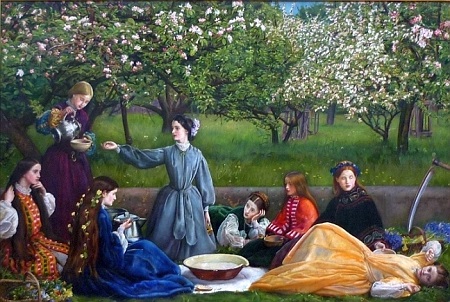
Spring (Apple Blossoms) door Sir John Everett Millais, 1859


Summer is coming

“Summer is coming!” the soft breezes whisper;
“Summer is coming!” the glad birdies sing,
Summer is coming – I hear her quick footsteps,
Take your last look at the beautiful Spring!

Lightly she steps from her throne in the woodlands,
“Summer is coming, and I cannot stay;
Two of my children have crept from my bosom,
April has left me but lingering May.

“What tho’ bright Summer is crownèd with roses?
Deep in the forest Arbutus doth hide;
I am the herald of all the rejoicing,
Why must June always disown me?” she cried.

Down in the meadow she stoops to the daisies,
Plucks the first bloom from the apple tree’s bough,
“Autumn will rob me of all the sweet apples;
I will take one from her store of them now.”

Summer is coming! I hear the glad echo,
Clearly it rings o’er the mountain and plain,
Sorrowful Spring leaves the beautiful woodlands,
Bright, happy Summer begins her sweet reign.


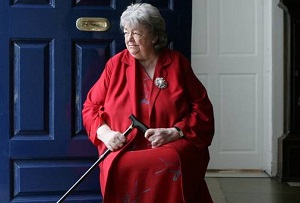
Dora Read Goodale (29 oktober 1866 – 12 december 1953)
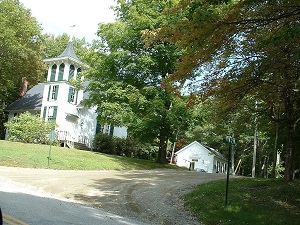
Mount Washington, Massachusetts, waar Dora Read Goodale werd geboren.


Zie voor de schrijvers van de 29e mei ook mijn vorige blog van vandaag.
André Brink, Eduard Escoffet, G. K. Chesterton, Bernard Clavel, T. H. White, Hans Weigel, Alfonsina Storni

De Zuid-Afrikaanse schrijver André Brink werd geboren op 29 mei 1935 in Vrede. Zie ook alle tags voor André Brink op dit blog.

Uit: A dry white season

“I had never been so close to death before.
For a long time, as I lay there trying to clear my mind, I couldn’t think coherently at all, conscious only of a terrible, blind bitterness. Why had they singled me out? Didn’t they understand? Had everything I’d gone through on their behalf been utterly in vain? Did it really count for nothing? What had happened to logic, meaning and sense?
But I feel much calmer now. It helps to discipline oneself like this, writing it down to see it set out on paper, to try and weigh it and find some significance in it.
Prof Bruwer: There are only two kinds of madness one should guard against, Ben. One is the belief that we can do everything. The other is the belief that we can do nothing.
I wanted to help. Right. I meant it very sincerely. But I wanted to do it on my terms. And I am white, and they are black. I thought it was still possible to reach beyond our whiteness and blackness. I thought that to reach out and touch hands across the gulf would be sufficient in itself. But I grasped so little, really: as if good intentions from my side could solve it all. It was presumptuous of me. In an ordinary world, in a natural one, I might have succeeded. But not in this deranged, divided age. I can do all I can for Gordon or scores of others who have come to me; I can imagine myself in their shoes, I can project myself into their suffering. But I cannot, ever, live their lives for them. So what else could come of it but failure?
Whether I like it or not, whether I feel like cursing my own condition or not — and that would only serve to confirm my impotence — I am white. This is the small, final, terrifying truth of my broken world. I am white. And because I am white I am born into a state of privilege. Even if I fight the system that has reduced us to this I remain white, and favored by the very circumstances I abhor“.


André Brink (29 mei 1935 – 6 februari 2015)
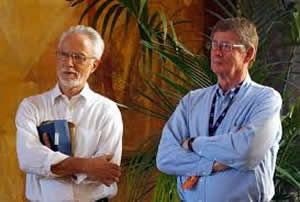
Hier met J.M. Coetzee (links)

Lees verder “André Brink, Eduard Escoffet, G. K. Chesterton, Bernard Clavel, T. H. White, Hans Weigel, Alfonsina Storni”

Joel Benton

De Amerikaanse dichter, schrijver en publicist Joel Benton werd geboren op 29 mei 1832 in het kleine stadje Amenia, in county New York. Hij volgde tot 1851 een opleiding aan het Amenia Seminarium. Op 19-jarige leeftijd werd hij aangesteld als redacteur van de pas opgerichte “Amenia Times”. Hij heeft ook stukken bijgedragen aan de krant “The Mercure”. Benton was een grote fan van krantenuitgever Horace Greeley; In 1872 keerde hij terug naar de journalistiek om Greeley tijdens zijn presidentiële campagne te ondersteunen. Gedurende zijn hele literaire carrière bleef hij bijdragen naar Greeley’s “New York Tribune” sturen. Achttien jaar van zijn leven werkte Benton als hoofd an een middelbare school. Vervolgens werd hij toezichthouder voor de stad waarin hij woonde. Volgens zijn overlijdensbericht in de Amenia Times was er gedurende de jaren 1850 en 1860 een literatuurbureau in zijn geboortestad, dat mensen zoals Horace Greeley, Margaret Fuller, Emerson, Thoreau en anderen aantrok … en werden er veel van deze notabelen in het huis van Benton ontvangen. In 1883 vertrok Benton naar Minnesota en schreef daar twee jaar voor de kranten in Chicago en St. Paul. Hij verhuisde terug naar Poughkeepsie, New York, in 1885 en bracht zijn resterende jaren door met literaire bezigheden. Hij publiceerde diverse boeken, waaronder “Emerson as a Poet” (1883), “Greeley on Lincoln” (1893), “In the Poe Circle” (1899), “Life of P. T. Barnum” (1902) en “Memories of the Twilight Club” ( (1909).

At Chappaqua

His cherished woods are mute. The stream glides down
The hill as when I knew it years ago;
The dark, pine arbor with its priestly gown
Stands hushed, as if our grief it still would show;
The silver springs are cupless, and the flow
Of friendly feet no more bereaves the grass,
For he is absent who was wont to pass
Along this wooded path. His axe’s blow
No more disturbs the impertinent bole or bough;
Nor moves his pen our heedless nation now,
Which, sworn to justice, stirred the people so.
In some far world his much-loved face must glow
With rapture still. This breeze once fanned his brow.
This is the peaceful Mecca all men know!


Dahkota

Sea-like in billowy distance, far away
The half-broke prairies stretch on every hand;
How wide the circuit of their summer day–
What measureless acres of primeval land,
Treeless and birdless, by no eyesight spanned!
Looking along the horizon’s endless line
Man seems a pigmy in these realms of space;
No segment of our planet–so divine–
Turns up such beauty to the moon’s fair face!
Here are soft grasses, flowers of tender hue,
Palimpsests of the old and coming race,
Vistas most wonderful, and vast and new;
And see–above–where giant lightnings play,
From what an arch the sun pours forth the day!

 
Joel Benton (29 mei 1832 – 15 september 1911)
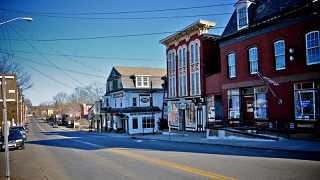
Downtown Amenia (Geen portret beschikbaar)

The Throstler (Alfred Tennyson)

Dolce far niente


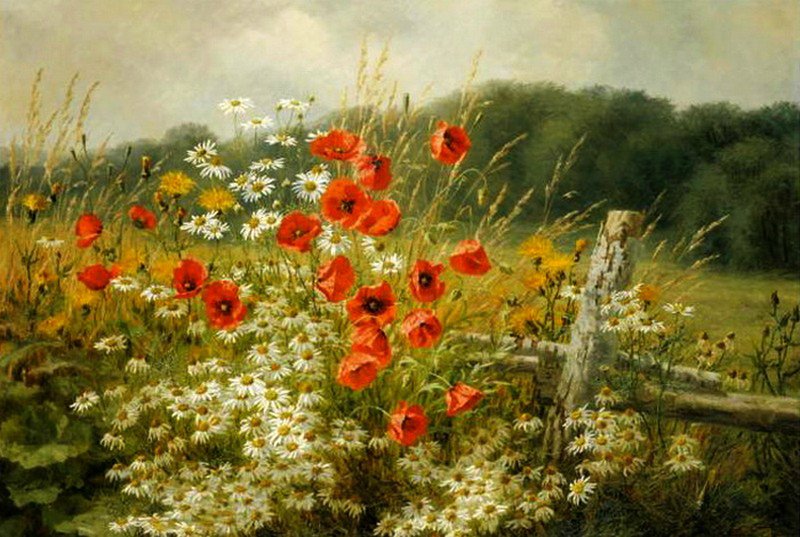
Poppies And Daisies door Anthonore Christensen, 1903


The Throstler

“Summer is coming, summer is coming,
I know it, I know it, I know it.
Light again, leaf again, love again.”
Yes, my wild little Poet.

Sing the new year in under the blue.
Last year you sang it as gladly.
“New, new, new, new!” Is it then _so_ new
That you should carol so madly?

“Love again, song again, nest again, young again.”
Never a prophet so crazy!
And hardly a daisy as yet, little friend,
See, there is hardly a daisy.

“Here again, here, here, here, happy year!”
O warble, unchidden, unbidden!
Summer is coming, is coming, my dear,
And all the winters are hidden.

Alfred Tennyson (6 augustus 1809 – 6 oktober 1892) 
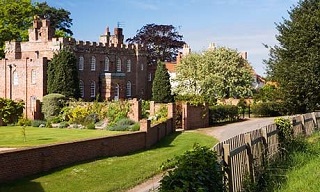
De pastorie in Somersby. Tennyson werd geboren in Somersby


Zie voor de schrijvers van de 28e mei ook mijn twee vorige blogs van vandaag.

Ad Zuiderent, Leo Pleysier, Adriaan Bontebal, Guntram Vesper, Frank Schätzing

De Nederlandse dichter en criticus Ad Zuiderent werd geboren in ’s-Gravendeel op 28 mei 1944. Zie ook alle tags voor Ad Zuiderent op dit blog.


Huis van liefde

Het huisnummer verlicht, waar liefde woont
(je zag aan de gordijnen dat dat zo was,
aan de kleur van een raam, donker hardsteen,
was de geveltuin vochtig, dan wist je genoeg)
waar liefde woont, een doordeweekse dag
achter een dichte deur, je belde aan,
een leven als een oordeel, daar kleef
je graag aan het vergankelijke leven.
Waar op de dorpel een doorweekte man
op iets te wachten staat dat binnen is
en zingt waar liefde woont gebiedt,
waar hij ook woont, daar stopt het lied.
Ging de deur open, stroomde de liefde
over de dorpel. Of je stelpen kon.


Dorp in Zuid-Holland

Elk woord gezegd hier was al veel.
In doods gemompel: torentijd,
de namen van de wielerkoers
of ‘hoi’ tegen een leuke meid.

’s Zaterdagsavonds tentmuziek.
Dan sloot het dorp de wereld af.
Fietsers verstarden tot publiek.
Dichter und Bauer, waarom niet.

Straat langs het water. Kritisch punt.
Wat kwam na de muziek tot stand?
Kijk zonder handen op de fiets,
en brommend met een buddyseat

de Kreek rond, over Kaai en Heul,
een hels kabaal het halve dorp –
maar iemand die ook vleugels kreeg,
die kwam niet ver. Die drijft er nog.


Ad Zuiderent (’s-Gravendeel, 28 mei 1944)

Lees verder “Ad Zuiderent, Leo Pleysier, Adriaan Bontebal, Guntram Vesper, Frank Schätzing”

Maeve Binchy, Sjoerd Leiker, Vladislav Chodasevitsj, Thomas Moore, Ian Fleming, Maximilian Voloshin, Bernhard Severin Ingemann

De Ierse schrijfster en columniste Maeve Binchy werd geboren op 28 mei 1940 in Dalkey. Zie ook alle tags voor Maeve Binchy op dit blog.

Uit: Quentins

“Brenda and her friend Nora had been inseparable during catering college. They made plans for life, which varied a bit depending on what was happening. Sometimes they thought they would go to Paris together and learn from a French chef. Then they might set up a thirty-bedroom hotel in the countryside, which would have a waiting list of six months for people trying to come and stay.
In reality, of course, it was slightly different. Shifts here and there and a lot of waitressing. Too many people after the same jobs, plenty of young men and women with experience. Nora and Brenda found it hard going at the start.
So they went to London, where two things of great significance happened. Nora met an Italian man called Mario who said he loved her more than he loved life itself. And Nora certainly loved him as much, if not more.
Brenda at the time caught a heavy cold, which turned into pneumonia, and as a result lost her hearing for a time. She regarded this deafness as a terrible blow. She, who could almost hear the grass grow before her illness.
“I was never sympathetic enough to deaf people,” she wept to the busy doctor who gave her leaflets on lip-reading classes and told her to stop this self-pity, her hearing would return in time.
So Brenda went to the classes, mainly much older people, men and women struggling with hearing aids.
She learned how to practice on a VCR machine. You watched the news with the volume turned down over and over until you could guess what they were saying, and then you turned it up very high to check if you were right.
Miss Hill, the teacher, loved Brenda, as she was so eager to learn. Brenda learned tostudy people’s faces as they spoke, trying to make sense of what she couldn’t hear. Brenda understood that the hard letters to hear were the ones in the middle of a word. Most people could read the word “pay” or “pan,” for example, but it was much harder to see a hidden consonant like an L or an R in the middle of a word. “Pray” or “plan” were much more difficult to work out. You had to do that from the meaning of the sentence.”


Maeve Binchy (28 mei 1940 – 30 juli 2012)

Lees verder “Maeve Binchy, Sjoerd Leiker, Vladislav Chodasevitsj, Thomas Moore, Ian Fleming, Maximilian Voloshin, Bernhard Severin Ingemann”

Niels ’t Hooft, Jan Blokker, Linda Pastan, Louis-Ferdinand Céline, Georges Eekhoud, Said, John Cheever, John Barth

De Nederlandse schrijver, journalist, blogger en gamedeskundige Niels ’t Hooft werd geboren in Leiderdorp op 27 mei 1980. Zie ook alle tags voor Niels ‘t Hooft op dit blog.

Uit: Hou me vast of ik hyperventileer

“Ze zit tegenover me. Halflang lichtbruin haar, strak rood jasje, stippelblouse, grijsleren handtas. Een gesatureerd graslandschap trekt aan ons voorbij. Elektriciteitsmasten aan de horizon, uitbundige zon. Op ons na is de coupé leeg. Het is maandagochtend, kwart over tien, ik ben op weg naar Maastricht, en ik schat haar 28.
Ze rommelt met een aluminium doosje, afgeronde hoeken, waaruit ze een contactlens haalt. Het doosje heeft één compartiment. Naast de schroefrand zit een lampje. Ze legt de lens op haar wijsvinger en houdt hem tegen het licht. Heel even draait ze een zonnestraal, zonder het te merken, recht in mijn gezicht. Ze doet lenzenvloeistof op de lens, trekt haar ooglid omlaag en laat de lens routineus op zijn plek zakken. Dan klikt ze het doosje dicht. In het deksel zit een lichtgevende appel verzonken, die na sluiting een paar keer pulseert en dan langzaam uitdooft. Ze kijkt op, naar mij, en ik richt me weer op de krant.
Dit is de toekomst, maar aan mij is niets veranderd. De wereld overkomt me als voorheen. ’s Morgens neem ik het nieuws tot me, in inkt gedrukt op papier. Meestal doe ik dat in een koffiezaak, maar als het even kan in de trein, zodat ik toch nog de sensatie van vooruitgang ervaar. De trein is niet goedkoop, maar ik neem boterhammen mee, en een thermoskan koffie. Als de ergste spits voorbij is, stap ik in. Een of twee coupés volstaan om de kranten bij elkaar te sprokkelen, inclusief de weekendbijlages. Her en der heeft iemand iets uitgescheurd, een recensie van een game die ik niet speel of een reportage over een technologie die ik niet gebruik. Maar niemand neemt verhalen over politiek mee. Wie daar om geeft, heeft zelf een abonnement.
Ik ben snel oud geworden. Geboren in 1980, op de grens tussen de laatste generatie die opgroeide zonder internet en mobiele telefoons, en de eerste generatie die niet anders heeft gekend. Met enthousiasme nam ik ze in gebruik, maar toen ik mijn baan verloor en, later, van de bijstand moest gaan leven, liet ik ze net zo makkelijk weer los.”


Niels ’t Hooft (Leiderdorp, 27 mei 1980)

Lees verder “Niels ’t Hooft, Jan Blokker, Linda Pastan, Louis-Ferdinand Céline, Georges Eekhoud, Said, John Cheever, John Barth”

Max Brod, Kaur Kender, Adriaan Venema, Arnold Bennett, Richard Schaukal, Ferdynand Ossendowski, M. A. von Thümmel, Herman Wouk, Dashiell Hammett

De Tsjechisch-Israëlische dichter, schrijver, criticus en componist Max Brod werd geboren in Praag op 27 mei 1884. Zie ook alle tags voor Max Brod op dit blog.

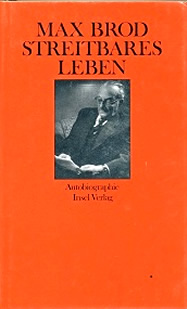
Uit: Streitbares Leben

„Ich brachte Werfel sofort mit Weltsch und Kafka zusammen. Wir hatten damals einen Kult der schönen Wälder und Bäche rings um Prag, Werfel wurde gleich eingeführt, fröhlich schwammen wir eines Sommertages viele Stunden lang (in meiner Erinnerung hat er überhaupt kein Ende) in den reinen, silbernen Strömungen der Sazawa. – Am nächsten Tag stürmte Mama Werfel meine Wohnung. Was mir denn einfalle! Ich sei doch der Ältere und müsse Verstand haben! Ihr Junge sei puterrot vor Sonnenbrand heimgekehrt und liege jetzt an hohem Fieber darnieder. Er werde die Matura nicht machen können… So schlimm kam es nun nicht, immerhin machte ich mir Vorwürfe, daß ich an die besonders weiße zarte Haut des jungen blonden Alkaios nicht gedacht hatte. Wir andern waren abgehärtet.
Ich sandte die Gedichte an den Mann mit der buntgestickten Weste. Er lehnte sie entschieden ab. Ich besitze noch einen Stoß Briefe, in denen Axel Juncker auf meine Überredungskünste reagiert. Endlich siegte ich doch. Und in Berlin, bei meiner ersten Vorlesung („es ist erstaunlich, mit wie geringem Akzent dieser tschechische Dichter deutsch spricht“, schrieb ein Kritiker. Dabei habe ich es nie so weit gebracht, korrekt tschechisch zu sprechen), legte ich zuletzt meine Werke weg, um aus den Druckbogen des damals noch völlig unbekannten Werfeischen „Weltfreund“ eine ganze Reihe von Gedichten zu lesen. Es war Werfeis Premiere vor einem Weltforum – eine kleine Sensation.
Es dauerte nicht lange, und der Kriegsausbruch spülte alle anderen Probleme in den Orkus. Kam der junge Krieger zu kurzem Urlaub heim, so war er, der Weltfreund, von Sarkasmen und Menschenverachtung verzehrt. Einmal erzählte er mir, wie er sich im Feld immer vorgestellt hatte, selbst gleichgültige Personen (wie zum Beispiel die Besitzerin des Hauses, in dem seine Eltern wohnten) würden ihn mit froher Rührung begrüßen, den aus so schwerer Gefahr Heimgekehrten. Und was sagte die Hausbesitzerin in Wirklichkeit beim Wiedersehen? Werfel ahmte virtuos ihre gralzende Baßstimme nach: „Herr Werfel, wissen Sie schon das Neueste? Der Herr Reitler im dritten Stock hat gekündigt.“


Max Brod (27 mei 1884 – 20 december 1968)
Cover

Lees verder “Max Brod, Kaur Kender, Adriaan Venema, Arnold Bennett, Richard Schaukal, Ferdynand Ossendowski, M. A. von Thümmel, Herman Wouk, Dashiell Hammett”

Alan Hollinghurst, Radwa Ashour, Hugo Raes, Vítězslav Nezval, Ivan O. Godfroid, Maxwell Bodenheim, Isabella Nadolny, Edmond De Goncourt

De Britse schrijver Alan Hollinghurst werd geboren op 26 mei 1954 in Stoud, Gloucestershire. Zie ook alle tags voor Alan Hollinghurst op dit blog.

Uit: The Line of Beauty

“At nineteen she already had a catalogue of failed boyfriends, each with a damning epithet, which was sometimes all Nick knew them by: ‘Crabs’ or ‘Drip-Dry’ or ‘Quantity Surveyor’. A lot of them seemed almost consciously chosen for their unacceptability at Kensington Park Gardens: a tramplike Welshman in his forties whom she’d met in the Notting Hill Record Exchange; a beautiful punk with FUCK tattooed on his neck; a Rastafarian from round the corner who moaned prophetically about Babylon and the downfall of Thatcher. Others were public schoolboys and sleek young professionals on the make in the Thatcher slump. Catherine was slight but physically reckless; what drew boys to her often frightened them away. Nick, in his secret innocence, felt a certain respect for her experience with men: to have so many failures required a high rate of preliminary success. He could never judge how attractive she was. In her case the genetic mixture of two good-looking parents had produced something different from Toby’s sleepy beauty: Gerald’s large confidence-winning mouth had been awkwardly squashed into the slender ellipse of Rachel’s face. Catherine’s emotions always rushed to her mouth.
She loved anything satirical, and was a clever vocal mimic. When she and Nick got drunk she did funny imitations of her family, so that oddly they seemed not to have gone away. There was Gerald, with his facetious boom, his taste for the splendid, his favourite tags from the Alice books. ‘Really, Catherine,’ protested Catherine, ‘you would try the patience of an oyster.’ Or, ‘You recall the branches of arithmetic, Nick? Ambition, Distraction, Uglification, and Derision . . . ?’ Nick joined in, with a sense of treacherously bad manners. It was Rachel’s style that attracted him more, as a code both aristocratic and distantly foreign. Her group sounded nearly Germanic, and the sort of thing she would never belong to; her philistine, pronounced as a French word, seemed to cover, by implication, anyone who said it differently. Nick tried this out on Catherine, who laughed but perhaps wasn’t much impressed. Toby she couldn’t be bothered to mimic; and it was true that he was hard to ‘get’. She did a funny turn as her godmother, the Duchess of Flintshire, who as plain Sharon Feingold had been Rachel’s best friend at Cranborne Chase school, and whose presence in their lives gave a special archness to their joke about Mr Duke the odd-job man. The Duke that Sharon had married had a twisted spine and a crumbling castle, and the Feingold vinegar fortune had come in very handy. Nick hadn’t met the Duchess yet, but after Catherine’s impression of a thoughtless social dynamo he felt he’d had the pleasure without the concomitant anxiety.”


Alan Hollinghurst (Stoud, 26 mei 1954)
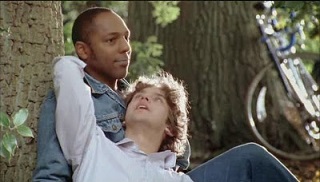
Don Gilet (Leo) en Dan Stevens (Nick) in de tv-serie „The Line of Beauty“ uit 2006.

Lees verder “Alan Hollinghurst, Radwa Ashour, Hugo Raes, Vítězslav Nezval, Ivan O. Godfroid, Maxwell Bodenheim, Isabella Nadolny, Edmond De Goncourt”

Hemelvaart (Gabriël Smit)

Bij Hemelvaartsdag


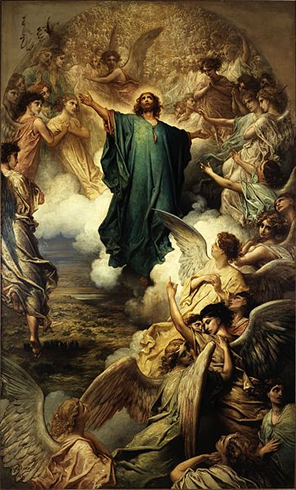
L’Ascension door Gustave Doré, 1879


Hemelvaart

Wat hebben zij gezien ? Er was
iets van u, een stem, een oogopslag,
een trillend licht in hun midden,
handen die andere wilden vinden,
een lichaam herinnering, doorzichtig
omringd binnen een landschap van
eindelijk vrede, iets van overkant,
nu nog hier, zwijgend, maar straks
overal opengebroken naar vruchtbare
dalen geluk : waar zij stonden
zagen zij het al allerwegen vervuld, over
het golvende land rondom stroomde
koren, oogsten te zwaar om te dragen,
psalmen van dank, want het zou eigen
zijn, hij had het beloofd, hij reikte
zelf de vlammende schoven aan,
de druiventrossen, de gouden raten
en het nieuwe lied.

Maar hij week,
alles scheen plotseling onzeker, hij
was er wel, maar toch ook niet,
hij scheen van het toegezegde rijk
niet te willen weten, hij beloofde wel
iets van kracht, maar wanneer ? Zij
stonden met lege handen, harten met
nauwelijks nog vermoeden van toekomst
en voor ze konden vragen om zekerheid, was
hij verdwenen, ergens omhoog, achter
een raadselachtige wolk.

Maar uit
het hulpeloos lege land rondom rezen
onverhoeds twee mannen op, gestalten
schitterwit, en klonken stemmen van
vaste belofte : hij komt terug zoals
hij is gegaan. En ook die mannen
verdwenen weer, maar nu had het
landschap een andere horizon, een
verdere verte, midden op de dag
iets van morgenlicht, en zwijgend
in geluk daalden zij samen
van de berg, naar de mensenstad.


Gabriël Smit (25 februari 1910 – 23 mei 1981)
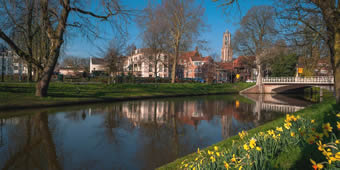
Utrecht, met in de verte de Dom. Gabriël Smit werd geboren in Utrecht.


Zie voor de schrijvers van de 25e mei ook mijn vorige blog van vandaag.