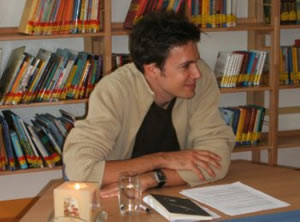
Bret Easton Ellis, Jürgen Theobaldy, Georges Perec, Milo Dor, Jan Frederik Helmers

De Amerikaanse schrijver Bret Easton Ellis werd geboren op 7 maart 1964 in Los Angeles. Zie ook alle tags voor Bret Easton Ellis op dit blog.

Uit: Imperial Bedrooms

“The scenes from the novel that hurt the most chronicled my relationship with Blair, especially in a scene near the novel’s end when I broke it off with her on a restaurant patio overlooking Sunset Boulevard and where a billboard that read disappear here kept distracting me (the author added that I was wearing sunglasses when I told Blair that I never loved her). I hadn’t mentioned that painful afternoon to the author but it appeared verbatim in the book and that’s when I stopped talking to Blair and couldn’t listen to the Elvis Costello songs we knew by heart (“You Little Fool,” “Man Out of Time,” “Watch Your Step”) and yes, she had given me a scarf at a Christmas party, and yes, she had danced over to me mouthing Culture Club’s “Do You Really Want to Hurt Me?”and yes, she had called me “a fox,” and yes, she found out I had slept with a girl I picked up on a rainy night at the Whisky, and yes, the author had informed her of that. He wasn’t, I realized when I read those scenes concerning Blair and myself, close to any of us — except of course to Blair, and really not even to her. He was simply someone who floated through our lives and didn’t seem to care how flatly he perceived everyone or that he’d shared our secret failures with the world, showcasing the youthful indifference, the gleaming nihilism, glamorizing the horror of it all.

But there was no point in being angry with him. When the book was published in the spring of 1985, the author had already left Los Angeles. In 1982 he attended the same small college in New Hampshire that I’d tried to disappear into, and where we had little or no contact.(There’s a chapter in his second novel, which takes place at Camden, where he parodies Clay — just another gesture, another cruel reminder of how he felt about me. Careless and not particularly biting, it was easier to shrug off than anything in the first book which depicted me as an inarticulate zombie confused by the irony of Randy Newman’s “I Love L.A.”) Because of his presence I stayed at Camden only one year and then transferred to Brown in 1983 though in the second novel I’m still in New Hampshire during the fall term of 1985.”
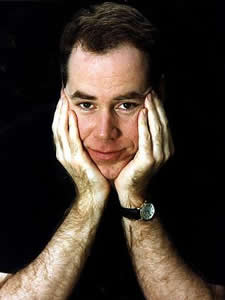
 

Bret Easton Ellis (Los Angeles, 7 maart 1964)

Lees verder “Bret Easton Ellis, Jürgen Theobaldy, Georges Perec, Milo Dor, Jan Frederik Helmers”
Gabriel García Márquez, Günter Kunert, Clark Accord, Elizabeth Barrett Browning, Stéphane Hoffmann, Michelangelo

De Colombiaanse schrijver Gabriel García Márquez werd op 6 maart 1928 in de kustplaats Aracataca geboren. Zie ook alle tags voor Gabriel García Márquez op dit blog.

Uit: One Hundred Years of Solitude (Vertaald door Gregory Rabassa)

“When José Arcadio Buendía and the four men of his expedition managed to take the armour apart, they found inside a calcified skeleton with a copper locket containing a woman’s hair around its neck.

In March the gypsies returned. This time they brought a telescope and a magnifying glass the size of a drum, which they exhibited as the latest discovery of the Jews of Amsterdam. They placed a gypsy woman at one end of the village and set up the telescope at the entrance to the tent. For the price of five reales, people could look into the telescope and see the gypsy woman an arm’s length away. ‘Science has eliminated distance,’ Melquíades proclaimed. ‘In a short time, man will be able to see what is happening in any place in the world without leaving his own house.’ A burning noonday sun brought out a startling demonstration with the gigantic magnifying glass: they put a pile of dry hay in the middle of the street and set it on fire by concentrating the sun’s rays. José Arcadio Buendía, who had still not been consoled for the failure of his magnets, conceived the idea of using that invention as a weapon of war. Again Melquíades tried to dissuade him, but he finally accepted the two magnetized ingots and three colonial coins in exchange for the magnifying glass. Úrsula wept in consternation. That money was from a chest of gold coins that her father had put together over an entire life of privation and that she had buried underneath her bed in hopes of a proper occasion to make use of it. José Arcadio Buendía made no attempt to console her, completely absorbed in his tactical experiments with the abnegation of a scientist and even at the risk of his own life. In an attempt to show the effects of the glass on enemy troops, he exposed himself to the concentration of the sun’s rays and suffered burns which turned into sores that took a long time to heal. Over the protests of his wife, who was alarmed at such a dangerous invention, at one point he was ready to set the house on fire. He would spend hours on end in his room, calculating the strategic possibilities of his novel weapon until he succeeded in putting together a manual of startling instructional clarity and an irresistible power of conviction. He sent it to the government, accompanied by numerous descriptions of his experiments and several pages of explanatory sketches, by a messenger who crossed the mountains, got lost in measureless swamps, forded stormy rivers, and was on the point of perishing under the lash of despair, plague, and wild beasts until he found a route that joined the one used by the mules that carried the mail.”


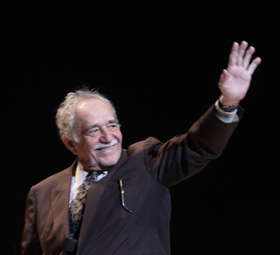
Gabriel García Márquez (Aracataca, 6 maart 1928)

Lees verder “Gabriel García Márquez, Günter Kunert, Clark Accord, Elizabeth Barrett Browning, Stéphane Hoffmann, Michelangelo”

Pier Paolo Pasolini, Arthur van Schendel, Koos van Zomeren, Jurre van den Berg, Danny King

De Italiaanse filmregisseur, dichter en schrijver Pier Paolo Pasolini werd geboren in Bologna op 5 maart 1922. Zie ook alle tags voor Pier Paolo Pasolini op dit blog.

Nineteen Forty-five

Dragging their feet in the dust, tired to the bone
the Germans now retreat, sheep lost in the fog.
Walking among the ruins, under wet acacia trees
dragging rifles in the mud along the least-known roads.
In the village bells are calling to the early morning service
and the days of old come back as if they never left.
In the villages bells ring as if to announce some holiday
with the yards swept neat and clean, with springtime fields
where gatherings of girls, their pony tails like sun rays,
pass under greening trellises on their way to hear mass.
The wild boys do come after, just finished with confession,
dressed in white knee socks and their blond hair neatly cut.
Monday, it’s Easter Monday! How they laugh how they run
these children from the village across the Tagliamento bridge,
they’re riding their bicycles and are wearing white shirts
beneath their English blazers, smelling of freshly cut oranges.
They are a little tipsy as they sing to the first coming of day,
and on their narrow scarves the cold wind ices their breath
as they ride to Codroipo, Casale, through grazing fields
riddled with check points and with companies of soldiers
joking and screaming underneath the platform
while wearing their best outfits to the first ball of the year.
God has dressed us in joy and in compassion,
on our foreheads he has placed the crown of love.
God has chosen to flatten hills and mountains,
to fill in the valleys, make the earth equal for us all
so that his creatures, contented, will people the land
in peacefulness and so fulfill their destiny.
God always knows that past our gloomiest dark
His splendor shines forever in each and every heart.


Vertaald door Adeodato Piazza Nicolai

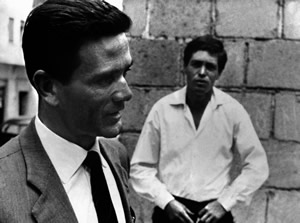
Pier Paolo Pasolini (5 maart 1922 – 2 november 1975)

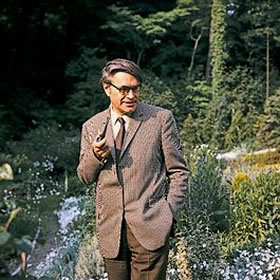
Hier met de acteur Franco Citti (rechts)

Lees verder “Pier Paolo Pasolini, Arthur van Schendel, Koos van Zomeren, Jurre van den Berg, Danny King”

Robert Kleindienst, Kristof Magnusson, Khaled Hosseini, Irina Ratushinskaya, Alan Sillitoe

De Oostenrijkse dichter en schrijver Robert Kleindienst werd geboren op 4 maart 1975 in Salzburg. Zie ook alle tags voor Robert Kleindienst op dit blog.


Uit: Später vielleicht

“Dann stellte er sich im Dunkel ans Fenster und zog den Vorhang zurück. Was mochte in diesem Moment in den Zimmern gegenüber vor sich gehen? Hinter den vorgezogenen Vorhängen und heruntergelassenen Jalousien konnte gerade eine Beziehung beendet oder ein Mord verübt werden. Zwei konnten sich wortlos gegenübersitzen, streiten oder miteinander schlafen, einem Kind das Leben schenken. Im Block gegenüber saß ein weißhaariger Mann am Tisch und schrieb. Er saß dort Tag für Tag, immer um dieselbe Zeit, bis tief in die Nacht. Er sah sich selbst an einem Schreibtisch sitzen, mit weißen Haaren, und stellte sich vor, jemand würde ihn von einem gegenüberliegenden Fenster aus beobachten und sich ähnliche Gedanken machen.

Eine kalte Hand legte sich auf seinen Nacken.

»Na, mein Voyeur?«, sagte Nelly.

»Ich suche eine gute Szene«, sagte er wie zur Rechtfertigung und zog ihre Hand auf seine Brust.

»Habe ich dir schon von meinem neuen Projekt erzählt?«, fragte er, als sie wenig später nebeneinander lagen, und sie schüttelte den Kopf.

»Der Protagonist in meinem Roman lernt zu Beginn eine Frau kennen und verliebt sich in sie, obwohl er eine Freundin hat. Er macht das, weil er die Emotion zum Schreiben braucht. Kannst du dir vorstellen, dass etwas daraus wird? Ich frage auch, weil ich Situationen aus meinem eigenen Leben in das Buch einbauen möchte. Verstehst du? Es kann nur so funktionieren.«

»Dann suchst du dir besser gleich jemand anderen. Ich werde nicht deine Laborratte sein.«

»Ach, komm. Erstens werde ich dich nicht namentlich erwähnen und zweitens gebe ich sicher nicht deine intimsten Geheimnisse preis. Das werden auch keine Figuren aus meinem Leben, sondern Romanfiguren sein.«

»Bist du schon müde?«, fragte sie und gähnte.

»Nein. Wir haben Vollmond heute.«

Nach einem Kuss drehte sie sich zur Seite, und er knipste das Licht aus. Kurz darauf: gleichmäßige Atemzüge. Er hätte gern noch ein paar Worte mit Nelly gewechselt, über das Buch, ihre Reaktion von vorhin. Aber sie war schon weit weg von all dem.”


Robert Kleindienst (Salzburg, 4 maart 1975)

Lees verder “Robert Kleindienst, Kristof Magnusson, Khaled Hosseini, Irina Ratushinskaya, Alan Sillitoe”

Manfred Flügge, Josef Winkler, Hans Verhagen, Kola Boof, Gudrun Pausewang, James Merrill, Clifton Snider

De Duitse schrijver Manfred Flügge werd geboren op 3 maart 1946 in Kolding, Denemarken. Zie ook alle tags voor Manfred Flügge op dit blog.


Uit: Heinrich Mann

“Herkunft, Erbe, Heimat ist das, was man hinter sich lassen muss. Das «Leben vor dem Leben», wie Heinrich Mann die Familiengeschichte nennt,hat nur die Bedeutung, die ihm der Einzelne zumisst. Es ist ein Fundus für die Phantasie und in diesem Sinne ein verwertbarer Familienschatz.

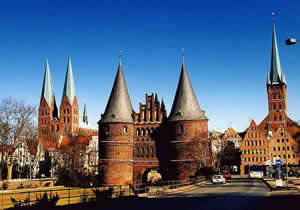
Das spitztürmige Lübeck war um 1870 eine reale Stadt und zugleich das Bild einer Stadt, ein lebendiger und produktiver Ort und zugleich das Monument einer siebenhundertjährigen Geschichte. Handel und Selbstverwaltung prägten die Stadt, Enge der Anlage und weltweite Beziehungen, auch Wohlstand und stolze Architektur. Durchreisende Geistesgrößen hinterließen respektvolle Äußerungen, aber als Quelle und Thema dichterischer Kreativität war die Stadt noch terra incognita.

Lübeck wurde im 12. Jahrhundert auf einer hügeligen Insel zwischen zwei Flussarmen angelegt. 1226 erhielt die Stadt die Reichsfreiheit, die bis in die Neuzeit verteidigt wurde. Die darauf gegründete Selbstverwaltung bestand auch nach 1866, als die Hansestadt dem Norddeutschen Bund, und nach 1871, als sie dem nunmehr geeinten Reich beitrat; gleichwohl überlagerten bald preußische Methoden die Traditionen der Stadtrepublik. Am Ende des 19. Jahrhunderts war Lübeck eine Mischung aus mittelalterlich-verwinkelter Enge, freiem Hansestolz, weltweiten Handelsverbindungen, republikanischer Selbstregierung und neuer Kasernierung.


Lübeck


Die Stadt schien dem Niedergang versprochen, als der Nord-Ostsee-Kanal eingeweiht wurde und die Zukunft in Form von Stahl und Eisen und Bismarcks Reich daherkam. Eine Stimmung der Wehmut berührte die Gäste, wenn auch nicht der Eindruck einer «toten Stadt» wie in Brügge.

Etwa 100 große Kaufmannsfamilien bestimmten das politische Leben. Die Presse bezog man lange aus Hamburg, ehe um 1850 zwei einheimische Zeitungen gegründet wurden, die Lübecker Zeitung und die volkstümliche Eisenbahn-Zeitung.In der Beckergrube befand sich das bescheidene Ebbe’sche Theater, ab 1858 umgebaut zum Casinotheater mit 800 Plätzen und von der Stadt subventioniert. Zudem gab es draußen vor der Stadt das Sommertheater Tivoli mit 1800 Plätzen. Das literarische Leben erblühte in der Stadt erst unter dem Einfluss des einheimischen Dichters Emanuel Geibel. An seinem Beispiel erfuhr die Lübecker Jugend, dass man mit Dichtung nationalen Ruhm und öffentliche Wirkung erzielen konnte. Mit Geibel waren Heinrich und Thomas Mann über die Familie ihrer Mutter weitläufig verwandt. Geibel starb 1884, aber die eine oder andere persönliche Begegnung mit ihm dürften die beiden Knaben erlebt haben.”


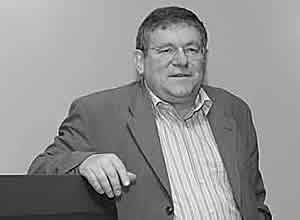
Manfred Flügge (Kolding, 3 maart 1946)

Lees verder “Manfred Flügge, Josef Winkler, Hans Verhagen, Kola Boof, Gudrun Pausewang, James Merrill, Clifton Snider”

Heinz Knobloch, Alexandros Papadiamantis, Charles Sealsfield, William Godwin, Paul Guimard, Edmund Waller, Thomas Otway

De Duitse schrijver en feuilletonist Heinz Knobloch werd op 3 maart 1926 in Dresden geboren. Zie ook alle tags voor Heinz Knobloch op dit blog.


Uit: Geisterbahnhöfe

“Es konnte die stehengebliebene, anbefohlene Dekoration sein zum gerade noch vom Volk gestatteten 40. Jahrestag der Deutschen Demokratischen Republik. So sah sie aus im Schaufenster und hätte vielleicht noch die Leser geärgert einen Monat später. Jetzt aber erfreute das Schaufenster.
Wegen dieser Darbietung bisher kaum beachtet. Nun aber stand da ein Kärtchen, gut sicht- und lesbar auf einem Glasträger in der Mitte und lautete schlicht »Alles umsonst«.
Es könnte als Kernwort stehen neben: »Wir sind das Volk«.
»Alles umsonst« galt auch für die geschlossenen und abgesperrten Bahnhöfe auf Ostberliner Gebiet. Alle Mühe war umsonst gewesen. Sie hatte nur viel gekostet. Nicht bloß Geld, wie wir wissen.
Wenn von Reisefreiheit die Rede war, oder dieser Gedanke jahrelang unausgesprochen in vielen Köpfen lebte, dann meinte man in Berlin zunächst das Nutzen sämtlicher Verkehrsmittel.

Kaufte man einen Stadtplan in der »Hauptstadt der DDR«, dann gab es neben der Hauptstadt eine Art Niemandsland, weiß gelassen, nein frei gelassen im feinsten Doppelsinne. Nur ein paar Bächlein waren eingezeichnet.
Und wer wußte von den Bahnlinien unter der volkseigenen Erde? Gelegentlich erschienen sie als westliches Fernsehbild zum Wundern.
Wer dabei war muß erzählen. ….


Heinz Knobloch (3 maart 1926 – 24 juli 2003)

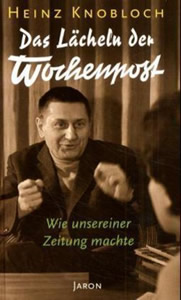
Cover

Lees verder “Heinz Knobloch, Alexandros Papadiamantis, Charles Sealsfield, William Godwin, Paul Guimard, Edmund Waller, Thomas Otway”

Honderd jaar Godfried Bomans, Multatuli, Thom Wolfe, John Irving, Michael Salinger

De Nederlandse schrijver Godfried Bomans werd geboren in Den Haag op 2 maart 1913. Zie ook alle tags voor Godfried Bomans op dit blog. Dat is vandaag precies honderd jaar geleden.

Uit: Pieter Bas

“Dit heb ik voorzeker met vele grote mannen gemeen: dat ik in Dordrecht geboren ben. De inwoners – die ik vanaf deze plaats hartelijk groet – kunnen u het eenvoudige huis aanwijzen: op de hoek van de Jan de Witstraat en het oude Muntplein. Zo van buiten gezien maakt het niet de indruk dat een minister daar geboren is; dit was althans mijn indruk toen ik het jaren later bezocht. Wanneer ge de moeite wilt nemen het Muntplein over te steken en u tegenover de slagerij van Bos op te stellen, krijgt ge een goede kijk op het geheel. Het raam

links, met de ijzeren spijltjes ervoor, is de kamer waar ik geboren ben. De gedenksteen erboven is natuurlijk later aangebracht. De twee ramen daarnaast werpen het licht in een vertrek dat wij gewoonlijk ‘het Kabinet’ noemden, vanwege het kleine eikenhouten bureau waaraan mijn vader te werken placht, wanneer zijn aanwezigheid niet op het stadhuis vereist werd. Hij vervulde daar de plaats van gemeentesecretaris, een woord dat wij moeilijk konden uitspreken. Zozeer waren wij destijds van zijn hoge positie en onmisbaarheid doordrongen, dat, toen hij een keer met verkoudheid in bed lag, wij verbaasd waren het verkeer op straat gewoon te zien doorgaan.

Naast ‘het Kabinet’, dat is dus het laatste raam rechts, bevond zich mijn slaapkamertje, sindsdien geheel verbouwd en veranderd; doch, naar ik hoor, zijn er reeds stappen gedaan alles in de vorige toestand te restaureren.

De dag dat ik het eerste licht zag, was een zeer bewogene. Het ministerie Brouwer-Kortenhoef was juist de vorige avond gevallen op een onderwijswet en ’s ochtends om acht uur kwam de mare hiervan tegelijk met het bericht van mijn geboorte ‘het Kabinet’ binnen, het eerste door de krant, het tweede door de baker.

Mijn vader schijnt een ogenblik in beraad te hebben gestaan aan welke van de twee bronnen hij het eerste zijn nieuwsgierigheid zou bevredigen, doch ten slotte zegevierde de vader in hem over de ambtenaar en kwam hij naar mijn toestand informeren.

‘Het is een gezonde jongen,’ zei hij, zich over het bed van zijn vrouw buigend en haar kussend, ‘het is een gezonde jongen en Kortenhoef is gewipt.”

Godfried Bomans (2 maart 1913 – 22 december 1971)

Lees verder “Honderd jaar Godfried Bomans, Multatuli, Thom Wolfe, John Irving, Michael Salinger”

János Arany, Jevgeni Baratynski, Pascal Rannou, Sholom Aleichem, Olivia Manning, Gerhard von Halem

De Hongaarse dichter János Arany werd geboren op 2 maart 1817 in Nagyszalonta. Zie ook alle tags voor János Arany op dit blog.

Uit: Toldi (Fragment)

First Canto

‘He took in one hand an enormous rail
and pointed at the road to Buda.’
Ilosvai

The sun shrivels up the sparse alkali flats,
parched herds of grasshoppers are grazing about –
not a new blade in all the the stubble, not a handbreadth
in green in all the broad meadows. A dozen laborers
or so are snoring under the stack – all their work
is going fine, but the big haywagons loiter there,
empty or only half loaded with hay.

A lanky sweep dandles its skinny neck into the well
and spies for water – imagine a giant gnat sucking
the blood of old earth. Thirsty oxen mill around
the through, making war on an armyt of flies. But
lazybone Laczkó hangs on the hands, and who’s to scoop
the water up?

As far as the eye can see on bleak earth and sky,
one workman alone on his feet. A whopping side-
rail sways on his browny shoulder ligthly, and still
not a trace of beard on his chin. He stares far,
far down the road as though to depart this village
and land for other fields. A live warning, you
would have thought him, planted at the crossroad on
a shallow hill.

Dear little brother, why stand in the blazing sun?
Look, others are snoring under the hay. The kuvasz,
too, is lolling there his tounge dangling out, not
for all the world would he go a-mousing. Or have you
never seen a whirlwind like this? It kicks up the
dust for a fight, lickd the road at breakneck speed,
a smoke-stack belching on the run.

János Arany (2 maart 1817 – 22 oktober 1882)

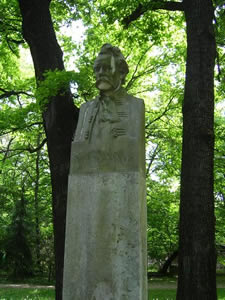
Beeld in Boedapest

Lees verder “János Arany, Jevgeni Baratynski, Pascal Rannou, Sholom Aleichem, Olivia Manning, Gerhard von Halem”

Jan Eijkelboom, Franzobel, Jim Crace, Franz Hohler, Lytton Strachey

De Nederlandse dichter, vertaler en journalist Jan Eijkelboom werd op 1 maart 1926 in Ridderkerk geboren. Zie ook alle tags voor Jan Eijkelboom op dit blog.

Pictures in your head

Beweging zit er niet in:
het zijn stills uit een movie;
meestal stom,
soms met geluid,
kreten van vogels bijvoorbeeld,
zelden een stem.
Ze komen terug, steeds vaker:
Er komen er ook wel bij.

Duizenden plaatjes in
een o zo zwaartillend hoofd.
Je zit er maar mee
op de achterste rij
van je eigen theater.


Een uit de hand gelopen haiku

Maansikkel, koud schoudertje
tegen haast donkerblauw
van zonnige wintermorgen.

Te klein om er mijn hoofd
moe tegenaan te vlijen.

Eerder geschikt om er een hand
zorgzaam omheen te leggen.

Gesteld dan dat ik groter was
tot kosmische proporties uit kon dijen.

Ik zie daar, schurkend in mijn jas
en trouwens onderweg naar jou,
voorlopig nog van af.


Dit Eiland

Heden voelen mijn voeten zich goed
in hun sokken en die weer
in hun ruime maar nog niet
sloffende schoenen.

Waarom dan niet de paden op,
de bergen in, de velden over
bij deze stad vandaan
waar stegen uitlopen op steigers

niet meer door boten gebruikt.
Wel kan men daar gaan staan uitkijken
over het eeuwig veranderlijk
zichzelf blijvende water,

ervaren dat tussen benauwenis
en ruimtezucht een afgepaald
maar onbeklemd domein kan liggen:
dit met een dagmars af te ronden

eiland.

Jan Eijkelboom (1 maart 1926 – 28 februari 2008)

Lees verder “Jan Eijkelboom, Franzobel, Jim Crace, Franz Hohler, Lytton Strachey”