Fleur Adcock, Joseph Kessel, Charles Lamb, Daniel Triller, Eugène Rellum, Margarete Hannsmann, Thomas Platter de oudere

De Nieuwzeelandse dichteres Fleur Adcock werd geboren op 10 februari 1934 in Auckland. Zie ook mijn blog van 10 februari 2009.


The Soho Hospital for Women  (Fragment)


1

Strange room, from this angle:

white door open before me,

strange bed, mechanical hum, white lights.

There will be stranger rooms to come.


As I almost slept I saw the deep flower opening

and leaned over into it, gratefully.

It swimmingly closed in my face. I was not ready.

It was not death, it was acceptance.


*


Our thin patient cat died purring,

her small triangular head titled back,

the nurse’s fingers caressing her throat,

my hand on her shrunken spine; the needle quick.


That was the second death by cancer.

The first is not for me to speak of.

It was telephone calls and brave letters

and a friend’s hand bleeding under the coffin.


*


Doctor, I am not afraid of a word.

But neither do I wish to embrace that visitor,

to engulf it as Hine-Nui-te-Po

engulfed Maui; that would be the way of it.


And she was the winner there; her womb crushed him.

Goddesses can do these things.

But I have admitted the gloved hands and the speculum

and must part my ordinary legs to the surgeon’s knife.


Adcock

Fleur Adcock (Auckland, 10 februari 1934)


De Franse schrijver, journalist en avonturier Joseph Kessel werd geboren op 10 februari 1898 in Clara, Entre Rios, Argentinië. Zie ook mijn blog van 10 februari 2009.

Uit: Ami entends-tu…

J’étais désormais reporter.

Mais le journalisme, c’était aussi pour moi la vie interne des journaux, les trucs, les astuces, les ficelles du métier. Et les collaborateurs qu’on croisait dans les couloirs. Ceux avec qui l’on discutait encore au marbre sur un mot, une mise en pages. Ceux avec qui l’on partageait les querelles, les déceptions, les enthousiasmes. Ceux enfin, qui, moins voyants, avaient aussi une histoire.

Etait-ce le petit renom que m’avait valu L’ Equipage, un court roman écrit à mon retour d’escadrille ou les articles publiés depuis entraînèrent la visite d’un certain M. Achelbé, détective privé ? Je ne le sus jamais.

Toujours ou plutôt cette ‘feuille’- elle était bien mince -, était composé d’histoires policières, d’histoire d’espionnage glanée dans les bas-fonds de Marseille ou de Paris, et tirées des expériences personnelles de son directeur.

(…)

A cette époque, je comptais Henri Torrès parmi mes amis les plus sûrs, les plus chers. Entre les deux guerres, dans les années 20 à 30, il était l’avocat le plus prestigieux de France. Les photographes de presse, les reporters l’assiégeaient. Ses plaidoiries aux assises ?

Pour les entendre, on s’étouffait, on se battait. Par la force des choses, il fut amené à défendre de grands truands : les plus chevronnés, les vrais durs, les gloires du milieu.”

kessel

Joseph Kessel (10 februari 1898 – 23 juli 1979)


De Engelse dichter, schrijver en essayist Charles Lamb werd geboren in Londen op 10 februari 1775. Zie ook mijn blog van 10 februari 2009.


Angel Help


This rare tablet doth include
Poverty with Sanctitude.
Past midnight this poor maid hath spun,
And yet the work is not half done,
Which must supply from earnings scant
A feeble bed-rid parent’s want.
Her sleep-charged eyes exemption ask
And Holy hands take up the task;
Unseen the rock and spindle ply,
And do her earthly drudgery.
Sleep, saintly poor one! sleep, sleep on;
And, waking, find they labours done.
Perchance she knows it by her dreams;
Her eye hath caught the golden gleams,
Angelic presence testifying,
That round her everywhere are flying;
Ostents from which she may presume,
That much of heaven is in the room.
Skirting her own bright hair they run,
And to the sunny add more sun:
Now on that aged face they fix,
Streaming from the Crucifix;
The flesh-clogg’d spirit disabusing,
Death-disarming sleeps infusing,
Prelibations, foretastes high,
And equal thoughts to live or die.
Gardener bright from Eden’s bower,
Tend with care that lily flower;
To its leaves and root infuse
Heaven’s sunshine, Heaven’s dews.
‘Tis a type, and ’tis a pledge,
Of a crowning privilege.
Careful as that lily flower,
This Maid must keep her precious dower;
Live a sainted Maid, or die
Martyr to virginity.


Charles_Lamb_by_William_Hazlitt

Charles Lamb (10 februari 1775 – 27 december 1834)
Portret door William Hazlitt


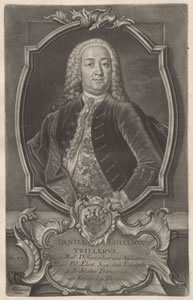
De Duitse dichter, schrijver en medicus Daniel Wilhelm Triller werd geboren op 10 februari 1695 in Erfurt. Zie ook mijn blog van 10 februari 2009.


Das Schaf und der Wolf


Nachdem es ungefähr sich traf,

Dass hier ein Wolf, und dort ein Schaf

Bei einem Bach zusammen kommen,

Und beide Seiten eingenommen:


So sprach das Schaf, was tu ich hier,

Dass du mit frecher Mordbegier

Mir stets nach meinem Leben trachtest,

Und mich so unbarmherzig schlachtest,

Wenn es mein Unfall mit sich bringt,

Dass dir dein Strassenraub gelingt?


Mit nichten! liess der Wolf sich hören,

Du irrst dich sehr, mein guter Freund,

Denn, tracht ich gleich, dich zu verzehren;

Ists doch so böse nicht gemeint.

Aus keinem Hass entstehn die Triebe,

In meiner dir geneigten Brust;

Dein süsses Fleisch erweckt mir Lust,

Ich fress dich nur aus lauter Liebe.


So macht es mancher falsche Freund,

Er schwätzt von nichts, als lauter Liebe,

Gibt aber dann die schärfsten Hiebe,

Wenn er am allerfrömmsten scheint.

Doch wenn die Bosheit klar erhellet,

Und man ihn drum zur Rede stellet:

Ist er wohl noch so frech zu sagen:

Es ist zwar übel ausgeschlagen:

Doch war es gut von mir gemeint.


Triller

Daniel Triller (10 februari 1695 – 22 mei 1782)


Zie voor onderstaande schrijver ook mijn blog van 10 februari 2009.


De Surinaamse dichter Eugène Rellum werd geboren in Paramaribo op 10 februari 1896. Zie ook mijn blog van 10 februari 2007  


De Duitse dichteres en schrijfster Margarete Hannsmann werd geboren op 10 februari 1921 in Heidenheim.


Zie voor onderstaande schrijver ook mijn blog van 10 februari 2007.


De Zwitserse humanistische schrijver en geleerde Thomas Platter de oudere werd geboren op 10 februari 1499 in Grächen in het kanton Wallis.


In Memoriam Kees van den Heuvel

In Memoriam Kees van den Heuvel

In Nijmegen is op 11 januari de Nederlandse dichter Kees van den Heuvel overleden. Kees van den Heuvel werd geboren op 2 november 1960 in Mill. Hij behoorde bij de top van de light-versedichters van Nederland, maar was de laatste jaren weinig in de belangstelling wegens ziekte. Van den Heuvel publiceerde werk in diverse bloemlezingen, in De Tweede Ronde en in Randschrift / Parmentier, het blad waarvan hij redacteur was. De uitgave binnenkort van zijn eerste bundel, bij uitgeverij De Stiel, Wat futen op een kluitje in het riet, mocht hij helaas  niet meer meemaken. Zie ook mijn blog van 2 november 2009. Hieronder volgt zijn afscheidsgedicht:


Dit neem ik mee het graf in als ik sterf

Een kaart van de planeten (uit een atlas)

Wat kamperfoelie in een plastic zak

Een verrekijker met een lens van matglas

Gewikkeld in een wollen anorak

Wat vliegertouw, een roestvrijstalen knikker


Een goed geprepareerde dennentak

Een zakje drinkbouillon, een flessenlikker

En bovendien een potje gele verf


En straks historici maar stug proberen

Om daar iets zinnigs uit te concluderen


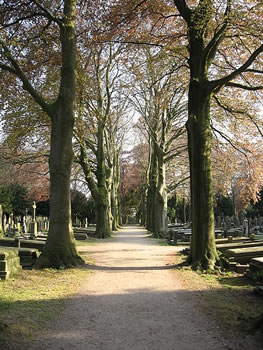
Begraafplaats_Daalseweg_Nijmegen

Kees van den Heuvel (2 november 1960 – 11 januari 2010)
Kees vond zijn laatste rustplaats op begraafplaats Daalseweg te Nijmegen

John Coetzee, Brendan Behan, Geerten Gossaert, Rainer Maria Gerhardt, Amy Lowell, Thomas Bernhard

De Zuidafrikaanse schrijver John Maxwell Coetzee werd geboren op 9 februari 1940 in Kaapstad. Zie ook mijn blog van 9 februari 2007 en ook mijn blog van 9 februari 2008 en ook mijn blog van 9 februari 2009.

Uit: Langzame man (Vertaald door Peter Bergsma)

De klap komt van rechts, hard en verrassend en pijnlijk, als een stroomstoot, en tilt hem van de fiets. Ontspan! zegt hij tegen zichzelf terwijl hij door de lucht vliegt (met het grootste gemak door de lucht vliegt!) en hij voelt zijn ledematen inderdaad gehoorzaam verslappen. Als een kat, zegt hij tegen zichzelf: omrollen, dan overeind springen, klaar voor wat komen gaat. Ook het ongebruikelijke woord soepel of souple is aan de horizon.
Maar zo pakt het niet helemaal uit. Of het nu komt omdat zijn benen hem niet gehoorzamen of omdat hij een ogenblik verdoofd is (hij hoort de klap van zijn schedel op het asfalt meer dan dat hij hem voelt, een ver, houten geluid, als een dreun met een houten hamer), hij springt helemaal niet overeind, maar glijdt door, meter na meter, steeds maar verder totdat hij helemaal slaperig wordt van het glijden.
Hij ligt languit, tot rust gekomen. Het is een schitterende ochtend. De zon voelt prettig. Er zijn ergere dingen dan je helemaal slap laten worden en wachten tot je kracht terugkeert. Er zijn misschien zelfs wel ergere dingen dan even gauw een dutje doen. Hij doet zijn ogen dicht; de wereld kantelt onder hem, draait; hij raakt weg.
Eenmaal komt hij bij, heel even. Het lichaam dat zo licht door de lucht vloog is zwaar geworden, zo zwaar dat hij met geen mogelijkheid zelfs maar een vinger kan optillen. En er staat iemand over hem heen gebogen, die hem de adem beneemt, een jongeman met weerbarstig haar en puistjes langs zijn haarlijn. ‘Mijn fiets,’ zegt hij tegen de jongen, de korte woorden met moeite uitsprekend. Hij wil vragen hoe het met zijn fiets is, of iemand ervoor zorgt, want fietsen kunnen zoals bekend zomaar verdwijnen; maar voordat die woorden willen komen is hij alweer weggezakt.”


Coetzee

John Coetzee (Kaapstad, 9 februari 1940)


De Ierse dichter en schrijver Brendan Behan werd geboren op 9 februari 1923 in Dublin. Zie ook mijn blog van 9 februari 2007 en ook mijn blog van 9 februari 2008 en ook mijn blog van 9 februari 2009.


Uit: The Hostage


OFFICER: Now your rent books, please, or a list of the tenants.

PAT. I can give you that easy. There’s Bobo, Ropeen, Colette, the Mouse, Pigseye, Mulleady, Princess Grace, Rio Rita, Meg, the new girl, and myself.

OFFICER. [PAT fetches his notebook] I’ll tell you the truth, if it was my doings there’d be no such thing as us coming here. I’d have nothing to do with the place, and the bad reputation it has all over the city.

PAT. Isn’t it good enough for your prisoner?

OFFICER. It’s not good enough for the Irish Republican Army.

PAT. Isn’t it now?

OFFICER. Patrick Pearse said “To serve a cause which is splendid and holy, men must themselves be splendid and holy.”

PAT. Are you splendid, or just holy? Haven’t I seen you somewhere before? It couldn’t be you that was after coming here one Saturday night …

OFFICER. It could not.

PAT. It could have been your brother, for he was the spitting image of you.

OFFICER. If any of us were caught here now or at any time, it’s shamed before the world we’d be. Still, I see their reasons for choosing it too.

PAT. The place is so hot, it’s cold.

OFFICERE. The police wouldn’t believe we’d touch it.

PAT. If we’re all caught here, it’s not the opinion of the world or the police will be upsetting us, but the opinion of the Military Court. But then I suppose it’s all the same to you; you’ll be a hero, will you not?

OFFICER. I hope that I could never betray my trust.

PAT. Ah yes, of course, you’ve not yet been in Mountjoy or the Curragh glasshouse.

OFFICER. I have not.

PAT. That’s easily seen in you.

OFFICER. I assure you, my friend, I’m not afraid of Redcaps.

PAT. Take it from me, they’re not the worst [to audience] though they’re bastards anywhere and everywhere. No, your real trouble when you go to prison as a patriot, do you know what it will be?

OFFICER. The loss of liberty.“


behan

Brendan Behan (9 februari 1923 – 20 maart 1964)


De Nederlandse dichter en schrijver Jacques Schreurs werd geboren in Sittard op 9 februari 1893. Hij is vooral bekend geworden is vanwege zijn boek “Kroniek Eener Parochie” waarop de beroemde televisieserie uit de jaren zeventig “Dagboek van een herdershond” is gebaseerd. Schreurs woonde in het klooster van Stein, vlak bij Geleen, waar de grootste steenkoolmijn van Europa, de Staatsmijn Maurits, tussen 1914 en 1926 ontstond. De 3-delige roman “Kroniek Eener Parochie” is geschreven tussen 1941 en 1948 en gaat over de eigen ervaringen van Schreurs als kapelaan in de mijnstreek van Limburg. Jacques Schreurs is in Stein begraven.


Arabesken


I  Adam.


Tusschen woekerplanten en nachtschade,

een donkere gestalte aan den horizont,

staat Adam tegen avond op zijn spade

en proeft voor ’t eerst de aarde van zijn mond.


En ziet de vrouw, die zwaar en blond,

in haar gewaad van vale bladen,

kreunend de armen strekt naar een genade

die zij ten halve niet verstond.


Besef en zorg, arbeid en zure wind

hebben hun aanschijn ruw versneden;

maar van hun beider ziel en leden

bloeit tusschen beiden nu de bloem: het kind

en lachen stil en droef en hebben vrede.


II

Eva.

Zij was onder de bloemen schoon; zelf bloem

en pril genot en louter leven

heeft zij, door te naïeven lust gedreven,

haar sidderende hand geheven

en plukkende ook geproefd den doem

en is sindsdien, maar zonder roem

een droeve bloem gebleven.


PaterSchreurs

Jacques Schreurs (9 februari 1893 – 31 januari 1966)


De Nederlandse dichter, essayist, historicus en politicus Geerten Gossaert (eig. Frederik Carel Gerretson) werd geboren in Kralingen op 9 februari 1884. Zie ook mijn blog van 9 februari 2009.


Een ding heb ik begeerd

Een ding heb ik begeerd; een ding heb ik ontvangen:
Dat, zo de dood mijn leden zou omvaen,
Ik voor Uw aangezicht, o Bron van mijn Verlangen,
Niet ledig zoude staan!

Want, als op ’t strand geslagen door de drift der branding
Een kinkhoorn, draagt mijn ziel uit dit mijn leven mee
De ene onzegbre vreugd, die Gij mij hebt gegeven:
Het Ruisen van de Wind: het Rythme van de Zee!

Een ding heb ik begeerd; een ding heb ik ontvangen:
Dat, zo de dood mijn leden zou omvaen,
Ik voor Uw aangezicht, o Bron van mijn Verlangen,
Niet ledig zoude staan!


Longe Exul

-O vreemdling met uw bruin gelaat,
Vanwaar?
-Van ’t westen, van ’t gebergte!
-Die weg is zwaar!
Wees welkom… ach,
Wat is uw ros bestuifd, bezweet!
-Maar o mijn land…
Eer dat ik ú vergeet’!

-O vreemdling met uw zacht gelaat,
Waarheen?
-De bergen over, naar de zee!
-Gij zijt alléen,
De nacht begint,
Er dreigt gevaar, dat gij niet weet!
-Maar o mijn land…
Eer dat ik ú vergeet’!

-O vreemdling met uw droef gelaat,
Waarheen?
-Een sterk verlangen… vraag mij niet!
-Gij zijt zo moe!
Blíjf dezen nacht,
Reeds is u peul en maal gereed…
-Maar o mijn land, mijn land, mijn land…
Eer dat ik ú vergeet’!


Gossaert

Geerten Gossaert (9 februari 1884 – 27 oktober 1958)
Portret door Karel van Veen


De Duitse dichter, schrijver, vertaler en uitgever Rainer Maria Gerhardt werd geboren op 9 februari 1927 in Karlsruhe. Zie ook mijn blog van 9 februari 2009.


Uit: Lieder der Liebe


Die Nacht naht still und leise,

dumpf rauschend steht der Wald,

aus Sternen tönt die Weise

der Welt so schwer und alt.

Und dämmernd in der Ferne

der letzte Abendschein –

schon läuten alle Sterne

uns in die Nacht hinein


Und dunkel rauscht es nieder,

entblättert Nacht um Nacht:

Dein gutes Lächeln (Flieder,

aus Tau und Tag erwacht).


Umströmt in wehen Tönen

mein wachsendes Gesicht

und treibt uns tief im Schönen,

in Welle, Weh´n und Licht.


Dein Gesicht ist gut,

ohne Schatten und Wind,

still und ausgeruht

wie ein lächelndes Kind.


Deine Güte wohnt

unter Deinem Gesicht

wie ein Märchenmond,

der uns Träume verspricht.


Nacht, die leise geht:

unsrer Liebe Gestalt,

und ein Lächeln weht

um uns: balde, ja bald ….


Gerhardt

Rainer Maria Gerhardt (9 februari 1927 – 27 juli 1954)
Hier met zijn gezin


De Amerikaanse dichteres Amy Lowell werd geboren op 9 februari 1874 in Brookline, Massachusetts. Zie ook mijn blog van 9 februari 2009.


A Winter Ride 


Who shall declare the joy of the running!

Who shall tell of the pleasures of flight!

Springing and spurning the tufts of wild heather,

Sweeping, wide-winged, through the blue dome of light.

Everything mortal has moments immortal,

Swift and God-gifted, immeasurably bright.


So with the stretch of the white road before me,

Shining snowcrystals rainbowed by the sun,

Fields that are white, stained with long, cool, blue shadows,

Strong with the strength of my horse as we run.

Joy in the touch of the wind and the sunlight!

Joy! With the vigorous earth I am one.


To a Friend 


I ask but one thing of you, only one,

That always you will be my dream of you;

That never shall I wake to find untrue

All this I have believed and rested on,

Forever vanished, like a vision gone

Out into the night. Alas, how few

There are who strike in us a chord we knew

Existed, but so seldom heard its tone

We tremble at the half-forgotten sound.

The world is full of rude awakenings

And heaven-born castles shattered to the ground,

Yet still our human longing vainly clings

To a belief in beauty through all wrongs.

O stay your hand, and leave my heart its songs!


Listening 


‘T is you that are the music, not your song.

The song is but a door which, opening wide,

Lets forth the pent-up melody inside,

Your spirit’s harmony, which clear and strong

Sings but of you. Throughout your whole life long

Your songs, your thoughts, your doings, each divide

This perfect beauty; waves within a tide,

Or single notes amid a glorious throng.

The song of earth has many different chords;

Ocean has many moods and many tones

Yet always ocean. In the damp Spring woods

The painted trillium smiles, while crisp pine cones

Autumn alone can ripen. So is this

One music with a thousand cadences.


amylowell

Amy Lowell (9 februari 1874 – 12 mei 1925)


De Oostenrijkse  schrijver Thomas Bernhard werd geboren op 9 februari 1931 in Heerlen. Zie ook mijn blog van 9 februari 2007 en ook mijn blog van 9 februari 2008 en ook mijn blog van 9 februari 2009.


Uit: Die Ursache


„Die Stadt ist,
von zwei Menschenkategorien bevölkert, von Geschäftemachern und ihren Opfern,
dem Lernenden und Studierenden nur auf die schmerzhafte, eine jede Natur störende, mit der Zeit verstörende und zerstörende, sehr oft nur auf die heimtückisch-tödliche Weise bewohnbar. Die extremen, den in ihr lebenden Menschen fortwährend irritierenden und enervierenden und in jedem

Falle immer krankmachenden Wetterverhältnisse einerseits und die in diesen Wetterverhältnissen sich immer verheerender auf die Verfassung dieser Menschen auswirkende Salzburger Architektur andererseits, das allen diesen Erbarmungswürdigen bewußt oder unbewußt, aber im medizinischen

Sinne immer schädliche, folgerichtig auf Kopf und Körper und auf das ganze diesen Naturverhältnissen ja vollkommen ausgelieferte Wesen drückende, mit unglaublicher Rücksichtslosigkeit immer wieder solche irritierende und enervierende und krankmachende und erniedrigende und beleidigende und mit großer Gemeinheit und Niederträchtigkeit begabte Einwohner produzierende Voralpenklima erzeugen immer wieder solche geborene oder hereingezogene Salzburger, die zwischen den, von dem Lernenden und Studierenden, der ich vor dreißig Jahren in dieser Stadt gewesen bin, aus Vorliebe geliebten, aber aus Erfahrung gehaßten kalten und nassen Mauern ihren bornierten Eigensinnigkeiten, Unsinnigkeiten, Stumpfsinnigkeiten, brutalen Geschäften und Melancholien nachgehen und eine unerschöpfliche Einnahmequelle für alle möglichen und unmöglichen Ärzte und Leichenbestattungsunternehmer sind. Der in dieser Stadt nach dem Wunsche seiner Erziehungsberechtigten, aber gegen seinen eigenen Willen Aufgewachsene und von frühester Kindheit an mit der größten Gefühlsund Verstandesbereitschaft für diese Stadt einerseits in den Schauprozeß ihrer Weltberühmtheit wie in eine perverse Geld- und Widergeld produzierende

Schönheits- als Verlogenheitsmaschine, andererseits in die Mittel- und Hilflosigkeit seiner von allen Seiten ungeschützten Kindheit und Jugend wie in eine Angst- und Schreckensfestung Eingeschlossene, zu dieser Stadt als zu seiner Charakter- und Geistesentwicklungsstadt Verurteilte, hat eine, weder zu grob, noch zu leichtfertig ausgesprochen,…”


Thomas-Bernhard

Thomas Bernhard (9  februari 1931 — 12 februari 1989)


Zie voor nog meer schrijvers van de 9e februari ook mijn twee vorige blogs van vandaag.

 

Alice Walker, Alina Reyes, Natsume Soseki, Herman Pieter de Boer, Maurits Sabbe

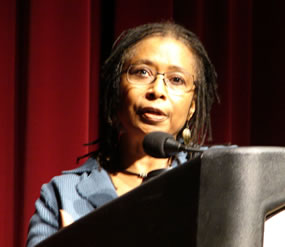
De Amerikaanse schrijfster en feministe Alice Malsenior Walker werd geboren op 9 februari 1944 in Eatonton, Georgia. Zie ook mijn blog van 9 februari 2008 en ook mijn blog van 9 februari 2009.


Uit: We are the Ones We Have Been Waiting For


„It is the worst of times. It is the best of times. Try as I might I cannot find a more appropriate opening for this volume: it helps tremendously that these words have been spoken before and, thanks to Charles Dickens, written at the beginning of A Tale of Two Cities. Perhaps they have been spoken, written, thought, an endless number of times throughout human history. It is the worst of times because it feels as though the very Earth is being stolen from us, by us: the land and air poisoned, the water polluted, the animals disappeared, humans degraded and misguided. War is everywhere. It is the best of times because we have entered a period, if we can bring ourselves to pay attention, of great clarity as to cause and effect. A blessing when we consider how much suffering human beings have endured, in previous millennia, without a clue to its cause. Gods and Goddesses were no doubt created to fill this gap. Because we can now see into every crevice of the globe and because we are free to explore previously unexplored crevices in our own hearts and minds, it is inevitable that everything we have needed to comprehend in order to survive, everything we have needed to understand in the most basic of ways, will be illuminated now. We have only to open our eyes, and awaken to our predicament. We see that we are, alas, a huge part of our problem. However: We live in a time of global enlightenment. This alone should make us shout for joy.”


Walker

Alice Walker (Eatonton, 9 februari 1944)


De Franse schrijfster Alina Reyes (pseudoniem van Aline Patricia Nardone) werd geboren op 9 februari 1956 in Bruges. Zie ook mijn blog van 9 februari 2008 en ook mijn blog van 9 februari 2009.


Uit: Le carnet de Rrose


“Je préfère de beaucoup les hommes qui ne sont pas persuadés de leur excellence, ou qui ne s’imaginent pas en savoir assez. Je les aime souples d’esprit, prêts à communiquer leurs goûts, leurs désirs, leur expérience, mais aussi à accepter mes propres envies et fantaisies. Sans se sentir humiliés par certains gestes ou certaines demandes qui les mettent, le temps d’un round parmi d’autres, dans une situation plus féminine que virile. Je les aime capables d’autorité mais aussi d’abandon. Je les aime, je les aime profondément tels qu’ils sont venus au monde, dans leur brutale innocence.”

(…)


“Il y en avait un qui recelait de drôles de fantasmes. Jouer au viol, de l’une par l’un ou de l’un par l’une. La femme en lui croyait que la femme cherchait l’envahissement par le viol. La femme en moi veut l’envahissement par l’amour, je le lui ai montré et fait, il a compris.”


Reyes

Alina Reyes (Bruges, 9 februari 1956)


De Japanse schrijver Natsume Sōseki werd g geboren als Natsume Kinnosuke op 9 februari 1867 in Edo. Zie ook mijn blog van 9 februari 2009


Uit: Kokoro (Vertaald door Edwin McClellan)


„I ALWAYS called him “Sensei.” I shall therefore refer to him simply as “Sensei,” and not by his real name. It is not because I consider it more discreet, but it is because I find it more natural that I do so. Whenever the memory of him comes back to me now, I find that I think of him as “Sensei” still. And with pen in hand, I cannot bring myself to write of him in any other way.

It was at Kamakura, during the summer holidays, that I first met Sensei. I was then a very young student. I went there at the insistence of a friend of mine, who had gone to Kamakura to swim. We were not together for long. It had taken me a few days to get together enough money to cover the necessary expenses, and it was only three days after my arrival that my friend received a telegram from home demanding his return. His mother, the telegram explained, was ill. My friend, however, did not believe this. For some time his parents had been trying to persuade him, much against his will, to marry a certain girl. According to our modern outlook, he was really too young to marry. Moreover, he was not in the least fond of the girl. It was in order to avoid an unpleasant situation that instead of going home, as he normally would have done, he had gone to the resort near Tokyo to spend his holidays. He showed me the telegram, and asked me what he should do. I did not know what to tell him. It was, however, clear that if his mother was truly ill, he should go home. And so he decided to leave after all. I, who had taken so much trouble to join my friend, was left alone.

There were many days left before the beginning of term, and I was free either to stay in Kamakura or to go home. I decided to stay. My friend was from a wealthy family in the Central Provinces, and had no financial worries. But being a young student, his standard of living was much the same as my own. I was therefore not obliged, when I found myself alone, to change my lodgings.“

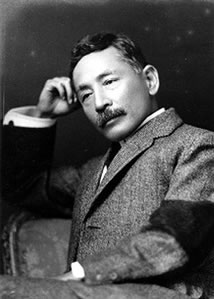
Natsume_Soseki_photo

Natsume Sōseki (9 februari 1867 – 9 december 1916)


De Nederlandse dichter en schrijver Herman Pieter de Boer werd geboren op 9 februari 1928 in Rotterdam. Zie ook mijn blog van 9 februari 2007 en ook mijn blog van 9 februari 2008 en ook mijn blog van 9 februari 2009.


Uit: De onvergetelijkheden van Hillegersberg


Ergens in de herfst van 1934 stak er een geweldige storm op. Het water in de Hoyledesingel tuimelde over zijn eigen golven, de jonge oeverboompjes bogen angstig. De wind ranselde een wanhopig flappende kartonnen doos over straat, een houten hekje sloeg radeloos open en dicht, ginds kletterde een ruit stuk. De muts was me van het hoofd gerukt, de stormwind joeg en jankte. Ik vluchtte het portiek in van de winkel tegenover de kerk. Daar bleef ik staan, rillend, met mijn armen om mezelf geslagen, bang ventje van zes…
…De slagersjongen kwam naar beneden uit de Kerkstraat, de wind pakte de fietsmand en daar zeilde hij naar links tegen het kerkehek, een grote klap, alles ondersteboven….
…Ik beet op mijn lip, keek weer schuw naar de straat, naar de Hillegondakerk, en toen gebeurde het wonder. Met de hand aan haar hoed, voorovergebogen, kwam een dame de hoek om. Was zij het werkelijk?…
…Ik had een wollen bivakmuts gekregen. alleen mijn neus, ogen en mond waren bloot, en als ik niet hoefde te praten, trok ik hem op tot over mijn neus, want het was erg koud. Ik stond op de hoek van de Berglustlaan en keek naar een grote kraai die zwart afstak tegen de besneeuwde boom waar hij in zat…
…Gelukkig ebde de onrust weer weg. Een neef van Ma was aan de Hoyledesingel komen wonen met zijn vrouw en kinderen. Ma moest altijd lachen om de lange oom Rients. Die lui hadden in Indië gewoond, langs de trapmuur kronkelde een slangevel omhoog, hier hingen een paar krissen, daar wajangpoppen, en oom Rients had verhalen uit de Oost, hij deed Javanen na met rollende r’s en rollende ogen. Op vrijdagavond kwamen ze vaak bridgen. Ma vond het nu weer gezellig in Hillegersberg. Pa opgelucht! De kinderen blij! Want al was het huis niet groot, de omgeving was geweldig. Als er geen geruchten waren over de Ziekte van Weil, kon je lekker naar openluchtzwembad ’t Zwarte Plasje…


Herman-pieter-de-boer

Herman Pieter de Boer (Rotterdam, 9 februari 1928)


De Vlaamse schrijver Maurits Sabbe werd op 9 februari 1873 te Brugge geboren. Zie ook mijn blog van 9 februari 2007 en ook mijn blog van 9 februari 2009.


Uit: Brugsche Liederen over den Veldtocht van Frederik Hendrik in Vlaanderen (1631)


„In 1631 ondernam Frederik Hendrik in Vlaanderen een veldtocht, die op een totale mislukking uitliep.

Het doel was Duinkerken te overmeesteren. Zooals wij het reeds in een vorig hoofdstuk schreven, maakte deze stad de zee onveilig voor den Hollandschen handel en veroorzaakte aan de Staten-Generaal groote onkosten, door hen te verplichten de koopvaardijschepen te laten convoyeeren.

De prins liet eenige troepen liggen te Wezel en bij de Schencke-schans om de Hollandsche grenzen te verzekeren, en met het gros van zijn leger trok hij naar Vlaanderen.

Hij scheepte in met 250 vendelen voetvolks, 70 cornetten ruiters en 50 stuks geschut; landde te Watervliet en rukte op naar Brugge, waar hij een viertal dagen voor de wallen bleef liggen.

Daar vernam hij echter, dat het leger van den Spaanschen koning op hem afkwam, ten getale van 17.000 man voetvolk, 5000 ruiters en 43 stuks geschut. De prins vond het geraadzaam die aanzienlijke macht niet af te wachten en vertrok, weer inschepende om zich m veiligheid te gaan leggen te Druynen bij Heusden en te Oostgeest bij Bergen op Zoom.

De aftocht van het prinselijk leger wekte niet alleen veel vreugde in Vlaanderen en Brabant, maar prikkelde ook den spotlust onzer voorouders, die in deze gebeurtenis een welgekomen gelegenheid vonden om zich over den geduchten Hollandschen veldheer vroolijk te maken.“


Sabbe_Maurits

Maurits Sabbe (9 februari 1873 – 12 februari 1938)


Rahel Sanzara, Anthony Hope, Vasily Zhukovsky, Karoline Brachmann

De Duitse schrijfster, actrice en danseres Rahel Sanzara (eig. Johanna Bleschke) werd geboren op 9 februari 1894 in Jena. Zie ook mijn blog van 9 februari 2009.


Uit: Die glückliche Hand


Krankenschwester Lotte Schuhmacher aus Berlin hatte, wie sie selber sagte, ihre staatliche Prüfung nur mit Ach und Krach bestanden. Einer der examinierenden Ärzte hatte sogar ihre phlegmatischen und wie es ihm schien uninteressierten Bewegungen getadelt und verzweifelt den Kopf geschüttelt, als er sah, wie entschlußlos und beinahe bockig Lotte vor dem Patienten stand, einem allerdings ungewöhnlich großen, breiten Mann, dem sie einen »spanischen Mantel« – eine besonders komplizierte Ganzpackung – anlegen sollte. »Die armen Kranken, die da hilflos unter Ihre Finger kommen!« meinte der Doktor ziemlich grob, während der Patient, dem die kleine brünette Lotte mit dem frischen, wenn auch etwas grobzügigen Gesicht und den ein wenig vorquellenden Schwarzkirschenaugen gefiel, ungeachtet seines Fiebers und seiner Schmerzen ihr gutmütig zuraunte: »Knien Sie sich doch einfach zu mir aufs Bett!« – Dies tat Lotte, vom Blitze der Erleuchtung getroffen, denn auch sofort und brachte nun mit gänzlich unerwarteter Behendigkeit geschickt und kunstgerecht den spanischen Mantel zuwege. Da sie aus dem Lehrgang für Irren- und Nervösenpflege eine besondere Belobung für geduldigen und beruhigenden Umgang mit diesen Kranken vorzuweisen hatte, auch im Theoretischen verhältnismäßig gut abschnitt, war ihre Ausbildung – ein großes Geldopfer für ihre Eltern – also doch nicht umsonst gewesen, und anstatt als Tochter eines Maurerpoliers Dienstmädchen werden zu müssen – da Lotte es sich schrecklich dachte, etwa Büroangestellte oder Verkäuferin zu sein –, erreichte sie nach dem Wunsche der Mutter den Stand einer staatlich geprüften Krankenschwester, trug Häubchen, blaues Kleid und weiße Schürze, die kreuzgezeichnete Brosche einer Organisation.“


Sanzara

Rahel Sanzara (9 februari 1894 – 8 februari 1936)


De Britse advocaat en schrijver Sir Anthony Hope Hawkins werd geboren op 9 februari 1863 in Londen. Zie ook mijn blog van 9 februari 2009.


Uit: The prisoner of Zenda


„”I wonder when in the world you’re going to do anything, Rudolf?” said my brother’s wife.

“My dear Rose,” I answered, laying down my egg-spoon, “why in the world should I do anything? My position is a comfortable one. I have an income nearly sufficient for my wants (no one’s income is ever quite sufficient, you know), I enjoy an enviable social position: I am brother to Lord Burlesdon, and brother-in-law to that charming lady, his countess. Behold, it is enough!”

“You are nine-and-twenty,” she observed, “and you’ve done nothing but–“

“Knock about? It is true. Our family doesn’t need to do things.”

This remark of mine rather annoyed Rose, for everybody knows (and
therefore there can be no harm in referring to the fact) that, pretty and accomplished as she herself is, her family is hardly of the same

standing as the Rassendylls. Besides her attractions, she possessed a large fortune, and my brother Robert was wise enough not to mind about her ancestry. Ancestry is, in fact, a matter concerning which the next observation of Rose’s has some truth.

“Good families are generally worse than any others,” she said.

Upon this I stroked my hair: I knew quite well what she meant.

“I’m so glad Robert’s is black!” she cried.

At this moment Robert (who rises at seven and works before breakfast) came in. He glanced at his wife: her cheek was slightly flushed; he patted it caressingly.“


Anthony_HopeHwkns

Anthony Hope  (9 februari 1863 – 8 juli 1933)


De Russische dichter en vertaler Vasily Andreyevich Zhukovsky werd geboren op 9 februari (29 januari) 1783 inMishenskoe bij Tula. Zie ook alle tags voor Vasily Zhukovsky op dit blog.


The Bard 


My friends, can you descry that mound of earth

Above clear waters in the shade of trees?

You can just hear the babbling spring against the bank;

You can just feel a breeze that’s wafting in the leaves;

A wreath and lyre hang upon the boughs…

Alas, my friends! This mound’s a grave;

Here earth conceals the ashes of a bard;

Poor bard!


A gentle soul, a simple heart

He was a sojourner in
the world;

He’d barely bloomed, yet lost his taste for life

He craved his end with yearning and excitement;

And early on he met his end,

He found the grave’s desired sleep.

Your time was but a moment – a moment sad

Poor bard!


He sang with tenderness of friendship to his friend, –

His loyal friend cut down in his life’s bloom;

He sang of love – but in a doleful voice;

Alas! Of love he knew naught but its woe;

Now all has met with its demise,

Your soul partakes of peace eternal;

You slumber in your silent grave,

Poor bard!


Here, by this stream one eventide

He sang his doleful farewell song:

“O lovely world, where blossomed I in vain;

Farewell forever; with a soul deceived

For happiness I waited – but my dreams have died;

All’s perished; lyre, be still;

To your serene abode, o haste,

Poor bard!


What’s life, when charm is lacking?

To know of bliss, with all the spirit’s striving,

Only to see oneself cut off by an abyss;

Each moment to desire and yet fear desiring…

O refuge of vexatious hearts,

O grave, sure path to peace,

When will you call to your embrace

The poor bard?”


The bard’s
no more … his lyre’s silent…

All trace of him has disappeared from here;

The hills and valleys mourn;

And all is still … save zephyrs soft,

That stir the faded wreath,

And waft betimes above the grave,

A woeful lyre responds:

Poor bard! 


Zhukovsky

Vasily Zhukovsky (9 februari 1783 – 12 april 1852)
Vlnr: De dichters Aleksandr Poesjkin, Ivan Krylov, Vasily Zhukovsky en Nicolai Gnedich


De Duitse dichteres en schrijfster Karoline Louise Brachmann werd geboren op 9 februari 1777 in Rochlitz. Zie ook mijn blog van 9 februari 2009.


Kindheit und Jugend.


Als mich die dämmernden Thäler der holden Kindheit umfingen
War mein Erwachen noch still, ruhig im Schlummer mein Traum,
Du erschienst mir, o Göttin, mit deinen unendlichen Streben,
Und in der Glut des Gefühls floh mir die selige Ruh.

Aber das Schicksal gebeut; einst fliehest du, lächelnde Hebe,

Und die verlohrene Ruh kehrt mir doch nimmer zurück.


Brachmann

Karoline Brachmann  (9 februari 1777 – 17 september 1822)


Neal Cassady, Elizabeth Bishop, Robin Block, Eva Strittmatter, Gert Jonke

De Amerikaanse schrijver Neal Cassady werd geboren op 8 februari 1926 in Salt Lake City. Zie ook mijn blog van 8 februari 2007 en ook mijn blog van 8 februari 2008 en ook mijn blog van 8 februari 2009.


Uit: Grace Beats Karma: Letters from Prison. 1958-1960 (Neal Cassady)


„10/31/1958

Dearest daft dove deliberately doubling deft devotion despite despair dripping dumbly down delicately dim decolletage deserving diametrically different dissectional dressing—drenched daily in daddy’s deepest dedication—to you, Lady of the Gardenias, Carolyn, wife dearest; Just as little as did the Druids in Gaul 22 Centuries ago suspect their annual late autumn blood & harvest gleaning sacrifice to Shaiman, God of the Dead, would eventually degenerate into tonites small fry trick or treating hollow culmination, did, I’ll wager, you guess when writing it that “Hallelujah, the Pope is dead” would nigh make you a byword here synonymous to the opposite of your true character by exciting, without excepting P. Donovan’s two negro friends, every convict who saw it to comment in admiration as misunderstood as it was genuine, “Jeez, what a tough (means great) broad”, “Man,what a swingin’ chick ya got”, & the topper, from an older felon absolutely bugeyed in disbelief, “Where’s she doin’ time?” Anyway, I, not having fully forgotten Cayce, knew how you meant that already almost classic final line—say, just this second, as I wrote “classic”, a faint recollection struck of some famous Prince or King in history dashing into the castle’s great hall proclaiming “Hallelujah, the Pope is dead”; no doubt the “cons”, you & I were all standing there thunderstricken—& was altogether proud of your performance, so amusingly mistaken by them, still it is true, as my initial letter this month stated, that I did feel a foolish twinge at Pius XII’s passing, somewhat, perhaps, because of two detailed biographies I read, but mostly, due, I think, to heightened sensitivity toward anything familiar that jailing always produces in one, because my priest Godfather had talked with him 3 times rather recently & this closeness by proxy had somehow helped impress on me his true saintliness—of course, at 82 practically anyone can assume that aura, note Churchill, now 84, or Elinor, 76.“


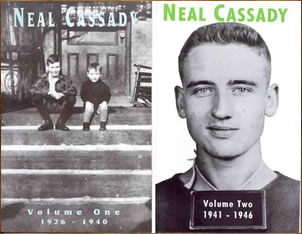
nealcovers

Neal Cassady (8 februari 1926 – 4 februari 1968)


De Amerikaanse dichteres en schrijfster Elizabeth Bishop werd geboren op 8 februari 1911 in Worcester, Massachusetts. Zie ook mijn blog van 8 februari 2008 en ook mijn blog van 8 februari 2009.


A Miracle for Breakfast 


At six o’clock we were waiting for coffee,

waiting for coffee and the charitable crumb

that was going to be served from a certain balcony

–like kings of old, or like a miracle.

It was still dark. One foot of the sun

steadied itself on a long ripple in the river.


The first ferry of the day had just crossed the river.

It was so cold we hoped that the coffee

would be very hot, seeing that the sun

was not going to warm us; and that the crumb

would be a loaf each, buttered, by a miracle.

At seven a man stepped out on the balcony.


He stood for a minute alone on the balcony

looking over our heads toward the river.

A servant handed him the makings of a miracle,

consisting of one lone cup of coffee

and one roll, which he proceeded to crumb,

his head, so to speak, in the clouds–along with the sun.


Was the man crazy? What under the sun

was he trying to do, up there on his balcony!

Each man received one rather hard crumb,

which some flicked scornfully into the river,

and, in a cup, one drop of the coffee.

Some of us stood around, waiting for the miracle.


I can tell what I saw next; it was not a miracle.

A beautiful villa stood in the sun

and from its doors came the smell of hot coffee.

In front, a baroque white plaster balcony

added by birds, who nest along the river,

–I saw it with one eye close to the crumb–


and galleries and marble chambers. My crumb

my mansion, made for me by a miracle,

through ages, by insects, birds, and the river

working the stone. Every day, in the sun,

at breakfast time I sit on my balcony

with my feet up, and drink gallons of coffee.


We licked up the crumb and swallowed the coffee.

A window across the river caught the sun

as if the miracle were working, on the wrong balcony.


bishop583

Elizabeth Bishop (8 februari 1911 – 6 oktober 1979)


De Nederlandse dichter, songwriter en musicus Robin Block werd geboren op 8 februari 1980 in Heemskerk. Zie ook mijn blog van 8 februari 2007 en mijn blog van 30 maart 2006 en ook mijn blog van 8 februari 2008 en ook mijn blog van 8 februari 2009.


One Night Ouija

laat dat glas staan, tel de ledematen


wat blijft…dat wat het zwijgen niet kapot krijgt…denk aan het geweld waarmee de grond moest wijken…scherven van ont-innering…adem die verstomde in een grotere storm…

droomwaker…fiebertraumatisch… storyboard in polaroid…letter die haar naam verbasterde…stotterende mond was ik, geboren uit de handgebaren…

haar lichaam vroeg om warmte…hoe ze het ook weigerde, wijkend voor de vingertoppen…wie kan die naaktheid wel verdragen…aanraking maakt zwak en wat breekbaar is verweert zich slecht…

stampte wildwiekend de lakens uiteen
de zoektocht van verbaasde ogen
boven alle stemmen uit
heb ik haar opgetild
de hals gekust
een lied lang vastgehouden

ze zong voorzichtig in de hoorn…zweerde dat ik niet meer luisterde…bedekte een orgaan waarvan ze het bestaan herinnerde…

ik lag schokkend hoofd in randslaap…trilling van de halfgeleiders…
leden strak ineengeregen…

vanmorgen werd ik wakker met haar adem in mijn oor en
spelde zuiver op de tast haar naam uit

RobinBlock
Robin Block (Heemskerk, 8 februari 1980)


De Duitse schrijfster en dichteres Eva Strittmatter werd als Eva Braun geboren op 8 februari 1930 in Neuruppin.  Zie ook mijn blog van 8 februari 2007 en ook mijn blog van 8 februari 2008 en ook mijn blog van 8 februari 2009.

Beichte


Immer die gleiche Rose.

Immer das gleiche Gesicht.

Unter wechselndem Monde.

Unter wechselndem Licht.

Immer die gleiche Tollheit.

Immer der gleiche Traum.

Immer noch keine Weisheit.

Immer noch nicht: wie ein Baum.


Freiheit


Ich kann dich lieben oder hassen-

ganz wie du willst. (Kann dich auch lassen.)

Und du kannst schweigen oder sprechen.

Ganz wie du willst. Daran zerbrechen

werd ich nicht mehr. (Ich kann auch gehn.)

Ganz wie ich will, wird es geschehen.


strittmatter

Eva Strittmatter (Neuruppin, 8 februari 1930)


De Oostenrijkse schrijver Gert Jonke werd geboren op 8 februari 1946 in Klagenfurt. Zie ook mijn blog van 8 februari 2007  en ook mijn blog van 8 februari 2008 en ook mijn blog van 8 februari 2009.


Uit: Der ferne Klang


„Vorhin haben auf einmal sämtliche Schornsteine des Hauses dort weiter vorne eine ergreifende M
usik zu blasen begonnen, und zwar zunächst in vereinzelt ganz tiefen aus den Rauchfängen hervorgekeucht ungeordnet aus allen Kaminen durcheinander hervorbrechend heftig auch spuckend manchmal durchaus ebenso leicht rülpsähnlich kräftig hinweggepreßten Gebläsestößen, waren aber erstaunlich bald schon nach und nach zum Anfang einer ganz diszipliniert dunkel herbeiposaunten Fanfare versammelt, durchaus auch trauermarschmäßig fehlerfrei fast einstimmig geordnet gewesen, ganz so, als hätten sich sämtliche Baßtubaspieler und Kontrafagottisten unserer Stadt und der sie umliegenden Landstriche im Dachstuhl dieses einen Gebäudes verborgen, vielleicht zu einer geheim zusammengekommenen ausnehmend mysteriösen Kontrabaßbläserversammlung, deren vorbildlich gemeinsames Musizieren durch die Schornsteinrohre aus dem Dachboden aus allen Schloten noch sehr lange in die Ebene hinausgeblasen worden ist.
Als du dann dem Gebäude immer näher gekommen warst, ist es dir aber nach und nach immer deutlicher als ein in dem vom Sommer geschmolzen zerflossenen Horizont herumschwimmendes Ozeanschiff erschienen, dessen Nebelhörner dich aus so weiter Ferne schon deine nun endliche Rückkehr zu dir herüber entgegen freundlich willkommenheißend herbeigrüßten.“


Jonke

Gert Jonke (8 februari 1946 – 4 januari 2009)


Zie voor nog meer schrijvers van de 8e februari ook mijn vorige blog van vandaag.


John Grisham, Henry Roth, Jules Verne, Kate Chopin, Gabriele Reuter

De Amerikaanse schrijver John Grisham werd geboren in Jonesboro, Arkansas, op 8 februari 1955. Zie ook mijn blog van 8 februari 2007 en ook mijn blog van 8 februari 2008 en ook mijn blog van 8 februari 2009.


Uit:  The Runaway Jury


„The face of Nicholas Easter was slightly hidden by a display rack filled with slim cordless phones, and he was looking not directly at the hidden camera but somewhere off to the left, perhaps at a customer, or perhaps at a counter where a group of kids hovered over the latest electronic games from Asia. Though taken from a distance of forty yards by a man dodging rather heavy mall foot traffic, the photo was clear and revealed a nice face, clean-shaven with strong features and boyish good looks. Easter was twenty-seven, they knew that for a fact. No eyeglasses. No nose ring or weird haircut. Nothing to indicate he was one of the usual computer nerds who worked in the store at five bucks an hour. His questionnaire said he’d been there for four months, said also that he was a part-time student, though no record of enrollment had been found at any college within three hundred miles. He was lying about this, they were certain.

He had to be lying. Their intelligence was too good. If the kid was a student, they’d know where, for how long, what field of study, how good were the grades, or how bad. They’d know. He was a clerk in a Computer Hut in a mall. Nothing more or less. Maybe he planned to enroll somewhere. Maybe he’d dropped out but still liked the notion of referring to himself as a part-time student. Maybe it made him feel better, gave him a sense of purpose, sounded good.“


John_Grisham

John Grisham (Jonesboro, 8 februari 1955)


De Amerikaanse schrijver Henry Roth werd geboren op 8 februari 1906 in Galicië in het toenmalige Oostenrijk-Hongarije. Zie ook mijn blog van 8 februari 2007 en ook mijn blog van 8 februari 2009.

Uit: Nenn es Schlaf (Vertaald door Eike Schönfeldt)


“Die Häuser, die Fahrbahnen, Gespanne, die Menschen auf der Straße besaßen nicht mehr ihre Einzigartigkeit und Gewißheit wie zuvor. Festumrissene Formen verwirrten ihn jetzt, entzogen sich ihm durch eine verschwommene Verschiebung der Konturen. Nicht einmal den Rhythmus und das Klappern der Hufe vermochte er richtig zu erkennen; etwas Fremdes und Böses hatte sich mit all den vertrauten Geräuschen und Erscheinungen der Welt verbunden. Die Sonne, die ihn zuvor noch so geblendet hatte, war nun auf rätselhafte Weise trübe,
wie von einem unsichtbaren Film gefiltert, Stein war etwas von seiner Gewißheit genommen, Eisen etwas von der unbeugsamen Präzision. Flächen waren ein wenig hohl geworden, waren eingesackt, Ränder verwischt. Die festen Züge der Maske der Welt überschnitten einander, hatten ihre Anordnung so heimlich und unmerklich verändert wie Uhrzeiger, so plötzlich wie ein Augenzwinkern.”

(…)

“Auf der Straße, zu tief unter dem Fenster, als daß man sie hätte sehen können, hatte sich mit dem Morgen die tumulthafte Flut erhoben, und ein wildes Durcheinander von Geräuschen und Stimmen ergoß sich über den Sims wie über einen Deich. Die Luft war außergewöhnlich kühl. Zwischen den aufgezogenen Vorhängen eines offenen Fensters auf der anderen Straßenseite kämmte eine Frau einem kleinem Mädchen mit einem viereckigen Kamm die Haare. Letzteres zuckte jedesmal, wenn der Kamm niederging, zusammen; sein dünnes Greinen tanzte auf den verschlungenen Wellen des brausenden Getöses der Straße.”


Henry_Roth

Henry Roth (8 februari 1906 – 13 oktober 1995)


De Franse schrijver Jules Verne werd geboren in Nantes op 8 februari 1828. Zie ook mijn blog van 8 februari 2007 en ook mijn blog van 8 februari 2009.


Uit: De reis om de wereld in tachtig dagen (Vertaald door Gerard Keller)


In het jaar 1872 werd het huis no. 7 in Saville Row, Burlington Gardens, waarin Sheridan in 1814 overleed, bewoond door Phileas Fogg esq., een der zonderlingste en meest bekende leden van de Reform-club te Londen, al deed hij ook al wat in zijn vermogen was om de aandacht niet op zich te vestigen.

Een der welsprekendste redenaars, waarop Engeland zich verheffen mag, had dus tot opvolger Phileas Fogg, een raadselachtig persoon, van wien men niets wist, dan dat hij een hoogst wellevend man was en een der schoonste gentlemen uit de aanzienlijkste kringen.

Men zeide dat hij op Byron geleek–wat zijn hoofd aangaat, want zijne voeten waren onberispelijk–maar een Byron met baard en knevel, een kalme Byron die duizend jaar had kunnen leven zonder oud te worden.

Ofschoon zonder eenigen twijfel Engelschman van geboorte, was hij misschien geen Londener. Men had hem nooit aan de beurs of aan de bank gezien, noch in eenig kantoor der City. Noch de bassins, noch de dokken te Londen hadden ooit eenig schip bevat, dat Phileas Fogg tot reeder had. Hij was lid van geen enkele administratieve commissie. Zijn naam was nog nooit genoemd in een gezelschap van advocaten, noch in Temple-bar, noch in Lincolns-inn. Nooit had hij gepleit voor de Court of Chancery, of voor Queens-bench, of voor de Rekenkamer of voor het kerkelijk Hooggerechtshof. Hij was noch fabrikant, noch grossier, noch winkelier, noch landbouwer. Hij was geen lid van het Koninklijk Britsch Instituut, noch van het Londensch Instituut, noch van de Maatschappij van Werklieden, noch van het Russels Instituut, noch van het Westersch Genootschap van Letterkunde, noch van de Vereeniging voor Rechtsgeleerdheid, noch van het Vereenigd Genootschap van Kunsten en Wetenschappen, dat onder rechtstreeksche bescherming staat der Koningin. Hij behoorde ook tot geen dier tallooze andere vereenigingen en genootschappen, waaraan Engelands hoofdstad zoo rijk is: van de maatschappij Armonica af tot het Entomologisch Genootschap, dat voornamelijk werd opgericht om schadelijke insecten uit te roeien.“

jules_verne_musee

Jules Verne (8 februari 1828 – 24 maart 1905)


De Amerikaanse schrijfster Kate Chopin (pseudoniem van Katherine O’Flaherty) werd geboren op 8 februari 1851 in St. Louis. Zie ook mijn blog van 8 februari 2007en ook mijn blog van 8 februari 2009.


Uit: The Story of an Hour


Knowing that Mrs. Mallard was afflicted with a heart trouble, great care was taken to break to her as gently as possible the news of her husband’s death.

It was her sister Josephine who told her, in broken sentences; veiled hints that revealed in half concealing. Her husband’s friend Richards was there, too, near her. It was he who had been in the newspaper office when intelligence of the railroad disaster was received, with Brently Mallard’s name leading the list of “killed.” He had only taken the time to assure himself of its truth by a second telegram, and had hastened to forestall any less careful, less tender friend in bearing the sad message.

She did not hear the story as many women have heard the same, with a paralyzed inability to accept its significance. She wept at once, with sudden, wild abandonment, in her sister’s arms. When the storm of grief had spent itself she went away to her room alone. She would have no one follow her.

There stood, facing the open window, a comfortable, roomy armchair. Into this she sank, pressed down by a physical exhaustion that haunted her body and seemed to reach into her soul.

She could see in the open square before her house the tops of trees that were all aquiver with the new spring life. The delicious breath of rain was in the air. In the street below a peddler was crying his wares. The notes of a distant song which some one was singing reached her faintly, and countless sparrows were twittering in the eaves.

There were patches of blue sky showing here and there through the clouds that had met and piled one above the other in the west facing her window.

She sat with her head thrown back upon the cushion of the chair, quite motionless, except when a sob came up into her throat and shook her, as a child who has cried itself to sleep continues to sob in its dreams.“


Kate_Chopin

Kate Chopin (8 februari 1851 – 22 augustus 1904)


De Duitse schrijfster Gabriele Reuter werd geboren op 8 februari 1859 in Alexandrië. Zie ook alle tags voor Gabriele Reuter op dit blog.


Uit: Ins neue Land


Die Schwester stand mit dem Arzt auf dem kleinen Flur vor dem Parterresaal der Verwundetenbaracke.

»Wie geht’s unserm Finsteren?« fragte der junge Doktor im weißen Operationsmantel, mit der unpersönlichen Heiterkeit, die Ärzten und Pflegerinnen im Verkehr untereinander und mit den Patienten zur Gewohnheit geworden ist.

»Wieder etwas Temperatur, der geistige Zustand derselbe, schwere Depression. Antwortet kaum auf eine teilnehmende Frage. Reden Sie doch mal mit ihm, Herr Doktor …«

»Ja, das will ich, Schwester … Sonderbar, gerade den Gebildeten unter den Verwundeten geht es oft so besonders hart an, 6 sich mit ihrem Schicksal abzufinden. Man sollte meinen …«

»Sie haben eben die größere Denkfähigkeit, um sich alle Schwierigkeiten der gehemmten Zukunft deutlich vorzustellen,« antwortete die Schwester. »Haben Sie mal auf die ausgearbeitete Stirn unseres Finsteren geachtet?«

»Was Ihnen noch alles auffällt bei Ihrer Arbeitslast, Schwester … Na, werde mir unsern Mann mal vornehmen.«

Der junge Arzt öffnete die Glastür. Aus langen Reihen weißer Eisenbetten grüßten ihn die Augen von bärtigen und unbärtigen, jungen und alten Männerköpfen. Feine wie stumpfe, törichte wie kluge Gesichter wendeten sich ihm erwartungsvoll zu. Sie alle, diese Krieger, welche ihr Leben rücksichtslos dem Tode entgegengeworfen hatten, waren nun in qualvollen Tagen und schlaflosen Nächten so mürbe geworden, daß sie von einem blonden 7 fröhlich blickenden jungen Manne im weißen Kittel sehnsüchtig irgendeine Linderung ihrer Leiden, irgendeinen Trost für unerträgliche Pein des Körpers oder der Seele erwarteten.“


Reuter

Gabriele Reuter (8 februari 1859 – 18 november 1941)


Charles Dickens, Emma McLaughlin, Christine Angot, Peter Carey, A. den Doolaard, Gay Talese

De Engelse schrijver Charles Dickens werd geboren op 7 februari 1812 in Landport. Dat is vandaag precies 200 jaar geleden. Zie ook alle tags voor Charles Dickens op dit blog.

Uit: David Copperfield

Whether I shall turn out to be the hero of my own life, or whether that station will be held by anybody else, these pages must show. To begin my life with the beginning of my life, I record that I was born (as I have been informed and believe) on a Friday, at twelve o’clock at night. It was remarked that the clock began to strike, and I began to cry, simultaneously.
In consideration of the day and hour of my birth, it was declared by the nurse, and by some sage women in the neighbourhood who had taken a lively interest in me several months before there was any possibility of our becoming personally acquainted, first, that I was destined to be unlucky in life; and secondly, that I was privileged to see ghosts and spirits; both these gifts inevitably attaching, as they believed, to all unlucky infants of either gender, born towards the small hours on a Friday night.
I need say nothing here, on the first head, because nothing can show better than my history whether that prediction was verified or falsified by the result. On the second branch of the question, I will only remark, that unless I ran through that part of my inheritance while I was still a baby, I have not come into it yet. But I do not at all complain of having been kept out of this property; and if anybody else should be in the present enjoyment of it, he is heartily welcome to keep it.
I was born with a caul, which was advertised for sale, in the newspapers, at the low price of fifteen guineas. Whether sea-going people were short of money about that time, or were short of faith and preferred cork jackets, I don’t know; all I know is, that there was but one solitary bidding, and that was from an attorney connected with the bill-broking business, who offered two pounds in cash, and the balance in sherry, but declined to be guaranteed from drowning on any higher bargain. Consequently the advertisement was withdrawn at a dead loss – for as to sherry, my poor dear mother’s own sherry was in the market then – and ten years afterwards, the caul was put up in a raffle down in our part of the country, to fifty members at half-a-crown a head, the winner to spend five shillings.”

dickens

Charles Dickens (7 februari 1812 – 9 juni 1870)


De Amerikaanse schrijfster Emma Lanier McLaughlin werd geboren op 7 februari 1974 in  Elmira, New York. Zie ook mijn blog van 7 februari 2009.


Uit: Nanny Returns


“Fuck,” I hear from the front stoop. I stare at the door’s peeling paint with an intensity rivaling Grace’s. “Look, just open up,” he speaks in a plaintive slur. “I left my wallet in the cab…and I just…I heard you…I know you’re — fuck.” I hear a thump and then something sliding heavily down the other side of the door.

Grace drops her head to sniff the jamb. I take a tentative step and ever so slightly lift the curtain. The streetlamp illuminates splayed kh
aki pants ending in shiny loafers. I make out slender fingers drifting open, releasing their grip on a black iPhone. My well-attired assailant is now slipping into unconsciousness? Death?

“Hey.” My voice surprises me and sets Grace barking. “Stop.” I put my hands around her muzzle to listen…Nothing. “Hey!” I slap the door.

“Yeah?” he coughs. “You’re home.”

“Who are you looking for?” I step around where Grace sits, ears squarely perked.

“Um…” I hear a scuffle; he’s attempting to stand up. “I’m looking for a…Nanny?”

My throat goes dry. I peer back out through the frayed lace covering the pane between us. “What?”

“Yeah, Nanny. Are you — ”

“Stand in front of the glass. On your right.”…Nothing. “Hey!”

“Yeah.”

“Your other right.”

Suddenly my view of the stoop is filled with a swerving face — a man — boy — somewhere in between. Beneath the mussed blond hair, atop the faintly freckled nose are two bloodshot blue eyes. They look out at me from the striking bone structure that unmistakably conjures his mother. I push my forehead into the cold glass, feeling at once a hundred years old and twenty-one. “Grayer?”


EmmaMcLaughlinNicola Kraus

Emma McLaughlin (Elmira, 7 februari 1974)
Emma McLaughlin (r) en medeschrijfster Nicola Kraus (l)


De Franse schrijfster Christine Angot werd geboren op 7 februari 1959 in Châteauroux. Zie ook mijn blog van 7 februari 2009.


Uit: Rendez-vous


Je connaissais Eric depuis un mois. Je l’avais déjà croisé, dans des bars de théâtre à la fin des spectacles, mais nous n’avions pas parlé, presque pas, rien. Je l’avais vu jouer deux ou trois fois. C’était un acteur génial. Je le connaissais depuis un mois, mais j’avais commencé à entendre parler de lui six ans plus tôt. A l’époque, son nom ne circulait pas comme maintenant, je ne le connaissais pas. Mais sur cinq ou six ans, des gens différents, dans des villes différentes, m’avaient rapporté avec des anecdotes toutes différentes : ah, tu sais il y a un acteur qui t’adore : Eric Estenoza. Ça me faisait plaisir, mais je n’y prêtais pas attention. Ça m’arrivait tout de même de temps en temps d’avoir des retours agréables, ce n’était pas le seul. Surtout avec des acteurs. Souvent les acteurs aimaient mes livres. La particularité était que ce même nom revenait tout le temps, par des sources différentes, et sur une période de temps longue. Et avec intensité. Avec insistance. Comme un encerclement. Et puis toujours ce mot : il y a un acteur qui t’adore. Toujours la même phrase. Avec l’air étonné de la personne qui me le racontait. La première fois c’était en 99, puis six mois plus tard, et puis ça s’était égrené comme ça. Des gens me rapportaient qu’il m’adorait, avec ce mot-là, le message me revenait régulièrement aux oreilles, et ce qui était surtout étrange, par des sources vraiment différentes, sur plusieurs années. Et ce qui était encore plus étrange c’est qu’il m’avait à peine adressé la parole le jour où il m’avait vue, une ou deux fois au cours de ces six années quand j’avais eu l’occasion de le croiser. En 99, je ne l’avais pas encore vu jouer. Et puis je l’avais vu quelques mois plus tard dans une pièce de Sarah Kane. J’étais avec un ami, acteur aussi, qui nous pr
sentait, je n’avais pas du tout l’impression de rencontrer quelqu’un qui m’adorait. Son comportement était tout à fait ordinaire avec moi, tout à fait banal, d’ailleurs je ne m’en souvenais même pas. Lui se souvenait bien de ce qu’il m’avait dit mais moi j’avais oublié.“


christine-angot

Christine Angot (Châteauroux, 7 februari 1959)


De Australische schrijver Peter Carey werd geboren op 7 februari 1943 in Bacchus Marsh (Victoria). Zie ook mijn blog van 7 februari 2007 en ook mijn blog van 7 februari 2008 en ook mijn blog van 7 februari 2009.


Uit: My Life as a Fake


I have known John Slater all my life. Perhaps you remember the public brawl with Dylan Thomas, or even have a copy of his famous book of ‘dirty’ poems. If it’s an American edition you’ll discover, on the inside flap, a photograph of the handsome, fair-haired author in cricket whites. Dewsong was published in 1930. Slater was twenty at the time, very nearly a prodigy.

That same year I was born Sarah Elizabeth Jane to a beautiful, impatient Australian mother and a no less handsome but rather posh English father, Lord William Wode-Douglass, generally known as Boofy.

Slater’s own class background was rather ambiguous, though my mother, a dreadful snob, had a tin ear, and I know she thought Slater very grand and therefore permitted him excesses she would not have tolerated from the Chester grammar-school boy he really was.

It was Slater who carved my father’s thirtieth birthday cake with his bare hands, who rode a horse into the kitchen, who brought Unity Mitford to dinner during the period she was stealing stationery from Buckingham Palace and carrying that nasty little ferret around in her handbag.

I cannot say that I understood his role in my parents’ marriage, and only when my mother killed herself — in a spectacularly awful style — did I suspect anything was amiss. In the last minutes of her life I saw John Slater put his arms around her and finally I understood, or thought I did.

From that moment I hated everything about him: his self-absorption, his intense angry good looks, but most of all those electric blue eyes which inhabited my imagination as the incarnation of deceit.

When my mother died, poorBoofy fell apart completely. He drank and wept and roared, and after falling down the stairs the second time he packed me off to St Mary’s Wantage in Berkshire, which I did not like at all.“


peter_carey

Peter Carey (Bacchus Marsh, 7 februari 1943)


De Nederlandse dichter en schrijver A. den Doolaard werd geboren op 7 februari 1901 in Hoenderloo. Zie ook alle tags voor A. den Doolaard op dit blog.


Uit: D.H. Lawrence. De gepijnigde polygraaf


“Zijn tweede, en eerste goede, roman: ‘Sons and Lovers’ was normaal wat methode betrof: uit karakteren milieu-beschrijving bleek een donker en krachtig realisme, toegespitst op het sexueele. Hij was een kind dat opgroeide in de mijnwerkerswereld, en de deugden en gebreken van een dergelijke afstamming blijven in zijn werk zuiver behouden: hij is oorspronkelijk en fel, schamper en trotsch, zwaar van somberheid en smartelijk bewust van zijn onbedwingbare scheppingsdrift. Deze leefdrift en voortplantingsdrang is hem door haar heftigheid een ziekte, waarvan hij zich tevergeefs zoekt te bevrijden. Dit is geen warmte meer, maar schroeien en zengen, dit is geen liefde meer, maar een gevecht. Afstand kent hij niet; stelling nemen doet hij niet; dag en nacht strijdt hij met de werkelijkheid op den korten afstand, lijf aan lijf; een oneindig aantal malen raakt hij verward en moet zich uit die ‘clinch’ gehavend loswringen. Door het gewelddadig zoeken naar het hart van de werkelijkheid werden zijn handen donker van geronnen bloed en zijn stem schamper en uitdagend. Hij wilde de werkelijkheid overmeesteren van vlakbij, met doorborenden blik en harde knoken. Elk van zijn liefkoozingen wordt door zijn overmatige heftigheid een kneuzing en met elke wonde die hij toebrengt, wondt hij zichzelf.

De bekentenis hiervan zijn z’n verzen, laaiend en verbrokkeld als smeulende lava. Hij weet, dat zijn verzen slecht zijn, en zijn proza soms onbeholpen van heftigheid; hij zoekt en zoekt naar een synthese, een intooming, een kleinste gemeene veelvoud van zijn kunnen; en vindt het van buiten af. Via een landschap en een ras, die de weerspiegeling zijn van zijn ziel. Dat landschap is Mexico, zwavelgeel, ziedend van zonnedrift en overwoekerd door cacteeën; het ras dat hij, sombere Angelsaks, zoekt is eerst het Latijnsche, lachend uitkomend voor het phallische ‘geheim’; en later de Mexicaansche Indiaan, wiens voortplantingsdrift een stage gloed is, verborgen brandend achter glasharde oogen.”


DenDoolaard

A. den Doolaard (7 februari 1901 –  26 juni 1994)


De Amerikaanse schrijver en journalist Gay Talese werd geboren op 7 februari 1932 in Ocean City. Zie ook mijn blog van 7 februari 2008 en ook mijn blog van 7 februari 2009.


Uit: Thy Neighbor’s Wife


She was completely nude, lying on her stomach in the desert sand, her legs spread wide, her long hair flowing in the wind, her head tilted back with her eyes closed. She seemed lost in private thoughts, remote from the world, reclining on this windswept dune in California near the Mexican border, adorned by nothing but her natural beauty. She wore no jewelry, no flowers in her hair; there were no footprints in the sand, nothing dated the day or spoiled the perfection of this photograph except the moist fingers of the seventeen-year-old schoolboy who held it and looked at it with adolescent longing and lust.

The picture was in a photographic art magazine that he had just bought at a newsstand on the corner of Cerinak Road in suburban Chicago. It was an early evening in 1957, cold and windy, but Harold Rubin could feel the warmth rising within him as he studied the photograph under the streetlamp near the curb behind the stand, oblivious to the sounds of traffic and the people passing on their way home.

He flipped through the pages to look at the other nude women, seeing to what degree he could respond to them. There had been times in the past when, after buying one of these magazines hastily, because they were sold under the counter and were therefore unavailable for adequate erotic preview, he was greatly disappointed. Either the volleyball-playing nudists in Sunshine & Health, the only magazine showing pubic hair in the 1950S, were too hefty; or the smiling show girls in Modern Man were trying too hard to entice; or the models in Classic Photography were merely objects of the camera, lost inartistic shadows.“


talese

Gay Talese (Ocean City, 7 februari 1932)


Zie voor nog meer schrijvers van de 7e februari ook mijn vorige twee blogs van vandaag.


Alban Nikolai Herbst, Anna Świrszczyńska, Harry Sinclair Lewis, Patricia De Landtsheer, Paul Nizan, Heinz Czechowski

De Duitse schrijver Alban Nikolai Herbst (pseudoniem van Alexander Michael v. Ribbentrop) werd geboren op 7 februari 1955 in Refrath. Zie ook mijn blog van 7 februari 2007 en ook mijn blog van 7 februari 2008 en ook mijn blog van 7 februari 2009.


Uit: Joachim Zilts Verirrungen


„Zwar lag ich durchaus in einem Bett, sogar einem, das dem meinen auf verblüffende Weise glich; dennoch war es ein anderes, überaus fremdes. Insgesamt machte dieses Schlafzimmer einen verdächtigen Eindruck.

Ausserdem befand sich der Krater, dieses Loch in der Decke, durch das ich ganz offenbar abgestürzt war, an einer völlig anderen Stelle als das, welches mir vorhin als Einschlupf gedient hatte. Sowieso war das Ding erheblich breiter. Kein Wunder also, dass ich mich nicht hatte halten können.

Nein, ich hatte nicht, wie man so sagt, “nur” geträumt. Meine verquere Situation war real. Ich hatte mich versehentlich in eine Parallelwelt locken lassen.

Ich suchte nach einem Einschlupf, fand keinen. Auch draussen, vor dem Fenster, hatte sich nichts verändert. Die drei Buchen, die Wiese, der Jägerzaun. Die Einfahrt. Wie immer hatte Christine sie gestern abend offen stehenlassen. Drüben Schmidts, die nächste Reihe die Henkells, danach… Moment! Ich hatte die Namen unserer neuen Nachbarn vergessen.

“Irgend etwas ist!” sagte sie.

“Nichts ist”, sagte ich.

“Aber du hast das doch nicht von Nichts!”

Ich hatte einfach keine Lust zu reden. Was hätte ich Christine erzählen können? Dass wir einander fremd waren?

Ich legte mich aufs Bett zurück. Christine stellte sich in die Tür, starrte mich an.

“Also was machst du denn jetzt?!”

Ich sprang auf. Ich kramte paar Sachen zum Anziehen zusammen, zerrte die Tasche vom Schrank. Stopfte sie mit Jeans T-Shirts Socken Pullovern. Ging sogar noch mal, sicherheitshalber, auf die Toilette, Christine bis zur Tür hinter mir her.

“Was hast du vor?”

“Pinkeln. Merkst du doch.”

Ich kam wieder raus, schob Christine entschlossen zur Seite, schlüpfte in die Reeboks. Dann zog ich mir den Anorak über, stopfte noch die Taschenlampe in die Tasche, liess meine Blicke schnell über die Zimmerwand gleiten. Christine wählte am Telefon, grüsste ihre ziemlich fade Freundin Mildred, war abgelenkt. Das nutzte ich. F a n d einen Einschlupf. War wieder fort.“


AlbanNikolaiHerbst
Alban Nikolai Herbst (Refrath, 7 februari 1955)


De Poolse dichteres Anna Świrszczyńska werd geboren op 7 februari 1909 in Warszawa. Zie ook mijn blog van 7 februari 2009.


The Greatest Love 


She is sixty. She lives

the greatest love of her life.


She walks arm-in-arm with her dear one,

her hair streams in the wind.

Her dear one says:

“You have hair like pearls.”


Her children say:

“Old fool.”


Vertaald door Czeslaw Milosz and Leonard Nathan


The Ghetto: A Mother 


Cuddling in the arms her half-asphyxiated baby, howling,

she ran up the staircase of the apartment building that was set ablaze.

From the first floor to the second.

From the second to the third.

From the third to the fourth.


Until she had jumped onto the roof.

There, having choked with air, clinging to the chimney,

she looked down from where she could hear

the crackle of flames which were reaching higher and higher.


And then she became motionless and silent.

She kept silent to the end, till the moment

at which she suddenly clenched her eyelids,

stepped to the roof edge and, throwing forward her arms,

she dropped her baby down.


Two seconds earlier than she herself leapt down.


Anna-Swir
Anna Świrszczyńska (7 februari 1909 – 14 augustus 1984)


De Amerikaanse schrijver Harry Sinclair Lewis werd geboren in Sauk Centre op 7 februari 1885. Zie ook alle tags voor Harry Sinclait Lewis op dit blog.
 

Uit: Sinclair Lewis. Rebel from Main Street (Biografie door Richard Lingeman)


The move from Ironton to Sauk Centre considerably boosted the young doctor’s income. His second son, Claude, was born in 1878, and on February 7, 1885, his third and youngest son, Harry Sinclair Lewis. (Sinclair was the surname of a dentist friend.) Four years later, Dr. E.J. (as he was known to family and friends) was doing well enough to purchase for $2,800 a ten-room house at 812 Third Street, directly across the street from Harry’s birthplace. It was a generic frame house common to Midwestern small towns. In the back of the parlor and family room, the doctor consulted patients after office hours. There was also a small barn on the back alley bordering the yard. A stairway in the hall led up to the second floor, which contained a master bedroom, a guest room, the boys’ bedroom, and a maid’s garret.
Dr. E.J. made country calls four or five times a week. On fierce winter nights, with temperatures down to thirty below, bundled in fur rugs and a coonskin coat, he drove a sleigh across trackless snowy fields, taking his bearings on a distant Catholic church steeple, then delivered a baby in a bedroom or performed surgery on a kitchen table by lamplight. A county history describes him as a “typical and able family physician.” Dr. Lewis’s account books reveal a man who kept track of every bill owed him, but he eventually wrote off unpaid debts, inscribing a dry “dead beat” or “left county” beside their names.
The account books are the only autobiography he left, a meticulous ledger of money incoming and outgoing. He recorded minute daily household expenditures-meat, flour, ice, coal, oysters, church tithes, cigars, clothing, cords of wood. In 1907, this notation appears: “Collected in last 20 years $65,473 or an average of $3273.00 cash for year.” At his peak, he netted $1,000 a year-a comfortable living. He paid off the mortgage on his parents’ property and later invested in mortgages on North Dakota farmland, which earned him a steady 6 percent-like Cascarets, he liked to say, referring to a patent laxative with the slogan “works while you sleep.”


lewis
Harry Sinclair Lewis (7 februari 1885 – 10 januari 1951)


De Vlaamse dichteres en schrijfster Patricia De Landtsheer werd geboren in Dendermonde op 7 februari 1952. Zie ook mijn blog van 7 februari 2009.


Wanneer kloof tot crevasse versmelt


Wanneer kloof tot crevasse versmelt

het woord ontoereikend wordt

door het verlies van zijn betekenis


de barsten in het hart door misverstanden

en hardnekkige onbuigzaamheid

dieper verwonden dan de kogel


uit onwetendheid afgevuurd

kan men slechts nederig zwijgen

het hoofd naar elkander nijgen


en hopen dat het ooit weer anders wordt

dat woorden weer gaan groeien

zich als parels op de wonden leggen


de weg naar de overkant

weer zichtbaar wordt

verbindt wat ooit verbroken werd


patriciaDeLandtsheer
Patricia De Landtsheer (Dendermonde, 7 februari 1952)


De Franse filosoof en schrijver Paul Nizan werd geboren op 7 februari 1905 in Tours. Zie ook mijn blog van 7 februari 2007 en ook mijn blog van 7 februari 2009 en ook mijn blog van 7 februari 2010.


Uit: La Conspiration


“Il n’y avait pas tout à fait un mois que Carré habitait la maison de François Régnier où il était arrivé un matin ave sa valise pour demander à Régnier s’il voulait de lui ; Régnier lui avait simplement répondu de s’installer. Une si prompte réponse ne peut surprendre que ceux qui ignorent tout des relations viriles. Parmi les liens qui lient les hommes, ceux de la guerre sont forts : Régnier pouvait demander à Carré :

-Te souviens-tu du 20 octobre 17 devant Perthes-les Hurlus ?

Carré répondait qu’il se souvenait. Il était avec Régnier dans un rapport moins étroit qu’avec ses camarades du parti- les fidélités de parti sont plus puissantes que les fidélités de la mort et du sang- mais il savait enfin qu’il pouvait demander à Régnier ce qu’on a le droit d’exiger d’un homme de qui on a été dans une guerre le témoin.

Carré avait beaucoup vagabondé en France depuis les arrestations du mois de juillet et son entrée dans l’univers difficile mais exaltant de l’illégalité ./..

Le communisme n’était pas seulement pour Carré la forme qu’il avait donné à son action, mais la conscience même qu’il avait de lui-même et de sa vie ; sa rencontre avec Régnier lui donna l’occasion d’exprimer des valeurs personnelles si profondes qu’il ne pensait pas plus à les remettre en question que les battements de son coeur ./..”


Nizan_Sartre

Paul Nizan (7 februari 1905 – 23 mei 1940)
Hier met Jean Paul Satre (l)


De Duitse dichter, schrijver en vertaler Heinz Czechowski werd geboren in Dresden op 7 februari 1935. Zie ook mijn blog van 7 februari 2009.


Uit: Der Garten meines Vaters


„Stuttgart, einmal vom Zug aus gesehen, desgleichen Frankfurt, vorher das Altmühltal, der Neckar, Sonthofen, Regensburg, München. Oder Moskau, Fahrt mit dem Taxi vom Bjelorussischen Bahnhof durch schmale Holzhausgäßchen, dann ein Durchbruch, die Gorkistraße, der Manegeplatz, das Hotel. Oder Sofia, Boulevard Russki, Uliza Graf Ignatiew, die Newski-Kathedrale – goldene Kuppeln vor taubenblauen Bergen. Sechsunddreißig Stunden Eisenbahnfahrt durch verschneite russische

Landschaft oder zweieinhalb Flugstunden – mit Zwischenlandung in Prag – über das ungarische Tiefland und die Transsylvanischen Alpen. Wir könnten uns auch Stadtpläne ansehen.Was ist eine Stadt?

Ich will also etwas aufschreiben, etwas über Dresden, meine Heimatstadt, aber wie? Denn noch ehe ich die ersten Zeilen aufs Papier setze, scheint sich die schöne Erscheinung, die man Erinnerung nennt, zu verflüchtigen. Also: Wo fängt man an? In der Kindheit? Gut: Eines Tages geht man zum erstenmal mit seinem eigenen Sohn den Schulweg in einer anderen Stadt. Im Flur Geruch von Fußbodenöl, Tinte, Desinfektionsmitteln. Wie war es damals? Lang vergessene Bilder erstehen: ein blauer Tag, in den Gärten der Böttgerstraße wenige Dahlien und Astern. Es ist Krieg, die Männer sind an der Front, die Frauen mit Kindern und Sorgen genügend beschäftigt. Für die Gärten bleibt wenig Zeit. Jeden Morgen kommt der Briefträger. Bringt er den Brief?

Doch besser keinen als den. Und noch gibt es die Stadt mit ihren Brücken und Türmen, den Straßen und Gassen, den Theatern, dem Zwinger, dem Tiermuseum auf der Ostraallee, dem Schneideratelier

der Tante in einem Hinterhaus auf der Prager Straße.“


Czechowski
Heinz Czechowski (Dresden, 7 februari 1935)


Laura Ingalls Wilder, Thomas Killigrew, Ludwig Winder, Johann Nepomuk Vogl, Rhijnvis Feith, Lioba Happel

De Amerikaanse schrijfster Laura Elisabeth Ingalls Wilder werd geboren in Pepin (Wisconsin) op 7 februari 1867. Zie ook mijn blog van 7 februari 2009.


Uit: Little House on the Prairie


„In the long winter evenings he talked to Ma about the Western country. In the West the land was level, and there were no trees. The grass grew thick and high. There the wild animals wandered and fed as though they were in a pasture that stretched much farther than a man could see, and there were no settlers. Only Indians lived there.

One day in the very last of the winter Pa said to Ma, “Seeing you don’t object, I’ve decided to go see the West. I’ve had an offer for this place, and we can sell it now for as much as we’re ever likely to get, enough to give us a start in a new country.”

“Oh, Charles, must we go now?” Ma said. The weather was so cold and the snug house was so comfortable.

“If we are going this year, we must go now,” said Pa. “We can’t get across the Mississippi after the ice breaks.”

So Pa sold the little house. He sold the cow and calf. He made hickory bows and fastened them upright to the wagon box. Ma helped him stretch white canvas over them.

In the thin dark before morning Ma gently shook Mary and Laura till they got up. In firelight and candlelight she washed and combed them and dressed them warmly. Over their long red-flannel underwear she put wool petticoats and wool dresses and long wool stockings. She put their coats on them, and their rabbit-skin hoods and their red yarn mittens.

Everything from the little house was in the wagon, except the beds and tables and chairs. They did not need to take these, because Pa could always make new ones.

There was thin snow on the ground. The air was still and cold and dark. The bare trees stood up against the frosty stars. But in the east the sky was pale and through the gray woods came lanterns with wagons and horses, bringing Grandpa and Grandma and aunts and uncles and cousins.

Mary and Laura clung tight to their rag dolls and did not say anything. The cousins stood around and looked at them. Grandma and all the aunts hugged and kissed them and hugged and kissed them again, saying good-by.“


Wilder

Laura Ingalls Wilder (7 februari 1867 – 10 februari 1957)


De Engelse toneelschrijver en -manager Thomas Killigrew werd geboren in Londen op 7 februari 1612. Zie ook mijn blog van 7 februari 2009.


Uit: The Pilgrim


„Giovanni.:

WERE I worthy to counsell the Duke, he
should know this removing of Generals
breeds ill blood, and disaffects
the Souldiers; whose kindness at this
time is of more importance then his
security will give faith to.

Ferdi.:

That Cosmo was made General, though it seemed strange at
first; yet those that know Julia ’s power with the old Duke, he being
her Son, wonder not at it. But how he comes now to be disgraced,
and yet she and Martino hold their Interest in Court,
makes me suspect some foul play, some further designes then their
Craft will let us discover.

Giov.:

He has won strangely upon the Souldiers by his Courage
and Affability; for those that are his Enemies will yet allow
Prince Cosmo a gallant and stout Souldier, else he would have
found the hatred they bear his Mother would have clouded all
his parts; his first Reception was so cold, we thought he looked
dejected, as if he were asham’d to own his Mother.“


Thomas_killigrew_1650

Thomas Killigrew (7 februari 1612 – 19 maart 1683)
Portret door William Sheppard, 1650


De Duitstalige, Oostenrijks – Tsjechische schrijver Ludwig Winder werd geboren op 7 februari 1889 in Šafov / Mähren. Zie ook mijn blog van 7 februari 2009.


Uit: Die Pflicht


Josef Rada, ein kleiner Beamter des Verkehrsministeriums in Prag, verließ am Morgen des 15. März 1939 ahnungslos seine Wohnung und ging in sein Amt. Er hatte rosige Wangen und ernste, graublaue Augen. Die rosige Tönung seines Gesichts gab ihm ein jugendliches Aussehen, aber die ernsten, immer besorgten Augen, die von kleinen, scharfen, strahlenförmig sich ausbreitenden Fältchen umgeben waren, verrieten sein Alter. Er war zweiundfünfzig Jahre alt. Er ging langsam und vorsichtig. Vor acht Jahren hatte er sich als Beamter einer kleinen Station in Südböhmen beim Heben eines schweren Koffers einen Bruch zugezogen. Es hatte nicht zu seinen Amtspflichten gehört, Gepäckstücke zu heben; aber der einzige Gepäckträger des entlegenen Gebirgsbahnhofs war ein älterer, kränklicher Mensch gewesen, und Rada hatte ihm die schwerste Arbeit abgenommen. Seit damals ging er der einstige Sportliebhaber, der sich drei Jahrzehnte lang als Turner betätigt hatte, so langsam und vorsichtig wie ein Mann, der erst durch eine späte Erfahrung die Tücken, die dem menschlichen Körper innewohnen, kennengelernt hat. Auf der Straße war nichts Ungewohntes zu sehen. Der Morgen war kalt, es schneite. Rada dachte an eine Tariftabelle, die er auszuarbeiten hatte. Er war ein tüchtiger Tariffachmann; zwar nur ein untergeordneter Hilfsarbeiter, weil er nie an einer Hochschule studiert hatte, aber in der Tarifabteilung des Verkehrsministeriums gab es nicht viele Kenner des Tarifwesens, di
e sich mit ihm messen konnten. Er stellte die kompliziertesten Tariftabellen zusammen, die sein Chef, der Abteilungsvorstand, als sein eigenes Werk, als seine eigene Leistung dem Minister überreichte. Josef Rada war nicht auf Anerkennung und Lob erpicht. Wenn seine Berechnungen genehmigt wurden, war er zufrieden.“


Winder

Ludwig Winder (7 februari 1889 – 16 juni 1946)


De Oostenrijkse dichter en schrijver Johann Nepomuk Vogl werd geboren op 7 februari 1802 in Wenen. Zie ook mijn blog van 7 februari 2009.

Das Erkennen

Ein Wanderbursch mit dem Stab in der Hand
Kommt wieder heim aus dem fremden Land.

Sein Haar ist bestäubt, sein Antlitz verbrannt;
Von wem wird der Bursch wohl zuerst erkannt?

So tritt er ins Städtchen ins alte Tor,
Am Schlagbaum lehnt just der Zöllner davor.

Der Zöllner, der war ihm ein lieber Freund,
Oft hatte der Becher die beiden vereint.

Doch sieh!  —  Freund Zollmann erkennt ihn nicht,
Zu sehr hat die Sonn‘ ihm verbrannt das Gesicht.

Und weiter wandert nach kurzem Gruß
Der Bursch, und schüttelt den Staub von dem Fuß.

Da schaut aus dem Fenster sein Schätzel fromm:
„Du blühende Jungfrau, viel schönen Willkomm!”

Doch sieh‘, auch das Mädchen erkennt ihn nicht,
Die Sonn‘ hat zu sehr ihm verbrannt das Gesicht.

Und weiter geht er die Straße entlang,
Ein Tränlein hängt ihm an der braunen Wang‘.

Da wankt von dem Kirchstieg sein Mütterchen her,
„Gott grüß euch!” so spricht er und sonst nichts mehr.

Doch sieh‘!  —  das Mütterchen schluchzet vor Lust:
„Mein Sohn!” und sinkt an des Burschen Brust.

Wie sehr auch die Sonne sein Antlitz verbrannt,
Das Mutteraug‘ hat ihn doch gleich erkannt.

Nepomuk

Johann Nepomuk Vogl (7 februari 1802 – 16 november 1866)


De Nederlandse schrijver Rhijnvis Feith werd geboren in Zwolle en daar op 7 februari 1753 gedoopt. Zie ook mijn blog van 7 februari 2007 en ook mijn blog van 7 februari 2009.

Het leven

Ach! hoe snelt ons leven,
Als een stroom gedreven,
Die van rotsen schiet!
Blijde en droeve jaren
Vluchten met de baren,
En zij keren niet!

Kindsheid ijlt als ’t krieken,
Jonglingschap heeft wieken,
Kommer zweept de man,
Grijsheid maant tot scheiden –
Zweeft er tussen beiden
Wel een enkele span*?

Onder min en kozen
Welken aardse rozen,
Worden Tempe’s* duin;
Onder spel en dansen
Vlecht de grijsheid kransen
Om de kale kruin.

’t Glinsterend smalt* der weide
Wordt een vale heide
Voor de ouderdom;
’t Koor der Filomelen*,
Hoe ze om bloeitijd kwelen,
Blijft voor ’t harte stom.

’t Mondje, toverend blode*
Dat tot kusjes node,
Wekt geen wensje meer.
’t Oog, dat lustjes teelde,
Vochtig eens van weelde,
Zinkt verlaten neer.

Of de beekjes stollen,
Of haar golfjes rollen,
Winter sneeuwt in ’t hart.
Bij de druk der jaren
Rekken al de snaren
Van de vreugde en smart.

Alles, wat wij minden,
Werd een spel der winden,
Of omsluit een graf.
Stomp en afgesleten,
Eenzaam en vergeten,
Zinkt ons de eeuwgeest af.

Wie zou ’t leven dragen
Met zijn heil en plagen,
Met zijn lang verdriet,
Zwol, na zoveel kommer,
In een dal vol lommer
’t Zachtste rustbed niet?

Alles is verschijning,
Alles is verdwijning,
Op de levensstroom.
Niets kan ’t rustpunt raken –
Sterven is ontwaken
Uit een bange droom.

….

Bij een *

span: afstand tussen de toppen van duim en pink
Tempe: verrukkelijk oord
smalt: koningsblauw
Filomelen: nachtegalen
blode: bedeesd.

Feith

Rhijnvis Feith (7 februari 1753 – 8 februari 1824)
Portret door Willem Barteld van der Kooi


Zie voor onderstaande schrijver ook mijn blog van 7 februari 2009.

De Duitse dichteres, schrijfster en vertaalster Lioba Happel werd geboren op 7 februari 1957 in Aschaffenburg.