In Memoriam V. S. Naipaul


In Memoriam V. S. Naipaul

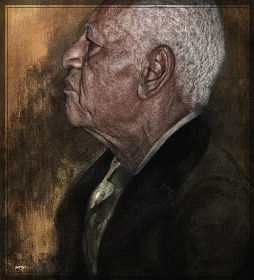
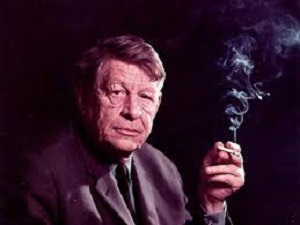
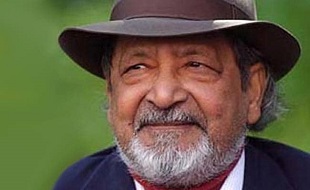
De Britse schrijver Sir Vidiadhar Surajprasad Naipaul, beter bekend als V.S. Naipaul, is gisteren op 85-jarige leeftijd in Londen overleden. Sir Vidiadhar Surajprasad Naipaul werd geboren op 17 augustus 1932 in Chaguanas, Trinidad en Tobago. Zie ook alle tags voor V. S. Naipaul op dit blog evenals de oudere berichten.

Uit: A House for Mr. Biswas

„That will be easy,’ Bissoondaye said, speaking with emotion for the first time.
‘On the twenty-first day the father must see the boy.
But not in the flesh.’
‘In a mirror, pundit?’
‘I would consider that ill-advised. Use a brass plate. Scour it well.’
‘Of course.’
‘You must fill this brass plate with coconut oil–which, by the way, you must make yourself from coconuts you have collected with your own hands–and in the reflection on this oil the father must see his son’s face.’
He tied the almanac together and rolled it in the red cotton wrapper which was also spattered with sandalwood paste. ‘I believe that is all.’
‘We forgot one thing, punditji. The name.’
‘I can’t help you completely there. But it seems to me that a perfectly safe prefix would be Mo. It is up to you to think of something to add to that.’
‘Oh, punditji, you must help me. I can only think of hun.’
The pundit was surprised and genuinely pleased. ‘But that is excellent. Excellent. Mohun. I couldn’t have chosen better myself. For Mohun, as you know, means the beloved, and was the name given by the milkmaids to Lord Krishna.’ His eyes softened at the thought of the legend and for a moment he appeared to forget Bissoondaye and Mr Biswas.
From the knot at the end of her veil Bissoondaye took out a florin and offered it to the pundit, mumbling her regret that she could not give more. The pundit said that she had done her best and was not to worry. In fact he was pleased; he had expected less.
Mr Biswas lost his sixth finger before he was nine days old. It simply came off one night and Bipti had an unpleasant turn when, shaking out the sheets one morning, she saw this tiny finger tumble to the ground. Bissoondaye thought this an excellent sign and buried the finger behind the cowpen at the back of the house, not far from where she had buried Mr Biswas’s navel-string.
In the days that followed Mr Biswas was treated with attention and respect. His brothers and sisters were slapped if they disturbed his sleep, and the flexibility of his limbs was regarded as a matter of importance. Morning and evening he was massaged with coconut oil. All his joints were exercised; his arms and legs were folded diagonally across his red shining body; the big toe of his right foot was made to touch his left shoulder, the big toe of his left foot was made to touch his right shoulder, and both toes were made to touch his nose; finally, all his limbs were bunched together over his belly and then, with a clap and a laugh, released.”

 
V. S. Naipaul (17 augustus 1932 –11 augustus 2018)

Dolce far niente, Remco Campert, Fernando Arrabal, Yoshikawa Eiji, Ernst Stadler, Hugh MacDiarmid, Andre Dubus

Dolce far niente


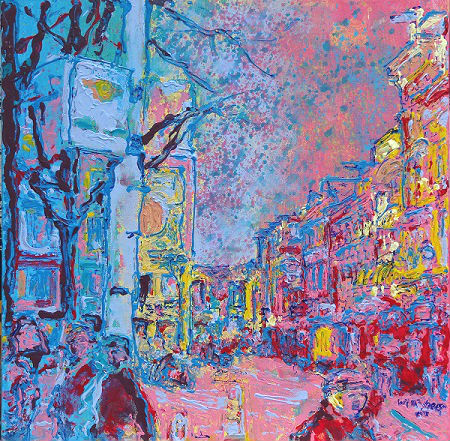
Leidseplein, Amsterdam door Wim Streep, 2014


Uit: De zwerftocht van Remco Campert (Ons Amsterdam, redactie Jojanneke Claassen en Jochem Brouwer)

“Een groot deel van de oorlog woonde ik in Epe op de Veluwe, maar in 1945 was ik weer terug in de Huidekoperstraat 23, terug in Amsterdam. Ik ben van die stad gaan houden, het is echt mijn stad geworden, al is er één ding dat ik wel altijd gemist heb: de zee. Je kon wel naar zee, natuurlijk. Dan ging je met de blauwe tram. Waar nu Athenaeum Nieuwscentrum is, op de hoek van de Spuistraat en het Spui, was het beginpunt van de tram naar Zandvoort. Maar de zee zoals in Den Haag onder bereik, nee.
Ik werd verliefd op Freddy Rutgers, een Wassenaars meisje dat aan de tekenacademie studeerde, en dat was voor mij het moment om het huis uit te gaan. Bij Bert Schierbeek, die ik uit de dichterskringen van Reijnders en Eylders op het Leidseplein kende, konden we een kamer krijgen in zijn huis, Van Eeghenlaan 7. In die tijd was zoiets niet gepast, maar Bert was zeer ruim en zeer behulpzaam. Ook mijn moeder deed er niet echt moeilijk over en ten slotte zijn Freddy en ik ook netjes getrouwd. We woonden in de Van Eeghenlaan en zaten veelvuldig in Parijs tot we in 1952 een verdieping in de Kerkstraat konden krijgen.
Op nummer 15, vlakbij de Leidsegracht, kregen we een benedenverdieping met een souterrain dat helemaal volgestouwd zat. Onze huisbaas woonde boven ons, een reusachtige aardappelboer met handen als kolenschoppen. Zulke grote handen had ik nog nooit gezien. En heb ik sindsdien ook niet meer gezien. Het was een aardige man met een pet. Geen Amsterdammer, hij kwam geloof ik uit Nood-Holland. Onze woonkamer was vrij behoorlijk, wel laag, en daarachter hadden we een klein keukentje met een wc in de hoek, waarvan de deur niet dicht kon als je erin ging. Dan was er nog een piepklein binnenplaatsje. Aan de straatkant hadden we een klein voorkamertje, wat mijn werkkamer was. In die tijd werkte het GEB nog met munten voor gas en licht. Munten die je bij de melkboer kon kopen. Als het licht plotseling uitging, stopte je een munt in de meter en dan liep het zaakje weer.”
 
Remco Campert (Den Haag, 28 juli 1929)
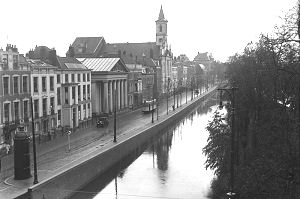
De Prinsessegracht in Den Haag, 1930


De Spaanse schrijver, dichter, dramaturg en cineast Fernando Arrabal werd geboren in Melila, Spaans Marokko op 11 augustus 1932. Zie ook alle tags voor Fernando Arrabal op dit blog.

Je te salue démente !

Je te salue démente !

Etrangement parée pour le bal de l’asile
Tu désires voler sur les rochers du sort
Alors que les furies sont devenues patientes
Grace aux nouveaux psychiatres, ces bergers de la haine

Je te salue démente !

Au centre du désert sans baisers, ni caresses
Des sectes aux gourous feignant la différence
Se disputent l’opium pour asservir l’enfant
Que parfume le sang versé par l’innocence.

Je te salue démente !

Tout enfant est un fou, le fou n’est qu’un enfant
Quand sa tête repose sur le divan de plumes.
Les Diafoirus entre eux, très fiers, se congratulent
Bercés par le roulis des certitudes molles.

Je te salue démente !

Toute damassée de portes sans issues ni secours
Tu nous tiens par la fête et surtout par l’étrange.
Phantasmes et fantômes sont venus d’ici-bas.
Ta cervelle te regarde et ne te connaît plus

Je te salue démente !

Tu galopes, inconsciente, en chevauchant Sigmund
Ou ses disciples creux, sans école buissonnière.
Héritières du carcan, purgées de tout amour
Leurs têtes vont sombrant dans la norme grégaire.

Je te salue démente !

Murés dans le cachot de ton retranchement
Tu distilles l’ennui, goutte à goutte, du temps
Craignant de naufrager sur ton sommet flottant
Cernés par des rancoeurs fatalement exactes

Je te salue démente !

Planant sur un déluge à peine universel,
Au cœur de ton chagrin tu triomphes, ignorant
Le déploiement d’étoiles dans ton sillage noir :
La vierge, la vivace, la belle apocalypse.

Je te salue démente !
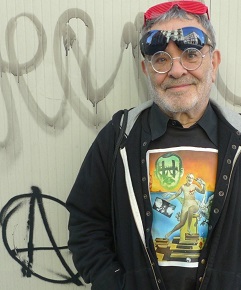

Fernando Arrabal (Melila, 11 augustus 1932)


De Japanse schrijver Yoshikawa Eiji werd geboren op 11 augustus 1892 in de prefectuur Kanagawa. Zie ook alle tags voor Yoshikawa Eiji op dit blog.

Uit: Taiko (Vertaald door William Scott Wilson)

“Thus chastened, Ofuku could say nothing. He lost courage and bit his nails. Although he was only a child, being called an ingrate made him feel much worse than being called a spineless jellyfish. The others looked away, their attention shifting from honey bees to a cloud of yellow dust rising at the far end of the fields. “Look, an army!” cried one of the boys. “Samurai!” said another. “They’ve come back from battle.” The children waved and cheered. The lord of Owari, Oda Nobuhide, and his neighbor, Imagawa Yoshimoto, were bitter enemies, a situation that led to constant skirmishing along their common border. One year, Imagawa troops crossed the border, set fire to the villages, and trampled the crops. The Oda troops rushed out of the castles of Nagoya and Kiyosu and routed the enemy, cutting them down to the last man. When the following winter came, both food and shelter were lacking, but the people did not reproach their lord. If they starved, they starved; if they were cold, they were cold. In fact, contrary to Yoshimoto’s expectations, their hardships only served to harden their hostility toward him.
The children had seen and heard about such things from the time they were born. When they saw their lord’s troops, it was as if they were seeing themselves. It was in their blood, and nothing excited them more than the sight of men-at-arms. “Let’s go see!” The boys headed toward the soldiers, breaking into a run, except for Ofuku and Hiyoshi, who were still glaring at one another. The weak-spirited Ofuku wanted to run off with the others, but he was held by Hiyoshi’s stare. “I’m sorry.” Ofuku nervously approached Hiyoshi’s side and put his hand on his shoulder. “I’m sorry, all right?” Hiyoshi flushed angrily and jerked away his shoulder, but seeing Ofuku on the brink of tears, he softened. “It’s just because you ganged up with the others and said bad things about me,” he reproached him. “When they tease you, they always call you names, like ’the Chinese kid.’ But have I ever made fun of you?” “No.” “Even a Chinese kid, when he becomes a member of our gang, is one of us. That’s what I always say, right?” “Yeah.” Ofuku rubbed his eyes. Mud dissolved in his tears, making little splotches around his eyes. “Dummy’ It’s because you cry that they call you ’the Chinese kid.’ Come on, let’s go see the warriors. If we don’t hurry, they’ll be gone.” Taking Ofuku by the hand, Hiyoshi ran after the others. War-horses and banners loomed out of the dust. There were some twenty mounted samurai and two hundred foot soldiers. Trailing behind was a motley group of bearers: pike, spear, and bow carriers. Cutting across the Inaba Plain from the Atsuta Road, they began to climb the embankment of the Shonai River. The children outstripped the horses and scampered up the embankment. Eyes gleaming, Hiyoshi, Ofuku, Ni’o, and the other snotty-nosed kids picked roses and violets and other wildflowers and threw them in the air, all the time yelling at the top of their voices, “Hachiman! Hachiman!” invoking the god of war, and, “Victory for our valiant, glorious warriors!”

 
Yoshikawa Eiji (11 augustus 1892 – 7 september 1962)
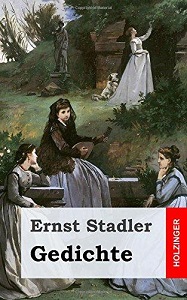
Cover


De Duitse dichter Ernst Stadler werd geboren op 11 augustus 1883 in Colmar (Kolmar). Zie ook alle tags voor Ernst Stadler op dit blog.

Ballhaus

Farbe prallt in Farbe wie die Strahlen von Fontänen, die ihr Feuer ineinanderschießen,

Im Geflitter hochgeraffter Röcke und dem Bausch der bunten Sommerblusen. Rings von allen Wänden, hundertfältig

Ausgeteilt, strömt Licht. Die Flammen, die sich zuckend in den Wirbel gießen,

Stehen, höher, eingesammelt, in den goldgefaßten Spiegeln, fremd und hinterhältig,

Wie erstarrt und Regung doch in grenzenlose Tiefen weiterleitend, Leben, abgelöst und fern und wieder eins und einig mit den Paaren,

Die im Bann der immer gleichen Melodien, engverschmiegt, mit losgelassnen Gliedern schreitend,

Durcheinanderquirlen: Frauen, die geschminkten Wangen rot behaucht, mit halb gelösten Haaren,

Taumelnd, nur die Augen ganz im Grund ein wenig matt, die in das Dunkel leerer Stunden laden,

Während ihre Körper sich im Takt unkeuscher Gesten ineinanderneigen,

Ernsthaft und voll Andacht: und sie tanzen, gläubig blickend, die Balladen

Müd gebrannter Herzen, lüstern und verspielt, und vom Geplärr der Geigen

Wie von einer zähen lauen Flut umschwemmt. Zuweilen kreischt ein Schrei. Ein Lachen gellt. Die Schwebe,

In der die Paare, unsichtbar gehalten, schaukeln, schwankt. Doch immer, wie in traumhaft irrem Schwung

Schnurrt der Rhythmus weiter durch den überhitzten Saal . . . Daß nur kein Windzug jetzt die roten Samtportieren hebe,

Hinter denen schon der Morgen wartet, grau, hager, fahl . . . bereit, in kaltem Sprung,

Die Brüstung übergreifend, ins Parkett zu gleiten, daß die heißgetanzten Reihen jählings stocken, Traum und Tanz zerbricht,

Und während noch die Walzerweise sinnlos leiernd weitertönt,

Tag einströmt und die dicke Luft von Schweiß, Parfum und umgegossnem Wein zerreißt, und durch das harte Licht,

Fernher rollend, ehern, stark und klar, das Arbeitslied der großen Stadt durch plötzlich aufgerissene Fenster dröhnt.
 
Ernst Stadler (11 augustus 1883 – 30 oktober 1914)
Cover


De Schotse dichter Hugh MacDiarmid werd geboren op 11 augustus 1892 als Christopher Marray Grieve in Langholm. Zie ook alle tags voor Hugh MacDiarmid op dit blog.

Gairmscoile (Fragment)

I
Wergeland, I mind o’ thee—for thy bluid tae
Kent the rouch dirl o’ an auld Scots strain,
—A dour dark burn that has its ain wild say
Thro’ a’ the thrang bricht babble o’ Earth’s flood.
Behold, thwart my ramballiach life again,
What thrawn and roothewn dreams, royat and rude,
Reek forth—a foray dowless herts condemn—
While chance wi’ rungs o’ sang or silence renshels them.

(A foray frae the past—and future tae
Sin Time’s a blindness we’ll thraw aff some day!)
… On the rumgunshoch sides o’ hills forgotten
Life hears beasts rowtin’ that it deemed extinct,
And, sudden, on the hapless cities linked
In canny civilisation’s canty dance
Poor herds o’ heich-skeich monsters, misbegotten,
… Streets clear afore the scarmoch advance:
Frae every winnock skimmerin’ een keek oot
To see what sic camsteerie cast-offs are aboot.

Cast-offs?—But wha mak’s life a means to ony end?
This sterves and that stuff’s fu’, scraps this and succours that?
The best survive there’s nane but fules contend.
Na! Ilka daith is but a santit need.
… Lo! what bricht flames o’ beauty are lit at
The unco’ een o’ lives that Life thocht deid
Till winnock efter winnock kindles wi’ a sense
O’ gain and glee—as gin a mair intense
Starn nor the sun had risen in wha’s licht
Mankind and beasts anew, wi’ gusto, see their plicht.

Mony’s the auld hauf-human cry I ken
Fa’s like a revelation on the herts o’ men
As tho’ the graves were split and the first man
Grippit the latest wi’ a freendly han’
… And there’s forgotten shibboleths o’ the Scots
Ha’e keys to senses lockit to us yet
—Coorse words that shamble thro’ oor minds like stots,
Syne turn on’s muckle een wi’ doonsin’ emerauds lit.

I hear nae ‘hee-haw’ but I mind the day
A’e donkey strunted doon a palm-strewn way
As Chesterton has sung; nae wee click-clack
O’ hoofs but to my hert at aince comes back
Jammes’ Prayer to Gang to Heaven wi’ the Asses;
And shambles-ward nae cattle-beast e’er passes
But I mind hoo the saft een o’ the kine
Lichted Christ’s craidle wi’ their canny shine.

Hee-Haw! Click-Clack! And Cock-a-doodle-doo!
—Wull Gabriel in Esperanto cry
Or a’ the warld’s undeemis jargons try?
It’s soon’, no’ sense, that faddoms the herts o’ men,
And by my sangs the rouch auld Scots I ken
E’en herts that ha’e nae Scots’ll dirl richt thro’
As nocht else could—for here’s a language rings
Wi’ datchie sesames, and names for nameless things.

Hugh MacDiarmid (11 augustus 1892 – 9 september 1978)
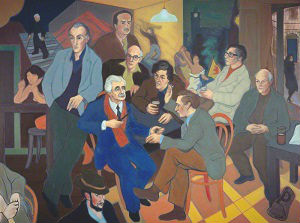
Poets’ Pub door Alexander Moffat, 1980. Hugh MacDiarmid zittend in het blauwe pak.


De Amerikaanse schrijver en essayist Andre Dubus werd geboren op 11 augustus 1936 in Lake Charles, Louisiana. Zie ook alle tags voor Andre Dubus op dit blog.

Uit: Dancing After Hours

“But he had no coffee, and he put on his raincoat and a felt hat turned the smile to him and said: “Well. What brings you out in the rain?” He took off his hat and placed it on the counter and was about to say he was going to buy coffee, but he looked at Doreen’s blue eyes and said: “I woke to the sound of rain. It was the first thing I smelled.” From behind her a young waitress approached and he signaled with thumb and forefinger as if gripping a cup. “Some was splashing through the screen, onto the windowsill. I didn’t close the window. I wanted to write about rain, but I was out of coffee.” He was unbuttoning his coat, removing his aims from its sleeves. “I’ve been writing things. I wanted to write its smell and sound. Its feel in April.” He let his coat fall to the back of his stool. The waitress brought his coffee, and he stopped talking to pay. She was a young brunette wearing glasses, probably a year out of high school and waiting, happily enough, it seemed, for something to happen. He looked at Doreen’s eyes: “It would be a separate section; the rain. Coming right after something I wrote yesterday about William James. He said that fear doesn’t cause running away. Running away causes fear. So if you hold your ground, you’ll be brave. And that sadness doesn’t cause crying. Crying makes us sad. So we should act the way we want to feel. And he said if that doesn’t work, nothing else will anyway.” Then he blushed. “He was a philosopher. I’ve been reading all kinds of things.” “Does it work?” “What?” “Acting the way you want to feel.” “Sometimes.” He looked away from her, stirred sugar and cream into his cup. Still he felt her eyes. “What is it you want to feel?”
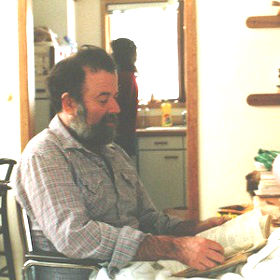

Andre Dubus (11 augustus 1936 –  24 februari 1999)


Zie voor nog meer schrijvers ook mijn blog van 11 augustus 2016 en ook mijn blog van 11 augustus 2011 deel 2.
Dolce far niente, Adriaan Jaeggi, Kees van Kooten, Moses Isegawa, Mark Doty, Elvis Peeters


Dolce far niente


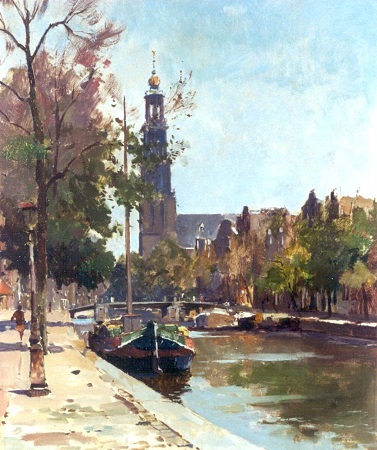
Prinsengracht met de Westerkerk door Evert Jan Ligtelijn, z.j. (1893-1975)


Uit: Het is hier altijd laag van licht, Amsterdamse stadsgedichten

I Drie kruisen

Ik zocht Amsterdam maar vroeg ik een man
de weg, dan zwol zijn krop en zong hij met Jordaan-
vibrato van Wester, duiven en Dam
Vroeg ik aan een vrouw de weg dan wou ze geld:
Twee euro voor een plattegrond

Ik offerde mijn fiets aan de fietsflat en zocht
mijn weg langs een hoer die haar lippen stiftte bij
strijklicht
Het VVV wees Museumplas, het mooie
Vondelmoeras
maar ik was op zoek naar de mytische
taxichauffeur die je snijdt bij de Munt en als je
op je voorhoofd tikt zijn raam omlaag draait en
zegt met de bedaardheid van een gnoe dat doe
jij verkeerd dat mot jij met een hamer doen
Ik zocht een stad die me kon vervoeren
ook als het om een kort ritje ging
Ik zocht de moddervette knipselbeat van XXX-large
funshoppen
in de Kalvertoren van je dromen
Ik zocht de Maillardreactie ken je die van die
Afghaan
die vlekkeloos Nederlands spreekt
als hij mijn auto in de fik steekt
in een stad waar je doet wat niet mag
omdat het Amsterdam is
en de rest ook knetterlam is
in een spandoekloze stad waar terughoudend wordt
ondersteund met alle oog voor kunstpolitieke
implicaties en ongewenste inhoudelijke
verantwoordelijkheid van het College dan wel
van het gemeentebestuur dan wel van
veelarmige olifantengod Ganesh niet dan met
inachtneming van alle overige religies en tot
niets verplichtend indien het geschrevene zou
kunnen ontstaan dat door derden als zodanig
kan worden ervaren en er politiek
verantwoording moet worden afgelegd
Ik zocht een gastvrije doorwaarbare plaats
met drie kruisen:
kankerfiets, kuttoerist, keizerskroon
Ik zocht zoals iedereen Amsterdam zoekt
niet als trapgevelnest maar als peper en zuur
niet als inspraakorgaan maar als water en vuur

En dáár zwol mijn krop en ik merkte ik barst
uit in een vibrato als een marktkoopman
op de maten van duiven de Wester de Dam


Adriaan Jaeggi (3 april 1963 – 10 juni 2008)
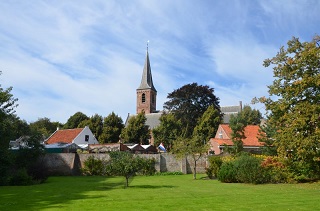
Wassenaar, de geboorteplaats van Adriaan Jaeggi


De Nederlandse schrijver en cabaretier Kees van Kooten werd geboren op 10 augustus 1941 in Den Haag. Zie ook alle tags voor Kees van Kooten op dit blog.

Uit: Leve het welwezen

“Ik zie hoe zij om mijn verschijning moet lachen, maar dat zij besluit geen krimp te geven. Het is de leukste en enig juiste manier van reageren; dat ridicule voorkomen heel normaal vinden en zogenaamd niets bijzonders aan mij zien. Maar zij kan zich niet goedhouden en jawel hoor: de glimlach van een kind. Laten we wel wezen – daar doe je het allemaal voor.
Een kwartiertje later ga ik met mijn dochter en haar beide kinderen te voet op weg naar school.
Zij ratelen geestdriftig over nieuwe ju[en, meesters en klasgenootjes.
Ik kan ze amper bijhouden en hap binnensmonds naar lucht maar hoef er gelukkig weinig tussendoor te zeggen want lopend praten gaat uiterst moeizaam en ze mogen natuurlijk niks merken maar niks aan de hand want over anderhalf uur zit ik veilig bij mijn kernachtige huisarts.
Kijk eens aan: daar zijn hun nieuwe klaslokalen.
Eentje op de eerste verdieping – om geen argwaan te wekken kreun ik overdreven hard en trek ik mij komisch ouwelijk aan de leuning omhoog – en eentje op de begane grond. Het is warm. Veel geschreeuw, weinig wol, dolle pret.
We nemen voor een hele dag afscheid van ze en hun moeder en ik lopen weer naar buiten. Daar tolt en golft het. Ik probeer mij de wandeling naar huis voor de geest te halen en zie halverwege dat aantrekkelijke uitblaasbankje staan. Dan kan mijn vrouw mij naar de afspraak met de dokter rijden, ach welja, nada aan de handa. Maar wanneer ook het schoolgebouw vervaarlijk begint over te hellen, beken ik mijn dochter dat ik mij een beetje slapjes voel, maar dat zij gerust naar haar werk kan gaan – dat kleine stukje terug kan ik best in mijn eentje lopen. Zij kijkt mij aan, haar mond zakt open, ze trekt haar hoofd geschrokken terug en roept: ‘Man! Je ziet helemaal grijs!’
Op deze speelplaats staat een betonnen pingpongtafel en daar moet ik gewoon een uurtje op gaan liggen, denk ik hunkerend. Met netjes opgetrokken knieën boven het netje in het midden, moet kunnen. De nieuwe lokalen zitten aan de achterkant van het gebouw, dus mijn kleinkinderen zullen mij goddank niet zo zien. Wel hollen er links en rechts nog wat plukjes verlate leerlingen langs, met afkeurend naar mij kijkende vaders en moeders.Die is om half negen ’s ochtends al aangeschoten.
‘Geef je mobieltje,’ sist mijn dochter, panisch hees. Ze houdt mij onder mijn oksels overeind. Veilig gevoel. Zo tilde mijn moeder mij uit de wasteil.”


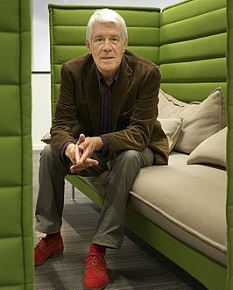
Kees van Kooten (Den Haag, 10 augustus 1941)


De Oegandese schrijver Moses Isegawa (pseudoniem van Sey Wava) werd geboren op 10 augustus 1963 in Kawempe in Oeganda. Zie ook alle tags voor Moses Isegawa op dit blog.

Uit: Abyssinian Chronicles

“He once told us of a skinless lamb left to roam the streets encumbered with unknown curses and armies of greedy flies. I remembered the story of a man who kept three sisters: he started with the one he had married, progressed to her next younger sister and ended up with their youngest sister, who needed accommodation near a reputable school. As with all his stories, the last one was open-ended, game to all kinds of endings and interpretations.
When Uncle Kawayida came, I made myself indispensable around the house, making sure that I was not sent away on long errands. When I suspected that he had some particularly juicy information about a relative or someone we knew and that Grandpa was going to send me away, I would voluntarily go off to play, double back, hide behind the kitchen and listen. Many times, however, Grandpa and Grandma were so enthralled that they forgot all about me, or just ignored my existence and intelligence, and I would listen to the story as if the future of the entire village depended on it.
Uncle Kawayida pricked my imagination so much that I wanted to verify some of his stories by visiting the places and the characters he talked about. For example, what sort of parents did whatever they did in bed with children snoring, falsely, on the floor? Were they Catholics? If not, did Protestantism, Islam or traditional religion allow such behavior? Were such people educated and well-bred? Unable to tame my raging curiosities and doubts, I begged Uncle Kawayida to take me with him, at least just once, but each time he refused, bolstered by Grandma and Grandpa. Most annoying were their weak excuses. Later I found out the real reason why: Kawayida’s wife, a woman from a very large, polygamous household, was not on good terms with my mother, who came from a very Catholic family, and none of the trio was ready to risk Padlock’s anger by sending her son to the house of a person she disliked and disapproved of so much.
The tension between their wives had driven the brothers apart. My mother despised Kawayida’s wife’s background because she believed there was no morality and no salvation in a household with thirty girls and ten boys born of so many “whore” mothers in a climate of perpetual sin. Kawayida’s wife despised Padlock for the poverty of her parental home, and for her guava-switch-wielding propensities.”


Moses Isegawa (Kawempe, 10 augustus 1963)
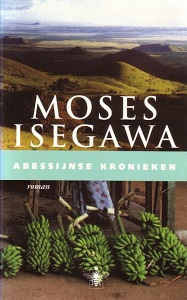
Cover Nederlandse uitgave


De Amerikaanse dichter en schrijver Mark Doty werd geboren op 10 augustus 1953 in Maryville, Tennessee. Zie ook alle tags voor Mark Doty op dit blog.


Verge

A month at least before the bloom
and already five bare-limbed cherries
by the highway ringed in a haze
of incipient fire
—middle of the afternoon,
a faint pink-bronze glow. Some things
wear their becoming:
the night we walked,
nearly strangers, from a fevered party
to the corner where you’d left your motorcycle,
afraid some rough wind might knock it to the curb,
you stood on the other side
of the upright machine, other side
of what would be us, and tilted your head
toward me over the wet leather seat
while you strapped your helmet on,
engineer boots firm on the black pavement.

Did we guess we’d taken the party’s fire with us,
somewhere behind us that dim apartment
cooling around its core like a stone?
Can you know, when you’re not even a bud
but a possibility poised at some brink?

Of course we couldn’t see ourselves,
though love’s the template and rehearsal
of all being, something coming to happen
where nothing was…
But just now
I thought of a troubled corona of new color,
visible echo, and wondered if anyone
driving in the departing gust and spatter
on Seventh Avenue might have seen
the cloud breathed out around us
as if we were a pair
of—could it be?—soon-to-flower trees.


Mark Doty (Maryville, 10 augustus 1953)


De Vlaamse schrijver en musicus Elvis Peeters werd geboren op 10 augustus 1957 in Grimbergen. Zie ook alle tags voor Elvis Peeters op dit blog.

Uit: Brood

“De nachthemel, daar moest ik aan wennen.
Thuis leken de sterren altijd van goud, zacht glinsterend. Hier lijken ze van zilver, en veel verder weg. Minder glinsterend, eerder bevend, alsof elk ogenblik de stroom kan uitvallen.
Niet alleen de hemel, ook de nacht is anders. Met dubbele, soms driedubbele schaduwen, of meer. Door de lampen, de overal aanwezige schrille lampen. De schaduwen weten niet welke kant ze uit moeten springen.
Soms voel ik me een schaduw. Maar ik ben van vlees en bloed. Met een onsterfelijke ziel, wordt gezegd, al wil niet iedereen dat geloven. Er zijn er die beweren dat de ziel slechts een woord is omdat we er geen betere omschrijving voor hebben, en dat ze zelfs dan niet is wat het woord wil zeggen. Dat we stamelen.
Naargelang de straat waar ik door loop, kan ik de schaduwen voorspellen. Omdat ik de lichten ken, elke lamp.
Op een dag komt het me van pas. Dat zeg ik niet, dat denk ik. Soms is het goed dingen te denken die je niet hoeft te zeggen.
Soms weet ik niet in welke taal ik moet denken.
Het mooiste is toch dat mensen je begrijpen.
Niet altijd gemakkelijk.
Niet altijd.
Uiteindelijk heb ik geleerd te zeggen wat mensen willen horen.
Onvoorstelbaar wat mensen allemaal willen horen.
Doe normaal.
De mensen weten niet hoe graag ik normaal wil zijn.
Als het echt hard regent, houdt karton het amper een kwartier uit. Tegen de gewone kou en het snerpen van de wind kan het helpen. Tegen de bittere kou is het niet opgewassen.
En als de bittere kou in jezelf zit, heb je er al helemaal niets aan.”


Elvis Peeters (Grimbergen, 10 augustus 1957)


Zie voor nog meer schrijvers van de 10e augustus ook mijn blog van 10 augustus 2017 en ook mijn blog van 10 augustus 2014 deel 2 en eveneens deel 3.

Dolce far niente, J. Neil C. Garcia, Luuk Gruwez, Philip Larkin, Gerrit Kouwenaar, Jan van Aken

Dolce far niente


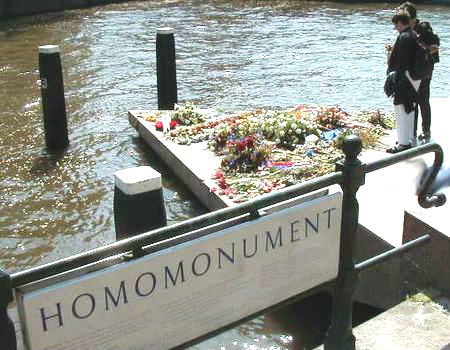
Homomonument, Amsterdam


Uit: Poems from Amsterdam (Fragment)

XXIII

This city tolerates soft drugs and sex,
so why shouldn’t it tolerate gayness?

It’s not called The World’s Gay Capital
for nothing. Gay saunas, S & M leather

hotels, bookstores, condomeries:
all havens for the other persuasion.

Along any busy straat or in any plein,
they semaphor to the lost and looking

with the universal signal of pride:
flapping pennants of the queer rainbow.

Of course, it hasn’t always been this way,
as the Homomonument in Wester Markt

affectingly reminds us. Sodomites burned
or fed to dogs in Europe and the Americas.

Same-sex offenders exorcised, lobotomized,
or electrically convulsed by self-hating shrinks

and hysterical priests. Women-loving women
and men-loving men banished from hearth

and home, denied the bracing sunlight, cheated
of all creature comfort. A whole humanity

shoved by bigoted hearts to the margin:
all the wide-eyed lives ruined, despoiled,

whose memory this trigonometric shrine
lapped by canal water does lovingly honor…


J. Neil C. Garcia (Manilla, 1969)
Een regenboogvlag in Amsterdam


De Vlaamse dichter, prozaïst en essayist Luuk Gruwez werd geboren op 9 augustus 1953 te Kortrijk. Zie ook alle tags voor Luuk Gruwez op dit blog.

Een belvedère op het heelal

Het was een huis vol kleine confidenties.
De deuren stonden altijd op een kier:
ik kon de bibelots soms horen praten,
de glans van tafelzilver leek een teken.
Ook woonden ouders er nog ernstig in leven.

Ik durfde ’s avonds niet te komen
waar slechts fantomen mochten wonen,
eendrachtig samenhokkend in de nok,
met schilferige stemmen in falset
die doedelden rondom mijn hoofd.

Nooit was ik banger voor de nacht,
hoewel mij op een lichter uur
het altijd open zolderraam
het ruimste raam ter wereld leek,
een belvedère op het azuur.

Men stierf hier wat en sloot een raam.
En leegstaand lijkt het huis verbaasd
zo zorgeloos nog overeind te staan,
als wou geen mens de muren slopen
rondom een kindertijd vol spoken.


Oma’s metafysica

Oma’s metafysiek: nooit komt daar eens een barstje in.
Zij drinkt white spirit uit een soepterrine, slurpt
cyaankali met een rietje of propt zich tussendoor
met ijzervijlsel vol. Waarna één boer, en opgelost!

Zij zingt ook zelf de lof van heel haar lijf.
Zij hinkt met stoere kuiten door het dorp, bezit
de elegantste kromme neus, het sterkste kunstgebit.
En wie heeft een zo virtuoze wandelkruk als zij?

Eenieder met een beetje mensenkennis
beweert dat ik haar idealiseer. Dat zij bijvoorbeeld
amper weet of het vandaag of gisteren of morgen is.
En dat zij kaarsen brandt voor een of andere louche Heer.

Maar het is heerlijk om haar op te hemelen.


Soorten thuiskomst

Oké, je komt dan wel eens thuis en wil meteen weer weg,
maar moesten wij dan kiezen tussen eb en vloed?
En moest er plotseling niet meer ontmoet?
Wij waren jong die zomer aan het strand

en niemand wilde weg, maar ieder zou terug. WIj trokken
langs een huis waar iemand pas iets nietigs had verwekt.
Geen donder wist hij van het kind in haar en ook het kind
nog niets van hem. Maar ramen stonden op een kier;

de ochtend bracht een bries van zilte golven, vroege
soep en jonge koffie bij ons binnen. Zo woei het daar
dat het wel leek of er geen uur verliep en wij
nog kansen hadden, honderd soorten ergens.

Toch gingen wij er weg om bijtijds thuis te zijn,
of het nu vloed of laag tij was. Wii wilden huiswaarts
om te kunnen zeggen. Om eindelijk te kunnen
zeggen aan de liefste: hierop heb ik gewacht.


Luuk Gruwez (Kortrijk, 9 augustus 1953)


De Engelse dichter Philip Larkin werd op 9 augustus 1922 geboren in Coventry. Zie ook alle tags voor Philip Larkin op dit blog

An Arundel Tomb

Side by side, their faces blurred,
The earl and countess lie in stone,
Their proper habits vaguely shown
As jointed armour, stiffened pleat,
And that faint hint of the absurd—
The little dogs under their feet.

Such plainness of the pre-baroque
Hardly involves the eye, until
It meets his left-hand gauntlet, still
Clasped empty in the other; and
One sees, with a sharp tender shock,
His hand withdrawn, holding her hand.

They would not think to lie so long.
Such faithfulness in effigy
Was just a detail friends would see:
A sculptor’s sweet commissioned grace
Thrown off in helping to prolong
The Latin names around the base.

They would not guess how early in
Their supine stationary voyage
The air would change to soundless damage,
Turn the old tenantry away;
How soon succeeding eyes begin
To look, not read. Rigidly they

Persisted, linked, through lengths and breadths
Of time. Snow fell, undated. Light
Each summer thronged the glass. A bright
Litter of birdcalls strewed the same
Bone-riddled ground. And up the paths
The endless altered people came,

Washing at their identity.
Now, helpless in the hollow of
An unarmorial age, a trough
Of smoke in slow suspended skeins
Above their scrap of history,
Only an attitude remains:

Time has transfigured them into
Untruth. The stone fidelity
They hardly meant has come to be
Their final blazon, and to prove
Our almost-instinct almost true:
What will survive of us is love.

 
Philip Larkin (9 augustus 1922 – 2 december 1985)
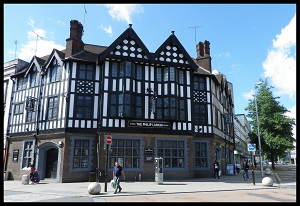
The Philip Larkin pub in Coventry, genoemd naar de dichter


De Nederlandse dichter Gerrit Kouwenaar werd op 9 augustus 1923 in Amsterdam geboren. Zie ook alle tags voor Gerrit Kouwenaar op dit blog.

Tuin

Achter het oog gezeten, opengezet
op alles wat al gebeurd is, de bliksem
waarmee de wimper het boek dichtslaat

hoor hoe de roodstaart onzichtbaar
zich in de bruidssluier opwindt en ontzeg
het potlood het doodgaan

de hond die opkijkt naar de verbazing
zijn licht dat blind op iets nieuws wacht

de boom waaruit langzaam
een slang valt, steeds langer
tot hij ophoudt –


Een glas om te breken

Liggend in zwart in de helderste kamer
bevat men volmaakt wat het afschrift onteigent
vult men gedwee zijn inhoud met leegte

omdat vlees moet geschreven verhongert de hemel
omdat taal doet ontleven moet men ontbinden
lidwoorden longen lipletters speeksel

niets dat hier klopt is meer dan een stilte
uren herhalen zich zonder beginnen
het ogenblik zoekt een glas om te breken


Aankomst

Zoals men aankomt op een station
in een reiziger uitstapt, met zijn ballast
vastloopt in een passant, dit is

het ogenblik, men is vacant, op slag
beslaat de inhoud het glas, taal past
haarfijn haar mal, niet gemond, ongehoord, totaal
onoorbaar, vlees, zoals het hoort

dat men dit mangat moet instaan, dit niks
moet uitleven in een snik, eindelijk
de navel van zijn bestaan, men laat

zijn leeftocht vallen, niets klopt, alles
verpopt in het wachtglas, achter de adem
stilt zich de made.

 
Gerrit Kouwenaar (9 augustus 1923 – 4 september 2014)


De Nederlandse schrijver Jan van Aken werd geboren in Herwen-en-Aerdt op 9 augustus 1961. Zie ook alle tags voor Jan van Aken op dit blog.

Uit: De ommegang

“Op de stoffige wegen van Italië, in de vroege lente van het jaar 1415, kwam ik een tweetal reizigers achterop. Een jonge vrouw leidde een bepakt muildier aan de hand en voor haar uit ging een rijzige grijsaard met zekere tred, al viel me op dat hij zijn reisstaf gebruikte als blindenstok. De vrouw droeg op haar linkerslaap een klein litteken als een zilveren spinnetje; ooit had een vaardige heelmeester daar een wond gehecht. Ik groette in het voorbijgaan zoals gebruikelijk is langs de pelgrimswegen en wierp een vlugge blik op de man. Ogen als lege ijsvelden.
Ik richtte mijn ogen alweer op de weg, toen de man me bij mijn naam riep. ‘Isidoor?’
Ik bleef staan en draaide me naar hem om. Voor mijn geestesoog zag ik hem nu twintig jaar jonger en in de kracht van zijn leven, toen zijn haar en baard nog donker waren en niets die felle blik ontging. Ook toen had hij een vrouw bij zich gehad en zij op haar beurt droeg een klein meisje op haar arm. Dat moest deze jonge vrouw zijn, die nu het muildier leidde.
Bij de herinnering hoorde een naam. ‘Maelgys,’ zei ik. ‘Ben jij het echt? Hoe vaak heb ik niet aan onze goede tijd in Trebizonde gedacht!’ Ik wrong me uit de draagriemen van mijn reiskist en zette die voorzichtig op de grond.
Maelgys lachte. ‘Ik herkende je aan je stem. En je kent mijn dochter? Haar naam is…’
‘Lorea,’ zei ik. ‘Natuurlijk ken ik haar nog.’ Ik maakte een hoofse buiging. Een volksvrouw zou erom gegiecheld hebben, maar zij aanvaardde het met een knikje. Afgezien van haar gebruinde gezicht leek ze sterk op haar moeder, die destijds net zo oud moest zijn geweest als zij nu. En om me haar te herinneren had ik geen geheugenkunst nodig. Hoeveel mensen leven, worden oud en sterven, zonder dat ze ooit een dergelijke schoonheid zien?
‘Vooruit,’ zei de man. ‘Er is maar één weg en we kunnen een tijdlang samen reizen. Ik hoor de instrumenten rinkelen in je kist. Die mag je op Gigi laden, hij kan zo’n last beter aan dan jij.’
Ik ontmoet genoeg volk onderweg, eenlingen of groepen, en soms loop ik een stukje op met iemand die ik sympathiek vind, maar lang houd ik het nooit vol. Anders dan de meesten voel ik niet de noodzaak om stilten te vullen met ijdel gepraat en zelden kom ik iemand tegen die werkelijk iets te zeggen heeft. Alleen tijdens eenzame voetreizen kan een mens zijn gedachten laten uitwaaieren, zijn kennis nalopen, herschikken en tot nieuwe inzichten komen. Daarnaast wil ik me niet inhouden voor traag gezelschap. Maar voor mijn oude vriend en zijn dochter maakte ik een uitzondering.
‘Je herkende me aan mijn stem,’ zei ik, terwijl wij onze weg vervolgden. ‘Dat is verbazingwekkend. Wat is jullie reisdoel?’

 
Jan van Aken (Herwen-en-Aerdt, 9 augustus 1961)


Zie voor nog meer schrijvers van de 9e augustus ook mijn blog van 9 augustus 2017 en ook mijn blog van 9 augustus 2015 deel 2.
Dolce far niente, Nicolaas Beets, Jostein Gaarder, Klaus Ebner, Birgit Vanderbeke, Elis Juliana, Lotte Lentes


Dolce far niente


Zomerregen door Dmitry Kustanovich, 2015


Zomerregen

Kom, liefelijke zomerregen,
Waarbij de boezem ademhaalt,
Kom suizend, ruischend neergezegen,
En zegen de aarde daar ge op daalt!
Den zegen, die haar klacht zal stillen
En leven geven aan haar borst,
Nu, daar ze onmachtig hijgt van dorst,
Moogt ge aan geen woeste zee verspillen,
Dient aan geen zandig duin vermorst.
Kom tot ons over op uw wieken!
Het groene bosch ziet grijs van stof,
De rozen sterven in den hof,
De glans der leliekroon is dof:
Doe gij ons de oude geuren rieken,
Verfrisch de kleuren voor ons oog,
Help overeinde wat zich boog,
Roep bovenal op weide en akker
Het ingesluimerd leven wakker,
En wisch op al het groene kruid
De sporen van het lijden uit!

Daar dreigt, daar nijgt, daar komt gij dalen!
Daar trekt gij ’t landschap tegemoet
Met heel uw hemelsch’ overvloed;
Daar storten zich uw milde stralen
Met hartverkwikkend ruischen uit;
Zoet, als het troostelijk geluid
Van die aandoenlijkste aller talen,
Waarin een moederlijk gemoed
Zich uitstort voor haar eigen bloed,
Als ’t kindje neerligt in zijn zwakte,
En met een kwijnend oogje spreekt,
En met een droevig lipje smeekt,
Om ’t vocht, waarnaar zijn hartje snakte;

Zoet, als het zacht en smeltend lied.
Dat hopende eeuw aan eeuw herhaalde,
En thans mijn boezem tegenvliet,
Alsof het met uw dropplen daalde:
‘Hij zal gelijk zijn aan den regen,
Die daalt op ’t late gras,
Aan droppels, die met milden zegen
Besproeien ’t veldgewas.’

– Mijn ziel, o God! heeft ondervonden
De waarheid van dat woord,
Als, op haar uitgedroogde gronden,
Die regen werd gehoord;
Wanneer ze hebben ingedronken,
Dien dauw, dien troost, die kracht,
Uit uwe hemelen geschonken
Aan alles wat versmacht;
Verkoelend, lavend en doordringend
Tot in den diepsten schoot,
En op zijn nadering ontwringend
Het leven aan den dood.
Toen hief het door de zon verschroeide
Zich uit zijn kwijning op,
En ’t voor zijn tijd reeds uitgebloeide
Vernieuwde blad en knop;
De sluimerende beek werd wakker,
Haar stokkende ader zwol,
De leege halmen, op den akker
Verwaarloosd, schoten vol;
De wonde, door de hagelstriemen
Hun toegebracht, genas,
En in de werkelooze kiemen
Ontwaakte een nieuw gewas;
In ’t kloppend harte werd geboren
Deze ééne wensch: o Heer!
Mocht op het veld mijn handvol koren
Slechts ruischen tot uw eer!


Nicolaas Beets (13 september 1814 – 13 maart 1903)
Haarlem, de geboortestad van Nicolaas Beets


De Noorse schrijver Jostein Gaarder werd geboren op 8 augustus 1952 in Oslo. Zie ook alle tags voor Jostein Gaarder op dit blog.

Uit: The Orange Girl (Vertaald door James Anderson)

“For instance, if the Orange Girl hadn’t kept her promise about seeing each other every day during the six months after her return from Spain, it would have been better for me never to have met her. That’s true of other fairytales, too. Do you think Cinderella would have chosen to go to the palace as its princess if she’d known she’d only be there for a week? What do you think it would have been like for her to go back after that, to her grates and pokers, to her wicked step-mother and ugly step-sisters? But now it’s your turn to answer, Georg; the floor is yours. It was while we were both sitting out there that night under the starry sky that I made up my mind to write this long letter to you. It suddenly brought tears to my eyes. The reason I cried wasn’t just because I knew I might soon be leaving you and the Orange Girl. I cried because you were so young. I cried because the two of us couldn’t have a proper talk. I ask again: what would you have chosen if you’d had the chance? Would you have elected to live a short span on earth only to be wrenched away from it all, never ever to return? Or would you have said no, thank you? You have only these two choices. Those are the rules. In choosing to live, you also choose to die. But Georg — promise me that you’ll take time to think it over carefully before you give your answer.
Perhaps I’m going too deep now. Perhaps I’m exposing you to too much. And perhaps I have no right to do it. But your answer to the question I’ve posed is so very important to me, because I’m directly responsible for your being here. You could never have been in the world if I’d turned it down. I almost feel a sense of guilt that I was partly responsible for bringing you into the world. In a way it was I that gave you this life, or more accurately the Orange Girl and I. But then it is we who will one day take it away from you as well. To give life to a small child is not simply to give it the great Gift of the World. It’s also to take that same incomprehensible gift back. I have to be honest with you, Georg. I say that I’d probably have said no to the offer of a lightning `get-to-know-the-world’ sightseeing tour in the great fairytale. I admit it. And if you think as I do, I feel guilty about what I have helped to set in train. I let myself be seduced by the Orange Girl, I let myself be lured by love, I let myself be tempted by the thought of having a child. Now comes remorse and the need for reconciliation. Have I done wrong, I wonder? The question is like a cruel conflict of conscience. Then there is also the need to make good after one.”


Jostein Gaarder (Oslo, 8 augustus 1952)


De Oostenrijkse dichter, schrijver en vertaler Klaus Ebner werd geboren op 8 augustus 1964 in Wenen. Zie ook alle tags voor Klaus Ebner op dit blog.

Youth (Vertaald door Anne Holcomb)

Maybe he had not yet thought about it. It was not his fault that the entire table looked empty. The surface was smooth and polished, with no trace of dust at the edges. Max sat down, his arms lightly touching the wood, and closed his eyes. His nose was stopped up; small wonder with the constant draft blowing through the room. It was clear that he had not yet thought about the eraser.
The text almost covered the whole page. It was written in pencil, as if Max had foreseen the absurdity of it, the futility that now tormented his thoughts unbearably. Each stroke, each particle of each letter had to disappear, had to be taken back into himself and made totally unavailable to his mother. Max stood up, stepped behind the chair and surveyed the desk. Sometimes he simply overlooked the important things. Perhaps the eraser had fallen onto the floor. Max bent forward, but no, there was nothing to be seen. Disappointed, he sat down again. The whole paragraph had to be undone. He could not cross it out because that would not cancel it, and it could certainly never be unthought. Each sentence, quickly jotted down with a pencil, had to disappear. There was no alternative.
Max opened the uppermost drawer slowly, note quite looking directly at it. Then he closed it to the point where he could just see into it, feeling the shadow from inside the drawer spread across his back. He gazed intently downward, his facial muscles frozen in slack tension. With his free hand, Max touched his chin. He took a deep breath and rose from the chair, pushing it back with his legs. His nostrils twitched, but only a weak urge to sneeze remained. Max reached into the drawer with his whole arm, being careful not to bump against the wood. Then he stuck his head into the drawer. The light from outside cast a faint backdrop of illumination. Max drew his left leg into the drawer, and then his right one. Thus poised, he had the uncomfortable sensation of gravity no longer existing. The sudden cracking of wood quickly convinced him however that it did as the drawer broke loose from its track.
As the mother came into the room, she saw one of the drawers lying on the floor. She attributed the fact that it was moving back and forth to the draft that was once again blowing through the apartment. She stood without hesitation in front of the table, holding in her hands a sheet of paper written with a pencil, and read.”


Klaus Ebner (Wenen, 8 augustus 1964)


De Duitse schrijfster Birgit Vanderbeke werd geboren op 8 augustus 1956 in Dahme. Zie ook alle tags voor Birgit Vanderbeke op dit blog.

Uit: Das Muschelessen

„Dass es an diesem Abend zum Essen Muscheln geben sollte, war weder ein Zeichen noch ein Zufall, ein wenig ungewöhnlich war es, aber es ist natürlich kein Zeichen gewesen, wie wir hinterher manchmal gesagt haben, es ist ein ungutes Omen gewesen, haben wir hinterher manchmal gesagt, aber das ist es sicherlich nicht gewesen, und auch kein Zufall. Gerade an diesem Tag wollten wir Muscheln essen, ausgerechnet an diesem Abend, haben wir gesagt, aber so ist es wiederum auch nicht gewesen, keinesfalls kann man von Zufall sprechen, wir haben nachträglich nur versucht, dieses Muschelessen als Zeichen oder als Zufall zu nehmen, weil das, was auf dieses ausgefallene Muschelessen dann folgte, tatsächlich von solcher Ungeheuerlichkeit gewesen ist, daß sich am Ende keiner von uns mehr davon erholt hat, und schließlich haben wir immer Muscheln gegessen, wenn es etwas Besonderes sein sollte, und dies ist etwas Besonderes gewesen, allerdings in einem ganz anderen Sinne, als wir uns vorgestellt hatten. Im Grunde ist das, was wir uns vorgestellt hatten, als wir das Muschelessen geplant hatten, im Verhältnis zu dem, was dann daraus geworden ist, von ziemlich geringfügiger Besonderheit, von einer untergeordneten jedenfalls, während das, was dann geworden ist, von erheblicher, ja, gewaltiger und außerordentlicher Besonderheit ist, aber keinesfalls kann man sagen, es ist ein Zeichen oder ein Zufall gewesen, daß es an dem Abend Muscheln hat geben sollen, was die Lieblingsspeise von meinem Vater gewesen ist, unsere ist es eigentlich nicht gewesen, nur mein Bruder hat Muscheln auch gern gegessen, die Mutter und ich haben uns nicht viel daraus gemacht. Ich mache mir nicht viel daraus, hat meine Mutter immer gesagt, während sie über die Badewanne gebeugt stand und abwechselnd ein kleines Küchenmesser und die rote Wurzelbürste in der Hand hatte, beide Hände sind knallrot gewesen, weil sie sie beim Muschelputzen unters fließende kalte Wasser gehalten hat, und dann hat sie gründlich kratzen, schrubben, bürsten und mehrfach spülen müssen, weil mein Vater nichts mehr gehaßt hat, als wenn er beim Essen auf Sand in den Muscheln gebissen hat, daß es ihm zwischen den Zähnen geknirscht hat, das hat ihn förmlich gequält. Ich mache mir eigentlich gar nicht so viel daraus, hat meine Mutter auch an dem Nachmittag gesagt und sich die eiskalten Hände gepustet, aber es ist eben doch etwas Besonderes gewesen, deshalb hat sie die vier Kilo Muscheln am Mittag auch eingekauft und gedacht, daß der Vater, wenn er am Abend von seiner Dienstreise heimkommen würde, seine Freude an einem Muschelessen haben würde, weil er das Kurzgebratene und Gegrillte, die Fleischklumpen, die es auf Dienstreisen gab, meistens satt hatte, und dann hat er sich etwas Anständiges von meiner Mutter bestellt, jedenfalls etwas Hausgemachtes, was es in diesen Tagungshotels nicht gab.“


Birgit Vanderbeke (Dahme, 8 augustus 1956)


De Antilliasanse dichter Elis Juliana werd op 8 augustus 1927 geboren op Curaçao. Zie ook alle tags voor Elis Juliana op dit blog.


Crystal Ball

In that crystal ball of mine
I see the things in store for me.
The toad is singing in my ears
a song of troubling misery.
I see my neighbor
in a frame disguised
wrapped in a blanket of paper
groping along the wall.
I see a pair of lovers
creeping up the stairs to Town Hall.
The maid-of-honor remains below
peeling fresh water shrimps.
I see a funeral.
Four men with choppers
bearing the corpse of morality
wrapped in palm fronds.
I see the roaches emerge
from SHELL’s rusty pipes.
A broken image handing out
communion to patient ground doves.
And in the distance far away
the sea of dignity has run dry.
We play together blindman’s buff
and pass the shame onto the Lord.


Vertaald door Frank A. Williams


Elis Juliana (8 augustus 1927 – 23 juni 2013)
Portret door Nicolaas Porter, 2012


Onafhankelijk van geboortedata

De Nederlandse schrijfster Lotte Lentes werd geboren in Trier in 1990. Lentes studeerde Nederlands in Nijmegen. Zie ook alle tags voor Lotte Lentes op dit blog. Zie ook alle tags voor Lotte Lentes op dit blog.

Uit: Walter

“Voor uw stuitje,’ zei ze vriendelijk, ‘om op te zitten.’
Ze raakte de zijkant van zijn rechterbil aan en herhaalde de boodschap, overdreven articulerend. Waarom dacht iedereen toch dat hij doof was?
Hij nam de zwemband aan, voelde het klamme plastic, voelde dat het ding niet helemaal goed opgeblazen was en door de drankroes en het onbegrip heen, had hij plotseling kraakhelder zijn zoons voor zich gezien. Twee kinderen, amper zes, zeven jaar, hij wist het niet meer precies. Ze stonden aan de rand van het zwembad, allebei in een ander jaar, allebei in een ander zwembad, maar in zijn droezige herinnering zag hij ze naast elkaar, op dezelfde rand.
Hij zag zijn oudste, opgewonden en ongeduldig. De forse beentjes die onder zijn zwembroek vandaan staken, verraadden de atletische bouw die hij in zijn puberteit zou krijgen. De jongen sprong, bleef enkele seconden onder water en kwam proestend en lachend boven.
Zijn kleine broertje stond al die tijd als van steen op de rand. Zijn spillebenen beefden, van de kou of van angst. Met zijn handje omklemde hij de rode zwemband om zijn middel. Hij kon niet geloven dat dit stukje plastic met die paar teugen lucht van papa hem van een onvermijdelijke verdrinkingsdood zou kunnen redden.
Op de dag van zijn negenentwintigste verjaardag, haalde de brandweer de jongste nog net levend uit zijn vuurrode Audi. Verkreukeld, als een bouwpakket. Walter was daar niet bij geweest, maar dacht zich dit aanblik de hele tijd te herinneren.
Omdat Walter geen tijd heeft verspild bij de verplegerspost, is hij te vroeg voor het diner. De zwemband legt hij op het zitvlak van de stoel, leunend op de tafel probeert hij zijn kont in de opening te mikken. Zijn lichaam voelt aan als een roestige gereedschapskist.
Tijdens het eten bekijkt Walter zijn medecliënten, mannen en vrouwen sterk variërend in leeftijd, maar voor hem allemaal jong. Verlost van de dikke dranksmog in zijn eigen hoofd, ziet hij hoe ook de cliënten die later dan hij de kliniek binnen werden gebracht, dag na dag veranderen. Hoe het troebel langzaam uit hun ogen verdwijnt, hoe hun clowneske motoriek weer zacht en rond wordt.”


Lotte Lentes (Trier, 1990)


Zie voor meer schrijvers van de 8e augustus ook mijn blog van 8 augustus 2017 en ook mijn blog van 8 augustus 2015 deel 2.
Dolce far niente, Archibald Lampman, John Birmingham, Cees Buddingh’, Diana Ozon


Dolce far niente


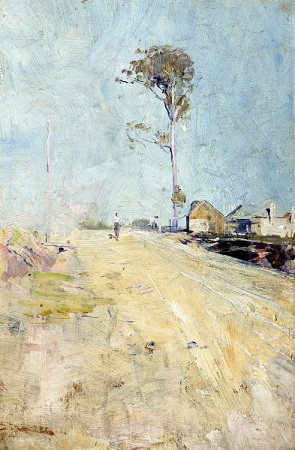
Summer Heat (A Road to the Ranges) door Arthur Streeton, 1889


Heat

From plains that reel to southward, dim,
The road runs by me white and bare;
Up the steep hill it seems to swim
Beyond, and melt into the glare.
Upward half-way, or it may be
Nearer the summit, slowly steals
A hay-cart, moving dustily
With idly clacking wheels.

In the sloped shadow of my hat
I lean at rest, and drain the heat;
Nay more, I think some blessèd power
Hath brought me wandering idly here:
In the full furnace of this hour
My thoughts grow keen and clear.


Archibald Lampman (17 november 1861 – 10 februari 1899)
Lampmans voormalige woonhuis in Ottawa


De Australische schrijver John Birmingham werd geboren op 7 augustus 1964 in Liverpool, Engeland. Zie ook alle tags voor John Birmingham op dit blog.

Uit: Emergence: Dave vs. the Monsters

« A helicopter is no place for a hangover. Hooper closed his eyes and breathed carefully as the engine spooled up. His gorge rose at the toxic mix of jet fuel, stale sweat, and bile at the back of his throat. The thudding of the rotors punched deep into his chest: sickening deep-body blows that traveled up his spinal column, directly into his neck and head. He bit down hard on a gag reflex, refusing to heave up what little remained of his stomach contents, most of which he’d left in a steaming pile on the grass at the edge of the helipad.
“Oh, fuck me,” he grunted as the red and white Era Helicopter took off, driving him down into his seat. Years of ass compression had squashed the foam cushioning into a thin hard sandwich between his butt and the steel struts of the seat fitting. The chopper, a venerable old AW139, was streaked with rust and oil, the Plexiglas scratched and the nonslip floor sticky with chaw tobacco and chewing gum. Like Dave, its glory days were behind it, and the AC did nothing to mask the baked-in stench of sweat, cigarette smoke, and budget cologne. Dave was just glad he had the cabin to himself on this trip. The only stewed farts and bad breath he had to contend with were his own. As they ascended, the great rusty iron lever behind his eyeballs cranked up the pressure on his headache. He squeezed his eyes shut behind wraparound Oakleys, but the bright Gulf sun burned through anyway, driving a sharp spike through his eyeballs, an unpleasant contrast to the duller concussive hammering on the sides of his skull. He removed his Dallas Cowboys cap and rubbed gently at the thinning hair on top of his skull in an effort to alleviate the pain—all to no avail. He kept his hair short these days. You had to when it started to fall out, and no matter how tenderly he ministered to himself, his fingertips seemed to rake deep and surely bloody furrows through the unprotected scalp.
“Oh, fuck me,” he grunted again, replacing the cap and making the stubbled skin disappear.”


John Birmingham (Liverpool, 7 augustus 1964)


De Nederlandse dichter en prozaïst Cees Buddingh’ werd op 7 augustus 1918 geboren in Dordrecht. Zie ook alle tags voor Cees Budding’ op dit blog.


Portret van een witte muis

Het is niet voldoende
een lap linnen van twee bij twee meter
helemaal wit te schilderen

om een lekker tof schilderij te maken
dient men er daarna niet alleen
met dezelfde witte verf
een volkomen witte muis op te schilderen
maar men moet vervolgens die witte muis
met een stuk puimsteen langzaam wegschuren
tot er geen spoor meer van overblijft

het kost tijd en moeite natuurlijk, maar dan pas
heeft men een lekker tof schilderij
dat men met een diepgerust hart
portret van een witte muis kan noemen.


Heel oud spel

het is een heel oud spel,
maar gelukkig nog vrij eenvoudig te leren

er komen geen stukken bij te pas,
geen stenen, geen schijven, geen fiches, geen kaarten,
alleen, soms, een simpel rekensysteem

het wordt gespeeld met drie of vier benen
(en nog een paar andere benodigdheden)
in een al dan niet opgemaakt bed
(bij gebreke daarvan kan vrijwel ieder
min of meer effen oppervlak dienen,
mits min of meer horizontaal van stand)

het is, als gezegd, een heel oud spel,
maar nog steeds veruit het gezelligste


Cees Buddingh’ (7 augustus 1918 – 24 november 1985)


De Nederlandse dichteres Diana Ozon (pseudoniem van Diana Groenveld) werd geboren in Amsterdam op 7 augustus 1959. Zie ook alle tags voor Diana Ozon op dit blog.


Moeder

Een bushokje is erg klein
tochtig en onherbergzaam
met je zeven kinderen
slapen op het plaveisel
samen onder één deken
ver van je thuisland
op reis overal uitgewezen

Je wou naar Rotterdam toe
daar zou iemand je helpen
waarschijnlijk had je nog nooit
van dat Groningen gehoord
tot bleek dat de trein daar stopt
het vervoer niet verder gaat
het was al na middernacht

Ik zie je steeds opnieuw staan
met koffers en kinderen
in vele gedaantes en
met elke taal verlegen
duizend angstige vragen
letters kan je niet lezen
geen plaats om in te rusten


MA~, AMIGA

Wil je een Duits toetsenbord
met ringel-s en umlaut
of liever compatibel met
de Commodore 64
de eerste volkscomputer
op de voet gevolgd door
de MSX 1, 2 en 2+

De optimalizering van pc
naar pct, xt, xtt naar at en
dan vergeet ik nog de st die
staat bij Chinees restaurant
Pa Lin ter controle of
de bamie is geënterd
Ik druk op einde F7 en ga eten

heb nog niet zo’n spatvrij zeil als
de nieuwe kok uit Hong Kong


Diana Ozon (Amsterdam, 7 augustus 1959)


Zie voor nog meer schrijvers van de 7e augustus ook mijn blog van 7 augustus 2017 en ook mijn blog van 7 augustus 2011 deel 1 en ook deel 2.
Dolce far niente, Adama van Scheltema, Kjell Westö, Diane DiPrima, Alfred Lord Tennyson, Paul Claudel


Dolce far niente


Heat Wave door John William Richie, 2017


Hitte

Hoog staat het stralend witte zonjuweel
En slaat zijn hete licht op ’t land te gruis,
De zilvren vlammen laaien uit ’t hemelhuis,
De barnende aarde blakert grijs en geel.

Elk buigt zijn rug onder het zware kruis
Van vlammen, een last van vuur, – het lijkt of heel
De wereld brandend draait, – de zon ziet scheel
En kookt het gulzig zweet op ’t heet fornuis.

Kon ik die zon aan bei mijn borsten drukken
En drinken van haar licht, dat ik in dagen
Van duisternis de mensen zou verrukken!

Wie dorst zijn ziel in ’t barre zonlicht dragen,
Om uit zijn hart voor andren de oogst te plukken, –
Wie dorst om zweet – wie dorst om waarheid vragen?


Adama van Scheltema (26 februari 1877 – 6 mei 1924)
Amsterdam. C. S. Adama van Scheltema werd geboren in Amsterdam


De Finse schrijver Kjell Westö werd geboren op 6 augustus 1961 in Helsinki. Zie ook alle tags voor Kjell Westö op dit blog.

Uit: The perils of being Skrak (Vertaald doorDavid McDuff)

“Through the crackling and the roaring of the waves he could hear his father take a deep breath, then Bruno said slowly: ‘Uncle Joe also writes that you’ve given up your course in company law. “The boy is a bit whimsy, he seems prone to follies,” he writes.’ Then Werner lost his temper. ‘I’m not a bit interested in company law, Dad,’ he said, ‘and I’m not a boy. I’ll be twenty-one next month and I’m going to start choosing my courses myself.’ ‘Aha,’ said Bruno, who wasn’t used to being contradicted, ‘if that’s the tone you’re going to adopt you can have your birthday here at home.’
If one has a father like Bruno, one’s father’s word is law, and Werner went home from Cleveland early, to a Helsinki that was spring-fragile and windy but no longer so war-scarred as it had been, where people were already preparing for the summer’s great party. He came home via London and Stockholm, Atlantic flights were still a novelty and Werner was scared of flying, he would rather have taken the Queen Mary from New York and then one of the North Sea ferries to Denmark or Gothenburg: it was Bruno who insisted on the outrageously expensive air tickets, he wanted to get his son home before he fell prey to more follies. And thus it was that Werner Skrake and Geoffrey Mulcahy arrived at Malm Aerodrome on the same flight, and after changing planes in Stockholm they actually sat next to each other, but without talking: the only thing that happened was that Werner grunted embarrassedly as he squeezed past Jeff Mulcahy from his window sear in order to visit the toilet.
For my grandfather Bruno the situation out there at Malm Aerodrome must have been a difficult one.
The last plane of the evening, the metal-gleaming aeroplane hulls still coloured faintly red by the dying light, spring dusk, a sky still white with a pale crescent moon hanging like a sword of Damocles over the control tower. There was to be a writing of History, and the whole of the Soft Drinks Company’s board of management was assembled to meet the prominent guest, they were dressed in black suits and well-ironed white shirts and had serious, furrowed warriors’ faces, they were a bilingual elite force that represented the very backbone of Helsinki’s post-war capitalism, they were the men who had paid off the gigantic war reparations in less than eight years. And then the Americans send a young whippersnapper in a tweed jacket and light-coloured sports shoes! And then his own boy, the rebel and renegade, comes along with the same plan, after being away since September!”


Kjell Westö (Helsinki, 6 augustus 1961)


De Amerikaanse dichteres en schrijfster Diane DiPrima werd geboren op 6 augustus 1934 in New York. Zie ook alle tags voor Diane DiPrima op dit blog.


Paracelsus:

Extract the juice which is itself a Light.

Pulp, manna, gentle
Theriasin, ergot
like mold on flame, these red leaves
bursting
from mesquite by the side
of dry creekbed. Extract

the tar, the sticky
substance
heart
of things
(each plant a star, extract

the juice of stars
by circular stillation
smear
the inner man w/the coction
till he burn
like worms of light in quicksilver
not the false
puffballs of marshfire, extract

the heart of the empty heart
it is full
of the star soul that paces fierce
in the deeps of earth
the Red Man,
healer
in furs
who carries a club
who carries
the pale homunculus
in his belly.
For you are angel, you call
the soul from plants

or pearls of ambergris
out of the grudging sea.
Extract arcanum. Separate
true Archeus from the false
the bitter
is not less potent—nor does clarity
bespeak truth.

Out of the heart of the ineffable
draw the black flecks of matter
& from these
the cold, blue fire.
Dry water. Immerse
yourself
though it be but a drop.
This Iliaster
flowers like the wind.
Out of the ash, the Eidolon of the world

Crystalline.
Perfect.


Diane DiPrima (New York, 6 augustus 1934)


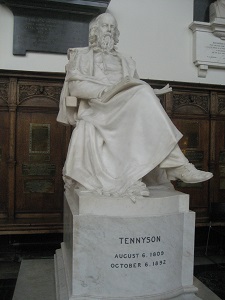
De Engelse dichter Alfred, Lord Tennyson werd geboren op 6 augustus 1809 in Somersby, Lincolnshire, England. Zie ook alle tags voor Alfred Tennyson op dit blog.


The Flower

Once in a golden hour
I cast to earth a seed.
Up there came a flower,
The people said, a weed.

To and fro they went
Thro’ my garden bower,
And muttering discontent
Cursed me and my flower.

Then it grew so tall
It wore a crown of light,
But thieves from o’er the wall
Stole the seed by night.

Sow’d it far and wide
By every town and tower,
Till all the people cried,
‘Splendid is the flower! ‘

Read my little fable:
He that runs may read.
Most can raise the flowers now,
For all have got the seed.

And some are pretty enough,
And some are poor indeed;
And now again the people
Call it but a weed.


Marriage Morning

Light, so low upon earth,
You send a flash to the sun.
Here is the golden close of love,
All my wooing is done.
Oh, all the woods and the meadows,
Woods, where we hid from the wet,
Stiles where we stayed to be kind,
Meadows in which we met!
Light, so low in the vale
You flash and lighten afar,
For this is the golden morning of love,
And you are his morning star.
Flash, I am coming, I come,
By meadow and stile and wood,
Oh, lighten into my eyes and my heart,
Into my heart and my blood!
Heart, are you great enough
For a love that never tires?
O heart, are you great enough for love?
I have heard of thorns and briers.
Over the thorns and briers,
Over the meadows and stiles,
Over the world to the end of it
Flash of a million miles.


Alfred Tennyson (6 augustus 1809 – 6 oktober 1892)
Standbeeld in Trinity College, Cambridge


De Franse dichter, schrijver en diplomaat Paul Claudel werd geboren op 6 augustus 1868 in Villeneuve-sur-Fère. Zie ook alle tags voor Paul Claudel op dit blog.

Uit: La Messe là-bas

Une fois de plus l’exil, l’âme toute seule une fois de plus qui remonte à son château,
Et le premier rayon du soleil sur la corne du Corcovado !

Tant de pays derrière moi commencés sans que jamais aucune demeure s’y achève !
Mon mariage est en deçà de la mer, une femme et ces enfants que j’ai eus en rêve.

Tous ces yeux où j’ai lu un instant qu’ils me connaissaient, tous ces gens comme s’ils étaient vivants que j’ai fréquentés,
Tout cela est pareil une fois de plus à ces choses qui n’ont jamais été.

Ici je n’ai plus comme compagnie que cette augmentation de la lumière,
La montagne qui fait un fond noir éternel et ces palmiers dessinés comme sur du verre.

Et quand la Création après le jour sans heures se condense une fois de plus du néant,
Fidèle à l’immense quai chaque soir, je vais revisiter l’Océan :

La mer et ce grand campement tout autour avec un million de feux qui s’allument,

L’Amérique avec toutes ses montagnes dans le vent du soir comme des Nymphes couronnées de plumes !

L’Océan qui arrive par cette porte là-bas et qui tape contre la berge haute,

Sous le ciel chargé de pluie de toutes parts ces chandelles de cinquante pieds qui sautent !

Mon esprit n’a pas plus de repos que la mer, c’est la même douleur démente !

La même grande tache de soleil au milieu sans rien ! et cette voix qui raconte et qui se lamente !

Voici la contagion de la nuit qui gagne tout le ciel peu à peu.


Paul Claudel (6 augustus 1868 – 23 februari 1955)
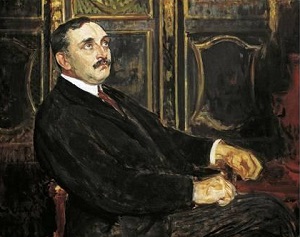
Portret door Jacques-Émile Blanche, 1919


Zie voor de schrijvers van de 6e augustus ook mijn blog van 6 augustus 2017 en ook mijn blog van 6 augustus 2015 en ook mijn blog van 6 augustus 2011 deel 1 en eveneens deel 2 en ook deel 3.

Dolce far niente, Joost Baars, Martin Piekar, Gunter Haug, Richard Preston


Dolce far niente


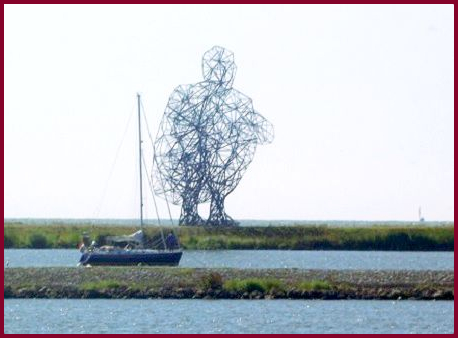
Flevopolder: Exposure door Antony Gormley, 2010


Ach, ganzen van de flevopolder

ach, ganzen van de flevopolder,
wat maakt het jullie uit,

dat onderscheid tussen natuur en cultuur?
jullie strijken neer waar water en ruimte is,

wanen je in het gakken onbespied door hen
die in metalen lichamen over de dijk voorbijrazen

(wat is in ganzenoren dat razen trouwens anders
dan ook een soort van gakken?)

jullie vliegen op ten zuiden van europa
waar menselijker wezens dat verboden is

en steken door de lucht het water over
waarin veel van hen ten onder gaan

jullie bereiken niet een land, maar land,
belanden niet maar landen,

jullie onbeperkte welkom komt van de aarde
en gaat ons niet aan,

wij die niet van de aarde zijn
en daarom de aarde willen bezitten.

ik ben op weg om mijn geleende metalen lichaam
aan zijn bezitter terug te geven,

met een gevulde tank
en met een lege portemonnee,

maar wat kan jullie dat schelen,
jullie economieloze wezens

met jullie grenzeloze gaan?


Joost Baars (Leidschendam, 2 oktober 1975)
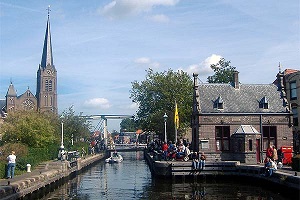
Leidschendam, de geboorteplaats van Joost Baars


 De Duits-Poolse dichter Martin Piekar werd geboren op 5 augustus 1990 in Bad Soden am Taunus. Zie ook alle tags voor Martin Piekar op dit blog.


CyberschlafStörung

Lass den Ghost in der Shell
Er muss brüten
Vom Mond im Jupiter im Livestream
Eines Nichtschlafs,
Denn
mich flieht der Schlaf
Durch die Nacht
Chat ich mich
Wenn du eine Revolution willst
Bestell sie über Amazon Prime
Gesicherter Versandt verringert Risiken
In gestörter Einsamkeit
Zieh ich meinen besten Schlafanzug an
Dustern gezwungen zu wachen
Ich halte Dunkel nicht träumend aus
Share me, share me, share me with you applephone
Und lass uns Doppelgänger tauschen
Per Zufall sind wie Foetalisten
Und hüpfen von USB
Zu USB-Port zu wälzen hilft
Nicht einer Ruhe beizuwohnen
Ich habe den Anschluss an Schlaf verloren
Und Versuche durch alte Tags
Wer die Langeweile sucht
Bleibt ungefunden
Du kannst nicht einfach
Deinen Beziehungsstatus ändern ohne
Dich zu ändern
Ich hab ne Buchempfehlung für dich
Schreib eins
Trommle ein paar Server ab und
Finde mein Leiden immer wieder
Scheißreziprozität des Netzes
Ich brauche einen Kollaps
Ich ghoste keinen SleepStream
Ich puste die WifiVerbindung aus
Und wünsch mir was


Martin Piekar (Bad Soden am Taunus, 5 augustus 1990)


De Duitse schrijver Gunter Haug werd geboren op 5 augustus 1955 in Stuttgart. Zie ook alle tags voor Gunter Hauch op dit blog.

Uit: Margrets Schwester

„Johanna Magdalena Friedrich ist am 3. August 1829 in Treschklingen bei Rappenau auf die Welt gekommen. Im Dorf kannte man die Kleine als ein fröhliches Mädchen. Denn obwohl sie in recht ärm­liche Verhältnisse hineingeboren worden war, fühlte sich Johanna auf eine unbestimmte Art und Weise unbeschwert, geborgen und zufrieden. So ein Kind spürt die Armut ja meistens nicht, vor allem dann nicht, wenn es bei den anderen Familien im Dorf genauso kärglich und bescheiden zugeht, wie zuhause. Und genau so war es in Treschklingen. Bei allen: bei den Tagelöhnern, den Kleinbauern, den herrschaftlichen Angestellten auf dem Gutshof, den Arbeitern und den Straßenwarten – sogar bei den Handwerkern. Die einzige Ausnahme bildeten die beiden Gastwirte und natürlich der Rittergutsbesitzer. Sie seien arme, aber glückliche Leute gewesen – so würde Johanna später einmal über ihre frühe Kindheit erzählen. Und dass sie der ganze Stolz ihrer Mutter gewesen sei, mit ihren dunklen, fast schwarzen, glänzenden Haaren und ihrer dunklen Hautfarbe, die in einem scharfen Kontrast zu Johannas wasserblauen Augen stand. »Die hast du von deinem Vater geerbt«, murmelte die Mutter manchmal lächelnd, wenn sie ihrer Tochter die Haare wieder zu zwei großen Zöpfen flocht, die dem Mädchen bis zu den Schultern herunter reichten. Auf ihre anschließende Frage, wer denn eigentlich ihr Vater sei, erhielt sie freilich niemals eine Antwort. Die Mutter pflegte darauf grundsätzlich nur leicht den Kopf zu schütteln, während sie den Zeigefinger der rechten Hand behutsam vor ihre geschlossenen Lippen führte.

Natürlich konnte Johanna im Vorübergehen ab und an aufschnappen, wie sich manche hinter vorgehaltener Hand spöttische Bemerkungen über »die Zustände« im Haus des Kleinbauern Christoph Friedrich ins Ohr tuschelten, aber das brauchte sie nicht weiter zu bekümmern – schließlich gab es ohnehin kaum eine Familie, die von der üblichen Tratscherei der dorfbekannten Lästermäuler verschont geblieben wäre.

Dennoch war ihr bald klar geworden, worauf die Schwätzer abzielten: auf diese ihrer Meinung nach seltsamen, wenn nicht sogar unziemlichen Familienverhältnisse im Haushalt der Friedrichs. Na und? Sollten sie sich ruhig weiter das Maul darüber zerreißen, dass Johannas Mutter auch nach der Geburt ihrer beiden unehelichen Kinder noch zusammen mit ihren drei jüngsten Geschwistern Maria, Georg und Elisabeth unter dem Dach des Vaters lebte.“


Gunter Haug (Stuttgart, 5 augustus 1955)


De Amerikaanse schrijver Richard Preston werd geboren op 5 augustus 1954 in Cambridge, Massachusetts. Zie ook alle tags voor Richard Preston op dit blog.

Uit: The Hot Zone

« When a hot virus multiplies in a host, it can saturate the body with virus particles, from the brain to the skin. The military experts then say that the virus has undergone “extreme amplification.” This is not something like the common cold. By the time an extreme amplification peaks out, an eyedropper of the victim’s blood may contain a hundred million particles. In other words, the host is possessed by a life form that is attempting to convert the host into itself. The transformation is not entirely successful, however, and the end result is a great deal of liquefying flesh mixed with virus, a kind of biological accident. Extreme amplification has occurred in Monet, and the sign of it is the black vomit.
He appears to be holding himself rigid, as if any movement would rupture something inside him. His blood is clotting up and his bloodstream is throwing clots, and the clots are lodging everywhere. His liver, kidneys, lungs, hands, feet, and head are becoming jammed with blood clots. In effect, he is having a stroke through the whole body. Clots are accumulating in his intestinal muscles, cutting off the blood supply to his intestines. The intestinal muscles are beginning to die, and the intestines are starting to go slack. He doesn’t seem to be fully aware of pain any longer because the blood clots lodged in his brain are cutting off blood flow. His personality is being wiped away by brain damage. This is called depersonalization, in which the liveliness and details of character seem to vanish. He is becoming an automaton. Tiny spots in his brain are liquefying. The higher functions of consciousness are winking out first, leaving the deeper parts of the brain stem (the primitive rat brain, the lizard brain) still alive and functioning. It could be said that the who of Charles Monet has already died while the what of Charles Monet continues to live.
The vomiting attack appears to have broken some blood vessels in his nose and he gets a nosebleed.”


Richard Preston (Cambridge, 5 augustus 1954)


Zie voor de schrijvers van de 5e augustus ook mijn twee blogs van 5 augustus 2016.

I Am the Bread of Life (Malcolm Guite)

Bij de 18e zondag door het jaar


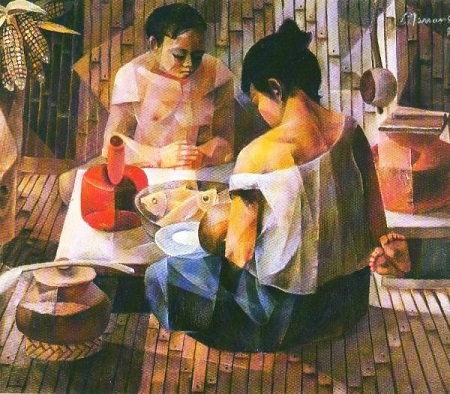
Give Us This Day Our Daily Bread door Vicente Manansala, 1981


I Am the Bread of Life

John 6:35. Jesus said to them, ‘I am the bread of life. Whoever comes to me will never be hungry,and whoever believes in me will never be thirsty.

Where to get bread? An ever-pressing question
That trembles on the lips of anxious mothers,
Bread for their families, bread for all these others;
A whole world on the margin of exhaustion.
And where that hunger has been satisfied
Where to get bread? The question still returns
In our abundance something starves and yearns
We crave fulfillment, crave and are denied.

And then comes One who speaks into our needs
Who opens out the secret hopes we cherish
Whose presence calls our hidden hearts to flourish
Whose words unfold in us like living seeds
Come to me, broken, hungry, incomplete,
I Am the Bread of Life, break Me and eat.


Malcolm Guite (Ibanda, 12 november 1957)
Oritamefa Baptist Church in Ibadan, Nigeria, de geboorteplaats van Malcolm Guite


Zie voor de schrijvers van de 5e augustus ook mijn blog van 5 augustus 2016 deel 1 en deel 2.
Dolce far niente, Jill McDonough, Jan Eijkelboom, Wystan Hugh Auden


Dolce far niente – Canal Parade, Amsterdam


Gay Pride and Diversity door Neil McBride, z.j.
 

Dear Gaybashers

The night we got bashed we told Rusty how
they drove up, yelled QUEER, threw a hot dog, sped off.

Rusty: Now, is that gaybashing? Or
are they just calling you queer? Good point.

Josey pitied the fools: who buys a perfectly good pack of wieners
and drives around San Francisco chucking them at gays?

And who speeds off? Missing the point, the pleasure of the bash?
Dear bashers, you should have seen the hot dog hit my neck,

the scarf Josey sewed from antique silk kimonos: so gay. You
missed laughing at us, us confused, your raw hot dog on the ground.

Josey and Rusty and Bob make fun of the gaybashers, and I
wash my scarf in the sink. I use Woolite. We worry

about insurance, interest rates. Not hot dogs thrown from F-150s,
homophobic freaks. After the bashing, we used the ATM

in the sex shop next to Annie’s Social Club, smiled at the kind
owner, his handlebar mustache. Astrud Gilberto sang tall and tan

and young and lovely, the girl from Ipanema… and the dildos
gleamed from the walls, a hundred cheerful colors. In San Francisco

it rains hot dogs, pity-the-fool. Ass-sized penguins, cock after cock in
azure acrylic, butterscotch glass, anyone’s flesh-tone, chrome.


Jill McDonough (Hartford, Connecticut, 1972)


Couples door Raphael Perez, z.j.


Voorkeur

Liefde:
de kortste eeuwigheid.
Laat het maar vriendschap zijn,
dan heeft het alle tijd.


Jan Eijkelboom (1 maart 1926 – 28 februari 2008)


Orpheus door Richard Taddei, z.j.


Lullaby

Lay your sleeping head, my love,
Human on my faithless arm;
Time and fevers burn away
Individual beauty from
Thoughtful children, and the grave
Proves the child ephemeral:
But in my arms till break of day
Let the living creature lie,
Mortal, guilty, but to me
The entirely beautiful.

Soul and body have no bounds:
To lovers as they lie upon
Her tolerant enchanted slope
In their ordinary swoon,
Grave the vision Venus sends
Of supernatural sympathy,
Universal love and hope;
While an abstract insight wakes
Among the glaciers and the rocks
The hermit’s carnal ecstasy.

Certainty, fidelity
On the stroke of midnight pass
Like vibrations of a bell,
And fashionable madmen raise
Their pedantic boring cry:
Every farthing of the cost,
All the dreaded cards foretell,
Shall be paid, but from this night
Not a whisper, not a thought,
Not a kiss nor look be lost.

Beauty, midnight, vision dies:
Let the winds of dawn that blow
Softly round your dreaming head
Such a day of welcome show
Eye and knocking heart may bless,
Find the mortal world enough;
Noons of dryness find you fed
By the involuntary powers,
Nights of insult let you pass
Watched by every human love.


Wystan Hugh Auden (21 februari 1907 – 29 september 1973)


Zie voor de schrijvers van de 4e augustus ook mijn blog van 4 augustus 2017 en ook mijn blog van 4 augustus 2013 en mijn blog van 4 augustus 2011 deel 1 en ook deel 2 en eveneens deel 3 en mijn blog over Robert Beck.