Ramsey Nasr, Peter Verhelst, Maik Lippert, Thierry Baudet, Ismail Kadare, Hermann Kesten, Miguel Barnet, David Lodge, Mo Rocca

De Nederlandse dichter, schrijver en acteur Ramsey Nasr werd geboren in Rotterdam op 28 januari 1974. Zie ook alle tags voor Ramsey Nasr op dit blog.


Het dooit onder de korven
(bij het tienjarig jubileum van het literaire tijdschrift Awater)

(naar Martinus Nijhoff)

1.
Het is de fout geweest van onze goden.
Zij waren eerst en hemelsbreed aanwezig.
Ze hadden beter moeten weten.

Wij stonden handwerkloos en ledig
op de bodem van hun verre feest
te wachten als reservesterren. Gloeiend vlees.

Eerst kregen we ijs, om ons te breken.
Geen tand of schedel kan beschrijven
wat dat voor leven was. Het was er geen.

Voortgedreven van leegte naar witte leegte.
We schreven de tweesnijdende jaren.
Weerszijden niets dan eeuwigheid.

En ik, moedermens op mijn morene
tegen ontallige stootwinden in – ik bleef
wenken, knipogen, flemen.

Ik lonkte naar grijze zon en planeten
leerde mezelf burlen als een beest, alles
om hen tot smelten te bewegen.

Wij zaten het uit. Halfbloot. Verweesd.
Volstrekt onleesbaar voor hun oog.

2.
Wij hadden afgesproken. Spoedig, halverwege
tegen het aanbreken van de seizoenen
te midden van bomen, bijen, kreken.

Reuzeneieren lagen vergeten in het woud
alsof elke ijstijd zijn terugkeer gereedhoudt:
verse kou, uit te broeden bij heimwee.

We hadden modderpoelen van ze gekregen
om zelf onze eilanden te kneden.
Het jaar mochten wij nu in vieren delen.

We stierven bij bosjes, leefden tevreden.
De ochtend verbreidde zijn godenschemer.
Eindelijk iets om voor te vrezen.

Ik wurgde netjes maagden aan het veen
stapelde gletsjerkeien om me heen
ging liggen met mijn trechterbekers –

en daar kwamen ze, halverwege als beloofd
wit en breekbaar naar beneden.
In kristallen warrelden voorouders mee.

Hier ga ik. Op twee verzamelaarsbenen
waad ik door sneeuw, zuigende sneeuw.
Ik ben een honingvat voor de hemel.

3.
Vroeger liet je nog iets van je horen.
Vond ik je terug, in een lever verborgen
of languit snurkend in drassige voren.

In de tuin trof ik sporen aan van bezoek.
Stuif verraadde je. De vlucht van een vogel
suizelend door de nacht bleek een code.

Jij, die uitgestorven panorama’s bewoonde
die danspasjes toonde in horzel en bij
zigzagbode, wezenloos tekeergaand in mij

ik speurde je geilheid in wijn en in brood
wij likten de dagen gezamenlijk schoon.
Nu wip je hooguit eens langs bij mijn dood.

Misschien zijn de goden bijziend geworden.
Moet ik ze uitroken in hun holen.
Het vuur doen sneeuwen uit hun ogen.
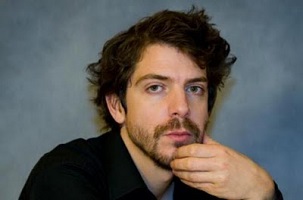


Ramsey Nasr (Rotterdam, 28 januari 1974)


De Vlaamse dichter, romancier en theatermaker Peter Verhelst werd geboren op 28 januari 1962 in Brugge. Zie ook alle tags voor Peter Verhelst op dit blog.


Tegen de muur

Een leven lang hadden we ervan gedroomd
een muur te vormen
sloegen armen om schouders
klikten in elkaar
heupkop in heupkom
we zetten ons schrap
we hesen een kind op onze schouders
komt het? riepen we, zongen we het toe
– de lange wimpers, de verwonderde blik
van een impala

we zingen almaar luider om er niet aan te denken
dat we op een dag van elkaar los
zand dat we nat maken met ons zweet
aanstampen hard maken

het kind boven ons dansend
balletje op een fontein – alles wat in onze macht lag hebben we gedaan
om het in de lucht te houden.


Muur na muur

Waarom we er zeker van zijn dat aan het eind van de gang
een deur is – het kan niet dat alles voor niets is geweest
het mag niet dat wij
er moet toch iets zijn.

Door het sleutelgat kijkt een vrouw naar een man
die eeuwenoude patronen in een kiezeltuin veegt als veegt hij
de resten glad van een andere muur.

Ergens moet de deur zich bevinden.
Het is een kwestie van tijd en ruimte die samenvallen.

Als iemand de deur ooit opent
vliegen duizenden flamingo’s uit een meer op.

Weldra zal de roze wolk de stad bereiken.


Vaas

Kun je een vaas haar breekbaarheid verwijten
of een hand het breken van de vaas?
Misschien is het zo bedoeld
dat de vaas de hand op zich af zingt
zodat de hand niet kan weerstaan,
hoewel de hand weet dat hij slaat
en in de vaas al scherven zingen
voor ze zijn ontstaan.

Waarom zou de hand verlangen naar een vaas
die, als een hals, zich uitstrekt naar de hand
die haar wil slaan? En waarom wil de vaas
haar scherven naar de oppervlakte zingen
zodat de hand haar niet langer kan weerstaan?

Misschien droomt de vaas wel van de hand
een roos te maken, wil de hand op zoek gaan naar de vaas
om eindelijk de scherf te vinden
waarmee hij rozen uit zijn eigen pols kan slaan.



Peter Verhelst (Brugge, 28 januari 1962)


De Duitse dichter en schrijver Maik Lippert werd geboren op 28 januari 1966 in Erfurt. Zie ook alle tags voor Maik Lippert op dit blog.


DAS GLÜCK MEINES SOHNES
Sind Rundumleuchten
An Autos
Glücklich ruft er tatütata
Baustellen und Bohrmaschinen
Interessieren ihn
Bücher nur vor dem abdrücken
Auf dem Topf
Glück gehabt
Das wird mal kein Literat
Der an jeder nicht gedruckten Zeile leidet
Er wird ein Regal an der Wand anbringen
Und einfach sagen können
Sieh mal wie schön
Selbst gemacht 


blank die gleise

zieht die sichel
über menschen wie
wasserzeichen
sie haben dich vergessen
die geheimschrift mit zitronensaft
die nachts dein licht
auf leckenden gußheizungen
dechiffrierte
den brief auf karopapier
liebste
diana selene birgit
semmelgesicht
ich zähle in gedanken
an deinen schläfen
die windpockennarben
nur ich mond
narr
dein sabbernder attis
ich schelle für dich
mit konservenblech
mond ich
tanze für dich
mit brokkoli & porzellan
in den einkaufstaschen
unter wartenden am bahndamm
in der appellinie der straßenbeleuchtung
menschen wie
wasserzeichen
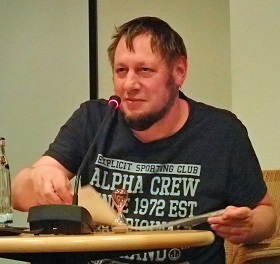


Maik Lippert (Erfurt, 28 januari 1966)


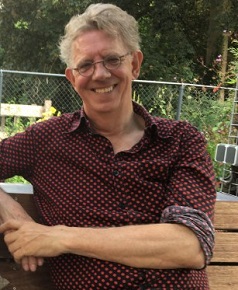
De Nederlandse schrijver, historicus, jurist en politicus Thierry Baudet werd geboren in Heemstede op 28 januari 1983. Zie ook alle tags voor Thierry Baudet op dit blog.

Uit: Seks en civilisatie

“Niet zo lang geleden stelde Boris Johnson dat moslimterroristen stuk voor stuk ‘seksueel gefrustreerde rukkers’ zijn. Die opmerking sluit aan bij een algemeen gevoel in de moderne westerse samenleving dat seksuele bevrijding goed is – en omgekeerd: dat wie zijn driften onderdrukt, wie ‘seksueel gefrustreerd’ is, niet goed terechtkomt.
Weinigen zullen betwijfelen dat er van alles misgaat bij fundamentalistische moslims, en het is tamelijk evident dat seksuele frustratie in die kringen endemisch is. Maar is er ook een causaal verband? Lange tijd zou zoiets bizar hebben geklonken. Eeuwenlang werd algemeen aangenomen dat een dergelijke frustratie juist het beginpunt zou zijn van cultivering, scheppingsdrang en waardigheid. Gedurende het grootste deel van onze geschiedenis werd seksuele onderdrukking gezien als voorwaarde voor beschaving. Dit zien we al terug bij Maria die – juist omdat ze nog maagd is – het kind van god kan baren. Ook Jezus blijkt vervolgens zonder driften, en juist daarin toont zich zijn goddelijke afstamming en zijn kracht. Verzaken we onze kuisheid, zoals de decadente keizers deden in het Romeinse rijk, dan gaat de boel ten onder.
Vele Europese mythen en verhalen bevatten een versie van deze moraal. Faust sluit een pact met de duivel om de bevallige Grätchen te kunnen schaken; Madame Bovary richt zichzelf (en haar Charles) te gronde door haar vele affaires; het graalslot uit het Parsifal-verhaal is grauw en onvruchtbaar geworden doordat koning Amfortas zich liet verleiden en zo zijn plicht verzaakte. Tegelijk hadden onze helden – de Christelijke heiligen en de vrome ridders van de Tafelronde, de héroïnes Penelope, Lucretia, Susanna en de maagd Jeanne d’Arc – stuk voor stuk hun driftleven volledig onder controle.
Het goede was het beheerste; het slechte het losbandige. Dit idee is pas zeer recent gekanteld. Waar de Freudiaanse cultuurtheorie nog uitgaat van de noodzaak van onderdrukking om via ‘sublimatie’ tot grote cultuurschepping te komen, daar leert zijn leerling Wilhelm Reich enige decennia later dat het de onderdrukking van de seksuele – vooral oedipale – drift is, die de patriarchale verbanden in stand houdt en de bloei van de vrije, open samenleving tegenhoudt.”



Thierry Baudet (Heemstede, 28 januari 1983)


De Albanese dichter en schrijver Ismail Kadare werd geboren in Gjirokastër op 28 januari 1936. Zie ook alle tags voor Ismail Kadare op dit blog.

Uit: Chronicle in Stone: A Novel (Vertaald door Arshi Pipa)

“Outside, the winter night had wrapped the city in water, fog and wind. Buried under my blankets, I listened to the muffled, monotonous sound of rain falling on the roof of our house. I pictured the countless drops rolling down the sloping roof, hurtling to earth to turn to mist that would rise again in the high, white sky. Little did they know that a clever trap, a tin gutter, awaited them on the eaves. Just as they were about to make the leap from roof to ground, they suddenly found themselves caught in the narrow pipe with thousands of companions, asking “Where are we going, where are they taking us?” Then, before they could recover from that mad race, they plummeted into a deep prison, the great cistern of our house. Here ended the raindrops’ life of joy and freedom. In the dark, soundless tank, they would recall with dreary sorrow the great spaces of sky they would never see again, the cities they’d seen from on high, and the lightning-ripped horizons. The only slice of the heavens they would see henceforth would be no bigger than the palm of my hand, on the occasions when I used a pocket mirror to send a fleeting memory of the endless sky to flicker on the surface of our reservoir. The raindrops spent tedious days and months below, until my mother, bucket in hand, would draw them out, disoriented and dazed from the darkness, to wash our clothes, the stairs, the floor. But for the moment they knew nothing of their fate. They ran happily and noisily across the slates, and I felt sorry for them as I listened to their wild chattering. When it rained three or four days in a row, my father would push the gutter-pipe aside to keep the cistern from overflowing. It was a very large cistern, extending under most of our house, and if it ever overflowed, it could flood the cellar and wreck the foundation. As our city was all askew, anything could happen then. As I lay wondering whether people or water suffered more in captivity, I heard footsteps and then the voice of my grandmother in the next room. “Hurry, get up. You forgot to shift the down pipe.” My father and mother leapt from their bed in alarm. Papa, in his long white drawers, ran down the dark hallway, opened the little window, and pushed the pipe aside with a long stick. Now we could hear the water splattering into the yard. Mamma lit the kerosene lamp and led Papa and Grandmother downstairs. I went to the window and tried to see out. The wind was furious, dashing the rain against the windowpanes, making the eaves groan. I was too curious to stay in bed, and I ran downstairs to see what was happening. All three grown-ups looked worried. They did not even notice I was there. “



Ismail Kadare (Gjirokastër, 28 januari 1936)
Sculptuur door Qazim Arifi, 2012


De Duitse dichter en schrijver Hermann Kesten werd geboren op 28 januari 1900 in Podwoloczyska (tegenwoordig Oekraïne). Zie ook alle tags voor Hermann Kesten op dit blog.

Uit: Die fremden Götter

“Junger Mann! Wollen Sie andeuten, in meiner Familie gehe es schlimmer zu als in Ihrer Familie? Oder in anderen guten Familien? Haben Sie nie Geschichte und Literatur studiert? Nie in der Schule von einer gewissen Iphigenie gehört? Das arme Kind ward zu Aulis vom eigenen Vater aus propagandistischen und religiösen Motiven geopfert. Und kennen Sie ihre Familie? Iphigeniens Urgroßvater Tantalus servierte seinen eigenen Sohn Pelops den Göttern zum Mahle, um sie auf die Probe zu stellen; er büßte es im Tartarus. Der Großvater Atreus, ein König von Mykene, rächte sich an seinem Bruder Thyestes. Indem er dessen Söhne tranchierte und dem Vater zum Mahle servierte; dafür tötete in sein Neffe Aegisthes. Die Mutter Klytämnestra erschlug mit Hilfe ihres Liebhabers Aegisthes ihren Mann Agamemnon im Bad nach dessen glücklicher Heimkehr vom Trojanischen Krieg. Der Onkel Menelaus war ein Hahnrei, der, um seine Hörner zu rächen, den Trojanischen Krieg entflammte. Ihre Tante Helena war die hübscheste Hure der Welt. Ihr Bruder Orestes war ein Muttermörder. Und ihre Schwester Elektra dessen Helfershelferin. Und doch stammte Iphigenia aus bester Familie, von hochbeliebten Atriden. Und lasen Sie nie die Bibel von Loth und seinen Töchtern? Und lasen Sie nicht kürzlich in der Zeitung vom Prozeß Laval, ich meine den Metzger Aristide Laval aus Juan-les-Pins, der seine Töchter jeweils an ihrem siebzehnten Geburtstag geschlachtet, zerlegt, durch seine Wurstmaschine getrieben hat als Charcuteriewaren in seinem Laden verkauft hat, die drei letzten armen Mädchen sogar auf dem schwarzen Markt?
Wer kennt die Menschen und mutet ihnen nicht alles zu, jede selbstlose Tat und jedes Verbrechen? Wenn ein Mensch es nur wagt, intim mit sich selber bekanntzuwerden, muss es ihm vor sich grausen und zugleich mag er sich bewundern. Schreiben Sie mal, ohne zu lügen, einen Tag lang alles auf, was Ihnen durch den Kopf geht, geheime Begierden, Erinnerungen, Vorstellungen und was Sie sagen, denken, tun und hören, Sie könnten ein ganzes Buch damit anfüllen und es wird erbaulich und entsetzlich sein.”
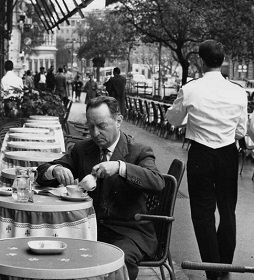


Hermann Kesten (28 januari 1900 – 3 mei 1996)
In Rome, eind jaren 1950


De Cubaanse dichter en schrijver Miguel Barnet werd geboren op 28 januari 1940 in Havanna. Zie ook alle tags voor Miguel Barnet op dit blog.


Flowers

She used to cut her nails with rusty clippers
Her skin was milky white
and she smelled like armpits
But her back had freckles and was shiny
and her nose was beautiful like a toucan
She was a foreigner
and read cards in a broken accent
I tried to bring her flowers
but she refused them
Give them to the man who takes care of the dogs
he has sores in his eyes
and dreams of lost loves
or so the cards tell me
So I did, like in a
Charlie Chaplain movie.


Black Men

He was black and drank aguardiente
I never heard him speak again
I never heard him laugh again
I never saw him kill a fly

He wore a white shirt, full of holes
and washed cars with a yellow cloth
His thick black fingers
squeezed the rag,
with such hatred, with such pain
that his white, gapped teeth
shot out of his mouth
I imagine his green kidney
pierced with an arrow

Everyone was afraid of him, even me
That was in the forties
when I still wet the bed

I know that time has passed
that there have been wars, tidal waves,
coups d’etat and revolutions
but his white teeth are still there, in my pupils
intact, like the night.


Vertaald door George Henson
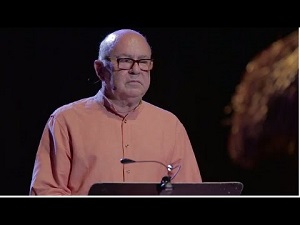


Miguel Barnet (Havanna, 28 januari 1940)


De Engelse schrijver en literatuurwetenschapper David Lodge werd geboren op 28 januari 1935 in Londen. Zie ook alle tags voor David Lodge op dit blog.

Uit: Nice Work

“He forced a laugh to cover his embarrassment. ‘Why can’t you people take things at their face value?’ `What people are you referring to?’ `Highbrows. Intellectuals. You’re always trying to find hidden meanings in things. Why? A cigarette is a cigarette. A piece of silk is a piece of silk. Why not leave it at that?’ `When they’re represented they acquire additional meanings, said Robyn. ‘Signs are never innocent. Semiotics teaches us that: `Semi-what?’ `Semiotics. The study of signs.’ ‘It teaches us to have dirty minds, if you ask me.’ ‘Why d’you think the wretched cigarettes were called Silk Cut in the first place?’ `I dunno. It’s just a name, as good as any other: “‘Cut” has something to do with the tobacco, doesn’t it? The way the tobacco leaf is cut. Like “Player’s Navy Cut” — my uncle Walter used to smoke them: `Well, what if it does?’Vic said warily. But silk has nothing to do with tobacco. It’s a metaphor, a metaphor that means something like,”smooth as silk”. Somebody in an advertising agency dreamt up the name “Silk Cut” to suggest a cigarette that wouldn’t give you a sore throat or a hacking cough or lung cancer. But after a while the public got used to the name, the word “Silk” ceased to signify, so they decided to have an advertising campaign to give the brand a high profile again. Some bright spark in the agency came up with the idea of rippling silk with a cut in it.The original metaphor is now represented literally. But new metaphorical connotations accrue — sexual ones.Whether they were consciously intended or not doesn’t really matter. It’s a good example of the perpetual sliding of the signified under the signifier, actually: Wilcox chewed on this for a while, then said, ‘Why do women smoke them, then, eh?’ His triumphant expression showed that he thought this was a knock-down argument. ‘If smoking Silk Cut is a form of aggravated rape, as you try to make out, how come women smoke ‘em too?’ `Many women are masochistic by temperament, said Robyn. `They’ve learned what’s expected of them in a patriarchal society.’



David Lodge (Londen, 28 januari 1935) 


De Amerikaanse schrijver, satiricus en komiek Mo Rocca werd geboren op 28 januari 1969 in Washington, DC. Zie ook alle tags voor Mo Rocca op dit blog.

Uit: All the Presidents’ Pets

“The only good part about being back in Washington was that I’d be near the White House. And the White House is where the President lives. Allow me to digress for a moment .. .
The President. The Commander-in-Chief. The Chief Executive. POTUS. Maybe I was fascinated by the office because I’d been raised in D.C., a mill town like L.A., where the President was the undisputed number-one star. Other kids might have become blasé but not I. Staring at the White House was magical, like looking through the gates of Paramount Studios.
It seemed that the office had worked a kind of alchemy on all its forty-two occupants. (George W. Bush is the forty-third President because Grover Cleveland’s nonconsecutive terms are counted twice.) In each case, the presidency took a man who seemed ordinary and transformed him into something more. Silent Cal Coolidge was no longer boring; he was stoic. Taft was no longer fat; he was robust. Clinton was no longer an adulterer; he was popular with women voters. Even George Washington, already a god among men, grew still larger than life in office. Had he never been President, he would have still been “First in War,” maybe even “First in the Hearts of his Countrymen.” But without the “First in Peace” part, the whole quote would have fallen apart.
Cynics believed that a presidential mythmaking machine was at work, serving the American public’s need, in the absence of royalty, to believe, say, that Warren Harding was a 1920s Abe Lincoln. (Warren Harding did have the biggest feet of any president—size fourteen and a half. That has to count for something.) They believed that the White House press corps aided and abetted this myth.
Perhaps it was no coincidence that the first modern all-powerful President, Teddy Roosevelt, had an especially close relationship with reporters and gave them their first pressroom inside the White House. He did this, the skeptics claimed, so that he could manage the flow of information more easily and control the way the American people perceived him.
But honestly, could anyone deny that TR was nearly superhuman? Through a hail of bullets this former asthmatic ran all the way up Cuba’s Kettle Hill without stopping for breath. (That’s right, Kettle Hill. San Juan Hill gets all the credit, but it was a lot less important.) This was no whitewashing.”



Mo Rocca (Washington, 28 januari 1969)


Zie voor nog meer schrijvers van de 28e januari ook mijn drie blogs van 28 januari 2018.
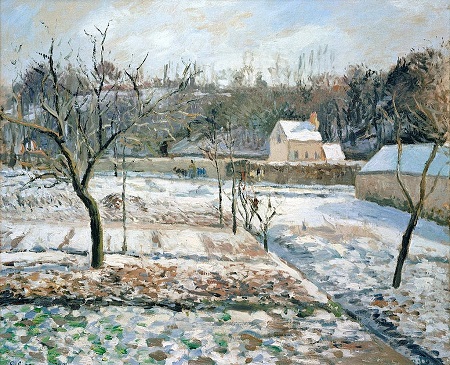
Orchard Trees, January (Richard Wilbur)


Dolce far niente


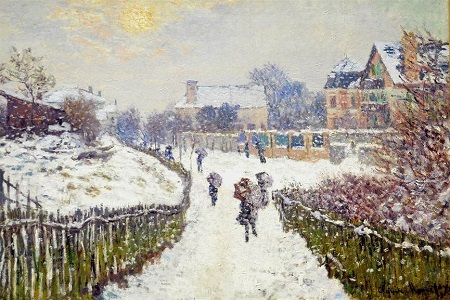
L’Hermitage, Pontoise, effet de neige door Camille Pissarro, 1874


Orchard Trees, January

It’s not the case, though some might wish it so
Who from a window watch the blizzard blow

White riot through their branches vague and stark,
That they keep snug beneath their pelted bark.

They take affliction in until it jells
To crystal ice between their frozen cells,

And each of them is inwardly a vault
Of jewels rigorous and free of fault,

Unglimpsed until in May it gently bears
A sudden crop of green-pronged solitaires


Richard Wilbur (1 maart 1921 – 14 oktober 2017)
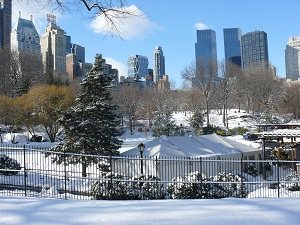
New York, de geboorteplaats van Richard Wilbur, in de sneeuw


Zie voor de schrijvers van de 27e januari ook mijn vorige blog van vandaag.

Rudolf Geel, Jannetje Koelewijn, Paolo Cognetti, Ethan Mordden, Lewis Carroll, Arie van der Krogt, Harvey Shapiro

De Nederlandse dichter en schrijver Rudolf Geel werd geboren in Amsterdam op 27 januari 1941. Zie ook alle tags voor Rudolf Geel op dit blog.

Uit: De voeten van Petrus

“5
‘Hoe komt “ons eigen nationale beest” om met Godfried Bomans te spreken, hier op deze Romeinse heuvel?’ vraagt de schrijver van mijn reisgids. Een noot vermeldt: ‘nadere details over dit curieuze en tragikomische geval geeft Godfried Bomans, Wandelingen door Rome.’
‘Ons eigen nationale beest’ is natuurlijk een leeuw. Ik bedoel: deze informatie verschaft de gids al eerder. Deze leeuw bevindt zich in het park van de Villa Borghese. Een speciaal bezoek ter ere van dit beeld is niet aan te bevelen. Zelfs niet aan de hand van onze eigen nationale Bomans. De laatste tijd zijn er verschillende aspecten van deze curieuze en tragikomische man behandeld. Hier iets over zijn gebruik van taal.
Als alle volkeren hun werkelijke ‘nationale beest’ kregen toebedeeld, dan zou de Nederlandse leeuw veranderen in een vooral herkauwende koe, de Duitse adelaar kreeg de gedaante van een zwijn, de Franse maagd werd een zuur oud wijf met slagtanden en Jan Stier een biscuitblik.
De Nederlandse leeuw is dan ook een symbool. Ons eigen Nederlandse symbool. Is hij dan ook een beest? Nee. De leeuw, koning Nobel, is de heerser over het dierenrijk. Het hoofdbeest dus, binnen het grappige idioom van Bomans. En daarom gaat het mij. ‘Ons eigen nationale beest’ is een grap, het is zogenaamd lollig bedoeld. Het is leuk. Maar in werkelijkheid is het helemaal niet leuk om van een leeuw een beest te maken. Dat is uitsluitend lollig, dat moet de Moerdijk over, dat is de feestneus van Oubol Roi. Met ‘beest’ ironiseer je de leeuw namelijk niet (de leeuw staat boven deze spot), maar evenmin met ‘ons nationale beest’ het feit dat wij uitgesproken een leeuw als symbool hebben.
Opgave: pas dezelfde bewijsvoeringen toe op: ‘Bomans, de pauselijke chimpansee’.”


Rudolf Geel (Amsterdam, 27 januari 1941)


De Nederlandse schrijfster en journaliste Jannetje Koelewijn werd geboren in Amsterdam op 27 januari 1959. Zie ook alle tags voor Jannetje Koelewijn op dit blog.

Uit: Heilbrons hel

“Lucas strekte zijn hals om het beter te kunnen zien. Bladerdeeg met iets erin. Rookworst. Ja, het was een halve rookworst in een goudglanzend omhulsel van gevlochten bladerdeeg, met mosterd, en mayonaise. Gadverdamme, dat zou hij dus nooit meer doen. Geen gefrituurde etenswaren meer als hij getankt had. De diëtiste had hem voorgerekend dat het op dagbasis algauw achthonderd calorieën scheelde, zo niet duizend of meer. `Het equivalent van een flinke warme maaltijd, meneer Pauw.’ `Zoveel?’ `Zoveel. En dat neemt u dus als hartig tussendoortje.’ In de auto had hij nog een appel liggen. Eenentwintig over vijf. Waarom schoten ze niet een beetje op bij de kassa? God, kijk nou, die vent. Hij kauwde nog op de laatste hap van zijn rookworst en het meisje achter de counter reikte hem al een grote puntzak met friet aan. Leuk kind trouwens. Aardig gezichtje. Vond die vent ook, want hij lachte naar haar. Vrachtwagenchauffeur, wedden? Dat vettige haar, die laag op de heupen hangende spijkerbroek met de verkeerde schoenen eronder. Nee, dan zijn schoenen. Zwarte brogues. Leren zolen. Smal en elegant. Ze zou hem niet op een slechte smaak betrappen. Ze zou meteen in de gaten hebben dat hij zich op een onnadrukkelijke manier uitstekend wist te kleden. Zijn maag knorde. Hij was aan de beurt om te betalen en toetste zijn pincode in. Zouden ze uit eten gaan? Wat als ze het zo gezellig zouden hebben dat ze de tijd vergaten en pas om een uur of acht, halfnegen op zoek zouden gaan naar een restaurant? Het kon wel halftien worden voordat ze het voorgerecht kregen. Een of ander liflafje. Friet was minder erg dan een kroket. In feite was friet gewoon aardappel met wat plantaardige olie. Geen verzadigde vetten, geen rood vlees. Hij zou aan dat meisje vragen of ze er niet te veel zout op wilde doen. En geen mayonaise. Drie minuten voor halfzes, hij moest wel gaan opschieten. `Hoe lang moet ik wachten als ik een portie friet bestel?’ `Het is al klaar, meneer. Een grote of een kleine?’ `Een eh… grote. Niet te veel zout.’ `Zit er al op, meneer. Ik kan het er niet meer af halen. Mayonaise? Pindasaus? Uitjes?’
Ui mocht. Ui was groente. Ui zonder saus zou niet blijven plakken. De snippers zouden van het frietje af rollen op het moment dat hij het in zijn mond wilde steken. Op zijn das. Gegarandeerd. `Meneer?’ `Mayonaise en uitjes, graag. Niet te veel.’ Heet, heet, heet. God, wat was dit lekker. De friet vroeger als ze met Koninginnedag naar de kermis op de Dam gingen. Hij zag zichzelf zitten, met zijn broers en zijn zusje, op de trappen van het Monument. Pa deelde de bakjes uit, kleine porties, zonder mayonaise, want dat gaf maar geklieder.”


Jannetje Koelewijn (Amsterdam, 27 januari 1959)


De Italiaanse schrijver Paolo Cognetti werd geboren in Milaan op 27 januari 1978. Zie ook alle tags voor Paolo Cognetti op dit blog.

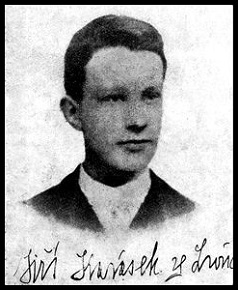
Uit: De acht bergen (Vertaald door Yond Boekeen Patty Krone)

“Op die plekken waren ze verliefd geworden, dat begreep ook ik na een tijdje: een priester had hen er als tieners mee naartoe genomen, en dezelfde priester had hen op een herfstochtend getrouwd, aan de voet van de Tre Cime di Lavarcdo, voor het kerkje dat daar staat. Dat berghuwelijk was de stichtingsmythe van ons gezin. Tegengewerkt door de ouden van mijn moeder, om redenen die mij onbekend waren, voltrokken in aanwezigheid van maar een paar vrienden, met windjacks als trouwkleding en voor hun eerste nacht als man en vrouw een bed in de Auronzohut. De sneeuw schitterde al op de richels van de Cima Grande. Het was een zaterdag in oktober, in 1972, het einde van hun alpinistenseizoen voor dat jaar en vele jaren daarna: de dag daarop laadden ze hun leren bergschoenen, hun Imidcerbockers, haar zwangerschap en zijn arbeidscontract in de auto en reden naar Milaan.
Kalmte was geen deugd die mijn vader hoog in het vaandel had staan, maar in de stad zou hij daar meer aan hebben gehad dan aan uithoudingsvermogen. Uitzicht had je in Milaan wel: in de jaren zeventig woonden we in een flat die uitkeek op een brede, drukke weg — ze zeiden dat onder het asfalt een rivier stroomde, de Olona. De straat kwam op regendagen blank te staan, en dan stelde ik me voor hoe de rivier daarbeneden in het donker bulderde en opzwol totdat hij uit de putdeksels golfde. Maar in die andere rivier, die werd gevormd door auto’s, bestelbusjes, brommers, vrachtwagens, bussen en ziekenwagen; was het voortdurend hoogwater. We woonden op de zevende verdieping: het kabaal werd versterkt door de twee rijen identieke flats aan weerszijden van de straat Op sommige nachten werd het mijn vader te veel, dan stond hij op en gooide het raam wijd open, alsof hij de stad wilde uitschelden, haar het zwijgen wilde opleggen of gloeiende pek over haar wilde uitstorten; hij bleef een tijdje naar beneden staan kijken, trok vervolgens zijn jas aan en ging een eind lopen. Vanuit ons raam zagen we een groot stuk lucht Eenvormig wit, ongeacht de seizoenen, slechts doorsneden door een enkele vogel. Tegen beter weten in kweekte mijn moeder bloemen op een door de rook zwart uitgeslagen en door eindeloze regenbuien beschimmeld balkonnetje. Daar verzorgde ze haar plantjes en vertelde me intussen over de wijngaarden in augustus op het platteland waar ze was opgegroeid, of over de tabaksbladeren die in de drogerijen aan lange stokken hingen, of over de asperges die, om ze wit te houden, moesten wonden geoogst voordat ze boven de aarde uitkwamen, en dat je dus een speciaal talent nodig had om ze te zien terwijl ze nog onder de grond zaten.”


Paolo Cognetti (Milaan, 27 januari 1978)


De Amerikaanse schrijver Ethan Mordden werd geboren op 27 januari 1947 in Pennsylvania. Zie ook alle tags voor Ethan Mordden op dit blog.

Uit: Buddies

“More quotidian possibilities include eating corn on the cob with a fork (the kernels come off in sedate little rows, which for some reason exasperates all the males at the table) and developing ersatz but noisy phobias about bridges, escalators, and religious activities of any kind. Rule Three: Never lie. Childlike honesty throws Them completely off. Moreover, as parents are virtually made of lies (e.g., “Don’t be afraid of bullies; stand up to Them and they’ll run away,” “If you stop crying and wait till we get home, I’ll make you an apple pancake,” “We have no favorites; we love you all equally”), your speaking truth undermines Their ethical position. Furthermore, lying is a sophisticated art generally beyond even the most gifted youngster. Almost any effort is doomed. And, remember: your failure is Their success. It is essential to avoid any error that will invigorate Their sense of power, and Their joy in that power. The sight of a small boy pathetically trying to worm his way out of a spanking enchants Them even more than administering the spanking itself. If you must be spanked, de-spoil it of all savor. Be cold and adult about it, like George Will at the dentist. Or try to look embarrassed for Them, as if you had spotted Them committing some atrocious peccadillo in a secret spot. Advanced students may want to Do the Manly Thing and insist on tak-ing it bare-bottom. With all but the most diehard parents, this will force Them to retreat, perhaps even apologize. Rule Four: Abjure reason and justice; only strength counts. As the tenant of a house owned by grown-ups, you are not the inhabitant of a moral universe: you live in a world populated exclusively by winners and losers. Show me a good loser, and I’ll show you a loser. Rule Five: Choose the major battles very carefully. Go to the mat over bedtime, food, and presents, major issues that will color your existence for nearly two decades. Don’t overextend yourself fighting over the small things—and of course it’s useful every so often to give in and let Them think They’re in charge.”


Ethan Mordden (Pennsylvania, 27 januari 1947)
De Stonewall Inn, een homobar op Christopher Street in Greenwich Village, Manhattan. Een politie-inval in 1969 leidde hier tot de Stonewall-rellen, een van de belangrijkste gebeurtenissen in de geschiedenis van LGBT-rechten


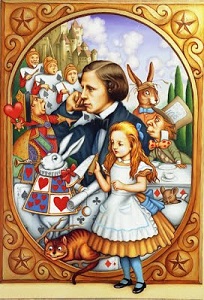
De Engelse dichter en schrijver Lewis Carroll werd op 27 januari 1832 in Daresbury geboren. Zie ook alle tags voor Lewis Caroll op dit blog.

Uit: Alice in Wonderland

“We, indeed!” cried the Mouse, who was trembling down to the end of its tail. “As if I would talk on such a subject! Our family always hated cats: nasty, low, vulgar things! Don’t let me hear the name again!”
“I won’t indeed!” said Alice, in a great hurry to change the subject of conversation. “Are you—are you fond—of—of dogs?” The Mouse did not answer, so Alice went on eagerly: “There is such a nice little dog, near our house, I should like to show you! A little bright-eyed terrier, you know, with oh, such long curly brown hair! And it’ll fetch things when you throw them, and it’ll sit up and beg for its dinner, and all sorts of things—I can’t remember half of them—and it belongs to a farmer, you know, and he says it’s so useful, it’s worth a hundred pounds! He says it kills all the rats, and—oh dear!” cried Alice in a sorrowful tone, “I’m afraid I’ve offended it again!” For the Mouse was swimming away from her as hard as it could go, and making quite a commotion in the pool as it went.
So she called softly after it, “Mouse dear! Do come back again, and we won’t talk about cats, or dogs either, if you don’t like them!” When the Mouse heard this, it turned round and swam slowly back to her: its face was quite pale (with passion, Alice thought), and it said, in a low trembling voice, “Let us get to the shore, and then I’ll tell you my history, and you’ll understand why it is I hate cats and dogs.”
It was high time to go, for the pool was getting quite crowded with the birds and animals that had fallen into it: there was a Duck and a Dodo, a Lory and an Eaglet, and several other curious creatures.
Alice led the way, and the whole party swam to the shore.
They were, indeed, a queer-looking party that assembled on the bank—the birds with draggled feathers, the animals with their fur clinging close to them, and all dripping wet, cross, and uncomfortable.
The first question of course was, how to get dry again: they had a consultation about this, and after a few minutes it seemed quite natural to Alice to find herself talking familiarly with them, as if she had known them all her life. Indeed, she had quite a long argument with the Lory, who at last turned sulky, and would only say, “I’m older than you, and must know better.”
And this Alice would not allow, without knowing how old it was, and, as the Lory positively refused to tell its age, there was no more to be said.”


Lewis Carroll (27 januari 1832 – 14 januari 1898)
Lewis Carroll temidden van zijn creaties uit Alice in Wonderland


De Nederlandse dichter, schrijver, vertaler, zanger en liedjesschrijver Arie van der Krogt werd geboren in Zoeterwoude op 27 januari 1952. Zie ook alle tags voor Arie van der Krogt op dit blog.


Veertig (40)

Ik fietste in de bergen op de Tourmalet
Ik had m’n versnelling in z’n dertigste gezet
Toen kwam d’r zo’n klein jochie heel snel voorbij geracet
Die reed op tandje veertig want veertig is het meest

Veertig is het mooiste, veertig is het meest
Want als je veertig bent dan is er lol, dan is er feest

Ik was eens op vakantie met een mannetje of tien
Toch had ik al die mensen na drie dagen wel gezien
Ik zeg tegen mezelf en ik zeg ook tegen Trees
Volgend jaar gaan we met veertig want veertig is het meest

Ik kreeg pas in de brievenbus een boek van ‘Boek en Plaat’
Dat over variaties bij het vrijen gaat
Ik heb die variaties natuurlijk uitgetest
Maar geef mij maar standje veertig, dat ligt me toch het best

Ik moest pas naar het ziekenhuis, naar Medisch Centrum West
Maar ik was veel te vroeg, ik zat in aflevering zes
Ik kwam bij zuster Reinie, die zuster die zo flirt
En in aflevering veertig, toen was ik aan de beurt

Ik liep in Palestina met twaalf van die gasten
Toen vroeg ik aan die ene hoeveel dagen moet je vasten
Hij zet z’n aureool op en hij zegt: “Wees niet bevreesd”
Veertig is het mooiste, veertig is het meest

Ik ging een keertje tennissen, dat was met ’n vriendin
Ik dacht ik ben een mannetje, dus ’t is zeker dat ik win
Maar na een drietal ballen toen was ik al bek-af
Ik zei het staat drie-nul voor jou, maar zij zei “Forty Love”

Veertig is het mooiste, veertig is het meest
Want als je veertig bent dan is er lol, dan is er feest


Arie van der Krogt (Zoeterwoude, 27 januari 1952)


De Amerikaanse dichter Harvey Shapiro werd op 27 januari 1924 in Chicago geboren in een joodse familie uit Kiev. Zie ook alle tags voor Harvey Shapiro op dit blog.


Provincetown, Mass.

The glazed day crumbles to its fall
Upon the tiny rout of fishing
Boats. Culls convey it down,
Lengthening their cries that soon
Will rake the evening air; while some,
Silhouetted on a strand
In a jumbled line of target ducks,
Watch as ebb tide drains the bay.

From a rotted log upon
The shore, like the other beached
Mutations, shell and weed, I wait
For Highland Light to cast its eye.

July unhives its heaven in
A swarm of stars above my head.
And at my feet, flat to the water
That it rides, the lighthouse beam,
A broken spar, breaks its pulse.

-What have I learned of word or liner
Ticks on, ticks off; ticks on, ticks off.
The bay, that was a clotted eye,
Is turned to water by the dark.
Only my summer breaks upon
The sea, the gulls, the narrow land.


Beyond The Demonic Element

I cast out Beyond the demonic element
And the fear of death
(And the fear of death)
Into that bright water
Beyond this water
Where leviathan swims.
Communication is instant
When it comes—close
As my hand, the words on my tongue,
Though the crying in my ear Is my own death crying.


Harvey Shapiro (27 januari 1924 – 7 januari 2013)


Zie voor nog meer schrijvers van de 27e januari ook mijn blog van 27 januari 2018 deel 2 en eveneens deel 3.

Ein junger Mann aus Nazareth (Jürgen Wagner)

Bij de derde zondag door het jaar


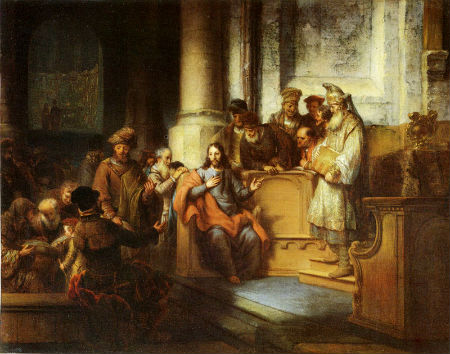
Christus onderwijst in de synagoge van Nazareth door Gerbrand van den Eeckhout, 1658


Ein junger Mann aus Nazareth

Ein junger Mann aus Nazareth
Verlässt Familie, Haus und Bett
Macht sich auf nach der Berufung
Trifft Johannes, dessen Ahnung,

Dass die Axt schon liegt am Baum
Für Korrektur ist etwas Raum
Ansonsten bleibt noch wenig Zeit
Das Gottesreich ist schon bereit

Er lässt sich taufen, wie geraten
Geht nun selbst auf diesen Pfaden
Kündet an die letzte Zeit
Macht auch andere dafür bereit

Er heilt und wandert, mahnt und redet
erkennt und weiß es, liebt und betet
Es sind die wunderlichen Sachen
Die ihn zum Messias machen

In den Augen seiner Zeit
Die so gerne wär‘ befreit
Von dem großen Arme Roms
So viele Opfer gab‘s da schon

Auch Er musst sich den Mächt‘gen beugen
Die hohe Geistlichkeit war Zeuge
Musst sein Leben jung schon geben
Bis heute wirkt es nach, dies Beben

Dass ein Gerechter hier erstand
Ein Gottessohn, Prophet, Heiland
Dem nichts dran lag, ihn zu verehren
Doch viel, die Liebe zu vermehren


Jürgen Wagner (Neckarsulm, 10 december 1957)
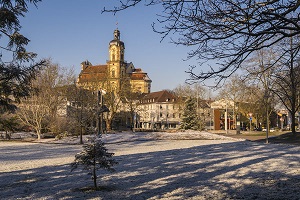
Neckarsulm, St. Dionysiuskerk en stadspark


Zie voor de schrijvers van de 27e januari ook mijn volgende blog van vandaag.


Saturday Evening (John Newton)


Dolce far niente


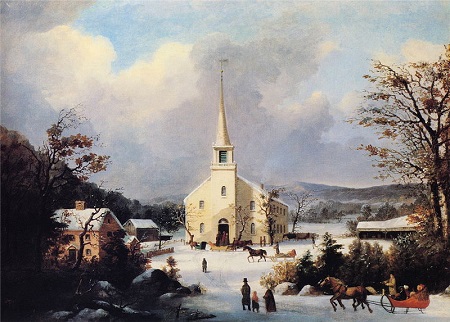
Going to Church door George Henry Durrie, 1853


Saturday Evening

Safely through another week,
God has brought us on our way;
Let us now a blessing seek,
On th’ approaching Sabbath-day:
Day of all the week the best,
Emblem of eternal rest.

Mercies multiply’d each hour
Through the week our praise demand
Guarded by Almighty pow’r,
Fed and guided by his hand:
Though ungrateful we have been,
Only made returns of sin.

While we pray for pard’ning grace,
Through the dear Redeemer’s name,
Show thy reconciled face,
Shine away our sin and shame:
From our worldly care set free,
May we rest this night with thee.

When the morn shall bid us rise,
May we feel thy presence near!
May thy glory meet our eyes
When we in thy house appear!
There afford us, Lord, a taste
Of our everlasting feast.

May thy Gospel’s joyful sound
Conquer sinners, comfort saints;
Make the fruits of grace abound,
Bring relief for all complaints:
Thus may all our Sabbaths prove,
Till we join the church above!


John Newton (24 juli 1725 – 21 december 1807)
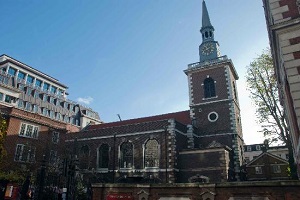
St James’s Church in Londen, de geboorteplaats van John Newton


Zie voor de schrijvers van de 26e januari ook mijn vorige blog van vandaag.

Jos van Daanen, Nora Gomringer, Jonathan Carroll, Florin Irimia, Menno ter Braak, Achim von Arnim, Rudolf Alexander Schröder, Michiel van Rooij, Martijn den Ouden

De Nederlandse dichter en schrijver Jos van Daanen werd geboren op 26 januari 1959 in Kerkrade. Zie ook alle tags voor Jos van Daanen op dit blog


Een loden jas

Jij was de man met de loden jas, die
een vrouwenvel om mijn schouders sloeg,
een zachte grijns tegen mijn oor duwde
en fluisterde: hier, houd haar maar warm.

Maar lege huid is zwaarder dan lucht
en een enkele keer zelfs zwaarder dan
het woord dat op mijn adem wegdrijft
naar je verdwijnpunt achter het raam.

Ten slotte drukte de vrouw
mijn lichaam tegen de koude ondergrond
van het kavel dat jij had uitgezet, tot het vuur in mij
door verstikking om het leven kwam.


Over de loop der dingen

Bij de bank in het park
haalt de man zijn adem,
schichtig, in zakjes
van twintig grammen

zijn vrouw telt haar schreden
maar heeft niets met cijfers
noch met de afstand tot haar huis

een zoon praat op een kist
over wind en blaadjes
een duif slaat de woorden op
en koert haar bewondering

er schijnt nog zon over
de stad wacht geduldig
tot de man is opgelucht
de vrouw is uitgeteld

de kist begraven is.


Jos van Daanen (Kerkrade, 26 januari 1959)


De Zwitsers-Duitse dichteres Nora Gomringer werd geboren op 26 januari 1980 in Neunkirchen an der Saar. Zie ook alle tags voor Nora Gomringer op dit blog.


PLUMBUM

“… en kunt u deze toestand eens in uw eigen woorden beschrijven?”

de zwarte hond
de jurk van lood
de nacht in de veren

het wezen van nevel
de weg van wegen
de vragen van leder

het grote zwijgen
de som van tijd
het lichaam zonder zoom

“De drugs helpt/ de dag wordt licht/ het leven: droom.”


Vertaald door Maud Vanhauwaert


TEREDO NAVALIS

In Stockholm, wo man in den 60er Jahren ein Schiff
der 1600er barg, wo du sie, immer sie anriefst,
sie, die ein Weltgesicht aller hat,
da kroch er uns namentlich über den Weg.

Teredo Navalis –
ein Name, der Schrecken verbreitet,
Frauen und Kinder fürchten macht,
aber viel mehr noch: den Käpt’n.

Teredo Navalis –
ein Bewohner der Wasa,
ein Gefangener des Elements,
eine Stufe des Seins, das noch nicht abgeschlossen.

Teredo Navalis –
Schiffsbohrwurm von bis zu 60 Zentimetern Länge.

Während wir durch das Museum streiften,
um ein gesunkenes Großunternehmen herum,
sank mein parasitär besetztes Herz
mit allen Organen der Flotte.

Hatte nicht einer Steine mir in den Bauch genäht,
als ich offen klaffte vor Eifersucht?

Teredo Navalis –
du Seemannsspulwurm, es steckt in dir
wie in allem seither
das brackwasserfaule

Warum


Nora Gomringer (Neunkirchen an der Saar, 26 januari 1980)


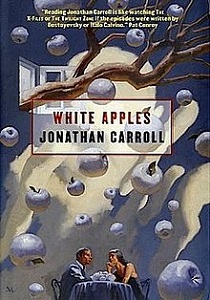
De Amerikaanse schrijver Jonathan Carroll werd geboren op 26 januari 1949 in New York. Zie ook alle tags voor Jonathan Carroll op dit blog.

Uit: White Apples

“Patience never wants Wonder to enter the house: because Wonder is a wretched guest. It uses all of you but is not careful with what is most fragile or irreplaceable. If it breaks you, it shrugs and moves on. Without asking, Wonder often brings along dubious friends: doubt, jealousy, greed. Together they take over; rearrange the furniture in every one of your rooms for their own comfort. They speak odd languages but make no attempt to translate for you. They cook strange meals in your heart that leave odd tastes and smells. When they finally go are you happy or miserable? Patience is always left holding the broom.
* * *
She liked candles in the bedroom. As far as Ettrich was concerned, candles were for churches, power outages, and the tops of birthday cakes. But he never said that to her, not even as a joke. She was very sensitive—she took whatever he said seriously. Soon after they met he realized he could hurt her easily, too easily. One nasty word or sarcastic phrase was enough to knock her flat. She confessed she had only recently gone beyond the point of feeling she had to please the whole world.
She said things like that. “I did drugs even though I hate them. But I wanted my boyfriend to love me so I took drugs with him. I was a terrible coward.” She admitted to mistakes. Early on, she was willing to tell him some of her most revealing secrets. It was thrilling and disconcerting at the same time. He loved her a little.
One day while walking through town he passed the store. When it came to women, Vincent Ettrich’s eyes were the most voracious part of his body. Even when he wasn’t fully aware of it, his eyes saw everything that had to do with women: what they wore, how they smoked, the size of their feet, the way they pushed their hair, the shape of their purses, the color of their fingernails. Sometimes it took a second for him to realize something had already registered in his mind—a detail, a sound, a wisp. Then he would look again. Invariably his unconscious sensors had been correct—the sheen of sunlight off a green silk blouse pulled taut over a great pair of breasts. Or a hand on a table, a rough stubby hand, surprisingly connected to a chic woman. Or unusual almond-shaped eyes reading a French sport newspaper. Or just the radiance of a plain woman’s smile that transformed her face completely.”


Jonathan Carroll (New York, 26 januari 1949)
Cover


De Roemeense schrijver, criticus, letterkundige en vertaler Florin Irimia werd geboren in Iași op 26 januari 1976.Zie ook alle tags voor Florin Irimia op dit blog.

Uit: A Few Things about You (Vertaald door Alistair Ian Blyth)

“But which holds, which works, as long as nobody throws you out of the window. As long as you do not think too much about how it is only an illusion. The clock on the mobile ‘phone shows 2:56 in large figures. Almost three in the morning. My mouth is dry and heavy, as if it were lined with a thousand pebbles. I ought to go to the toilet. No! To spit, rinse my mouth out. No. Don’t go! Why? It doesn’t matter. Why doesn’t it matter? It’s better this way. I don’t want you to go there. I swallow. I sense something coming towards me, like an evil spirit, like a spy sent up from Hell, it stalks me, sniffing my heart, which starts to beat faster. A cold, malign sweat oozes through my skin and as it does so I remember what I dreamed…
The light in the bathroom. The tap running. Signs of somebody having been in there. The scene left behind, the painting of a demented artist. But dreams are dreams, an intense, somehow necessary cerebral activity, but nothing more. They are not premonitions, they do not reveal to us what we are afraid to discover for ourselves. We dream in order to forget, some say, not to remember. Perhaps this is just what happened to me: I dreamed too much during all this time, and now… now the telephone is ringing. Not the mobile. It is the landline. From somewhere far away. And the buzzing is not from this century. It sounds ceremonious and lugubrious, with long pauses between each buzz, and it is coming… Where is it coming from? It is as if it were from another room. From another room, but still one occupied by me. It looks like I am staying in a suite. I didn’t remember that. Neither that nor all the other things. A feeling of helplessness, of being abandoned, as if I had woken up to find myself bound to a chair and was now about to be tortured. A feeling of inadequacy, of incompatibility with the world. Bewilderment in the face of destiny’s parsimoniousness. Consternation. Angst. The foregoing crowd together now, trying to find room in my head, like beggars in front of a table laid with alms. I don’t want to answer it. Who could be ‘phoning me at three in the morning? But maybe it is something important. Something vital, something crucial, perhaps at the other end of the line is a voice that wants to come to my aid. As if such voices existed…
“Hello?”
“Hello, good morning, I’m calling from reception. It’s three a.m. You asked for a wake-up call.”


Florin Irimia (Iași, 26 januari 1976)


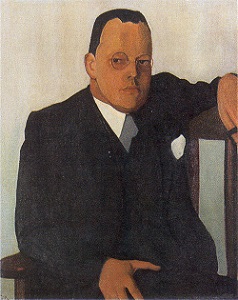
De Nederlandse schrijver Menno ter Braak werd geboren op 26 januari 1902 in Eibergen. Zie ook alle tags voor Menno ter Braak op dit blog.

Uit: Het lezen van poëzie

“Hoe men dan poëzie leest? Ik geloof, op de rand van de slaap en de droom. Poëziebundels koopt men om ze in de boekenkast te zetten, en er van tijd tot tijd met diepe genegenheid naar te kijken en ze dan in een onbewaakt ogenblik uit de kast te nemen, ze verstrooid door te bladeren, in een stoel te gaan zitten, twee, drie, acht gedichten ‘op te nemen’ en ze dan weer weg te zetten. Daarvan behoudt men het verrukkelijke, maar daarom nog niet met dwaze theorieën te idealiseren gevoel, dat men in zijn kast een verzameling taalbeelden bewaart, die een geheel andere waarde hebben dan etsen en aquarellen, omdat zij door het woord op een bijzondere wijze verzwagerd zijn met het redelijk argument, zonder zich, als de logica, te verliezen in de techniek dier redelijkheid zelf.
Alle geur der beeldende kunst verbindt zich met alle aangeduide mogelijkheden van het denken; ziedaar voor mij één van de voornaamste bekoringen der poëzie.
De poëzie van Slauerhoff is mij daarom zo dierbaar, omdat zij dit karakter van bindstof tussen logica en beeld zo volkomen en oprecht bezit. Ik herinner mij altijd nog, hoe zijn prachtig gedicht Chlotarius (opgenomen in de bundel Saturnus) mij betoverde, en wel vooral door de volgende regels, waarin de uitzonderingspositie van de knaap Chlotarius wordt getekend:

’t Hoogst steeg de prille prinselijke haat
Tegen de norsche noordlijke vazallen,
Wier baarden op hun harnas dalen, hard en
Ruig als vuilzwartbevroren watervallen.

Zij leken op de oude Longobarden
Die hangen, sluw en somber afgeschilderd,
In ’n zaal waar ’t zonlicht vleermuisschuw verwildert,
Waar de avond daalt als nauw de noen begonnen.

Hoe vaak ik deze bundel ook uit de kast neem en in een verloren ogenblik die regels overlees, altijd weer ril ik even om de feilloze ‘juistheid’, waarmee Slauerhoff het beeld van die vazallen en Longobarden weet op te roepen; zonder één woord te veel, zonder de uitvoerigheid van een schilderij, met een zuiverheid van taalnuance, die alleen voort kan komen uit een onbedorven beeldende intuïtie, in bedwang gehouden door de even natuurlijke distinctie van de ontdekker van mensenzielen, wiens hartstocht niet uitgaat naar het alleen-maar-pittoreske, maar in de eerste plaats naar het voor de mens kenmerkende detail.”


Menno ter Braak (26 januari 1902 – 14 mei 1940)
Portret door Paul Citroen, 1939


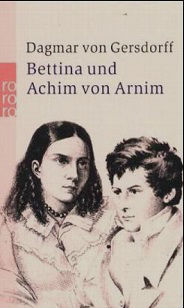
De Duitse dichter en schrijver Achim von Arnim werd geboren in Berlijn op 26 januari 1781. Zie ook alle tags voor Achim von Arnim op dit blog.


In Frankfurt am Main

Zuweilen that mir das Herz so weh,
Als ob es wär gesprungen,
Und wenn ich dann recht in mich geh′,
So hat mir das Ohr geklungen.
Was klingt das Ohr, was schlägt das Herz,
So laut an die großen Glocken?
Es treibt der Himmel im Herzen Scherz,
Da ist der Verstand erschrocken,
Und schiebt es wohl auf die Witterung
Und auf die vergangnen Zeiten,
Wer liebt, der ist noch im Himmel jung
Und schauet die Erden von Weitem.


Bienenlied
(Fliegendes Blat)

Ein Liedlein will ich singen,
Vom Honigvögelein,
Die hin und her sich schwingen,
Wo bunte Blumen seyn.
Das Völklein in dem Grünen,
Es schmauset auf der Weid,
Ich singe von den Bienen,
Auf dieser freien Haid.

Der Winter hält gefangen
Das zarte Jungfernvolk,
Bis daß der Schnee vergangen,
Frost, Schauer, Nebelwolk.
Und wann die Weste stimmen,
Nach linder Lenzen Art,
So machen sich die Immen
Auf ihre Blumenfahrt.

Sie ziehen mit der Trummel,
Der Stachel weist das Schwerdt;
Ihr Brummel und Gehummel
Hat niemand noch gefährdt.
Sie nehmen sonder Morden
Den zarten Blumenraub,
Und ihre Beut ist worden
Der Baum und Blüthen Laub.

Wie sie die Wachsburg bauen,
Aus güldnem Pergament,
Kann niemand nicht beschauen,
Ja keines Künstlers Händ
Hat man so sehr bewundert,
Die Zimmerchen so gleich,
Sechseckigt ist gesondert
Das Honigkönigreich.

Man sieht sie friedlich leben
Ohn Eigennutz und Streit,
In steter Mühe weben,
Zu Lenz und Winterszeit;
Sie pflegen einzutragen
Der Blumen Saft und Thau,
Und führen mit Behagen
Gesammt den Zuckerbau.


Achim von Arnim (26 januari 1781 – 21 januari 1831)
Cover


De Duitse dichter en schrijver Rudolf Alexander Schröder werd geboren op 26 januari 1878 in Bremen. Zie alle tags voor Rudolf Alexander Schröder op dit blog


Im halben Eis

Blick in die Welt und lerne leben,
bedrängt Gemüt;
braucht nur ein Tauwind sich zu heben
und alles blüht.

Die Hasel stäubt, am Weidenreise
glänzt seidner Glast,
Schneeglöckchen lenzt im halben Eise
und Seidelbast.

Braucht nur ein Tauwind sich zu heben. –
Verzagt Gemüt,
blick in die Welt und lerne leben;
Der Winter blüht!


Komm, der unsre Fragen schweigt

Komm, der unsre Fragen schweigt, Pilgrim, werter Gast,
halte, weil der Tag sich neigt, in der Herberg Rast.

Bleib und mach die Herzen still, der die Herzen schaut:
weiß kein Herz doch, was es will, eh sich’s dir vertraut.

Weiß nicht eins, was ihm gebricht, oder was ihm frommt,
kennt sich in der Fremde nicht, wenn der Abend kommt.

Rede Meister und erklär unserm Fuß die Bahn,
lehr uns wandeln auf dem Meer, wie du selbst getan.

Lehr uns werben, wie du warbst, ringen wie du rangst,
und wo du in Ängsten starbst, sterben unsrer Angst.

Segn’ und brich uns unser Brot, Herr, und lass dich sehn,
wo wir zwischen Tod und Tod als die Blinden stehn.

Unser Müh’n und unsre Macht zahlt den Zoll der Welt.
Doch du sprangest in die Schlacht und gewannst das Feld.

Und nun wacht und trotzt dem Neid, wer dich hält und hegt,
wenn der Feind zu argen Zeit seine Schlingen legt.

Dunkel ward’s die Welt schläft ein; gönn uns dein Gesicht:
und die Nacht wird Morgen sein und der Abend Licht.


Rudolf Alexander Schröder (26 januari 1878 – 22 augustus 1962)


Onafhankelijk van geboortedata

De Nederlandse dichter en schrijver Michiel van Rooij werd geboren in Eindhoven in 1982. Zie ook alle tags voor Michel van Rooij op dit blog.


Rue du Moulin des Pres

Aan het raam staande.
Leunend op smeedwerk.
Gitanes tussen de lippen.
Geluid van hakken bereikt
me galmend.
Rue du Moulin des Pres.

Ze trekt me mee, weg van
Prevert, met haar wapperend
haar, op het ritme van Chet Baker.
Ik zou hier eigenlijk geen
gedicht over kunnen schrijven.

Het is te Parijs. Te zoals je het
je altijd voor zou stellen.
Het is dat ik er zelf bij ben.
Anders zou niemand het geloven.
Dat ik hier. Dat het hier.
precies zo is geweest.


Michiel van Rooij (Eindhoven, 1982)


De Nederlandse dichter en beeldend kunstenaar Martijn den Ouden werd geboren in Nieuw-Lekkerland in 1983.Zie ook alle tags voor Martijn den Ouden op dit blog.


ik slaap veel

ik slaap veel
ik heb mijn dromen nodig

in juni 1986 nog
droomde ik van een schip dat met spinnenpoten over de horizon
kroop
zijwaarts
met gehesen zeilen
het was windstil

het waait nooit in mijn dromen
het is er altijd nacht
er zijn vrouwen zonder monden
kinderen

geruisloos
duiken zij op

omdat het nacht is zijn mijn dromen blauw
blauw dat zich langzaam volzuigt met nattigheid
niet dat het regent
je ziet de nacht gewoonweg langzaam wakker worden

de betonnen maan
het lispelend water
de asgrauwe duinen
het spinnend schip
vastgeniet aan de aarde
dan weer zijn zij los
zij schuiven in de windloze nacht

de feesten waar ik niet bij kan zijn drijven op zwart water


Martijn den Ouden (Nieuw-Lekkerland, 1983)


Zie voor nog meer schrijvers van de 26e januari ook mijn blog van 26 januari 2018 en ook mijn blog van 26 jauari 2016 en mijn blog van 26 januari 2014 deel 1 en deel 2 en eveneens deel 3.

Renate Dorrestein, Lisa Weeda, David Grossman, William S. Maugham, Virginia Woolf, Alessandro Baricco, Paavo Haavikkom, J. G. Farrell, Robert Margerit

De Nederlandse schrijfster Renate Dorrestein werd geboren in Amsterdam op 25 januari 1954. Zie ook alle tags voor Renate Dorrestein op dit blog.

Uit: Dagelijks werk – een schrijversleven

„In de zomer van 2016 had ik een nieuwe koelkast nodig, ter vervanging van het chagrijnige oude beest dat in mijn bijkeuken stroom stond te slurpen. Op dus naar die witgoedwinkel in Haarlem-Noord waar ik eerder zo goed was geslaagd. Omdat het een prachtige middag was en het noordelijke stadsdeel ‘achter het spoor’ mij relatief onbekend was, besloot ik daar na de aanschaf van mijn nieuwe koelkast een wandeling te maken. Het is een stedelijk woongebied, zoals die rond 1900 overal in Nederland zijn gebouwd, met overwegend lage woningbouw en poortachtige toegangen tot de zijstraten.
Al binnen een paar minuten stond ik stil, getroffen door iets wat ik niet eens zozeer zág als wel voelde: ik stond op de locatie waar mijn volgende roman zich zou gaan afspelen.
Je moet al zoveel verzinnen als je een roman schrijft, dus een bestaande locatie biedt in elk geval houvast en grond onder de voeten. Voor iedere schrijver zal het anders zijn, maar voor mij begint alles met die aardende, verankerende plaatsbepaling. Heb ik de plek, dan komt het verhaal vanzelf. Die rare term ‘de plaats van handeling’ is zo gek nog niet. Als ik eenmaal weet wat de plaats van handeling van mijn volgende boek is, dan kom ik al schrijvende ook wel te weten wat die handeling behelst.
Wat mij triggerde op die zonovergoten middag in Haarlem-Noord was dat in één straat de monotonie van eengezinswoningen werd onderbroken door een schoolachtig gebouw dat zich als een schuw dier zo laag mogelijk tegen de stoep gedrukt hield, alsof het aan mijn blik wilde ontsnappen, maar daarmee bereikte het dus het tegendeel. noorder kinderhuis, stond er in de gevel gebeiteld.
Bij die woorden zag ik een ijsvlakte voor me waarover sneeuwvlagen joegen. Ik wist genoeg. Onguurder dan dit ging ik het niet krijgen. Het Noorder Kinderhuis! Mijn god, dat was een plek waar je als kind niet moest zijn!
Ik stak de straat over en tuurde door een raam naar binnen. Er was een doodgewoon hedendaags kinderdagverblijf gevestigd. Maar dat betekende niets. Als je aan dat soort details gewicht toekent, schrijf je nooit een roman. Dit had best sinds mensenheugenis een goelag voor kleine mensen kunnen zijn. Gemene ouders dumpten hier hun nageslacht als ze er genoeg van hadden.
Op slag vlogen wonderlijke namen mijn hoofd binnen. Zebedee, Hosanne, Anne-Eden, de tweeling Michaël en Daniël. Voor mijn geestesoog rees een compleet, kroostrijk gezin uit de Biblebelt op, met van die bleke, langgerekte kinderen die zonder vaccins of mobieltjes door het leven moeten terwijl ze elkaars kleren afdragen en naar bevindelijke zomerkampen gaan. Zo’n gezin met minstens tien kinderen, waarbij niemand het merkt als er opeens een kotertje minder is.”


Renate Dorrestein (25 januari 1954 – 4 mei 2018)


De Nederlandse schrijfster Lisa Weeda werd geboren in Dordrecht op 25 januari 1989. Zie ook alle tags voor Lisa Weeda op dit blog.

Uit: Rijskracht

“De laatste keer dat ik mijn vader zag, snoof ik achterin de bus een halve gram coke van de voordeursleutel van mijn ouderlijk huis. Het was zondagmiddag, één uur. Naast me zat een oude dame in een geruite trenchcoat, een paraplu tussen haar benen geklemd. Toen ik met trillende handen het koude ijzer van de met poeder gevulde baard tegen mijn neus perste, keek ze opzij. Ze verschoof niet, had een kalme blik in haar ogen.
‘Zou je dat nu wel doen jongen,’ vroeg ze.
Rustig, alsof ze een in een hoek gedreven kat wilde aaien, legde ze haar rechterhand op mijn bovenbeen. We bleven een tijdje zo zitten. We reden langs boerenbedrijven, voorbij borden ‘aardappelen te koop’, Sjaaks garage. Ik keek de bus rond: altijd dezelfde vriendelijk lachende koppen op de stoelen, een besnorde man achter het stuur. Na tien minuten legde ik mijn hand op die van de vrouw. Ze was oud, maar warm.
‘Ik probeer al een tijd iets te worden,’ zei ik. ‘Maar het wil niet echt. Mijn vrienden zeiden: alleen wat lijntjes in de tentamenweken. Je moet naar de klote gaan om aan de top te komen.’
‘Lukte dat?’
‘Negens, achten. Uitnodigingen voor masterclasses, meelopen op vooraanstaande kantoren.’
‘Waar is je maatpak nu, jongen?’
Alle gekken vallen op een gegeven moment van de rand af. Tuimelen zacht door een glazen wand zonder daarna te zien dat ze aan de andere kant van het glas terechtgekomen zijn. Nog eens keek ze me aan. Ze legde haar andere hand op de mijne, pakte me in, vouwde me klem. Bijna trilde ik niet meer.”


Lisa Weeda (Dordrecht, 25 januari 1989)


De Israëlische schrijver David Grossman werd geboren op 25 januari 1954 in Jeruzalem. Zie ook alle tags voor David Grossman op dit blog.

Uit: Be My Knife (Vertaald door Vered Almog en Maya Gurantz)

“April 7
(Just a few more words.) I sent that letter, came back, and still couldn’t calm down–why should I?–oh, Miriam, please pay no attentionto this fool who’s been smiling uncontrollably since this morning. He’s so happy. He wants right at this minute to take off his clothes, strip off his epidermis, everything, and stand before you bare, right down to the white kernel of his soul. I wish I could paint for you, bray for you, neigh, bark, even whistle for you everything roaring inside me (which reminds me–when I was about twenty, I looked for ways to be a secular version of one of the Righteous Thirty-six. This led to a plan to, at least once a week, sit down on the bus behind a solitary woman, preferably a woman in black widow’s weeds–but you can’t be picky–and, without letting her see me, quietly whistle a love song in her ear that could trip through the outer shell, into her inner ear, and touch everything that was asleep, despaired of, congealed) …
I’m not at all scared that we’re strangers, by the way. On the contrary, tell me, what is more attractive and provocative than the possibility of taking something very precious–the most precious thing–a secret or weakness, or a thoroughly implausible request like the one I made of you, and deliberately placing it in the hands of a total stranger? And then to be tormented by so much shame and disgrace for allowing the beggar in me such a transparent delusion, so that for three days and three nights I spent every moment in self-imposed solitary confinement, a trap … then, just as I was about to give up, stupid, spiteful, gloomy, and gray, all of a sudden your white hand–
Look, maybe you can’t see what excites me so terribly, but your warm, radiant letter, especially the P.S. at the end, that one line–it was as if you came and led me by the hand from shadow into light. That’s how I felt, that you had given me your hand and led me across a watershed of light, it was so simple, as if it was completely natural for a person to do that for a stranger.
(And now, a cold wave. Of all the times, now, just at this moment, and why? Because it was good? A cold wave rising from my stomach, a cold fist rolled up into a ball just under my heart–get acquainted with it.)
Again, please understand I’m really talking about letters only, not a meeting, never a body. No flesh, not with you, your letter made that so clear to me: only words. It would ruin us, being face-to-face, it would immediately take us down into familiar territory. Also, of course, we will keep this strictly secret, we won’t let anybody in on it, so that no one from the outside can use our secret words against us. Only my words meeting yours, so we can feel the rhythm of our breath slowly becoming one.
It makes me so tired to write this way, not a usual fatigue, but after every few lines I really have to stop to take a breath, calm down.”


David Grossman (Jeruzalem, 25 januari 1954)


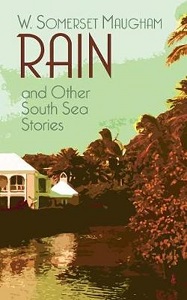
De Engelse schrijver William Somerset Maugham werd geboren in Parijs op 25 januari 1874. Zie ook alle tags voor William Somerset Maugham op dit blog.

Uit: Rain

“It was nearly bed-time and when they awoke next morning land would be in sight. Dr. Macphail lit his pipe and, leaning over the rail, searched the heavens for the Southern Cross. After two years at the front and a wound that had taken longer to heal than it should, he was glad to settle down quietly at Apia for twelve months at least, and he felt already better for the journey. Since some of the passengers were leaving the ship next day at Pago-Pago they had had a little dance that evening and in his ears hammered still the harsh notes of the mechanical piano. But the deck was quiet at last. A little way off he saw his wife in a long chair talking with the Davidsons, and he strolled over to her. When he sat down under the light and took off his hat you saw that he had very red hair, with a bald patch on the crown, and the red, freckled skin which accompanies red hair; he was a man of forty, thin, with a pinched face, precise and rather pedantic; and he spoke with a Scots accent in a very low, quiet voice. Between the Macphails and the Davidsons, who were missionaries, there had arisen the intimacy of shipboard, which is due to propinquity rather than to any community of taste. Their chief tie was the disapproval they shared of the men who spent their days and nights in the smoking-room playing poker or bridge and drinking. Mrs. Macphail was not a little flattered to think that she and her husband were the only people on board with whom the Davidsons were willing to associate, and even the doctor, shy but no fool, half unconsciously acknowledged the compliment. It was only because he was of an argumentative mind that in their cabin at night he permitted himself to carp.
“Mrs. Davidson was saying she didn’t know how they’d have got through the journey if it hadn’t been for us,” said Mrs. Macphail, as she neatly brushed out her transformation. “She said we were really the only people on the ship they cared to know.” 1 shouldn’t have thought a missionary was such a big bug that he could afford to put on frills.”
“If s not frills. I quite understand what she means. It wouldn’t have been very nice for the Davidsons to have to mix with all that rough lot in the smoking-room.” “The founder of their religion wasn’t so exclusive,” said Dr. Macphail with a chuckle. “I’ve asked you over and over again not to joke about religion,” answered his wife. “I shouldn’t like to have a nature like yours, Alec. You never look for the best in people.” He gave her a sidelong glance with his pale, blue eyes, but did not reply. After many years of married life he had learned that it was more conducive to peace to leave his wife with the last word.”


William Somerset Maugham (25 januari 1874 – 16 december 1965)
Cover


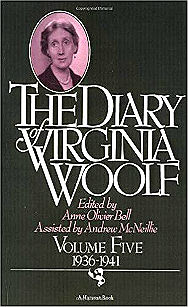
De Engelse schrijfster Virginia Woolf werd geboren op 25 januari 1882 te Londen. Zie ook alle tags voor Virginia Woolf op dit blog

Uit: The Diary of Virginia Woolf

“Friday 1 September (1939)
War is on us this morning. Hitler has taken Dantzig: has attacked – or is attacking – Poland. Our P(arliamen)t meets at 6 tonight. This after a day in London, submerged doubts & hopes. Last night we heard terms to Poland read. We then had some hope. Now at 1 I go in to listen I suppose to the declaration of war.
By the early summer of 1940 the Woolfs were much preoccupied with the threat of a German invasion. Leonard told Virginia that he was keeping petrol in the garage for the purpose of committing suicide by carbon monoxide poisoning if Hitler won. Wednesday 15 May
An appeal last night for home defence – against parachutists. L. says he’ll join. An acid conversation. Our nerves are harassed – mine at least: L. evidently relieved by the chance of doing something. Gun & uniform to me slightly ridiculous. Behind that the strain: this morning we discussed suicide if Hitler lands. Jews beaten up. What point in waiting? Better shut the garage doors. This a sensible, rather matter of fact talk. Then he wrote letters, & I too: thanked Bernard Shaw for his love letter. Copied my lecture contentedly. A thunderous hot day. Dutch laid down arms last night. The great battle now raging. Ten days, we say, will settle it. I guess we hold: then dig in; about Nov. the USA comes in as arbitrator. On the other hand –
Mabel just come. She says theyre building wooden bridges beside the others on the Thames. Pop-pop-pop, as we play bowls. Probably a raider over Eastbourne way. Now thunder rain sets in. No, I dont want the garage to see the end of me. I’ve a wish for 10 years more, & to write my book wh. as usual darts into my brain. L. finished his yesterday. So we’ve cleared up our book accounts – tho’ its doubtful if we shall publish this June. Why am I optimistic? Or rather not either way? because its all bombast, this war. One old lady pinning on her cap has more reality. So if one dies, it’ll be a common sense, dull end – not comparable to a days walk, & then an evening reading over the fire. Hospital trains go by. A hot day to be wounded. Anyhow, it cant last, this intensity – so we think – more than 10 days. A fateful book this. Still some blank pages – & what shall I write on the next 10?
This idea struck me: the army is the body: I am the brain. Thinking is my fighting.”


Virginia Woolf (25 januari 1882 – 28 maart 1941) 
Cover


De Italiaanse schrijver Alessandro Baricco werd geboren op 25 januari 1958 in Turijn. Zie ook alle tags voor Alessandro Baricco op dit blog.

Uit: Ocean Sea (Vertaald door Alastair McEwen)

“As it is always like this, you need only the glimmer of a man to wound the repose of that which would otherwise be a split second away from becoming truth but instead immediately becomes suspense and doubt once more, because of the simple and infinite power of that man who is a slit, a chink, a small doorway through which return a flood of stories and the enormous inventory of what could be, an infinite gash, a marvelous wound, a path made of thousands of steps where nothing can be true anymore but everything will be  — just as the steps are of that woman who, wrapped in a purple cloak, her head covered, is pacing the beach with measured tread, skirting the backwash of the sea, her feet tracing furrows from right to left across what is by then the lost perfection of the great picture, consuming the distance that separates her from the man until she comes to within a few paces of him, and then right beside him, where it takes nothing to pause and silently look on.
The man does not even turn. He continues staring out at the sea. Silence. From time to time he dips the brush in a copper cup and makes a few light strokes on the canvas. In their wake the bristles of the brush leave a shadow of the palest obscurity that the wind immediately dries bringing the pristine white back to the surface. Water. In the copper cup there is only water. And on the canvas, nothing. Nothing that may be seen.
The north wind blows as it always does and the woman pulls her purple cloak closer around her.
“Plasson, you have been working for days and days down here. Why do you carry all those colors around with you if you do not have the courage to use them?”
This seems to wake him up. This hits home. He turns to observe the woman’s face. And when he speaks it is not to reply.
“Please, do not move, he says.”
Then he brings the brush up to the woman’s face, hesitates a moment, rests it on her lips and slowly runs it from one corner of her mouth to the other. The bristles come away tinged with carmine. He looks at them, dips them ever so slightly in the water and looks up once more towards the sea. On the woman’s lips there lingers the  hint of a taste that obliges her to think “sea water, this man is painting the sea with the sea” — and it is a thought that brings a shiver.”


Alessandro Baricco (Turijn, 25 januari 1958)


De Finse dichter, toneelschrijver en uitgever Paavo Juhani Haavikko werd geboren in Helsinki op 25 januari 1931. Zie ook alle tags voor Paavo Haavikko op dit blog.

Uit: No. That’s to say, yes

To begin with, one must note:
There are many wise men. But on the other hand, there is not a single
insane tree.
      We are allies, the forest and I, in the sense that the forest is my ally,
and that I am a representative and responsible person.
      There are many such alliances in the world.
      That is because they have not been studied much.

*

I have written: ‘From the very beginning, the human being has been
designed as a throwaway item. It finds it hard to understand that, since it
did not create itself.’
      The human being is a superego. The trees know that.
*

It is hard to communicate with trees because they do not want to speak,
read, count, or lie.
      It has become apparent to them that it is difficult to say a single truthful
word without insulting the public or objects.
      They do not speak because they do not want to insult or restrain the
public.
      They do not want to speak because they are afraid of being understood
by accident.
      They do not agree with flight or attack. They have seen war.
The sun might go out if trees started speaking, telling what they have
seen, asking for compensation.
      If they were to start asking questions, the questions would turn into
answers. And they would be accurate.


Vertaald door Anselm Hollo


Paavo Haavikko (25 januari 1931 – 6 oktober 2008)
In 1997


De Iers-Britrse schrijver James Gordon Farrell werd geboren op 25 januari 1935 in Liverpool. Zie ook alle tags voor J. G. Farrell op dit blog.

Uit:The Singapore Grip

“There, in those ‘lower depths’ Chinese secret societies undoubtedly performed monstrous crimes, kidnapped their own prominent citizens, fought out appalling territorial battles, stunned themselves with drugs and so forth. If you were merely a visitor, a sailor, say, in those years before the war, Singapore would undoubtedly have seemed no less tawdry, no less exciting than another of the great Eastern sea ports. You would have gone to drink and dance at one of the amusement parks, perhaps even at The Great world itself, whose dance-hall, a vast, echoing barn of a place, had for many years entertained lonely sailors like yourself. There, for twenty-five cents, you could dance with the most beautiful taxi-girls in the East, listen to the loudest bands and admire the glorious dragons painted on the walls. In the good old days, before the troops started flooding in at the beginning of the War, that place could swallow an entire ship’s company and still seem empty except for you and the two or three Chinese girls with dolls’ painted faces sitting at your table, ready to support you with tiny but firm hands should you look like plunging to the floor full of Tiger beer. There, too, when you staggered outside into the sweltering night, you would have been able to inhale that incomparable smell of incense, of warm skin, of meat cooking in coconut oil, of money and frangipani, and hair-oil and lust and sandalwood and heaven knows what, a perfume like the breath of life itself. And from the roof of the Seamen’s Institute, or from some other less respectable roof, you might have seen the huge purple sign advertising Tiger Balm and, beside it, once darkness had completely fallen, its guardian, the great sabre-toothed tiger with glowing orange stripes beginning its nightly prowl over the sleeping roofs of Singapore. But there is no denying it, certain parts of the city were tawdry and others were wretched, and becoming more so as the age advanced: already, by 1940, the walls of cheap hotels and boarding-houses, hitherto impermeable except to an occasional muffled groan or sigh, were becoming porous and beginning to leak radio music, twangings of guitars and news bulletins. Every great city has its seamy side. And so let us look for preference at the gentler parts of the city, at the elegant European suburb of Tanglin, for instance, where Walter Blackett, chairman of the illustrious merchant and agency house of Blackett and Webb Limited, lived with his family At first glance Tanglin resembled any quiet European suburb with its winding, tree-lined streets and pleasant bungalows. There was a golf course close at hand with quite respectable greens; numerous tennis courts could be seen on the other side of sweet-smelling hedges and even a swimming pool or two. It was a peaceful and leisurely life that people lived here, on the whole. Yet if you looked more closely you would see that it was a suburb ready to burst at the seams with a dreadful tropical energy. Foliage sprang up on every hand with a determination unknown to our own polite European vegetation. Dark, glistening green was smeared over everything as if with a palette knife, while in the gloom (the jungle tends to be gloomy) something sinister which had been making a noise a little while ago was now holding its breath.”


J. G. Farrell (25 januari 1935 – 11 augustus 1979)


De Franse schrijver en journalist Robert Margerit werd geboren op 25 januari 1910 in Brive-la-Gaillarde. Zie ook alle tags voor Robert Margerit op dit blog.

Uit: La Révolution

« Danton ne s’en souciait pas, et ni Robespierre ni Marat ne donnaient aucun signe de le vouloir. Du reste, pensait Claude, il fallait que ses propres recommandations, pour empêcher les Brissotins suspendus de s’enfuir en province, aient été annulées par Marat en personne. Dangereuse mansuétude. Lui-même, bien entendu, ne songeait point à user de rigueur envers ces hommes. Il ne les aurait pas moins retenus très fermement à Paris. On ne surveillait même pas sérieusement ceux qui restaient. Ils correspondaient, recevaient des visites, sortaient, gardés chacun par un seul gendarme. Le ministre Lebrun venait sous l’oeil du sien travailler au Comité de salut public, auquel les Montagnards avaient fait adjoindre Saint-Just, Couthon, Hérault-Séchelles, Ramel, ci-devant de Nogaret, et Mathieu. Ce renfort était bien nécessaire pour lutter contre les ravages du fédéralisme. Aux nouvelles du 31 mai, puis du 2 juin, la province achevait de prendre feu. L’insurrection touchait à cette heure soixante départements. Les rapports que Claude recevait des représentants en mission donnaient le vertige. Robert Lindet, délégué par le Comité pour prendre la situation en main à Lyon, venait de trouver la grande cité entièrement au pouvoir des royalistes alliés aux Brissotins du cru, mandait-il. S’étant rendus maîtres de l’hôtel de ville après un dur combat, ils avaient emprisonné la municipalité montagnarde et se déclaraient en guerre ouverte avec la Convention. Les représentants Roux et Antiboul, chassés de Marseille, faisaient savoir que les Modérés, avec Rebecqui, s’associaient aux aristocrates pour combattre les Jacobins locaux qu’ils arrêtaient par centaines et traduisaient devant un tribunal contre-révolutionnaire. De Bordeaux, les représentants ne pouvaient plus écrire, ils étaient arrêtés. À leur place, des Montagnards signalaient qu’une prétendue commission populaire, évinçant les autorités constituées, en partie complices, avait mis la main sur les caisses publiques, levait des troupes et invitait les départements voisins à se fédérer contre Paris. »


Robert Margerit (25 januari 1910 – 27 juni 1988)


Zie voor nog meer schrijvers van de 25e januari ook mijn blog van 25 januari 2018 en ook mijn blog van 25 januari 2017 en mijn blog van 25 januari 2015 deel 2 en eveneens deel 3.

Wintertag (Friedrich Rückert)


Dolce far niente


Ein sonniger Wintertag door Fritz Muller-Landeck (1865-1942)


Wintertag

Reine Schönheit, Wintertag,
Wo nur Himmelsstrahlen leben,
Und kein Erdetrieb vermag,
Frostgebunden, aufzustreben.
Dieser Sonnenblicke Gruß
Will die Seele mir beschwingen,
Nicht, ein buhlerischer Kuß,
In die Adern Aufruhr bringen.
Dieser keusche Schnee der Au’
Nährt nicht Schlangen der Bethörung,
Dieses stille Himmelblau
Nicht gewitt’rische Empörung.
Daß ich, athmend Sommergluth,
Von der Rose Düften trunken,
An der Erde je geruht,
Ist dem Geiste wie versunken.
Höh’re Wonnen weiß ich nicht,
Als, vom Boden ungehalten,
Himmelssrhön’, in deinem Licht
Stehn, dem reinen, glänzend kalten.


Friedrich Rückert (16 mei 1788 – 31 januari 1866)
Schweinfurt, de geboorteplaats van Friedrich Rückert


Zie voor de schrijvers van de 24e januari ook mijn vorige blog van vandaag.

E. Th. A. Hoffmann, Ivan Ivanji, Eugen Roth, Ulrich Holbein, Edith Wharton, Jiří Karásek ze Lvovic, Vicki Baum, John Donne, Charles Sackville

De Duitse dichter en schrijver Ernst Theodor Amadeus Hoffmann werd geboren in Koningsbergen op 24 januari 1776. Zie ook alle tags voor E. Th. A. Hoffmann op dit blog.

Uit: Lebensansichten des Katers Murr

„Ganz dunkel erinnere ich mich gewisser knurrender, prustender Töne, die um mich her erklangen, und die ich beinahe wider meinen Willen hervorbringe, wenn mich der Zorn überwältigt. Deutlicher und beinahe mit vollem Bewußtsein finde ich mich in einem sehr engen Behältnis mit weichen Wänden eingeschlossen, kaum fähig, Atem zu schöpfen, und in Not und Angst ein klägliches Jammergeschrei erhebend. Ich fühlte, daß etwas in das Behältnis hinabgriff und mich sehr unsanft beim Leibe packte, und dies gab mir Gelegenheit, die erste wunderbare Kraft, womit mich die Natur begabt, zu fühlen und zu üben. Aus meinen reich überpelzten Vorderpfoten schnellte ich spitze gelenkige Krallen hervor und grub sie ein in das Ding, das mich gepackt, und das, wie ich später gelernt, nichts anderes sein konnte als eine menschliche Hand. Diese Hand zog mich aber heraus aus dem Behältnis und warf mich hin, und gleich darauf fühlte ich zwei heftige Schläge auf den beiden Seiten des Gesichts, über die jetzt ein, wie ich wohl sagen mag, stattlicher Bart herüberragt. Die Hand teilte mir, wie ich jetzt beurteilen kann, von jenem Muskelspiel der Pfoten verletzt, ein paar Ohrfeigen zu, ich machte die erste Erfahrung von moralischer Ursache und Wirkung, und eben ein moralischer Instinkt trieb mich an, die Krallen ebenso schnell wieder einzuziehen, als ich sie hervorgeschleudert. Später hat man dieses Einziehen der Krallen mit Recht als einen Akt der höchsten Bonhomie und Liebenswürdigkeit anerkannt und mit dem Namen »Samtpfötchen« bezeichnet.
Wie gesagt, die Hand warf mich wieder zur Erde. Bald darauf erfaßte sie mich aber aufs neue beim Kopf und drückte ihn nieder, so daß ich mit dem Mäulchen in eine Flüssigkeit geriet, die ich, selbst weiß ich nicht, wie ich darauf verfiel, es mußte daher physischer Instinkt sein, aufzulecken begann, welches mir eine seltsame innere Behaglichkeit erregte. Es war, wie ich jetzt weiß, süße Milch, die ich genoß, mich hatte gehungert, und ich wurde satt, indem ich trank. So trat, nachdem die moralische begonnen, die physische Ausbildung ein.
Aufs neue, aber sanfter als vorher, faßten mich zwei Hände und legten mich auf ein warmes weiches Lager. Immer besser und besser wurde mir zumute, und ich begann mein inneres Wohlbehagen zu äußern, indem ich jene seltsamen, meinem Geschlecht allein eigenen Töne von mir gab, die die Menschen durch den nicht unebenen Ausdruck: spinnen bezeichnen. So ging ich mit Riesenschritten vorwärts in der Bildung für die Welt. Welch ein Vorzug, welch ein köstliches Geschenk des Himmels, inneres physisches Wohlbehagen ausdrücken zu können durch Ton und Gebärde! – Erst knurrte ich, dann kam mir jenes unnachahmliche Talent, den Schweif in den zierlichsten Kreisen zu schlängeln, dann die wunderbare Gabe, durch das einzige Wörtlein »Miau« Freude, Schmerz, Wonne und Entzücken, Angst und Verzweiflung, kurz, alle Empfindungen und Leidenschaften in ihren mannigfaltigsten Abstufungen auszudrücken. Was ist die Sprache der Menschen gegen dieses einfachste aller einfachen Mittel, sich verständlich zu machen! – Doch weiter in der denkwürdigen, lehrreichen Geschichte meiner ereignisreichen Jugend! – Ich erwachte aus tiefem Schlaf, ein blendender Glanz umfloß mich, vor dem ich erschrak, fort waren die Schleier von meinen Augen, ich sah!“


E. Th. A. Hoffmann (24 januari 1776 – 25 juni 1822)
Cover


De Joegoslavische schrijver, vertaler, diplomaat en journalist Ivan Ivanji werd geboren op 24 januari 1929 in Zrenjanin. Zie ook alle tags voor Ivan Ivanji op dit blog.

Uit: Schlussstrich

„Pero trat zurück, warf einen kontrollierenden Blick in das Stiegenhaus, versperrte die Wohnungstür hinter ihnen und begann mit einem Redeschwall: »Du, ich weiß nicht, ob es bei mir sicher ist, für eine Nacht vielleicht oder zwei, wir müssen etwas Besseres finden … Unterbrich mich nicht! Du weißt doch, wie mein Vater ist, also verpfeifen würde er dich nie, nie direkt … Aber gewiss wird er dich bitten, uns nicht zu gefährden. Er weiß, dass du Jude bist, aber natürlich nicht, dass wir beide Jungkommunisten sind. Dass man mir selbst auf die Schliche kommen könnte, wenn jemand verhaftet wird und nicht durchhält, das weiß er natürlich erst recht nicht, aber … Hör mal, wieso trägst du keinen Judenstern?«
»Lass mich doch endlich zu Wort kommen. Ich brauche keine Bleibe, ich bin ganz legal in einem Hotel angemeldet …«
»Was bist du?«
»Legal bin ich. Ein braver, ungarischer Mitbürger, Mitglied des deutschen Kulturbunds, angestellt beim deutschen Militärkommando. Ich will dich abholen, du kommst jetzt mit, Pero. Und zieh dich anständig an, wie ich. Feine Herrschaften fallen nicht auf. Ich muss dir auf dem Terazije-Platz etwas zeigen. Aber willst du mir nicht inzwischen einen Platz anbieten?«
»Ja, ich sage doch, dass du verrückt geworden bist. Bitte, nimm Platz. Soll ich dir vielleicht einen Kaffee kochen? Meine Mutter hat rechtzeitig einige Kilogramm beiseitegeschafft …«
Der Besucher kümmerte sich nicht um die Nervosität seines Kommilitonen und Genossen, er fand sie sogar ein wenig lächerlich. Freilich staunte er gleichzeitig, dass er so überlegen war, was ihn ziemlich selbstzufrieden machte: »Deine Eltern sind nicht zu Hause?«
»Nein, sie sind … Papa in der Bank, Mama in ihrem Blumenladen.«


Ivan Ivanji (Zrenjanin, 24 januari 1929)


De Duitse dichter Eugen Roth werd op 24 januari 1895 in München geboren. Zie ook alle tags voor Eugen Roth op dit blog.


Die guten Vierziger

Das Leben, meint ein holder Wahn,
geht erst mit vierzig Jahren an.
Wir lassen uns auch leicht betören,
von Meinungen, die wir gern hören,
und halten, längst schon vierzigjährig,
meist unsre Kräfte noch für bärig.
Was haben wir, gestehn wir’s offen,
von diesem Leben noch zu hoffen?
Ein Weilchen sind wir noch geschäftig
und vorderhand auch steuerkräftig,
doch spüren wir, wie nach und nach
gemächlich kommt das Ungemach,
und wie Hormone und Arterien
schön langsam gehen in die Ferien.
Man nennt uns rüstig, nennt uns wacker
und denkt dabei: “Der alte Knacker!”
Wir stehn auf unsres Lebens Höhn,
doch ist die Aussicht gar nicht schön –
ganz abgesehen, daß auch zum Schluß
wer droben, wieder runter muß.
Wer es genau nimmt, kommt darauf:
Mit vierzig hört das Leben auf.


Optische Täuschung

Ein Mensch sitzt stumm und liebeskrank
Mit einem Weib auf einer Bank:
Er nimmt die bittre Wahrheit hin,
Daß sie zwar liebe, doch nicht ihn.
Ein andrer Mensch geht still vorbei
Und denkt, wie glücklich sind die zwei,
Die – in der Dämmrung kann das täuschen –
Hier schwelgen süß in Liebesräuschen.
Der Mensch in seiner Not und Schmach
Schaut trüb dem andern Menschen nach
Und denkt, wie glücklich könnt ich sein,
Wär ich so unbeweibt allein.
Darin besteht ein Teil der Welt,
Daß andre man für glücklich hält.


Eugen Roth (24 januari 1895 – 28 april 1976)


De Duitse schrijver Ulrich Holbein werd op 24 januari 1953 in Erfurt geboren. Zie ook alle tags voor Ulrich Holbein op dit blog.

Uit: Knallmasse

„Ruckweise kam der Wecker in Gang. Pressluftstöße wanderten durchs Zwielicht des eisernen Schlafzimmers. Knallmasse — ruckweise — erwachte. Er stellte, mit eisernem Finger, seinen Einbau-Wecker aus. Die Stöße verebbten. Leisere Geräusche meldeten sich. Sehorgane, blicklos eingerostet, klappten auf, hinter grauschwarzer Metallbrille. Deckel klemmten. Im Rumpf des Knallmasse knackten Zahnräder. Ein großer Zahn knackte alle zwölf Sekunden. Alle zwölf Mikrosekunden klickten winzige Rädchen. Wei-tere Räder begannen zu arbeiten. Immer winzigere Zähn-chen knisterten ineinander, als werde altes Blech gebürstet. Knallmasse hob den Kopf vom Kopfkissen: Die Zentral-schulpflicht rief! Das Kopfkissen lag im Bett, als Eisenklumpen, defor-miert, viereckig wie Knallmasses Kopf, auf dem jetzt beide Kopfbirnchen hellgraues Licht versendeten, nötigerweise. Das eiserne Schlafzimmer besaß keine Fenster. Die ganze Sache kam in Bewegung, ruckweise, mausgrau austapeziert, durch und durch verbeult. Möbel verschoben sich. Wände begannen zu wandern. Aus dem Innern von Knallmasses Kopf schoben sich viereckige Ohrmuscheln, dann eine An-tenne, die sich dünnbeinig aufrichtete. Aus der mausgrauen Tapete kam eine übergroße Pinzette herausgefahren, die geräuschvoll auf Knallmasses Metallbrille — eine weitere Metallbrille stülpte. Erst ab jetzt begann Knallmasse zu sehen. »Guten Morgen, Stöpsel!•, sagte Knallmasse. Stöpsel we-delte mit seinem kiesgrauen Zeiger und drehte sein Vorder-ende seinem Herrchen zu. »Ich hoffe, dass du, wie immer, gut geschlafen hast.« Stöpsels Zeiger wedelte schneller. Ein übergroßer Schraubenzieher zog einige Schrauben fest, die sich nachts am Knallmasse gelockert hatten, und verschwand wieder in der mausgrauen Tapete des eisernen Schlafzimmers. Knallmasses Traumschlauch, dünner als jedes Verlänge-rungskabel, stöpselte sich selbstständig ab vom Rumpf des Knallmasse, genauso sein Kraftschlauch, dicker als jeder Python. Beide zogen sich geräuschvoll zurück in die maus-graue Tapete des eisernen Schlafzimmers. Knallmasse, strotzend vor Kraft, sann noch eine Minute lang dem Traum nach, in ihn eingeflossen durch den Traum-schlauch. Alle seine Gehirndrähte standen in freudiger Vi-bration. Denn der unbewusste Traum fühlte sich weiterhin wunderschön an und lag ihm auf der Zunge aus Blech. Hoch über seiner Mutterstadt hatte Knallmasse schwe-ben dürfen, freihändig und rundum glücklich. Er sah hinun-ter auf die prachtvollen Stadtteile der Metropole DeziBel, die ungeheuren Baustellen, auf sehenswerte Grauanlagen, angenehme Wohnklotzmassen, hinreißende Fabriken mit Schloten und Türmen, köstliche Startbahnen, grandiose Ufo-Häfen, beglückende Omnibushaltestellen, mittendrin der Uralte Turm, breit, asphaltfarben und herrlich umflossen vom Strom, der durch den Staat des Dröhnens floss, der Heimat des Knallmasse, weiter hinten imposante Außenbezirke, gigantische Krater, umsäumt vom Silbernen Gebirge.“


Ulrich Holbein (Erfurt, 24 januari 1953)
Cover


De Amerikaanse schrijfster Edith Wharton werd geboren op 24 januari 1862 in New York. Zie ook alle tags voor Edith Wharton op dit blog.

Uit: The Custom of the Country

“Undine Spragg!-how can you?” her mother wailed, raising a prematurely wrinkled hand heavy with rings to defend the note which a languid “bell-boy” had just brought in.
But her defense was as feeble as her protest, and she continued to smile on her visitor while Miss Spragg, with a turn of her quick young fingers, possessed herself of the missive and withdrew to the window to read it.
“I guess it’s meant for me,” she merely threw over her shoulder at her mother.
“Did you ever, Mrs. Heeny?” Mrs. Spragg murmured with deprecating pride.
Mrs. Heeny, a stout professional-looking person in a waterproof, her rusty veil thrown back, and a shabby alligator bag at her feet, followed the mother’s glance with good-humored approval.
“I never met with a lovelier form,” she agreed, answering the spirit rather than the letter of her hostess’s inquiry.
Mrs. Spragg and her visitor were enthroned in two heavy gilt armchairs in one of the private drawing rooms of the Hotel Stentorian. The Spragg rooms were known as one of the Looey suites,and the drawing room walls, above their wainscoting of highly varnished mahogany, were hung with salmon-pink damask and adorned with oval portraits of Marie Antoinette and the Princess de Lamballe. In the center of the florid carpet a gilt table with a top of Mexican onyx sustained a palm in a gilt basket tied with a pink bow. But for this ornament, and a copy of The Hound of the Baskervilles which lay beside it, the room showed no traces of human use, and Mrs. Spragg herself wore as complete an air of detachment as if she had been a wax figure in a show-window. Her attire was fashionable enough to justify such a post, and her pale soft-cheeked face, with puffy eye-lids and drooping mouth, suggested a partially melted wax figure which had run to double-chin.
Mrs. Heeny, in comparison, had a reassuring look of solidity and reality. The planting of her firm black bulk in its chair, and the grasp of her broad red hands on the gilt arms, bespoke an organized and self-reliant activity, accounted for by the fact that Mrs. Heeny was a “society” manicure and masseuse. Toward Mrs. Spragg and her daughter she filled the double role of manipulator and friend; and it was in the latter capacity that, her day’s task ended, she had dropped in for a moment to “cheer up” the lonely ladies of the Stentorian.
The young girl whose “form” had won Mrs. Heeny’s professional commendation suddenly shifted its lovely lines as she turned back from the window.”


Edith Wharton (24 januari 1862 – 11 augustus 1937)
“The Mount”: het huis dat Wharton haar “first real home” noemde, in Lenox, Massachusetts. Zij ontwierp het huis en de tuin eromheen zelf en woonde er van 1902 tot 1911.


De Tsjechische dichter, schrijver en literair criticus Jiří Karásek ze Lvovic werd geboren in Praag op 24 januari 1871. Zie ook alle tags voor Jiří Karásek ze Lvovic op dit blog.

Uit: Stagnant Waters (Vertaald door Kirsten Lodge)

“With an unconstrained, indolent step, engrossed in his thoughts, in vague, diffuse dreaming unconsciously merging with the tumult of the streets, with the hazy luminosity of the lampposts and the moving black stains of the evening pedestrians, it was a constant overflowing, mixing, and pouring of that same melancholy, cold yellow into the blue and heavy black, he strolled from street to street. His hands clenched in his pockets, he smiled ironically, gripping an extinguished cigarette in the corner of his delicately modeled, artfully and gracefully sculpted mouth, and becoming intoxicated by the hubbub in the midst of which he unexpectedly found himself, closing and half-opening his eyes, which were flooded with the conquering illumination of the reflected elevated lights of elegant store windows, in which the weak lights of chandeliers, feeble, sickly, and fading, poured out into the frosty air, superfluous and useless in their impotence and their seemingly last and final exhaustion. He walked down the promenade and back up again, immersed in himself in the midst of the sound of the strolling pedestrians, which gave the impression of a single undulating mass, cut into yellow and black strips, a mingling and moving play of hard, contrasting colos. Someone greeted him and he turned, startled, but he did not see and did not even apprehend who it was. Odd, odd—that word kept coming to mind, and he sought an image to accompany it, but it kept slipping away, and he grimaced and but his brow and suddenly felt an emptiness, a cold emptiness beneath his skull, and in his eats a weak, nervously provoked and persistent resonance.
— — — how stupid, he said almost under his breath, and laughed. And suddenly he felt so light, so fresh, that he could laugh. He felt as though his entire inner self had been flooded with a hot, boiling shower, washing away all the filth, all the sediment that had dried and stuck there. Only an eagerness, and eagerness for something, whether for work, for laughter, for anger, or for derision, just not this stagnant mud, inertia, stagnation, indifference. To work, to work—five, six pages a day, prose, about which he had been thinking the whole month, after a long period of complete barrenness. The splendid prose of glorious sentences, majestic in the range of their rhythms, his final Work, his last work, the fulfillment of his dream —
He just needed to start. Bind himself to his work with the heavy ball of a galley-slave, the chains of a firm decision, and work, work, work, persistently, like a machine — — —
He found himself in deep thought across from the column with the lighted clock by the Powder Tower. Six-thirty — — — it is still too early to go home. There is still time to walk around…or to stop in somewhere. He started walking back towards Ovocni Street, lighting a cigarette. It is splendid to walk here. This bustle will finally move even the stagnant waters inside. It will warm the blood, rouse the nerves. The whole machine will start up and start working.”


Jiří Karásek ze Lvovic (24 januari 1871 – 5 maart 1951)
Op 20-jarige leeftijd in 1891


De Oostenrijkse schrijfster Vicki Baum werd op 24 januari 1888 in Wenen geboren. Zie ook alle tags voor Vicki Baum op dit blog.

Uit: Makkaroni in der Dämmerung

“Als ich ein Baby war, bekam ich viele Bilderbücher geschenkt; das hörte auf zwischen meinem fünften und sechsten Jahr, in der Zeit, da ich mit viel Kunst und Zähigkeit das Lesen erlernte. Aber neuerdings hat es wieder angefangen. Bilderbücher sind ein Geschenkartikel geworden, der sich auf dem Gabentisch des modernen Erwachsenen zu Haufen türmt. Das hängt erstens zusammen mit den Fortschritten der Fotografie und den Errungenschaften der Drucktechnik, habe ich mir sagen lassen. Und zweitens mit jenen infantilen Eigenschaften, die sich im Wesen des modernen Erwachsenen großgezüchtet haben: Ungeduld und Neugierde.
Wozu sich noch die Mühe machen, zu lesen? denkt dieser moderne Erwachsene, da man doch alles und jedes fotografieren kann! Ihm fliegen die gebratenen Resultate ins Gehirn, er braucht nicht mehr den Umweg des Denkens zu Hilfe zu nehmen. Tiere sehen uns an, Kinder sehen uns an, Dinge sehen uns an – und wir sehen sie an, mit einem ziemlich beschwerdelosen Vergnügen und ohne viel Kritik. Die Fotografen, diese Teufelskerle, kommen doch hinter alles. Sie zeigen uns: das Gesicht der Städte, das Antlitz der Zeit, Frauen von heute, den Mann von morgen. Sie entdecken Wolkenkratzer, Hände, die Staubfäden der Feuerlinie, Totenmasken, das Liebesspiel der Stichlinge, den Tanz der Maschinen und die Landschaft, die sich in einem Wassertropfen spiegelt. Sie knipsen, und wir brauchen überhaupt nichts mehr zu tun. Wir kriegen alle Eindrücke fertig belichtet und vorgekaut.
Es gibt da eine Art von Fotografien, die sehr überhandgenommen haben. Ich habe zu meiner inneren Erleichterung den Sammelnamen »Makkaroni in der Dämmerung« dafür erfunden. Weiß man, was ich meine? Ich meine: Zweihundert Zwirnspulen auf einer Tischplatte, ein bißchen Lichtspielerei und ein bißchen Perspektivzauber. Ich meine: Achtzehn Paar Schuhe hintereinander aufgestellt, und so von schräg unten aufgenommen, daß sie wie eine Straße oder ein Turm aussehen. Marke: Sachliche Fotografie. Ich meine: Aus einem Jutesack (wunderbar wie das Material lebt! sagt der Kenner) fließen dreieinviertel Pfund geschälter Reis. Sieht das nicht wunderbar aus?
Ja, liebe Fotografen, das sieht wunderbar aus, wenn man es zum erstenmal sieht. Auch beim drittenmal noch macht es Eindruck und beim zehntenmal Vergnügen. Aber beim hundertstenmal fängt es an, langweilig zu werden. Wir sind langsam hinter eure Tricks gekommen, wir kennen euer ewiges Treppenhaus, von unten her zur Schnecke zusammengeschoben, eure kühn verkürzten Hausfassaden und eure Schornsteinsilhouetten. Ihr kommt noch immer, seit drei oder vier Jahren kommt ihr und wollt uns immer wieder mit der gleichen Sache überrumpeln. Aber wir wissen schon! Achthundert Teerfässer. Gut. Tausend Glasplatten. Schön. Zwölfhundert Holzlöffel. Ausgezeichnet. Zweitausend Allgäuer Käse. Prachtvoll. Viertausend Pfund Makkaroni. Wunderbar, wie das aussieht. Und so sachlich – nicht?”


Vicki Baum (24 januari 1888 – 29 augustus 1960)


De Engelse dichter John Donne werd ergens tussen 24 januari en 19 juni 1572 geboren in Londen. Zie ook alle tags voor John Donne op dit blog.


Holy Sonnet XVI: Father

Father, part of his double interest
Unto thy kingdome, thy Sonne gives to mee,
His joynture in the knottie Trinitie
Hee keepes, and gives to me his deaths conquest.
This Lambe, whose death, with life the world hath blest,
Was from the worlds beginning slaine, and he
Hath made two Wills, which with the Legacie
Of his and thy kingdome, doe thy Sonnes invest.
Yet such are thy laws, that men argue yet
Whether a man those statutes can fulfill;
None doth; but all-healing grace and spirit
Revive againe what law and letter kill.
Thy lawes abridgement, and thy last command
Is all but love; Oh let this last Will stand!


Holy Sonnet XVII: Since she whom I loved

Since she whom I loved hath paid her last debt
To Nature, and to hers, and my good is dead,
And her soul early into heaven ravishèd,
Wholly on heavenly things my mind is set.
Here the admiring her my mind did whet
To seek thee, God; so streams do show the head;
But though I have found thee, and thou my thirst hast fed,
A holy thirsty dropsy melts me yet.
But why should I beg more love, whenas thou
Dost woo my soul, for hers offering all thine:
And dost not only fear lest I allow
My love to saints and angels, things divine,
But in thy tender jealousy dost doubt
Lest the world, flesh, yea, devil put thee out.


John Donne (24 januari 1572 – 31 maart 1631)
Cover biografie


De Engelse dichter en edelman Charles Sackville werd geboren op 24 januari 1638 in Buckhurst. Zie ook alle tags voor Charles Sackville op dit blog.


To all you ladies now at land (Fragment)

To all you ladies now at land
We men at sea indite;
But first would have you understand
How hard it is to write:
The Muses now, and Neptune too,
We must implore to write to you–
With a fa, la, la, la, la!

For though the Muses should prove kind,
And fill our empty brain,
Yet if rough Neptune rouse the wind
To wave the azure main,
Our paper, pen, and ink, and we,
Roll up and down our ships at sea–
With a fa, la, la, la, la!

Then if we write not by each post,
Think not we are unkind;
Nor yet conclude our ships are lost
By Dutchmen, or by wind:
Our tears we’ll send a speedier way,
The tide shall bring ‘em twice a day–
With a fa, la, la, la, la!


Charles Sackville (24 januari 1638 – 29 januari 1706)
Portret door Godfrey Kneller in Sissinghurst Castle, ca. 1694 – 1706


Zie voor nog meer schrijvers van de 24e januari ook mijn blog van 24 januari 2018 en ook mijn blog van 24 januari 2017 en ook mijn blog van 24 januari 2016 deel 2.

Snow Day (Billy Collins)


Dolce far niente


Boulevard Saint Denis door Claude Monet, 1875


Snow Day

Today we woke up to a revolution of snow,
its white flag waving over everything,
the landscape vanished,
not a single mouse to punctuate the blankness,
and beyond these windows

the government buildings smothered,
schools and libraries buried, the post office lost
under the noiseless drift,
the paths of trains softly blocked,
the world fallen under this falling.

In a while I will put on some boots
and step out like someone walking in water,
and the dog will porpoise through the drifts,
and I will shake a laden branch,
sending a cold shower down on us both.

But for now I am a willing prisoner in this house,
a sympathizer with the anarchic cause of snow.
I will make a pot of tea
and listen to the plastic radio on the counter,
as glad as anyone to hear the news

that the Kiddie Corner School is closed,
the Ding-Dong School, closed,
the All Aboard Children’s School, closed,
the Hi-Ho Nursery School, closed,
along with – some will be delighted to hear –

the Toadstool School, the Little School,
Little Sparrows Nursery School,
Little Stars Pre-School, Peas-and-Carrots Day School,
the Tom Thumb Child Center, all closed,
and – clap your hands – the Peanuts Play School.

So this is where the children hide all day,
These are the nests where they letter and draw,
where they put on their bright miniature jackets,
all darting and climbing and sliding,
all but the few girls whispering by the fence.

And now I am listening hard
in the grandiose silence of the snow,
trying to hear what those three girls are plotting,
what riot is afoot,
which small queen is about to be brought down.


Billy Collins (New York, 22 maart 1941)
New York, de geboorteplaats van Billy Collins in de sneeuw


Zie voor de schrijvers van de 23e januari ook mijn vorige blog van vandaag.