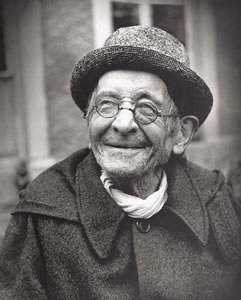
Louis Menand, Ludwig Thoma, Egon Friedell, Imre Madách, Ludwig Jacobowski, Joseph Méry, Kristín Marja Baldursdóttir, Roderich Benedix

De Amerikaanse schrijver en letterkundige Louis Menand werd geboren op 21 januari 1952 in Syracuse, New York. Zie ook alle tags voor Louis Menand op dit blog.

 Uit: American Studies

 „In 1901, when he was fifty-nine, William James delivered the Gifford Lectures at the University of Edinburgh. James was an international academic celebrity. The Principles of Psychology, which appeared in 1890 and which had taken him twelve years to write, had been quickly recognized as the leading summation of developments in a field transformed by the introduction of laboratory methods and by the evolutionary theories of Charles Darwin. An abridged edition for students, Psychology: Briefer Course, popularly known as “Jimmy,” appeared in 1892; by the time of the Gifford Lectures, it had sold nearly fifty thousand copies.

The Gifford lectureship was a two-year appointment. James returned to Edinburgh for the second set of lectures in l902, and that year the lectures were published as The Varieties of Religious Experience. The Varieties has probably been, over the years, James’s most popular book, read even when his functionalist psychology had been superseded by Freudianism and behaviorism, and his pragmatist philosophy was in eclipse. It is composed primarily of case histories, collected from all around the world and organized by category — “Conversion,” “Saintliness,” “Mysticism,” and so on. It looks, in other words, like a psychology textbook, and that is because it is a psychology textbook. The Varieties is not a study of religion; it is, as the subtitle states, “a study in human nature.”
 

Menand
Louis Menand (Syracuse, 21 januari 1952)


De Duitse dichter en schrijver Ludwig Thoma werd geboren op 21 januari 1867 in Oberammergau. Zie ook alle tags voor Ludwig Thoma op dit blog.


Vergänglichkeit

Es prangt um uns auf allen Wiesen
In Grün und Gelb, in Blau und Rot.
Wir wollen diese Pracht genießen,
Denn übermorgen ist sie tot.

Schon kommt man, sie hinwegzuraffen,
Es naht der Schnitter, der sie mäht.
Gott hat die Blumenwelt geschaffen,
Dass sie als Heu die Kühe bläht.

Wohl ist es wert, dass man sich härme,
Wenn man das Ganze recht bedenkt,
Wie diese Schönheit durch Gedärme
Verwandelt sich nach außen lenkt.

Hier liegt die Blume hingesch…lagen,
Sie rauchet noch als warmer Mist.
Warum? .. Das wird die Allmacht wissen,
Du frage nicht als frommer Christ.


Auf Höhen

Und ich fragte meinen Lehrer,
Wo der liebe Herrgott wohnt.
»Ei, im blauen Himmel oben,
Wo er mit den Englein thront.«

Und die grauen Felsenberge
Ragen doch so hoch empor!
Sieht man von dem steilen Gipfel
In das offne Himmelstor?

Sieht man auch die Engelsscharen?
Hat der Himmel dort ein Loch?
»Ja, natürlich,« sprach der Lehrer,
»Warte, du begreifst es noch.«

Nein, ich hab’ es nie begriffen,
Als ich dann nach manchem Jahr
Oft und oft und immer wieder
Auf den Bergesgipfeln war.

Hoch zu Häupten, fest verschlossen
Wölbte sich das Himmelszelt,
Und ich sah nur kleiner werden
Unter mir die Erdenwelt.


Ludwig_Thoma
Ludwig Thoma (21 januari 1867 – 26 augustus 1921)


De Oostenrijkse schrijver en kunsthistoricus Egon Friedell werd op 21 januari 1878 in Wenen geboren. Zie ook alle tags voor Egon Friedell op dit blog.

 Uit: Kulturgeschichte Griechenlands

 „Daß der Mensch ein einfaches Bodenprodukt sei wie seine Brüder, die Pflanzen und Tiere, ist eine zu naheliegende Meinung, als daß sie nicht schon sehr früh aufgestellt worden wäre. In der Tat sehen wir sie bereits von Aristoteles vertreten, der sich seinerseits wieder auf den Chefarzt von Hellas stützt, Hippokrates den Großen, wie er ihn mit Recht nennt. Beide erklären ganz unmißverständlich, die Menschen seien im großen und ganzen genau soviel wert wie ihr Land und ihr Klima, mit dem sie in Körper und Seele übereinstimmen. Aber die nächstliegenden Gedanken sind nicht immer die tragfähigsten: das zeigt sich wiederum bereits bei Aristoteles, der aus seiner Theorie die Behauptung ableitet, daß die Bewohner der kalten Gegenden Europas tapfer, jedoch an geistiger Einsicht und an Kunstsinn arm und zu Herrschaft und echter Staatenbildung wenig befähigt seien. Dieser Schluß, für die damalige Weltlage vollkommen richtig, ist, von uns aus gesehen, haarsträubend falsch; denn niemand wird heute mehr die Ansicht wagen, daß es im Norden unseres Erdteils, auf einem Boden, wo Kant und Newton, Rembrandt und Shakespeare gewachsen sind, an geistiger Einsicht oder an Kunstsinn gefehlt habe und daß England, Rußland und Preußen keine Eignung zu Herrschaft und Staatenbildung erwiesen hätten. Es zeigt sich hier
wieder einmal, daß alle Geschichtsphilosophien ebensowohl wahr wie falsch sind: falsch vor dem Weltgeist, dessen Antlitz wandelbar oder vielmehr unerkennbar ist, und wahr als Ausdruck ihrer Zeit.

Die aristotelische Ansicht scheint das ganze Altertum beherrscht zu haben: auch ein so scharfer Geschichtsdenker wie Polybios erklärt, was die Sitten der Völker so gut wie ihre Gestalt und Farbe bilde, sei das Klima. Das Mittelalter dachte zu tief, um dieser allzu diesseitigen Weisheit zu huldigen. Aber im neunzehnten Jahrhundert ist sie wieder zu fast orthodoxem Ansehen gelangt, zumal durch Buckles «Geschichte der Zivilisation in England»,
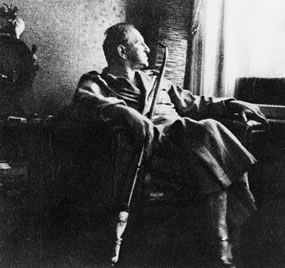
 

EgonFriedell
Egon Friedell (21 januari 1878 – 16 maart 1938)


De Hongaarse schrijver Imre Madách werd geboren op 21 januari 1823 in Dolná Strehová in het huidige Slowakije. Zie ook alle tags voor Imre Madách op dit blog.

Uit: Die Tragödie des Menschen

“Im Himmel. Der Herr mit Glorienschein umgeben auf seinem Throne Knieende Engelscharen. Die vier Erzengel stehen neben dem Throne. Großer Strahlenglanz.

CHOR DER ENGEL.

Gott sei gepriesen, Ehre dem Allmächt’gen,
Der allem, was vorhanden, Dasein gab;
Ein Wort von ihm schuf Himmel, Erde, Welten,
Von seinem Blick hängt auch das Ende ab.
Er ist der Weisheit, Kraft und Wonne Fülle,
Uns überstrahlt der Abglanz nur davon;
Und froh des reichen Anteils knieen dankbar
Anbetend wir um seinen hohen Thron.
Der Urgedanke ist zur That geworden,
Das hehre Schöpfungswerk, es ist vollbracht;
Von allem, was da lebt und webt, erwartet
Nun würd’gen Zoll des Schöpfers Herrschermacht.
DER HERR.
Das Meisterwerk ist fertig, und ist gut.
Es geht nun seinen Gang, der Schöpfer ruht.
Äonen wirbelt’s um die Achse fort,
Bis abgenützt ein Radzahn hemmt den Lauf.
Auf also, meine Weltengeister, auf,
Flink tretet euern ew’gen Reigen an!
Wie ihr im Flug einhersaust mir zu Füßen,
Will ich nun schau’n und mich ergötzen dran.”

 .
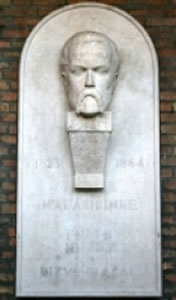
Madach
Imre Madách (21 januari 1823 – 5 oktober 1864)
Nationaal standbeeld


De Duitse dichter en schrijver Ludwig Jacobowski werd geboren op 21 januari 1868 in Strzelno (Strelno). Zie ook alle tags voor Ludwig Jacobowski op dit blog.


Trost der Nacht

Weiche Hände hat die Nacht
und sie reicht sie mir ins Bette;
fürchtend, daß ich Tränen hätte,
streicht sie meine Augen sacht.

Dann verläßt sie das Gemach;
rauschen hör’ ich, sanft und seiden;
und den Dornenzweig der Leiden
zieht sie mit der Schleppe nach.


Dem Auge fern, dem Herzen nah…

“Dem Auge fern, dem Herzen nah!”
Als ich die alte Grabschrift sah
Im eingesunknen Marmorstein,
Da fiel mein totes Lieb mir ein.

O Gott, ich schrieb schon tausendmal
Das gleiche Lied aus gleicher Qual,
Und war doch keins wie dieses da:
Dem Auge fern, dem Herzen nah!”
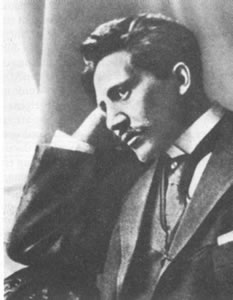
 

Jacobowski
Ludwig Jacobowski (21 januari 1868 – 2 december 1900)


 De Franse dichter en schrijver Joseph Méry werd geboren op 21 januari 1797 in Marseille. Zie ook alle tags voor Joseph Méry op dit blog.


 Le Ballet des heures

Les heures sont des fleurs l’une après l’autre écloses
Dans l’éternel hymen de la nuit et du jour ;
Il faut donc les cueillir comme on cueille les roses
Et ne les donner qu’à l’amour.

Ainsi que de l’éclair, rien ne reste de l’heure,
Qu’au néant destructeur le temps vient de donner ;
Dans son rapide vol embrassez la meilleure,
Toujours celle qui va sonner.

Et retenez-la bien au gré de votre envie,
Comme le seul instant que votre âme rêva ;
Comme si le bonheur de la plus longue vie
Était dans l’heure qui s’en va.

Vous trouverez toujours, depuis l’heure première
Jusqu’à l’heure de nuit qui parle douze fois,
Les vignes, sur les monts, inondés de lumière,
Les myrtes à l’ombre des bois.

Aimez, buvez, le reste est plein de choses vaines ;
Le vin, ce sang nouveau, sur la lèvre versé,
Rajeunit l’autre sang qui vieillit dans vos veines
Et donne l’oubli du passé.

Que l’heure de l’amour d’une autre soit suivie,
Savourez le regard qui vient de la beauté ;
Être seul, c’est la mort ! Être deux, c’est la vie !
L’amour c’est l’immortalité !
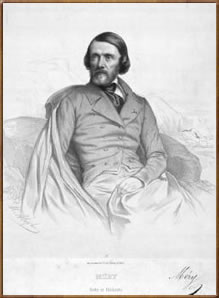
 

joseph_mery
Joseph Méry (21 januari 1797 – 17 juni 1866)


Zie voor onderstaande schrijvers ook mijn blog van 21 januari 2009.

 De IJslandse schrijfster Kristín Marja Baldursdóttir werd geboren op 21 januari 1949 in Hafnarfjörður. Zie ook mijn blog van 21 januari 2007 en ook mijn blog van 21 januari 2008.

De Duitse toneelschrijver, acteur en theaterdirecteur Julius Roderich Benedix werd geboren op 21 januari 1811 in Leipzig.

Edward Hirsch, Nazim Hikmet, Guy Helminger, Eugen Gomringer, Batya Gur, Egon Bondy

De Amerikaanse dichter en letterkundige Edward Hirsch werd geboren op 20 januari 1950 in Chicago. Zie ook mijn blog van 20 januari 2009.


Poor Angels


At this hour the soul floats weightlessly

through the city streets, speechless and invisible,

astonished by the smoky blend of grays and golds

seeping out of the air, the dark half-tones


of dusk suddenly filling the urban sky

while the body sits listlessly by the window

sullen and heavy, too exhausted to move,

too weary to stand up or to lie down.


At this hour the soul is like a yellow wing

slipping through the treetops, a little ecstatic

cloud hovering over the sidewalks, calling out

to the approaching night, “Amaze me, amaze me,”


while the body sits glumly by the window

listening to the clear summons of the dead

transparent as glass, clairvoyant as crystal.

Some nights it is almost ready to join them.


Oh, this is a strange, unlikely tethering,

a furious grafting of the quick and the slow:

when the soul flies up, the body sinks down

and all night—locked in the same cramped room—


they go on quarreling, stubbornly threatening

to leave each other, wordlessly filling the air

with the sound of a low internal burning.

How long can this bewildering marriage last?


At midnight the soul dreams of a small fire

of stars flaming on the other side of the sky,

but the body stares into an empty night sheen,

a hollow-eyed darkness. Poor luckless angels,


feverish old loves: don’t separate yet.

Let what rises live with what descends.


Branch Library


I wish I could find that skinny, long-beaked boy

who perched in the branches of the old branch library.


He spent the Sabbath flying between the wobbly stacks

and the flimsy wooden tables on the second floor,   


pecking at nuts, nesting in broken spines, scratching

notes under his own corner patch of sky.


I’d give anything to find that birdy boy again

bursting out into the dusky blue afternoon


with his satchel of scrawls and scribbles,

radiating heat, singing with joy.


hirsch

Edward Hirsch (Chicago, 20 januari 1950)


De Turkse schrijver Nazim Hikmet werd op 20 januari 1902 geboren in Thessaloniki. Zie ook mijn blog van 20 januari 2007  en ook mijn blog van 20 januari 2008 en ook mijn blog van 20 januari 2009.


De reus met de diepblauwe ogen


Er was eens een reus met diepblauwe ogen

Hij beminde een heel kleine vrouw

Die droomde van een huisje met een tuin

Waarin gevlamde kamperfoelies bloeiden.


De reus had lief als een reus

Zijn handen waren groot voor grote dingen

Nooit hadden zij de muren kunnen bouwen of het belletje doen schellen

Van het huisje met de tuin waarin gevlamde kamperfoelies bloeiden.


Er was eens een reus met heel blauwe ogen

Hij beminde een heel kleine vrouw

Zij was heel aardig, maar werd vlug moe.

Op de grote wegen van de reus

Had ze zich behaaglijk willen voelen.

Ze zei vaarwel aan de diepblauwe ogen

En in de armen van een rijke dwerg

Liep ze het huisje binnen met een tuin waarin gevlamde kamperfoelies bloeiden.


Nu begrijpt de reus

Dat de liefde van een reus

Zelfs niet mag begraven worden

In het huis waarin gevlamde kamperfoelies bloeien.


Vertaald door Paul Snoek


De dode op het Beyazitplein


Er ligt een dode
een jongen van negentien
bij dag onder de zon
bij nacht onder de sterren
op het Beyazitplein in Istanbul.


Er ligt een dode
in de ene hand een leerboek
in de andere hand zijn vermoorde droom
april in het jaar negentienhonderdzestig
op het Beyazitplein in Istanbul.


Er ligt een dode neergeschoten
de wonde aan zijn voorhoofd
gaat open als een rode anjer
op het Beyazitplein in Istanbul.


Er zal een dode liggen
zijn bloed zal zo lang op de grond druppen
tot mijn volk met de wapens
met vrijheidsliederen
het machtige plein zal heroveren.


Vertaald door J. Iven en P. Eydemir


Hikmet

Nazim Hikmet (20 januari 1902 – 3 juni 1963)


De Duitse (Luxemburgse) schrijver Guy Helminger werd geboren op 20 januari 1963 in Esch-sur-Alzette. Zie ook mijn blog van 20 januari 2007 en ook mijn blog van 20 januari 2008 en ook mijn blog van 20 januari 2009.


Uit: Pelargonien (Etwas fehlt immer)


Es gab wenig, das Frank Perl so erfreute wie das Fahrradfahren. Da waren Tage, an denen hob er sich morgens kurz nach dem Frühstück in den Sattel, und erst wenn es dunkel wurde, merkte er, daß er die ganze Zeit nichts gegessen hatte. Er fuhr in der Stadt herum, und ab und an, wenn es sich anbot, wenn er wußte, daß es ihm dieses seltsame Glücksgefühl bescheren würde, ließ er den Lenker los, richtete sich auf und schlug einem Passanten im Vorbeigleiten auf den Hinterkopf. Er drehte sich danach nie um, schaute sich nie die überraschten Mienen der Gedemütigten an. Er fuhr einfach weiter, wissend, daß die Gesichter in seinem Rücken in all ihren stumpfen Variationen doch immer mit dem gleichen Ausdruck völliger Sprachlosigkeit über dem Bürgersteig hingen, während in seiner Brust im selben Moment eine Sauerstoffflasche geöffnet wurde und etwas sich aufrichtete in seinen Gliedern.
An sehr schönen Tagen radelte Perl nach so einem Schlag einmal um den Block und steuerte sein Opfer erneut an.
Die Stadt hatte etwas von einem riesigen Blumenkasten, in dem die vom Vorjahr übriggebliebenen Erdbrocken sich zu kleinen schimmeligen Wohneinheiten strukturierten. In den Furchen dazwischen lief die eine oder andere Kellerassel, erschrocken über so viel Licht, das plötzlich über den Dachgiebeln stand und von dort aus jede noch so verwinkelte Ecke ausputzte. Nur die Blumen fehlten.
„Etwas fehlt immer“, sagte Perl und faßte sich ans rechte Ohr.
Er sah die Wagen, die sich langsam und laut aus der Stadt hinaus Richtung Autobahn schoben, sah, wie ihre Schatten stotterten, län-ger wurden, sich in aller Ruhe ausdehnten und wie Geisterfahrer die Gegenfahrbahn benutzten, während sein Rad ihn fast lautlos und gleichmäßig über den Bürgersteig ans Ende des Tages trug.“ 


Helminger

Guy Helminger (Esch-sur-Alzette, 20 januari 1963)


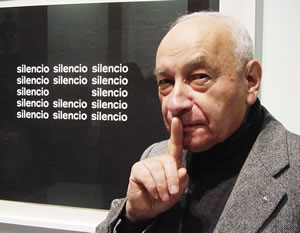
De Zwitserse dichter en schrijver Eugen Gomringer werd op 20 januari 1925 geboren in Cachuela Esperanza, Bolivia. Zie ook mijn blog van 20 januari 2007 en ook mijn blog van 20 januari 2009.


schweigen schweigen schweigen
schweigen schweigen
schweigen schweigen schweigen


gleichmässig gleich gleichmässig ungleich ungleichmässig

gleich ungleichmässig ungleich gleichmässig

gleich

gleichmässig ungleich ungleichmässig gleich

ungleichmässig ungleich gleichmässig gleich gleichmässig


Gomringer

Eugen Gomringer (Cachuela Esperanza,  20 januari 1925)


De Israëlische schrijfster, journaliste en literatuurwetenschapster Batya Gur werd geboren op 20 januari 1947 in Tel Aviv. Zie ook mijn blog van 20 januari 2008 en ook mijn blog van 20 januari 2009.


Uit: The Saturday Morning Murder (Vertaald door Dalva Bilu)


It would take years, Shlomo Gold knew, before he would be able to park his car in front of the Institute on Disraeli Street without feeling a cold hand gripping his heart. Sometimes he even thought that the analytic society should change its prernises from Talbieh, just so he would not have to feel this recurrent anxiety. He had also considered requesting special permission to treat his patients elsewhere, but his supervisors thought that he should confront the situation with his own inner resources and not by means of external changes.

He could still hear old Hildesheimer’s words reverberating in his mind. The building was not the issue, the old man had said: it was not the budding that was causing his anxiety; it was his own feelings in relation to the event. Ever since the day it had happened, Gold heard the words, in their heavy German accent, whenever he approached the building. Especially the sentence about how it was his own emotions he had to face, not the stone walls.

Naturally, Hildesheimer had said then, the fact that it was his,Gold’s, analyst, who was involved had to be taken into account, and perhaps — the old man gave him a shrewd, inquiring look-he should try to “derive the maximum from the difficulties of the situation.” But Shlomo Gold, who had once been so proud of being given the keys to the building, could no longer enter his room at the Institute without an anxiety attack.“


gurbatya

Batya Gur (20 januari 1947 – 19 mei 2005)


De Tsjechische dichter, schrijver en filosoof Egon Bondy werd geboren op 20 januari 1930 in Praag. Zie ook mijn blog van 20 januari 2009.


Uit: Hatto (Vertaald door Mira Sonnenschein)


Der Erzbischof begann nun damit, die wertvollen Gaben zu zeigen, die er kürzlich von den Herzögen erhalten hatte, weil sie seine Unterstützung bei der Forchheimer Wahl suchten: Goldenes und silbernes Geschirr, kostbare Stoffe und seltene Pelze, aber auch Kuriositäten und wertvolle Nichtigkeiten wie die Federn eines Pfaus oder der Schwanz eines Basilisken befanden sich darunter ebenso wie eine antike Karte mit der Darstellung der Erde. Der Erzbischof entfaltete die Rolle, um sie sodann voller Stolz als ein Geschenk der Gesandtschaft des westfränkischen Königs zu präsentieren. Er betonte, sie sei wahrhaftig römischen Ursprungs, da hier, wie er erklärte, Jerusalem entgegen der Wahrheit nicht in der Mitte der Welt dargestellt worden war. (Tatsächlich handelte es sich, obgleich die Karte schon einige Jahrhunderte alt sein musste, um eine von einem ungelehrten Mönch angefertigte Kopie späteren Datums.) Für alle erkennbar war Jerusalem nachträglich in den asiatischen Teil eingezeichnet worden. Lesen konnten die Karte allerdings nur der Erzbischof, Salomon und Hatto. Die drei beugten sich also über das äußerst seltene Werk. Keiner von ihnen hatte eine solche Karte öfter als ein-, zweimal zu Gesicht bekommen. Zuerst konnte Hatto die Umrisse Italiens, dann aber auch schon leicht die des Mittelmeers erkennen. Oberhalb im Süden Afrika, unten der Norden mit Gallien und Germanien und noch etwas tiefer die skandische und die englische Insel. Ganz unten jenes Ultima Thule, ein häufiger Gegenstand seiner Überlegungen. Links im Osten zog sich das Festland bis zum Land der Serren hin. Im Westen endete es mit einigen Halbinseln im Ozean. Auch die größten Gebirgsketten und Flüsse waren auf der Karte eingezeichnet. Doch Hatto benötigte eine Weile, bis er erkannte, wo das eigene Land zu finden war. Der Erzbischof, der bereits einige Zeit dem Studium der Karte gewidmet hatte, deutete den geschätzten Gästen mit seinem Finger die entsprechenden Umrisse an. Da – und da – und hier. Hier leben schon die Sarazenen und von hier aus ziehen die Heiden los. Hatto betrachtete das Pergament mit größter Aufmerksamkeit. Es war ein sehr seltsames Gefühl, alles auf einer so kleinen Fläche, auf der eine so große Stadt wie Mainz gar nicht auffiel, aufgezeichnet zu sehen. Er folgte konzentriert dem Finger des Erzbischofs, ja er forderte ihn auf, alles noch einmal zu zeigen …“

bondy

Egon Bondy (20 januari 1930 – 9 april 2007)


Zie voor nog meer schrijvers van de 20e januari ook mijn vorige blog van vandaag.


Sawako Ariyoshi, Axel Hacke, Robert Olen Butler Jr, Qurratulain Hyder, Raymond Roussel, Michiel de Swaen, Edeltraud Eckert

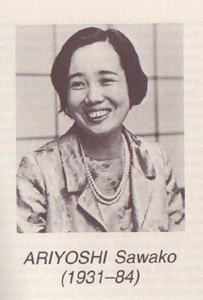
De Japanse schrijfster Sawako Ariyoshi werd geboren op 20 januari 1931 in Wakayama. Zie ook mijn blog van 20 januari 2007 en ook mijn blog van 20 januari 2009.


Uit: The Doctor’s Wife (Vertaald door Wakako Hironaka)


Otsugi’s kimono was probably part of her dowry and therefore was far better than the costumes of the tenant farmers and other villagers. Made of rough hand-woven silk, it suited her position. However, in view of the fact that the Hanaokas were socially inferior to the Matsumotos, Otsugi’s parents had not provided her with a formal kimono of soft shiny silk, wisely deciding she would not have a chance to wear it.

Nevertheless, it was a vibrant, rich black, with an elegant degree of looseness at the back of the neck, a neat V-shape opening in the front, and a tightly fitted sash. Otsugi approached the altar and bowed low, revealing a pale green ribbon around the bun of her hair. Kae watched her pick up some incense. As her slender fingers gently rubbed the beads, the young girl could not help thinking that beautiful people were just born beautiful–from head to toe. She also thought that Otsugi’s dignity was a manifestation of her superior intelligence. Otsugi bowed toward the coffin in the main house in homage to Grandfather and silently nodded to each Imose close by. Kae had been standing somewhat apart from her relatives and did not expect to be noticed. But when Otsugi, her face shadowed in sympathy, turned in her direction, Kae felt as if the tip of a sword had been pointed at her forehead. The woman bowed to her, not suspecting her feelings, and moved to the gate. As she disappeared from sight, the center seam of her kimono below the sash was still absolutely straight.“


Ariyoshi_Sawako

Sawako Ariyoshi (20 januari 1931 – 30 augustus 1984)


De Duitse schrijver en journalist Axel Hacke werd geboren op 20 januari 1956 in Braunschweig. Zie ook mijn blog van 20 januari 2009.


Uit: Wortstoffhof


„Dank eines weit gespannten Leserkorrespondentennetzes bin ich seit einiger Zeit in der Lage, über kulinarische Entwicklungen in aller Welt zu berichten, von denen man anderswo nicht mal etwas ahnt (Drahthuhn, Fischtageszeitung, Huhntorte). In diesem Kapitel möchte ich auf ungewöhnliche gastronomische Ideen rund um den Globus hinweisen. Bitte bedenken Sie: Jedes Küchengenie hat namenlos begonnen, und was heute noch ohne Aufsehen in Quedlinburg oder der Bretagne aufgetischt wird, kann morgen schon in berühmten Restaurants Münchens, Hamburgs oder Berlins auf dem Teller liegen.

Ich habe mir erlaubt, die Zuschriften nach Länderküchen zu gliedern.

Deutsche Küche. Hier ist von einer erstaunlichen Entwicklung zu berichten, zuerst von Familie B. bei einem Ausflug in Quedlinburg entdeckt, auf dem Weg zum Burgberg. Dort wurde neben Schweinebraten auch »Bauernmädchen mit Rotkraut und Klösse« angeboten. Kein Einzelfall! Denn in Kulmbach, im Bistro einer dortigen Metzgerei (Frau F. schickte mir das Inserat), gibt es: »Omas Saures Fleisch mit Baumwollnem Kloß«. Und Frau E. berichtet aus der Kantine ihrer Firma in München, dort habe eines Montags »Fenchel- Organsuppe« auf dem Speiseplan gestanden.

Ist es zu fassen? Nach der nouvelle cuisine ein nouveau cannibalisme. Das kann jeden treffen, wie ich selbst von Leser K. erfahren musste, der in der Münchner Giselastraße vor einem Lokal ein Schild fotografierte, auf dem es hieß: »Heute: Gebacken Hackefleisch mit Kartoffelen In tomaten Soß u. Basmati Reis«. So schnell kann es gehen.“


axel_hacke

Axel Hacke (Braunschweig, 20 januari 1956)


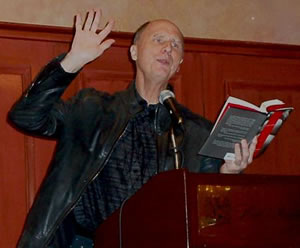
De Amerikaanse schrijver Robert Olen Butler Jr. Werd geboren op 20 januari 1945 in Granite City, Illinois. Zie ook mijn blog van 20 januari 2009.


Uit: Fairy Tale


I like the way fairy tales start in America. When I learn English for real, I buy books for children and I read, “Once upon a time”. I recognize this word “upon” from some GI who buys me Saigon teas and spends some time with me and he is a cowboy from the great state of Texas. He tells me he gets up on the back of a bull and he rides it. I tell him he is joking with Miss Noi (that’s my Vietnam name), but he says no, he really gets up on a bull. I make him explain that “up on” so I know I am hearing right. I want to know for true so I can tell this story to all my friends so that they understand, no lie, what this man who stays with me can do. After that, a few years later, I come to America and I read some fairy tales to help me learn more English and I see this word and I ask a man in the place I work on Bourbon Street in New Orleans if this is the same. Up on and upon. He is a nice man who comes late in the evening to clean up after the men who see the show. He says this is a good question and he thinks about it and he says that yes, they are the same. I think this is very nice, how you get up on the back of time and ride and you don’t know where it will go or how it will try to throw you off.
Once upon a time I was a dumb Saigon bargirl. If you want to know how dumb some Vietnam bargirl can be, I can give you one example. A man brought me to America in 1974. He says he loves me and I say I love that man. When I meet him in Saigon, he works in the embassy of America. He can bring me to this country even before he marries me. He says that he wants to marry me and maybe I think that this idea scares me one little bit. But I say, what the hell. I love him. Then boom. I’m in America and this man is different from in Vietnam, and I guess he thinks I am different too. How dumb is a Saigon bargirl is this. I hear him talk to a big crowd of important people in Vietnam, businessman, politician, big people like that. I am there too and I wear my best ao dai, red like an apple and my quan, my silk trousers, are white. He speaks in English to these Vietnam people because they are big, so they know English. Also my boyfriend does not speak Vietnam. But at the end of his speech he says something in my language and it is very important to me.“


butler

Robert Olen Butler Jr. (Granite City, 20 januari 1945)


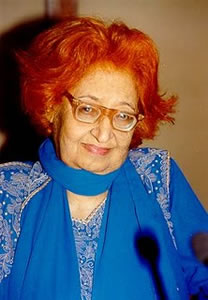
De Indiaase schrijfster Qurratulain Hyder werd geboren op 20 januari 1927 in Aligarh, Uttar Pradesh. Zie ook mijn blog van 20 januari 2009.

 Uit: River of Fire

 „Now he was tired. Gautam Nilambar, final year student of the Forest University of Shravasti, had walked all the way from Shravasti to Saket in pursuit of more knowledge. He had been attending a centenarian sage’s lectures on cosmology till he felt that his head was overflowing with stars. The new term was about to begin in his own gurukul and he was trudging back to Shravasti, his hometown. It rained frequently and he had to stop now and then under the trees.
The journey was arduous. As a student he was not allowed to use boats or vehicles or umbrellas. Nor was he supposed to carry any money. He had to beg his food from respectful villagers and sleep under the trees. Such a life of extreme hardship could match that of any Jain ascetic, except that Gautam was neither a Jain sadhu nor a Buddhist bhikshu. His head was not shaved and he let his long Brahmanical top-knot mingle with his glossy ringlets. He was rather proud of his good looks. Gautam, in fact, was quite vain and had certainly not conquered his ego-he saw no reason why he should.
Once his friend, Aklesh, a townsman, had said that he was like the proverbial peacock that danced in the jungle, but there was nobody to admire him. Surrounded by hoary gurus, erudite shastris and pedantic students, poor Gautam had become a loner. He liked to dance and paint and make terracotta figurines. Once he had travelled on foot all the way to Kashi to learn Shiva’s nritya. He had had no intention of becoming a priest like his father. He wanted to gain some insight into Saraswati’s bhed as a creative artist. He wanted to partake in the mysteries of the universe as the beerbahutis did in their own tiny, weary manner-surely they must have their own perception of the cosmos! As he was the only son of the High Priest of Shravasti, he had been sent to the gurukul as a young boy. He had lived there all these years, devoting himself exclusively to the goddess of learning.
The month of Bhadon had arrived and it rained frequently. He reached the outskirts of Saket and sat down on the grassy bank of the Saryu river.
While he was piously reciting his shlokas and cleaning his muddy feet in the water, something soft touched his toes. He heard the jingle of anklets and glass bangles. A woman laughed. Giggly females jingling their bangles, he thought loftily. Then he noticed thick jasmine garlands floating past his toes. Magnolia blossoms followed. Are they sending me floral messages, he thought vainly, and stole a glance in the direction the flowers had come from. It was a bathing ghat, hidden behind a bamboo screen. Gautam peeped through the lattice and held his breath.“


qurratulain_hyder

Qurratulain Hyder (20 januari 1927 – 21 augustus 2007)


De Franse dichter en schrijver Raymond Roussel werd geboren op 20 januari 1877 in Parijs. Zie ook mijn blog van 20 januari 2009.


Uit: Locus Solus


Ce jeudi de commençant avril, mon savant ami le maître Martial Canterel m’avait convié, avec quelques autres de ses intimes, à visiter l’immense parc environnant sa belle villa de Montmorency.

Locus Solus—la propriété se nomme ainsi—est une calme retraite où Canterel aime poursuivre en toute tranquillité d’esprit ses multiples et féconds travaux. En ce lieu solitaire il est suffisamment à l’abri des agitations de Paris—et peut cependant gagner la capitale en un quart d’heure quand ses recherches nécessitent quelque station dans telle bibliothèque spéciale ou quand arrive l’instant de faire au monde scientifique, dans une conférence prodigieusement courue, telle communication sensationnelle.

C’est à Locus Solus que Canterel passe presque toute l’année, entouré de disciples qui, pleins d’une admiration passionnée pour ses continuelles découvertes, le secondent avec fanatisme dans l’accomplissement de son œuvre. La villa contient plusieurs pièces luxueusement aménagées en laboratoires modèles qu’entretiennent de nombreux aides, et le maître consacre sa vie entière à la science, aplanissant d’emblée, avec sa grande fortune de célibataire exempt de charges, toutes difficultés matérielles suscitées au cours de son labeur acharné par les divers buts qu’il s’assigne.

Trois heures venaient de sonner. Il faisait bon, et le soleil étincelait dans un ciel presque uniformément pur. Canterel nous avait reçus non loin de sa villa, en plein air, sous de vieux arbres dont l’ombrage enveloppait une confortable installation comprenant différents sièges d’osier.

Après l’arrivée du dernier convoqué, le maître se mit en marche, guidant notre groupe, qui l’accompagnait docilement. Grand, brun, la physionomie ouverte, les traits réguliers, Canterel, avec sa fine moustache et ses yeux vifs où brillait sa merveilleuse intelligence, accusait à peine ses quarante-quatre ans. Sa voix chaude et persuasive donnait beaucoup d’attrait à son élocution prenante, dont la séduction et la clarté faisaient de lui un des cham
pions de la parole.

Nous cheminions depuis peu dans une allée en pente ascendante fort raide.

À mi-côte nous vîmes au bord du chemin, debout dans une niche de pierre assez profonde, une statue étrangement vieille qui, paraissant formée de terre noirâtre, sèche et solidifiée, représentait, non sans charme, un souriant enfant nu. Les bras se tendaient en avant dans un geste d’offrande—les deux mains s’ouvrant vers le plafond de la niche. Une petite plante morte, d’une extrême vétusté, s’élevait au milieu de la dextre, où jadis elle avait pris racine.“


roussel

Raymond Roussel (20 januari 1877 – 14 juli 1933)


De Vlaamse dichter, rederijker en heelmeester Michiel de Swaen werd geboren in Duinkerke op 20 januari 1654. Zie ook mijn blog van 20 januari 2009.


Toemaet


bij gedachten op den tijdt,
gepast op het beginnende jaer


Ziele, die gewaerschouwt syt
Om met ’t nieuwe jaer te leeren,
Hoe gy uwen weerden tydt
Moet opwegen en waerdeeren,
Wilt gy deze les verstaen?
Merkt den oogenblik van heden
Voor den alderbesten aen,
Die gy sult op aerd besteden.
Waerom eenen stont verwacht,
Die is buyten uwe macht?


Swaen

Michiel de Swaen (20 januari 1654 – 3 mei 1707)


Zie voor onderstaande schrijver ook mijn blog van 20 januari 2009.


De Duitse dichteres en schrijfster Edeltraud Eckert werd geboren op 20 januari 1930 in Hindenburg.


Edgar Allen Poe, Julian Barnes, Edwidge Danticat, Gustav Meyrink, Eugénio de Andrade

De Amerikaanse schrijver Edgar Allen Poe werd geboren op 19 januari 1809 in Boston. Zie ook mijn blog van 19 januari 2007 en ook mijn blog van 19 januari 2008 en ook mijn blog van 19 januari 2009.

Uit: The Oval Portrait Analysis

Long- long I read- and devoutly, devotedly I gazed. Rapidly and gloriously the hours flew by and the deep midnight came. The position of the candelabrum displeased me, and outreaching my hand with difficulty, rather than disturb my slumbering valet, I placed it so as to throw its rays more fully upon the book.
But the action produced an effect altogether unanticipated. The rays of the numerous candles (for there were many) now fell within a niche of the room which had hitherto been thrown into deep shade by one of the bed-posts. I thus saw in vivid light a picture all unnoticed before. It was the portrait of a young girl just ripening into womanhood. I glanced at the painting hurriedly, and then closed my eyes. Why I did this was not at first apparent even to my own perception. But while my lids remained thus shut, I ran over in my mind my reason for so shutting them. It was an impulsive movement to gain time for thought- to make sure that my vision had not deceived me- to calm and subdue my fancy for a more sober and more certain gaze. In a very few moments I again looked fixedly at the painting.
That I now saw aright I could not and would not doubt; for the first flashing of the candles upon that canvas had seemed to dissipate the dreamy stupor which was stealing over my senses, and to startle me at once into waking life.
The portrait, I have already said, was that of a young girl. It was a mere head and shoulders, done in what is technically termed a vignette manner; much in the style of the favorite heads of Sully. The arms, the bosom, and even the ends of the radiant hair melted imperceptibly into the vague yet deep shadow which formed the back-ground of the whole. The frame was oval, richly gilded and filigreed in Moresque. As a thing of art nothing could be more admirable than the painting itself. But it could have been neither the execution of the work, nor the immortal beauty of the countenance, which had so suddenly and so vehemently moved me. Least of all, could it have been that my fancy, shaken from its half slumber, had mistaken the head for that of a living person. I saw at once that the peculiarities of the design, of the vignetting, and of the frame, must have instantly dispelled such idea- must have prevented even its momentary entertainment. Thinking earnestly upon these points, I remained, for an hour perhaps, half sitting, half reclining, with my vision riveted upon the portrait. At length, satisfied with the true secret of its effect, I fell back within the bed. I had found the spell of the picture in an absolute life-likeliness of expression, which, at first startling, finally confounded, subdued, and appalled me. With deep and reverent awe I replaced the candelabrum in its former position. The cause of my deep agitation being thus shut from view, I sought eagerly the volume which discussed the paintings and their histories. Turning to the number which designated the oval portrait, I there read the vague and quaint words which follow:
“She was a maiden of rarest beauty, and not more lovely than full of glee. And evil was the hour when she saw, and loved, and wedded the painter.”

edgar_allen_poe

Edgar Allen Poe (19 januari 1809 – 7 oktober 1849)
Portret door Eric Allshouse


De Engelse schrijver Julian Barnes werd geboren op 19 januari 1946 in Leicester. Zie ook mijn blog van 19 januari 2007 en ook mijn blog van 19 januari 2008 en ook mijn blog van 19 januari 2009.

Uit: East Wind

„The previous November, a row of wooden beach huts, their paintwork lifted and flaked by the hard east wind, had burned to the ground. The fire brigade came from twelve miles away, and had nothing to do by the time it arrived. “YOBS ON RAMPAGE,” the local paper decided, though no culprit was ever found. An architect from a more fashionable part of the coastline told the regional TV news that the huts had been part of the town’s social heritage and must be rebuilt. The council announced that it would consider all options, but since then had done nothing. Vernon had moved to the town only a few months before, and had no feelings about the beach huts. If anything, their disappearance improved the view from the Right Plaice, where he sometimes had lunch. From a window table, he now looked out across a strip of concrete to damp shingle, a bored sky, and a lifeless sea. That was the east coast: for months on end you got bits of bad weather and lots of no weather. This was fine by him: he’d moved here to have no weather in his life.

“You are done?”

He didn’t look up at the waitress. “All the way from the Urals,” he said, still gazing at the long, flat sea.

“Pardon?”

“Nothing between here and the Urals. That’s where the wind comes from. Nothing to stop it. Straight across all those countries.” Cold enough to freeze your knob off, he might have added in other circumstances.

“Oorals,” she repeated. As he caught the accent, he looked up at her. A broad face, streaked hair, chunky body, and not doing any waitressy number in hope of a bigger tip. Must be one of those Eastern Europeans who were all over the country nowadays. Building trade, pubs and restaurants, fruit picking. Came over here in vans and coaches, lived in rabbit warrens, made themselves a bit of money. Some stayed; some went home. Vernon didn’t mind one way or the other. That’s what he found more often than not these days: he didn’t mind one way or the other.“

julian_barnes

Julian Barnes (Leicester,  19 januari 1946)


De Amerikaanse schrijfster Edwidge Danticat werd geboren in Port-au-Prince op Haïti op 19 januari 1969. Zie ook mijn blog van 19 januari 2009.


Uit: Brother, I’m Dying


On Sunday, October 24, 2004, nearly two months after he left New York, Uncle Joseph woke up to the clatter of gunfire. There were blasts from pistols, handguns, automatic weapons, whose thundering rounds sounded like rockets. It was the third of such military operations in Bel Air in as many weeks, but never had the firing sounded so close or so loud. Looking over at the windup alarm clock on his bedside table, he was startled by the time, for it seemed somewhat lighter outside than it should have been at four thirty on a Sunday morning.
During the odd minutes it took to reposition and reload weapons, you could hear rocks and bottles crashing on nearby roofs. Taking advantage of the brief reprieve, he slipped out o
f bed and tiptoed over to a peephole under the staircase outside his bedroom. Parked in front of the church gates was an armored personnel carrier, a tank with mounted submachine guns on top. The tank had the familiar circular blue and white insignia of the United Nations peacekeepers and the letters UN painted on its side. Looking over the trashstrewn alleys that framed the building, he thought for the first time since he’d lost Tante Denise that he was glad she was dead. She would have never survived the gun blasts that had rattled him out of his sleep. Like Marie Micheline, she too might have been frightened to death.
He heard some muffled voices coming from the living room below, so he grabbed his voice box and tiptoed down the stairs. In the living room, he found Josiane and his grandchildren: Maxime, Nozial, Denise, Gabrielle and the youngest, who was also named Joseph, after him. Léone, who was visiting from Léogâne, was also there, along with her brothers, Bosi and George.”


danticat_edwidge

Edwidge Danticat (Port-au-Prince, 19 januari 1969)


De Oostenrijkse schrijver Gustav Meyrink werd op 19 januari 1868 te Wenen geboren. Zie ook mijn blog van 19 januari 2009.


Uit: Walpurgisnacht


„Ein Hund schlug an.

Einmal. Ein zweitesmal.

Dann lautlose Stille, als ob das Tier in die Nacht hinein horche, was geschehen werde.

»Mir scheint, der Brock hat gebellt«, sagte der alte Baron Konstantin Elsenwanger, »wahrscheinlich kommt der Herr Hofrat.«

»Das ist doch, meiner Seel’, kein Grund nicht zum Bellen «, warf die Gräfin Zahradka, eine Greisin mit schneeweißen Ringellocken, scharfer Adlernase und buschigen Brauen über den großen, schwarzen, irrblickenden Augen, streng hin, als ärgere sie sich über eine solche Ungebührlichkeit, und mischte einen Stoß Whistkarten noch schneller, als sie es ohnehin bereits eine halbe Stunde hindurch getan

hatte.

»Was macht er eigentlich so den ganzen, lieben Tag lang?« fragte der Kaiserliche Leibarzt Taddäus Flugbeil, der mit seinem klugen, glattrasierten, faltigen Gesicht über dem altmodischen Spitzenjabot wie ein schemengleicher Ahnherr der Gräfin gegenüber in einem Ohrenstuhl kauerte, die unendlich

langen, dürren Beine affenhaft fast bis zum Kinn emporgezogen.

Den »Pinguin« nannten ihn die Studenten auf dem Hradschin und lachten immer hinter ihm drein, wenn er Schlag 12 Uhr mittags vor dem Schloßhof in eine geschlossene Droschke stieg, deren Dach erst umständlich auf- und wieder zugeklappt werden mußte, bevor seine fast 2 Meter hohe Gestalt

darin Platz gefunden hatte. – Genau so kompliziert war der Vorgang des Aussteigens, wenn der Wagen sodann einige hundert Schritt weiter vor dem Gasthaus »Zum Schnell« halt machte, wo der Herr Kaiserliche Leibarzt mit ruckweisen vogelhaften Bewegungen ein Gabelfrühstück aufzupicken

pflegte. – –

»Wen meinst du«, fragte der Baron Elsenwanger zurück, – »den Brock oder den Herrn Hofrat?«

»Den Herrn Hofrat natürlich. Was macht er so den ganzen Tag?«

»No. Er spielt sich halt mit den Kindern in den Choteks- Anlagen.«

»Mit ›die‹ Kinder«, verbesserte der Pinguin.

»Er – spielt – sich – mit – denen – Kindern«, fiel die Gräfin verweisend ein und betonte jedes Wort mit Nachdruck. Die beiden alten Herrn schwiegen beschämt.“


Gustav_Meyrink

Gustav Meyrink (19 januari 1868 – 4 december 1932)


De Portugese dichter Eugénio de Andrade (eig. José Fontinhas) werd geboren op 19 januari 1923 in Póvoa de Atalaia. Zie ook mijn blog van 19 januari 2009.


Silence


When tenderness

seems tired at last of its offices


and sleep, that most uncertain vessel,

still delays,


when blue bursts from

your eyes


and searches

mine for steady seamanship,


then it is I speak to you of words

desolate, derelict,


transfixed by silence.


Fruit


Peaches, pears, oranges,

strawberries, cherries, figs,

apples, melon, honey dew,

oh, music of my senses,

pure pleasure of the tongue;

let me speak now

of fruit that fascinate,

with the flavour, with the hues,

with the fragrance of their syllables:

oh tangerine, oh tangerine.


Vertaald door Alexis Levitin


andrade

Eugénio de Andrade (19 januari 1923 – 13 juni 2005)


Zie voor nog meer schrijvers van de 19e januari ook mijn vorige blog van vandaag.


Patricia Highsmith, Thomas Gsella, Paul-Eerik Rummo, Marie Koenen

De Amerikaanse schrijfster Patricia Highsmith werd geboren als Mary Patricia Plangman in Fort Worth (Texas) op 19 januari 1921. Zie ook mijn blog van 19 januari 2008 en ook mijn blog van 19 januari 2009.


Uit: Those Who Walk Away


‘What are you worried about?’ asked Elisabetta. She was smiling, a little merry on the champagne.

‘I don’t know. Nothing.’ He felt faint, blank, dead or perhaps dying. Distant, high-pitched bells rang in his ears. The girl was saying something that he could not hear, looking off to one side now, and her unconcern at his condition made him feel quite alone. He breathed deeply, one deep breath after another of the tobacco-laden air. The girl did not notice. The faintness passed.

A few moments later, they were out on the street, walking. The girl said it was not far back to where they lived, and there was no boat that could be of any help. The lanes were moist under their shoes. The girl held his arm and chattered on about last summer’s vacation. She had gone to visit relatives in the Ticino. They had cows and a big house. They had taken her to Zurich. She thought Zurich was much cleaner than Venice. Ray could feel the warmth of the girl’s arm next to his. He did not feel faint now, but he felt alone and lost, without purpose, without identity. Wouldn’t it be strange, he thought, if he really were dead, if he were dreaming all of this, or if by some strange process – which was the assumption on which nearly all ghost stories were based – he was a ghost visible to a few people, like this girl, a ghost who tomorrow would not be in the room at Signora Calliuloi’s, would have left not even an unmade bed behind him, only a strange memory in the minds of the few who had seen him, a few whom other people might not believe when they spoke him?

But the dark canals were very real, and so was the rat that crossed their path twenty feet ahead, running from a hole in the stone parapet that bordered the canal, where a barge stirred sleepily against its rope mooring, making a piggish sound like schlurp. The girl had seen the rat, but had interrupted what she was saying only by a brief ‘Ooh!’ and gone on. A light, fixed on the corner of a house so it would illuminate four streets, seemed to burn with impatience, waiting for persons not yet arrived, persons who would carry out some action below it.

‘How long are you really going to be here?’ asked Elisabetta.

Ray saw that they had entered their street. ‘Three or four days.’

‘Thank you for this evening,’ Elisabetta said in her doorway. She looked quickly at her watch., but Ray doubted if she could even see the time on it. ‘I think it’s before eleven. We are very good.’

He had reached a state of not hearing what she said, and yet he did not want to leave her.“


patricia-highsmith

Patricia Highsmith (19 januari 1921 – 4 februari 1995)


De Duitse dichter en satiricus Thomas Gsella werd geboren op 19 januari 1958 in Essen. Zie ook mijn blog van 19 januari 2009.

Die Bundeskanzlerin

Sie platzt vor Fleiß. Kaum graut der Tag,
Da stellt sie erste Weichen:
Sie nimmt den Armen den Belag
Vom Brot und schenkt’s den Reichen.
Am Mittag geht’s ins Kabinett.
Ergebnis der Debatten:
Sie kratzt den Hungrigen das Fett
Vom Brot und gibt’s den Satten.
Am Abend dann das reine Glück:
Sie senkt Lohnnebenkosten.
Zehn Wessis kriegen Geld zurück
Von einer aus ‘m Osten.


Der ICE-Zugchef

Ein Kieler Morgen, heiß und licht.
Er spricht dezent und leise:
“Die Lüftung funktioniert heut’ nicht.
Wir wünschen gute Reise.”
Ein Kieler Nachmittag. Man hört
Im Halbschlaf seine Worte:
“Die Oberleitung ist zerstört.
Im Bistro: alte Torte.”
Die Kieler Nacht, von ihm versüßt
Dank tiefster Menschenkenntnis:
“Zwölf Stunden sind nun eingebüßt.
Wir bitten um Verständnis.”

Thomas_Gsella

Thomas Gsella (Essen,19 januari 1958)


De Estlandse dichter, schrijver en politicus Paul-Eerik Rummo werd geboren op 19 januari 1942 in Tallinn. Zie ook mijn blog van 19 januari 2009.


Now give me god the strength


now give me god the strength to run in showers of
chances
and to recognize the inevitability amongst the many
imposing themselves on being it


memory is where our sufferings are nesting
no dog can gnaw through his genetic chain
but it’s quite another thing to run just here in showers
of chances
but it’s quite another thing to run just here in showers
of chances
inevitability, give me your hand


inevitability, here is my second hand
my first one has been already given to you by my
birth
inevitability, give me your hand


Vertaald door de dichter en Enn Soosaar


Here you grew up


Here you grew up. On a land which is flat.
You get your peace and balance from that.


The Egg Hill remains the cloud-frontier
The clouds are low and mouse-grey here.


One ticket to the world was meant for you.
You can still check whether it’s all true.


What Mecca is to a Moslem believer,
these woods are to you with mushroom-fever.


Here you were born. On a land which is flat.
Your peace and balance stem from that.


Vertaald door Ivar Ivask


rummo

Paul-Eerik Rummo (Tallinn, 19 januari 1942)


De Nederlandse dichteres en schrijfster Marie Koenen werd geboren in ’s-Hertogenbosch op 19 januari 1879. Zie ook mijn blog van 19 januari 2007 en ook mijn blog van 19 januari 2008 en ook mijn blog van 19 januari 2009.

Ze kwamen

En toch zijn hier Gods Heiligen geland.
Hun zeilsnik kwam eens met de meeuwen strijken
Uit ’t ochtendlicht, hier, aan dit zelfde strand.

Om met hun diepst geluk haar te verrijken,
Zochten ze zingend de overzeesche kust,
De twaalef, die op koningen gelijken.

Ewald en Adelbert en Werenfried
En de anderen, die met Sint Wilbert kwamen,
Veroveraars voor God en Zijn gebied.

De zang der zee druischt door hun heldennamen,
Zooals Gods waarheid door hun heldengeest,
Ze trekken op, sterk als een leger samen.

Wel even sterk in God en onbevreesd
Als ’t twaalfetal door Christus uitgezonden,
Die de veroveraars van volken zijn geweest.

Ze hebben d’ingang tot het land gevonden,
Tusschen de duinen de open groene poort,
Waardoor de Rijn in de Noordzee komt monden.

Ze roeien ’t schip door ’t klare water voort,
De vlakte door, den droom der verte tegen,
En bidden: ‘In den aanvang was het woord’.

Bleef dan ook van hun stem, hun zang, hun zegen
Geen laatste naklank leven aan dit strand,
Geen zweem van hun gestalte op deze wegen,
Geen spoor meer van hun voetstap in het zand:
Gods Heiligen, ze zijn hier toch geland.

marie_koenen

Marie Koenen (19 januari 1879 – 11 juli 1959)

In Memoriam Bibeb

In Memoriam Bibeb

De Nederlandse journaliste Bibeb is op 95-jarige leeftijd in Scheveningen overleden. Dat meldde maandag tijdschrift Vrij Nederland op zijn website.

Bibeb, pseudoniem van Elisabeth Maria Lampe-Soutberg, werd geboren in Amsterdam op 15 juni 1914.  Bibeb begon met schrijven voor bladen van De Nieuwe Pers, in het bijzonder voor het Haarlems Dagblad, waar Walther Schaper hoofdredacteur was. Toen deze in 1936 een baan accepteerde bij De Sumatra Post in Deli, volgde zij hem een jaar later; in 1937 trouwde zij met Schaper in Deli. Voor De Sumatra Post begon zij een kinder- en moderubriek. Ook schreef zij voor het maandblad Oké. Later hertrouwde zij met George Lampe die directeur was van de Vrije Academie voor Beeldende Kunsten in Den Haag. Vanaf begin jaren vijftig tot circa 1997 publiceerde ze interviews in het weekblad Vrij Nederland. Opvallend aan haar interviews was dat zij zich als interviewster zeer sterk op de achtergrond hield, en niets over zichzelf prijsgaf in haar stukken. Haar interviews behoorden lange tijd tot de meest gelezen bijdragen aan Vrij Nederland. Haar interviews bereidde ze gedegen voor en vonden vaak in meerdere urenlange sessies plaats, bij voorkeur bij de geïnterviewde thuis; een enkele keer in haar eigen huis in Scheveningen.

Uit: Bibeb in gesprek met Willem Brakman

‘Ik ben een angstgenie, ik draag de dood bij me vanaf dat ik een kind was’

‘Ik heb altijd veel last gehad van doodsangst. Ik heb daar een talent voor. Ik ben een angstgenie. Ik draag de dood bewust bij me vanaf dat ik kind was. Het sombere gedempte geschuifel, gebogen mond en, alles ruikt muf.

M’n oudste herinnering is de dood van vrouw Prins. Op een avond, in winter, kwam een man m’n moeder halen. “Vrouw Prins ligt op het uiterste”. Ik deed de gordijnen een eindje opzij en keek naar buiten. In die tijd gingen de lantarens pas aan als het echt donker was. De straat leek een duister hol. Vrouw Prins woonde aan de overkant, gelijkvloers. Ze lag altijd voor het raam, daarachter zag je haar roerloze bleke profiel.

Een sterfgeval was in Scheveningen een gebeurtenis. Iedereen liep ervoor uit. De zwarte kist werd naar buiten gedragen. Ik kon niet begrijpen dat ze daarin lag. De eerste opdonder kreeg ik toen m’n vriendje zei: “Daar komen we allemaal in.” “Maar eerst word je vreselijk ziek,” zei m’n broer. Ik was verpletterd.

Toen m’n opa gestorven was, hadden ze een kapelletje gemaakt in huis. Om de kist stond een zwart kamerscherm met zilveren koorden en tressen. In de diepte, onder het ruitje in het deksel, zag ik een klein blauw gezichtje. Later is mijn tante zo op opa gaan lijken. Raar hoe spoken in de levenden kruipen.’t Was net of die man weer langzamerhand opstond!’

(Vrij Nederland 23 mei 1981)

Bibeb

Bibeb (15 juni 1914 – 18 januari 2010)


Rubén Darío, Peter Stamm, Roger Bésus, Robert Anton Wilson, Arno Schmidt, Franz Blei, Paul Léautaud

De Nicaraguaanse schrijver Rubén Darío werd geboren in Metapa, tegenwoordig Ciudad Darío, op  18 januari 1867. Zie ook mijn blog van 18 januari 2007 en ook mijn blog van 18 januari 2008 en ook mijn blog van 18 januari 2009.


Nocturne

I want to express my anguish in verses that speak
of my vanished youth, a time of dreams and roses,
and the bitter defloration of my life
by many small cares and one vast aching sorrow.

And the voyage to a dim orient in half-seen ships,
the seeds of prayer that flowered in blasphemies,
the bewilderment of a swan among the puddles,
the false nocturnal blue of a sick Bohemia.

Far-off harpsichord, silent and forgotten,
that never gave my dreams the sublime sonata;
orphan skiff, heraldic tree, dark nest
which the night made lovely with its silver light;

Hope still aromatic with fresh herbs; the trill
of the nightingale in the morning in the spring;
the white lily cut down by a fatal destiny;
the search for happiness, and evil’s persecutions–

And the dismal amphora with its divine poison
that causes the inner torments of this life;
the fearful knowledge of our human mire;
and the horror of knowing that we are transitory,

the horror of walking blindly, among alarms,
toward the unknowable, toward the inevitable;
and the brute nightmares that rack our weeping sleep,
from which no one but She can wake us up!


Vertaald door Lysander Kemp


Nightfall In The Tropics


There is twilight grey and gloomy

Where the sea its velvet trails;

Out across the heavens roomy

Draw the veils.


Bitter and sonorous rises

The complaint from out the deeps,

And the wave the wind surprises

Weeps.


Viols there amid the gloaming

Hail the sun that dies,

And the white spray in its foaming

“Miserere” sighs.


Harmony the heavens embraces,

And the breeze is lifting free

To the chanting of the races

Of the sea.


Clarions of horizons calling

Strike a symphony most rare,

As if mountain voices calling

Vibrate there.


As though dread, unseen, were waking,

As though awesome echoes bore

On the distant breeze’s quaking

The lion’s roar.


Vertaald door Thomas Walsh


ruben-dario

Rubén Darío (18 januari 1867 – 6 februari 1916)


De Zwitserse schrijver Peter Stamm werd geboren op 18 januari 1963 in Weinfelden. Zie ook mijn blog van 18 januari 2007  en ook mijn blog van 18 januari 2008 en ook mijn blog van 18 januari 2009.


Uit: Sieben Jahre


“Sonja stand in der Mitte des hellerleuchteten Raumes, im Zentrum wie immer. Sie hielt den Kopf etwas gesenkt und die Arme nah am Körper, ihr Mund lächelte, aber ihre Augen waren zusammengekniffen, als blende sie das Licht oder als hab
e sie Schmerzen. Sie wirkte abwesend,

ausgestellt wie die Bilder an den Wänden, die niemand beachtete und die doch der Anlass des Zusammenkommens waren.

Ich rauchte einen Zigarillo und beobachtete durch das große Schaufenster der Galerie, wie ein gutaussehender Mann auf Sonja zuging und sie ansprach. Es war, als erwache sie. Sie lächelte, stieß mit ihm an. Er bewegte den Mund, in ihrem Gesicht war ein fast kindliches Erstaunen zu sehen, dann lächelte sie wieder, aber selbst von hier aus sah ich, dass sie dem Mann nicht zuhörte, dass sie an etwas anderes dachte.

Sophie war neben mir stehen geblieben. Auch sie schien nachzudenken. Dann sagte sie, Mama ist die schönste Frau der Welt. Ja, sagte ich und streichelte mit der Hand über ihren Kopf. Das ist sie, deine Mutter ist die schönste Frau der Welt.

Es hatte seit dem Morgen geschneit, aber der Schnee schmolz, sobald er den Boden berührte. Mir ist kalt, sagte Sophie und schlüpfte durch die Tür, die eben jemand geöffnet hatte, in die Galerie. Ein großer, kahlköpfiger Mann war herausgekommen, eine Zigarette im Mund. Er blieb unangenehm nah vor mir stehen, als kennten wir uns, und zündete sich die Zigarette an.

Krasse Bilder, sagte er. Als ich nicht antwortete, wandte er sich ab und ging ein paar Schritte von mir weg. Er wirkte plötzlich unsicher und etwas verloren.

Ich schaute noch immer durch das Schaufenster. Sophie war zu Sonja gelaufen, deren Gesicht sich aufhellte. Der gutaussehende Mann, der immer noch neben ihr stand, schaute etwas betreten, fast beleidigt auf das Kind. Sonja beugte sich zu Sophie hinunter, die beiden redeten kurz miteinander, und Sophie zeigte nach draußen. Sonja schirmte mit der Hand die Augen ab und

schaute mit gerunzelter Stirn und einem irritierten Lächeln in meine Richtung. Ich war ziemlich sicher, dass sie mich nicht sehen konnte in der Dunkelheit.”


peter-stamm

Peter Stamm (Weinfelden,  18 januari 1963)


De Franse schrijver en beeldhouwer Roger Bésus werd geboren op 18 januari 1915 in Bayeux. Zie ook mijn blog van 18 januari 2009.


Uit: Journal 1962 – 1972


„1er juillet 1962 – Je viens d’écrire le mot Fin… Mon roman est d’un pessimisme épouvantable. Il illustre ma pensée qu’il n’y a de bonheur total qu’en échappant au monde par le rêve ou la folie. Et le mot d’émilia qui conclut mon roman est à ce titre bouleversant. J’ai sangloté tout au long du passage où Jeanne évoque son fiancé. Enfin j’aimerais qu’on me fît crédit pour tout ce qui est contradiction et foisonnement dans mes pages : cela est destiné à traduire de manière incernable la vérité, la vérité qui est incernable. Je crois que je n’aurais jamais joué aussi bien qu’ici avec le symbole et son approximation – car je lui refuse l’exactitude. évidemment je suis heureux d’avoir écrit cet ouvrage. Je le crois destiné à durer bien des générations.

(…)


29 mai 1970 – Aperçu hier, dans un hebdomadaire ou mensuel du style Elle ou Marie-Claire : Le mariage est contre nature. Les imbéciles, ils le remplaceront par quoi ? Car il y a les enfants. Dire « contre nature » ce qui est une institution sans doute immémoriale est du reste ne pas savoir ce qui est « naturel », naturel à l’homme, j’entends. On veut tout ramener au coït et voir en lui la seule finalité de l’homme. Mais alors c’est ne pas se soucier de l’homme naturel, c’est se soucier de l’animal dans la nature, de l’infra-homme, c’est, fût-ce symboliquement, arrêter la création un jour plus tôt. Je crois que je n’ai rien écrit d’aussi juste pour expliquer cette civilisation, que les quelques lignes de La Couleur du Gris où j’associe technocratie et pourrissement. Le technocrate, c’est le Néron moderne, qui gouverne dans le mépris de ceux qu’il endort par la satisfaction qu’il leur procure du pain et des jeux.“


Besus

Roger Bésus (18 januari 1915 – 17 februari 1994)
Hier bij een “zelfportret”


De Amerikaanse schrijver, filosoof, futuroloog, anarchist en onderzoeker Robert Anton Wilson werd geboren op 18 januari 1932 in New York. Zie ook mijn blog van 18 januari 2008 en ook mijn blog van 18 januari 2009.


Uit: Prometheus Rising


The third semantic circuit handles artifacts and makes a “map” (reality-tunnel) which can be passed on to others, even across generations. These “maps” may be paintings, blueprints, words, concepts, tools (with instructions on use transmitted verbally), theories, music, etc.
Human beings (domesticated primates) are symbol-using creatures; which means, as the pioneer semanticist, Korzybski, noted, that those who rule symbols, rule us.
If Moses, Confucius, Buddha, Mohammed, Jesus and St. Paul can be considered living influences—and they are: look around the world—this is only because their Signal has been carried to us by human symbol systems. These systems include words, artworks, music, rituals and unrecognized rituals (“games”) through which culture is transmitted. Marx and Hitler, Newton and Socrates, Shakespeare and Jefferson, etc. continue to “rule” parts of humanity in the same way—through the semantic circuit.
We are ruled even more, and even less consciously, by the inventors of the wheel, the plow, the alphabet, even the Roman roads.
Since words contain both denotations (referents in the sensory-existential world) and connotations (emotional tones and poetic or rhetorical hooks), humans can be moved to action even by words which have no real meaning or reference in actuality. This is the mechanism of demagoguery, advertising and much of organized religion.


wilson

Robert Anton Wilson (18 januari 1932 – 11 januari 2007)  


De Duitse schrijver Arno Schmidt werd op 18 januari 1914 geboren in Hamburg. Zie ook mijn blog van 18 januari 2007 en ook mijn blog van 18 januari 2009.


Uit: Julia, oder die Gemälde


Ihering: “Ja, das’ss der Fundamentalirrtum der Marx & Sozialisten : daß alle Menschen gleich seien: und man, durch bloßes Vorhalten von Wissensfutter, über Nacht ein vorbildliches Volk produzieren könnte : nichts als kluge, kulturtragende (oder gar =schaffende) EdelMenschen. Und das hätten bisher nur die Kapitalisten verhindert. – Ach nein, die Menschen sind sehr verschieden – viele dumm, schlecht, grausam; und werden noch lange so bleiben : ‘Vererbung’ ist kein leerer Wahn! Sinn und Geschmack für Kulturgüter sind einfach nicht vorhanden; auch nicht anzuerziehen; ja, schon das simple ‘NaturGefühl’ ist recht selten. Ob Arbeiter, ob Bauern, ob ‘Akademiker’ sind Barbaren, die sich nicht binnen einer halben Generation in Schnellkursen zu Roten RenaissanceGiganten machen lassen; sondern wie Entwicklungsvölker angesehen werden müßten; die man langsam, so 3-400 Jahre lang zu züchten & schulen versuchen müßte.” (Ja, vielleicht wäre sogar das mit in Anschlag zu bringen: Wir haben eine fette Milliarde Jahre hindurch in so manchen TierVerkleidungen auf Erden gelebt, und sind nicht gut geworden – : vielleicht sollen Wir nicht gut sein?)”

(…)


(Über Theologen): “Wenn man diesen Wust von Gelehrsamkeit und Unwissenheit, von Scharfsinn und Borniertheit, von Weisheit und Frivolität, von unerforschlicher Geistestiefe und unglaublicher Schalheit durchstöbert, so erstaunt man über die Gesetzlosigkeit der Gesetze des Denkens, über die Vereinbarkeit der höchsten Intelligenz mit der tiefsten Finsternis, über den Mißbrauch des eminentesten Scharfsinns, der angehalten wird, die crasseste Dummheit zu beleuchten, und über die Verschwendung des allumfassendsten, oft 40=jährigen Studiums, welches sich zur Aufgabe macht Windeier auszubrüten, mit einem Ernst, als ob ein Göttergeschlecht aus diesen Eiern hervorgehen sollte!”


arnoschmidt

Arno Schmidt (18 januari 1914 – 3 juni 1979)


De Oostenrijkse schrijver, vertaler en uitgever Frans Blei werd geboren op 18 januari 1871 in Wenen. Zie ook mijn blog van 18 januari 2009.


Uit: Erzählung eines Lebens


Im Briefkasten des »Berner Bund«, in welcher Zeitung er das Departement der Literatur mit Ansehen und nicht ohne Einsichten verwaltete, druckte Josef Victor Widmann im Mai 1897 einige Strophen und gab dem nicht genannten Dichter wohlgemeinten Rat, daß und wie es besser zu machen. Als Bodmer und Gottsched in einer Person. Vor diesen Strophen hatte der Praeceptor in litteris die Grenze seiner kritischen Fähigkeiten erreicht. Diese Gedichte waren ungewöhnlich schön und hatten ihren eigenen Ton. Auf eine Anfrage gab der Berner Redaktor Antwort, wie der Dichter hieße und wo er wohne, in Zürich wie man selber. Ich bat ihn in einem Briefe um seinen Besuch. Und ein paar Tage drauf öffnete ich auf ein Klingeln die Türe, und davor stand ein ganz junger Mensch, sah aus wie ein wandernder Handwerksbursch in einer etwas zu knappen Jacke, aus deren kurzen Ärmeln große, etwas rote Hände kamen, die den Hut hielten, und über dem geröteten, schweizerisch knochigen Jungensgesicht struppelte ein Weizenfeld von Haaren. »Ich bin der Walser«, sagte der Wanderbursch.
Er sah in der Tat nicht nur so aus. Immer nur wenn es gerade nötig war, um ein paar Franken für ein sehr einfaches Leben zu verdienen, verdingte er seine geringen Kenntnisse, aber seine überaus schöne feine Handschrift an ein Bankgeschäft und war da ein Schreiber. Nicht ungern, nicht aufsässig. Nur wenn das Wetter mailich wurde und die Sonne schien, litt er ein wenig darunter, »verlegen kratzen zu müssen am Hals unter dem strengen Blick des Prinzipals«, gab die Winterstelle auf und zog über die Landstraßen, ein sehr sauberer und gar nicht robuster, eher zierlicher Wanderbursch, wie aus der Geschichte von Eichendorff herausspaziert. Oder wie ein Kaspar Hauser, der nach seinem Schicksal unterwegs ist. Ganz und gar nicht wie ein Dichter mit dem Schreibtäfelchen im Busen und hungrig nach dem Vers. Als Walser zum zweitenmal zu mir kam, brachte er ein in schwarzes Glanzleinen gebundenes, hübsch liniertes Schulheft mit. Darein hatte er mit seiner sauberen Hand, der des Bankkommis, seine Gedichte geschrieben, etwa vierundzwanzig waren es, keines die Pastiche eines andern; jedes war etwas und stand für sich, Klage nicht lauter als ihr Anlaß, Freude nicht stärker als ihr Grund. Voll Zartheit in der Farbe, nie im Undeutlichen verschwimmend, immer gehalten von einer guten Struktur schweizerischer Jungensknochen, die sich um nichts in der Welt in Stimmungssülze legen lassen.”


Franz_Blei

Frans Blei (18 januari 1871 – 10 juli 1942)


De Franse schrijver Paul Léautaud werd geboren op 18 januari 1872 in Parijs. Zie ook mijn blog van 18 januari 2009.


Uit: Le petit ami


La région qui m’était la plus familière, celle où mes yeux s’emplissaient des images que je devais conserver toujours, était celle qui
est comprise entre les rues Notre-Dame-de-Lorette et Fontaine, les boulevards de Clichy et Rochechouart, et les rues Rochechouart et Lamartine. Tout ce quartier est resté pour moi plein d’une couleur et d’une vie particulière. Né quelques rues plus bas, du côté du Palais-Royal, c’est là que j’ai grandi, après avoir été si malade que les médecins assuraient que je ne vivrais pas, là que j’ai fait tant de pas et regardé tant de choses et commencé aussi à aimer les femmes, petit garçon très lent et qui souriait à peine, malgré tout son bonheur. Les maisons où mon père habita, rue des Martyrs et rue Rodier, la maison où demeurait ma vieille bonne Marie, rue Clauzel, et les maisons où j’allais voir des dames que mon père connaissait, rue de la Tour-d’Auvergne, avenue Trudaine et boulevard des Batignolles, n’ont pas changé depuis. Lorsque je vais par là et que j’arrive, dans le faubourg Montmartre, à ce tournant où il y a, à droite, une boutique de bijouterie avec une grosse horloge à double cadran, mon émotion est toujours la même de retrouver ce quartier tel à peu près que je le connus. Et quand, plus haut, je passe devant ces maisons et que je m’arrête à leur porte pour regarder ces cours que tant de fois je traversai, seul ou tenu par la main, je me sens envahir d’une douceur et d’une tendresse que je ne saurais dire… »


leautaud

Paul Léautaud (18 januari 1872 – 22 februari 1956)


Zie voor nog meer schrijvers van de 18e januari ook mijn vorige blog van vandaag.

Montesquieu, Jon Stallworthy, Henry A. Dobson, Alan A. Milne, Ioan Slavici, Saint-Martin, Madame de Lafayette

De Franse schrijver en filosoof Charles Louis de Secondat, baron de La Brède et de Montesquieu werd geboren op 18 januari 1689 op het kasteel La Brède bij Bordeaux. Zie ook mijn blog van 18 januari 2007 en ook mijn blog van 18 januari 2009.


Uit: Lettres Persanes


LETTRE III. ZACHI A USBEK.

A Tauris.

    Nous avons ordonné au chef des eunuques de nous mener à la campagne; il te dira qu’aucun accident ne nous est arrivé. Quand il fallut traverser la rivière et quitter nos litières, nous nous mîmes, selon la coutume, dans des boîtes: deux esclaves nous portèrent sur leurs épaules, et nous échappâmes à tous les regards.
Comment aurais-je pu vivre, cher Usbek, dans ton sérail d’Ispahan; dans ces lieux qui, me rappelant sans cesse mes plaisirs passés, irritaient tous les jours mes désirs avec une nouvelle violence? J’errais d’appartements en appartements, te cherchant toujours et ne te trouvant jamais, mais rencontrant partout un cruel souvenir de ma félicité passée. Tantôt je me voyais en ce lieu où, pour la première fois de ma vie, je te reçus dans mes bras; tantôt dans celui où tu décidas cette fameuse querelle entre tes femmes. Chacune de nous se prétendait supérieure aux autres en beauté. Nous nous présentâmes devant toi, après avoir épuisé tout ce que l’imagination peut fournir de parures et d’ornements: tu vis avec plaisir les miracles de notre art; tu admiras jusqu’où nous avait emportées l’ardeur de te plaire. Mais tu fis bientôt céder ces charmes empruntés à des grâces plus naturelles, tu détruisis tout notre ouvrage: il fallut nous dépouiller de ces ornements qui t’étaient devenus incommodes; il fallut paraître à ta vue dans la simplicité de la nature. Je comptai pour rien la pudeur, je ne pensai qu’à ma gloire. Heureux Usbek, que de charmes furent étalés à tes yeux! Nous te vîmes longtemps errer d’enchantements en enchantements: ton âme incertaine demeura longtemps sans se fixer, chaque grâce nouvelle te demandait un tribut, nous fûmes en un moment toutes couvertes de tes baisers; tu portas tes regards dans les lieux les plus secrets; tu nous fis passer en un instant dans mille situations différentes; toujours de nouveaux commandements, et une obéissance nouvelle. Je te l’avoue, Usbek, une passion encore plus vive que l’ambition me fit souhaiter de te plaire. Je me vis insensiblement devenir la maîtresse de ton coeur; tu me pris, tu me quittas, tu revins à moi, et je sus te retenir: le triomphe fut tout pour moi, et le désespoir pour mes rivales. Il nous sembla que nous fussions seuls dans le monde: tout ce qui nous entourait ne fut plus digne de nous occuper. Plût au ciel que mes rivales eussent eu le courage de rester témoins de toutes les marques d’amour que je reçus de toi! Si elles avaient bien vu mes transports, elles auraient senti la différence qu’il y a de mon amour au leur; elles auraient vu que, si elles pouvaient disputer avec moi de mes charmes, elles ne pouvaient disputer de sensibilité…
Mais où suis-je? Où m’emmène ce vain récit? C’est un malheur de n’être point aimée; mais c’est un affront de ne l’être plus. Tu nous quittes, Usbek, pour aller errer dans des climats barbares. Quoi! Tu comptes pour rien l’avantage d’être aimé? Hélas! Tu ne sais pas même ce que tu perds! Je pousse des soupirs qui ne sont point entendus; mes larmes coulent, et tu n’en jouis pas; il semble que l’amour respire dans le sérail, et ton insensibilité t’en éloigne sans cesse! Ah! mon cher Usbek, si tu savais être heureux!
Du sérail de Fatmé, le 21 de la lune de Maharram, 1711.”


montesquieu-clodion

Montesquieu (18 januari 1689 – 10 februari 1755)
Beeld van Clodion uit 1783, Louvre, Parijs.


De Engelse dichter en letterkundige Jon Stallworthy werd geboren op 18 januari 1935 in Londen. Zie ook mijn blog van 18 januari 2009.


At Half Past Three in the Afternoon


On one side of the world
I was watching the waterfall
shake itself out, a scroll unfurled
against a grey slate wall,
when on the other side
it would be half past nine, and you
in bed – when on the other side
the night was falling further than I knew.


And watching the water
fall from that hole in the sky
to be combed into foam, I caught
a glimpse in the pool’s dark eye
of us, eating our bread
and cheese, watching the falling light
crash into darkness. “Look,” you said,
“a rainbow like a dragonfly in flight.”


On one side of the world
at half past five in the afternoon
a telephone rang, and the darkness welled
from a hole in the sky,
darkness and silence. Soon,
in search of a voice – how to recall
“a rainbow like a dragonfly
in flight” – I walked back to the waterfall.


The trees had lost their tongues –
as I did, coming face to face
with the glacial skeleton hung
beside our picnic place.
The spine was broken, cracked
the ribcage of the waterfall.
The pond under its cataract
knew nothing of us, knew nothing at all.


And what did I know, except
that you, the better part of me,
did not exist? But I have kept
your anniversary
today – or, there, tonight –
returning to the creek, and trying
to understand. I saw the light
falling, falling, and the rainbow flying.


stallworthy2

Jon Stallworthy (Londen,18 januari 1935)


De Engelse dichter en essayist Henry Austin Dobson werd geboren op 18 januari 1840 in Plymouth. Zie ook mijn blog van 18 januari 2009.


On the Future of Poetry


Bards of the Future! you that come

With striding march, and roll of drum,

What will your newest challenge be

To our prose-bound community?


What magic will you find to stir

The limp and languid listener?

Will it be daring and dramatic?

Will it be frankly democratic?


Will Pegasus return again

In guise of modern aeroplane,

Descending from a cloudless blue

To drop on us a bomb or two?


I know not. Far be it from me

To darken dark futurity;

Still less to render more perplexed

The last vagary, or the next.


Leave Pindus Hill to those who list,

Iconoclast or anarchist —

So be it. “They that break shall pay.”

I stand upon the ancient way.


I hold it for a certain thing,

That, blank or rhyming, song must sing;

And more, that what is good for verse,

Need not, by dint of rhyme, grow worse.


I hold that they who deal in rhyme

Must take the standpoint of the time —

But not to catch the public ear,

As mountebank or pulpiteer;


That the old notes are still the new,

If the musician’s touch be true —

Nor can the hand that knows its trade

Achieve the trite and ready-made;


T
hat your first theme is Human Life,

Its hopes and fears, its love and strife —

A theme no custom can efface,

Common, but never commonplace;


For this, beyond all doubt, is plain:

The Truth that pleased will please again,

And move men as in bygone years

When Hector’s wife smiled through her tears.


(Henry)_Austin_Dobson_by_Frank_Brooks

Henry Austin Dobson (18 januari 1840 – 2 september 1921)
Portret door Frank Brooks


De Britse schrijver Alan Alexander Milne werd geboren op 18 januari 1882 in Londen. Zie ook mijn blog van 18 januari 2009.


Uit:  The Red House Mystery


In the drowsy heat of the summer afternoon the Red House was taking its siesta. There was a lazy murmur of bees in the flower-borders, a gentle cooing of pigeons in the tops of the elms. From distant lawns came the whir of a mowing-machine, that most restful of all country sounds; making ease the sweeter in that it is taken while others are working.

It was the hour when even those whose business it is to attend to the wants of others have a moment or two for themselves. In the housekeeper’s room Audrey Stevens, the pretty parlour-maid, re-trimmed her best hat, and talked idly to her aunt, the cook-housekeeper of Mr. Mark Ablett’s bachelor home.

“For Joe?” said Mrs. Stevens placidly, her eye on the hat. Audrey nodded. She took a pin from her mouth, found a place in the hat for it, and said, “He likes a bit of pink.”

“I don’t say I mind a bit of pink myself,” said her aunt. “Joe Turner isn’t the only one.”

“It isn’t everybody’s colour,” said Audrey, holding the hat out at arm’s length, and regarding it thoughtfully. “Stylish, isn’t it?”

“Oh, it’ll suit you all right, and it would have suited me at your age. A bit too dressy for me now, though wearing better than some other people, I daresay. I was never the one to pretend to be what I wasn’t. If I’m fifty-five, I’m fifty-five–that’s what I say.”

“Fifty-eight, i
sn’t it, auntie?”

“I was just giving that as an example,” said Mrs. Stevens with great dignity.

Audrey threaded a needle, held her hand out and looked at her nails critically for a moment, and then began to sew.

“Funny thing that about Mr. Mark’s brother. Fancy not seeing your brother forfifteen years.” She gave a self-conscious laugh and went on, “Wonder what I should do if I didn’t see Joe for fifteen years.”

“As I told you all this morning,” said her aunt, “I’ve been here five years, and never heard of a brother. I could say that before everybody if I was going to die to-morrow. There’s been no brother here while I’ve been here.”

“You could have knocked me down with a feather when he spoke about him at breakfast this morning. I didn’t hear what went before, naturally, but they was all talking about the brother when I went in–now what was it I went in for–hot milk, was it, or toast?–well, they was all talking, and Mr. Mark turns to me, and says–you know his way–‘Stevens,’ he says, ‘my brother is coming to see me this afternoon; I’m expecting him about three,’ he says. ‘Show him into the office,’ he says, just like that. ‘Yes, sir,’ I says quite quietly, but I was never so surprised in my life, not knowing he had a brother. ‘My brother from Australia,’ he says–there, I’d forgotten that. From Australia.”


AA_Milne

Alan Alexander Milne (18 januari 1882 – 31 januari 1956)


De Roemeense schrijver en journalist Ioan Slavici werd geboren op 18 januari 1848 in Siria. Zie ook mijn blog van 18 januari 2009.


Uit: Popa Tanda (Vertaald door Lucy Byng)


God have mercy on the soul of Schoolmaster Pintilie! He was a good man, and a well known chorister. He was very fond of salad with vinegar. Whenever he was hoarse, he would drink the yolk of an egg with it; when he raised his voice, the windows rattled while he sang, “Oh, Lord, preserve Thy people.” He was schoolmaster in Butucani, a fine, large town containing men of position and sound sense, and given to almsgiving and hospitality. Now Schoolmaster Pintilie had only two children: a daughter married to Petrea Tzapu, and Trandafir, Father Trandafir, priest in Saraceni.

God keep Father Trandafir! He was a good man, he had studied many books, and he sang even better than his dead father, God have mercy on his soul! He always spoke correctly and carefully as though he were reading out of a book. Father Trandafir was an industrious, careful man. He gathered from many sources, and made something out of nothing. He saved, he mended, he collected to get enough for himself and for others.

Father Trandafir went through a great deal in his youth. One does not achieve big results in a minute or two. The poor man has to go without a great deal more than he ever gets. He worked harder with his brain than with a spade a
nd fork. But what he did was not work thrown away. Young Trandafir became priest in his native town, in Butucani, a fine large town containing men of position and good sense, but Trandafir did not enjoy the almsgiving and hospitality.”


Ioan_Slavici_(timbre_roumain)

Ioan Slavici (18 januari 1848 – 17 augustus 1925)


De Franse schrijver en filosoof Louis-Claude de Saint-Martin werd geboren op 18 januari 1743 te Amboise (Indre-et-Loire). Zie ook mijn blog van 18 januari 2009.


Uit: Extraits sur l’âme


„Âme humaine, tu avais oublié cette loi supérieure, lorsque, dans ton état de splendeur, tu te laissas égarer par un faux attrait ; mais cette loi inextinguible t’a poursuivie jusque dans ton abîme terrestre, parce que le principe des choses ne peut rien produire sans imprimer partout les éloquents caractères de sa langue divine. Le Ministère… : De l’Homme.


Âme humaine, ne perds pas un instant pour ranimer en toi toutes ces mesures, si tu les as laissé s’altérer. Fais que toutes ces puissances, chacune dans sa classe, procèdent toujours en avant de soi, sans regarder ni à droite, ni à gauche ; car c’est là ce que l’on appelle la voie de la justice. Le Ministère… : De la Parole.“


Saint_Martin

Louis-Claude de Saint-Martin (18 januari 1743 – 13 oktober 1803)


De Franse schrijfster Madame de Lafayette werd geboren op 18 januari 1634 in Parijs. Zie ook mijn blog van 18 januari 2009.


Uit: La princesse de Clèves


„Il se mit à repasser toutes les actions de madame de Clèves depuis qu’il en était amoureux ; quelle rigueur honnête et modeste elle avait toujours eue pour lui, quoiqu’elle l’aimât. “Car, enfin, elle m’aime, disait-il ; elle m’aime, je n’en saurais douter ; les plus grands engagements et les plus grandes faveurs ne sont pas des marques si assurées que celles que j’en ai eues. Cependant je suis traité avec la même rigueur que si j’étais haï ; j’ai espéré au temps, je n’en dois plus rien attendre ; je la vois toujours se défendre également contre moi et contre elle-même. Si je n’étais point aimé, je songerais à plaire ; mais je plais, on m’aime, et on me le cache. Que puis-je donc espérer, et quel changement dois-je attendre dans ma destinée ? Quoi ! je serai aimé de la plus aimable personne du monde, et je n’aurai cet excès d’amour que donnent les premières certitudes d’être aimé, que pour mieux sentir la douleur d’être maltraité ! Laissez-moi voir que vous m’aimez, belle princesse, s’écria-t-il, laissez-moi voir vos sentiments ; pourvu que je les connaisse par vous une fois en ma vie, je consens que vous repreniez pour toujours ces rigueurs dont vous m’accablez. Regardez-moi du moins avec ces mêmes yeux dont je vous ai vue cette nuit regarder mon portrait ; pouvez-vous l’avoir regardé avec tant de douceur, et m’avoir fui moi-même si cruellement ? Que craignez-vous ? Pourquoi mon amour vous est-il si redoutable ? Vous m’aimez, vous me le cachez inutilement ; vous-même m’en avez donné des marques involontaires. Je sais mon bonheur ; laissez-m’en jouir, et cessez de me rendre malheureux.“


la_fayette

Madame de Lafayette (18 januari 1634 – 26 juni 1893)


Lukas Moodysson, Jörg Bernig, Ib Michael, Frank Geerk, Anne Brontë, Raoul Schrott, Ilja Leonard Pfeijffer, Roel Houwink

De Zweedse dichter, schrijver en regisseur Lukas Moodysson werd geboren op 17 januari 1969 in Malmö. Zie ook mijn blog van 17 januari 2009.

What Am I Doing Here (Fragment)


my face is corroded by cancer
tony blair smiles and kisses anna lindh’s cheeks
there’s an ocean of distrust between me and that kiss
the world is upside down
the police in göteborg are forced to suspend
the schengen agreement in order to stop
those who are coming to sweden to protest
against among other things precisely the schengen agreement
julius plays with the pirate ship
emil screams ouch in the corridor
you fall down
i see the red hole in your thin body
i wish that i was there
i wish i could lift you up
and carry you away from there
i wish i could talk to you
i would tell you that it’s not possible
to change the world with hate
one can only change the world with love
but i don’t know
i’m not so sure any more
i walk along the street
i get an overdose of life and reality
the street stones rain over me
i have to shut my eyes
my eyelids are so thin
i tie emil’s pokeman shirt
like a bind over my eyes
i dont’ feel at home
i feel foreign
it feels like i’m 15 years old again
i wake up and the store is
gone and there is a new world
the tv lies
the newspapers lie
i’m at a party
i’m totally alone
the telephone is quiet
nobody is calling

Vertaald door Johannes Göransson


Lukas_Moodysson

Lukas Moodysson (Malmö, 17 januari 1969)


De Duitse dichter en schrijver Jörg Bernig werd geboren op 17 januari 1964 in Wurzen. Zie ook mijn blog van 17 januari 2009.


fraglich


bis einmal der wunsch ausbleibt stehen einen ganzen tag auf dem fleck
vom ersten licht an das noch von unten her durch die erde sich schiebt und
über die stunde hinaus da es verlischt hinein in das blatt der welten
esche oder das blatt einer linde die das beetende markiert
stehen abgekehrt das gesicht ein wenig vom einfallenden licht
unbeweglich im fortgang der dinge den fortgang der dinge betrachtend
den fortgang von etwas das nichts ist als fraglich
aber das hinführt zu einem blatt sei’s hier oder da vom moment an
des erdentspringenden lichts bis er ausbleibt einmal der wunsch


joerg-bernig

Jörg Bernig (Wurzen, 17 januari 1964)


De Deense schrijver Ib Michael (eig. Ib Michael Rasmussen) werd geboren op 17 januari 1945 in Roskilde. Zie ook mijn blog van 17 januari 2009.


Uit: Prinz (Vertaald door Sigrid Engeler)


„Über dem Kirchhügel bricht der Tag an.

Der Junge ist beim ersten Hahnenschrei auf. Wie der Wind ist er zur Tür heraus. Er hat sich aus Blumenstöcken und dem Papier von der Buttertonne einen Drachen gebaut. Der Schwanz ist aus

Zeitungspapier gebunden, und der Gärtner hat ihm eine Rolle Schnur geschenkt. Er rennt durch die Dünen, daß der Sand hinter ihm aufstiebt, und versucht, den Drachen abheben zu lassen. Der Drachen stürzt auf die Erde, erschreckt eine Möwe. Die läßt von ihrem Fischgerippe samt Kopf im Sand ab und zieht danach unbeschwert in der Luft ihre Kreise – wie es der Junge mit seiner gebrechlichen Konstruktion angestrebt hat.

Der Drachen flattert vor ihm, als er es wiederum versucht. Der Möwenschrei klingt laut über seinem Kopf – laut und verwundert. Plötzlich glückt es. Das Knallen wird zu einem hochgespannten Sausen, die Schnur biegt sich über die Hügel, und der Drachen steigt. Während er im Himmel versinkt, folgt ihm Malte atemlos. Als der Drachen so groß ist wie eine Salmiakraute, hat Malte noch immer Schnur auf der Rolle. Beinahe kommen ihm Bedenken, so hoch fliegt er, die Geräusche, die der Schwanz macht, kann er nicht länger hören, und es ist ein Stück von ihm selbst, das da oben segelt, schwindelerregend hoch über dem Strandhafer.

Den Kopf im Nacken, setzt er rasch einen Fuß vor den anderen, um dem Flug des Drachens zu folgen. Vielleicht ritzt er etwas in den blauweißen Himmelsteller; er beißt sich auf die Lippen, um nicht zu feixen, runzelt die Augenbrauen und droht seinem Gedanken. Jetzt liegt Zug auf der Schnur, ein vorwärtsgerichteter Zug, der ihn mit sich zieht. Der Drachen hat die Richtung zum Meer hin genommen,

und Malte wankt hinterher. Das Papier, glänzend vom Fett der Tonne, blinkt über seinem Kopf.

Mit einem Mal ist die Schnur schlaff, und der Drachen sinkt. Er versucht gleichzeitig zu rennen und die Schnur auf die Rolle zu winden. Der Drachen hat sich vor ihm voller Freude geschlängelt, nun darf er nicht fallen. Sobald er Widerstand spürt, hat er wieder die Kontrolle. Schritt für Schritt, die Zunge im Mundwinkel, folgt er ihm vom Strand. Währenddessen beginnt der Drachen, Achten zu beschreiben.“


ib-michael

Ib Michael (Roskilde, 17 januari 1945)


De Duitse dichter, schrijver en schilder Frank Geerk werd geboren op 17 januari 1946 in Kiel. Zie ook mijn blog van 17 januari 2009.

Unzucht

Das Roggenfeld im Abendlicht,
der Ginsterbusch, der weiße Dorn –
Ein Schatten kreuzte ihr Gesicht,
ich drückte einen Weg ins Korn.

Die Ähren schwankten gelb und fett,
und Mädchen, die schon fünfzehn sind,
sind reif genug fürs milde Bett,
zerwühlt vom schweren Sommerwind,

der pfeift drauf, wer Gesetze macht,
und pfeift darauf, was ihr Vater ist,
und daß er wacht die ganze Nacht
und ist im Amt ein Polizist.-

Ach, daß es Väter geben muß,
erpicht, mir Zuchthaus aufzubrummen,
nur weil wir tauschen Kuß für Kuß,
bis dicke Fliegen um den Samen summen.

Geerk

Frank Geerk (17 januari 1946 – 7 februari 2008)


De Engelse dichteres en schrijfster Anne Brontë werd geboren op 17 januari 1820 in Thornton. Zie ook mijn blog van 17 januari 2007 en ook mijn blog van 17 januari 2009.


The North Wind


That wind is from the North: I know it well;
No other breeze could have so wild a swell.
Now deep and loud it thunders round my cell,
The faintly dies, and softly sighs,
And moans and murmurs mournfully.
I know it’s language: thus it speaks to me:


‘I have passed over thy own mountains dear,
Thy northern mountains, and they still are free;
still lonely, wild, majestic,bleak and drear,
And stern, and lovely , as they used to be


‘When thou a young enthusiast,
As wild and free as they,
O’er rocks and glens, and snowy heights,
Didst thou love to stray.


‘I’ve blown the pure, untrodden snows
in whirling eddies from their brows;
And I have howled in cavern’s wild,
Where thou, a joyous mountain-child,
didst dearly love to be.
The sweet world is not changed, but thou
art pining in a dungeon now,
Where thou must ever be.


‘No voice but mine can reach thy ear,
And heaven has kindly sent me here
to mourn and sigh with thee,
And tell thee of the cherished land
of thy nativity.’


Blow on wild wind; thy solemn voice,
However sad and drear,
is nothing to the gloomy silence
I have had to bear.


Hot tears are streaming from my eyes,
But these are better far
Than that dull, gnawing , tearless time,
The stupor of despair.


Confined and hopeless as I am,
Oh, speak of liberty!
Oh, tell me of my mountain home,
And I will welcome thee!


brontesisters00a

Anne Brontë (17 januari 1820 – 28 mei 1849)
Anne, Emily Brontë en Charlotte Brontë door Patrick Brontë


De Oostenrijkse schrijver Raoul Schrott werd oop 17 januari 1964 geboren in Landeck, Tirol (en volgens andere bronnen op een schip „São Paulo“ dat van Brazilië onderweg was naar Europa). Zie ook mijn blog van 17 januari 2009.


Actaeon


mittags erst dünne zypressenschatten harkend

die sonne über den hügeln liefst du die stiege

am haus herauf an mir vorbei weniger denn wortlos

und ich sah auch an deinem offenen haar

roch daß etwas anders war

ein blick nur keine erwiderung erwartend

ich ging dir nach – deine sandalen in der diele

wo du aus dem kleid geschlüpft warst sorglos

auch deine ledertasche auf den fliesen – ich bückte

mich nicht nach ihr drückte

zögernd die tür zur dusche auf – hörte dich singen

im falsett aufschreien starrte dich an wie du

mich über den rücken hände

schmal über die brüste errötend dann

und wusste du kamst von einem andren mann

dass du nackter standest als ich dich je finden

oder die welt es würd von strähnen zu

auf die schlüsselbeine tropfte es als schlänge

sich ein netz um dich – sprich red was du willst sagen

doch daß ich dich beim jagen

auf das selbe überrascht hatte schnitt mir die zunge

ab – deine finger spritzten mir wasser hart

wie regen ins Gesicht ich sank auf die ferse

die wahrheit ein zerbrochner spiegel

scham die unsichtbare wunde

hunde hechelnd im gras unten ineinander verkrallt

ihr gebell als ob es sich in die hitze fresse


schrott

Raoul Schrott (Landeck, 17 januari 1964)


De Nederlandse dichter en schrijver Ilja Leonard Pfeijffer werd geboren op 17 janauari 1968 in Rijswijk. Zie ook mijn blog van 17 januari 2007 en ook mijn blog van 17 januari 2008 en ook mijn blog van 17 januari 2009.


Uit: Het ware leven, een roman


Het is weer begonnen te sneeuwen. Ik heb nauwelijks zicht. De schemer valt vroeg in. Het is maar een paar uur licht geweest. Vandaag moet ik Perovnoje vinden. Voor het donker moet ik Perovnoje vinden. Ik kan niet nog een nacht doorbrengen zonder enige andere bescherming tegen de kou dan het warme lichaam van Curruwitz. Curruwitz is mijn paard. Hij is sterker dan ik. Zonder hem was ik allang dood geweest.
Ik ben Zlev. Mijn missie is Perovnoje te vinden. Mijn missie is riskant. De exacte positie van de vijandelijke linies is onbekend. Ze kunnen niet ver zijn. Ik kan ze ruiken. Ze ruiken naar soldaten, net als ik. Ze lijden kou en ze zijn bang. Net als ik. Ze hebben nauwelijks zicht. Het enige verschil tussen hen en mij is dat zij de vijand zijn. Zij zullen mij moeten doden als ik in hun handen val. Ik moet voorkomen dat ik in hun handen val. De situatie in ons kamp is belabberd. Het is koud. Orders tot opmars naar het oosten blijven uit. De manschappen morren. Ze trekken thee van buskruit, zoals het spreekwoord zegt. De voorraden zijn zo goed als uitgeput. Daarom moet ik Perovnoje vinden.
Ik houd mijzelf in leven met dennennaalden en paardenvijg. Zonder Curruwitz was ik allang dood geweest. In Perovnoje is graan, zegt luitenant Boeb. In Perovnoje zijn varkens die je kunt pekelen en bieten en aardappelen, zegt luitenant Boeb. Daarom moet ik Perovnoje vinden.
Maar ik heb Perovnoje nog niet gevonden. Ik heb niets gevonden dan kale vlakte. De vijand is nabij. Ik mijd de wegen. De benen van Curruwitz zakken diep weg in de sneeuw. De duisternis valt in. Perovnoje vind ik niet.
Ik heb drie zonen en een paard. Mijn zonen heb ik nog nooit gezien. Zonder mijn paard was ik allang dood geweest. Ik heb een rang, een plicht en een missie. Ik heb nooit anders gewild. Mensen praten over het ware leven. Mensen praten zoveel. Er wordt te veel gepraat. Vooral door mensen. Ik neem een voorbeeld aan Curruwitz. Hij is mijn paard. Hij praat niet. Hij galoppeert als ik hem de sporen geef. Dat is het ware leven. Iemand geeft je de sporen en je galoppeert. Iemand heeft geen eten en je gaat het vinden. Iemand wil dat je naar Perovnoje gaat en je gaat naar Perovnoje. Daar zijn geen woorden voor nodig.“

Ilja Leonard Pfeiffer

Ilja Leonard Pfeijffer (Rijswijk,  17 janauari 1968)


De Nederlandse dichter en schrijver Roel Houwink werd geboren op 17 januari 1899 in Breda. Zie ook mijn blog van 17 januari 2007 en ook mijn blog van 17 januari 2009.


Vrouw met Bloemen


Van zichzelve ongeweten,

door geen spiegelbeeld verraden,

is zij sluimrend neergezeten

in den hof van God’s genade –


tulpen bloeien aan haar voeten,

meien met hun bloesemspranken

haren teedren slaap ontmoeten,

dicht omkruifd van winde-ranken –


niemand kent dit droomen-zoete

dan wie over dood’s ravijnen

reeds God’s engelen begroetten

bij haar lijfelijk verschijnen.


Aan den Dood


Hoevele malen, dood, zijt gij voorbijgegaan

vlak onder mijn geopend raam?…

maar niet heb ik uw voet gehoord

en niet verstaan uw minziek woord.


hoe vaak, o dood, heb ik in uwer armen krocht

gerust van een verloren tocht?…

en sluimerde bevrijd van wee,

of ‘k in mijn liefste’s armen leê.


hoe dikmaal, dood, ben ik uw lust ontvlucht

en losgebroken uit uw tucht?…

en toch zwelt in mijn smallen schoot

gestaâg uw duistre vrucht, o dood!


houwink

Roel Houwink (17 januari 1899 – 3 juni 1987)


Zie voor nog meer schrijvers van de 17e januari ook mijn vorige blog van vandaag.

Einar Schleef , Klaus M. Rarisch, William Stafford, Jan Van Droogenbroeck, Dorothee Wong Loi Sing, Nevil Shute, Mrs Henry Wood, George Lyttelton, Hella Eckert

De Duitse schrijver en regisseur Einar Schleef werd in 1944 geboren in Sangershausen, Thüringen. Zie ook mijn blog van 17 januari 2009.

 Uit: “Tod eines Lehrers” in DIE BANDE.

[…] Eine Frau die früh 4 bis abends 11 stramm gearbeitet hat verkommt. In ersehnter Rentenruhe den Lebensabend genießen. Davon macht Ihr Euch kein Bild, schreib und schärf das auch Deinem Bruder ein. Ich meckere nicht, aber wenn ich auf dem Schragen liege, wer kümmert sich um mich, beide einfach abhauen.
Wer fragt nach mir.
Ich nummeriere meine Briefe, aber was machst Du. Ich habe Deine ganze Reise auf der Karte verfolgt, Dein Schulatlas liegt auf dem Schreibtisch genau vor Vatis Bild, kann er auch sehen wo Du Dich rumtreibst. Einfach fabelhaft. Manchen Abend blättere ich drin rum, überall der Stempel der Oberschule, daß Du Dich nicht schämst, wenn man den Atlas bei mir findet. Die Feierlichkeiten für die Lehrer sollen schon vorbei sein, da klingle ich einfach heute Abend, steh vor der Tür. Ich habe herrliche weiße Gladiolen. Vati hab ich auch seine rausgetragen. Wieviel Jahre du mich vertröstet, wir kümmern uns gemeinsam um einen Stein, es ist bis jetzt keiner draußen. Rings alles pompös, keiner denkt, ich kann den mir nicht leisten, das ist lächerlich, man denkt, ich will ihn nicht. Vati wünschte sich einen Findling, den soll er erhalten aber woher. Ich tigere durch die Umgebung, rauf zur Schachthalde, nirgendswo ein geeigneter zu entdecken, ja wär ich früher drauf gekommen, den Friedhofsgärtner mit Intershop eingepackt, hätte der Vati einen, hinten die alte Schrift ab und die unsere neu. In Gold oder Natur. Oder einfach Schwarz. Ich habe soviele Fragen an Dich und kein Mensch ist da. Aber daß ich so völlig von der Welt abgeschnitten, wer sich das denken können. Jammern, ich kann hier nicht weg, müßte ja den Vati ausbuddeln und wo sollte ich hin, euch folgen, nein der Vati hält mich fest, das ist auch besser so.
Schreib Deinem Lehrer. Wieoft warst Du bei ihm. Kannst Du das einfach vergessen. Ich bin ja unwichtig. Die Laster donnern am Gaswerk vorbei, jeden Tag, die Lampe zittert, der Schreibtisch wackelt. Ich bin alt geworden, muß mich jedesmal festhalten. Abends stiebt der Qualm durch die Mogkstraße, rote Funken mache sofort die Fenster zu, früh sitzen trotzdem dicke, schwarze Noppen in der Gardine.
Hoffentlich erreicht Dich mein Brief und antworte sofort.

Dich lieb grüßend

Deine Mutter.


schleef

Einar Schleef (17 januari 1944 – 21 juli 2001)


De Duitse dichter Klaus M. Rarisch werd geboren op 17 januari 1936 in Berlijn. Zie ook mijn blog van 17 januari 2009.


Deep blue


Viele Zwerge glauben: Klein

sind wir an Statur und Klasse,

aber nicht an Zahl und Masse.

Schraube los? Wir schrauben ein!


Macht aus faulen Trauben Wein,

doch laßt ab von eurem Hasse

gegen unsre Däumlingsrasse,

laßt das Bauernrauben sein!


Was wir in das Blech gesteckt,

das hat Int’ligenz geweckt,

adelt Variantenschutt!


Was der Gegner auch bezweckt –

wir sind schneller, sind perfekt!

Input … Output … Liliput.


Tod im Café


Ein Dichter will sich aufs Papier verschwenden –

Statt dessen nimmt ein Weib an ihm Gefallen.

Man trinkt und schweigt in langen Intervallen.

Dem Dichter zieht es süßlich in den Lenden …


Da flammt sie auf – der Wein aus den Kristallen

Verzischt, als Essig rinnt er von den Wänden –

Manon hielt eben Flieder noch in Händen? –

Jetzt krampft sie Asche in geborstnen Krallen.


Ringsher fängt zähes Lachen an zu fließen,

Wie Sand aus einem leeren Portemonnaie.

Die Kellner lassen es sich nicht verdrießen –

Der Dichter zahlt und hetzt aus dem Café.

Er muß sich jetzt in freie Rhythmen gießen:

Die liest er morgen auf der Sturmsoirée!


Rarisch

Klaus M. Rarisch (Berlijn, 17 januari 1936)


De Amerikaanse dichter William Edgar Stafford werd geboren op 17 januari 1914 in Hutchinson, Kansas. Zie ook mijn blog van 17 januari 2009.


When I Met My Muse 


I glanced at her and took my glasses

off–they were still singing. They buzzed

like a locust on the coffee table and then

ceased. Her voice belled forth, and the

sunlight bent. I felt the ceiling arch, and

knew that nails up there took a new grip

on whatever they touched. “I am your own

way of looking at things,” she said. “When

you allow me to live with you, every

glance at the world around you will be

a sort of salvation.” And I took her hand.


Notice What This Poem Is Not Doing 


The light along the hills in the morning

comes down slowly, naming the trees

white, then coasting the ground for stones to nominate.


Notice what this poem is not doing.


A house, a house, a barn, the old

quarry, where the river shrugs–

how much of this place is yours?


Notice what this poem is not doing.


Every person gone has taken a stone

to hold, and catch the sun. The carving

says, “Not here, but called away.”


Notice what this poem is not doing.


The sun, the earth, the sky, all wait.

The crowns and redbirds talk. The light

along the hills has come, has found you.


Notice what this poem has not done. 


Stafford

William Stafford (17 januari 1914 – 28 augustus 1993)


De Vlaamse schrijver Jan Van Droogenbroeck werd geboren te Sint-Amands op 17 januari 1835. Zie ook mijn blog van 17 januari 2007 en ook mijn blog van 17 januari 2009.


Het zieke broerken


De moeder zit aan ’t vensterraam,

Zij heeft een kind op haren schoot

En vouwt de handen biddend saam:

Ons broederken is bijna dood!

[p. 50] Hoe ligt het daar, op haren schoot,

Wat is het bleek, het arme wicht!

Mijn broederken is bijkans dood,

Dat nog op ons zijne oogen richt.


Wat ziet het bleek, het arme wicht!

Het legt zijn hoofdje moede neer

Terwijl ’t op ons zijn oogen richt;

Want het bemint ons nog zoo teer!


Het legt het moede hoofdje neer

En zoekt in moeders armen rust.

Ach! het bemint ons nog zoo teer:

Het heeft ons gistren nog gekust…


Nu zoekt het bij de moeder rust.

Het wilde,…. maar en kan niet meer,

Het heeft ons gistren nog gekust:

Omarm ons, lieve, nog een keer!


Het wil wel, maar het kan niet meer!


Droogenbroeck

Jan Van Droogenbroeck (17 januari 1835 – 27 mei 1902)


De Surinaamse schrijfster en beeldend kunstenares Dorothee Wong Loi Sing werd geboren in Paramaribo op 17 januari 1954. Zie ook mijn blog van 17 januari 2009.


Uit: Witmans hel


Daar gaan ze dan: vergezeld van een voortdurend innerlijk kontakt met mij, de Mamaisa, die de hoogmoedswaanzin, het onterechte superioriteitsgevoel, en de hebzuchtige egocentriciteit van de valse broeders en zusteren wil nivelleren.

In mij sluimeren ook onrustig de Witmensen, geplaagd door angstige voorspellende visioenen van hel en verdoemenis, want hoe goed hebben zij geweten, dat hun daden niet tot in alle eeuwigheid ongestraft zouden blijven, en dat zij de verstikte stem van hun eigen geweten niet voor immer zouden kunnen blijven negeren. Onrustig sliepen hun beenderen in mij, bedekt door marmeren praalgraven met lovende in-memoriams: de Suzanna Duplessis’en, de Cecil Rhodes’en, de tallozen. Onrustig keerden hun schimmen telkens en telkens terug naar de plaatsen waar zij hun wandaden bedreven hadden, tot zelfs de minst gevoelige arbeider, wandelaar of toerist op voormalige executieplaatsen, voormalige slavenplantages, in musea en antiekzaken (waar nog authentieke brandijzers en folterwerktuigen te koop zijn! Om als versiering voor je huis te dienen!) het gevoel kreeg, iets op te hebben gevangen van een echo uit het schuldige verleden. Ook de witmensen van toen bekleed ik met nieuw vlees, maar ik plaats ze in parallelle werelden, waar de historie ná hun succesvolle historische wandaden nèt iets anders verloopt Enkelen ge-

[p. 186]nieten de twijfelachtige eer, in dezelfde parallelwereld te mogen reïncarneren, waar ze in historische tijden zo’n ongebreidelde macht uitoefenden en aanzien genoten. Daar zullen ze verdwaald en angstig moeten toezien, hoe de afstammelingen der slaven nu gelijk zijn in velerlei, of zelfs superieur in sommige aspecten. En dan laat ik ze lòs, allen, op het door hen gekozen tijdstip.

En verklaar de ‘jacht’ voor geopend.“


Sing

Dorothee Wong Loi Sing (Paramaribo, 17 januari 1954)


De Engelse schrijver Nevil Shute werd geboren op 17 januari 1899 in Ealing. Zie ook mijn blog van 17 januari 2009.


Uit: The Far Country


They went back to the hotel, and rested for a time in the lounge with glasses of cold beer, and dined, and went out to see Worm’s Eye View, and laughed themselves silly. They got up late by their standards next day, and early by those of the hotel, and went down to their breakfast in the dining room. As country folk they were accustomed to a cooked breakfast and the hotel was accustomed to station people; half a pound of steak with two fried eggs on top of it was just far enough removed from normal to provide a pleasant commencement for the day for Jack. Jane ate more modestly – three kidneys on toast and a quarter of a pound of bacon. Fortified for their day’s work they set out to look at pictures with a view to buying one.

The first gallery they went to was full of pictures of the central Australian Desert. The artist had modeled his style upon that of a short-sighted and eccentric old gentleman called Cezanne, who had been able to draw once but had got tired of it; this smoothed the path of his disciples a good deal. The Dormans wandered, nonplused, from mountain after mountain picture, glowing in rosy tints, all quite flat upon the canvas, with queer childish brown scrawls in the foreground that might be construed into aboriginals. A few newspaper clippings, pinned to the wall, hailed the artist as one of the outstanding landscape painters of the century.

Jack Dorman, deep in gloom at the impending waste of money, said, “Which do you like best? That’s a nice one, over there.”

Jane said, “I don’t like any of them. I think they’re horrible.”

“Thank God for that,” her husband replied. The middle-aged woman seated at the desk looked at them with stern disapproval.

They went out into the street. “It’s this modern stuff,” Jane said. “That’s not what I want at all.”

“What is it you want?” he asked. “What’s it got to be like?”

She could not explain to him exactly what she wanted, because she did not know herself. “It’s got to be pretty,” she said, “and in bright colours, in oils, so that when it’s raining or snowing in the winter you can look at it and like it. And it’s got to be like something, not like those awful daubs in there.”

The next gallery that they went into had thirty-five oil paintings hung around the walls. Each picture depicted a vase of flowers standing on a polished table that reflected the flowers and a curtain draped behind; thirty-five oil paintings all carefully executed, all with the same motif. A few newspaper cuttings pinned up announced the artist as the outstanding flower painter of the century.“


Shute

Nevil Shute (17 januari 1899 – 12 januari 1960)


De Engelse schrijfster Mrs Henry Wood werd geboren in Worcester op 17 januari 1814 als Ellen Price. Zie ook mijn blog van 17 januari 2009.


Uit: Reality Or Delusion?


THIS is a ghost story. Every word of it is true. And I don’t mind confessing that for ages afterwards some of us did not care to pass the spot alone at night. Some people do not care to pass it yet.

  It was autumn, and we were at Crabb Cot. Lena had been ailing; and in October Mrs. Todhetley proposed to the Squire that they should remove with her there, to see if the change would do her good.

  We Worcestershire people call North Crabb a village; but one might count the houses in it, little and great, and not find four-and-twenty. South Crabb, half a mile off, is ever so much larger; but the church and school are at North Crabb.

  John Ferrar had been employed by Squire Todhetley as a sort of overlooker on the estate, or working bailiff. He had died the previous winter; leaving nothing behind him except some debts; for he was not provident; and his handsome son Daniel. Daniel Ferrar, who was rather superior as far as education went, disliked work: he would make a show of helping his father, but it came to little. Old Ferrar had not put him to any particular trade or occupation, and Daniel, who was as proud as Lucifer, would not turn to it himself. He liked to be a gentleman. All he did now was to work in his garden, and feed his fowls, ducks, rabbits, and pigeons, of which he kept a great quantity, selling them to the houses around and sending them to market.

  But, as every one said, poultry would not maintain him. Mrs. Lease, in the pretty cottage hard by Ferrar’s, grew tired of saying it. This Mrs. Lease and her daughter, Maria, must not be confounded with Lease the pointsman: they were in a better condition of life, and not related to him. Daniel Ferrar used to run in and out of their house at will when a boy, and he was now engaged to be married to Maria. She would have a little money, and the Leases were respected in North Crabb.“


Wood

Mrs Henry Wood (17 januari 1814 – 10 februari 1887)


De Engelse schrijver, politicus en staatsman George Lyttelton, 1e Baron Lyttelton werd geboren in Hagley, Worcestershire op 17 januari 1709. Zie ook mijn blog van 17 januari 2009.


Uit: Dialogues of the Dead


_Mr. Hampden_.–I wished for peace too, as ardently as your lordship, but I saw no hopes of it.  The insincerity of the king and the influence of the queen made it impossible to trust to his promises and declarations. Nay, what reliance could we reasonably have upon laws designed to limit and restrain the power of the Crown, after he had violated the Bill of Rights, obtained with such difficulty, and containing so clear an assertion of the privileges which had been in dispute?  If his conscience would allow him to break an Act of Parliament, made to determine the bounds of the royal prerogative, because he thought that the royal prerogative could have no bounds, what legal ties could bind a conscience so prejudiced? or what effectual security could his people obtain against the obstinate malignity of such an opinion, but entirely taking from him the power of the sword, and enabling themselves to defend the laws he had passed?

_Lord Falkland_.–There is evidently too much truth in what you have said.  But by taking from the king the power of the sword, you in reality took all power.  It was converting the government into a democracy; and if he had submitted to it, he would only have preserved the name of a king.  The sceptre would have been held by those who had the sword; or we must have lived in a state of perpetual anarchy, without any force or balance in the government; a state which could not have lasted long, but would have ended in a republic or in absolute dominion.“


George_Lyttelton

George Lyttelton (17 januari 1709 – 24 augustus 1773)


Zie voor onderstaande schrijver ook mijn blog van 17 januari 2009.


De Duitse  schrijfster Hella Eckert werd geboren op 17 januari 1948 in Bremen.